



TL;DR
Choosing the right airline customer support software is critical for managing customer interactions, improving customer experience, and maintaining customer satisfaction across the airline industry. Modern desk software helps airline companies manage customer inquiries across multiple channels, reduce wait times, and respond quickly to flight disruptions, flight delays, and high volumes of flight status checks or baggage tracking requests. By combining automation, human agents, and data-driven insights, the right desk solution helps airline staff deliver personalized support, streamline booking flights and seat upgrades, and improve the overall passenger experience across the travel industry.
Why Airlines Need Specialized Customer Support Software in 2026
Airline support operations look very different from those in most other industries. A weather event, operational delay, or airport disruption can generate thousands of support requests within minutes.
Customer support teams must handle these spikes without sacrificing accuracy, compliance, or customer experience.
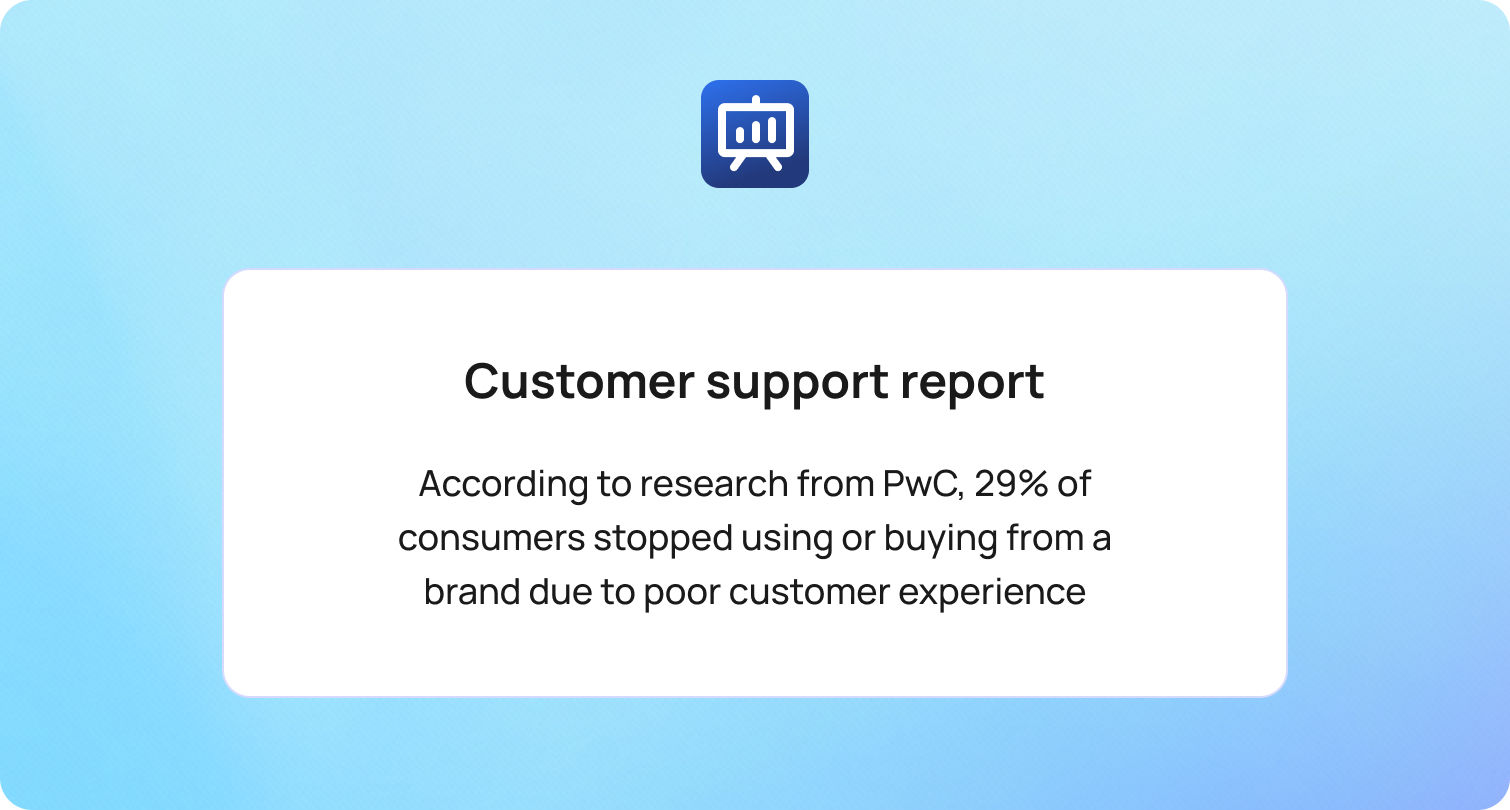
According to research from PwC, 29% of consumers stopped using or buying from a brand due to poor customer experience, highlighting how quickly service failures can translate into lost revenue. For airlines, where disruption events and operational delays are inevitable, the ability to deliver fast, accurate support during high-stress moments can be the difference between maintaining customer loyalty and losing it.
This is why many airlines are moving toward purpose-built airline customer support software that supports disruption workflows, omnichannel messaging, and operational analytics.
What Airlines Need in 2026 That Most Support Tools Miss
Most generic helpdesk platforms weren’t designed for the realities of airline operations. Traditional customer support tools are typically optimized for steady ticket volumes and predictable service environments. Airlines, by contrast, operate in a world where customer demand can spike dramatically within minutes, triggered by events such as weather disruptions, air traffic control issues, strikes, or technical delays.
When these disruption events occur, support teams must respond at scale while maintaining consistent messaging across every channel passengers use, from voice calls and email to chat, social media, and messaging apps. At the same time, agents must work with constantly evolving operational information, including flight status updates, policy adjustments, and rebooking rules. Without the right systems in place, this complexity can quickly overwhelm traditional support workflows.
There is also a higher level of accuracy and compliance required in airline customer service. Passengers often contact support teams about baggage policies, refund eligibility, loyalty accounts, schedule changes, and payment-related issues, all of which involve sensitive personal data and strict policy adherence. This means the software supporting these teams must provide both speed and guardrails, ensuring agents can respond quickly while staying aligned with approved policies and procedures.
For this reason, airlines increasingly look for airline customer support software that goes beyond simple ticket management. Modern platforms must support disruption workflows, integrate with operational systems, and provide real-time visibility into support performance during high-pressure events.
Airlines typically require the following capabilities to support both everyday inquiries and large-scale disruptions:
- IROPS readiness: sudden spikes in rebooking requests, refund inquiries, policy updates, and “where is my flight?” questions.
- High-stakes accuracy: baggage rules, cancellation policies, and fees must be consistent, compliant, and auditable.
- Omnichannel communication: voice, chat, email, messaging apps, and social media — with seamless context transfer between channels.
- Identity and privacy protection: airlines manage sensitive passenger data and must guard against account takeover risks.
- Always-on reporting: live dashboards tracking SLAs, abandonment rates, containment, and agent workloads during disruption events.
The right airline customer service software acts less like a traditional helpdesk and more like an operational control layer for customer communication.
The 13 Best Airline Customer Support Software Platforms for 2026
Before diving into individual platforms, it’s important to understand how airlines typically structure their support stack. Most carriers use a mix of capabilities, including:
- Ticketing and case management
- Voice and contact center infrastructure (CCaaS)
- Messaging and chatbot automation
- Knowledge base management
- Workforce management and analytics
The platforms below represent different strengths across that stack.
1) BlueTweak — Editor’s Choice (Mid-Market All-in-One)

Best for: Airlines seeking a unified omnichannel platform with built-in operations and analytics.
BlueTweak combines chat, voice, and email support with shared customer context, within a single environment, making it well-suited for airline support teams managing high-volume communication across channels. This approach has already been applied in real-world airline environments, where features like custom notifications help teams proactively manage disruption updates and reduce inbound support volume during peak periods.
Airline fit: Designed for organizations that need centralized support operations with minimal tool sprawl, which is particularly valuable for airline groups operating multiple brands.
Channels / voice: Chat, email, and voice are integrated within one platform.
Automation & AI: AI supports agent workflows with features like conversation summaries and suggested replies, helping teams respond faster during peak demand.
Knowledge base: A smart knowledge base supports policy consistency, enabling airlines to keep messaging aligned during disruptions or operational changes.
Ops (analytics / WFM): Built-in analytics and workforce management help teams forecast spikes, track SLAs, and manage staffing during high-volume disruption windows.
Integrations: Supports integrations with CRM systems and operational tools.
Security note: Role-based permissions and administrative controls support enterprise environments.
Pricing note: BlueTweak offers a transparent pricing structure starting at €65 per agent per month, which includes core omnichannel channels such as email, chat, and voice within a single platform. The base plan also includes features like a ticketing system, public knowledge base, analytics dashboards, workforce management, CSAT surveys, and automation rules. Pricing may vary depending on configuration, integrations, or additional AI capabilities, so airlines should verify details directly with the vendor.
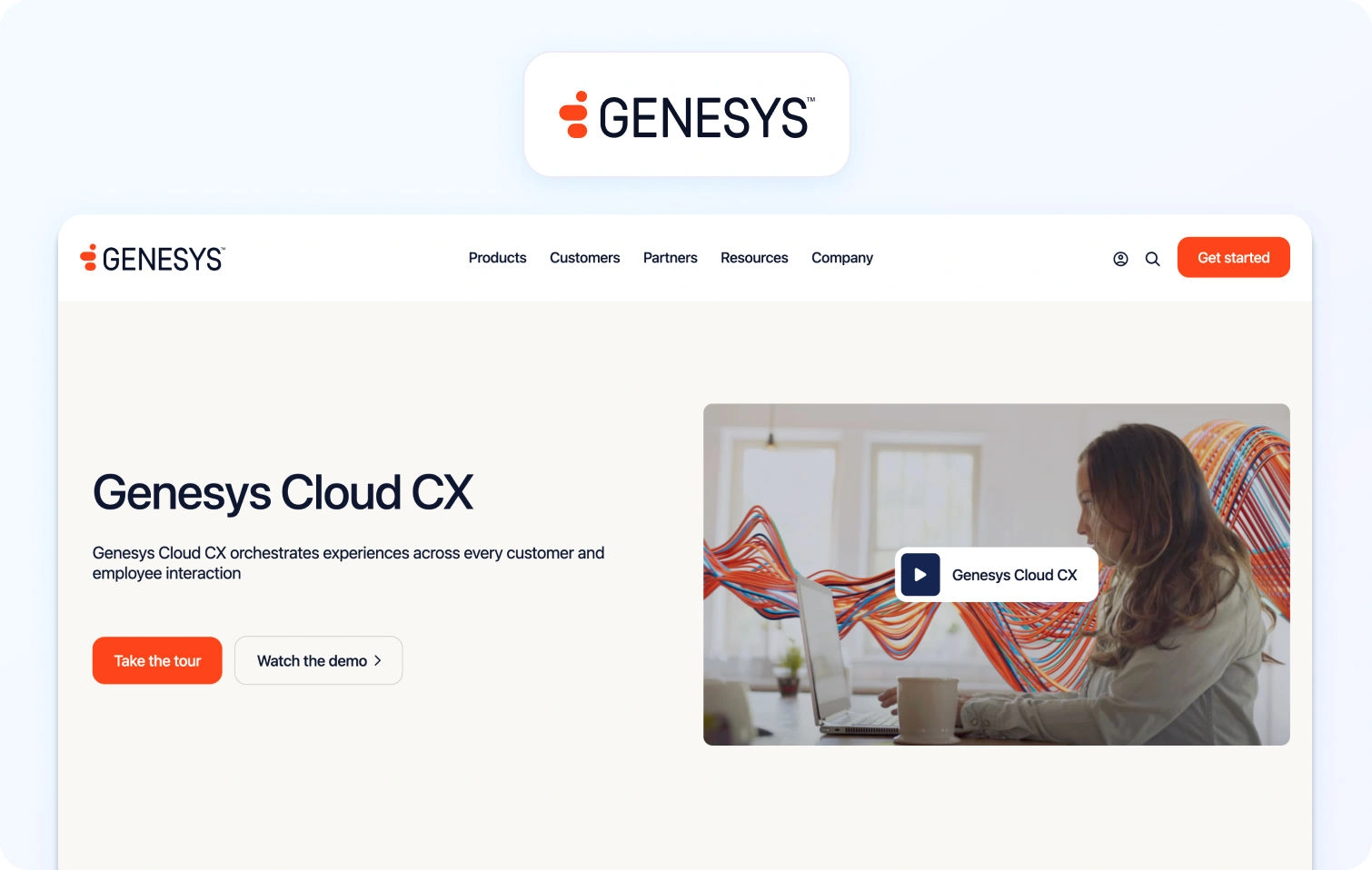
2) Genesys Cloud CX
Best for: Enterprise airlines prioritizing deep contact center capabilities.
Genesys Cloud CX focuses heavily on voice infrastructure and advanced routing, which can be valuable for large airlines operating complex global contact centers.
Airline fit: Large carriers with significant call volumes and multi-region support teams.
Channels / voice: Strong voice support alongside digital channels.
Automation & AI: AI-powered routing and interaction analysis.
Knowledge base: Supports agent assistance and knowledge integrations.
Ops: Advanced workforce management and analytics.
Integrations: Extensive marketplace integrations.
Security note: Enterprise-grade security features.
Pricing note: Genesys Cloud CX uses tiered pricing based on feature depth. Entry-level plans start at around $75 per user per month (billed annually) for voice-focused contact centers, while higher tiers with full omnichannel support, workforce engagement tools, and advanced AI capabilities can reach around $240 per user per month. Additional add-ons and usage-based costs may apply depending on configuration, so verify details directly with the vendor.
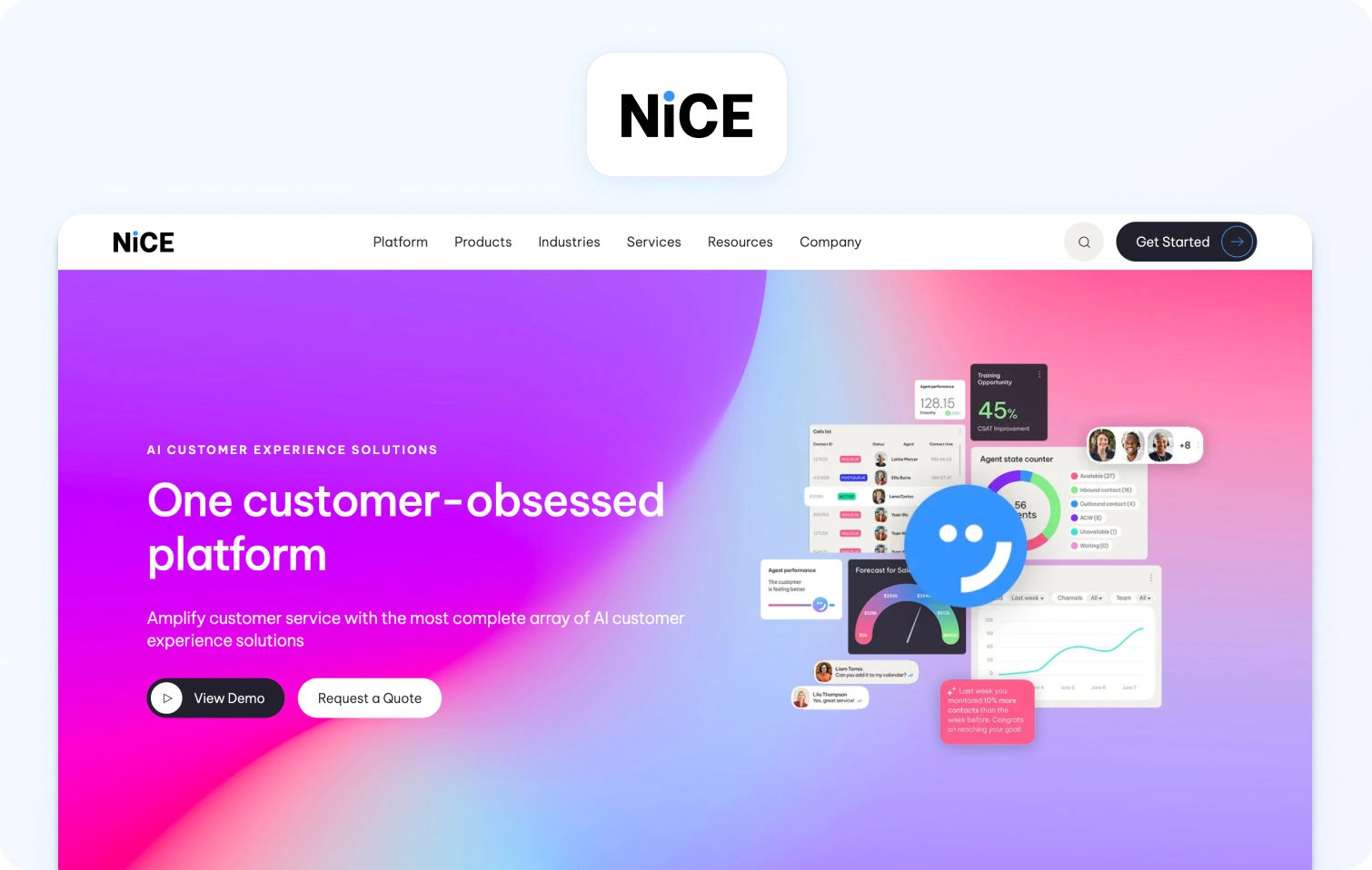
3) NICE CXone
Best for: Enterprise-scale customer service operations.
NICE CXone offers a comprehensive contact center-as-a-service (CCaaS) platform designed for large support teams with complex workflows.
Airline fit: Global airlines need advanced analytics and quality management.
Channels / voice: Full omnichannel support with strong voice capabilities.
Automation & AI: AI-powered routing and automation tools.
Knowledge base: Integrates with external knowledge systems.
Ops: Workforce optimization and performance analytics.
Integrations: Wide integration ecosystem.
Security note: Enterprise compliance features.
Pricing note: NICE CXone uses a tiered, per-agent pricing model. Published packages start at around $110 per agent per month for the Omnichannel Suite, with higher tiers such as Core ($169), Complete ($209), and Ultimate ($249) adding capabilities like workforce engagement tools, analytics, and AI-powered automation. Some advanced features and AI services are available as add-ons or usage-based components depending on configuration, so verify details directly with the vendor.
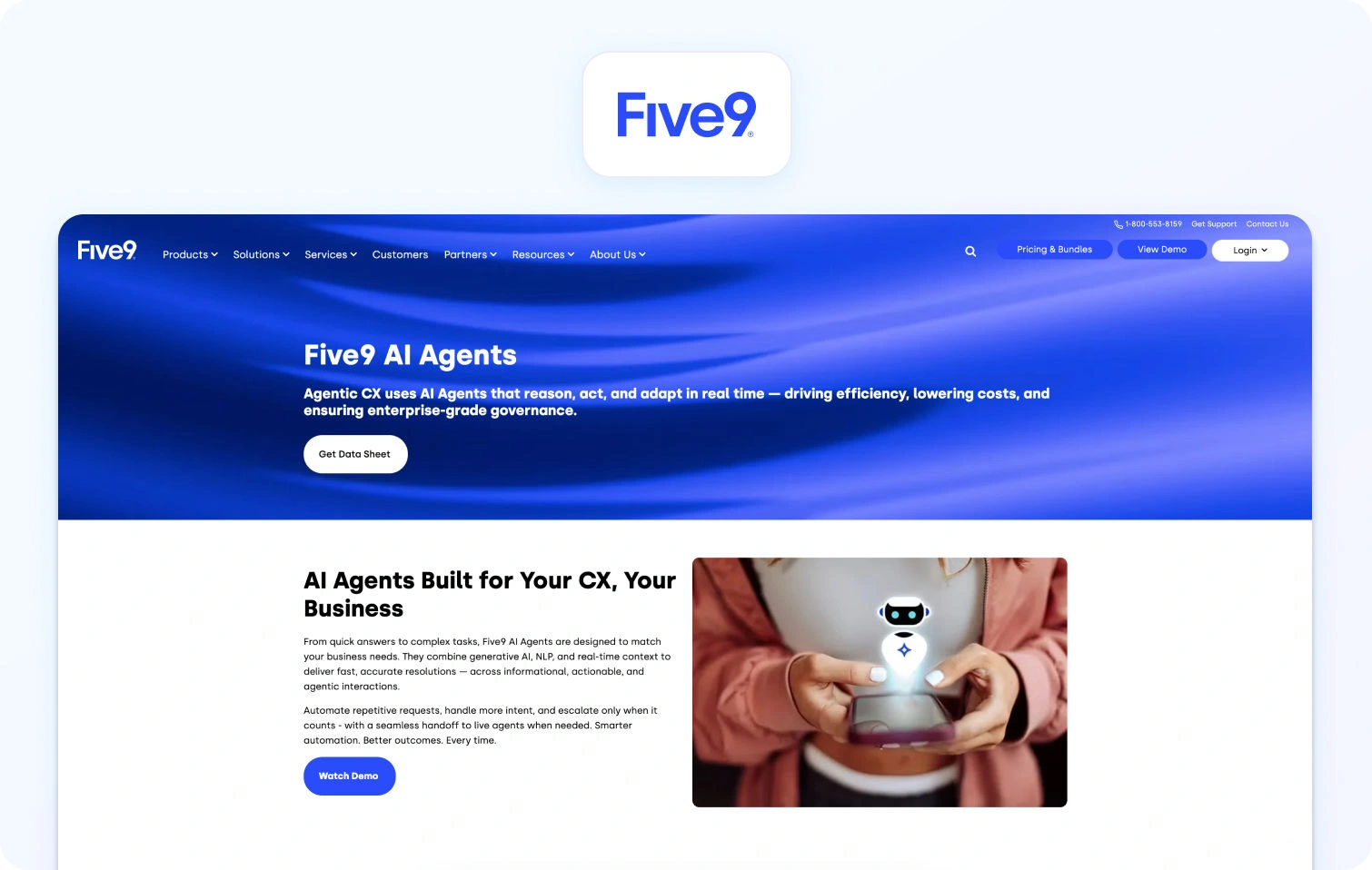
4) Five9
Best for: Voice-heavy airline support environments.
Five9 is widely known for its contact center routing capabilities and voice infrastructure, which makes it a popular option for organizations that still handle a large volume of phone inquiries.
Airline fit: Airlines with significant inbound call volumes.
Channels / voice: Strong voice-first platform with digital support channels.
Automation & AI: AI-assisted routing and automation tools.
Knowledge base: Integration-based.
Ops: Analytics and workforce tools.
Integrations: CRM and contact center integrations.
Security note: Enterprise security controls.
Pricing note: Five9 offers tiered pricing bundles starting at around $119 per seat per month for digital-first contact center capabilities, with higher tiers such as Core at around $159 per seat per month, adding full voice and omnichannel functionality. Plans typically include features like inbound and outbound call handling, call recording, AI tools such as agent assist and live transcription, and workforce engagement options, including quality management and workforce management. Verify details directly with the vendor, as pricing is usually based on concurrent users with a minimum seat requirement, and additional AI usage or messaging costs may apply depending on configuration.
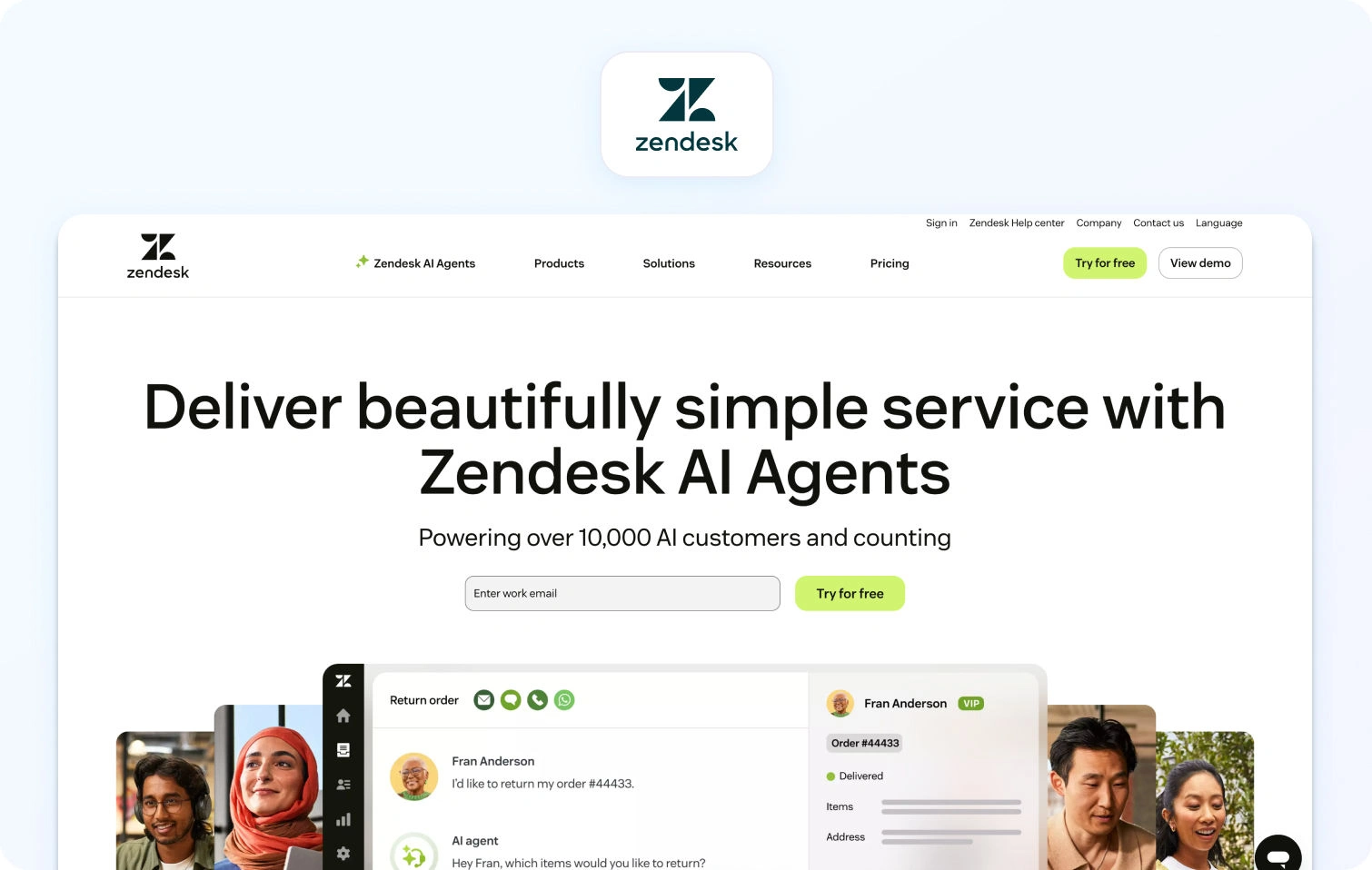
5) Zendesk
Best for: Ticketing-first support ecosystems.
Zendesk is one of the most widely used customer support software platforms, offering strong ticketing and ecosystem integrations.
Airline fit: Airlines prioritizing structured ticket management.
Channels / voice: Email, chat, messaging, and optional voice.
Automation & AI: Automation workflows and AI support tools.
Knowledge base: Robust help center and self-service capabilities.
Ops: Reporting dashboards.
Integrations: Large marketplace ecosystem.
Security note: Enterprise security and compliance features.
Pricing note: Pricing varies by plan and configuration. Zendesk offers a 14-day free trial for teams to explore its ticketing, messaging, and automation features before committing to a subscription. Specific pricing tiers should be verified directly with the vendor.
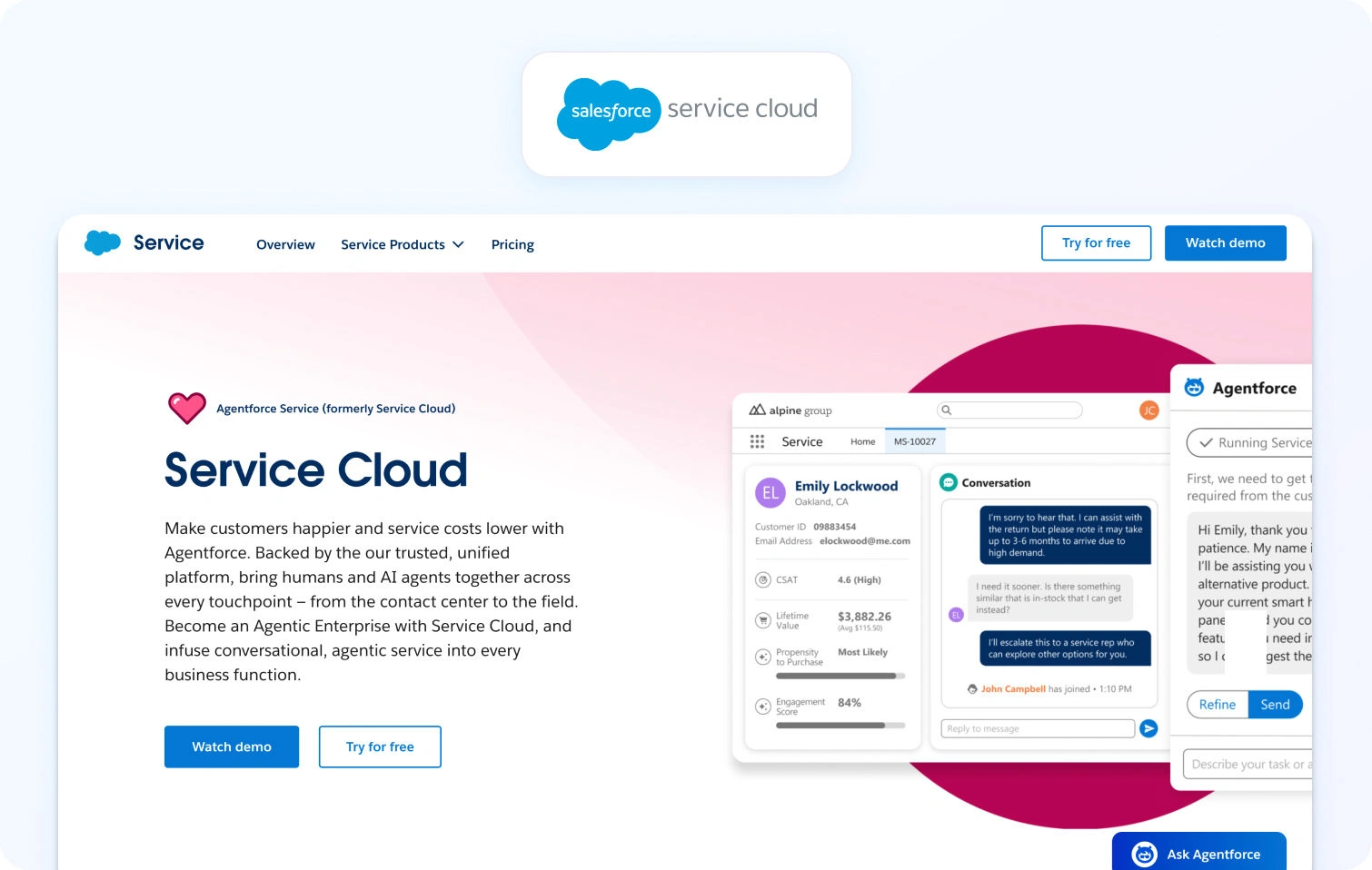
6) Salesforce Service Cloud
Best for: Airlines with a Salesforce-centric tech stack.
Salesforce Service Cloud is built around CRM-driven case management, making it particularly useful when customer support needs to connect deeply with loyalty programs and passenger data.
Airline fit: Airlines already using Salesforce for CRM or marketing.
Channels / voice: Omnichannel support through integrations.
Automation & AI: AI-powered case routing and insights.
Knowledge base: Integrated knowledge management.
Ops: Advanced reporting and analytics.
Integrations: Deep ecosystem via the Salesforce platform.
Security note: Enterprise-grade governance.
Pricing note: Salesforce Service Cloud uses tiered per-user pricing. Entry-level CRM suites start at around €25 per user per month, while more advanced Service Cloud tiers such as Enterprise (€165 per user/month) and Unlimited (€330 per user/month) add capabilities like AI-powered customer service, workflow automation, knowledge management, chatbots, and advanced support features. Higher-tier packages with expanded AI and data capabilities are also available, with pricing varying by configuration; pricing should be verified directly with the vendor.
7) ServiceNow Customer Service Management
Best for: Enterprise service workflows.
ServiceNow’s CSM platform focuses on complex service operations and workflow orchestration.
Airline fit: Large airlines managing complex internal service processes.
Channels / voice: Digital channels with integration-based voice.
Automation & AI: Workflow automation.
Knowledge base: Enterprise knowledge management.
Ops: Service operations analytics.
Integrations: Broad enterprise integrations.
Security note: Strong governance and compliance capabilities.
Pricing note: Custom pricing, verify with vendor.
8) Intercom
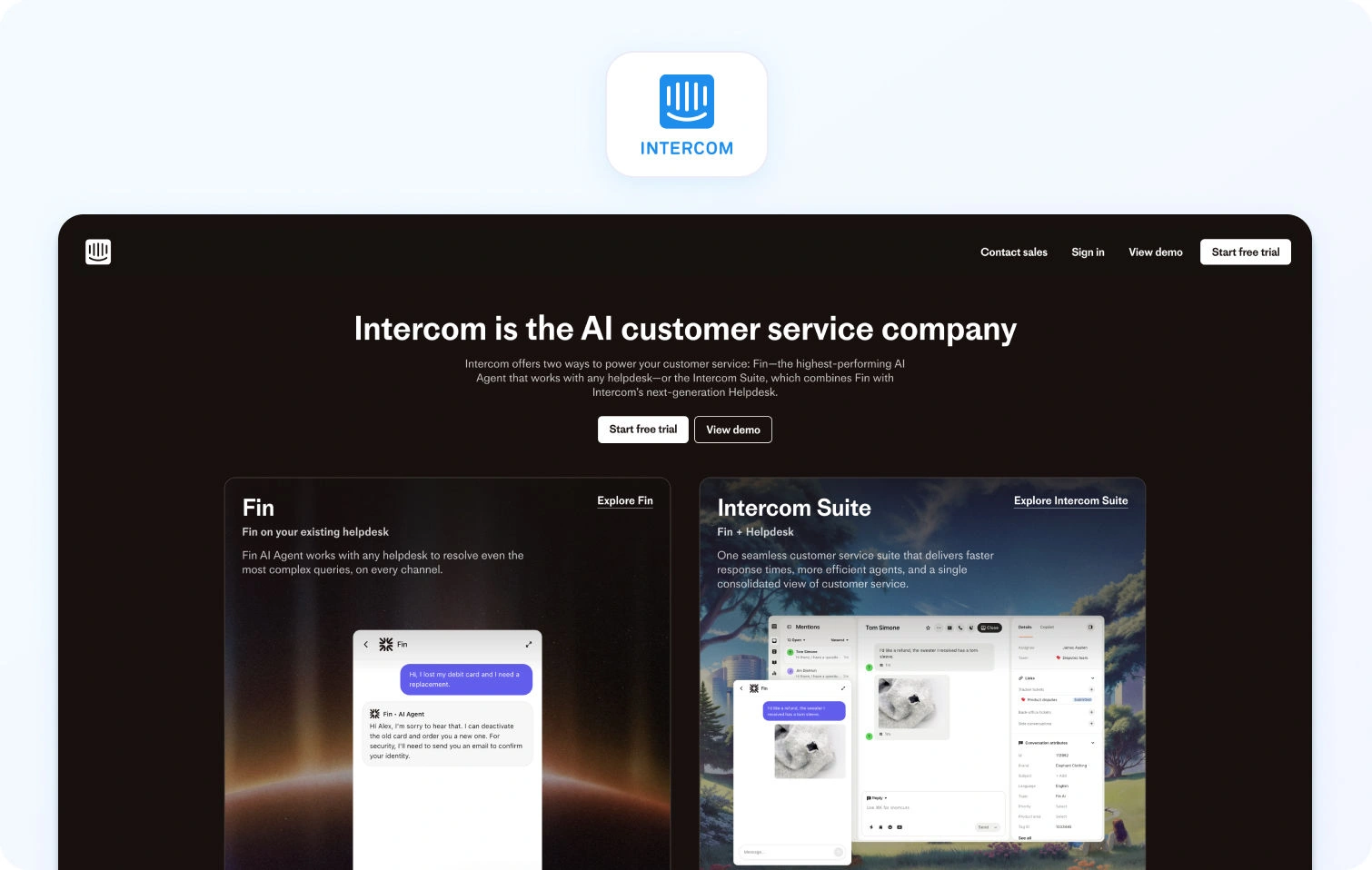
Best for: Messenger-first support strategies.
Intercom focuses on real-time messaging and automation, which can be useful for digital-first airline support.
Airline fit: Airlines emphasizing mobile or web-based customer communication.
Channels / voice: Chat and messaging-first approach.
Automation & AI: Bots and automation flows.
Knowledge base: Help center integration.
Ops: Reporting dashboards.
Integrations: Third-party integrations available.
Security note: Standard enterprise controls.
Pricing note: Intercom uses a tiered subscription model starting at $74 per user per month for the Essentials plan, which includes messaging, email, and basic automation. Higher tiers, such as Pro ($149 per user/month) and Premium (custom pricing), add advanced automation, AI-powered chat, multilingual support, and workflow capabilities. Pricing should be verified directly with the vendor, as it may vary depending on add-ons, team size, or custom configuration.
9) Freshdesk
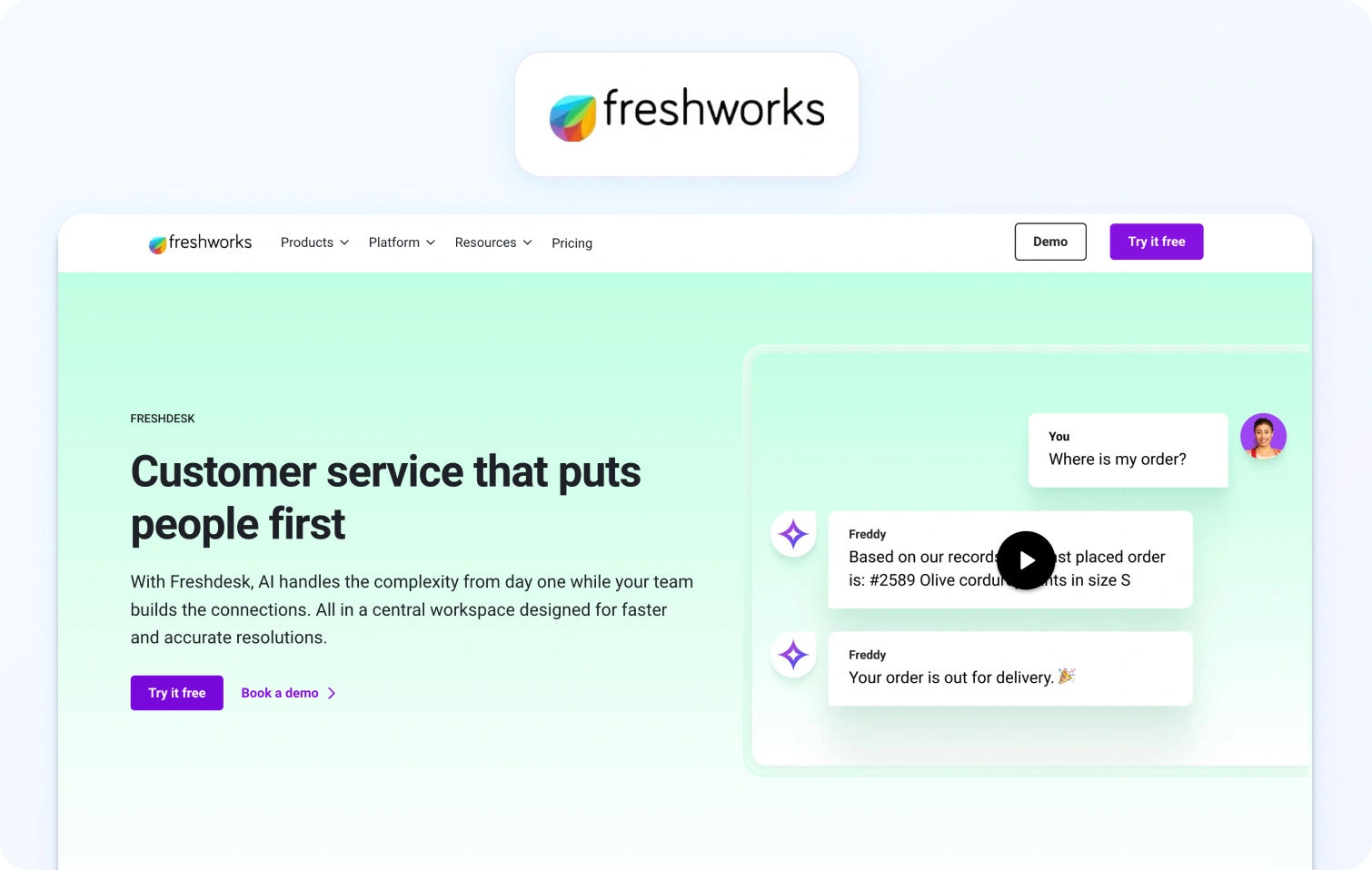
Best for: Fast deployment ticketing platforms.
Freshdesk offers a ticketing-first help desk designed for teams seeking quick rollout and approachable workflows.
Airline fit: Regional airlines or growing support teams.
Channels / voice: Email, chat, and optional voice.
Automation & AI: Automation rules and AI support tools.
Knowledge base: Integrated help center.
Ops: Reporting and dashboards.
Integrations: Large marketplace.
Security note: Standard security features.
Pricing note: Freshdesk uses tiered per-agent pricing, starting at $19 per agent per month (Growth plan, billed annually), with higher tiers such as Pro ($55 per agent/month) and Enterprise ($89 per agent/month) adding capabilities like advanced ticket routing, custom reporting, approval workflows, and additional security features. A 14-day free trial is available for teams to test the platform before committing, but exact pricing should be verified directly with the vendor.
10) Talkdesk
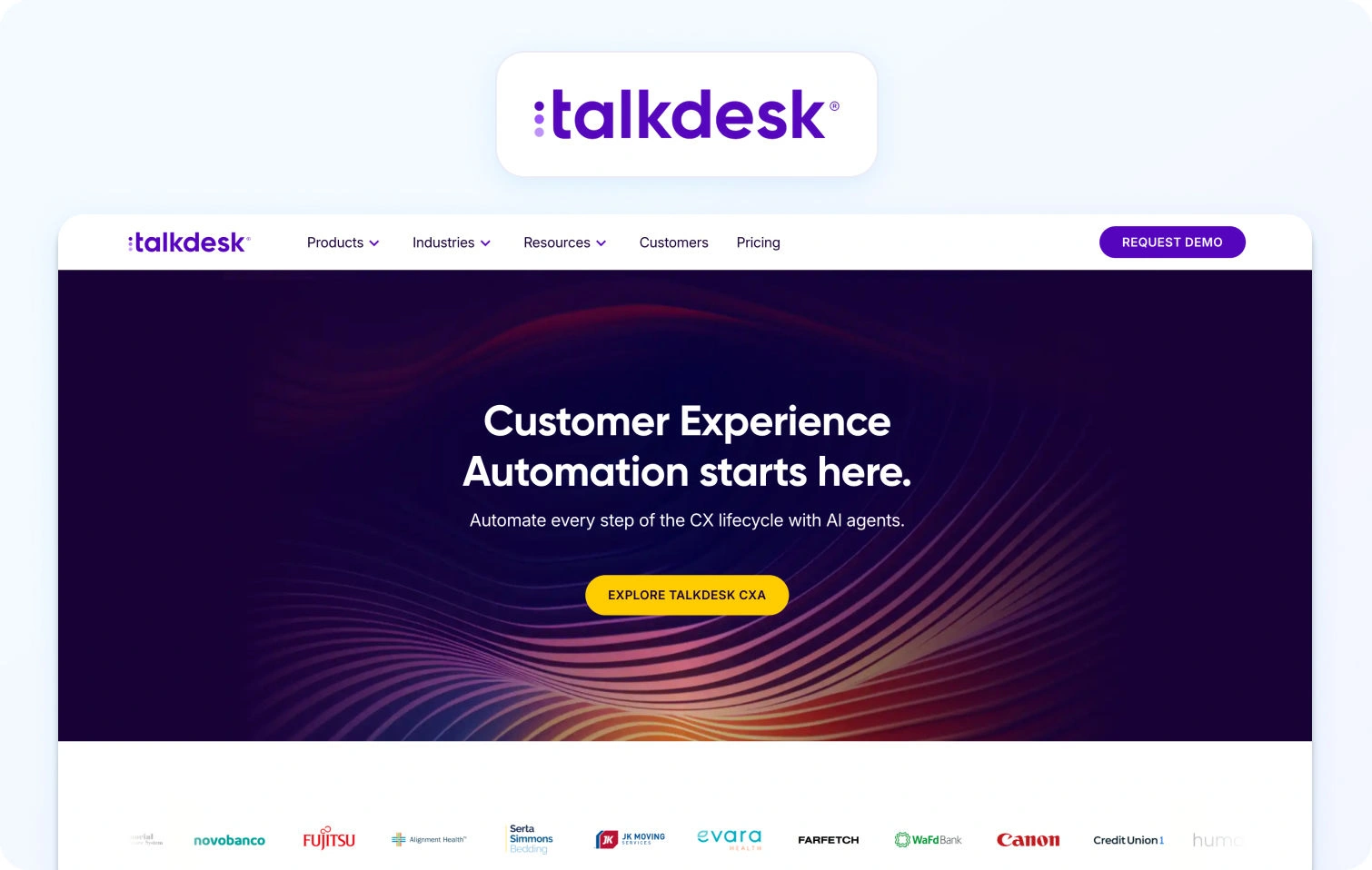
Best for: Cloud contact center environments.
Talkdesk offers contact center infrastructure with AI capabilities, focusing on automation and voice routing.
Airline fit: Airlines prioritizing CCaaS features.
Channels / voice: Strong voice capabilities with digital channels.
Automation & AI: AI-based automation tools.
Knowledge base: Integration-based knowledge systems.
Ops: Analytics and workforce management.
Integrations: Contact center integrations.
Security note: Enterprise controls.
Pricing note: Talkdesk offers tiered per-user pricing depending on channel and feature depth. Plans start at around $85 per user per month for Digital Essentials, with higher tiers such as Voice Essentials ($105 per user/month) and Elite ($165 per user/month) adding voice capabilities, advanced reporting, workforce management, and AI-powered automation features. Additional industry-specific packages and add-ons are available depending on configuration, so exact pricing should be verified directly with the vendor.
11) Sprinklr Service
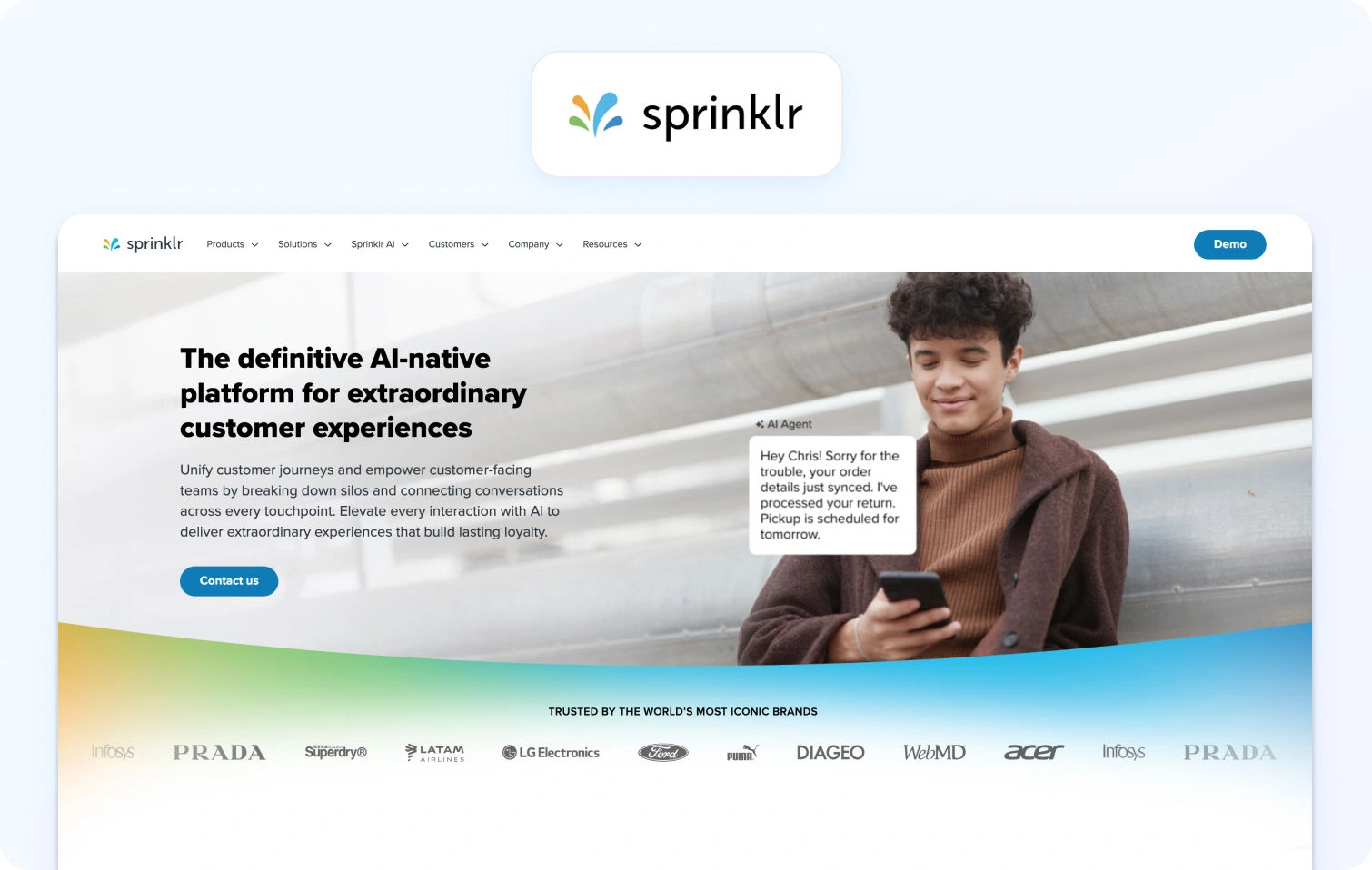
Best for: Social media-driven customer care.
Sprinklr Service focuses heavily on social support and digital engagement, making it useful for airlines that receive high volumes of social inquiries.
Airline fit: Airlines with large social care teams.
Channels / voice: Social media, messaging, and digital channels.
Automation & AI: AI for social engagement.
Knowledge base: Integrated content management.
Ops: Digital analytics.
Integrations: Marketing and CRM integrations.
Security note: Enterprise governance features.
Pricing note: Custom pricing, verify with vendor.
12) Twilio Flex

Best for: Engineering-heavy organizations building custom support stacks.
Twilio Flex is a programmable contact center platform, allowing organizations to design their own workflows.
Airline fit: Airlines with strong engineering teams.
Channels / voice: Programmable omnichannel.
Automation & AI: Developer-driven automation.
Knowledge base: Integration-based.
Ops: Custom analytics and reporting.
Integrations: Extensive API ecosystem.
Security note: Enterprise security infrastructure.
Pricing note: Twilio Flex uses a usage-based or per-user pricing model. Teams can pay around $1 per active user hour for usage-based billing or around $150 per named user per month for predictable monthly costs; pricing should be verified directly with the vendor. Twilio also offers a free trial with 5,000 active user hours to test the platform before committing.
13) Kustomer
Best for: Customer conversation timelines.
Kustomer focuses on customer timelines and conversation-centric support, which can help agents maintain context across channels.
Airline fit: Airlines emphasizing unified customer histories.
Channels / voice: Omnichannel messaging.
Automation & AI: Automation workflows.
Knowledge base: Help center support.
Ops: Customer experience analytics.
Integrations: CRM integrations.
Security note: Enterprise controls.
Pricing note: Pricing is custom and varies by plan, with Kustomer offering tailored packages depending on support volume, automation needs, and integrations. Plans typically include capabilities such as omnichannel messaging, conversation timelines, workflow automation, and analytics, with additional AI and advanced features available depending on configuration. Pricing should be verified directly with the vendor.
Key Use Cases for Airline Customer Support Software
Airline support platforms must handle unique operational challenges. The most effective tools support workflows designed specifically for aviation customer service.
Key use cases include:
- Flight disruption triage (delays or cancellations): Automated routing, macros, and AI-assisted replies help support teams manage sudden spikes in passenger inquiries during operational disruptions.
- Rebooking and schedule changes: Integrations with reservation systems and guided workflows enable agents to assist passengers quickly when itineraries need to change.
- Baggage claim updates: Case management tools allow teams to track baggage issues while sending automated notifications and status updates to passengers.
- Loyalty program support: Identity verification and CRM integrations help agents securely access frequent flyer accounts and resolve points or status inquiries.
- Refund and chargeback workflows: Structured approval chains and audit trails ensure refund requests follow the correct policies and remain compliant.
- Multilingual support at scale: Translation tools and localized knowledge bases allow airlines to support passengers across multiple languages and regions.
- Proactive communication: Outbound messaging can notify passengers about gate changes, delays, cancellations, or other operational updates before they contact support.
- High-volume peak events: Workforce management, real-time dashboards, and self-service options help teams handle demand spikes caused by weather events, strikes, or large-scale disruptions.
Together, these capabilities allow airlines to manage support as an operational function, not just a customer service channel.
What to Look For in Airline Customer Support Software in 2026
Choosing the right platform requires evaluating capabilities specific to airline operations. Below are the key areas to assess when comparing airline customer service software solutions.
Disruption Workflows (IROPS)
The platform should support disruption-specific routing and workflows, including surge handling, routing by disruption type, and templates for refunds or rebooking scenarios. During irregular operations (IROPS), passenger inquiries can surge dramatically, so systems must automatically prioritize requests related to cancellations, delays, and missed connections.
Airline-ready platforms should also allow support teams to quickly deploy updated macros, knowledge base articles, and communication templates to ensure messaging stays consistent across agents. This helps teams maintain accuracy when policies change quickly during major disruption events.
Omnichannel + Voice Handoff
Airline support often moves between channels. Voice calls should link to tickets and conversations, while agents should retain context across email, chat, and messaging. When a passenger begins a conversation through chat or social media and later escalates to a phone call, agents should be able to access the full conversation history instantly.
This continuity reduces friction for passengers, who shouldn’t have to repeat their issue across multiple channels. It also helps support teams resolve cases faster while maintaining consistent customer context.
Automation and AI (With Guardrails)
Automation should help triage tickets, summarize conversations, suggest responses, and translate messages, while ensuring responses remain grounded in approved knowledge base content. AI can significantly reduce agent workload by automatically categorizing requests, recommending next actions, and generating draft responses for review.
However, in airline operations, accuracy is critical. Automation systems must include guardrails that ensure responses align with approved policies and operational data, particularly when addressing refunds, baggage policies, or schedule changes.
Knowledge Base Governance
Airline policies change frequently. Knowledge base systems should support version control, multilingual content, and restricted access for regulated topics. This ensures agents always reference the most current information when responding to passengers.
Strong governance also helps maintain consistency across global support teams, particularly when airlines operate in multiple regions and languages. With structured content management, teams can update policies quickly and ensure changes are reflected across support channels.
Operations and Workforce Management
Real-time dashboards, disruption monitoring, and workforce forecasting help teams staff appropriately during peak events. During major disruption periods, support leaders need immediate visibility into metrics like queue volumes, wait times, and abandonment rates.
Workforce management tools allow airlines to forecast demand based on historical patterns and operational triggers, such as seasonal travel spikes or weather disruptions. This helps teams allocate resources efficiently and maintain service levels even during unpredictable events.
Security and Compliance
Airlines handle sensitive passenger data. Platforms should support multi-factor authentication, audit logs, role permissions, and data retention controls. These features help protect personally identifiable information (PII) and reduce the risk of account takeover or unauthorized data access.
In addition, detailed audit trails and permission controls allow organizations to monitor how data is accessed and modified across the support environment. This level of governance is essential for maintaining compliance with global data protection regulations and internal security policies.
Integrations
Customer support platforms must integrate with core airline systems, including:
- Passenger reservation systems (PSS) such as Amadeus, Sabre, or Travelport
- CRM and loyalty platforms
- Payment and refund systems
- Baggage management tools
- Flight status feeds and operational systems
- Business intelligence platforms
Pricing Transparency
Pricing models often combine seat licenses, usage costs, voice minutes, messaging volume, and AI features. Understanding these factors early helps prevent unexpected cost growth.
How We Evaluated Airline Customer Support Software
To ensure an objective comparison, we reviewed vendor product documentation, pricing pages, help centers, and marketplace listings rather than relying on third-party rankings.
We evaluated platforms based on their ability to support airline-specific operational needs, including omnichannel communication, disruption workflows, automation capabilities, knowledge management, analytics, and integrations.
Must-Have Capability Checklist
Airline-ready platforms should provide:
- Omnichannel support with voice integration
- Disruption routing and surge-ready SLAs
- AI features like summaries and suggested replies
- Multilingual support and localized knowledge bases
- Analytics dashboards and workforce forecasting
- Security controls, including MFA and audit logs
- Integrations and APIs for airline operational systems
- Transparent pricing models and governance for add-ons
- CSAT measurement and quality assurance workflows
Scoring Rubric
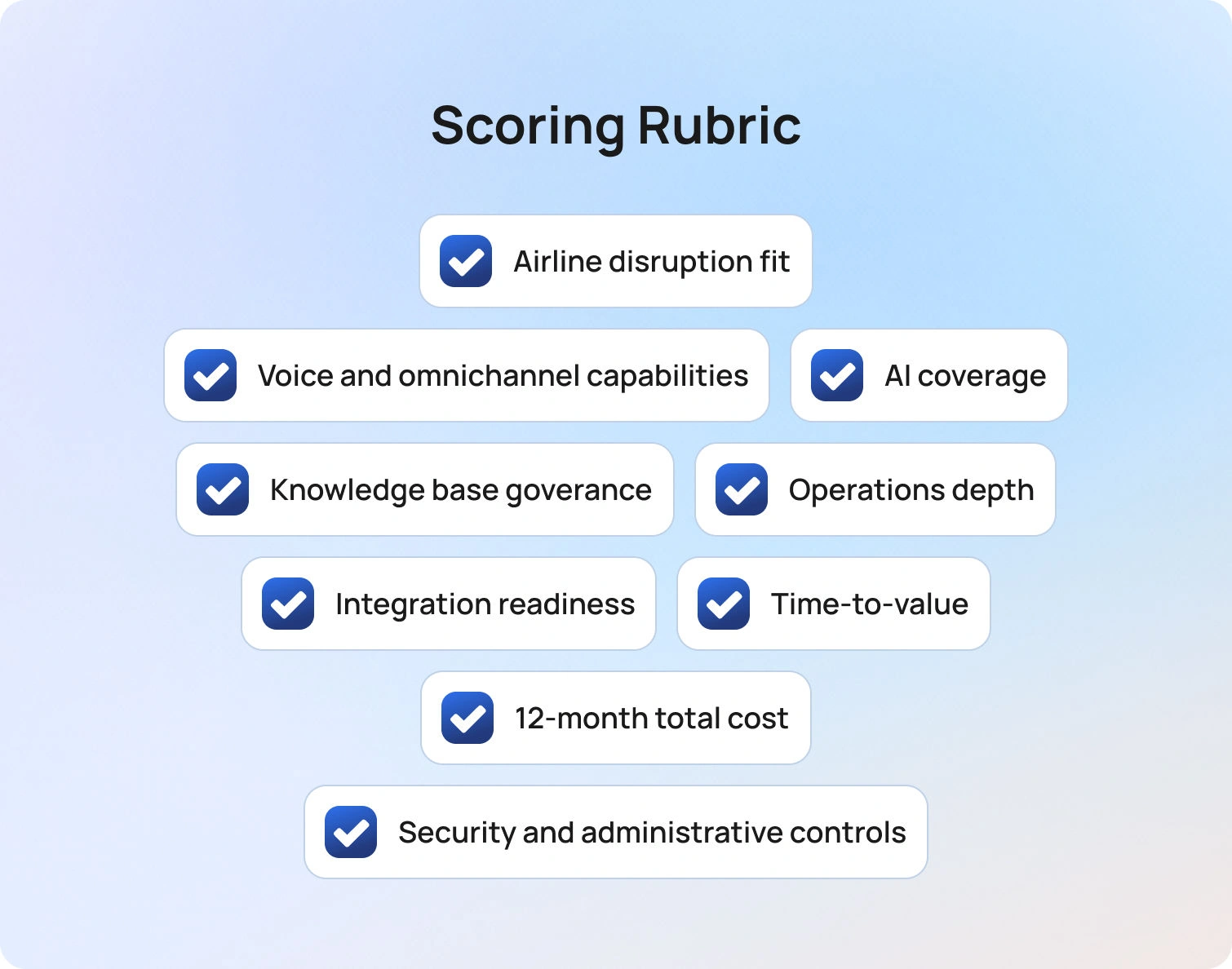
Each platform can be evaluated across the following dimensions:
- Airline disruption fit
- Voice and omnichannel capabilities
- AI coverage with guardrails
- Knowledge base governance
- Operations depth (analytics and workforce management)
- Integration readiness
- Time-to-value
- 12-month total cost of ownership clarity
- Security and administrative controls
Implementation Playbook for Airlines
Adopting customer support software for airlines requires careful planning to ensure the system performs well during real operational events.
Phase 1 (2–4 weeks)
Integrate core communication channels and flight status feeds. Build support workflows for the most common requests, such as flight delays, cancellations, baggage claims, refunds, and loyalty inquiries. Clean up and version control the knowledge base.
Phase 2 (4–6 weeks)
Introduce AI-powered capabilities, including conversation summaries and suggested responses. Implement multilingual workflows and automation for top customer intents. Establish quality assurance sampling.
Phase 3 (6–10 weeks)
Optimize voice routing and IVR workflows. Implement workforce management forecasting for disruption periods. Build dashboards segmented by airport location, language, or operational region.
Successful pilots should measure metrics such as average handle time, abandonment rates, containment, first-contact resolution, and CSAT during peak demand periods.
Pricing and ROI Modeling for Airlines
Evaluating the ROI of airline customer support software requires modeling the full operational cost structure. Typical cost components include:
- Agent seats
- Voice minutes and telephony infrastructure
- Messaging volumes
- AI usage (translation or transcription)
- Data storage and retention
- Integration costs
- Professional services
- Quality assurance and language review time
Potential ROI improvements may come from lower cost per contact, improved self-service containment, reduced abandonment during disruption events, and higher first-contact resolution.
However, airlines should carefully evaluate pricing structures. Voice services, AI capabilities, and workforce management modules are often priced separately, which can significantly impact the total cost of ownership.
Final Thoughts: Choosing the Right Airline Customer Support Software
Selecting the right customer support software for airlines ultimately comes down to how well a platform supports the realities of airline operations while improving the overall customer experience. Airlines must manage thousands of customer interactions every day, often under challenging conditions such as weather events, operational delays, or large-scale disruptions that can quickly turn into flight disruption chaos if support systems aren’t prepared.
The strongest platforms combine several capabilities that allow airlines to respond effectively during these high-pressure moments:
- Disruption workflows designed for IROPS scenarios
- Omnichannel communication with seamless voice handoff
- AI automation supported by knowledge-based guardrails
- Reliable knowledge base governance
- Workforce management and operational analytics
- Deep integrations with airline systems and integrated workflows
- Enterprise-grade security and compliance
- Transparent pricing and total cost visibility
When these capabilities work together, airlines can reduce passenger frustration, respond to customer interactions faster, and maintain service levels even during disruption events. Modern platforms increasingly combine AI agents and human agents to handle routine requests, assist with flight updates, and help airport staff and customer support teams manage growing volumes of passenger inquiries.
Beyond improving support response times, the right platform can also help airlines reduce costs by automating repetitive tasks, improving staffing efficiency, and offering insights from support data that help teams continuously improve operations. With stronger analytics and automation, airlines can better understand trends in customer interactions, optimize staffing during peak travel periods, and deliver more consistent service across the entire passenger journey.
For airlines looking to simplify their support stack, platforms that combine automation, analytics, omnichannel communication, and AI agents in a single environment can significantly improve operational resilience. By enabling smarter workflows and faster responses, these systems help airlines manage disruption events more effectively while maintaining a high-quality customer experience.
If your airline is evaluating modern customer support software for airlines, consider exploring BlueTweak to see how a unified platform can streamline customer interactions, support airport staff, and improve response times during disruption events.
Request a demo to learn how BlueTweak can support airline customer service operations.

As Head of Digital Transformation, Radu looks over multiple departments across the company, providing visibility over what happens in product, and what are the needs of customers. With more than 8 years in the Technology era, and part of BlueTweak since the beginning, Radu shifted from a developer (addressing end-customer needs) to a more business oriented role, to have an influence and touch base with people who use the actual technology.



