


Radu Dumitrescu

As Head of Digital Transformation, Radu looks over multiple departments across the company, providing visibility over what happens in product, and what are the needs of customers. With more than 8 years in the Technology era, and part of BlueTweak since the beginning, Radu shifted from a developer (addressing end-customer needs) to a more business oriented role, to have an influence and touch base with people who use the actual technology.
Recent articles
14 Use Cases That Turn AI Customer Service Implementation Challenges Into Real Results
Purpose and Context
AI in customer service doesn’t fail due to a lack of models; it fails because day-to-day operations are often messy. Teams juggle multiple tools for a single customer journey, so context gets lost, and leaders argue over mismatched reports. Peaks arrive faster than schedules can flex, SLAs wobble, and the cost of covering more languages climbs. Security reviews add another layer of protection, especially when customer data or payments are involved. None of these problems is exotic; they’re routine, and they compound.
This article demonstrates how to overcome implementation challenges by leveraging 14 practical use cases. Each one pairs a specific blocker with a concrete pattern that moves in a controlled sequence (Assist → Approve → Automate) so you can start safely, learn fast, and only automate what’s genuinely low-risk. Where examples mention tools, they illustrate the pattern rather than prescribe a vendor.
Principles That Turn AI From a Pilot Into an Operating Advantage

These principles are the operating rules behind the 14 use cases. They decide which plays you run, how you run them, and how you prove they worked.
Outcome-first means every play earns its spot by moving one of four targets: CSAT, FCR, average handle time, or SLA adherence. That’s why the first cluster focuses on quick, measurable lifts: virtual agents for repetitive requests and agent assist to cut typing (#1–#2), multilingual coverage to remove a capacity bottleneck (#3), and routing that reduces reassignments (#4). If a proposed use case can’t show movement on those metrics in a pilot, it doesn’t progress.
Human-in-the-loop defines the cadence of each use case. We start in Assist (AI drafts, humans decide), move to Approve (AI proposes, humans confirm), and automate only the narrow, low-risk steps that have proven stable in production. That pattern can be seen in sentiment-aware triage (#5), knowledge governance tied to suggested replies (#6), and human-designed handoffs that prevent talled handoffs (#13). The result is safer wins early, then sustained gains as confidence grows.
Platform-over-point tools explain why the use cases connect, rather than living as one-off fixes. When channels, knowledge, customer support analytics, and workforce planning share the same context, improvements reinforce each other: WFM plans to the real demand that routing and deflection create (#7), analytics surfaces cross-brand patterns that feed proactive moves (#8, #12), privacy controls make approvals faster instead of slower (#9), and integrations prevent manual rekeying between systems so answers reflect real customer data (#10). Call transcription and summaries capture what was learned and push it back into the knowledge base (#11), while governance ensures everything is released on a steady rhythm (#14).
Data and Security Foundations
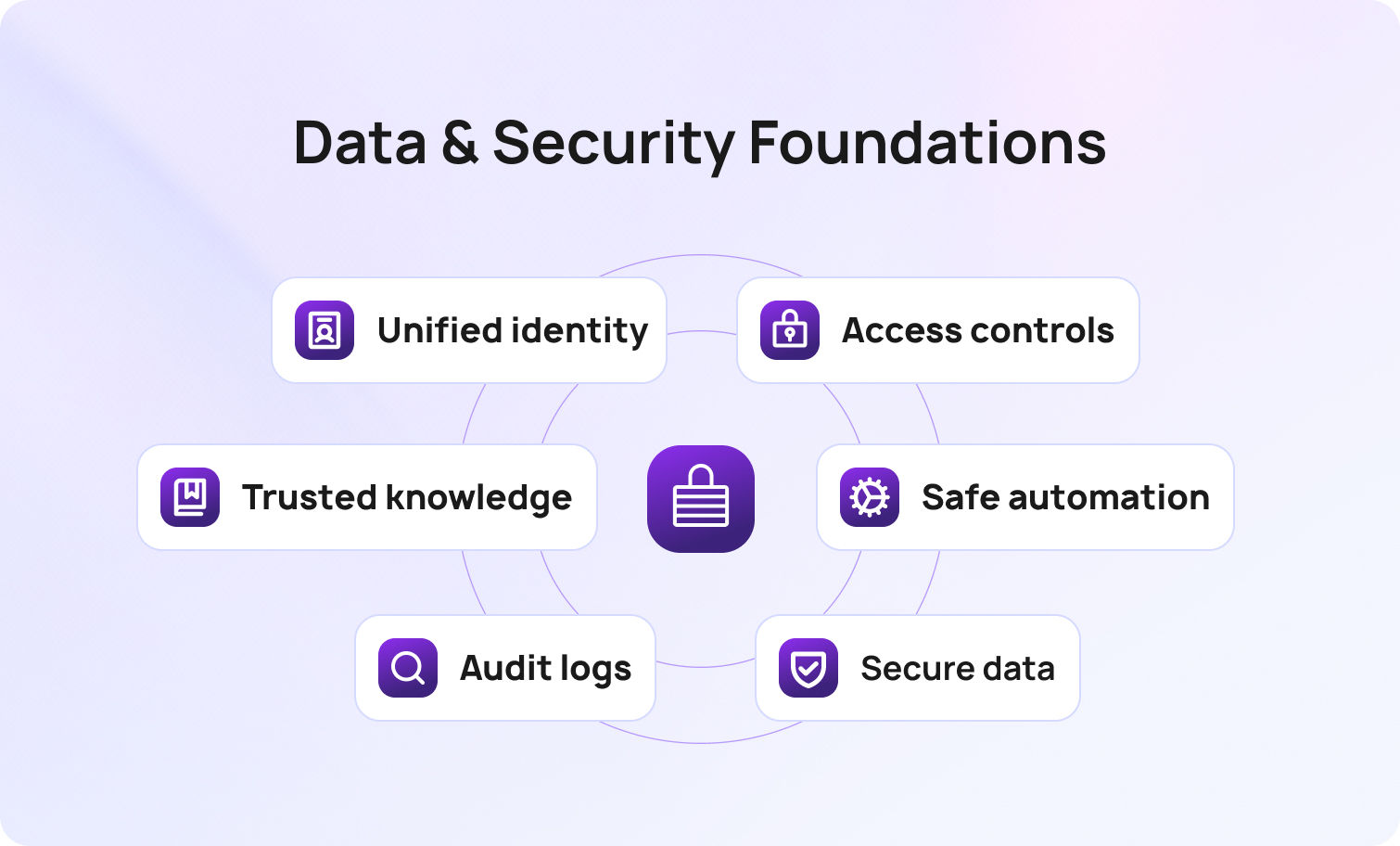
Data and security are the green light, not the epilogue. When identities are stitched across channels, assistants and agents always know who they’re helping and what the customer is entitled to. That single view keeps authentication simple, makes routing smarter, and allows any reply, whether automated or human, to accurately reflect the real account state, rather than relying on guesswork.
Robust data and security practices are crucial for maintaining customer trust, particularly when handling sensitive information, such as account balances.
A governed knowledge base is the second pillar. Clear ownership, versioning, and approvals mean answers are consistent, auditable, and safe to reuse. With a living KB in place, you can start in Assist (AI drafts), move to Approve (AI proposes, humans confirm), and only then automate tightly bound steps without debating content quality every time.
Finally, access and audit controls remove friction from change. Role-based permissions, MFA, session policies, and exportable audit logs let security sign off once and monitor continuously. Options like IP allowlists and data-location choices keep regulated teams comfortable, so you can iterate on flows, prompts, and articles without reopening a full risk review.
Together, these foundations make early wins shippable and keep the Assist → Approve → Automate progression moving, so we can apply them now in the 14 use cases.
14 Use Cases That Turn AI Implementation Challenges Into Results
Each use case addresses a specific blocker and demonstrates how AI is used to complement, rather than replace, human customer service. By integrating AI thoughtfully, organizations can ensure the human touch is preserved for complex or sensitive interactions, maintaining empathy and trust. To keep the narrative connected, each play highlights how it advances the next step in the journey.
1) Resolve Routine Inquiries With Virtual Agents That Escalate Cleanly
The implementation challenge is not simply “we have lots of routine contacts”; it’s that virtual agents, designed to handle a wide range of customer inquiries and routine tasks, are often rolled out without a clear intent taxonomy, confidence thresholds, authentication rules, and escalation design.
Design the assistant around a governed intent library with per-intent guardrails, including minimum confidence, required data, allowable actions, and a clear line for when to hand off. Add step-up authentication where the answer touches identity or money, and package escalation with transcript, steps completed, and customer context.
Results include fast resolutions on low-risk intents, efficient handling of routine tasks and customer inquiries, lower average handle times, and higher CSAT scores, with clean handoffs for any ambiguous issues. BlueTweak supports this with voice/chat bots grounded in a governed KB and with structured escalations into the agent desktop.
2) Accelerate Response Quality With Agent Assist Instead Of Replacement
The AI challenge is ungrounded drafting; models generate plausible text that drifts from policy or tone, creating review churn and brand risk.
Fix it by implementing retrieval-augmented generation tied to your knowledge base and recent interaction history, then require human approval as the default operating mode. Enforce inline citations that link back to the KB and provide style controls to ensure drafts match the voice. Log accept/ edit/ reject to improve prompts and content.
Results are shorter time to first response, fewer errors, and a sustained lift in first-contact resolution because agents make decisions, not first drafts. Human agents are essential for reviewing and personalizing responses to ensure customer needs are met, especially in nuanced or sensitive situations. BlueTweak’s proposed reply follows the “AI writes, agent approves” pattern with citations and KB grounding.
3) Provide Multilingual Support Without a Hiring Surge
The AI challenge is translation fidelity and terminology control, rolling out multilingual models without glossaries, domain terms, or guardrails risks misinforming customers and breaching policy.
Stand up language detection at intake, apply neural translation with term glossaries and do-not-translate lists, and route sensitive/regulatory topics to specialists in the target language. Keep humans in the loop on edge cases and feed corrections back into the glossary.
Results include 24/7 coverage in customers’ preferred languages, stable costs, and improved SLA adherence across time zones. BlueTweak delivers multilingual voice and text with domain terminology controls and specialist routing where required. By providing support in multiple languages and delivering personalized service, organizations can meet diverse customer needs and enhance the overall customer experience.
4) Classify and Route With Context, Not Guesswork
The AI challenge is a cold start for routing models without labeled data and a current skills inventory; intent classifiers can’t reliably put work in the correct queue.
Bootstrap labels from historical tickets, define a living skills matrix (who handles what, where, and when), and use human feedback loops to correct misroutes. Add priority features (customer value, deadlines, churn risk) to inform routing decisions.
Results include fewer reassignments, shorter waits, and cleaner workloads, which make every downstream AI assist more accurate. BlueTweak provides automated tagging, skills-based routing, and queue controls to operationalize this.
5) Protect Trust By Prioritizing Negative Sentiment in Real Time
The AI challenge is a signal without action. By using sentiment analysis to prioritize responses and tailor interactions, organizations can focus on enhancing customer satisfaction. However, many haven’t wired these insights into routing, alerting, or coaching, so risk hides in volume.
Connect real-time sentiment to policy: thresholds that trigger lane changes to senior agents, supervisor alerts when spikes occur, and post-incident reviews that feed the KB. Pair with reason codes so you can separate “angry” from “at risk.”
Results are faster saves on high-risk contacts, fewer public escalations, and a tighter loop between detection and prevention. BlueTweak links sentiment signals to routing and analytics, enabling leaders to act now and learn later.
6) Run a Living Knowledge Base That Serves Customers and Agents
The AI challenge is hallucination from stale or fragmented knowledge. Assistants and agents answer from different sources, or sensitive content lacks ownership and approvals.
Treat the KB like a product: clearly define owners, versioning, review cadence, sensitivity flags, and measure its usefulness. Serve both bots and agents from the same KB via retrieval so every draft and bot reply cites controlled content.
Results include consistent answers, safe deflection, and FCR gains that compound because fixes are implemented in one place. BlueTweak’s hierarchy, versioning, approvals, and KB-driven replies ensure alignment between bots and Proposed Reply.
7) Staff the Operation With Workforce Management That Matches Demand
The AI challenge is mismatched staffing after deflection. As automation absorbs volume and changes the mix (from shorter, simpler contacts to longer, more complex ones), schedules don’t adapt, and SLAs wobble.
Close the loop between AI signals and WFM. Forecast with intent and deflection rates, schedule to expected concurrency, and watch adherence alongside live queue health. Reallocate in-day based on spikes flagged by routing and sentiment.
Results are steadier SLAs, higher productivity, and clear headroom to expand automation safely. BlueTweak’s WFM integrates analytics and routing, so capacity tracks the work that AI actually reshapes.
8) Create One Analytics Truth Across Brands, Channels, and Sites
The AI challenge is attribution. Pilots “feel good,” but fragmented metrics make it impossible to prove deflection, FCR, or AHT moved because of AI.
Standardize definitions across channels and brands (CSAT, FCR, backlog, handle time, deflection), instrument assist approvals and bot success/failure, and run control groups or A/Bs where feasible. Combine live and historical views in a single tool that operators use on a daily basis.
Results are credible ROI stories and fast iteration because teams act on shared facts, not stitched exports. BlueTweak provides pre-built dashboards and custom reports, allowing for the AI impact to be visible and comparable. Unified analytics delivers insights into every customer interaction.
9) Enforce Data Privacy Controls That Match Enterprise Expectations
The AI challenge is security review gridlock; unclear access, retention, or auditability stalls every use case.
Adopt a privacy-by-design approach: implement encryption in transit/at rest, use RBAC with least privilege for agents/bots/admins, enforce MFA and session policies, maintain exportable audit logs, establish IP allowlists, and provide data-location options. Document data maps and retention so risk can be approved once and monitored continuously.
Results are faster deployments, fewer incidents, and a safe runway to iterate prompts/intents without reopening risk debates. BlueTweak exposes these controls in admin and infra settings; ISO progress is documented.
10) Integrate AI With Existing Systems To Avoid Swivel Chair Work
The AI challenge is context-free assistance. Without CRM, commerce, billing, or order data, AI gives plausible but incomplete guidance.
Start with a minimum viable integration set tied to top intents (identity/entitlements from CRM, orders/payments from commerce, shipping from warehouse systems). Read before you write: prefer retrieval and side-effects that can be audited.
Results include fewer tabs and rekeys, higher-quality resolution, and a wider envelope for safe automation, as steps can be verified and validated. Selecting the right AI solution and integrating it into a comprehensive AI system ensures that AI solutions deliver accurate and relevant support, thereby improving both customer experience and operational efficiency. BlueTweak offers APIs, SaaS connectors, and per-flow feature toggles to meet governance.
11) Transcribe and Summarize Calls To Capture Institutional Knowledge
The AI challenge is no training substrate. In call centers, the richest context lives in voice, but without transcripts and summaries of past interactions, models and KBs learn slowly and inconsistently.
Capture accurate transcripts with speaker separation and timestamps, then generate concise summaries (including issue, actions, outcome, and follow-ups) that link to tickets and KB articles. Index them so search and retrieval can use the content immediately.
Results include improved coaching, fewer repeat contacts on the same issue, and a faster path to safe automation, as policy guidance is available in text format. BlueTweak includes call transcription and AI summaries wired to tickets and KB.
12) Detect Trends and Act Early With Predictive Analytics
The AI challenge is models that predict but don’t operationalize; anomaly flags exist, but nothing changes in production.
Convert predictions into playbooks: when returns spike, publish banners and guided flows; when payment failures increase, send targeted replies; when region-specific delays occur, adjust capacity. Track outcomes and feed them back into models.
Results are stabilized queues, protected brand sentiment, and time for teams to plan instead of firefighting. BlueTweak’s live dashboards, trend reports, and predictive routing connect detection to action.
13) Design Human Handoffs As Part of the Plan, Not an afterthought
The AI challenge is context loss at the boundary. Automation hands off late or thin, forcing customers to repeat themselves and agents to rediscover facts.
Define escalation criteria early to ensure that complex issues and complex queries are routed to a human agent for resolution. Package a comprehensive payload, including the transcript, steps taken, authentication state, KB citations, and next-best actions. In the agent UI, surface that context and a grounded suggested reply so resolution continues, rather than restarting.
Results include shorter journeys, higher post-handoff CSAT, and the confidence to expand automation, as it never leaves the customer stranded. BBlueTweak’s workspace centers on Suggested Reply, unified histories, and KB context.
14) Treat AI As An Ongoing Process With Governance and Iteration
The AI challenge is model and content drift; prompts change, intents sprawl, and articles age, eroding accuracy.
Establish ownership (RACI), change control for prompts/intents/articles, and an evaluation harness with real conversation snippets. Run a quarterly refresh with rollback plans; publish quality dashboards (accuracy, citation rate, hallucination flags, policy exceptions).
Results are steady quality, quick recovery from regressions, and compounding gains across channels and brands. Ongoing governance and iteration also foster customer loyalty and enable more personalized customer interactions as the system adapts to evolving needs. BlueTweak’s implementation playbook codifies workflows, approvals, and configuration patterns for safe iteration.
H3: What These Use Cases Collectively Deliver
The set covers inbound efficiency, customer satisfaction, and operational transparency. Virtual assistants and AI-powered systems automate repetitive tasks, enabling more efficient solutions for common queries and improved execution of customer service tasks. Agents handle exceptions with better context and fewer tabs. Leaders steer with unified data instead of reconciling disconnected reports. Collectively, these use cases deliver improved customer experiences, high-quality service, and efficient solutions while automating and enhancing customer service tasks. Reported outcomes include lower ticket volume, higher FCR, and a substantial cost and ROI profile when implemented on a consolidated stack.
Implementation Blueprint For Leaders
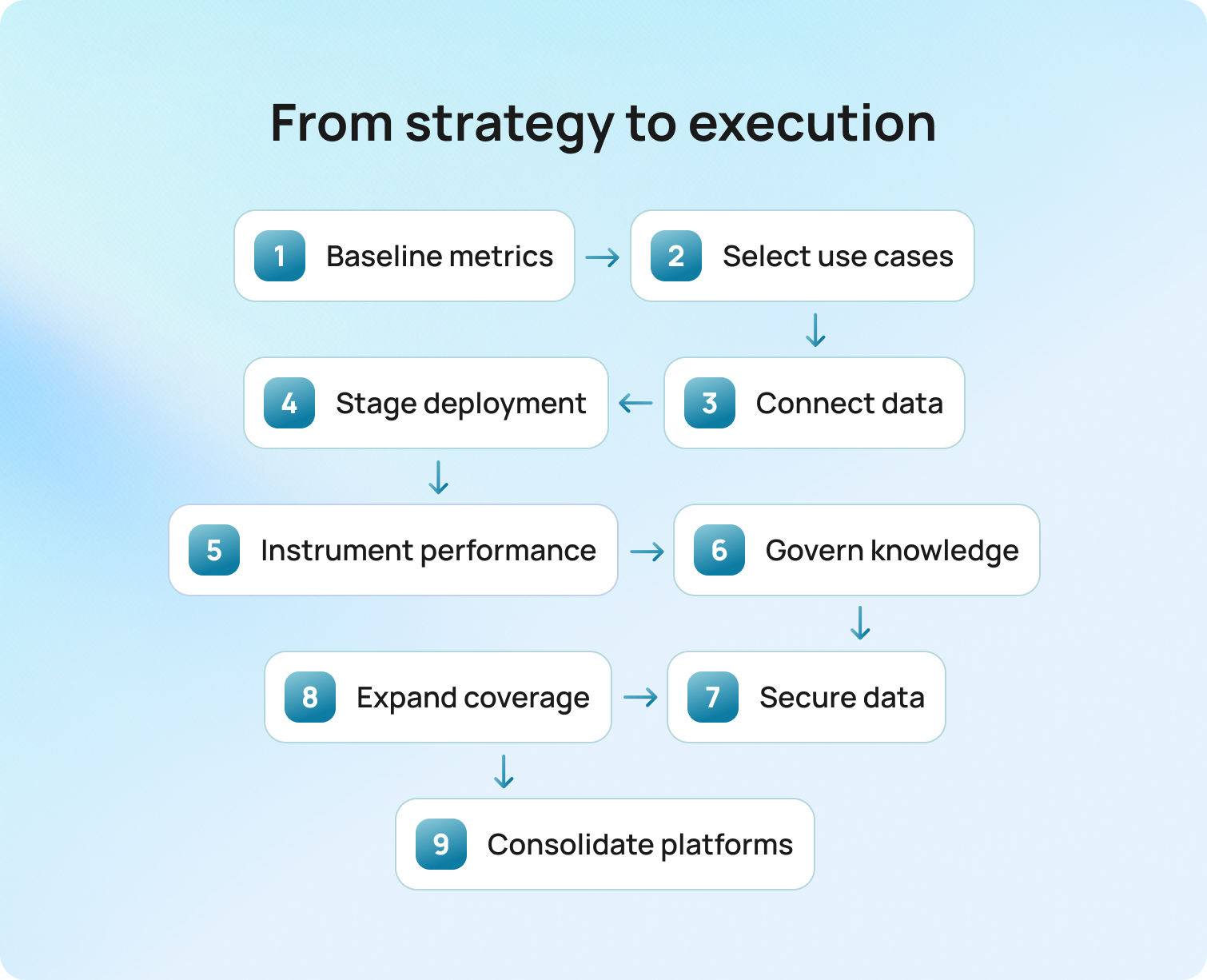
A concise blueprint helps programs move from presentations to production. Careful planning is essential for implementing AI and leveraging AI technology to meet the needs of customers in modern support environments. The steps below address buyer concerns, including integration and security.
1) Frame the problem using operational baselines. Start with three metrics, one for each queue and channel. CSAT, FCR, and average handle time identify the first candidates for change. Teams with multi-brand operations incorporate cross-project normalization into their view for consistent comparisons.
2) Choose use cases with clear success criteria. Target high volume and low ambiguity first. Password resets, order status, warranty checks, and billing lookups meet this test under most policies. Design guardrails for identity, payments, and any regulated topics that require human involvement.
3) Connect data sources before releasing assistants. A short integration list goes a long way. CRM for identity and entitlements, commerce for orders and payments, and warehouse for shipping all feed relevant responses. BlueTweak’s API and integration approach are designed to simplify this step.
4) Deploy in assist mode first, then approve, then automate. Assist mode de-risks the rollout and proves value quickly. Approve mode teaches policies and exposes content gaps; only then should low-risk flows move to full automation (e.g., after-hours). Only then should low-risk flows move to full automation for after-hours coverage. The assistance in approving the auto sequence aligns with BlueTweak’s messaging and mitigates risk.
5) Instrument everything. Dashboards and custom reports make progress visible and help isolate regressions. Cross-brand analytics keep vendors and internal teams aligned. BlueTweak surfaces these views natively for live and historical analysis.
6) Govern content and prompts like a product. Assign owners to KB sections. Require approvals for sensitive changes. Track usage, deflection, and article helpfulness, then retire or merge weak entries. KB governance features in BlueTweak, including versioning and approvals, support this discipline.
7) Formalize data privacy controls and audits. Restrict access to sensitive customer data using role-based permissions. Enforce MFA and session policies. Retain audit logs and export them to the SIEM of choice. BlueTweak exposes these control points for administrators and security teams.
8) Expand to multilingual coverage and workforce changes. Introduce multilingual support in the top two languages first, then scale it up. Adjust schedules and staffing as deflection and concurrency improve. WFM features and language tools in BlueTweak help match capacity to demand.
9) Consolidate platforms to lock in gains. Retire point tools that duplicate functions, and move reporting into a single analytics layer. Consolidation reduces costs and provides AI with a stable foundation with fewer moving parts. BlueTweak’s all-in-one footprint is structured for this outcome.
Measurement and Proof
Executives expect proof that automation improves both the customer experience and the P&L. The list below summarizes the typical movements when programs follow the blueprint.
- Ticket deflection. Significant reductions occur when self-service and virtual assistants resolve repetitive tasks. BlueTweak benchmarks cite significant decreases in ticket volume.
- First contact resolution. Gains follow when assistants and agents draw from the same knowledge base and context.
- Average handle time. Reduction driven by Proposed Reply, classification, and clean routing.
- Operational efficiency. Improved when WFM aligns capacity with demand and AI absorbs repetitive tasks.
Cost and ROI. Documented improvements with a consolidated stack and AI-driven deflection.
Operating Model and Governance
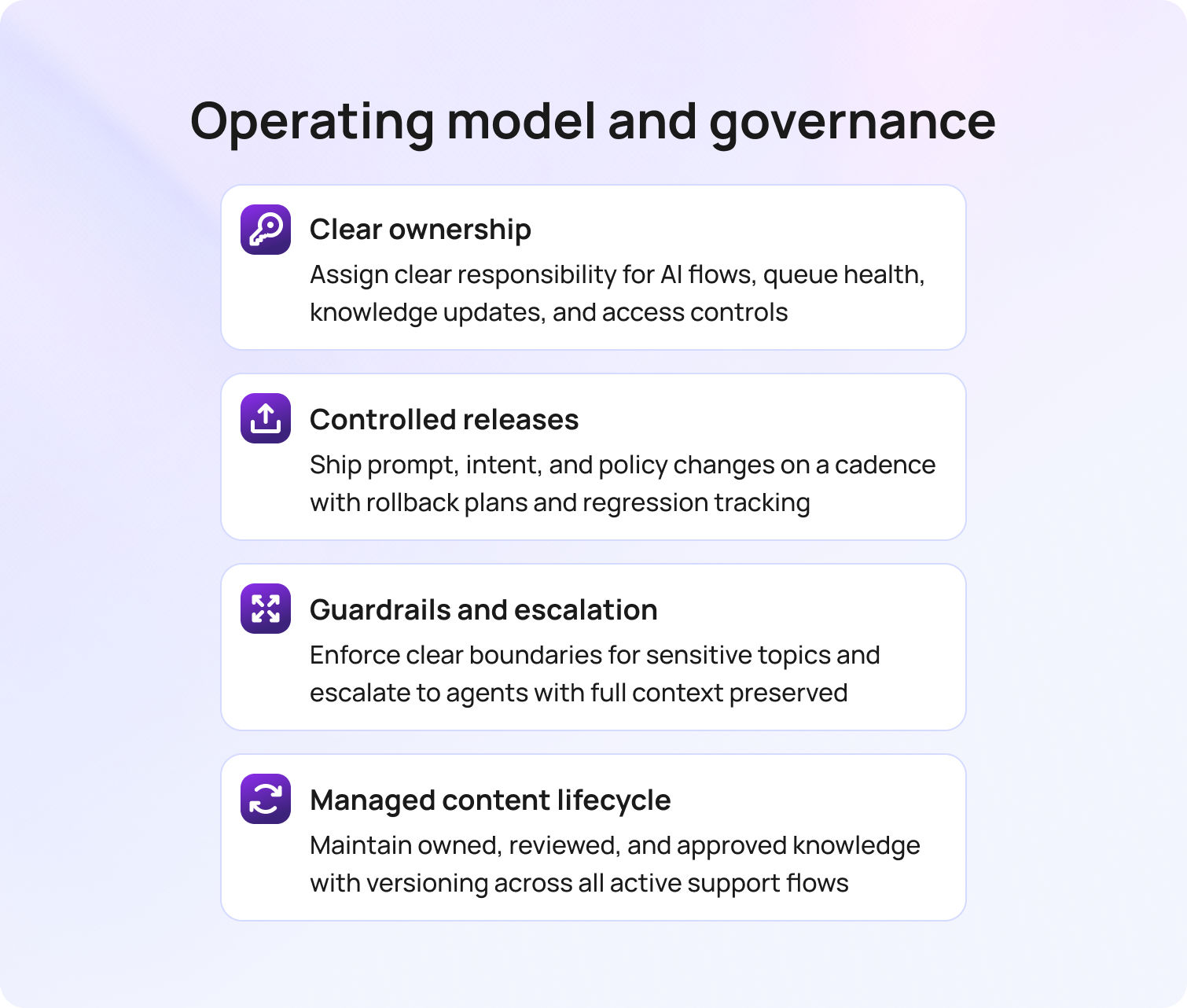
AI in customer service performs best when operating under an explicit model.
Roles and responsibility. Product operations owns AI flows and prompts. Support operations owns queue health and WFM. Knowledge owners maintain articles and approve changes. Security owns access policies and audits. BlueTweak exposes the control points needed by each group through administration and configuration features. Customer service leaders leverage insights into customer behavior and preferences to inform governance and operational decisions, ensuring that AI-driven support aligns with evolving customer needs.
Release management. Changes to intents, prompts, and policies occur on a weekly basis, with rollback plans in place. Analytics track regressions in deflection, handle time, and CSAT. Issues trigger reviews that include article updates or routing adjustments.
Guardrails and escalation. Topics that require human judgment, such as identity, refunds, and compliance, always escalate. Assistants explain limits and transfer with context. Agents receive transcripts and KB citations, and follow best practices to preserve continuity.
Content lifecycle. KB entries include owners, review dates, and links to affected flows. Versioning and approvals are enforced for sensitive domains. BlueTweak provides KB version management and approvals to support this lifecycle.
Risk Management and Data Privacy
AI programs carry reputational and regulatory risk. A minimal control set fits most sectors.
- Encryption in transit and at rest for all records that include customer data.
- Role-based permissions and the principle of least privilege are applied to agents, bots, and administrators.
- MFA and session policies with periodic review.
- Audit logs are exported to the central SIEM for monitoring and forensics.
- IP range restrictions and data location selections, as required by policy.
- Vendor risk management with clear data maps and retention policies.
BlueTweak configuration aligns with these expectations and surfaces administrative controls for each item above. ISO progress appears in the security section of the positioning materials.
Budgeting and Time To Value
The strongest business cases tie deflection and handle time savings to a single platform model. Consolidating tickets, bots, knowledge, analytics, and WFM simplifies vendor management and reduces failure points, which shortens time to value.
BlueTweak offers transparent pricing at €65 per agent per month for the entire stack, emphasizing a fast time to value in mid-market and enterprise contexts. Outcome evidence includes ticket reduction, efficiency gains, and higher FCR.
Conclusion: From Slideware to Standard Practice
AI in customer service reaches its full potential when it complements people, rather than trying to replace them. The 14 use cases above provide support leaders with a concrete playbook that addresses AI customer service implementation challenges through a balanced mix of automation and human support. A consolidated platform simplifies the integration of AI with existing systems, protects sensitive customer data, and enables operations to measure progress with shared dashboards.
BlueTweak was built for this reality, covering ticketing, voice, chat, bots, analytics, knowledge, and WFM in one stack, with multilingual capability and enterprise controls. Documented outcomes include substantial reductions in ticket volume, higher FCR, and a clear ROI profile.
Schedule a BlueTweak demo to map use cases to current volumes, languages, and channels, and to see how governance and analytics anchor the rollout.

25 Best Intercom Alternatives & Competitors in 2026
Customer expectations have changed dramatically over the last few years. Today's support teams are handling voice, email, SMS, WhatsApp, social messaging, and AI-assisted conversations simultaneously.
While Intercom remains one of the best-known customer messaging platforms, many businesses eventually hit its limits. Usage-based AI pricing, limited native voice functionality, and growing integration costs often make it difficult to scale efficiently.
If you're comparing Intercom alternatives, this guide reviews 25 leading platforms across pricing, AI capabilities, omnichannel support, workforce management, and long-term value. For mid-market teams looking to consolidate multiple tools into one platform, BlueTweak emerges as one of the strongest all-in-one options.
Why Businesses Are Looking for Intercom Alternatives
Intercom pioneered conversational support and remains the go-to choice for many B2B SaaS companies prioritizing in-app messaging and proactive customer engagement. Its Messenger widget feels native in web applications, Fin AI Agent delivers autonomous resolution, and product tours help onboard users without creating support tickets.
However, several pain points consistently drive teams to evaluate better Intercom alternatives:
- Usage-based unpredictability
- No native voice support
- Resolution-based AI pricing
- Limited for contact centers
- Expensive at scale
This guide compares alternatives across omnichannel depth, native WFM/QA, multilingual AI, pricing transparency, and total cost to operate. We've included options for every segment, from affordable email-first helpdesks to enterprise CCaaS platforms, with BlueTweak leading for mid-market teams that need everything in one subscription.
Intercom Alternatives at a Glance
With dozens of customer support platforms available, narrowing your shortlist can be overwhelming. The table below highlights our top five Intercom alternatives based on features, pricing, AI capabilities, and overall value for growing support teams.
If you're looking for a quick comparison, this is a great place to start. For a more detailed evaluation (including strengths, limitations, pricing, and best-fit use cases for all 25 vendors) continue to the full breakdown below.
Every platform excels in different areas. While this comparison provides a high-level overview, the right choice ultimately depends on your support channels, team size, AI requirements, and budget. Below, we take a closer look at all 25 Intercom alternatives, including detailed feature comparisons, pricing, pros and cons, and the types of businesses each platform is best suited for.
Looking for an easier way to replace Intercom?
If you're comparing platforms because costs are rising or you're juggling multiple customer support tools, BlueTweak brings voice, chat, email, AI, workforce management, and quality assurance together in one platform with transparent pricing. Book a personalised demo to see how it works for your team.
25 Best Intercom Alternatives to Consider in 2026
Find the right fit fast. We've ranked 25 Intercom alternatives by channels, AI, voice, and price so you can shortlist in minutes.
1. BlueTweak: Best for unified omnichannel customer support

BlueTweak is the top Intercom alternative for 20–100 agent teams that need unified omnichannel support, native voice, and multilingual AI, without add-on sprawl or usage-based surprises. Built on 20+ years of BPO operations, it offers predictable, per-seat pricing and a comprehensive CX OS (tickets, voice, chat, bots, WFM, analytics, and KB) in one stack.
Best fit
BlueTweak is ideal for businesses with 20-100 support agents that want to replace multiple customer service tools with one AI-powered platform. It combines voice, chat, email, social messaging, workforce management, quality assurance, analytics, and multilingual AI in a single subscription.
Features
- Unified omnichannel ticketing:Email,chat, voice,social, SMS with a single history and queueing model
- AI-powered service: Voicebot, chatbot, suggested replies ticket summaries, sentiment/routing
- Multilingual & translation: On-the-fly translation across voice and text; documented multi-language coverage
- Workforce & quality management: Forecasting, scheduling, adherence, scoring/coaching
- Knowledge & self-service: Knowledge base for agents and customer help center
- Analytics & SLA tracking: Real-time dashboards and custom reports
- Enterprise-grade security: Role-based permissions, MFA, audit logs; ISO certification in progress
Who Uses It
BlueTweak serves BPO providers running multi-client operations, as well as e-commerce, aero, travel, and tech companies with 20-100 agent teams.
"Most organizations don't replace Intercom because chat isn't working - they replace it because everything around chat has become too complex. As support expands across voice, messaging apps, AI, workforce management, and quality assurance, managing multiple disconnected tools quickly becomes expensive and difficult to scale. A unified platform gives teams better visibility, more consistent customer experiences, and far greater control over operational costs." — Radu Dumitrescu, Head of Automation & Digital Transformation, BlueTweak
Pros
- All-in-one simplicity: No separate subscriptions for WFM, QA, or voice
- Predictable pricing: Seat-based model avoids usage swings
- Multilingual AI at core: Real-time translation across 50+ languages for voice and text
- BPO-native architecture: Manages multiple brands/clients from one instance
- Native voice included: Voicebot with NLU, KB-grounded answers, seamless agent handoff
- Fast implementation: Most teams go live in 2-4 weeks with hands-on support
Cons
- More miniature marketplace than Intercom's extensive integration ecosystem
- Brand awareness is lower than established players
- No free tier; requires demo and sales conversation
BlueTweak in Action
BlueTweak's approach has already delivered measurable results for large-scale customer service operations. In a global BPO environment, Conectys used BlueTweak to consolidate customer support across multiple brands and channels within a single platform.
As a result, the organization reduced average resolution times by 25%, improved reporting efficiency by 40%, and increased customer satisfaction by 35%. By bringing omnichannel communications, AI-powered automation, workforce management, and analytics together in one solution, Conectys simplified day-to-day operations while giving agents faster access to the information they needed to deliver consistent customer experiences.
Pricing
BlueTweak starts from €65 per agent/month, bringing together omnichannel ticketing, native voice, AI-powered automation, workforce management, quality assurance, analytics, knowledge management, and API access in a single subscription.
Unlike many competing platforms, essential capabilities aren't split across multiple add-ons or charged on a per-resolution basis, giving growing support teams greater pricing transparency and more predictable monthly costs as they scale.
Want to understand the potential savings of consolidating multiple support tools into one platform? Try the BlueTweak ROI Calculator to estimate your return before making the switch.
2. Zendesk: Best for enterprise support ecosystems
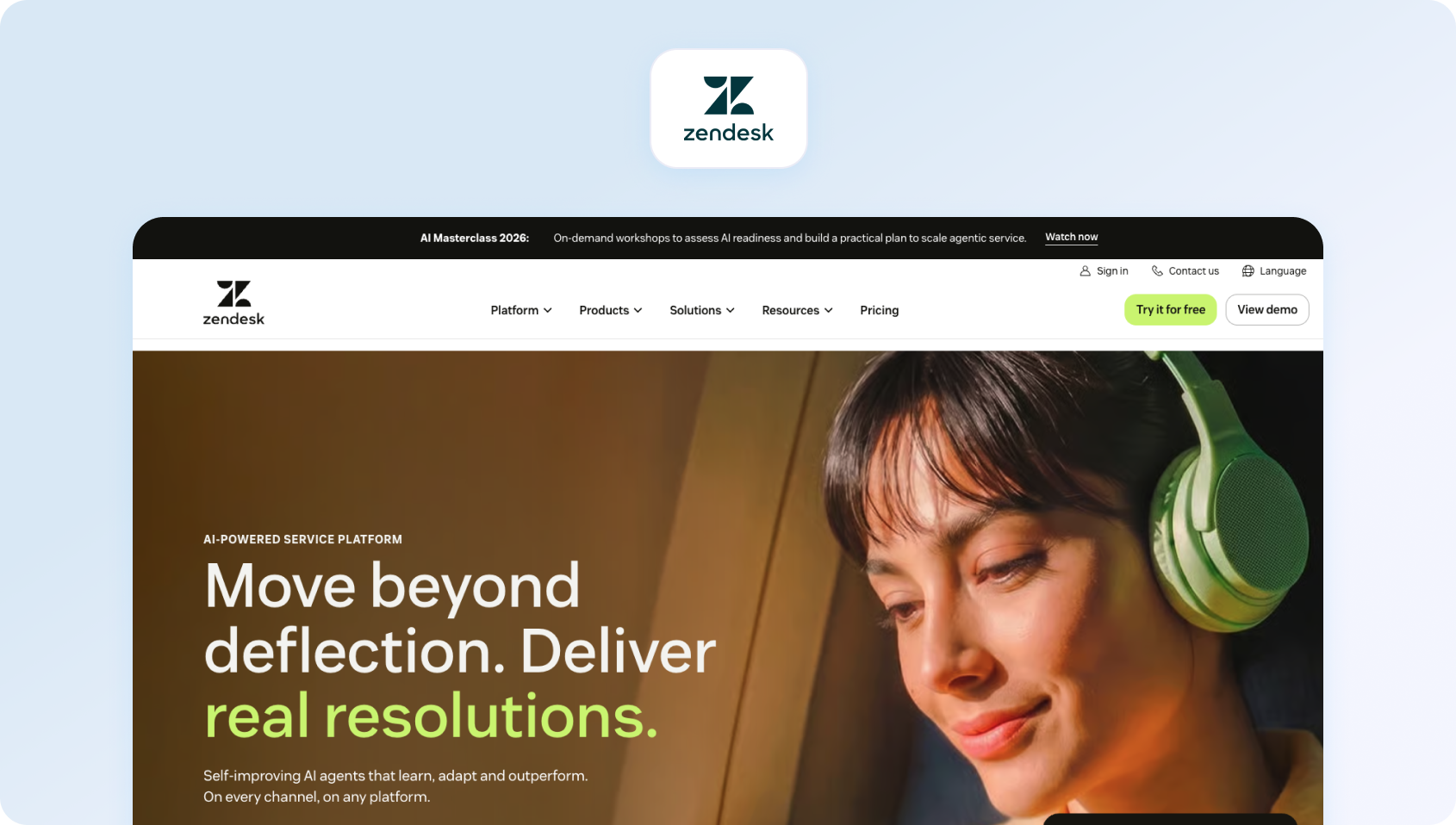
Zendesk offers mature ticketing, an extensive marketplace (with over 1,500 integrations), and comprehensive feature coverage. It's an Intercom alternative for teams prioritizing ecosystem depth over conversational UX.
Best fit
Zendesk is best suited to organizations that need a mature help desk with extensive third-party integrations. It's a strong option for businesses already invested in a large software ecosystem and willing to pay for additional functionality.
Features
- Omnichannel: Email, chat, voice (Talk via Twilio), social, messaging
- AI: Answer Bot, workflow automation, intent detection
- Voice: Zendesk Talk with call routing and recording
- Marketplace: 1,500+ pre-built integrations
- Analytics: Explore with customizable dashboards
Who Uses It
SMBs to enterprises across e-commerce, SaaS, retail, and financial services.
Pros
- Mature ecosystem with an extensive app marketplace
- Familiar UI for many teams
- Strong integration library
- Enterprise-grade compliance options
Cons
- Voice is partner-dependent (Twilio), not native
- WFM and advanced AI are gated behind enterprise tiers
- TCO climbs quickly with add-ons
- No native voicebot—text-based Answer Bot only
Pricing
Zendesk's Suite plans start at $55/agent/month for Suite Team, rising to $89 for Suite Growth and $115 for Suite Professional (annual billing). Voice, workforce management, quality assurance, and advanced AI capabilities are priced separately, so organizations should expect the total cost to increase as additional functionality is added.
3. Freshdesk: Best for growing SMB support teams
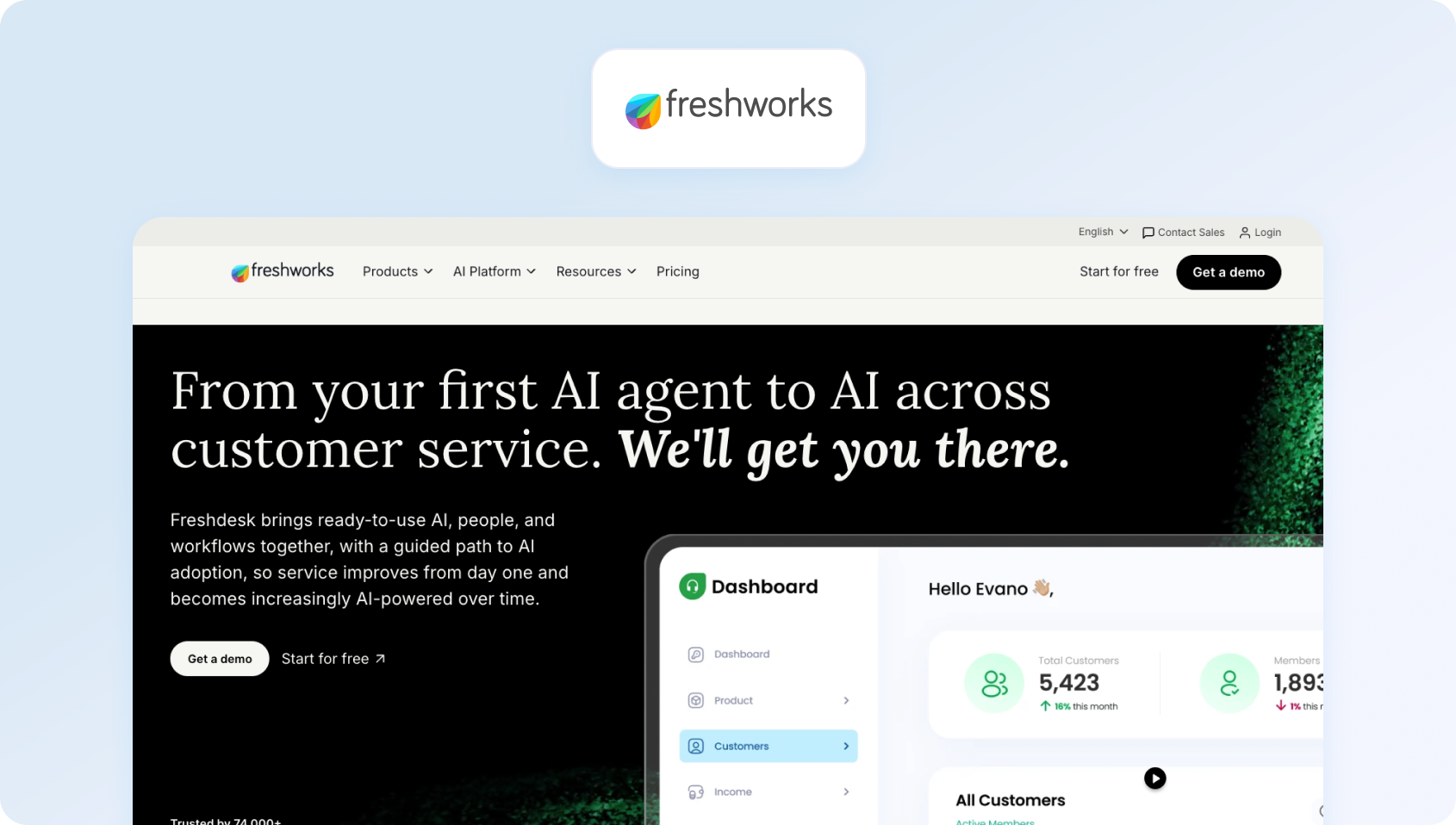
Freshdesk offers affordable ticketing with a clean user experience. It's a strong, cheaper alternative to Intercom for SMBs prioritizing simplicity over conversational features.
Best fit
Freshdesk is a good choice for small and growing businesses looking for affordable ticket management with an intuitive interface. It offers a gentle learning curve, although advanced AI and voice capabilities increase costs as teams scale.
Features
- Omnichannel: Email, chat, phone, social media
- AI: Freddy AI Copilot (drafts, summaries), Freddy AI Agent (autonomous)
- Automation: Routing, SLA management, workflows
- Knowledge Base: Customer-facing help center
Who Uses It
Startups to enterprises; strong in e-commerce, education, healthcare, and SaaS.
Pros
- Affordable entry point ($15/agent)
- Intuitive interface, clean modern UI
- Quick setup (1-2 weeks operational)
- Gamification boosts agent morale
Cons
- AI gets expensive at scale
- Voice requires a separate Freshcaller product
- No native WFM
- Per-session AI billing creates cost unpredictability
Pricing
Freshdesk offers a free plan for up to 10 agents. Paid plans start at $19/agent/month for Growth, increasing to $49 for Pro and $79 for Enterprise (billed annually). Freddy AI Copilot is available as a paid add-on from $29/agent/month, while Freddy AI Agent uses usage-based pricing from $100 per 1,000 sessions, meaning AI costs can increase alongside support volume.
4. Help Scout: Best for email-first support teams
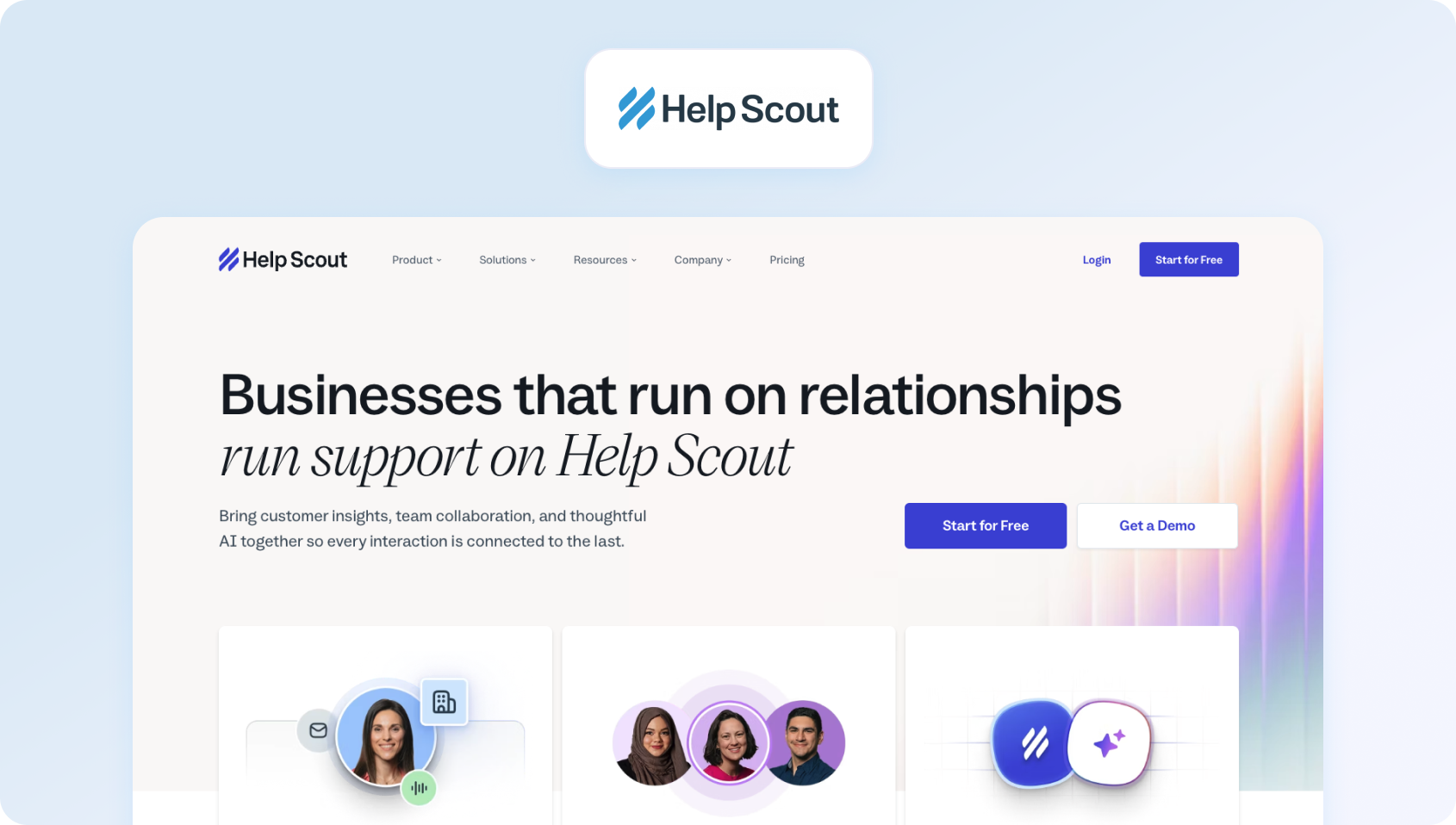
Help Scout offers email-centric support with a Gmail-like user experience. Recently shifted to a contact-based pricing model (unlimited users), making it a more affordable alternative to Intercom for collaborative teams.
Best fit
Help Scout works best for businesses where email remains the primary support channel. Its collaborative inbox and unlimited user pricing make it particularly attractive for customer success and smaller support teams.
Features
- Shared Inbox: Email-first interface
- Live Chat (Beacon): Embeddable widget
- Knowledge Base (Docs): Customer-facing articles
- AI Features: Built-in drafts, summaries, tone adjustment
- Phone & SMS: Make/receive calls and texts
Who Uses It
Small businesses, startups, B-corps; strong in e-commerce, education, and services.
Pros
- Unlimited users on all paid plans
- Contact-based pricing smooths seasonal fluctuations
- Built-in AI with no extra fees
- Great for cross-functional collaboration
Cons
- Unpredictable for growing teams (one campaign doubles bill)
- Limited voice capabilities
- AI is limited to Help Scout content only
- Expensive integrations are locked in the Plus plan
Pricing
Help Scout uses contact-based pricing rather than charging per agent. Paid plans start at $25/month for 100 contacts, increasing to $45 for 200 contacts and $75 for 300 contacts. Unlimited users are included on paid plans, but costs scale with the number of customers you support over a rolling three-month average.
5. Zoho Desk: Best for Zoho ecosystem users

Zoho Desk appeals to teams using the Zoho ecosystem (CRM, Books, Projects). Offers robust features at competitive prices as an alternative to Intercom.
Best fit
Zoho Desk is ideal for organizations already using Zoho CRM and other Zoho applications. Native integrations and competitive pricing deliver excellent value for businesses committed to the wider Zoho ecosystem.
Features
- Omnichannel: Email, phone, live chat, social, instant messaging
- Zia AI: Sentiment analysis, reply suggestions, predictive assignment
- Automation: Workflows, macros, SLA management
- Knowledge Base: Internal and customer-facing
- Community Forums: Build customer communities
Who Uses It
SMBs to enterprises; strong in tech, retail, healthcare, and financial services.
Pros
- Aggressive pricing (most affordable full-featured)
- Zoho ecosystem integration
- Robust automation rivals 3x-priced platforms
- Generous free tier (3 agents)
Cons
- Dated UI feels cluttered
- Steep learning curve, weeks of setup
- Limited third-party integrations
- AI is limited to Professional and above
Pricing
Zoho Desk offers one of the most affordable pricing structures in the customer support market. A Free plan supports up to three agents, while paid plans start at €9/agent/month for Express, increasing to €20 for Standard, €35 for Professional, and €50/agent/month for Enterprise (annual billing). Higher tiers unlock advanced automation, AI capabilities through Zia, and greater customisation, making Zoho a strong value option for growing support teams already invested in the Zoho ecosystem.
6. HubSpot Service Hub: Best for HubSpot CRM customers

HubSpot Service Hub extends the HubSpot CRM ecosystem into customer support, ideal for teams already using HubSpot for marketing or sales who want unified customer data across all touchpoints.
Best fit
HubSpot Service Hub is designed for companies already using HubSpot's marketing or sales tools. Bringing customer support into the same platform creates a single view of every customer interaction.
Features
- Shared Inbox & Ticketing: Email-based support with ticket management and team collaboration
- Knowledge Base: Customer-facing help center with search and article management
- Live Chat: Website chat widget with chatbot builder
- Customer Portal: Self-service area where customers track tickets and access resources
- Automation: Workflows, ticket routing, SLA management
- Breeze AI (Enterprise): AI-powered agent assist, summaries, and content generation
- Reporting: Standard dashboards with custom report builder
- HubSpot CRM Integration: Native connection to contacts, deals, and companies across all HubSpot hubs
Who Uses It
SMBs to mid-market companies already in the HubSpot ecosystem; strong adoption in SaaS, professional services, and B2B companies prioritizing unified customer platforms.
Pros
- Support, sales, and marketing data in one CRM
- No extra cost for robust contact management
- If you're on HubSpot, setup is straightforward
- Workflow builder rivals platforms at 2x the price
- Enterprise tier gets AI features without per-resolution fees
Cons
- Professional and Enterprise tiers cost more than standalone helpdesks
- Features lag competitors if not using the broader HubSpot ecosystem
- Lacks workforce management or quality assurance tools
- Requires a 10-seat minimum and an annual commitment for the top tier
- $1,500-$3,500 implementation charges on top of subscription
Pricing
HubSpot Service Hub includes a Free plan for up to two users. Paid plans start at $7/seat/month (annual billing) for Starter, increasing to $90/seat/month for Professional and $150/seat/month for Enterprise. Professional and Enterprise plans also require one-time onboarding fees of $1,500 and $3,500 respectively. While Service Hub includes AI credits with paid plans, additional usage may require purchasing extra HubSpot Credits, so costs can increase as AI adoption and support volumes grow.
7. Salesforce Service Cloud: Best for highly customised enterprise support
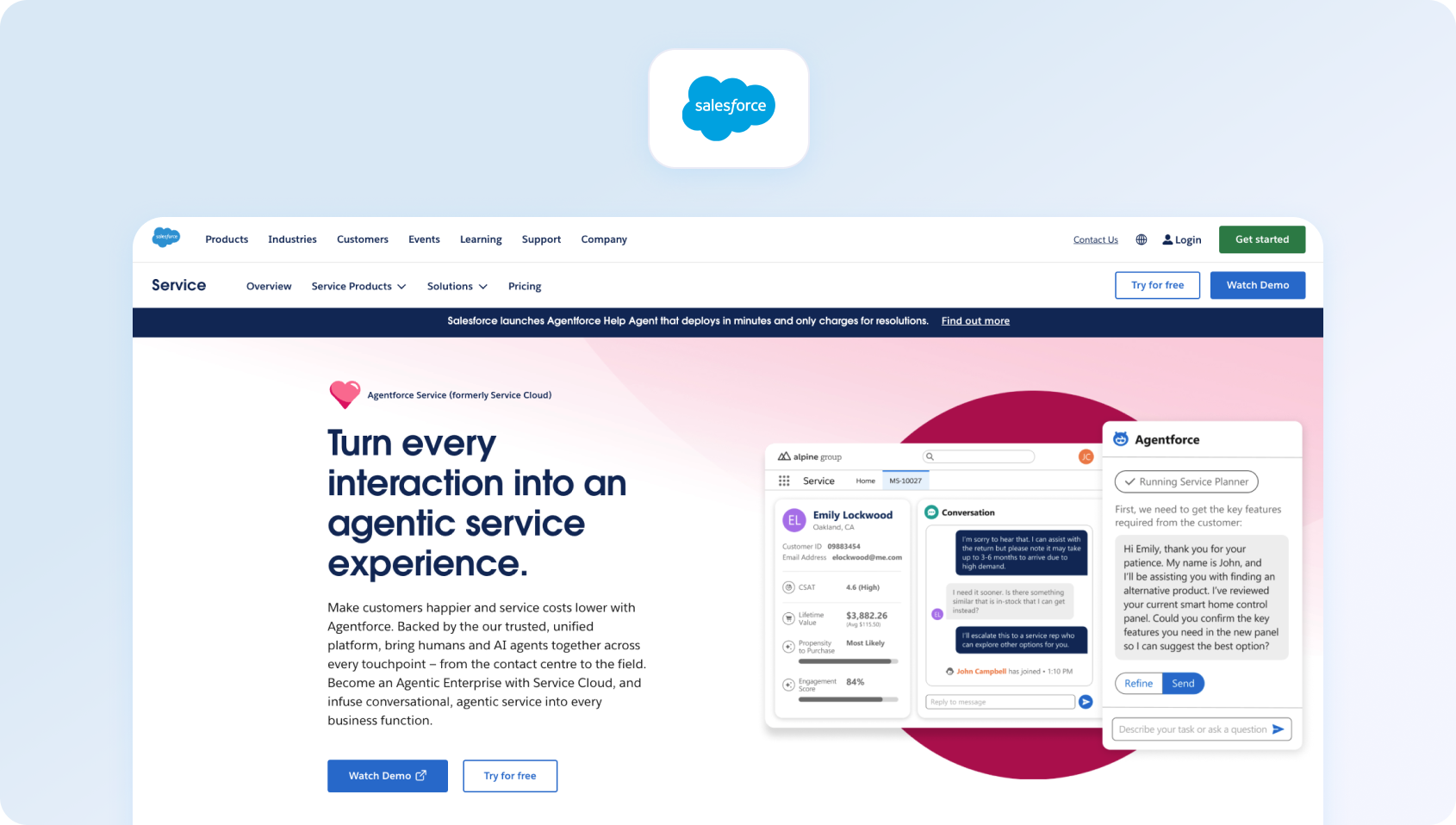
Salesforce Service Cloud is the enterprise CRM giant's service platform, offering unmatched customization for Fortune 500 companies with complex requirements and existing Salesforce investments.
Best fit
Salesforce Service Cloud is built for large enterprises with complex customer service requirements. Its extensive customisation options make it a powerful solution for organizations with dedicated Salesforce administrators.
Features
- Omnichannel: Email, chat, phone (via integration), SMS, social messaging, video
- Case Management: Advanced workflows, escalation rules, entitlements, SLAs
- Einstein AI: Predictive case routing, reply recommendations, knowledge suggestions, sentiment analysis
- Knowledge Base: Robust article management with AI-powered search
- Field Service: Schedule and dispatch field technicians (Lightning add-on)
- AppExchange: 7,000+ pre-built integrations and apps
- Industry Clouds: Pre-configured customer service solutions for healthcare, financial services, retail, and manufacturing
- Customization: Unlimited custom objects, fields, workflows via Apex code
Who Uses It
Fortune 500 enterprises in financial services, healthcare, retail, and manufacturing; companies with dedicated Salesforce admin teams and existing Salesforce ecosystem investments.
Pricing excludes implementation costs ($50K-$200K+), Einstein AI features (additional license), and specialized clouds.
Pros
- Build exactly what you need with Apex, Lightning components, and custom objects
- Native integration with Sales Cloud, Marketing Cloud, Commerce Cloud
- Security, compliance, and governance built for regulated industries
- Pre-built processes for healthcare, banking, insurance, and retail
- 7,000+ AppExchange apps extend functionality
Cons
- Among the most costly options ($80-$330/user + implementation)
- Requires 3-6 months and $50K-$200K in consulting fees
- Feature depth and complexity wasted on teams under 50 support agents
- Need dedicated admins who know the platform
- Customizations require ongoing developer resources
Pricing
Salesforce Service Cloud offers a range of plans for businesses of different sizes. Starter Suite begins at $25/user/month (up to 10 users), followed by Professional at $80/user/month, Enterprise at $165/user/month, and Unlimited at $330/user/month (annual billing). While the platform is highly scalable, organizations should also budget for implementation, customisation, and optional Einstein AI capabilities, which are licensed separately and can significantly increase the total cost of ownership.
8. LiveAgent: Best for affordable voice support

LiveAgent combines helpdesk ticketing with native phone support, offering unlimited calling at flat monthly rates—a rarity among Intercom alternatives in this price range.
Best fit
LiveAgent suits businesses that want native phone support without enterprise pricing. It's particularly attractive for SMBs where voice remains a key customer service channel.
Features
- Omnichannel Ticketing: Email, chat, phone, social media, contact forms
- Native Phone System: Built-in calling with IVR, call routing, recording, unlimited inbound calls
- Live Chat: Website chat widget with proactive invitations and canned responses
- Knowledge Base: Internal and customer-facing help articles
- Automation: Ticket rules, SLA management, time-based triggers
- Reporting: Standard dashboards tracking response times, ticket volumes, and agent performance
- Mobile Apps: iOS and Android for agents on the go
- Integrations: 200+ pre-built connectors, including Shopify, WordPress, Mailchimp
Who Uses It
E-commerce, SaaS, and SMBs needing voice support without per-minute charges; customers include Huawei, BMW, USC, and mid-sized retail brands.
Pros
- Built-in calling without a separate telephony provider
- No per-minute charges like Zendesk Talk or RingCentral
- $15-$85/agent is competitive, especially with phone included
- Most teams are operational within 1 week
- Strong option if phone support is the primary channel
Cons
- No chatbot, voicebot, or advanced automation features
- UI feels older compared to Freshdesk or Intercom
- 200 integrations versus Zendesk's 1,500+
- Translation requires manual setup, no real-time AI translation
Pricing
LiveAgent offers four straightforward pricing tiers. Plans start at $10/agent/month for Small, increasing to $19 for Medium, $33 for Large, and $46/agent/month for Enterprise (annual billing). All paid plans include native calling without per-minute charges, making LiveAgent one of the more affordable options for businesses that rely heavily on voice support.
All plans include unlimited calling; billed annually with a 10% discount
9. Front: Best for collaborative shared inboxes
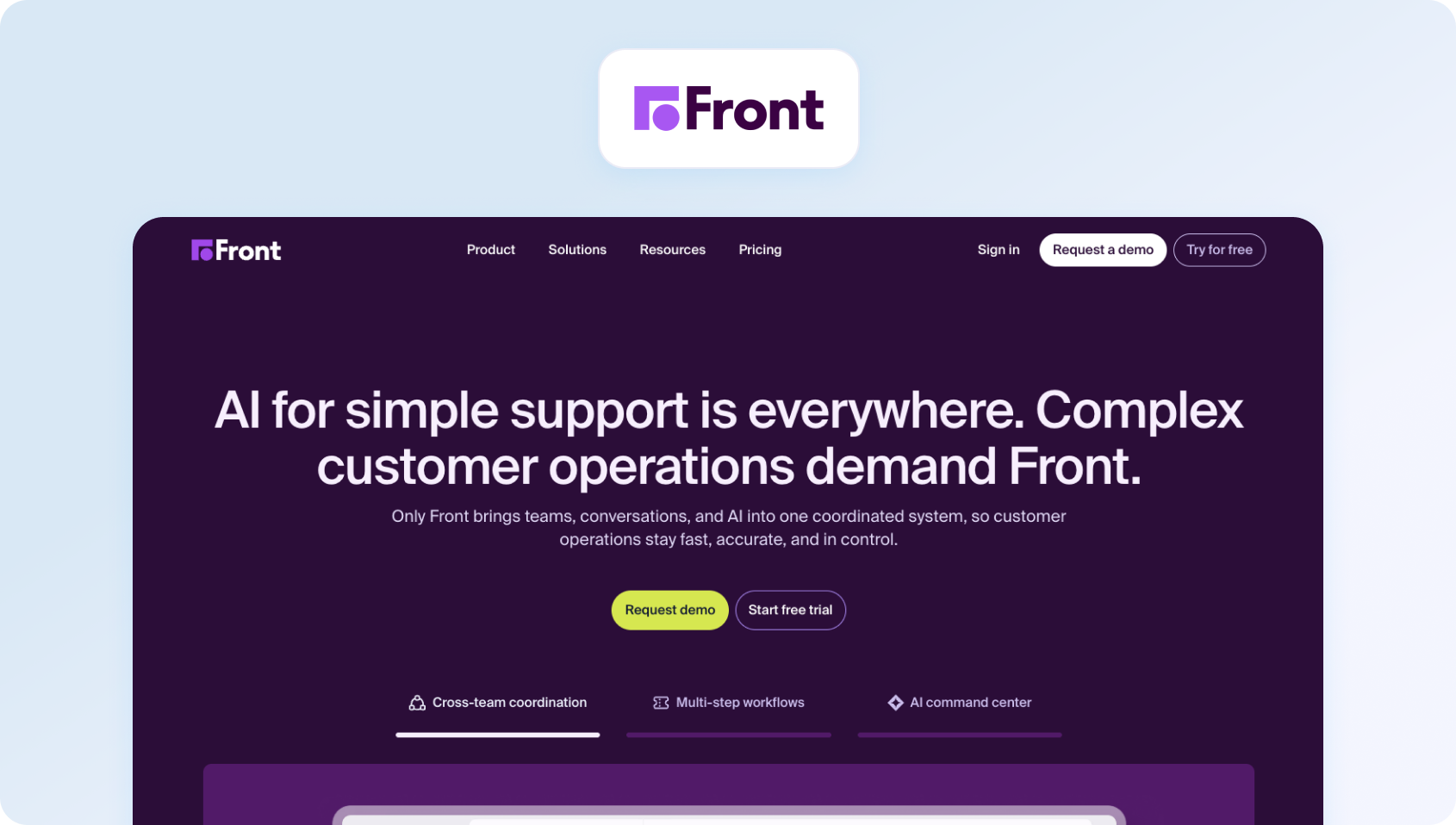
Front transforms shared email into collaborative customer communication, blending helpdesk features with team collaboration tools. It's built for teams that live in email but need more than Gmail.
Best fit
Front is ideal for teams that collaborate primarily through email. It combines shared inbox functionality with internal collaboration tools, making it popular with customer success, sales, and support teams.
Features
- Shared Inbox: Email-centric interface with assignments, internal comments, @mentions
- Multi-Channel: Email, SMS, WhatsApp, Facebook, Twitter in one inbox
- Collaboration: Real-time editing, internal discussions, @mentions, shared drafts
- Rules & Workflows: Automate support, tagging, routing, and assignments based on conditions
- Analytics: Response time tracking, team performance, workload distribution
- Integrations: Deep connectors for Salesforce, HubSpot, Asana, Slack, 100+ apps
- Templates & Snippets: Canned responses for common queries
- Mobile Apps: Full-featured iOS and Android apps
Who Uses It
Small teams (5-30 people) across sales, customer success, and support who prefer email-centric workflows; popular with agencies, consultancies, and B2B startups.
Pros
- Feels like enhanced Gmail, not a traditional ticketing system
- Multiple people can work on the same conversation simultaneously
- Beautiful interface that teams actually enjoy using
- Sales, success, and support all collaborate in one platform
- Operational within days, not weeks
Cons
- Email, SMS, and messaging only—no voice calling
- Missing ticketing fundamentals like SLA management, queues
- Basic automation, no chatbot or voicebot capabilities
- Starter's 50-conversation cap creates unpredictable costs
Pricing
Front offers four paid plans designed for collaborative customer communication. Pricing starts at $25/seat/month for Starter, increasing to $65 for Growth, and $105 for Scale. While Front's pricing is easy to understand, businesses should note that some plans include conversation limits or are designed for larger teams, meaning costs can increase as support volumes or feature requirements grow.
10. Gorgias: Best for Shopify customer support
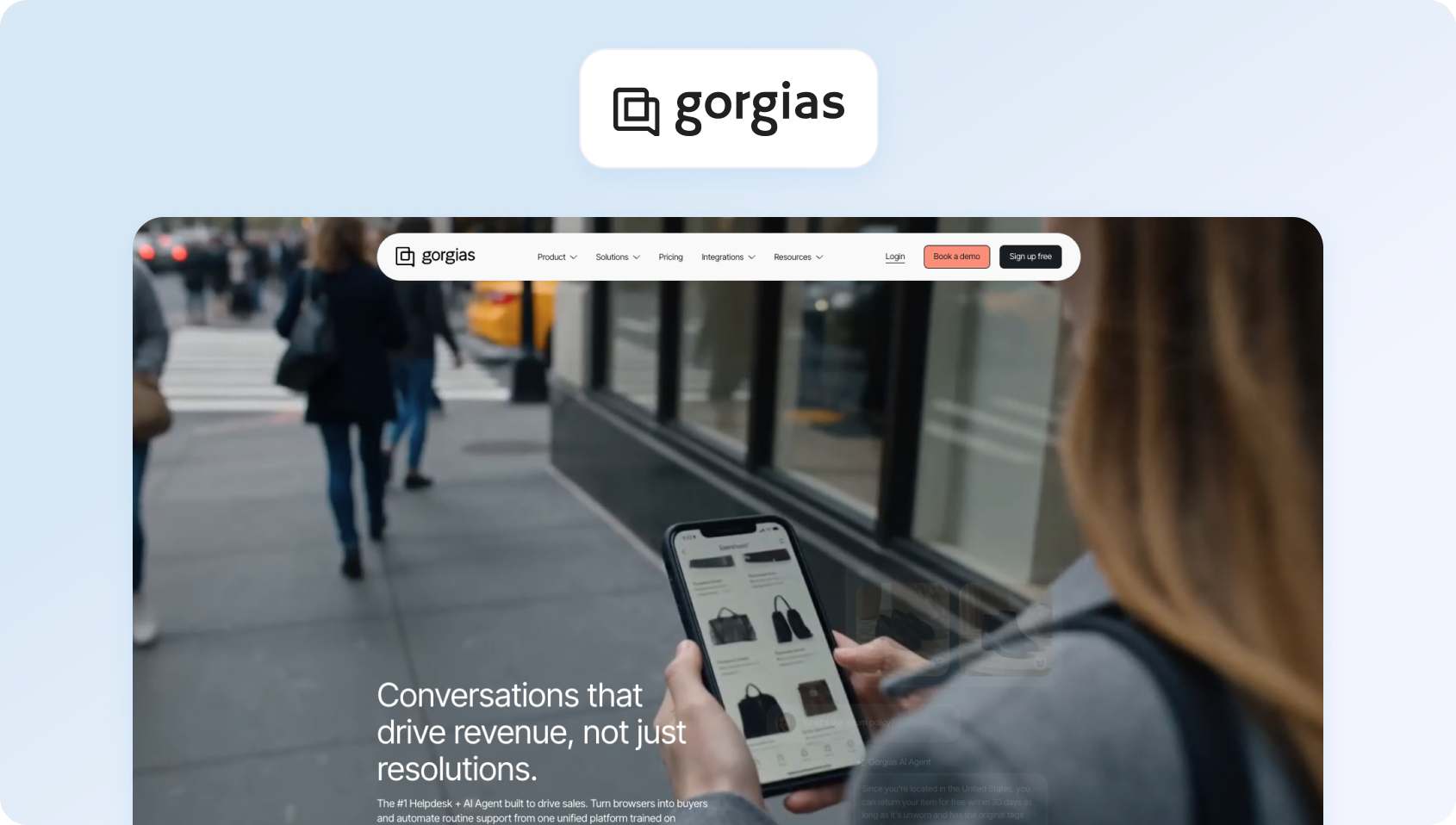
Gorgias built its platform exclusively for e-commerce, automating Shopify support queries and tying customer service metrics directly to revenue.
Best fit
Gorgias is purpose-built for e-commerce businesses using Shopify and similar platforms. It excels at automating order-related enquiries while connecting support directly to revenue.
Features
- E-commerce Integration: Deep connections to Shopify, Magento, WooCommerce, BigCommerce
- Omnichannel: Email, live chat, SMS, Facebook, Instagram, phone (limited)
- Order Management: View orders, process refunds, edit shipping, all from the ticket interface
- Automation: Rules engine handles “where's my order,” returns, and tracking updates automatically
- Macros: Pre-built response templates for common e-commerce scenarios
- Revenue Attribution: Track which support conversations lead to purchases
- Self-Service: Customers check order status via chat without agent involvement
- Analytics: Standard helpdesk metrics plus e-commerce KPIs (revenue per ticket, conversion rates)
Who Uses It
Direct-to-consumer e-commerce brands on Shopify, Magento, and BigCommerce; typically online retailers with moderate to high order volumes seeking automation.
Pros
- Features explicitly designed for online retail
- Best-in-class Shopify integration (edit orders, refunds in-ticket)
- See which conversations lead to sales
- Automation handles 30-40% of repetitive tickets
- Affordable entry point ($10-$60/month)
Cons
- Unpredictable costs during sales, product launches, and holidays
- Voice calling is extremely limited (Basic plan: 0 calls; Pro: 50 calls)
- Works best on Shopify; other platforms get fewer key features
- No value outside online retail
- $900/month for 5,000 tickets; overages add up quickly during peak seasons
Pricing
Gorgias offers three primary plans based on monthly ticket volumes. Basic starts at $77/month (billed annually) and includes 300 tickets and 30 AI automated interactions per month. Pro costs $471/month with 2,000 tickets and 190 AI interactions, while Advanced starts at $1,227/month, including 5,000 tickets and 530 AI interactions. Businesses exceeding their included limits pay additional per-ticket and per-interaction fees, meaning costs can increase significantly during busy sales periods or as automation usage grows.
11. Kustomer: Best for customer-centric service operations

Kustomer takes a customer-centric approach, organizing all interactions on a unified timeline rather than separate tickets. It's built for consumer brands prioritizing conversational, contextual support.
Best fit
Kustomer is well suited to brands that prioritise personalised customer experiences over traditional ticket management. Its unified customer timeline provides agents with rich context throughout every conversation.
Features
- Customer Timeline: All interactions (calls, chats, orders, emails) on one view
- Omnichannel: Email, chat, SMS, WhatsApp, voice, social
- No Ticket Numbers: Conversations, not tickets (customers never see ticket numbers)
- AI & Automation: Chatbots, routing, suggested replies
- CRM Capabilities: Built-in customer data platform
Who Uses It
Consumer brands in retail, travel, and fintech; customers include luxury and lifestyle companies.
Pros
- Agents see people, not ticket numbers
- Complete interaction history without switching screens
- Luxury and lifestyle brands love a conversational approach
- Intelligent routing based on customer context and history
- Seat-based or conversation-based models
Cons
- Pricing competitive with or higher than Zendesk Enterprise
- Forces sales conversations for basic information
- Requires full migration to Kustomer CRM
- No native scheduling or forecasting tools
- All the features with AI require additional fees on top of the base plans
Pricing
Kustomer now uses custom enterprise pricing, with organizations required to contact the sales team for a tailored quotation. Costs are typically based on factors such as the number of users, required AI capabilities, communication channels, and implementation requirements. While this provides flexibility for larger organizations, it also makes it more difficult for buyers to estimate the total cost of ownership or compare pricing with vendors that publish transparent per-seat rates.
12. Gladly: Best for premium customer experiences
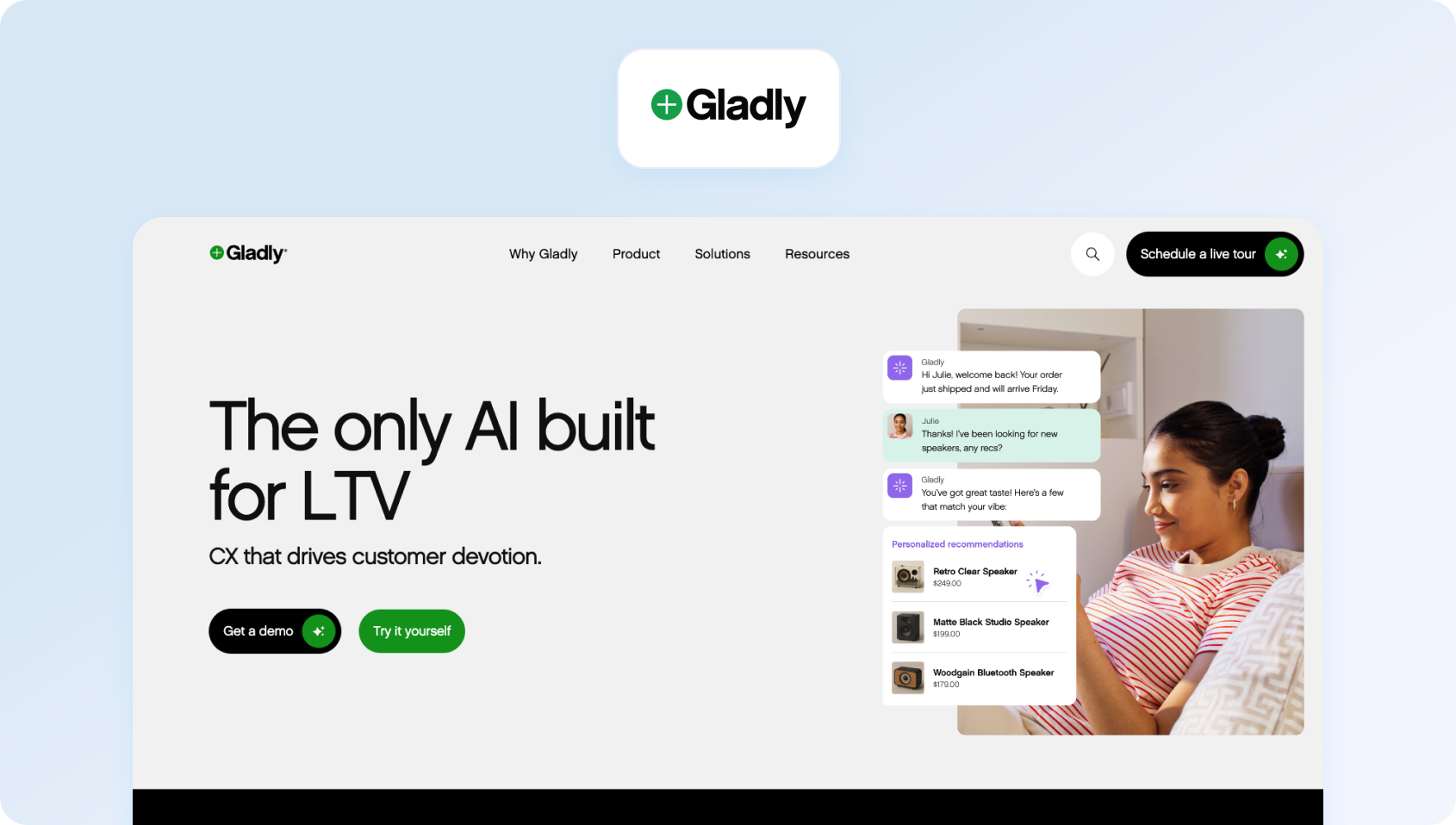
Gladly puts customers (not tickets) at the center with lifelong conversation threads. It's designed for consumer brands focused on loyalty and personalized experiences.
Best fit
Gladly is designed for high-touch consumer brands focused on customer loyalty. It keeps every interaction connected in one lifelong conversation, making it ideal for premium support environments.
Features
- Lifelong Conversation Threads: All interactions with one customer in one thread
- Omnichannel: Voice, SMS, email, chat, social messaging
- Customer Profiles: Rich profiles with purchase history, preferences, and notes
- Task Management: Follow-ups tied to customers, not tickets
- Customer AI: Sidekick AI for automated conversations
- Reporting: Customer-centric metrics (not just ticket counts)
Who Uses It
Consumer brands in retail, hospitality, and travel.
Pros
- Seamless hand-offs between voice, chat, and email in one conversation
- Agents build relationships, not close tickets
- Strong telephony built in, not bolted on
- Luxury and high-touch brands use it to stand out
Cons
- Premium pricing ($150-$180/seat), even compared to Salesforce
- Requires a sales process and often minimum commitments
- Designed for 100+ agent operations
- Not ideal for deflecting volume with chatbots
- Excludes smaller teams
Pricing
Gladly also now uses a custom enterprise pricing model, with organizations required to contact the sales team for a tailored quotation. Pricing typically depends on factors such as team size, communication channels, AI capabilities, and implementation requirements. While this allows Gladly to tailor packages to larger customer service operations, it also makes it more difficult for buyers to compare costs directly with vendors that publish transparent per-seat pricing.
13. Dixa: Best for European omnichannel support

Dixa is a Scandinavian customer service platform emphasizing conversation over tickets. It offers solid omnichannel capabilities with native voice for international teams.
Best fit
Dixa is a strong choice for European businesses looking for a modern customer service platform with native voice capabilities. Its conversation-first approach helps agents deliver more personalised support.
Features
- Omnichannel: Email, chat, voice, Facebook Messenger, WhatsApp, Instagram, Twitter
- Smart Routing: Skill-based routing and automatic prioritization
- Conversation Continuity: Context preserved across channels
- VoIP Included: Native calling with local numbers in 100+ countries
- Mim AI Agent: Handles 55% of repetitive tasks
- Analytics: Real-time dashboards and historical reporting
Who Uses It
European SMBs and mid-market companies.
Pros
- Native calling without a separate telephony provider
- Intuitive interface with minimal clutter
- Local numbers in 100+ countries
- Less ticket-centric than traditional helpdesks
- Mim handles majority of repetitive tasks
Cons
- Smaller than US-based competitors
- Requires sales engagement for most plans
- Lacks advanced automation compared to Intercom or Freshdesk
- Fewer pre-built connectors than major platforms
Pricing
Dixa offers three transparent pricing plans, with all tiers billed annually. Growth starts at €89/agent/month, including omnichannel support across voice, email, live chat, social messaging, AI Agent (Mim), intelligent routing, knowledge management, and native integrations. Ultimate costs €139/agent/month, adding advanced automations, skills-based routing, AI intent detection, and third-party AI integrations. Prime starts at €179/agent/month, introducing enterprise capabilities such as SSO, advanced analytics, custom user roles, higher API limits, and multi-organization management. While Dixa includes a broad range of functionality in each tier, businesses should expect costs to increase as they move into its more advanced AI and enterprise features.
14. Talkdesk CX Cloud: Best for enterprise contact centres
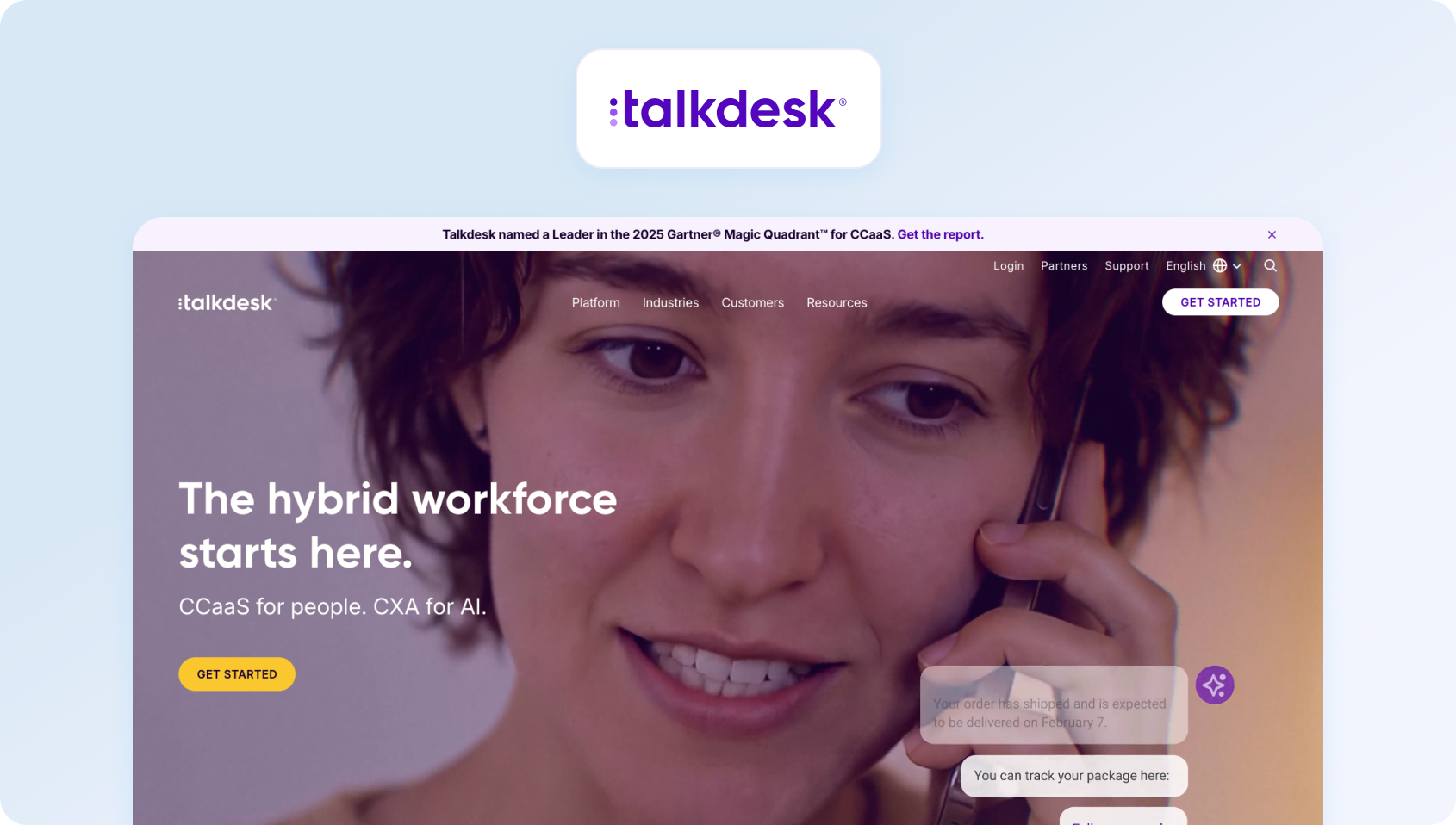
Talkdesk is an enterprise cloud contact center platform with comprehensive voice, omnichannel routing, AI, native WFM, and QA capabilities.
Best fit
Talkdesk is best suited to organizations managing high volumes of voice interactions. Native workforce management, AI, and quality assurance tools make it a strong contact centre solution.
Features
- Enterprise Contact Center: Advanced IVR, skills-based routing, call recording
- Omnichannel: Voice, SMS, email, chat, social messaging
- AI (Talkdesk AI): Virtual agent, sentiment analysis, call transcription
- WFM: Native workforce management with scheduling and forecasting
- Quality Management: Call recording, evaluation forms, coaching workflows
Who Uses It
Mid-market to enterprise voice-heavy operations (100+ agents) in healthcare, retail, financial services, and hospitality.
Pros
- Purpose-built for high-volume call centers
- Integrated scheduling, forecasting, and adherence monitoring
- Built-in quality management and coaching tools
- Voicebot and virtual agent capabilities rival specialized CCaaS
- Pre-built templates for healthcare, retail, and finance
Cons
- Better for call centers than email-heavy support teams
- Multiple modules and add-ons make the true cost hard to predict
- Feature depth requires significant training
Pricing
Talkdesk offers several CX Cloud pricing tiers depending on whether organizations prioritise digital engagement, voice, or broader contact centre capabilities. CX Cloud Digital Essentials starts at $85/user/month and includes digital engagement channels, quality management, dashboards, automation tools, and API access. CX Cloud Essentials is also priced at $85/user/month and focuses on voice engagement, routing, workspace tools, and integrations. CX Cloud Elevate costs $115/user/month, adding features such as screen recording, feedback management, and automated notifications, while CX Cloud Elite starts at $145/user/month and adds workforce management, performance management, custom reporting, and customer experience analytics. Industry-specific deployments through Industry Experience Clouds use custom pricing.
15. NICE CXone: Best for large regulated enterprises
NICE CXone is the enterprise-grade contact center platform with comprehensive WFM, QA, analytics, and proven scalability for large operations.
Best fit
NICE CXone is built for large organizations that require enterprise-scale customer service with advanced compliance capabilities. It performs particularly well in highly regulated industries.
Features
- True Omnichannel: Voice, email, chat, SMS, social media in a unified agent desktop
- Enlighten AI: Real-time agent assist, sentiment analysis, coaching recommendations
- WFM: Comprehensive workforce optimization suite
- Quality Management: Recording, evaluation, calibration, coaching
- Analytics: Real-time and historical reporting with AI-powered insights
- Compliance: HIPAA, PCI-DSS, SOC 2 built for regulated industries
Who Uses It
Large enterprises and BPOs (500+ agents) in healthcare, financial services, retail, and telecom require compliance and scale.
Pros
- Handles 10,000+ agent deployments reliably
- Comprehensive: Everything needed for contact center operations in one platform
- HIPAA, PCI-DSS, and SOC 2 are built for regulated industries
- Industry-leading forecasting and scheduling
Cons
- Requires dedicated admins and a long implementation
- Enterprise pricing is out of reach for SMBs
- Feature depth wasted on teams under 100 agents
- Expect 3-6 months from evaluation to go-live
- Users report pricing complexity and unexpected costs
Pricing
NICE CXone starts at $110/agent/month for the Omnichannel Suite, increasing to $135 for Essential, $169 for Core, $209 for Complete, and $249/agent/month for Ultimate. Some advanced AI capabilities use a consumption-based pricing model alongside the seat licence, so organizations should evaluate expected AI usage when estimating total cost.
16. Genesys Cloud CX: Best for global contact centres
Genesys Cloud CX competes directly with NICE CXone in the enterprise CCaaS market, known for its flexibility, AI capabilities, and multi-tenant architecture, which is critical for BPOs.
Best fit
Genesys Cloud CX is ideal for multinational organizations and BPOs managing complex customer service operations across multiple regions. Its flexibility and scalability make it a leading enterprise platform.
Features
- Omnichannel: Voice, digital channels, video, co-browse
- Genesys AI: Voicebot, chatbot, agent assist, predictive routing
- Native WFM: Forecasting, scheduling, intraday management
- Quality & Analytics: Recording, evaluation, speech analytics
- AppFoundry: 300+ pre-built integrations
- Multi-tenant architecture
Who Uses It
Enterprises and BPOs (100+ agents); strong in telecom, finance, healthcare, and retail.
Pros
- Excellent for BPOs managing multiple clients
- Highly customizable for complex requirements
- Voicebot and predictive engagement capabilities
- Extensive API and integration ecosystem
- Handles large enterprise deployments
Cons
- Not suitable for teams under 50 human agents
- Premium pricing even for mid-tier features
- DIY setup impractical
- Expect 2-4 months for full deployment
- Complex admin interface
Pricing
Genesys Cloud CX offers four named-user plans. Cloud CX 1 starts at $75/user/month for voice contact centres, Cloud CX 2 at $115 adds omnichannel capabilities and quality management, Cloud CX 3 at $155 includes workforce engagement management, while Cloud CX 4 starts at $240/user/month and adds advanced AI capabilities. Some AI features use separate AI Experience tokens, and telecom usage charges may apply.
17. ServiceNow Customer Service Management: Best for IT service organizations
ServiceNow CSM brings ITSM discipline to customer service. Ideal for organizations already using ServiceNow for IT operations.
Best fit
ServiceNow Customer Service Management works best for enterprises already using the ServiceNow platform. It extends existing IT workflows into customer service with powerful automation and governance.
Features
- Omnichannel: Email, chat, phone (via integrations), social, mobile
- Case Management: ITSM-style workflows with SLAs and escalations
- Knowledge: Robust knowledge base with AI-powered search
- Self-Service: Customer self-service portal with case tracking
- Now Assist: AI for agent productivity and case resolution
- ITSM Integration: Seamless connection with ServiceNow ITSM
Who Uses It
Enterprises on the ServiceNow platform, especially in B2B, tech, and professional services.
Pros
- Extends existing ITSM investment
- Best for technical support and B2B service management
- AI-powered KB search and recommendations
- Security, compliance, and governance built in
- Service, IT, HR, all in one ecosystem
Cons
- Among the priciest options
- Better for technical support than consumer service
- Requires ServiceNow expertise
- Only makes sense if already on ServiceNow
- Months to implement properly
Pricing
ServiceNow doesn't publish pricing for Customer Service Management. Organizations must contact the sales team for a tailored quotation based on users, modules, and deployment requirements. Total investment typically depends on the wider ServiceNow platform, implementation services, and any additional AI or workflow automation products.
18. Sprinklr Service: Best for social customer engagement

Sprinklr is an enterprise unified CXM platform designed for large organizations managing customer service across 30+ social and digital channels.
Best fit
Sprinklr is designed for enterprises managing customer service across a large number of digital and social channels. It combines social listening, engagement, and customer support in one platform.
Features
- Social-First: Native support for 30+ social channels
- Omnichannel: Voice, email, chat, messaging apps, review sites
- AI: Routing, sentiment, chatbots
- Listening: Social listening and brand monitoring
- Unified Agent Desktop: All channels in one workspace
Who Uses It
Enterprise brands (Fortune 500) in retail, telecom, hospitality, and financial services are managing high-volume social/digital support.
Pros
- Best for brands active on social media
- Monitor brand mentions across the internet
- Built for 100K+ social interactions monthly
- Marketing, advertising, and service in one ecosystem
- Comprehensive reporting across all channels
Cons
- Enterprise pricing ($249/seat minimum) is out of reach for SMBs
- Unless massive social volume, it's too much platform
- Steep learning curve and long implementation
- Social-first means voice is secondary
Pricing
Sprinklr no longer publishes detailed package pricing for its enterprise CX platform. Businesses must request a custom quotation based on the number of users, channels, AI capabilities, and additional products required. Pricing is generally tailored to large enterprise deployments.
19. Khoros Care: Best for digital-first customer communities

Khoros focuses on digital and social customer care, built for brands managing support across social media, messaging apps, and review sites.
Best fit
Khoros Care is ideal for brands that rely heavily on online communities and social media support. It helps businesses engage customers across digital channels while building peer-to-peer support communities.
Features
- Digital-First: Social media, messaging apps, review sites, online communities
- AI & Automation: Bot framework, intelligent routing, sentiment analysis
- Community Forums: Build and manage customer communities
- Listening: Social monitoring and brand tracking
- CRM Integration: Salesforce, Microsoft Dynamics connectors
Who Uses It
Consumer brands with strong digital presence in retail, telecom, and hospitality.
Pros
- Excels at building customer forums and peer-to-peer support
- Deep social media management capabilities
- Purpose-built for B2C digital support
- Connect support relevant customer data to social advertising
Cons
- Enterprise pricing model
- Not ideal for phone-heavy support operations
- Requires significant configuration and training
- Losing ground to Sprinklr and Salesforce Social Studio
Pricing
Khoros uses bespoke enterprise pricing and doesn't publish licence costs. Organizations should contact the sales team for a customized quotation based on the size of their digital customer service operation and required modules.
20. LivePerson: Best for conversational AI engagement
LivePerson's Conversational Cloud is a messaging-first platform with Voice AI capabilities, leveraging generative AI and LLM orchestration.
Best fit
LivePerson is best suited to enterprises focused on messaging-based customer engagement. Its conversational AI capabilities help automate customer interactions across digital channels.
Features
- Conversational Cloud: Messaging across web, mobile, SMS, WhatsApp, Apple Business Chat
- Intent Manager: AI detects customer intent and routes accordingly
- Conversation Builder: Low-code bot building
- Agent Workspace: Unified workspace for customer communication channels
- Analytics Studio: Voice + text conversation analysis
- Compliance: GDPR, HIPAA, PCI DSS, CCPA
Who Uses It
Enterprise brands in retail, financial services, telecom, and hospitality are prioritizing digital-first, messaging-based engagement.
Pros
- Intent detection and bot building are mature
- Customers message when convenient
- Handles 1 billion+ conversations monthly
- Bring Your Own AI model
Cons
- Conversation-based pricing is hard to predict
- Better for messaging than traditional phone support
- Minimum contracts and pricing exclude SMBs
- Limited native voice capabilities
- Requires sales contact
Pricing
LivePerson doesn't publish standard pricing for Conversational Cloud. Pricing is provided through a customized sales process and typically depends on conversation volume, AI usage, messaging channels, and implementation requirements.
21. Five9 Intelligent CX: Best for voice-first contact centres

Five9 is a cloud contact center platform with 20+ years of voice expertise. It recently added digital channels and positioned itself for mid-market to enterprise operations, prioritizing telephony.
Best fit
Five9 is a strong choice for organizations where voice remains the primary customer service channel. Its advanced telephony capabilities are backed by workforce management and AI-powered agent assistance.
Features
- Cloud Contact Center: Advanced IVR, ACD, skills-based routing, predictive dialing
- Omnichannel: Voice, email, chat, SMS, social (digital channels are less mature than voice)
- Five9 Genius AI: Agent assist, virtual agent (IVA), speech analytics, real-time transcription
- WFM: Integrated workforce management with forecasting and scheduling
- CRM Integration: Deep connectors for Salesforce, ServiceNow, Zendesk, Microsoft Dynamics
Who Uses It
Mid-market to enterprise voice-heavy contact centers (50-500 agents).
Pros
- 99.999% uptime SLA, trusted by 3,000+ organizations
- Native forecasting, scheduling, intraday management
- Handles high-volume operations reliably
- Best-in-class Salesforce and ServiceNow connectors
Cons
- Digital channels feel like afterthoughts; a weaker omnichannel customer experience
- Multiple editions and add-ons make the total cost unclear
- If email/chat are primary channels, better options exist
- IVA, Agent Assist, and advanced features cost extra
Pricing
Five9 offers several CX Cloud bundles with pricing based on the channels, AI capabilities, and workforce engagement features required. Digital starts at $119/user/month for digital channels, while Core starts at $159/user/month and adds voice alongside AI essentials. Higher tiers, including Plus, Pro, and Enterprise, use custom pricing and add more advanced AI capabilities, workforce engagement management, analytics, and optimization tools. Five9 also notes that pricing can vary depending on whether organizations use concurrent users, named agents, or usage-based models, with additional charges potentially applying for AI and telephony usage.
22. Dialpad AI Contact Center: Best for AI-powered business communications

Dialpad built a modern business communications platform (voice, video, messaging) and extended it to contact centers. Real-time AI transcription and sentiment analysis run during calls.
Best fit
Dialpad is well suited to growing businesses looking to combine business communications and customer support. Real-time transcription and AI coaching make it particularly valuable for voice teams.
Features
- Cloud Contact Center: IVR, ACD, call recording, real-time analytics
- Real-Time AI: Live transcription, sentiment scoring, action item detection during calls
- Omnichannel: Voice, SMS, web chat, social messaging
- Integrations: Pre-built connectors for Salesforce, HubSpot, Zendesk, 70+ apps
- Unified Communications: Combines contact center with business phone system
- AI Recaps: Automatic call summaries and coaching recommendations
Who Uses It
SMBs to mid-market teams (20-200 agents) needing modern voice plus light digital channels; customers span tech, professional services, and healthcare.
Pros
- Built for the cloud-first era, not legacy telephony
- Transcription and sentiment analysis during calls (not after)
- Faster implementation than Five9, Genesys, or Talkdesk
- Combine the contact center with the business phone system in one platform
- Strong mobile experience for remote teams
- Most teams are operational in 2-4 weeks
Cons
- Younger than Five9/Genesys, fewer enterprise capabilities
- Basic scheduling, not comprehensive workforce management
- Voice and SMS are strong; email/ticketing is less mature
Pricing
Dialpad offers separate pricing tiers across its communications and contact centre products. Dialpad Support starts at around $80/user/month for contact centre capabilities, with higher tiers adding more advanced routing, analytics, integrations, and administrative controls. Dialpad AI Agent uses a conversation-based pricing model, where organizations purchase AI Agent Credits based on usage rather than paying a fixed per-seat licence.
23. Zowie: Best for AI-powered e-commerce automation
Zowie is an AI-first customer service platform built specifically for e-commerce, automating common queries while integrating deeply with Shopify, Magento, and other platforms.
Best fit
Zowie is designed specifically for online retailers wanting to automate repetitive customer enquiries. Deep e-commerce integrations help reduce support volumes without sacrificing customer experience.
Features
- AI Automation: Handles up to 60% of common e-commerce queries automatically
- E-commerce Integration: Deep connections to Shopify, Magento, WooCommerce, BigCommerce
- Order Management: Check order status, process returns, update shipping—all automated messages
- Omnichannel: Chat, email, Facebook Messenger, Instagram
- Product Recommendations: AI-powered upselling and cross-selling
- Analytics: Track automation rates, customer satisfaction, and resolution times
- Multilingual: Support for multiple languages
Who Uses It
Direct-to-consumer e-commerce brands on Shopify, Magento, WooCommerce; typically stores with moderate to high order volumes seeking automation.
Pros
- Explicitly built for online retail, not adapted from a generic helpdesk
- Most brands are operational within 2 weeks
- Reduces the need to hire additional agents
- AI understands your inventory and can make recommendations
- Instant answers for “where's my order” type questions
Cons
- No value outside the online retail vertical
- Can't handle phone support
- Works for order status, not product troubleshooting or technical issues
- Not built for 50+ agent operations
- Strongest for Shopify stores, weaker for other platforms
Pricing
Zowie uses custom enterprise pricing based on automation volumes, order volumes, and business requirements. Organizations need to contact the sales team for a tailored quotation, making it best suited to larger e-commerce businesses evaluating AI-first customer service.
24. Groove: Best for small business help desks
Groove positions itself as the simple, affordable help desk for small businesses. If you're a micro-team that finds Zendesk overwhelming and wants a shared email with basic features, Groove is a good fit.
Best fit
Groove is ideal for startups and small businesses that need straightforward ticket management without enterprise complexity. Its simple interface makes it easy to deploy and adopt quickly.
Features
- Shared Inbox: Email-centric support with assignments, notes, and collision detection
- Knowledge Base: Customer-facing help articles with search
- Reporting: Basic analytics on response times, volumes, and team performance
- Integrations: Slack, Shopify, Mailchimp, Zapier, and 40+ apps
- Collaboration: Private notes, @mentions, internal discussions
- Rules & Automation: Basic workflow automation and ticket routing
Who Uses It
Micro-businesses and startups (3-15 people); customers include small SaaS companies, consultants, agencies, and bootstrapped startups.
Pros
- Among the cheapest full-featured helpdesks (not just shared Gmail)
- Clean interface, minimal learning curve, quick onboarding
- Flat monthly rate regardless of volume
- Perfect for bootstrapped startups with 3-10 people
- Familiar workflow for teams used to Gmail/Outlook
- Can start with just 1-2 users
Cons
- Lacks AI, advanced automation, and chatbot capabilities
- No real omnichannel (no native voice, chat is basic)
- Small ecosystem (40 apps) compared to Zendesk (1,500+)
- Most teams outgrow Groove by 15-20 people
- Missing workforce management, quality assurance, and sentiment analysis
Pricing
Groove offers a free forever pricing model across its core platform, with no monthly subscription fee. Users can access the platform at $0/month, with revenue generated through transaction fees on selected products rather than software licences. For example, GrooveSell and GrooveKart charge a 5% platform fee on sales, while GrooveMail supports unlimited contacts at no cost when users connect their own SMTP provider.
25. HappyFox :Best for internal service desks

HappyFox offers a traditional help desk with essential features at competitive prices. It's particularly popular with IT service desks and internal customer support teams.
Best fit
HappyFox is well suited to IT teams and organizations that need traditional help desk functionality alongside asset management. It provides a solid mix of ticketing, automation, and knowledge management at competitive prices.
Features
- Ticketing: Multi-channel ticket management (email, chat, phone, social, web forms)
- Knowledge Base: Internal and external help articles with search and organization
- Task Management: Convert tickets to tasks, set dependencies, and track projects
- Asset Management: Track hardware and customer service software assets (IT service desk focus)
- Community Forums: Build a customer community platform for peer-to-peer support
- Automation: Workflows, SLA management, smart rules, escalations
- Reporting: Standard reports on customer service team performance, ticket volumes, and resolution times
Who Uses It
IT departments, educational institutions, and SMBs; strong adoption in schools, universities, and companies needing IT asset management alongside exceptional customer support.
Pros
- Competitive pricing for the feature set ($29-$89/agent range)
- Asset management and service desk features appeal to IT teams
- Popular with schools and universities (often with education discounts)
- No hidden fees or complex add-ons
- Built-in customer community platform included
Cons
- UI feels older compared to alternatives
- Basic automation, no chatbot or AI agent assist capabilities
- Fewer integrations (50-75) than major competitors
- Requires third-party telephony integration (not included)
- Interface complexity without corresponding power features
Pricing
HappyFox offers four help desk pricing tiers billed annually. Basic starts at $24/agent/month and includes unlimited tickets, omnichannel ticket creation, SLA management, knowledge base functionality, and SSO support for smaller teams (up to five agents). Team costs $49/agent/month, adding multi-brand support, custom roles, ticket queues, and additional support options. Pro is priced at $99/agent/month and adds advanced operational features such as asset management, task management, load-balanced ticket assignment, scheduled tickets, and uptime SLAs.
What Is Intercom & Why Teams Consider Customer Support Alternatives
Intercom revolutionized customer communication by making support conversational rather than transactional. Its strengths remain compelling: The Messenger widget integrates seamlessly into products. Proactive messaging prevents support tickets through in-app guidance. Product tours onboard users without human intervention. Fin AI Agent handles resolution autonomously at scale.
However, five factors consistently drive teams to explore Intercom chat alternatives:

- Unpredictable costs: Usage-based pricing for Fin AI ($0.99/resolution), messaging channels (SMS, WhatsApp, and email campaigns), and phone support result in monthly bills that swing 30-50%. Teams report difficulty budgeting when a single marketing campaign or product launch can triple support volume overnight.
- No voice capability: Intercom doesn't handle phone calls natively. Teams requiring voice must integrate with Twilio, Five9, or another telephony provider, resulting in fragmented workflows and duplicate customer data entry.
- Not built for contact centers: Intercom alternatives offer essential features missing from Intercom: workforce management for scheduling and forecasting, quality assurance for monitoring and coaching, skills-based routing for complex queries, and call transcription for compliance and training.
- Limited for high-volume operations: Intercom excels for product-led SaaS with moderate support volume. It's less suitable for 100-agent contact centers handling thousands of daily interactions across multiple channels and languages.
- Add-on accumulation: Base plans start at $29/seat, but effective costs range from $120 to $175/agent after adding Copilot Unlimited ($35/agent), Proactive Support Plus ($99/month), and usage-based channel fees.
If these considerations apply to you, the top Intercom alternatives listed below address these gaps in different ways.
Every support team has different challenges. Whether you're managing multilingual customer service, scaling AI automation, or introducing voice support, a personalized BlueTweak demo shows exactly how the platform fits your workflows.
How We Evaluated These Intercom Alternatives
We assessed each intercom competitor using publicly available documentation, demo videos, pricing pages, and verified user reviews.
- Features Assessment: We checked each alternative to Intercom against our must-have checklist. Platforms were categorized as Meets (native, documented, and available for 20-100 agents), Partial (requiring add-ons or higher tiers), or Not Evident (no public documentation).
- Who Uses It: We identified user segments from case studies, public logos, and review filters. Where unclear, we noted TBD based on positioning.
- Pricing: All pricing data comes from vendor websites as of October 2025. Where pricing isn't public, we noted “Contact sales” and the stated model.
- Pros and Cons: Strengths and weaknesses tie directly to our checklist and rubric, avoiding superlatives in favor of evidence-based observations.
Must-Have Capability Checklist and Advanced Features
- Omnichannel: Email, chat, voice, SMS, social, bots
- WFM & QA:
Native scheduling, forecasting, quality review - Analytics & Dashboards: Real-time, SLA tracking, custom reports
- Knowledge Base & Self-Service: Internal/external KBs, AI search, multilingual
- Multilingual AI (Voice + Text): Translation, transcription, sentiment analysis, guardrails
- APIs, Integrations & Compliance: REST API, customer relationship management (CRM)/e-commerce, data residency, ISO/GDPR
- Pricing Clarity: Transparent, seat-based, or usage tiers, bundled features
- AI Tools: Voicebot, proposed replies, auto routing/summarization
Scoring Rubric
Technology Overview: From Chat-First Helpdesks to Unified CX (2015→2026)
Between 2015 and 2026, customer support platforms evolved from chat-first helpdesks to comprehensive omnichannel solutions. Intercom defined the modern conversational support category in 2011, but the market has since consolidated around unified platforms that bundle voice, WFM, QA, and multilingual AI natively.
The old model looked like this: Purchase Intercom for in-app messaging and chat. Integrate Twilio or a separate contact center for voice. Add a third-party WFM tool for scheduling. Use spreadsheets or a separate QA platform for quality monitoring. Manage translation through plugins. Stitch together reports from 3-5 different dashboards.
This worked when support was primarily chat and email in a single language. It breaks down when managing thousands of customer interactions across multiple channels, including voice, email, SMS, WhatsApp, and social media, in various languages.
Modern Intercom competitors like BlueTweak, Genesys Cloud CX, and NICE CXone bundle these capabilities natively. This resulted in fewer vendor relationships, improved data flow between systems, cleaner customer profiles, and more predictable monthly costs.
Three forces drove this consolidation:
- Channel expansion (chat, SMS, WhatsApp, social media, voice all need unified queues)
- AI maturity (modern AI can transcribe calls, translate conversations, suggest replies, and resolve tickets, but only with unified context)
- CFO scrutiny (finance teams demand predictable TCO, not surprise usage spikes).
This shift reflects a broader change in how support is structured, As Radu Dumitrescu, Head of Automation & Digital Transformation at BlueTweak, explains: “Support teams are moving away from stitched-together tools towards unified platforms where every interaction (voice, chat, and AI) is connected. That's the only way to scale quality and control costs at the same time.”
When evaluating alternatives to Intercom, prioritize native omnichannel, integrated WFM and QA, multilingual AI with guardrails, pricing transparency, and security basics in base plans.
Choosing the Right Intercom Alternative for 2026
Teams leave Intercom when usage-based pricing volatility, lack of native voice, or missing contact center features outweigh its conversational strengths. The best Intercom alternatives for 2026 offer comprehensive omnichannel capabilities, clearer pricing structures, and modern AI.
If you need an all-in-one customer service platform with native voice, workforce management, multilingual AI, and predictable pricing, BlueTweak delivers the best balance for 20-100 agent teams. You won't need separate subscriptions for WFM, QA, or advanced AI; everything's included at €65/agent/month
BlueTweak won't fit if you're a 5-person startup that needs just chat and email, or a 500-agent enterprise that's standardized on Salesforce. But for mid-market teams (20-100 agents) looking to consolidate vendors, eliminate usage-based surprises, and add voice capabilities, it's the Editor's Choice.
If you're ready to move beyond fragmented customer service software, start a 14-day free trial or speak with our team to discover how BlueTweak combines AI, voice, omnichannel support, workforce management, and quality assurance into one platform.

How to Automate Help Desk Operations to Cut Costs and Save Time
Start With Clarity, Then Automate the Work That Repeats
If the goal is to cut costs and save time, automation must target the moments that quietly burn hours: incomplete intake, manual routing, hand-typed status updates, and agents searching for steps. BlueTweak transforms your top five SOPs into running workflows: forms enforce required fields, routing rules select the correct queue and priority, SLA clocks start automatically, and contextual knowledge suggestions, as well as AI reply drafts, appear the moment a ticket opens. Status changes trigger the right customer updates, surveys are sent automatically, and outcomes are recorded in analytics with minimal effort.
This article shows how to write a usable help desk standard operating procedure template, where to store SOPs and keep them current, which service desk processes to automate first, how to measure with a small KPI set, and how BlueTweak maps each SOP step to a no-code workflow so the entire team moves faster without cutting corners.
Why Procedures First, Automation Second
It is tempting to automate the queue before writing anything down. The trouble is that code accelerates whatever exists today, including gaps, procedural issues, and outdated steps. A short, practical SOP document avoids that trap. It provides automation with a reliable framework to follow. It also gives new hires and seasoned staff members the same reference point, which helps maintain consistency across shifts and regions.
Well-written SOPs shrink decision fatigue. Analysts are not sifting through chat logs or asking a colleague for a screenshot that circulates in a private channel. A ticket progresses from intake to 'done' through straightforward procedures that anyone can follow. When a wrinkle appears, the SOP instructs the analyst on how to proceed, who to involve, and which reference documents to consult. The support process becomes predictable without becoming rigid.
What A Strong Help Desk SOP Looks Like in Practice

Think of an SOP as a short, detailed document that removes guesswork. The title page features a descriptive title, such as “Password Reset and MFA Re-enrollment,” the owner’s name, and the dates for the last and next reviews. The following section explains the purpose and scope in a few sentences, which helps protect your business goals by clearly defining what is in and what is out. After that, the SOP lists prerequisites and links to the knowledge base, vendor runbooks, and any relevant policies. These links serve as your reference documents, and they must be kept up to date.
Roles come next. Level 1 handles verification and common fixes, Level 2 handles advanced troubleshooting, and the development team approves edge cases or data changes. Then comes the heart of the SOP: the detailed instructions.
Each action is numbered, the required details are explicit, and the expected outcome is clear. If there are branches, use a flowchart format or simple headings so the SOP format visually maps the choice. The SOP concludes with quality checks, the fields analysts must complete, and a brief survey to be sent. That closing loop is where the qualitative data lives. It is small, but it is closely related to the improvements you will make next month.
This is not bureaucracy. It is a tool for speed and quality. A two-page SOP that people use beats a ten-page wall of text that nobody opens.
In BlueTweak, SOP fields map directly to intake forms, roles map to routing rules, and “Path A/Path B” branches render as guided buttons inside the ticket. Quality checks become closure conditions, and required notes become auto-filled resolution templates. The diagram is helpful, but the workflow is what enforces it.
The Power of a Small Library
Start with five topics that drive volume or risk for your help desk. Password resets, access requests, laptop provisioning, VPN failures, and software installs are common choices. Write one SOP, test it with real tickets for a week, and then refine it based on the feedback provided from the queue. The following month, add three more. In a quarter, you will have a living library of helpdesk SOPs that cover most of your day. The work will feel more stable because the process remains consistent from analyst to analyst.
Keep that library in a centralized repository that everyone can search. Tie each SOP to the forms and queues that use it, so analysts do not need to click around. Assign an owner to each SOP and set a quarterly review. This simple document control habit is what keeps SOP documentation trustworthy in the long run.
From Paper to Practice: Turning SOPs Into Automation

Once an SOP is clear, automation can move work without friction. Intake forms match the SOP’s prerequisites, so tickets arrive complete. Routing rules send incidents to the right group based on system, region, and priority. Status changes trigger the proper notice at the right time, which reduces customer complaints without flooding inboxes. When a ticket opens, the agent console presents the relevant knowledge base article and the two branches from the SOP, resulting in fewer tabs and fewer mistakes.
None of this replaces people. It supports them. Automation handles the repetitive motions. Analysts focus on the specific tasks that need judgment. Over time, this blend of operating procedures, SOPs, and workflow creates fewer handoffs, cleaner notes, and a better helpdesk experience for end users.
The SOP Template You Can Use Today
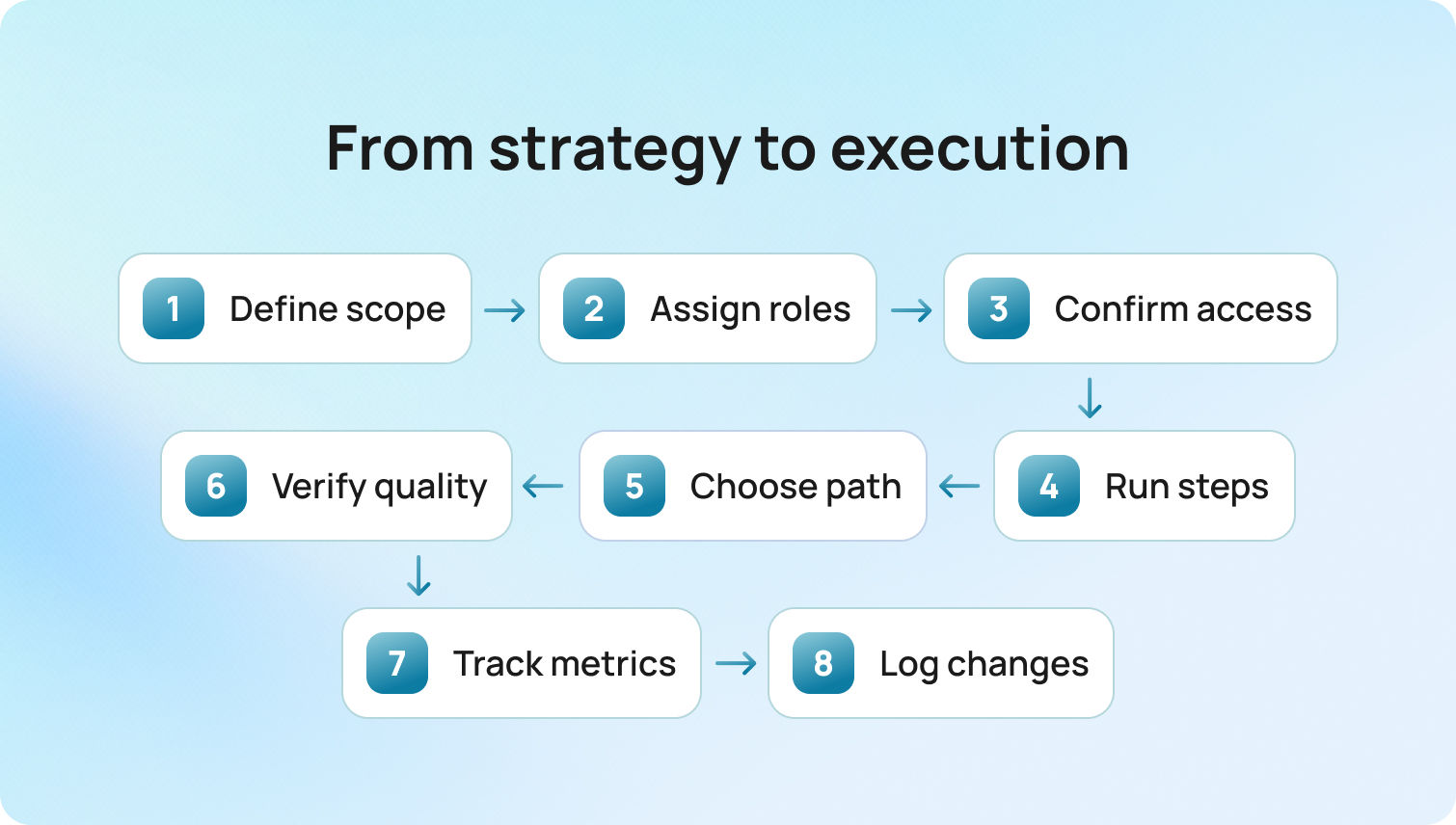
Teams often ask for free templates to get started. The template below is intentionally short. Copy it, fill it with your context, and save it in your repository. It also serves as a standard operating procedures template for other ticket types, doubling as a help desk.
Help Desk SOP: [Descriptive title]Purpose and scope in three sentences. Systems in scope are listed by name.
Roles and responsibilitiesWho is responsible for what, including the on-call rotation and any vendor involvement?
Prerequisites and reference documentsWhat access is required, and where to click for the knowledge base and policy.
ProcedureNumbered step-by-step instructions with expected outcomes. If the ticket can go in two directions, create Path A and Path B with the trigger that decides which to follow.
Decision flowA small diagram or a bullet-free paragraph that visually maps the choice and the multiple potential outcomes.
Quality checksWhat to confirm before closing. The fields to capture. The quick survey link.
MetricsWhich three signals does this SOP affect, such as handle time, first-contact resolution, and reopen rate?
Revision historyWhat changed, when, and why?
This SOP template fits neatly inside most tools, providing new team members and hires with a comprehensive understanding of what good looks like on their first day.
Service Desk Processes That Benefit First
Some service desk processes pay off quickly when an SOP is bound to BlueTweak automation. Incident management uses auto-classification, risk-based routing, and templated stakeholder communications tied to severity levels. Service requests are processed through forms with embedded approvals and license checks, then automatically provisioned or handed off with a comprehensive checklist. Problem management auto-clusters repeat incidents and opens a linked problem with required evidence. Change enablement routes by risk, schedule windows, and trigger freeze-period guards. Knowledge management surfaces the right article at ticket open and prompts authors to update content when agents deviate from the path.
Training That People Remember
Good SOPs shorten training, and guided workflows further reduce it. BlueTweak embeds three-minute walkthroughs next to the steps agents see, and in-product tips appear where mistakes occur most often. Refresher prompts are triggered after product or policy changes, ensuring content and behavior remain aligned without requiring long classes.
Training should feel like part of the company culture, not a one-time event. When people know where to look and how to act, backlogs shrink and confidence rises. That confidence shows up in tone, speed, and the way analysts handle exceptions.
How Automation and SOPs Change a Workday
Imagine the same Monday again. A ticket arrives about a failed VPN login. The intake form captured device type, location, and error code. The ticket routes to the correct queue. An SLA clock starts, and the console shows Path A/Path B as buttons with pre-filled commands. The analyst follows Path A, verifies entitlement, applies the fix, and closes with notes that match the SOP. Resolution notes and tags are auto-completed, and a survey is sent without extra clicks. A survey goes out. The user replies that the connection works. One issue down.
Later, an access request lands from a contractor. The Service Request SOP collects approval within the form itself. The system applies the correct tags and checks license seats. The analyst identifies a single missing item, requests it through a prewritten message, and the case proceeds. The day continues like this. Fewer restarts. Fewer do-overs. More time left for the complex problems.
Measuring Progress Without Drowning in Charts
Start with five signals that BlueTweak tracks out of the box: first-contact resolution, handle time, reopen rate, SLA compliance, and customer satisfaction. If automation is working, FCR rises, handle time falls, breaches decline, and CSAT holds or improves.
Use these signals to guide edits. If adoption is low, surface the SOP steps as guided actions in the ticket. If reopens are high, adjust the branch trigger text and add a verification step that the workflow can enforce. If CSAT dips, tune the status templates and tone once, and let the system carry it across the queue.
Handling Exceptions Without Breaking the System
Not everything fits a template. When a strange error appears, the analyst needs a safe path. Your SOPs should outline an exception process that includes a concise checklist, a designated owner for expedited decisions, and a method for capturing lessons learned. This prevents one-off fixes from living in private chats. It also helps you write new SOPs when an exception becomes a common occurrence. Over time, this habit protects business operations because unusual work still passes through the same quality gate.
Keeping the Library Healthy
An SOP only helps when it matches reality. BBlueTweak automates document control: owners receive review reminders, diffs show what has changed, and agents can flag a step directly from inside the ticket. A weekly, ten-minute review converts those flags into edits, and the updated steps are deployed live in the workflow without requiring separate change campaigns.
The Role of BlueTweak in Automated Help Desk Operations

BlueTweak is a unified platform for help desk operations. It combines ticketing, knowledge base software, workflow automation, analytics, and workforce management in one place, so SOPs are not just documents. They become running workflows.
- Surface the proper steps at the right moment. When a ticket opens, BlueTweak displays the relevant SOP path, required fields, and AI reply suggestions based on your knowledge.
- Orchestrate the flow. Intake validation, dynamic routing, SLA timers, status logic, and surveys run automatically, while auto-documentation ensures consistent notes.
- Close the loop. Analytics tie outcomes to SOP versions; workforce management adjusts staffing as handle time changes; authors get prompts to update content where agents deviated.
This is not one more dashboard. It is automation integrated with your procedures, which is how costs come down and time is regained without sacrificing quality.
Bringing It All Together
Automation cuts costs and saves time when it rests on the bedrock of clear help desk standard operating procedures. Write a handful of SOPs that your team will actually use. Store them in one place, keep them up to date, and attach them to the relevant work. Then automate the simple motions that surround each case. The payoff is evident in the queue and the numbers. Tickets arrive complete. Analysts know the next step. Customer satisfaction rises because answers are consistent and polite. Leaders make better calls because the data reflects a stable support process.
If you need a place to begin, start with a single help desk standard operating procedure template and one high-volume ticket type. Build from there. The path is not complex. It is a set of key steps that turn scattered business processes into calm, reliable help desk operations.
See BlueTweak in action. Watch a ticket move from intake to resolution with form validation, dynamic routing, SLA timers, AI reply suggestions, auto-updates, and auto-documentation running in the background. One workspace, clear procedures, less rework.

Customer Support Trends 2026: What’s Changing (And What Matters)
What You’ll Learn: The Trends, The Playbooks, The Wins to Target
Customer service trends are not fads; they reflect how organizations adapt to changing customer expectations and operational constraints. These changes define how businesses are adapting to the evolving needs of consumers. The businesses that adopt these methods the quickest are the ones who’ll retain (and win) trust moving forward.
Whether you lead a support organization, operate a contact center, or oversee customer operations, these trends materially affect cost, loyalty, and growth. The pages that follow explain what’s changing and the actions you can take now.
10 Customer Support Trends For 2026

Here’s what’s changing and how to act: support is shifting from reactive tickets to AI-assisted, measurable operations that deflect routine work and surface real-time insights. The 10 trends below outline where to invest now, striking a balance between automation and human judgment to enhance cost, loyalty, and growth.
1. AI in Customer Support
AI and machine learning enhance support teams, reducing repetitive tasks and enabling a focus on addressing complex customer needs. AI tools that actually help support agents do their jobs faster and with less frustration are:
- AI-powered ticket summaries
- Call transcription software that captures every detail
- AI voicebots that handle repetitive work
- Suggested reply
Early adopters have learned the hard way that pure automation without human oversight can lead to hallucinations, negative experiences, and angry customers. Now, the most innovative companies are using AI to assist and streamline operations.
Sentiment analysis flags frustrated customers in real time. Predictive analytics helps you spot issues before they escalate. And natural language processing makes interactions feel less robotic.
Support agents increase productivity, and customers get faster, more accurate help.
See a real-life example of AI in customer support trends by reading how Conectys elevated support with BlueTweak.
2. Omnichannel Support
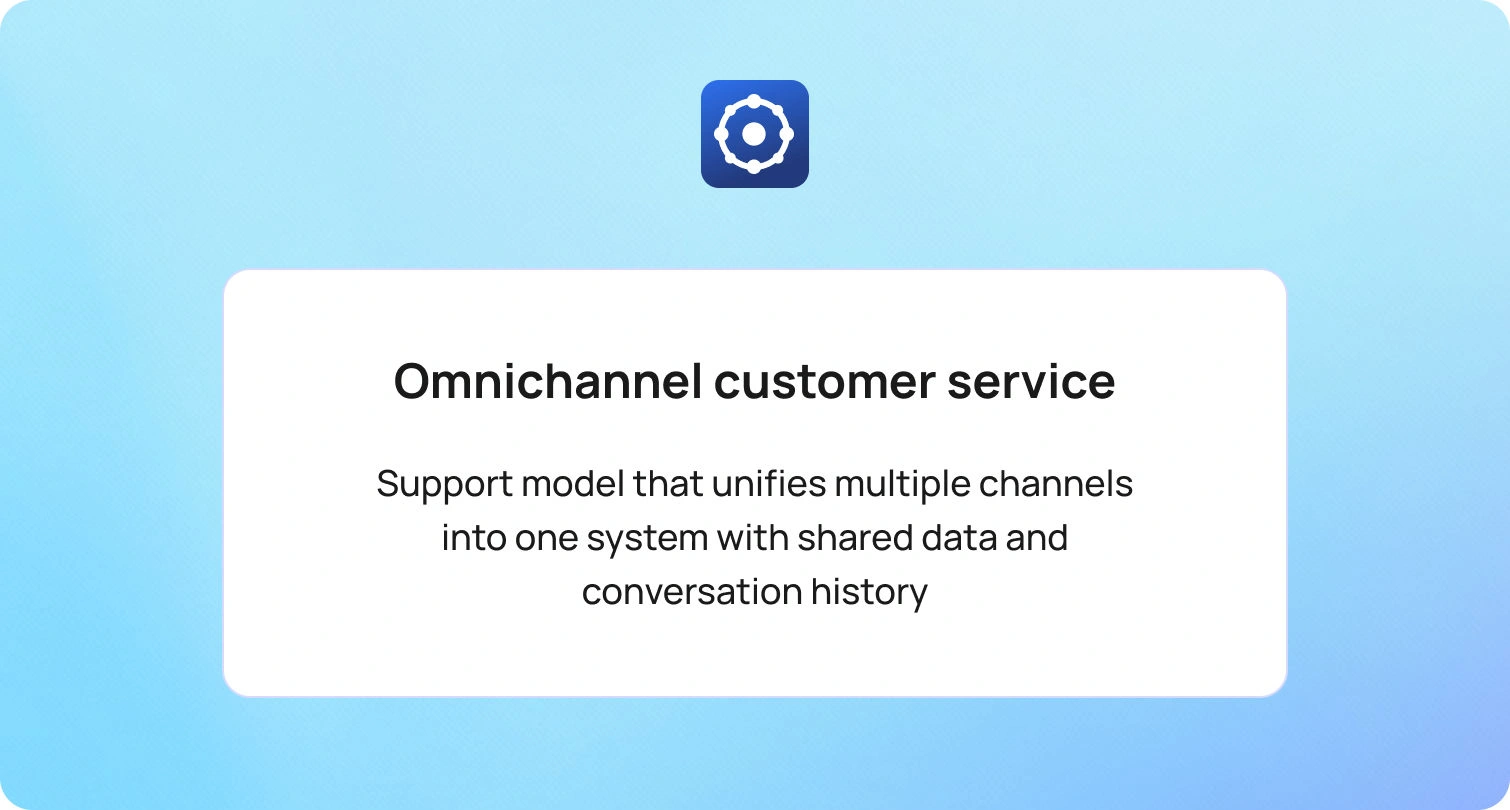
Customers expect consistency across channels, regardless of internal systems. They just want to receive support on their terms, whether that's email, chat, social media, or phone.
Current trends in customer support indicate that businesses with genuine omnichannel support experience higher customer retention and improved customer satisfaction scores. That’s because repeat contact across channels is a frequent driver of dissatisfaction
Support teams need a unified approach. One platform that syncs every customer interaction (voice, email, chat, social) so support representatives have full context every time.
Customers who interact with a brand through multiple channels are more likely to be loyal and spend more, provided the experience is consistent. That means investing in customer support platforms and omnichannel strategies that integrate everything, rather than cobbling together five disparate tools.
3. Proactive Customer Service
The old model: Wait for customers to complain, then fix it.
The new model: Spot the problem, fix it, and notify the customer before they even realize there's a problem.
That's proactive customer service, and it's one of the most significant trends in the customer support industry right now. Companies are using customer data and AI capabilities to predict issues (like a delayed shipment or a billing error) and address them immediately.
Proactive support boosts customer loyalty, reduces ticket volume, and turns potential complaints into loyalty-building moments. Instead of customers calling in angry, they get a heads-up message: "Hey, we noticed your order's delayed. Here's a discount code and the new delivery date."
4. Self-Service Solutions
Not every customer wants to speak with a live representative. Sometimes, they just want the answer, and they want it fast.
That's why self-service options are emerging. Knowledge bases, FAQ pages, interactive tutorials, and AI-powered chatbots are empowering customers to solve problems independently.
This leads to:
- Reduced support ticket volume
- Lower operational costs
- Higher customer satisfaction (because customers get instant answers)
- Support agents can focus on complex issues that actually need human help
However, self-service must be effective. If customers can’t find an answer quickly, they escalate, often with lower satisfaction.
The best customer solutions combine self-service with intelligent routing. If a customer can't find the answer, they're automatically connected to the right agent with full context. No starting over. No repeating themselves.
5. Personalization
Personalized service means using customer data to tailor interactions. Customer support agents should be able to view purchase history, past tickets, and preferences as soon as they open a conversation. AI tools should suggest canned responses that match the customer's tone and the issue at hand.
Customers interact with brands that understand them. Generic, copy-paste responses are outdated. Personalized experiences demonstrate that you've paid attention and foster customer loyalty.
Still, this requires the right technology. You need platforms that centralize customer information so your team doesn't have to dig through five different systems to find context.
6. Multilingual Customer Support
Companies offering multilingual customer support experience higher customer engagement and can tap into new markets without proportional headcount growth.
AI-powered translation and multilingual voicebots enable this. A team in one location can now handle customer requests in German, French, and Spanish without needing fluent speakers for every language.
This is one of those customer support software trends that's leveling the playing field. Small and mid-sized businesses can now compete globally without the traditional cost barriers that previously hindered their growth.
7. Data Security & Data Privacy
Customers are more aware than ever about how their data is used. And with regulations tightening globally, businesses need to prioritize data security (not just for compliance, but for customer trust).
Transparency wins. Companies that openly communicate how they protect information and give customers control over their data are building stronger, more trustworthy relationships.
If your support platform lacks robust security measures (MFA, role-based access, audit logs, and data-location controls), it's time to upgrade. Your customers and legal team will appreciate your efforts. Your customers and legal team will appreciate your efforts.
8. The Human Touch
As automation and AI become more prevalent, the value of human connection increases.
Yes, AI agents can handle routine tasks, and self-service is excellent for simple issues. However, when things become complicated, emotional, or simply frustrating, customers want to speak with a real person who genuinely cares.
The most innovative strategies strike a balance between cutting-edge tools and empowered employees. Support agents should have access to the best technology and the training, autonomy, and resources necessary to deliver a personal touch when it matters most.
Explore this paradox in more depth and discover the human touch in a digital world.
9. Real-Time Analytics

Gone are the days of waiting for end-of-month reports to see how you're doing. Now, business leaders and support managers can track customer satisfaction, response times, and agent performance live.
Customer service analytics provide valuable insights into what's working and what's not, allowing you to adjust on the fly. If wait times are spiking, you can reassign agents to address the issue. If a particular issue continues to escalate, update your knowledge base.
Predictive analytics take this even further, helping you forecast demand, optimize staffing, and prevent issues before they compound.
10. Continuous Learning
One of the most important current trends in customer support is the shift toward continuous learning. Support organizations are investing in ongoing training, and this isn’t just on new technology. It’s for communication skills, empathy, and problem-solving.
The companies that stay ahead are those that constantly adapt, experiment with new tools, and refine their strategies.
This is about building a culture where your team is empowered to learn, evolve, and deliver better customer experiences every day.
What Does This All Mean for Your Business?
The future isn't about choosing between AI and humans, automation and personalization, or operational efficiency and empathy. It's about blending them.
The businesses winning in 2026 are the ones that:
- Use AI to eliminate repetitive work and raise FCR.
- Deliver consistent omnichannel experiences with unified context.
- Shift from reactive to proactive outreach on known failure points.
- Invest in self-service with clean escalation and article governance
- Personalize with governed data, not ad-hoc macros.
- Adopt a continuous learning cadence (weekly/quarterly).
If you're still patching together disconnected tools, relying on outdated processes, or treating customer support as a cost center instead of a competitive advantage, then you're behind.
Fortunately, it's not too late. The right customer support automation platform (combined with a smart strategy) can transform how you support customers.
See how a unified, AI-powered platform can help you stay ahead of these trends: Explore BlueTweak and see what modern support actually looks like.

10 Best AI Chatbots for Customer Support in 2026
Before You Choose: Why Multilingual + GDPR Is Non-Negotiable in 2026
Customer support volume has shifted from email-only to omnichannel messaging, with teams handling inquiries across WhatsApp, chat, voice, and social media in 15+ languages. Human agents alone can't scale this efficiently, which is why AI chatbots and voicebots are stepping in to automate routine inquiries.CFOs now focus on total cost of operation, data sovereignty, and whether your AI chatbot actually grounds answers in your knowledge base or hallucinates under pressure. Common pitfalls include:
- Add-on sprawl: Separate vendors for chat, voice, translation, WFM, and QA (each with its own contract, integration headaches, and siloed analytics).
- Unclear data flows: No DPA (Data Processing Agreement), vague sub-processor lists, or missing data residency options that put you at risk during GDPR audits.
- Text-only bots: Platforms that call themselves multilingual but only handle chat, forcing you to bolt on telephony and voicebot capabilities separately.
We evaluated 10 platforms against a consistent checklist and scoring rubric to help you find exactly what each customer service AI chatbot delivers, where it falls short, and when to shortlist BlueTweak for an all-in-one approach. Here are the top five:
| Platform | Best For... | Key AI Feature | GDPR / Residency | Pricing (2026) |
|---|---|---|---|---|
| BlueTweak | Omnichannel Teams | Native Multilingual Voicebot | EU-Native (Full) | €65/agent (All-in) |
| Intercom | SaaS / In-app Chat | Fin AI Agent | Standard DPA | $29/seat + fees |
| Zendesk | Enterprises | Answer Bot | Regional Options | $55/agent + AI |
| Ada | Chat-First Teams | No-Code Automation | Enterprise DPA | Custom Quote |
| Gorgias | Shopify Stores | Order Automation | Standard DPA | $10/mo + fees |
AI Technology Overview: From Translation Add-Ons to GDPR-Ready, Multilingual CX (2018→2026)
A typical 2018 setup might include Zendesk for ticketing, Twilio for voice, Google Translate API for chat, a standalone chatbot builder (such as Drift or Chatfuel), and manual quality assurance via call recording exports. Customer data flowed through five systems with no unified customer profile, no shared context between channels, and weak oversight of what information the AI chatbot could access.However, growth in messaging and voice volume, as well as the increasing complexity of multi-brand operations for BPOs, and stricter privacy expectations, drove the shift. Older stacks (one vendor for ticketing, another for chat, a third for telephony, separate translation APIs, spreadsheet-based WFM) created unclear data paths, siloed analytics, inconsistent terminology, and high agent handoff rates.To accommodate, teams moved from chat-only existing tools with menu-based IVR systems and translation plug-ins to unified omnichannel platforms
with multilingual AI chatbots and voicebots that ground answers in the knowledge base and provide transparent data governance.Now, it's important to prioritize:
- Native multilingual capability across voice and text channels
- Knowledge base grounding with embeddings + LLM to prevent hallucinations
- Clear GDPR posture (DPA/SCCs, sub-processors, data residency options, DSAR tooling, audit logs)
- Unified analytics over piecemeal add-ons
Double-check the platform handles customer interactions end-to-end—bot deflection, seamless agent escalation,suggested replies
, and post-interaction analysis—without requiring custom development or third-party middleware.These changes demonstrate the importance of using our must-have checklist and scoring rubric for every vendor evaluation.
10 Best AI Customer Service Chatbots With Multilingual Support & GDPR Compliance
These platforms pair knowledge-grounded chatbots with agent copilot tools to deflect routine work and speed resolution. Each was evaluated using the checklist and rubric above.
1. BlueTweak – Editor's Choice

BlueTweak is an AI-native customer service solution
that unifies ticketing, chatbot, agent assist, analytics, and workforce management. It handles email, chat, SMS, WhatsApp, Facebook Messenger, and voice in a unified inbox with shared customer profiles.The platform grounds AI in your internal knowledge base using embeddings + LLM, preventing hallucinations with natural language processing while enabling instant answers to complex queries across text and voice channels.Multilingual support
is available for both chatbots and voicebots, featuring real-time translation and native fluency in over 35 languages. GDPR compliance includes DPA with SCCs, EU data residency, a public sub-processor list, DSAR automation, and audit logs tracking every interaction.Who Uses It
: BPO providers and internal CX teams (20–100+ agents) across e-commerce, telecom, finance, and healthcare, managing multilingual support at scale.Key Features
- Customer support automation: Intelligent routing, auto-classification, sentiment analysis prioritizing urgent customer issues.
- AI voicebot & chatbot: Multilingual conversations (35+ languages) grounded in your KB; seamless agent handoff with full context.
- Copilot assist: Call transcription, AI ticket summary, and suggested replies in under 10 seconds using KB and past tickets.
- Omnichannel inbox: Email, chat, SMS, WhatsApp, Facebook Messenger, unified with shared customer profile history.
- WFM built-in; QA available via add-on: Forecasting, real-time adherence dashboards, shift planning, automated scoring, feedback loops, coaching workflows.
- Multilingual AI: Real-time translation across multiple channels; native fluency for consistent terminology.
- €65/agent/month all-in (ticketing, omnichannel, AI chatbot, AI voicebot, copilot tools, WFM, QA, analytics, integrations)
- AI usage priced separately per interaction (transparent, predictable)
- No feature gating; unlimited users and integrations included
- Bundles agentic AI (voicebot + chatbot), agent copilot tools, native WFM/QA, and full omnichannel in one subscription
- Multilingual across voice and text with KB-grounding to prevent hallucinations
- GDPR-ready: DPA, SCCs, EU data residency, DSAR automation, audit logs
- Transparent pricing; no voice or AI add-ons
- Fast time-to-value (weeks, not months); onboarding support from the BlueTweak team
- Built for BPOs: multi-tenant, multi-brand configuration in one instance
- Suggested replies reduce first response time to under 10 seconds
- Call transcription and ticket summaries free agents from note-taking
- Newer brand compared to Zendesk/Salesforce legacy (though proven with 15M+ customer interactions).
- AI usage scales with volume; per-interaction pricing AI model requires volume forecasting.
to see how BlueTweak's unified AI customer support platform handles voicebot deflection, agent copilot workflows, and real-time workforce analytics in one subscription—no feature gating, no surprise fees.
2. Zendesk
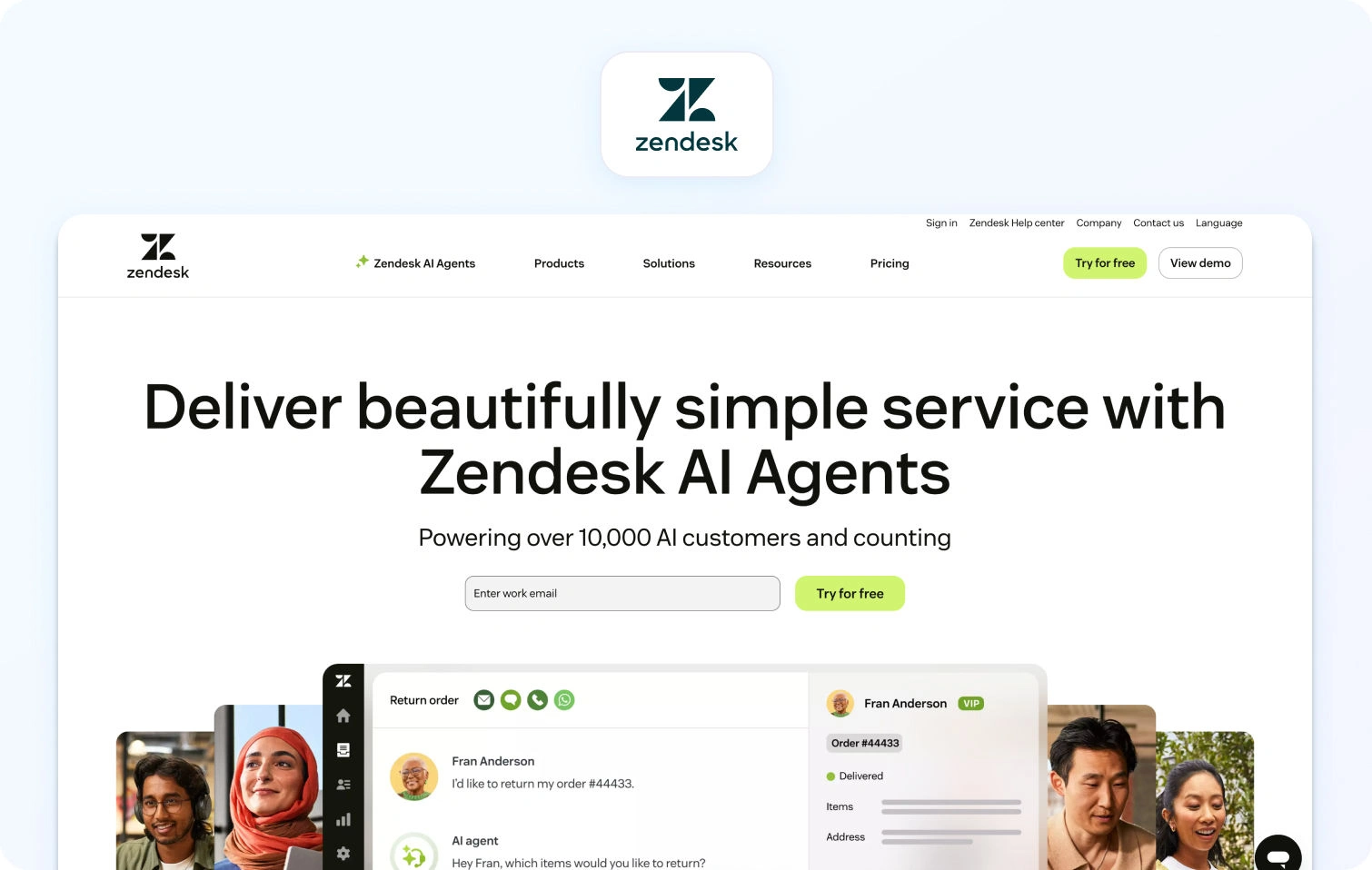
is a cloud-based helpdesk platform with AI add-ons for ticket summarization, customer intent detection, and chatbot automation. It covers email, chat, voice (via Twilio partnership), and messaging, but charges separately for advanced AI, WFM, and voice features.Who Uses It
: SMBs to enterprises across industries; strong in SaaS, e-commerce, and tech support.Key Features
- Omnichannel ticketing with macros and automation
- Answer Bot (knowledge-base chatbot, text-only)
- AI-powered workflow automation and intelligent routing
- Basic reporting dashboards
- Zendesk Talk (voice via Twilio third-party integration)
- Marketplace with 1,200+ app integrations
- Suite Team: $55/agent/month (billed annually)
- Suite Growth: $89/agent/month (billed annually)
- Suite Professional: $115/agent/month (billed annually)
- Suite Enterprise: $150+/agent/month (billed annually)
- Voice, WFM ($25/agent/month), QA ($35/agent/month), and premium AI features cost extra
- Mature ecosystem with an extensive app marketplace
- Familiar UI for many support teams
- Strong integration library for CRM and commerce platforms
- Public DPA with SCCs available
- Voice is partner-dependent (Twilio), not native
- WFM and advanced AI are gated behind enterprise tiers, inflating TCO
- No native voicebot, only text-based Answer Bot
- AI chatbots are limited compared to LLM-native platforms
3. Intercom
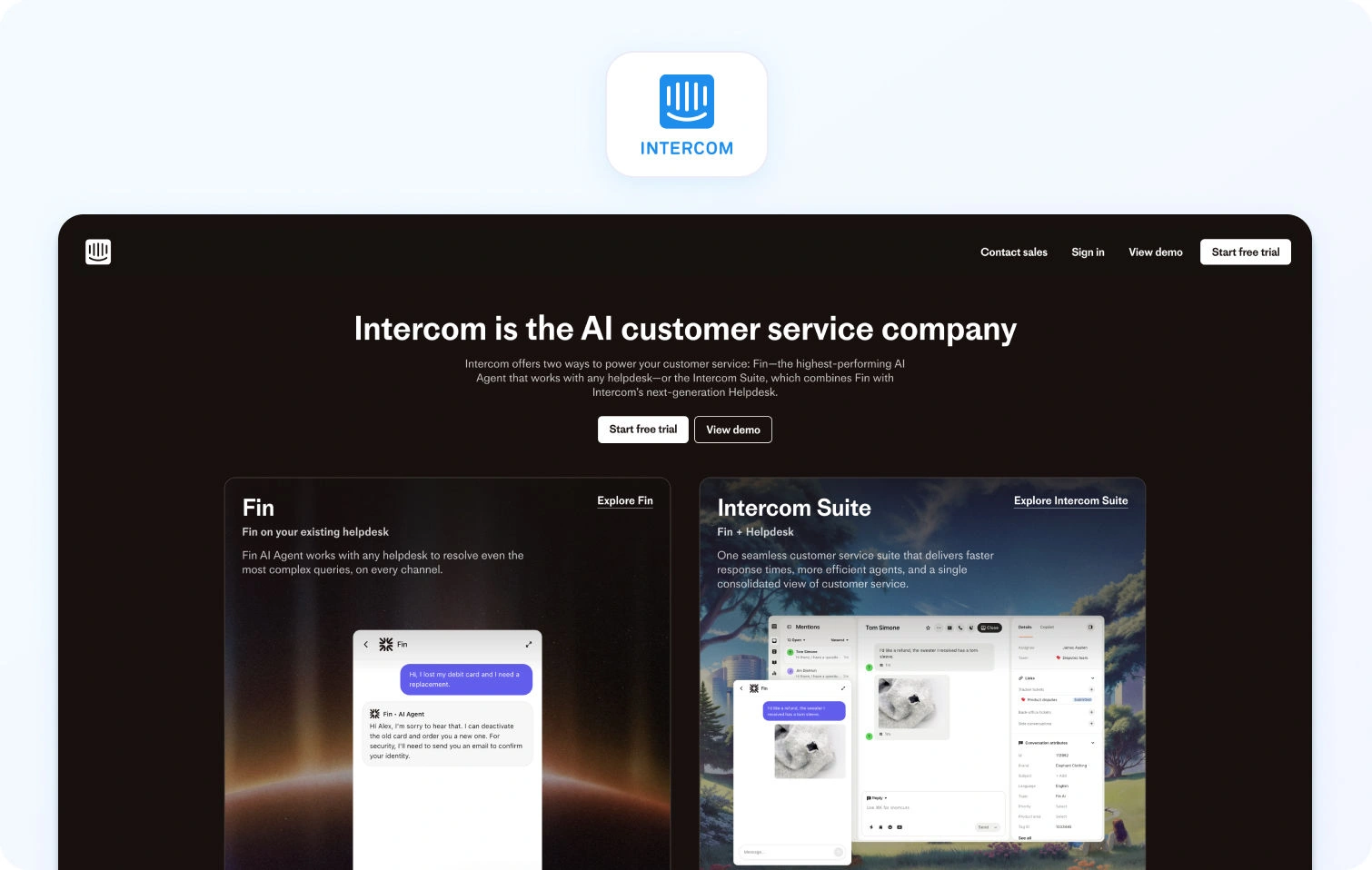
combines live chat, a custom AI chatbot (Fin AI), and helpdesk ticketing, with a focus on proactive engagement and sales conversations. It includes basic email/messaging but limited native voice support.Who Uses It
: SaaS companies, product-led growth teams, and digital-first businesses engaging customers via in-app chat.Key Features
- Fin AI chatbot (GPT-powered, KB-grounded, text-only)
- Live chat and messaging
- Product tours and proactive campaigns (Series)
- Basic ticketing system
- Reporting dashboards
- Multilingual support (45+ languages)
- Essential: $29/seat/month (billed annually)
- Advanced: $85/seat/month (billed annually)
- Expert: $132/seat/month (billed annually)
- Fin AI Agent: $0.99 per resolution (minimum 50 resolutions/month = $49.50 baseline)
- Fin AI Copilot: $35/seat/month for unlimited agent assist
- Proactive Support Plus: $99/month base
- No native voice; integrations required for telephony
- Strong chatbot UX with modern interface
- Proactive messaging capabilities
- Quick setup for digital preferred channels
- Multilingual chatbot
- Expensive at scale
- No native voice or voicebot
- Analytics is limited compared to contact-center platforms
- Unpredictable costs; AI resolution fees balloon during peak volumes
4. Freshdesk (Freshworks)
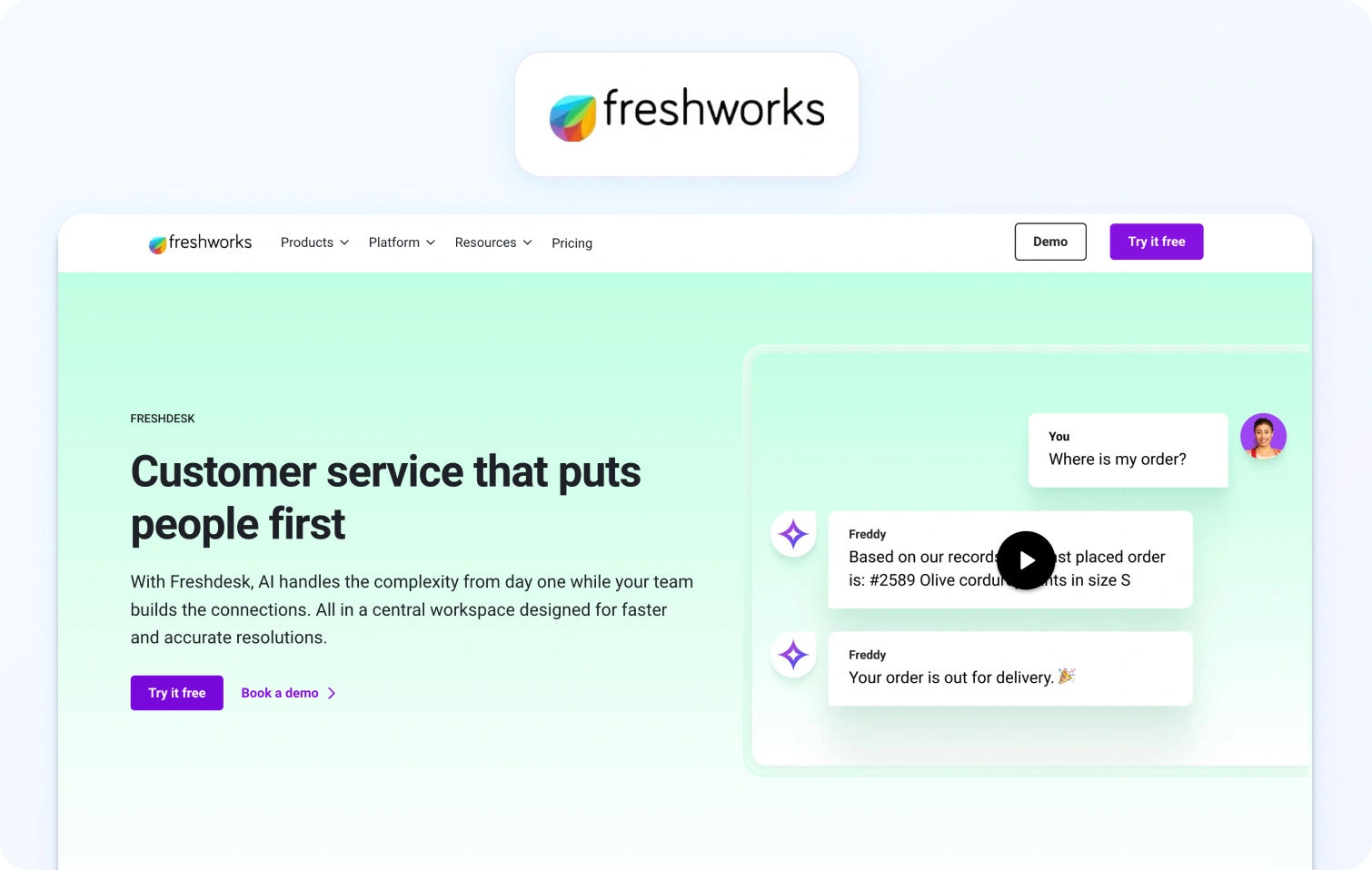
offers ticketing, email, chat, phone (Freshcaller), and Freddy AI for chatbot and real-time assistance. WFM and advanced analytics are available in higher tiers or separate Freshworks products.Who Uses It
: SMBs and mid-market teams; popular in retail, hospitality, and education.Key Features
- Omnichannel ticketing (email, chat, phone, social)
- Freddy AI chatbot (text-only)
- Ticket automation and workflow rules
- Freshcaller (cloud telephony add-on)
- Team collaboration tools
- Basic reporting
- Free: $0 for up to 2 agents (limited features)
- Growth: $15/agent/month (billed annually)
- Pro: $49/agent/month (billed annually)
- Enterprise: $79/agent/month (billed annually)
- Freddy AI Copilot: $29/agent/month (add-on)
- Freddy AI Agent: $100 per 1,000 bot sessions (usage-based)
- WFM via separate Freshworks suite
- Affordable entry point
- Easy onboarding with an intuitive interface
- Decent AI chatbot for text channels
- Voice and WFM bolt-ons inflate TCO
- Freddy AI is less advanced than LLM-native platforms
- Per-session AI pricing is unpredictable (deflecting more tickets = higher costs)
5. Salesforce Service Cloud (Einstein for Service)
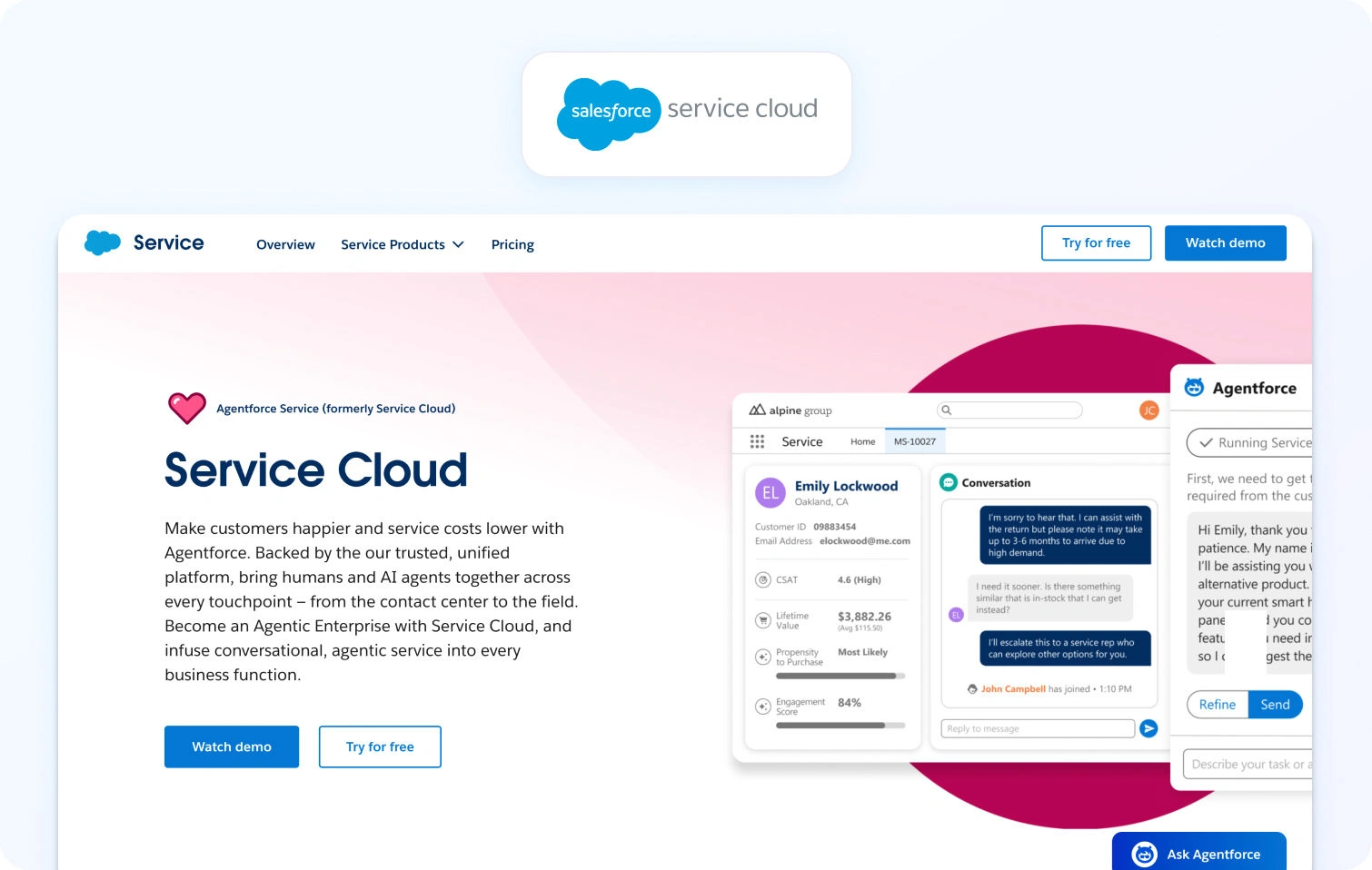
integrates CRM data with omnichannel case management and Einstein AI for predictive routing, chatbots, and sentiment analysis. Voice via third-party CTI or Amazon Connect integration.Who Uses It
: Enterprise companies already in the Salesforce ecosystem; finance, healthcare, and B2B services.Key Features
- Einstein Bots (text chatbot, no voicebot)
- Omnichannel case management
- Einstein AI for case classification and routing
- Field service management
- Einstein analytics and dashboards
- Workflow automation
- Secure CRM integration
- Service Cloud Essentials: ~$75/user/month
- Enterprise Edition: ~$165/user/month
- Unlimited Edition: ~$330/user/month
- Einstein AI add-on: $50/user/month (requires Enterprise or Unlimited Edition)
- Agentforce add-on (newer AI): $125/user/month
- Voice, WFM, and advanced features require higher tiers or additional products
- Deep CRM context for Salesforce-native organizations
- Enterprise-grade security and compliance
- Powerful for teams already invested in Salesforce
- Complex setup requiring months of implementation
- Voice not native; requires third-party integration
- Einstein Bots text-only (no voicebot)
- WFM via separate products
6. Genesys Cloud CX
is a contact-center platform with native voice, digital channels, WFM, QA, and AI for predictive routing, sentiment analysis, and agent assist.Who Uses It
: Large contact centers (100+ agents) in telecom, financial services, healthcare, and utilities.Key Features
- Omnichannel (voice, chat, email, SMS, messaging)
- Genesys AI (routing, bots, transcription, analytics)
- Native WFM and QA tools
- Real-time analytics and chatbot performance monitoring
- Workforce engagement management
- Genesys Cloud CX 1: ~$75/user/month (voice-only)
- Genesys Cloud CX 2: ~$115/user/month (includes digital + AI features)
- Genesys Cloud CX 3: ~$155/user/month (adds WFM)
- Genesys Cloud CX 4: ~$240/user/month (adds AI Customer Experience Orchestration)
- Minimum monthly contract commitment: $2,000 (roughly 27 agents on CX 1)
- AI Experience tokens: 250 named or 350 concurrent tokens per org/month included; additional tokens cost extra
- Enterprise contracts often require custom quotes
- Full contact-center stack with robust voice
- Native WFM/QA included in higher tiers
- Strong compliance controls for regulated industries
- Gartner Magic Quadrant Leader (11+ consecutive years)
- Overkill for <100 agents
- Steep learning curve
- Slower time-to-value
- Complex AI token system adds cost unpredictability
7. Ada
is a no-code AI chatbot platform (text-only) that automatically handles customer inquiries via chat and messaging. No native ticketing, voice, or WFM. It integrates with external helpdesks.Who Uses It
: E-commerce, fintech, SaaS; companies seeking chatbot-first automation with low IT overhead.Key Features
- GPT-powered chatbot (text-only)
- Knowledge-base grounding
- Multilingual support (45+ languages)
- Analytics dashboard
- Integrations (Zendesk, Salesforce, Shopify)
- Custom pricing only; no public paid plans
- Per-resolution or per-conversation pricing model
- No free plan; contact sales for a quote
- Fast chatbot deployment
- Strong text automation
- Multilingual capabilities (45+ languages)
- Easy for non-technical teams
- No transparent pricing (requires sales contact)
- Text-only (no voice or voicebot)
- No native ticketing or WFM
- Must integrate with a separate helpdesk
- Limited visibility into agent workflows or quality assurance
8. LivePerson
is a conversational messaging platform that specializes in messaging-first customer engagement across web, mobile apps, SMS, and social channels, utilizing generative AI and LLM orchestration.Who Uses It
: Enterprise brands (retail, telecom, finance, hospitality) prioritizing digital-first, messaging-based engagement over voice.Key Features
- Conversational Cloud platform (messaging-first)
- Omnichannel messaging (SMS, WhatsApp, Apple Business Chat, Facebook, web, app)
- Generative AI and LLM orchestration (Bring Your Own AI)
- Intent Manager and Conversation Builder (no-code AI chatbot builder)
- Agent Assist and Conversation Copilot
- Analytics Studio (voice + text conversation analysis)
- Integration with Apple Pay for in-chat transactions
- Compliance (GDPR, HIPAA, PCI DSS, CCPA)
- Custom pricing only (no public plans)
- No free option; free trial available
- Messaging-first platform (ideal for digital-first brands)
- Handles 1 billion+ conversations monthly
- Strong LLM/generative AI capabilities
- BYOAI (Bring Your Own AI) flexibility
- Deep social and messaging integrations
- No transparent pricing (requires sales contact)
- Expensive for SMBs
- Messaging-focused; limited native voice
- Complex setup and navigation
- Not ideal for voice-heavy contact centers
9. HubSpot (Chatbot)
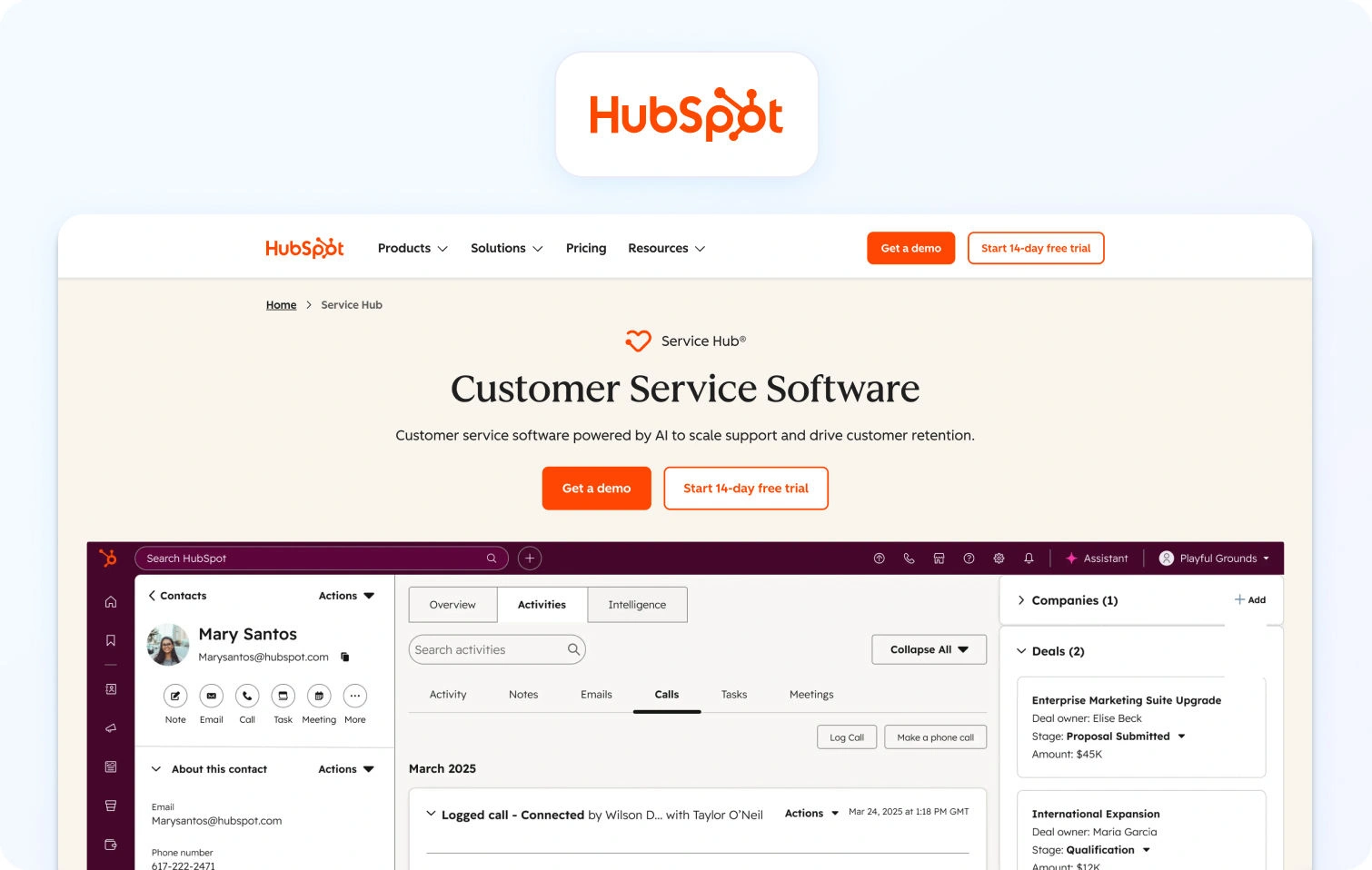
combines CRM, marketing automation, and customer service with a free chatbot builder and live chat. It's designed for inbound marketing teams that want unified customer data across sales, marketing, and support.Who Uses It
: SMBs and mid-market companies using HubSpot CRM; strong in SaaS, professional services, and B2B.Key Features
- Free chatbot builder with conversation flows
- Live chat widget with team inbox
- Ticketing system with automation
- Knowledge base and help center
- Email integration and team collaboration
- CRM integration (contact history, deal tracking)
- Basic AI features in paid tiers
- Reporting and analytics
- Free: $0 (includes basic chatbot, live chat, ticketing for up to 2 users)
- Service Hub Starter: $15/seat/month (2-seat minimum = $30/month)
- Service Hub Professional: $90/seat/month (5-seat minimum = $450/month)
- Service Hub Enterprise: $150/seat/month (10-seat minimum = $1,500/month)
- AI features are limited to Professional and Enterprise tiers
- No native voice or voicebot
- Free plan available with basic chatbot and ticketing
- Seamless CRM integration for HubSpot users
- Easy setup with no-code chatbot builder
- Unified platform for marketing, sales, and service
- Strong for inbound lead generation
- Limited AI capabilities compared to dedicated platforms
- No native voice or voicebot
- No native WFM or QA tools
- Chatbot flows are basic (rule-based vs conversational artificial intelligence and machine learning)
- Limited multilingual support
10. Gorgias
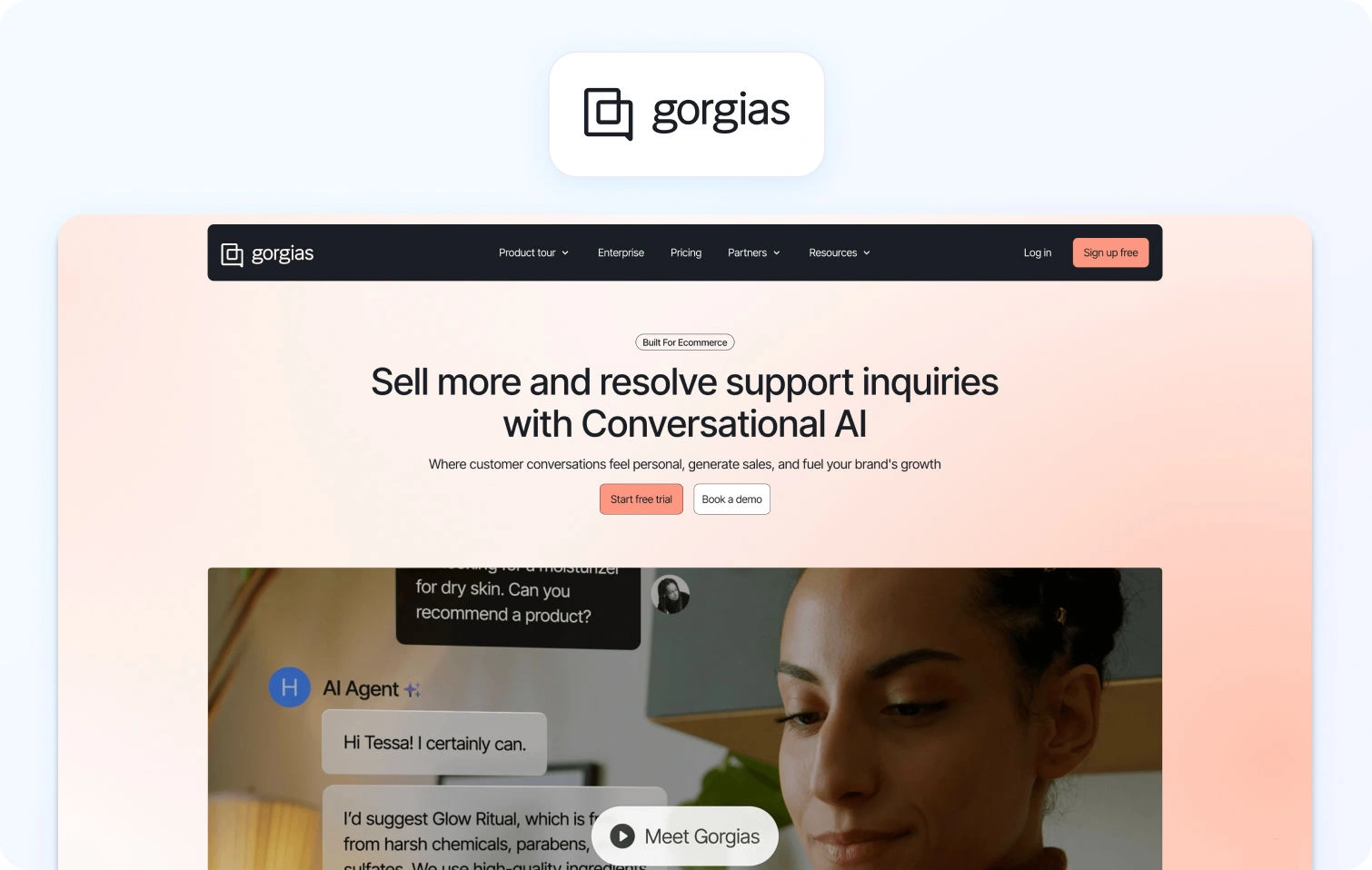
is an e-commerce-focused helpdesk with deep integrations for Shopify/BigCommerce/Magento, as well as AI Agent capabilities for order management, refunds, and product recommendations.Who Uses It
: E-commerce brands (especially Shopify stores) with moderate to high order volumes.Key Features
- Deep e-commerce integrations (Shopify, BigCommerce, Magento)
- AI Agent (text-only chatbot) for order tracking, cancellations, and refunds
- Omnichannel inbox (email, chat, SMS, social, voice)
- Automated workflows and macros
- Revenue-driving features (upsells, product recommendations)
- 100+ e-commerce app integrations
- Starter: $10/month (50 tickets included)
- Basic: $60/month (300 tickets included)
- Pro: $360/month (2,000 tickets included)
- Advanced: $900/month (5,000 tickets included)
- AI Agent resolutions: $0.90–$1.00 each (annual vs monthly billing)
- Overage fees apply beyond plan limits
- Best-in-class for Shopify/e-commerce stores
- Order management directly in Helpdesk
- Revenue-focused features (product recommendations, cart recovery)
- Affordable entry point for small e-commerce teams
- Primarily Shopify-focused; limited value for non-e-commerce
- AI Agent text-only (no voicebot)
- Complex pricing: pay for AI resolutions + they count toward ticket limits
- No native WFM or QA tools
What Counts as GDPR-Ready, Multilingual in 2026
Not all platforms that claim GDPR compliance actually deliver the controls teams need. Here's what to verify before signing:GDPR essentials
- DPA/SCCs: Data Processing Agreement with Standard Contractual Clauses for EU data transfers.
- Sub-processors: Public, updated list of all third-party AI providers (OpenAI, Anthropic, Google) the platform uses.
- Data residency: Options to store customer data in EU or other regional data centers, not just US-only cloud.
- DSAR tooling: Built-in features to handle data subject access requests (view, export, delete customer data).
- Audit logs: Granular records of who accessed what data, when, and why—critical during compliance reviews.
- Native vs translation: Does the AI chatbot support multiple languages natively (trained on multilingual datasets) or rely on real-time translation APIs that introduce latency and errors?
- KB grounding: Can the chatbot pull context from your internal knowledge base, CRM, or external APIs to answer queries accurately, or does it generate responses from a generic model?
: Confirm multilingual support for chat (not just translated UI labels), and evaluate any voice features separately if you plan to automate phone calls.
The Importance of GDPR Compliance
Choosing a customer service AI chatbot without verified GDPR compliance exposes your organization to regulatory penalties, reputational damage, and operational disruption. Here's what's at risk:
- Regulatory penalties: GDPR fines can reach €20 million or 4% of global annual revenue, whichever is higher. In 2023, the Irish Data Protection Commission fined Meta €1.2 billion for inadequate data transfer mechanisms—a direct result of unclear sub-processor agreements and missing SCCs.
- Reputational damage: A data breach or non-compliance disclosure triggers customer churn, especially in finance, healthcare, and insurance, where trust is the foundation. Support teams that can't demonstrate secure data handling lose enterprise contracts.
- Operational disruption: Without DSAR tooling and audit logs, responding to data subject requests becomes a manual, time-consuming process. Platforms that store customer data in non-EU data centers without SCCs force you to halt operations during compliance reviews.
- Third-party liability: If your AI chatbot relies on external LLMs (OpenAI, Google, Anthropic) without clear DPAs, you inherit their compliance gaps. Many platforms don't disclose sub-processor relationships until after the contract is signed, leaving you liable for their data handling.
- Loss of customer trust: Customers expect transparency about how AI handles their data. Platforms that can't explain where human conversations are stored, who accesses transcripts, or how long data is retained create friction during sales cycles and support interactions.
GDPR compliance isn't a checkbox. It's a competitive advantage. Sales teams that choose GDPR-ready platforms with transparent data governance win enterprise deals, pass audits faster, and sleep better knowing customer interactions are protected.
How We Evaluated Each AI-Powered Chatbot
Our ranking process ensures you can compare platforms objectively, without marketing spin or unverified claims. Here's how we assessed every AI customer service chatbot:
- Features: Checked against the must-have checklist below using public documentation, product demos, and vendor support articles. We prioritized platforms that bundle AI chatbot, voicebot, agent copilot tools, and customer support automation in base subscriptions rather than charging per feature.
- Who uses it: Drawn from public case studies, customer logos on vendor websites, and third-party review platforms (G2, Capterra). If user segments weren't clear, we noted and evaluated them based on the stated positioning (SMB vs. mid-market vs. enterprise).
- Pricing: From published pricing pages. If absent, we noted the stated model (per-agent, per-resolution, tiered) and flagged "contact sales."
- Pros/cons: Evidence-based strengths and gaps tied directly to checklist criteria and rubric scores. No superlatives ("best-in-class," "industry-leading") unless supported by third-party benchmarks. We focused on what teams at 20–100 agents will encounter: setup complexity, integration quality, support responsiveness, and whether AI chatbots actually reduce ticket volume or just shift work to agents.
Must-Have Capability Checklist
Every platform below was evaluated against these baseline requirements:
- Multilingual AI & Voice: Supports 10+ languages with native fluency and conversational IVR for 60–80% routine deflection.
- KB-Grounded Accuracy: Uses RAG (Embeddings + LLM) to pull context from your internal knowledge base, preventing AI hallucinations.
- True Omnichannel: A single inbox for email, WhatsApp, SMS, and voice with a unified customer profile.
- GDPR & Data Sovereignty: Mandatory DPA/SCCs, regional data residency (EU/US), and granular audit logs for compliance.
- Operational Alignment: Built-in Workforce Management (WFM) and Quality Assurance (QA) to avoid "tool sprawl."
- Pricing Integrity: Flat "all-in" per-agent rates; no hidden per-resolution fees that balloon during peak volume.
Scoring Rubric
After confirming baseline capabilities, we scored each platform on these dimensions:
| Dimension | What We Look For |
|---|---|
| Mid-Market Fit | Scaled for 20–100 agents; avoids SMB limitations or enterprise complexity. |
| AI Coverage | Balance of "Agentic AI" (autonomous) and "Copilots" (agent assistance). |
| Native WFM/QA | Ability to forecast, schedule, and score interactions without 3rd-party add-ons. |
| Time-to-Value | Deployment in weeks, not months of professional services. |
| Total Cost (TCO) | Full visibility into voice, AI, and integration costs for 50-agent scenarios. |
| Security Controls | MFA, role-based permissions, and DSAR automation for data requests. |
Choosing the Right GDPR-Ready, Multilingual Chatbot
The best AI chatbot for improving customer service delivers multilingual coverage, a knowledge base foundation to prevent hallucinations, a clear GDPR posture, and native WFM/QA capabilities. It does this without gating features behind enterprise SKUs or charging unpredictable per-resolution fees.If you're running a 20–100 agent team and need everything in one platform, BlueTweak delivers. It's the only solution that bundles agentic AI (voicebot + chatbot), agent copilot tools (call transcription, ticket summaries, suggested replies), native workforce management, quality assurance, and full omnichannel capabilities in one €65/agent/month subscription.No feature sprawl, no surprise fees, no voice or AI add-ons; just transparent pricing and fast deployment.Schedule a 30-minute demo
and learn how BlueTweak replaces five tools while delivering measurable gains in ticket deflection, first response time, and agent productivity.
FAQ
Want to see BlueTweak for yourself? Sign up to our free 14-day trial!
Free trial
How to Find (and Fix) Customer Pain Points That Matter Most
An Evidence-First Playbook for Customer Pain Points
If customers encounter friction, they tend to leave. Understanding customer pain points is crucial for protecting retention, maintaining a good reputation, and minimizing the cost to serve. Each unresolved issue risks churn, negative reviews, and a handover to a competitor.
Many teams guess from anecdotes or partial dashboards. A reliable view can be obtained from evidence such as tickets and transcripts, search logs with no results, product and journey analytics, refund or cancellation reasons, and survey verbatim responses.
This guide provides a repeatable method for identifying and resolving the most critical issues. You will instrument the journey, quantify drivers by volume and business impact, validate with quick customer and agent feedback, prioritize fixes across product, policy, process, and knowledge, and track the lift in FCR, CSAT, repeat-contact rate, and revenue.
A customer pain point is a specific obstacle or source of friction a customer encounters when using your product, accessing your service, or interacting with your brand. In practice, these are moments when the experience becomes more challenging than it should be, resulting in delays, confusion, additional costs, or avoidable effort. Such moments can prompt customers to reconsider continuing the relationship.
Every organization has pain points. Leaders address them with discipline by identifying, prioritizing, and resolving them before they accumulate into churn, negative reviews, or rising support costs.
Why Customer Pain Points Matter (More Than You Think)

Ignoring common pain points does not remove them. It removes customers.
Here's what happens when pain points go unaddressed:
- Churn: Customers switch to competitors that resolve their issues. A single bad experience may earn a second chance, but repeated pain points lead to attrition.
- Damaged brand reputation: Unhappy customers don't remain silent. They leave negative reviews, post on social media channels, and tell anyone who'll listen why your brand frustrated them.
- Decreased customer loyalty: Loyalty is built on positive experiences. Every unresolved pain point chips away at that foundation until there's nothing left.
- Lost revenue: Customer dissatisfaction often results in lost customers and subsequent revenue losses. Plus, you miss out on upsells, cross-sells, and referrals from customers who would've been advocates.
The 5 Types of Customer Pain Points (With Real Examples)

Below are the main categories of customer pain points, along with concrete examples, to help you identify them in your business.
1. Functional Pain Points
These are problems with the core functionality of your product or service. When these pain points occur, it means that things just don't work the way they should.
Examples of customer pain points in this category:
- The website loads slowly
- Software crashes during critical tasks
- Product features are broken or buggy
- Mobile app freezes constantly
- Technical support can't replicate or fix the issue
Functional pain points kill trust. If your product doesn't do what it promises, nothing else matters.
2. Usability Pain Points
This is when your product or service works, but it's confusing, complicated, or frustrating to actually use.
Common customer pain points here include:
- Complicated user interfaces
- Unclear instructions or missing documentation
- Too many steps in the buying process
- No guest checkout option (making customers create accounts just to buy something)
- Confusing navigation that makes customers feel lost
Even if your product is excellent, usability pain points make customers feel inadequate, and they'll blame you for it.
3. Financial Pain Points
These are cost-related frustrations where customers feel like they're not getting value for money.
Customer pain points examples:
- Hidden fees that show up at checkout
- Pricing that's higher than competitors, with no apparent reason why
- Unexpected final cost that's way more than advertised
- No flexible payment options
- Unclear what's included vs. what costs extra
Financial pain points breed resentment. Even if customers pay, they'll never trust you.
4. Support Pain Points
These are problems with how (or if) you help customers when things go wrong.
Customer service pain points include:
- Slow response times from customer support teams
- Support agents who don't actually help
- Limited support channels (email only, no phone or chat)
- Getting bounced between different support team members who all ask the same questions
- No proactive communication during outages or issues
Support pain points turn fixable problems into reasons to leave. Customers don't expect perfection. They expect you to care when things break.
5. Convenience Pain Points
These are obstacles that make it more complicated than necessary for customers to achieve their desired goals.
Examples:
- Complicated account creation with too many required fields
- Limited payment options (cash only, or credit cards only)
- No mobile-friendly experience
- Clunky checkout process
- Hard-to-find store locations or delivery vehicles
- Can't easily track orders or get updates
Convenience pain points add friction to the customer journey. Every extra step is a chance for customers to bail.
How to Identify Customer Pain Points (The Right Way)

You cannot fix what you have not identified. Here’s how to find customer pain points instead of just guessing.
1. Listen to Customer Feedback (All of It)
Customers are already signaling what is not working.
Where to look:
- Customer surveys (keep them short and specific)
- Online reviews (both yours and competitors')
- Social media channels (what are people complaining about?)
- Support tickets (what issues come up repeatedly?)
- Live chat transcripts
- Call recordings from customer support teams
Look for patterns. One complaint might be an outlier, but ten complaints about the same thing are definitely a customer pain point.
For agent techniques that turn feedback into fixes, review our customer support best practices guide.
2. Use Qualitative Market Research
Talk to your customers.
Conduct user research through interviews, focus groups, or one-on-one conversations. Ask open-ended questions and let customers explain in their own words what frustrates them.
You might ask:
- "What's the hardest part about using our product?"
- "If you could change one thing about our service, what would it be?"
- "What almost made you choose a competitor instead?"
- "When was the last time you felt frustrated with us—and why?"
3. Analyze Customer Behavior Data
Sometimes customers don't say what's wrong. Instead, they just stop using your product or abandon their carts.
This is when you look at:
- Where customers drop off in the buying process
- Which features customers never use (might be too confusing)
- Support ticket volume by issue type
- Time spent on specific pages (are they stuck?)
- Repeat issues from the same customers
Tools like customer service analytics can automatically surface these insights.
4. Map the Customer Journey
Create a customer journey map that tracks every touchpoint from awareness to online purchase to post-sale support.
At each stage, ask: where could customers encounter pain points?
Customer journey pain points to look for:
- Discovery: Can they even find you?
- Research: Is your messaging clear?
- Customer Purchase: Is checkout smooth?
- Onboarding: Do they know how to use your product?
- Support: Can they get help when needed?
- Renewal/upsell: Do they trust you enough to make a repeat purchase?
5. Monitor Competitor Reviews
Your competitors' customers are dealing with similar pain points. Read their reviews to understand:
- What customers in your industry struggle with
- What your competitors are failing to fix
- Opportunities for you to differentiate
If most consumers in your space complain about frequent outages or slow technical support, you just found your competitive edge.
7 Strategies for Addressing Customer Pain Points

Identifying pain points is step one. Now, it’s time to fix them.
1. Prioritize Based on Impact
Customer pain points vary in severity. Some create minor friction, while others pose a material threat to revenue and retention.
Focus on:
- High-frequency issues (affecting many customers)
- High-impact issues (causing churn or negative emotions)
- Quick wins (easy to fix, big customer satisfaction boost)
Use a customer pain point analysis framework to rank issues by frequency and severity.
2. Fix Functional Issues First
If your product is broken, nothing else matters. Customers will tolerate a clunky interface if the product works. They won't tolerate a beautiful interface if it doesn't.
Make sure your core functionality is solid before worrying about convenience or design tweaks.
3. Simplify Everything
Most usability pain points come from unnecessary complexity.
Ask yourself:
- Can we remove steps from the process that deter customers?
- Can we make this more intuitive?
- Are we asking customers for information we don't actually need?
- Could a guest checkout option reduce friction?
Every extra click, field, or decision is a potential source of pain. Simplify wherever possible.
4. Improve Customer Support
Your support team is your frontline for addressing customer pain points in real-time.
Invest in:
- Faster response times
- Better training for support agents
- Improved training for sales representatives
- Multiple support channels (phone, chat, email, social)
- Scalable solutions to handle higher volume
- Proactive customer service that fixes issues before customers notice
Consider customer support automation to handle routine questions more efficiently, freeing your team to focus on solving complex problems.
5. Be Transparent About Pricing
Financial pain points often stem from surprises rather than the actual cost.
Best practices:
- Show the total cost upfront (no hidden fees)
- Explain what customers get for their money
- Offer flexible payment options
- Make refunds or exchanges easy
If your pricing is higher than your competitors, explain why. Give customers a reason to choose you beyond price.
6. Use Customer Feedback to Drive Continuous Improvement
This isn't a one-and-done project. Customer expectations change. New pain points emerge. Your job is to keep listening and adapting.
Create internal processes where:
- Customer-facing teams regularly share pain points they're hearing
- Product teams review customer surveys and online reviews
- Leadership prioritizes fixes based on customer concerns
For a complaints workflow from intake to resolution, see our complaints management guide.
7. Empower Customers to Help Themselves
Not every customer wants to contact support. Many just want the answer as soon as possible. You can make this possible through comprehensive knowledge bases, FAQ pages, tutorial videos, and in-app guidance.
Self-service options reduce the workload of the support team and provide customers with the quick answers they want. For turning feedback into self-service content, see our knowledge article playbook.
ROI and Real Cost Savings
When teams resolve the highest-impact pain points, the results are evident in revenue and cost-to-serve. Conversion improves when checkout and onboarding are simple. Lead generation increases when multilingual experiences remove friction for first-time buyers. Service costs decline when repeat contact rates fall and first contact resolution rates rise. Insert one verified metric here as a proof point. Add source before publishing.
Optimization Practices
Treat improvements as an ongoing program. Run A and B tests on messages, prompts, and help content. Segment results by intent, channel, brand, and language. Increase self-service where customer satisfaction is high and route faster to a human when confidence or value is low. Close the loop weekly by updating knowledge articles, macros, and workflows, and then remeasure first contact resolution, customer satisfaction, and repeat contact rates.
A Future Look
Decision-makers expect assistants that act within guardrails, maintain parity between voice and text, and have transparent governance for data and model behavior. Expect continued movement toward knowledge-grounded automation, transparent audit trails, and multilingual experiences that feel native. The advantage will go to teams that instrument the journey, learn quickly, and show measurable impact.
The Bottom Line
Customer pain points are everywhere. In your checkout process, customer service experience, product functionality, and pricing model.
The businesses that win aren't the ones without pain points. They're the ones who:
- Actively identify pain points before customers leave
- Address customer pain points quickly and transparently
- Use customer feedback to keep improving
- Build a culture where solving customer challenges is everyone's job, not just the support team's
You can't eliminate every frustration. But you can show customers you're paying attention and working to make things better.
That's what turns one-time buyers into lifelong customers.
For a platform that helps you identify and fix customer pain points faster, explore BlueTweak's customer support solutions and see how the right tools make all the difference.

12 Use Cases For AI in Omnichannel Customer Support That Drive Results (2026)
Why AI Now: Context, Speed, and One Experience
Customer expectations rose while communication channels multiplied. A single customer might start on social media, continue in chat, and finish on a phone call. Without an omnichannel customer service strategy anchored by AI, context gets lost, repetitive intake burns time, and the same issue spawns three separate cases. AI changes the shape of the work. It links identities across different channels, maintains context throughout the entire customer journey, and converts unstructured customer inquiries into structured work that the customer service team can resolve without having to start over.
AI also elevates agent productivity. Instead of juggling tabs and copying and pasting history, support agents see a single timeline for the entire customer journey, complete with the relevant knowledge article, suggested responses grounded in approved content, and a clear next step. Leaders transition from guessing to reading live customer insights, tracking agent performance, and adjusting existing workflows. The organizations that win combine a unified customer support platform with lightweight, safe AI tools, so human agents stay in control and customers feel valued with consistent service across multiple communication channels and digital platforms.
Many teams prefer a centralized workspace that combines ticketing, knowledge, automation, and analytics. BlueTweak is an example that combines omnichannel support, AI assistance, and reporting on the same screen, enabling changes to routing, content, or SLAs to be implemented quickly in production.
Where AI Pays Off First (and Why)

The strongest stacks connect identities across touchpoints, ground responses in approved content, and maintain human control. With that frame, these use cases consistently drive results, improve agent productivity, and enhance customer satisfaction.
1) Unified Intent Detection Across Channels
One customer, many touchpoints. AI links identities across multiple platforms and recognizes the same issue described differently on social media channels, chat, email, and phone calls. Instead of three tickets, a single case is managed by a single owner with full context. Duplicate handling disappears, customer interactions stay coherent, and the customer experience feels like a single, seamless interaction.
BlueTweak’s unified timeline keeps history, purchase history, and preferences in one place, so the customer service representative doesn't have to ask the same question twice.
Why it works: Intent detection and identity resolution combine to form a single thread from scattered messages. Customers get a consistent experience, and support teams stop reworking the same problem.
2) Smart Triage With Confidence
Incoming customer queries are classified by intent with a clear confidence score. High-confidence cases are automatically routed to the right team. Middle-confidence cases show two likely labels for one-click confirmation. Low-confidence cases prompt a clarifying question that preserves context rather than relying on guesswork. Misroutes fall, first-contact outcomes rise, and the entire customer journey avoids painful transfers.
Why it works: Machine learning algorithms trained on real conversation patterns reduce human error in early routing, and visible confidence ensures that human agents remain in control.
3) AI-Assisted First Replies That Stay On Brand
Grounded suggestions pull from the knowledge base and current customer data. Agents skim, adjust tone, attach a link, and send. Response times shrink while voice, policy, and compliance stay consistent across channels. Messages align with the brand because the model is grounded in approved content and the internal knowledge base.
Why it works: AI-powered customer service accelerates drafting without forcing canned text. The blend of speed and judgment enhances customer satisfaction while maintaining governance integrity.
4) Channel-Aware Playbooks
Email invites detail and links. SMS and in-app messaging demand brevity. Social prefers short reassurance plus a public link to the next step. AI selects the most suitable variant based on channel, device, and customer preferences, resulting in a higher completion rate for customers who resolve their issues.
In BlueTweak, categories and channels can be mapped to playbooks/macros and articles, so the agent's view automatically surfaces the appropriate version once it is configured.
Why it works: Matching the message to the medium increases completion rates and reduces the need for back-and-forth communication across different channels.
5) Proactive Notifications Before A Ticket Forms
Patterns in conversation data, inventory management, and order status trigger targeted updates in the customer’s preferred channel. Shipping delays, renewal reminders, planned maintenance, or known issues are communicated to customers before they ask. That is proactive support that reduces volume and builds trust.
Why it works: Predictive analytics spot risks early and turn potential tickets into clear, timely updates. Customers reward that with higher engagement and brand loyalty.
6) Multilingual Replies With Glossary Control
Language is detected at intake. Drafts use an approved glossary for product names and policy terms. Agents confirm intent and send localized replies that feel native across regions without forking core workflows.
In BlueTweak, language detection can be combined with region-specific SLA calendars and templates, allowing the same workflow to run globally while respecting local expectations once configured by administrators.
Why it works: Multilingual AI meets customers in their own language, expanding reach, improving accessibility, and increasing conversion without duplicating processes.
7) Sentiment-Guided Prioritization and Tone
Real-time sentiment analysis reads the room. Urgent or frustrated tones influence priority and template choice. Escalations surface early, tense moments receive empathetic phrasing, and handoffs include the emotional context so the next agent can adjust immediately. The outcome is calmer threads, fewer reopens, and a smoother omnichannel customer experience.
Why it works: AI systems that interpret emotions help humans respond with care. That is how enhanced customer service drives retention.
8) Omnichannel Knowledge Surfacing
One knowledge base powers both self-service and agent guidance. The right article appears in context based on category and channel. Customers see the same answer in the help center that agents see during the live conversation. Search terms with no results are converted into content requests.
In BlueTweak, a single knowledge article can be displayed in both the agent view and the self-service portal. Updating it once allows the change to propagate to both experiences, subject to publishing permissions and cache/locale settings.
Why it works: Unified knowledge reduces handle time and improves deflection. It also keeps answers consistent across multiple channels.
9) Conversation Summaries For Clean Handoffs
When a case transitions from social to email, or from chat to phone, AI summarizes who said what, what was promised, and what remains outstanding. Handoffs start informed, customers do not repeat themselves, and managers can audit decisions without having to hunt through side chats. Summaries also help after-hours teams rejoin the thread with full context.
Why it works: Concise, accurate summaries maintain context across the entire customer journey and keep momentum through channel changes.
10) Verification Flows in Chat and Voice
Guided ID checks request only the required fields in the current channel and route exceptions to specialists for further review. Sensitive steps stay behind human approval. Customers complete verification within the conversation they initiated, without needing to switch or take redundant steps.
Why it works: Tailored flows meet security needs while maintaining a quick and channel-appropriate experience.
11) Post-Resolution Follow-Ups That Close Loops
After the fix, a brief check-in in the original channel confirms success, invites a one-question CSAT survey, and links to helpful resources. If something is still off, the case is reopened with full context. Reopen rates fall and relationships strengthen.
Why it works: Closing the loop shows care, turns a solved issue into a positive memory, and fuels customer insights for future improvements.
12) Journey-Level Analytics That Drive Action
Leaders view time to first response, FCR, sentiment, and ticket trends by channel and intent in one place. Routing rules or article content changes in the same screen. Top AI customer support tools with multichannel communication are converging on this pattern; BlueTweak emphasizes insight-to-edit in a single workspace so teams do not stall between analysis and execution.
Why it works: Analytics connected to the workflow shorten the distance from learning to doing, creating a durable advantage.
What Capable Omnichannel Stacks Should Include

A credible platform for omnichannel customer support with AI should resolve a few non-negotiables. It should unify identities across communication channels and maintain context throughout the customer journey. It should provide intent classification with confidence and rationale, grounded reply suggestions that draw from approved content, multilingual support with a controlled glossary, and sentiment analysis that can safely influence priority and tone. It should keep humans in the loop for sensitive actions and expose audit trails that explain how decisions were made. It should connect SLAs, routing, macros, and knowledge without spreadsheets.
Finally, it should transform customer data into actionable customer insights that managers can use to optimize flows without needing to export data to another tool.
BlueTweak provides a centralized workspace that combines ticketing, knowledge management, workflow automation, analytics, and workforce scheduling. Teams can design and publish flows that run at intake, while identity resolution, AI assist features, and reporting operate in the same environment to keep omnichannel strategies aligned with day-to-day work.
How to Pilot AI in Omnichannel Customer Support

Start small and real. Pick two high-volume intents across two channels. Enable intent classification with confidence, knowledge-grounded reply suggestions, and sentiment-aware priority. Connect CRM to provide customer context, ensuring replies accurately reflect plan tier and purchase history. Track three signals for two weeks: time to first reply, first-contact resolution, and sentiment trend. Fix one friction point each week. When stable, add a third channel and proactive notifications for predictable events, such as renewals or shipment delays. The goal is a calm center that scales, not a flashy demo that cannot survive production.
Program Guardrails That Keep Trust High
Keep AI behind approval for refunds, legal topics, and identity risks. Limit models to allowed sources and maintain a clear audit log, allowing a customer service representative to explain a decision later. Publish tone and language guidelines that show how to acknowledge frustration, decline requests, and offer next steps. Review content weekly. The combination of explainable decisions, grounded content, and measured rollouts protects both customers and brand reputation.
What This Means For Customers and Teams
For customers, the experience feels simple. Answers arrive quickly, the conversation never resets, personalized support acknowledges preferences, and tailored solutions anticipate needs. For support teams, routine queries move faster, complex work gets more focus, and agent performance improves because the system maintains context and supplies the right step at the right time. For leaders, journey-level analytics reveal volume trends by intent and channel, informing staffing and content priorities. This is transforming customer service from reactive triage to proactive, data-driven service delivery.
The Competitive Edge
Organizations that adopt omnichannel customer service with AI experience steadier workloads, cleaner handoffs, and measurable improvements in customer engagement and retention. They deliver fast across multiple channels without sacrificing tone or accuracy. They use AI-driven analytics to analyze customer data, predict demand, and tune flows early. They earn a competitive advantage by offering a seamless and personalized experien
Where BlueTweak Fits
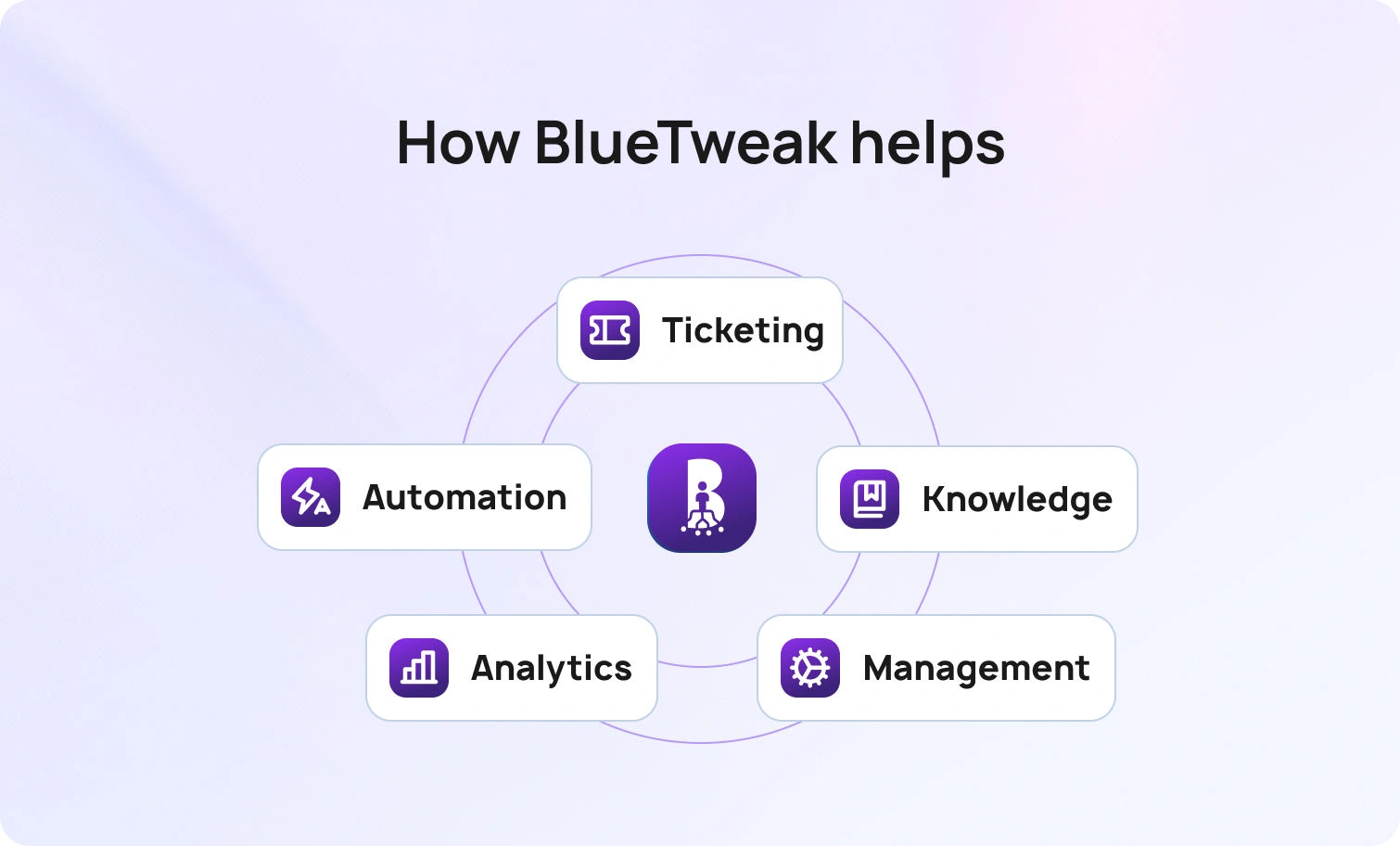
BlueTweak combines ticketing, knowledge, workflow automation, analytics, and staffing into a single workspace, enabling omnichannel support to operate as a unified system, not a collection of tabs. Teams design the flow once and run it at intake, with identity resolution, intent classification with confidence, and grounded reply suggestions available on the same screen that agents use. Category and channel mappings link to playbooks and articles, so the correct version appears automatically. Language detection pairs with region-specific SLAs, letting one process work globally while respecting local expectations.
A single knowledge article powers both the agent view and the self-service portal, so one update improves both paths. Leaders watch time to first reply, FCR, sentiment, and ticket trends by channel, then adjust routing, content, or SLAs in place. The result is consistent service across multiple channels,
Conclusion: Make AI the Connective Tissue of the Customer Journey
AI in omnichannel customer support is most valuable when it maintains a single story across channels, assists human agents in determining the next step, and converts customer data into actionable guidance at the point of work. Start with identity resolution, intent detection, and grounded suggestions. Tie the knowledge to categories. Add sentiment for prioritization and multilingual support for reach. Measure the journey, not the silo. The payoff is consistent service, calmer queues, and sustained gains in customer satisfaction.
Request a BlueTweak walkthrough to watch one ticket move across channels with complete context, AI-guided steps, and live analytics that turn insight into edits on the same screen.

How to Choose Help Desk Software: A Practical, Buyer-Ready Guide for 2026
The Goal: Help Desk Software That Improves Service
Fewer tabs, faster replies, and happier customers come from a help desk solution that streamlines workflow. The right help desk system connects multiple channels, converts support requests into structured work, and provides agents with quick access to customer data and the exact next step. Leaders gain visibility into volume trends, coaching opportunities, and a consistent customer service experience across the support team.
This guide covers framing requirements, identifies key features, compares desk software options, and conducts an objective evaluation of these options. It includes copy-ready RFP criteria, a compact scoring model, and where BlueTweak fits for teams seeking a customer support platform that combines ticketing, knowledge, automation, analytics, and staffing in one place.
4 Steps To Choose Help Desk Software

The path below turns a crowded market into a structured, evidence-led evaluation. Capture current reality, convert it into scoreable criteria, shortlist matching desk platforms, and test them against real work.
Step 1: Define What “Good” Looks Like
Before browsing lists of the best help desk software, write a one-page snapshot of reality. Perfect numbers aren't needed, just enough detail to anchor the search.
Workload and channels. List daily support tickets by email, chat, phone support, social media, web forms, and in-app messaging. Note seasonality and language mix.
Top intents. Name the ten most common customer inquiries by the plain words customers use. This will drive categories and ticket routing.
Team composition. Count support agents, team leads, QA, and folks who only jump in during peaks. Capture current roles and permission needs.
Existing stack. Note the CRM integration you require, your identity provider, internal communication tools, and the systems that hold billing, account management, and asset tracking data.
Success metrics. Pick 6 to 8 key customer service metrics already tracking or on the list to start tracking, e.g., time to first reply, average handle time, first contact resolution, reopen rate, customer satisfaction or CSAT, sentiment analysis, SLA breach rate, and ticket backlog.
It is key to start here because help desk software is mostly about matching real work to a real desk solution. Without this snapshot, every demo looks great, but it fails to solve actual problems.
Step 2: Turn Needs Into Selection Criteria That Can Be Scored
Translate the snapshot into buyer criteria. Keep it simple enough to score quickly, but detailed enough to separate look-alike tools.
Ticketing system and workflow depthCan you design an end-to-end example of a help desk workflow, from ticket creation to closure, with status rules, SLA timers, and escalations that accurately reflect reality? Are customizable workflows possible without code? Is there automated routing, intelligent routing, and automated workflows reachable from the UI?
Omnichannel support and shared inboxAre multiple channels unified in a single queue with a shared inbox and complete customer context? Can you reply from email, chat, phone support, social media, and in-app messaging without switching tabs? Does the help desk platform normalize identities across channels?
Knowledge and self-serviceIs there a built-in knowledge base and knowledge base builder? Can you create a self-service portal with search functionality, forms, and role-based access? Do articles provide suggested steps in the agent view and self-service options for customers?
Automation tools and AI-powered featuresCan you streamline repetitive tasks with triggers, macros, and rules? Are there AI tools like summarization, AI agents, reply suggestions, or classification? Can AI safely assist ticket categorization and ticket routing with a visible confidence score?
Collaboration and internal notesCan agents add internal notes, @mention colleagues, and use collaboration tools inside the ticket? Are side conversations tracked against the case? Does everyone stay on the same page without copying and pasting?
Reporting and analyticsCan leaders track team performance, volume trends, and key customer service metrics without exporting spreadsheets? Are there views by queue, label, product, and channel, as well as filters for VIP customers and parent ticket relationships?
Integrations and data flowHow easily can you integrate desk software with your CRM, data warehouse, identity management system, NPS tool, chat widget, and billing system? Do webhooks and APIs exist for custom needs?
Security, privacy, access controlCan you assign granular permissions by role and team? Is there SSO, SAML, SCIM, IP allow-listing, and data residency? Are audit trails complete when auditors ask who changed what?
Scalability and reliabilityWill the desk system keep pace with growth? What are uptime, RTO, and RPO commitments? How are spikes handled? Can you partition queues by region while maintaining unified leadership views?
Pricing and total cost of ownershipUnderstand free plan limits, what paid plans include, and where paid plans start. Compare ticket limits, seat tiers, AI consumption, storage, and sandbox availability.
Give each criterion a weight. High weights go to core flow, automation capabilities, analytics, and integrations. This keeps the discussion grounded when a nice-to-have feature distracts the room.
BlueTweak maps forms, categories, SLAs, macros, and knowledge to the same workflow, so the rules tested in evaluation are the rules that run at intake. Confidence-based AI classification and grounded reply suggestions remain human-approved by default.
Step 3: Know the Landscape Without Getting Lost in Logos
A list of thirty vendors is not needed. Instead, create a short list that fits the shape of your work. Here is a pragmatic way to scan desk platforms:
- If you are already deep in a CRM, check the help desk module there first.
- If you're looking for a pure customer support platform with years of enterprise-scale experience, review the usual leaders and challengers, and then confirm how quickly you can configure your help desk workflows without relying on professional services.
- If your team values email-like handling with collaboration, explore tools built around a shared inbox that still offer a proper ticketing system and automation tools.
- If you prioritize modern AI and grounded workflows over a large ecosystem, consider BlueTweak to consolidate design, execution, AI-powered features, and reporting in one place.
The point is to match your shape to their shape. Once you pick four contenders, stop shopping and start testing.
Step 4: Run A Hands-On Evaluation That Mirrors Real Life
Great demos are not proof. Replace vague trials with a tight, two-week test that uses your actual data and tickets.
Prepare a tiny blueprint before day one.
- Create ten sample tickets per top category from real transcripts.
- Write a small taxonomy with definitions and SLAs.
- Draft two simple help desk workflow diagrams you want to reproduce.
- Decide the three outcomes you must see: for example, 30 percent faster first replies, visible ticket trends by product, and fewer misroutes.
Ask all vendors to do the same things.
- Configure your two workflows in their help desk software.
- Connect your CRM sandbox and import 1,000 contacts for customer context.
- Build a self-service portal with three articles and two forms.
- Enable intelligent routing and a rule set that auto-assigns low-risk categories.
- Turn on AI-powered features you plan to use, like reply suggestions or classification.
- Show the dashboard that tracks your chosen metrics.
Score each vendor daily against your weighted criteria. Capture agent feedback on agent productivity, UI friction, and whether the desk process flow feels natural.
What the Core Should Do: the Non-Negotiables

The center of a help desk platform is not a page of toggles. It is what happens when a new ticket lands. Picture this sequence and require it when testing.
Intake that collects the correct detailsTickets should arrive labeled with intent and display a minimal, category-aware form (including invoice and plan for billing, OS, and version for device issues). This eliminates human error and reduces the need for back-and-forth communication.
Classification and routing with controlAutomatic ticket classification proposes a category with confidence and routes by skill, load, and region. Low-confidence cases stay one-click confirmable. AI can assist, but humans remain in charge.
First moves are attached to categoriesEach category loads a macro and the matching knowledge article, so the first reply contains a real step. This keeps the help desk workflow and knowledge in sync.
Status, timers, and SLAs that match realityCalendars, pause rules, and breach actions vary by label, channel, and tier. Holidays and customer wait states are handled natively, not in spreadsheets.
Collaboration that preserves contextMentions, side threads, and internal notes are stored in the case history, allowing decisions to be traced and ensuring that handoffs never lose context.
Analytics that drive changes in placeQueue health, response times, FCR, status mix, and volume trends are visible by category. Owners can adjust routing or content from the same view, so insight turns into action.
Feature Deep Dive: What to Look For and How to Test It
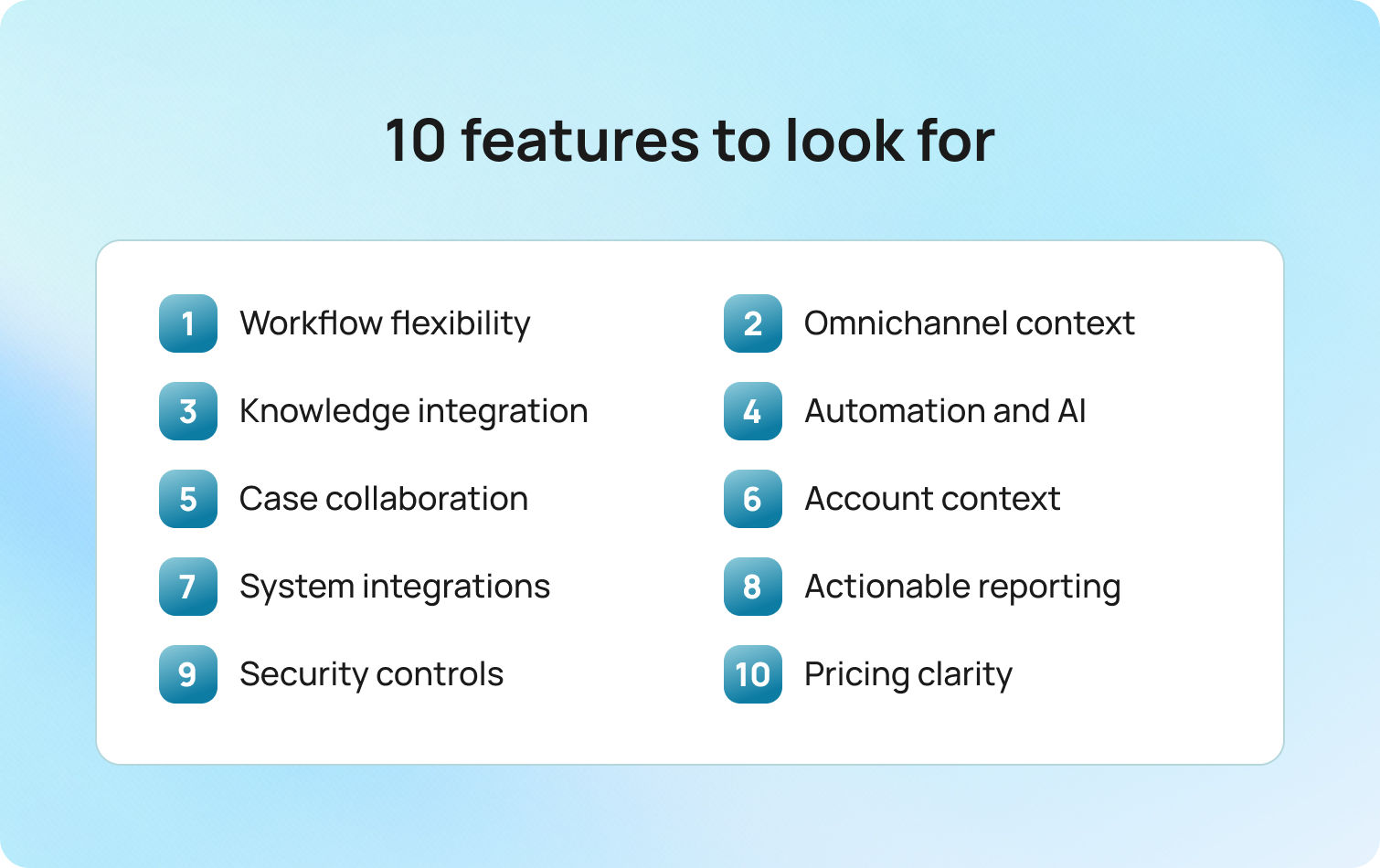
The following section breaks down the capabilities that separate a solid help desk platform from another tab in the browser. For each key feature, it outlines what matters in practice and a quick way to validate it during a short trial.
Ticketing System and Customizable Workflows
The core test is speed-to-working-flow, not toggle count. Rebuild two real flows end-to-end inside the help desk platform in under an hour each and run five live tickets through them. Watch for automatic status transitions, clean parent–child handling, intact reporting after merges, and a readable audit trail with inline internal notes.
Omnichannel and Shared Context
Open one case from email, one from chat, and one from phone transcription for the same contact. Confirm that the help desk system unifies identities into a single timeline, preserves macros and signatures across channels, and enables agents to respond from a single screen. If in-app messaging is the primary focus, include it in the same test thread.
Knowledge Base and Self-Service
Articles should drive the work, not live on an island. In the agent view, the correct article must surface automatically by category; the same content should power the self-service portal. Publish one new article and update one existing draft during the trial, then check deflection, searches with no results, and article feedback.
BlueTweak’s Knowledge Base surfaces the matching article in the agent view and the self-service portal from a single source of truth, so updates go live for the next ticket without duplicate editing.
Automation and AI
Pick three repetitive motions that happen daily and wire them up: priority by plan, tags by product, and customer update on queue change. Then enable AI classification with rationale, conversation summarization, and grounded suggested replies, all of which are subject to human approval. Success looks like fewer clicks and clearer first replies, not just novel UI.
BlueTweak provides AI classification with rationale and confidence, as well as conversation summaries and grounded suggested replies, ensuring these are reviewed and approved by humans for sensitive flows. Triggers, macros, and rules reduce repetitive setup while preserving control.
Collaboration in the Case
Keep coordination where the record lives. Test @mentions, threaded side conversations with vendors, and file attachments inside the ticket. Later, reconstruct the decision from the case history; if any step requires digging through DMs, the collaboration model isn’t working.
Account and Asset Context
Require instant context, not tab hunts. Pull plan tier, recent interactions, model/version, warranty, and asset changes straight into the case. Run three tickets and time how often agents ask for basics; that number should drop on day one.
Integrations and Data Flow
Prove the stack fit. Connect CRM, telephony, auth, and a warehouse or BI sink. Push sample data through each path and verify that fields are populated correctly, identities remain consistent, and webhooks fire on status changes without requiring custom code.
Reporting That Drives Action
Open a single view that shows queue health, response times, FCR, and ticket trends by category and channel. Make one routing or content change and confirm tomorrow’s report reflects it without exports. Forecasting is a bonus only if it helps schedule coverage, not decorate slides.
BlueTweak displays queue health, FCR, and SLA performance in the same workspace where owners can adjust labels, routing, or content, thereby closing the loop from insight to action without requiring exports.
Security, Roles, and Audit
Grant and restrict access by role; edit an SLA and a macro; export and delete a record. Then read the audit log to see who changed what and when. If AI is on, ensure prompts, sources, and approvals are traceable.
Pricing Clarity
List real limits: free plan caps, where paid plans start, metered AI, sandbox access, extra analytics seats, and success services. Model 12 months at current volume and again at 2× volume. The right help desk software is the one that survives both scenarios without surprise fees.
A Simple Scoring Model
Use a 100-point rubric to ensure discussions remain objective.
Here is a breakdown of core customer support features.
- Core ticketing and workflows: 20
- Omnichannel and shared inbox: 15
- Knowledge and self-service portal: 10
- Automation and AI-powered features: 15
- Collaboration and internal notes: 5
- Reporting and key customer service metrics: 15
- Integrations and CRM integration: 10
- Security and governance: 5
- Scalability and reliability: 3
- Pricing and TCO: 2
Require a written note for any score under 7 out of 10. That note becomes your risk register after the purchase.
Measuring Success After You Go Live
The goal is not to go live. It is getting better every week. Put your metrics in motion from day one.
- The time to first reply should decrease because intake forms and routing remove friction.
- The average handle time for solved cases should decrease when playbooks and knowledge are aligned.
- First-contact resolution should improve for well-defined categories.
- SLA breach rate should decline if calendars and timers reflect real operations.
- Customer satisfaction should hold or improve as templates and tone stabilize.
- The reopen rate should decrease when agents have customer context and a clear checklist.
- The ticket backlog should shrink as automated workflows accurately close stale cases.
- Sentiment analysis in follow-ups should trend positive when loops disappear.
Review these outcomes weekly for the first eight weeks. Adjust forms, labels, and macros where friction shows up. This is how a help desk workflow becomes part of the culture, not just another tool.
BlueTweak tracks these KPIs by queue, label, and channel out of the box, making it easy to ship and measure weekly tweaks.
Avoid the Five Classic Pitfalls

Most stalled rollouts can be traced back to a few predictable mistakes. Spot these early, sidestep them quickly, and the evaluation stays honest and on track.
- Buying for features, not flow. A long feature list does not fix a broken help desk process. Start with two flows you will run every hour.
- Ignoring the agent experience. If basic actions take five clicks, agent productivity suffers. Let agents drive the scorecard.
- Treating AI as magic. Keep AI agents behind a human approval step for complex requests. Use AI where it is safe: summaries, classification, and grounded reply suggestions.
- Forgetting reporting hygiene. If labels and fields are noisy, your metrics will also be noisy. Define the taxonomy and required fields early.
Underestimating change. Set aside two hours per week for your owners to review and update forms, playbooks, and automations. The loop is how you win.
Where BlueTweak Fits
BlueTweak serves as a centralized platform for customer support, consolidating the ticketing system, knowledge base, automation, analytics, and workforce scheduling into a single workspace, allowing teams to streamline support without integrating multiple apps.
Design and run your help desk workflow. Configure steps, attach forms and service level agreements, link macros and articles, then publish. What’s designed in the workflow builder runs at intake.
Automate without losing control. Enable automated routing, status updates, and closure rules. Turn on AI-powered features like classification with rationale and grounded reply suggestions, with human approval for sensitive actions.
Keep everyone aligned. Use a shared inbox with internal notes, side conversations, and @mentions so support agents and specialists stay on the same page.
See context, answer faster. Pull approved CRM fields, account data, asset details, and prior contacts into the case so responses are informed and fast.
Publish knowledge once. Create content in the Knowledge Base Builder; BlueTweak surfaces the same articles in both the agent view and the self-service portal. Updates appear for new tickets after they are published.
Measure what matters. Track FCR, response times, CSAT, and ticket trends in the same screen where leaders adjust labels, routing, or content, so insights lead directly to action.
Scale calmly. Support regional queues and product lines on one backbone. Add language detection, localized content, and regional SLAs alongside the base process to avoid forking core workflows.
Pricing clarity. Start small and expand seats or AI capacity as needed, with transparent plan limits and add-ons.
Evaluate BlueTweak with the same hands-on bake-off described earlier; it’s built to connect design, execution, and measurement in one place.
Buy For Flow, Measure For Outcomes, Improve Every Week
Choosing a help desk platform is not about ticking boxes on a PDF; it's about finding the right solution for your organization. It is about changing how your customer service teams work so customers get clear answers faster and agents spend time on complex requests that need human care. When you anchor the decision in your real support operations, test workflows with live data, and compare tools against key customer service metrics, the correct answer becomes obvious.
If you want a desk solution that combines ticketing, knowledge management, automation tools, AI assistance, analytics, and staffing into one centralized platform, add BlueTweak to your shortlist. See how design, execution, and measurement live in one place, how automated workflows and intelligent routing cut waste, and how leaders move from insight to action without leaving the screen.
Request a BlueTweak walkthrough to observe a ticket's progression from intake to resolution across multiple channels, featuring grounded AI suggestions, streamlined ticket routing, and reports that accurately reflect the work your team actually performs. Bring three real tickets. We will run them end-to-end and let the results speak for themselves.

How to Use Multilingual Chatbots to Improve Global CX
The Playbook for Multilingual Support Bots in 2026
Global customers expect support in their native language across chat, messaging apps, and self-service channels. When human language barriers force native speakers to struggle through English (or worse, abandon help entirely), you lose conversions, inflate contact volume, and damage customer satisfaction in growth markets.
It’s not always your team’s fault, though. They might be struggling with fragmented tools that don't share context, inconsistent terminology across locales, cumbersome escalations that require customers to repeat themselves, and weak analytics that can't prove which languages or intents actually drive service quality.
This guide explains the process of launching and scaling multilingual chatbots for customer support. Learn how to ground responses in your knowledge base, prepare high-quality training data, design clean escalation paths, instrument the right metrics, and quantify impact through higher containment, lower cost per contact, faster resolution, and improved CSAT across languages.
What Is a Multilingual Chatbot (for Support)?

A multilingual chatbot is a chat automation that responds in the customer's language across supported channels (web chat, WhatsApp, Facebook Messenger, SMS), pulls answers from the knowledge base, integrates with backend systems to complete actions, and escalates to humans with full context when needed.
Multilingual chatbots offer features that serve both external audiences (customer self-service) and internal audiences (agent-facing suggestions). The goal goes beyond translation, focusing on enhancing customer experience through accurate and contextual help . It delivers accurate, contextual help in multiple languages while maintaining consistent terminology and ensuring smooth handoffs.
BlueTweak gives you a globally scalable solution. The AI Chatbot is agentic and responds contextually, leveraging machine learning to use only information from your knowledge base. It supports multilingual customer support across various channels and creates tickets with a conversation history when escalation is required.
Technology Overview: From Translation Plug-Ins to KB-Grounded Multilingual CX (2018→2026)
This evolution underpins the Readiness Checklist, Architecture 101, and the best practices that follow, particularly in areas such as language and intent selection, KB governance, clean handoffs, and metrics that demonstrate lift.
- What changed: Teams moved from chat-only widgets with translation add-ons and menu-based IVR systems to AI-assisted, omnichannel platforms with native multilingual capability, knowledge-base grounding, unified ticketing, and measurable analytics.
- Why it changed: Growth in messaging channels, multi-brand complexity for global operations, and CFO pressure to prove impact on containment, first-contact resolution (FCR), and SLA adherence, not just deploy more tools.
- How older stacks worked: Separate chat widgets, translation layers bolted on afterward, unclear handoffs between bot and agent, and siloed analytics. This led to repeat contacts, inconsistent terminology across locales, and no way to prove which language options delivered ROI.
This means that in 2026, you should prioritize KB-grounded multilingual chatbots, context-rich escalation into ticketing, and unified analytics segmented by language, brand, and intent. Double-check all security controls (roles, MFA, audit logs, data-location options) and avoid chatbot platforms that treat multilingual as an afterthought add-on.
Readiness Checklist: Are You Set to Scale Across Markets?

Use this checklist before launching multilingual chatbots:
- Languages and volumes: Identify which markets drive the highest contact volume, and start with 2-3 various languages that cover 60-70% of non-English inquiries.
- Top intents by region: Track which issues dominate in each market (order tracking, returns, account access). Different regions often have different top intents.
- Escalation paths: Map how customers reach humans today and what context gets lost in the handoff.
- Knowledge sources: Audit your KB for multilingual coverage, e.g., are articles translated?
- Metrics to track: Establish baseline dashboards for containment rate, resolution rate, first response time, transfer reasons, and CSAT.
BlueTweak helps make this possible with key features like customer Profiles and omnichannel ticketing that show real drivers by region, and Analytics that provide baseline dashboards segmented by language, brand, and channel.
Architecture 101: From Question to Resolution (with Multilingual in Mind)
Here's how a multilingual chatbot flow works:
- Customer initiates: Widget on website, messaging app (WhatsApp, Facebook), or SMS.
- Language choice/identification: Bot's language detection identifies the user's preferred language based on browser settings, local language, user preferences, past interactions, or explicit selection.
- Retrieval from Knowledge Base: AI uses natural language processing (NLP) to match intent, pulls answer(s) from KB, and can reference past tickets via AI Ticket Summary.
- Action/integration: If needed, the bot triggers lookups (for order status) or updates (for subscription changes) via APIs.
- Escalate with context: When intervention is required, the bot creates a ticket with the full transcript, the Customer Profile, and fields pre-filled.
BlueTweak offers multilingual support, powered by a Knowledge Base to deliver accurate responses, an AI Chatbot to handle natural language across various channels, and ticketing to ensure streamlined operations with conversation history intact.
11 Best Practices to Launch and Grow a Multilingual Chatbot

The checklist that follows prioritizes governance, data quality, and clear handoffs, ensuring that multilingual bots launch reliably and scale without fragmentation. Applied together, these steps drive higher containment, faster answers, and a consistent brand voice in every language.
1. Pick Languages and Intents for Wave One
Start simple: 2-3 languages, 5-7 high-volume intents (order tracking, returns, password reset). This tight scope lets you learn fast, validate KB coverage, and prove ROI before expanding.
Prioritize by volume and impact. Not every market or intent needs AI agent automation on day one. Use actual contact data, not assumptions. BlueTweak's Analytics supports multiple languages by displaying top drivers by brand, region, and channel, helping you prioritize wave-one scope based on real data rather than guesswork.
2. Ground Every Answer in Your Knowledge Base
Use atomic articles (one topic per article) and canonical snippets so the AI retrieves dependable content. Avoid vague or outdated KB articles, as they can negatively impact bot accuracy and erode customer trust.
The multilingual chatbot should be agentic: it responds contextually to the global customer base using only information from the knowledge base, asks follow-up questions, and makes logical connections with related information. BlueTweak's AI Chatbot responds contextually using only KB content, ensuring accurate responses across supported languages without hallucinations.
3. Design Chat for Clarity (Not Just Translation)
Use concise prompts and structured steps. Avoid over-relying on UI elements or jargon that doesn't translate well across different audiences. Keep one intent per thread. It's essential not to attempt to address multiple unrelated issues in a single conversation.
Machine translation works best with simple, direct language. Complex or idiomatic phrasing often confuses both NLP engines and customers.
4. Handle Terminology Consistently
Maintain a term list (glossary) in your content management system. Align article titles, steps, and field labels across locales. Inconsistent terms, particularly for product names, policies, or actions, can create confusion and reduce the success of self-service.
Train your content team to use the same source term consistently, then translate it accurately.
5. Plan Multilingual Escalation Without Re-Asking
Pass the full transcript, pre-filled fields, and Customer Profile into the ticket. Surface prior interactions so agents don't have to ask customers to repeat themselves.
Nothing frustrates global customers more than explaining their issue in their native language, only to have an agent ask them to start over on multiple channels. BlueTweak's unified ticketing, with conversation history and customer profile, ensures agents see the full context when they pick up escalated cases.
6. Connect to the Systems That Resolve the Issue
Trigger lookups (order status, subscription details) and updates (cancel order, reset password) via API integrations. Confirm outcomes in the chat so customers know the action has been completed.
Self-service only works if the bot can actually resolve the issue. BlueTweak's APIs and integrations connect to CRM systems, e-commerce platforms, and other applications, enabling the multilingual chatbot to take action and resolve issues without human intervention.
7. Instrument the Multilingual Chatbot for the Metrics That Matter
Track containment rate (% resolved without escalation), resolution rate, first response time, assisted handle time, transfer reasons, and CSAT. Segment by language, brand, and intent.
Without metrics, you can't prove ROI or identify which languages or intents need improvement. BlueTweak's real-time and custom analytics dashboards show containment, CSAT, and resolution rates segmented by language, channel, and intent, contributing to increased customer satisfaction .
8. Close the Loop with Agents
Capture "did this help?" feedback after rule-based multilingual chatbot interactions. Review escalated cases weekly and fold top fixes into KB articles and Canned Responses.
Agents see gaps the bot can't handle yet. Use that insight to improve knowledge base coverage, multilingual content, and bot logic. BlueTweak's Suggested Reply and Canned Responses keep agent answers aligned to KB content, creating a feedback loop that improves both bot and human responses.
9. Staffing and Quality Routines
Use quality reviews and coaching for multilingual cases. As containment grows, adjust staffing via Workforce Management to reallocate agents to complex issues or sales-assist.
Multilingual automation should free up capacity (not create new quality problems). BlueTweak's Workforce Management and quality assurance tools help you monitor performance and adjust staffing as automation scales.
10. Security and Data Controls Across Regions
Apply role-based permissions, multi-factor authentication (MFA), audit logs, and data-location options (cloud, hybrid, on-prem) to meet regional compliance requirements (GDPR, CCPA, local data residency).
BlueTweak includes MFA, audit logs, role-based permissions, SSL encryption, and data-location options to ensure compliance across regions without requiring separate security tools.
11. 30/60/90 Day Iteration Cadence
Ship, measure, and fix top gaps weekly. Quarterly, review top articles and intents for each language. Add new languages only once KPIs (containment, CSAT) hold steady in existing markets.
Rushing to add languages before stabilizing the first wave creates quality debt that's expensive to fix later.
Implementation Guide: From Pilot to Region-Wide Rollout

Here’s what you can expect for an implementation timeline:
- Week 0–2: Configure channels (web chat, WhatsApp, etc.), connect Knowledge Base, define 5-7 top intents, set up analytics dashboards.
- Week 3–6: Launch in one or two languages. Tighten prompts and KB articles based on real interactions. Validate escalation paths and ticket creation.
- Week 7–12: Add languages or brands. Expand API integrations for order lookups and account updates. Formalize weekly quality reviews and KB governance.
BlueTweak provides a single customer service solution platform that reduces technical wiring and makes it easier to move from pilot to full-scale rollout without vendor sprawl.
ROI & Real Cost Savings (Lead Generation)
Multilingual automation captures demand you currently miss. These key benefits result in more qualified leads, higher checkout completion rates, and faster issue resolution for first-time buyers in new regions.
- Conectys outcomes attributed to BBlueTweak: ~20% operational cost reduction, ~35% CSAT lift, ~25% faster resolution time (source).
- Conversion lift: Regional pages with bot assistance in personalized language see higher customer engagement and lower cart abandonment rates than those with a single language.
- Deflection × cost-per-contact improvement: Each contained interaction in a new market saves $5–$15 per contact, with the savings compounding as volume grows.
Agent productivity reallocation: Free up human agents for sales-assist, live chats at key moments, and complex escalations that actually require human judgment.
Optimization Practices: A/B, Segmentation, Dynamic Adaptation
There’s a right way (and a wrong way) to use multilingual chatbots. Here are a few best practices to help you get the most out of these tools:
- A/B test prompts: Try different text input structures and escalation thresholds per language to determine which ones improve containment and CSAT.
- Segment metrics: Break down containment, CSAT, and resolution rate by language × brand × intent to identify weak spots.
- Use dynamic flows: Offer self-service where CSAT is high; route to a faster human handoff for low-confidence or high-value, personalized interactions.
- Fold agent feedback into weekly updates: Agents see gaps the bot misses—use that insight to improve KB coverage, localized content, and bot logic.
- Retire low performers: If an intent or language service consistently underperforms, pause it, identify the root cause (usually KB gaps or poor prompts), and then relaunch.
BlueTweak can help with custom analytics, KB, Suggested/Canned Responses, and WFM.
A Future Look: Where Multilingual Support Is Heading
Expect agentic bots that take bounded actions (process refund, update subscription) with human approval workflows, and tighter governance around explainable answers and data residency. They'll have even better sentiment analysis and be able to measure a bot's performance to self-escalate.
Buyers will favor AI that progresses through assist, approve, and auto stages with clear guardrails, rather than black-box automation that makes decisions without transparency.
Multilingual support will shift from "can we translate?" to "can we resolve the issue end-to-end in the customer's language with full auditability?"
That’s the future of scalable multilingual support, and it’s a win-win for businesses and consumers.
Next Steps: Scaling Multilingual CX with Confidence
Multilingual CX scales when knowledge is grounded in your KB, handoffs to human agents are clean, and metrics guide weekly iteration. Start with 2-3 languages and 5-7 intents, prove the ROI, and then systematically expand to cover multiple languages.
The best multilingual chatbot solutions combine accurate natural language processing, KB-grounded answers, seamless escalation, and analytics that show which languages and intents drive real business impact.
Book a 15-minute demo with BlueTweak and discover how one platform seamlessly integrates multilingual chatbots, ticketing, analytics, and customer support automation, eliminating vendor sprawl.



