



TL;DR
Kustomer is a CRM-native customer service platform designed to unify customer data and support interactions into a single customer timeline. In 2026, many teams evaluating Kustomer alternatives are prioritizing stronger AI capabilities, simpler deployment, more transparent pricing, and native omnichannel support. BlueTweak stands out as one of the best Kustomer alternatives for organizations that want AI-powered customer support, native voice, unified analytics, and faster time-to-value without the operational complexity associated with more implementation-heavy customer service software.
Why Teams Look for Kustomer Alternatives in 2026
Kustomer alternatives are customer service software platforms designed to deliver similar omnichannel support and customer relationship management capabilities, often with simpler deployment, stronger AI coverage, or more transparent pricing.
Kustomer built its reputation around a CRM-native architecture that gives support agents a unified customer timeline spanning customer communications, customer interactions, order history, and support history. For many organizations, especially e-commerce businesses and consumer brands, that customer-centric model remains valuable.
However, as customer support operations become more AI-driven in 2026, many teams are reassessing whether they still need a CRM-heavy support architecture or whether a more operationally focused customer support platform can deliver the same context with lower complexity and faster implementation.
Public reviews on G2 and Capterra consistently reference several recurring challenges with Kustomer, particularly among scaling mid-market and enterprise teams.
Pricing and Total Cost of Ownership
Pricing complexity is one of the most common reasons organizations search for Kustomer alternatives.
Kustomer’s pricing structure has historically been positioned toward enterprise support environments. Publicly available pricing and review commentary suggest that costs increase significantly as teams add AI features, advanced reporting, voice integrations, workforce management functionality, or higher agent counts.
Several reviewers also reference minimum seat commitments and the need for third-party integrations to extend core functionality. While Kustomer offers extensive customization, many teams evaluating customer service platforms in 2026 are prioritizing predictable operating costs and bundled AI features.
This is particularly relevant for organizations managing customer support across multiple channels, where costs scale rapidly with support volume.
Implementation Complexity and Time-to-Value
Deployment complexity is another major factor driving buyers toward alternatives to Kustomer.
Kustomer’s CRM-native design gives enterprises significant flexibility, but it can also introduce implementation overhead. Public review platforms regularly reference:
- Longer onboarding timelines
- More complex workflow configuration
- Steeper learning curves for support agents
- Greater dependency on implementation partners or internal technical teams
For fast-growing support teams, time-to-value matters as much as feature depth. Teams that need to resolve customer inquiries efficiently are often prioritizing platforms with self-serve onboarding, automated workflows, and a simpler, more intuitive interface.
AI Coverage and AI Pricing Models
AI capabilities have become one of the most important evaluation criteria for customer service software in 2026.
Most major customer support platforms now offer AI-powered suggested replies, AI agents, conversational support, ticket summarization, knowledge base search, and proactive messaging. The key question is whether those AI tools are included in the base platform or sold separately.
Many buyers evaluating kustomer alternatives are increasingly focused on:
- RAG-grounded knowledge base responses
- AI-powered suggested reply generation
- Real-time sentiment scoring
- AI-assisted ticket summarization
- AI coaching for support agents
- AI performance reporting
The broader market trend is clear. According to Deloitte’s 2025 Global Contact Center Survey, organizations using AI-powered customer support tools reported measurable improvements in agent productivity, customer satisfaction, and operational efficiency as AI adoption accelerated across support operations.
At the same time, fragmented support stacks continue to increase costs. Research from PwC in 2025 found that disconnected customer communications systems and multiple systems handling customer interactions remain major contributors to operational inefficiency and inconsistent customer experience.
Voice, Reporting, and Operational Visibility
Voice support and analytics depth are increasingly central to customer support platform evaluations.
Many modern support teams now expect native voice, omnichannel support, advanced analytics, SLA management, QA scoring, and workforce management within a single user-friendly platform.
One of the recurring themes in public reviews of Kustomer is that certain operational capabilities may require additional integrations or configuration work, particularly for advanced reporting, workforce management, or voice support.
For organizations trying to streamline support operations, the appeal of consolidated platforms has become stronger.
Many support organizations initially adopt CRM-native customer service platforms because they want deeper customer context. But once AI workflows, voice support, workforce management, and analytics enter the picture, they often discover the operational stack becomes fragmented and expensive to maintain. The platforms gaining momentum in 2026 are the ones reducing operational complexity while expanding AI coverage.

Kustomer Competitors at a Glance
A Kustomer competitor comparison table helps support leaders evaluate AI coverage, omnichannel support, pricing transparency, and deployment complexity across leading customer support platforms.
The table below compares the best Kustomer alternatives based on publicly available pricing and feature information as of Q2 2026.
The 17 Best Kustomer Alternatives for 2026
The best Kustomer alternatives combine customer support functionality, AI-powered workflows, omnichannel support, and operational visibility without introducing unnecessary implementation complexity.
The platforms below were evaluated using public pricing pages, product documentation, published customer case studies, and verified review platform insights reviewed in Q2 2026. No vendor paid for placement in this list. BlueTweak appears first as the Editor’s Choice due to its breadth of AI capabilities, native voice support, unified analytics, and operational tooling.
1) BlueTweak — Best Kustomer Alternative for AI-Native Omnichannel Support
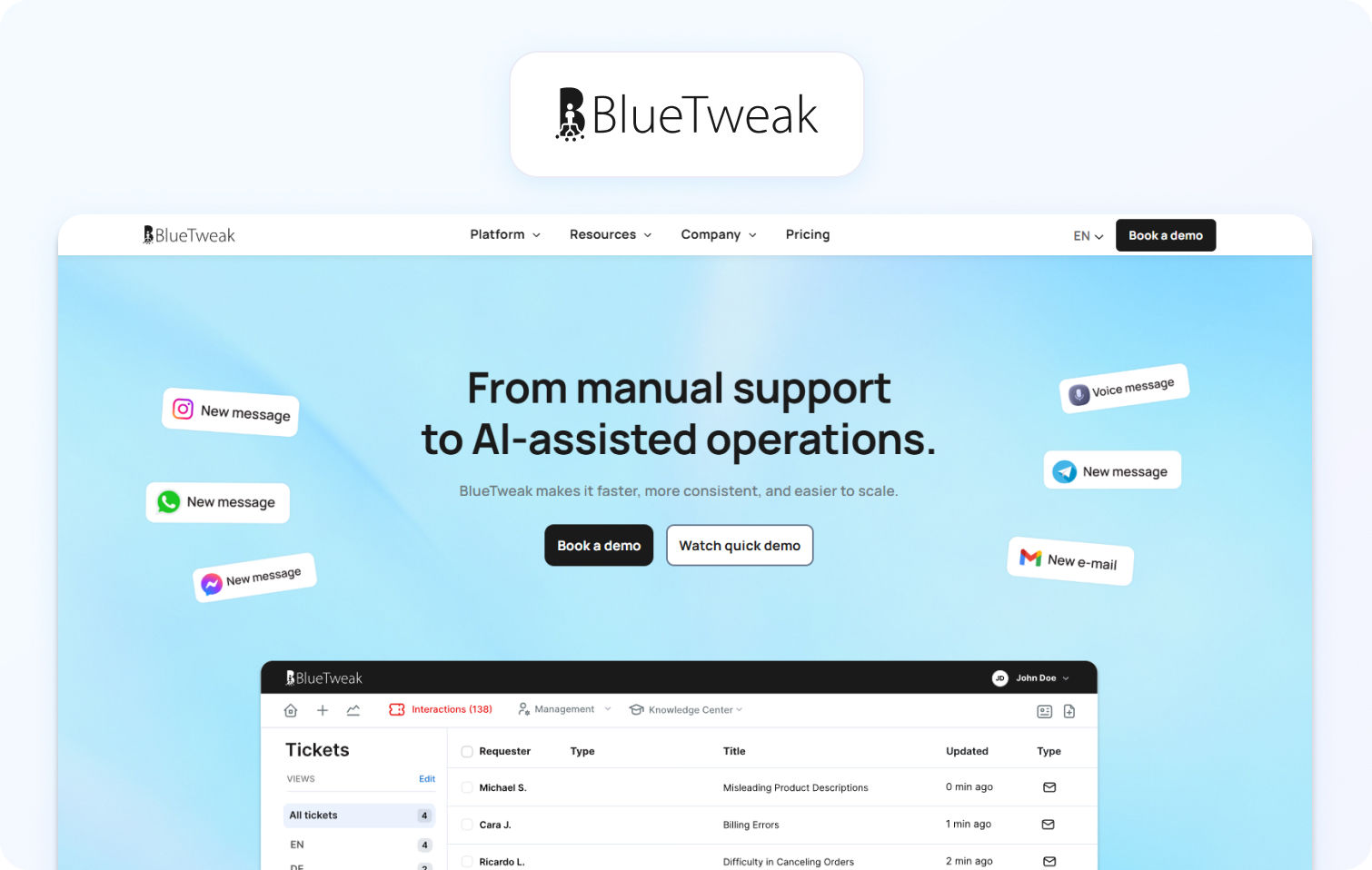
What it is: BlueTweak is a customer interaction management platform built to unify voice, chat, email, SMS, and social conversations inside a single operational workspace. The platform combines AI-powered automation, analytics, workforce management, and omnichannel routing without relying on multiple disconnected tools. BlueTweak’s AI infrastructure is designed around modern large language model workflows and cloud-native scalability, leveraging enterprise-grade environments such as Microsoft Azure and OpenAI-powered AI services.
Best for: Mid-market and enterprise support teams that want operationally unified customer support with native AI, voice, reporting, QA, and workforce management capabilities.
Key features:
- Unified inbox with persistent cross-channel conversation history
- AI-powered intent detection, sentiment analysis, and interaction summaries
- AI copilot tools for support agents and supervisors
- Native voicebot and chatbot automation
- Real-time routing and skill-based distribution
- Advanced analytics across CSAT, FCR, AHT, sentiment, and SLA performance
- Workforce management and QA tooling are built into the core platform
- CRM and customer data integrations
Channels supported: Voice, email, live chat, SMS, WhatsApp, and social messaging platforms.
Pricing: Transparent pricing starting at €65/agent/month, including ticketing, omnichannel support, AI chatbot, AI voicebot, workforce management, QA, analytics, and integrations.
Pros:
- Strong AI coverage built directly into the platform
- Native voice and omnichannel support
- Unified operational tooling reduces platform fragmentation
- Deep reporting and interaction-level visibility
Cons:
- Advanced customization requires onboarding support
- More operational depth than some smaller teams may require
Free trial available
Case Study Snapshot:
A leading e-commerce retailer used BlueTweak to consolidate fragmented customer communications across voice, email, chat, and social channels into a single omnichannel support environment. Prior to implementation, the business struggled with inconsistent reporting, limited visibility into customer interactions, and operational inefficiencies caused by disconnected support systems. Following deployment, the company improved support efficiency through AI-powered automation, centralized customer interaction reporting, and faster response handling across multiple communication channels, giving teams a clearer operational view of the entire customer journey while reducing friction for both customers and support agents.
Support organizations are increasingly moving away from fragmented support stacks because disconnected systems create reporting blind spots, slower agent workflows, and inconsistent customer experiences. The biggest shift we see in 2026 is toward operationally unified, AI-native customer support platforms.
2) Zendesk Support Suite — Best Kustomer Alternative for Enterprise-Scale Ticketing
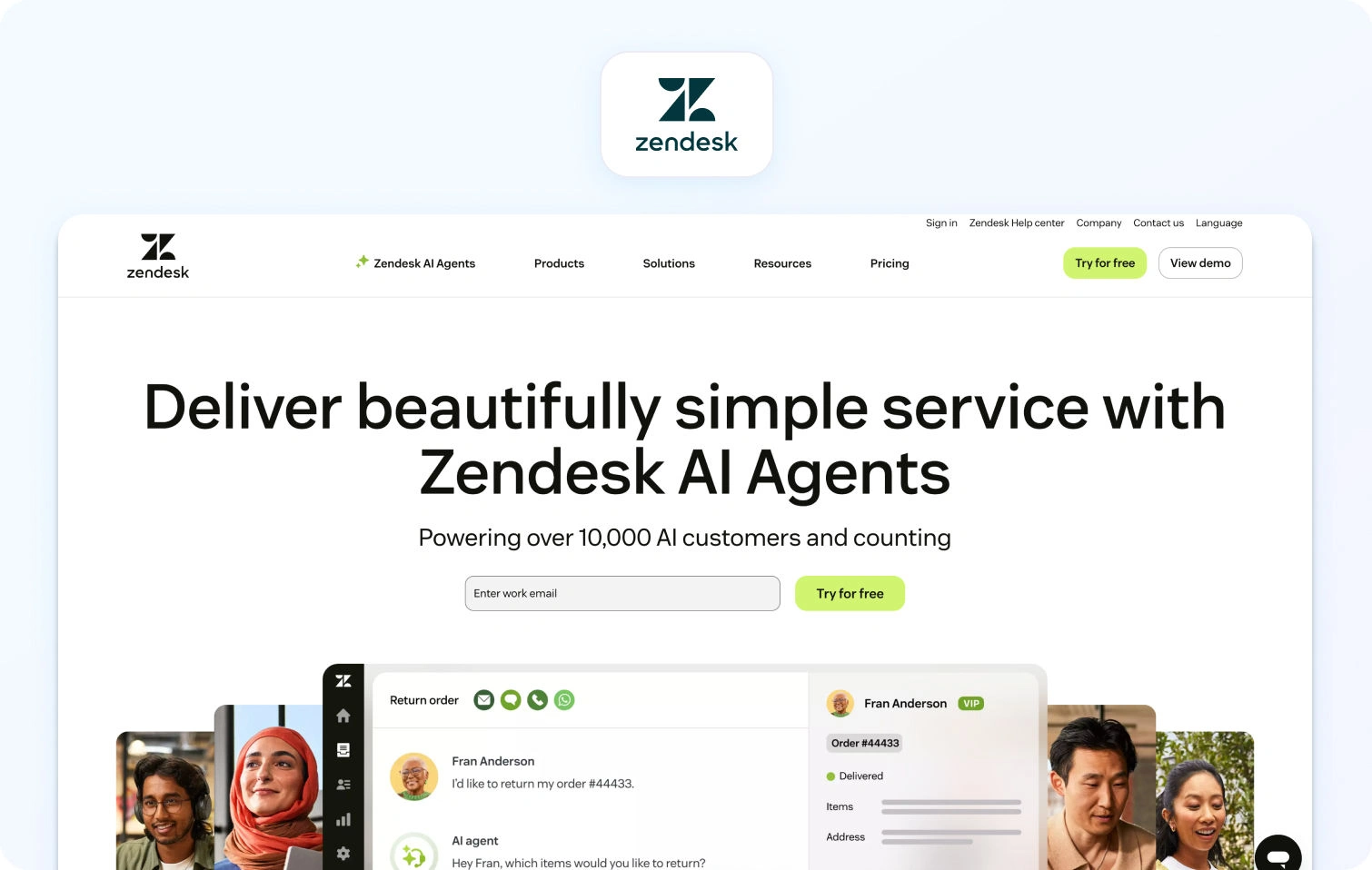
What it is: Zendesk Support Suite is an enterprise customer support platform focused on ticket management, omnichannel communication, workflow automation, and large-scale support operations.
Best for: Enterprise support teams handling high ticket volumes across multiple customer service channels.
Key features:
- Advanced ticket routing and SLA management
- AI-powered suggested replies and workflow automation
- Omnichannel support across email, voice, chat, and social
- Extensive app marketplace and integrations
- Advanced reporting and analytics dashboards
- Self-service knowledge base functionality
Channels supported: Email, live chat, voice, SMS, and social channels.
Pricing: Custom pricing with AI functionality and advanced capabilities varying by package. Verify with the vendor for details.
Pros:
- Mature enterprise ecosystem
- Strong workflow customization
- Broad integration support
Cons:
- AI and advanced functionality can significantly increase total platform cost
- Enterprise deployment can become implementation-heavy
Free trial availability: Yes.
3) Intercom — Best Kustomer Alternative for SaaS and Product-Led Teams
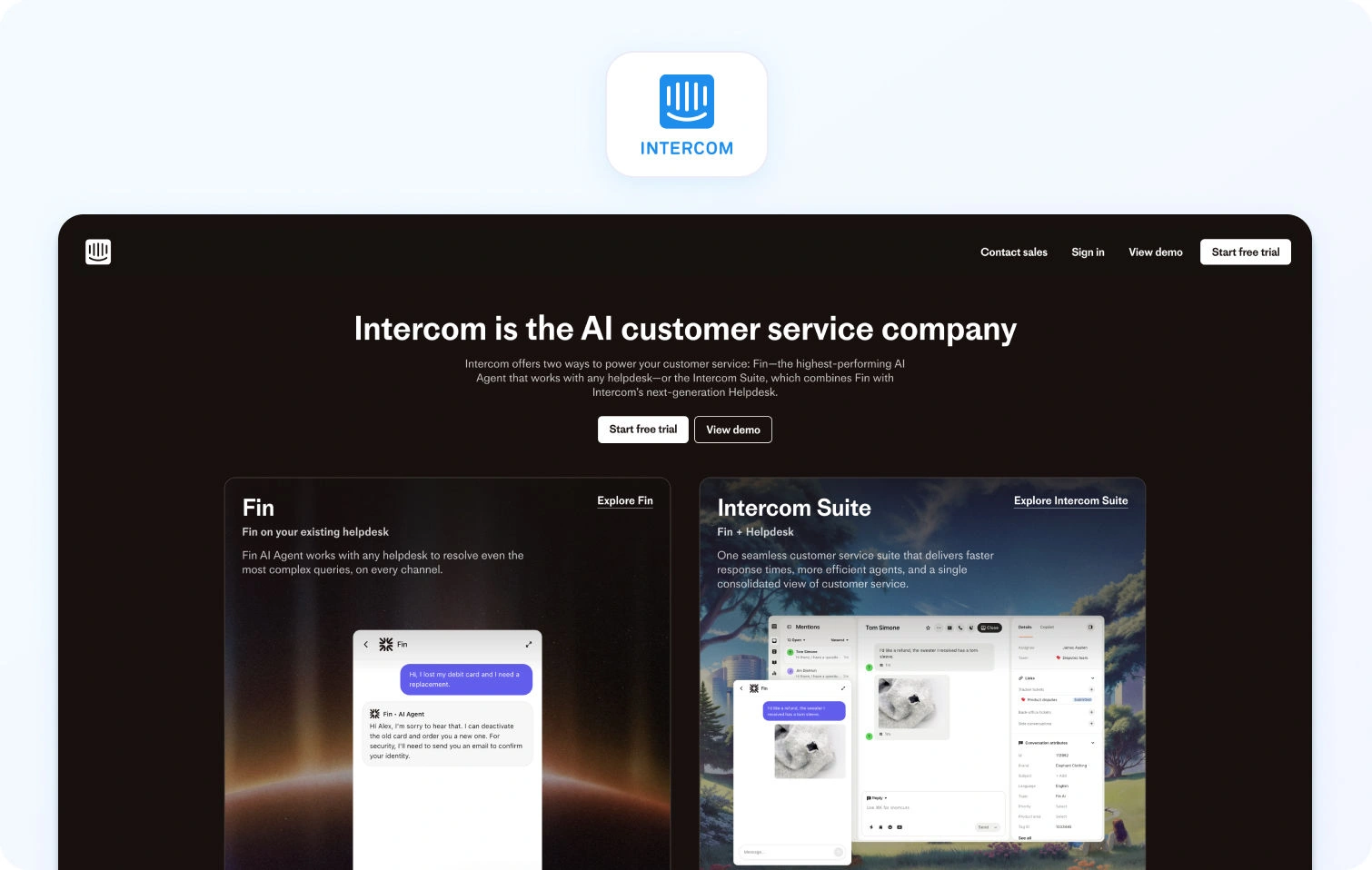
What it is: Intercom is a conversational customer support platform designed around AI-powered messaging, customer engagement, and proactive support automation.
Best for: SaaS and product-led organizations focused on conversational support and customer onboarding.
Key features:
- AI chatbot and AI agent functionality
- Proactive messaging and onboarding flows
- Conversational support automation
- Product tours and engagement workflows
- Shared inbox and live chat functionality
- Customer engagement reporting
Channels supported: Live chat, email, in-app messaging, and social integrations.
Pricing: Tiered pricing based on seats, contacts, and AI usage. Verify for details.
Pros:
- Excellent conversational support workflows
- Modern and intuitive interface
- Strong onboarding and engagement tooling
Cons:
- Pricing scales quickly as support volume increases
- Less operational depth for traditional contact center environments
Free trial availability: Yes.
4) Freshdesk — Best Kustomer Alternative for Budget-Conscious Growing Teams
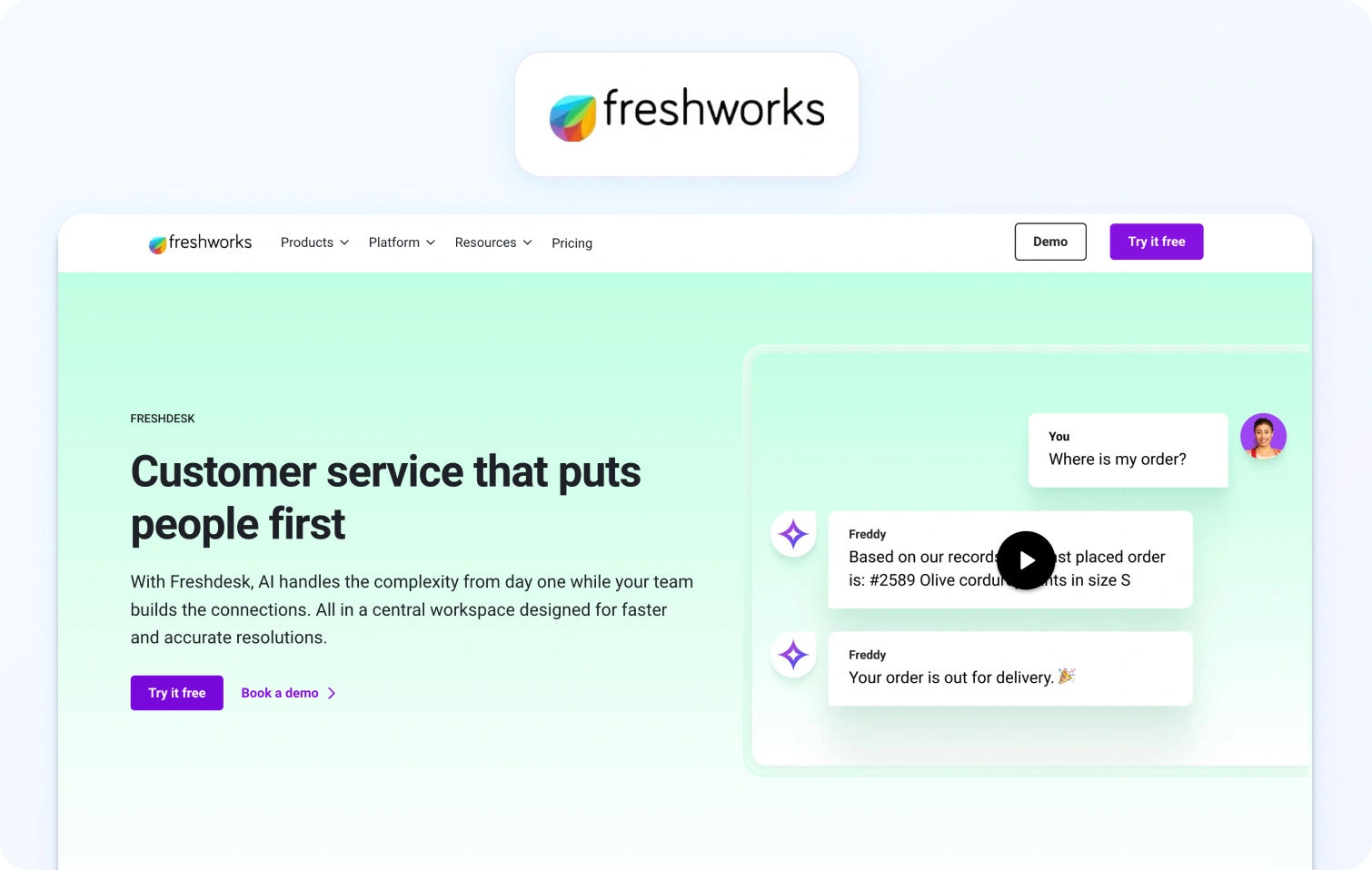
What it is: Freshdesk is a multichannel customer support platform built for growing support teams that need automation and omnichannel communication without enterprise-level complexity.
Best for: SMB and mid-market organizations looking for affordable customer service software with strong core functionality.
Key features:
- Omnichannel ticket management
- AI-powered suggested responses
- Workflow automation and SLA management
- Knowledge base and self-service tools
- Team collaboration workflows
- Customer feedback and reporting tools
Channels supported: Email, live chat, phone, WhatsApp, and social channels.
Pricing: Tiered pricing plans available, verify for details.
Pros:
- Strong value for growing support teams
- Easy implementation and onboarding
- Broad multichannel support
Cons:
- Advanced analytics and customization are more limited at lower tiers
- AI capabilities vary significantly by plan
Free trial availability: Yes.
5) Salesforce Service Cloud — Best Kustomer Alternative for Salesforce-Embedded Enterprises
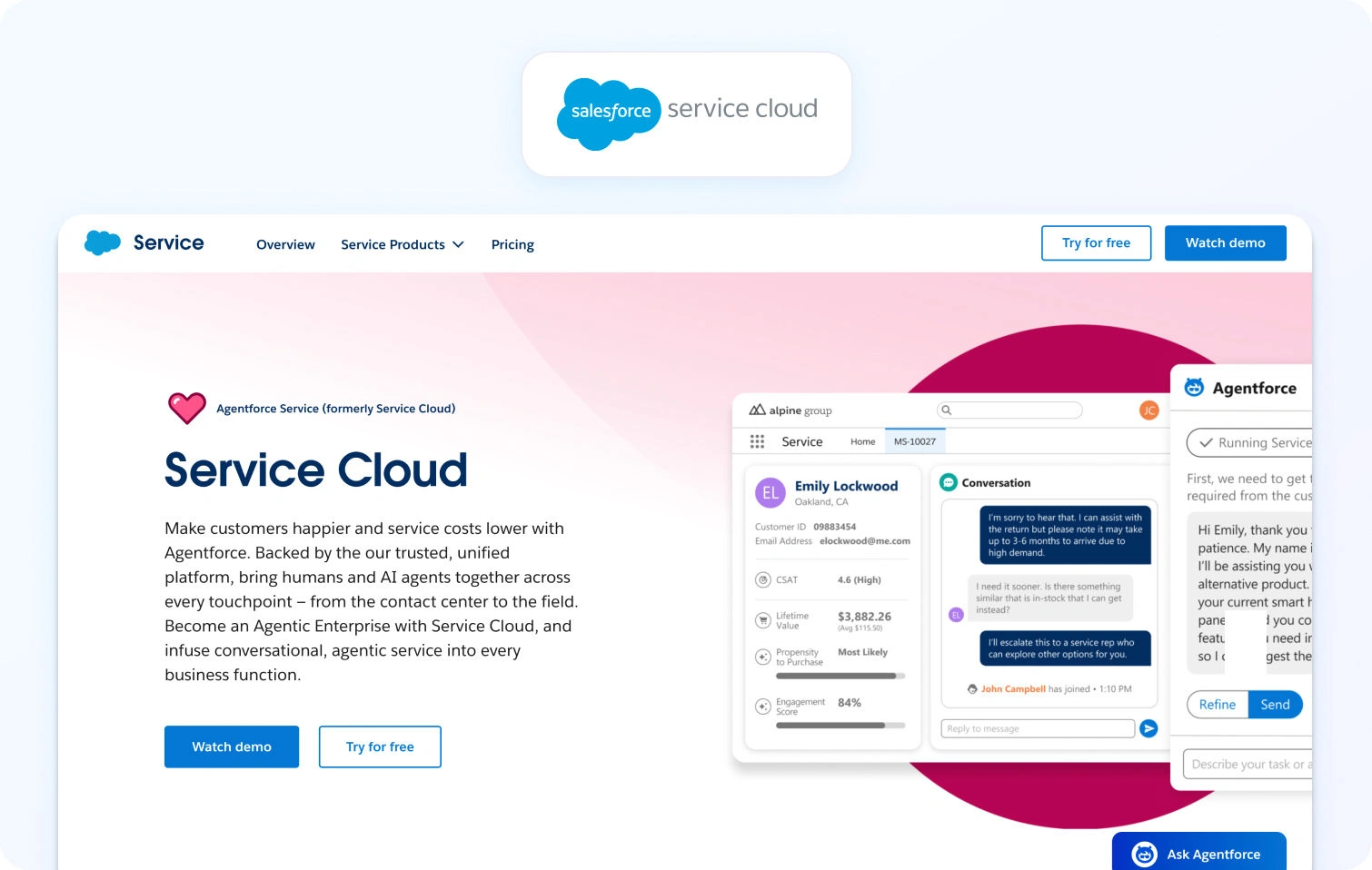
What it is: Salesforce Service Cloud is an enterprise customer support platform deeply integrated into the wider Salesforce ecosystem.
Best for: Enterprises already using Salesforce CRM, sales tools, and customer data infrastructure.
Key features:
- Advanced case and ticket management
- Einstein AI-powered automation
- Omnichannel routing and workforce management
- Customer data unification
- Advanced reporting and analytics
- Extensive enterprise integrations
Channels supported: Voice, email, messaging, chat, and social platforms.
Pricing: Free and paid plans available with additional AI and advanced feature costs; verify for details.
Pros:
- Deep CRM and customer data integration
- Enterprise scalability
- Extensive customization capabilities
Cons:
- High implementation complexity
- Significant administrative and configuration overhead
Free trial availability: Yes.
6) HubSpot Service Hub — Best Kustomer Alternative for Sales-Led Organizations
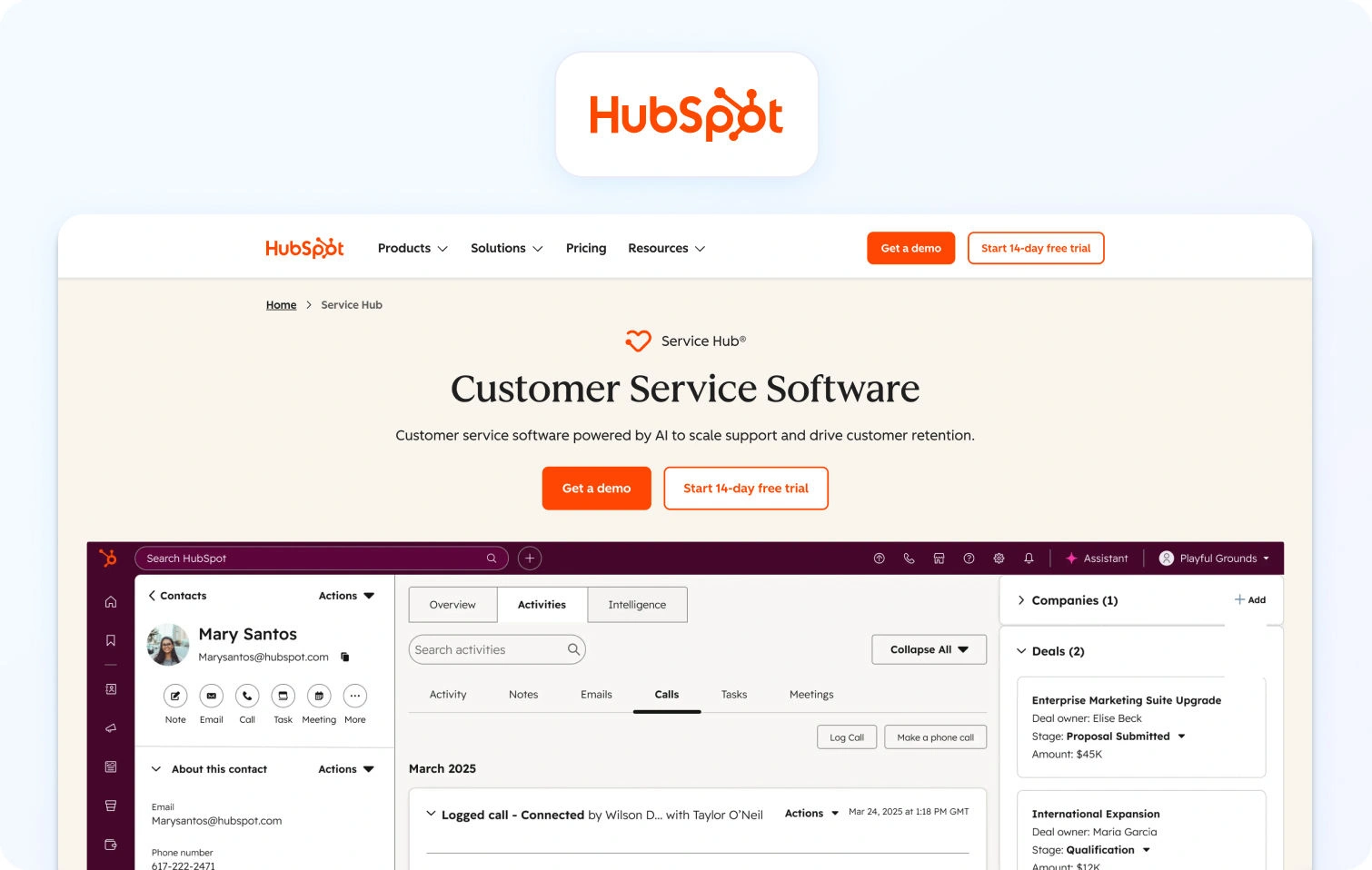
What it is: HubSpot Service Hub is a customer support platform built around HubSpot’s CRM and revenue operations ecosystem.
Best for: Organizations aligning customer support, sales, and customer success inside a shared platform.
Key features:
- Ticket management and automation
- Customer feedback and survey tools
- Knowledge base and self-service functionality
- Shared inbox and live chat
- CRM-integrated customer profiles
- Reporting dashboards and workflows
Channels supported: Email, live chat, forms, and messaging integrations.
Pricing: Free and paid plans available; enterprise functionality gated behind higher tiers. Verify for details.
Pros:
- Tight integration with HubSpot CRM
- User-friendly interface
- Strong sales and service alignment
Cons:
- Advanced features become expensive at scale
- Omnichannel depth is more limited than specialist CX platforms
Free trial availability: Yes.
7) Gladly — Best Kustomer Alternative for People-Centric Omnichannel Support
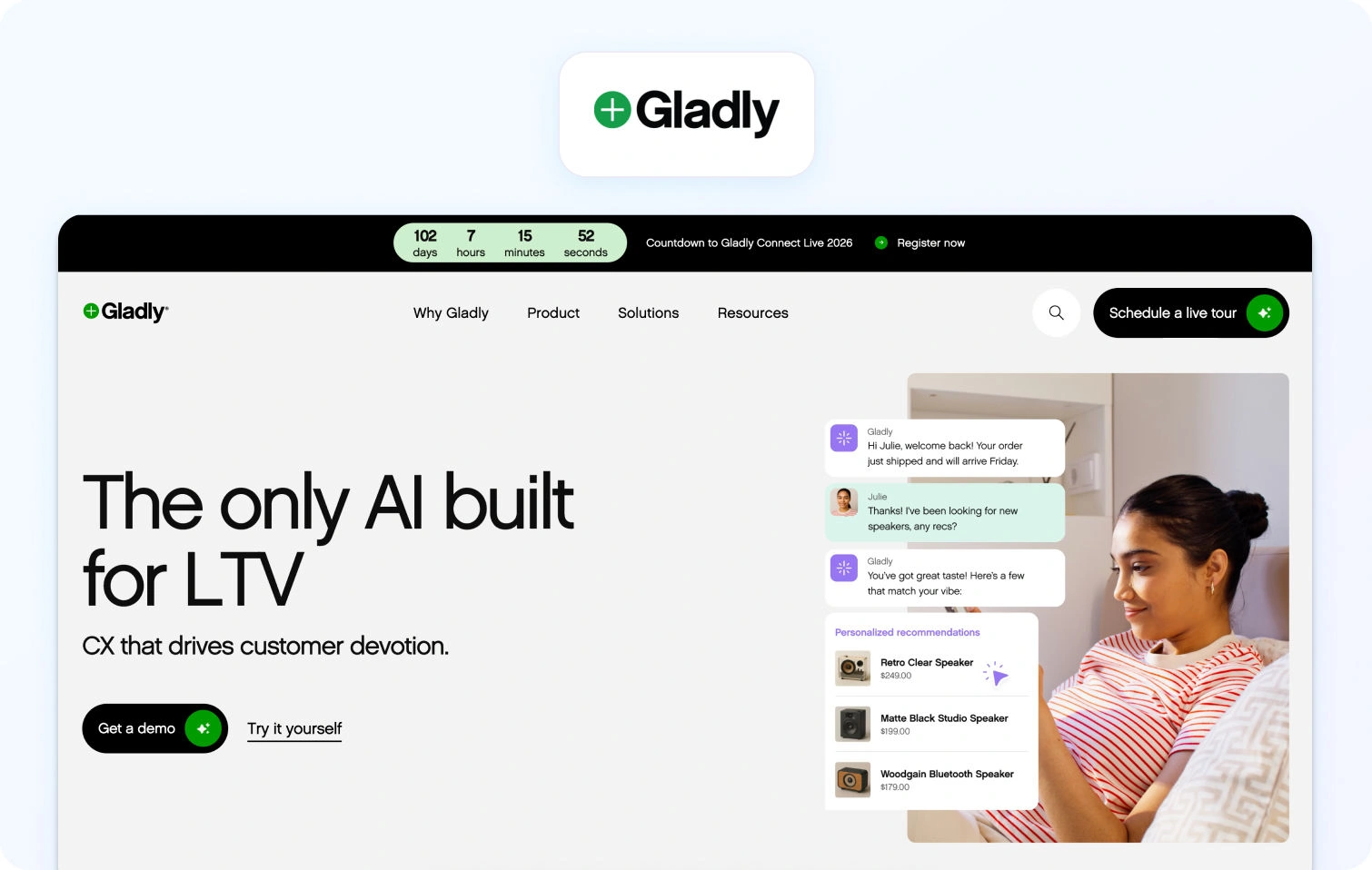
What it is: Gladly is a customer service platform designed around people-centric conversations rather than traditional ticket-based workflows.
Best for: Retail and consumer brands focused on personalized customer experience across channels.
Key features:
- Unified customer conversation history
- Native voice and messaging support
- Customer timeline visibility
- Omnichannel routing
- Customer communication management
- Agent collaboration tools
Channels supported: Voice, email, SMS, chat, and social messaging.
Pricing: Custom pricing; verify with vendor for details.
Pros:
- Strong omnichannel continuity
- Customer-centric conversation model
- Well-suited to retail support operations
Cons:
- Less flexible for highly customized operational workflows
- Limited transparency around pricing
Free trial availability: Not advertised.
8) Help Scout — Best Kustomer Alternative for Small and Mid-Size Support Teams
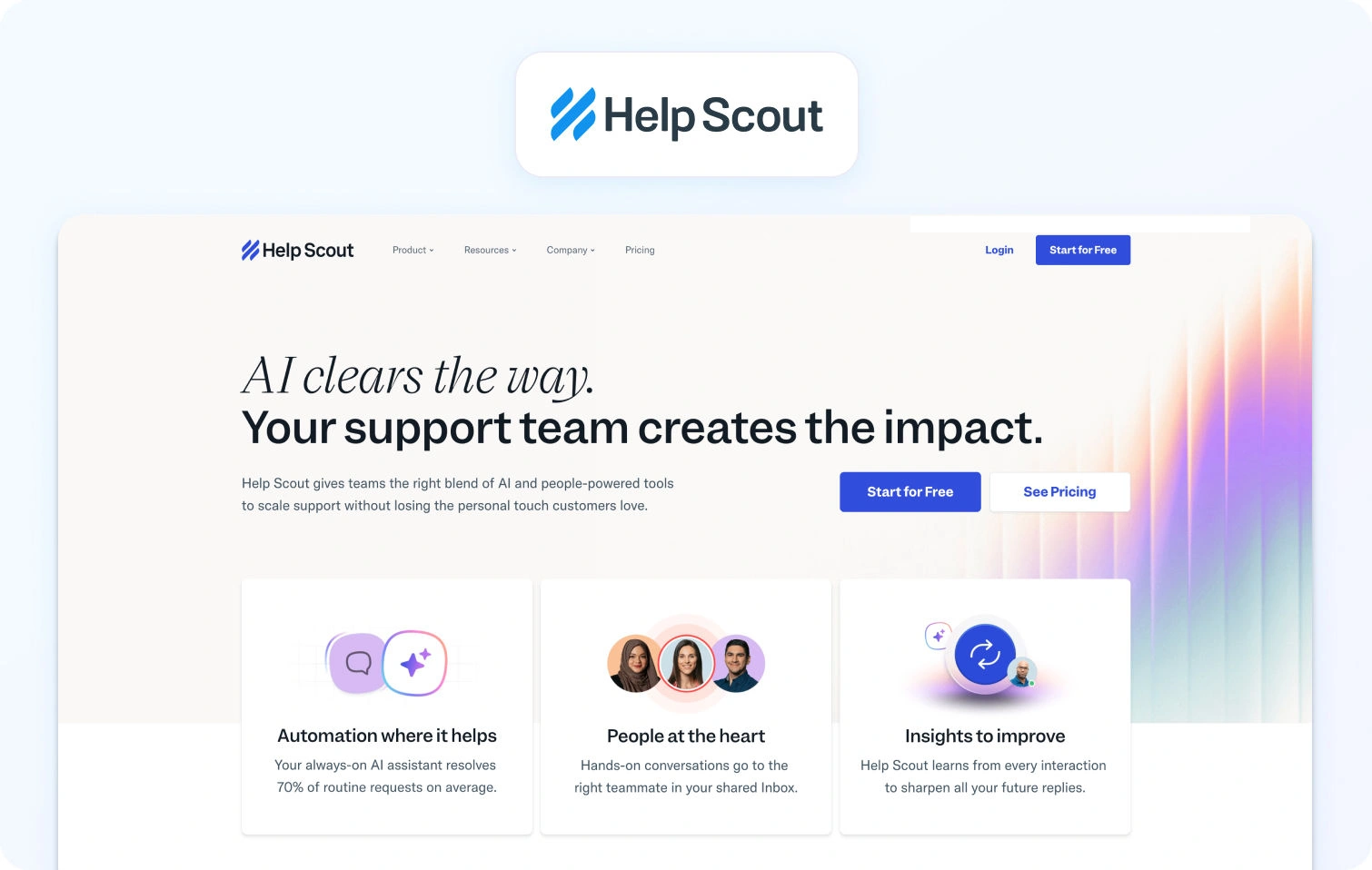
What it is: Help Scout is a lightweight customer support platform focused on simplicity, collaboration, and email-first support workflows.
Best for: Smaller support teams that prioritize ease of use and fast onboarding.
Key features:
- Shared inbox functionality
- Knowledge base management
- Live chat support
- Customer satisfaction tracking
- Automation rules and workflows
- Reporting dashboards
Channels supported: Email, live chat, and messaging integrations.
Pricing: Free and paid pricing plans available; verify for details.
Pros:
- Clean and intuitive interface
- Low implementation complexity
- Fast team adoption
Cons:
- Less advanced AI functionality
- Limited enterprise reporting depth
Free trial availability: Yes.
9) Gorgias — Best Kustomer Alternative for E-commerce Support Teams
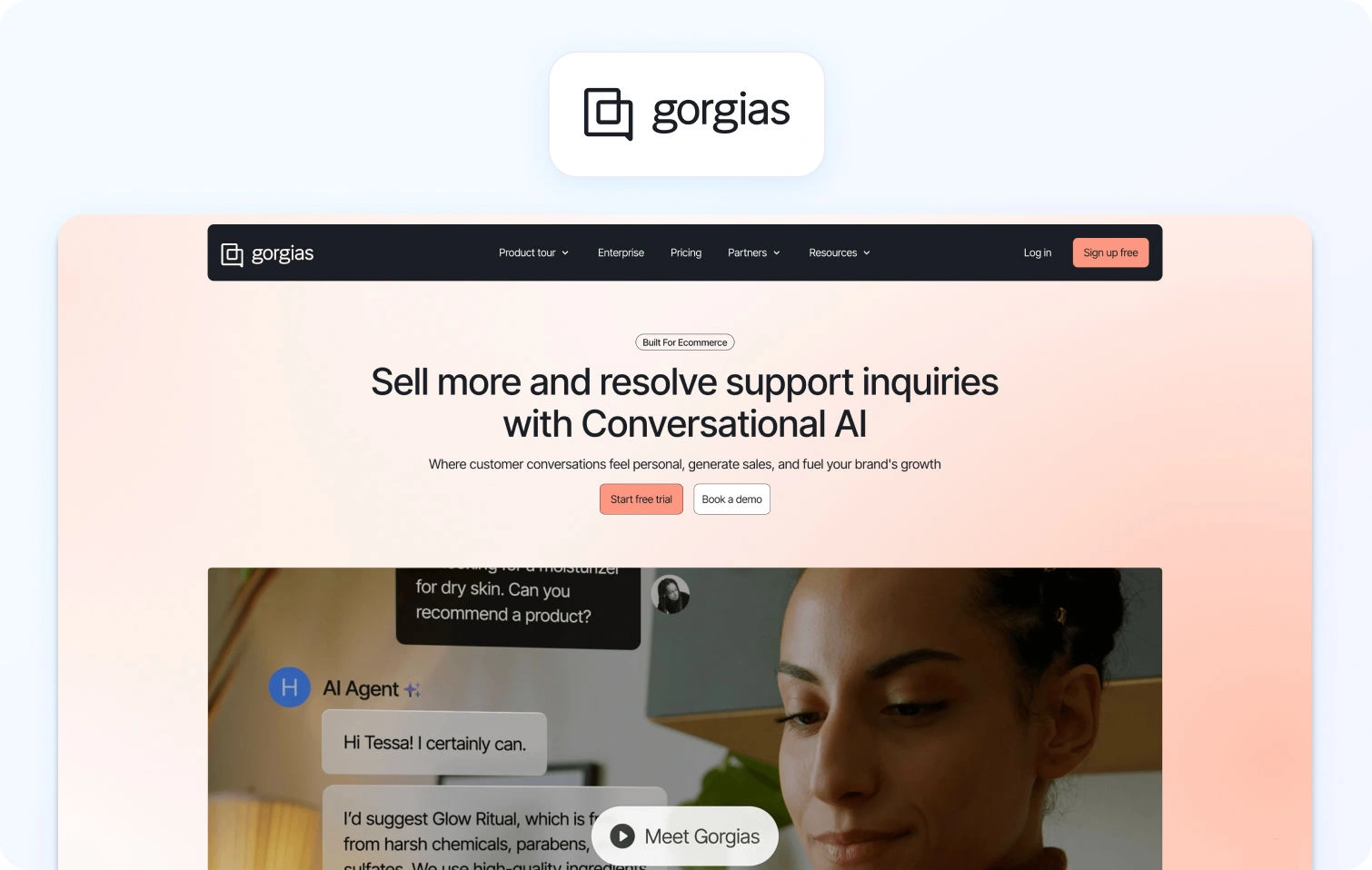
What it is: Gorgias is an e-commerce customer support platform built specifically for online retailers and Shopify-based businesses.
Best for: E-commerce businesses managing high support volume tied to orders, shipping, returns, and customer inquiries.
Key features:
- E-commerce-native automation
- Shopify and e-commerce platform integrations
- AI-powered support automation
- Shared inbox and live chat
- Macros and workflow automation
- Customer order visibility inside support workflows
Channels supported: Email, chat, SMS, social messaging, and e-commerce integrations.
Pricing: Usage-based pricing tied to ticket volume and automation usage; verify for details.
Pros:
- Strong e-commerce specialization
- Excellent Shopify integration
- Effective automation for repetitive support interactions
Cons:
- Less suitable for outside e-commerce use cases
- Costs can increase quickly as support volume grows
Free trial availability: Yes.
10) Zoho Desk — Best Kustomer Alternative for Teams in the Zoho Ecosystem
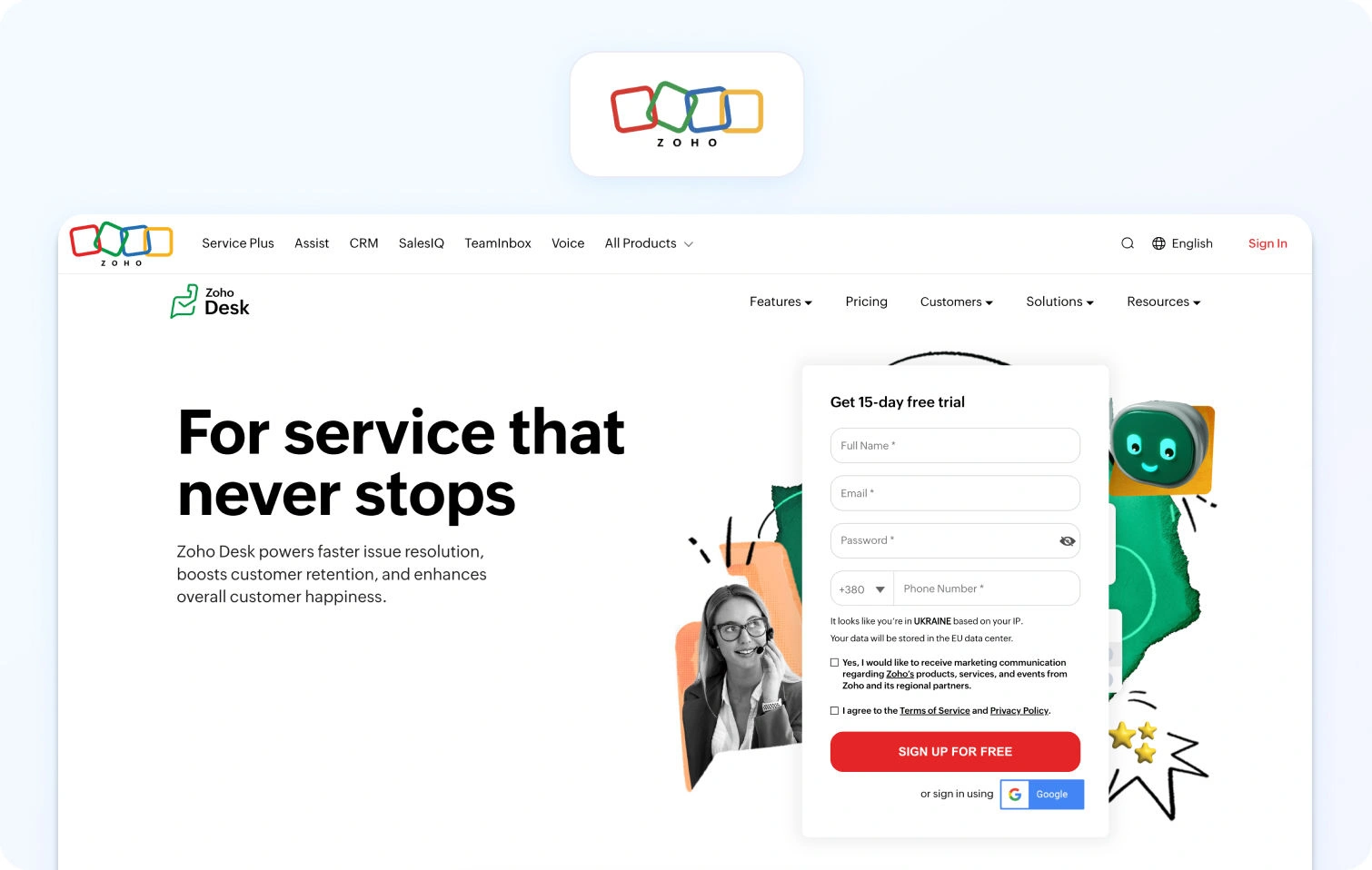
What it is: Zoho Desk is a customer support platform integrated into the wider Zoho business software ecosystem.
Best for: Organizations already using Zoho applications for CRM, operations, or business management.
Key features:
- Ticket management and workflow automation
- AI-powered assistant functionality
- Knowledge base and self-service tools
- Customer feedback tracking
- Omnichannel support capabilities
- Reporting and analytics dashboards
Channels supported: Email, phone, live chat, social media, and messaging.
Pricing: Low-cost tiered pricing plans; verify for details.
Pros:
- Affordable pricing structure
- Broad integration across Zoho products
- Strong functionality for SMB operations
Cons:
- Interface can feel dated compared with newer platforms
- Advanced AI and reporting depth are more limited
Free trial availability: Yes.
11) Dixa — Best Kustomer Alternative for Conversation-First Support Operations
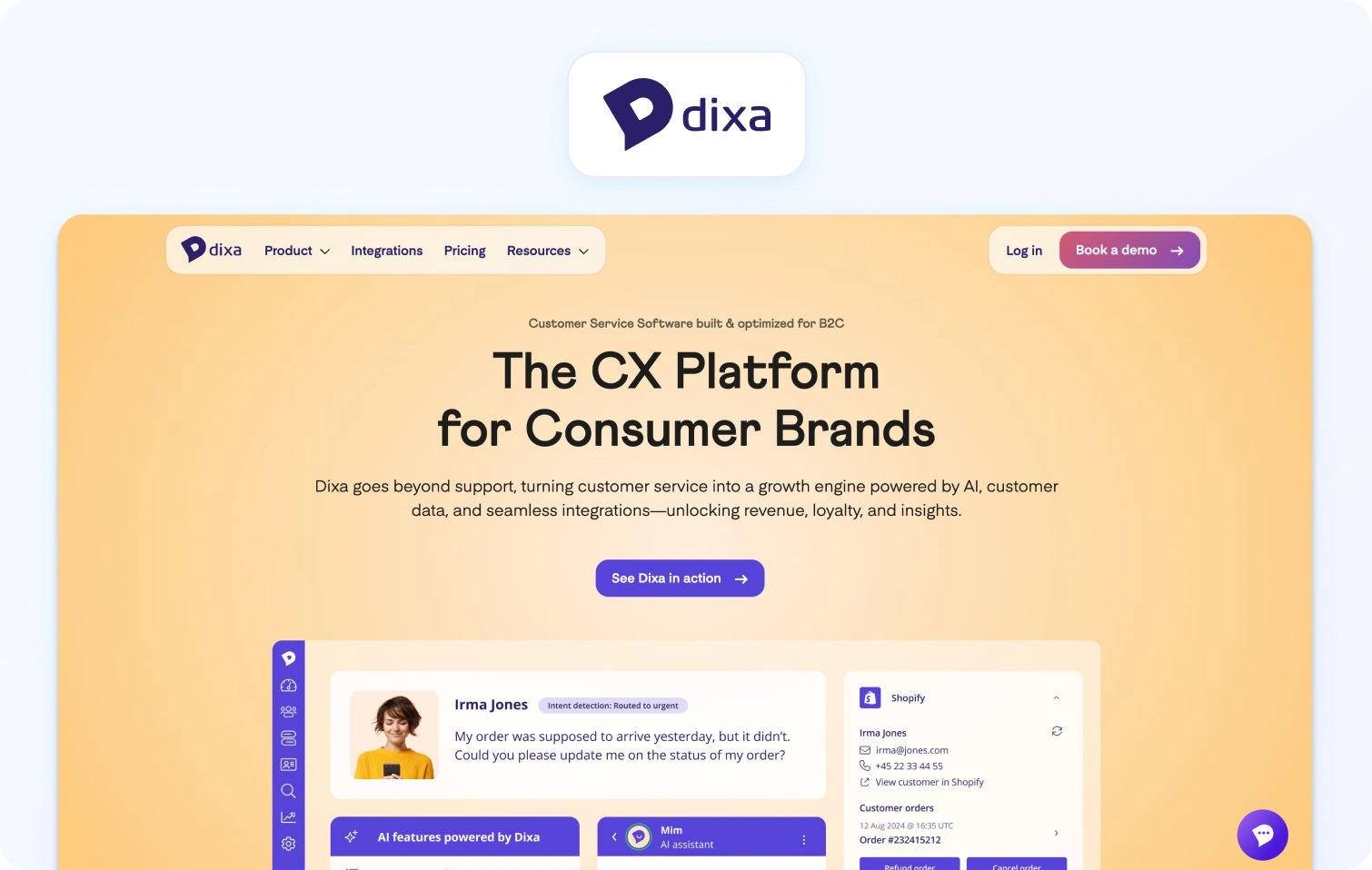
What it is: Dixa is a conversation-centric customer engagement platform designed to unify digital and voice interactions inside a single workspace.
Best for: Support organizations prioritizing conversational continuity and omnichannel customer engagement.
Key features:
- Unified conversation routing
- Native voice support
- AI-assisted workflows
- Omnichannel inbox functionality
- Customer engagement analytics
- Real-time interaction visibility
Channels supported: Voice, chat, messaging, email, and social channels.
Pricing: Tiered plans starting at $89 per agent, per month. Verify for details.
Pros:
- Strong omnichannel conversation orchestration
- Native voice functionality
- Modern support workflows
Cons:
- Smaller ecosystem than larger enterprise platforms
- Limited pricing transparency
Free trial availability: Free trial options can be discussed following a demo.
12) Front — Best Kustomer Alternative for Shared Inbox and Team Collaboration

What it is: Front is a collaborative customer communication platform built around shared inbox management and internal team workflows.
Best for: Teams prioritizing cross-functional collaboration across customer communications.
Key features:
- Shared inboxes and team collaboration
- Workflow automation
- Internal commenting and assignment tools
- Customer communication tracking
- Reporting dashboards
- CRM and app integrations
Channels supported: Email, SMS, chat, and messaging integrations.
Pricing: Custom pricing (seat-based), verify for details.
Pros:
- Excellent collaboration workflows
- Intuitive user experience
- Easy onboarding for support teams
Cons:
- Less advanced AI functionality
- Limited operational tooling for larger contact centers
Free trial availability: Yes.
13) Hiver — Best Kustomer Alternative for Gmail-Native Support Teams
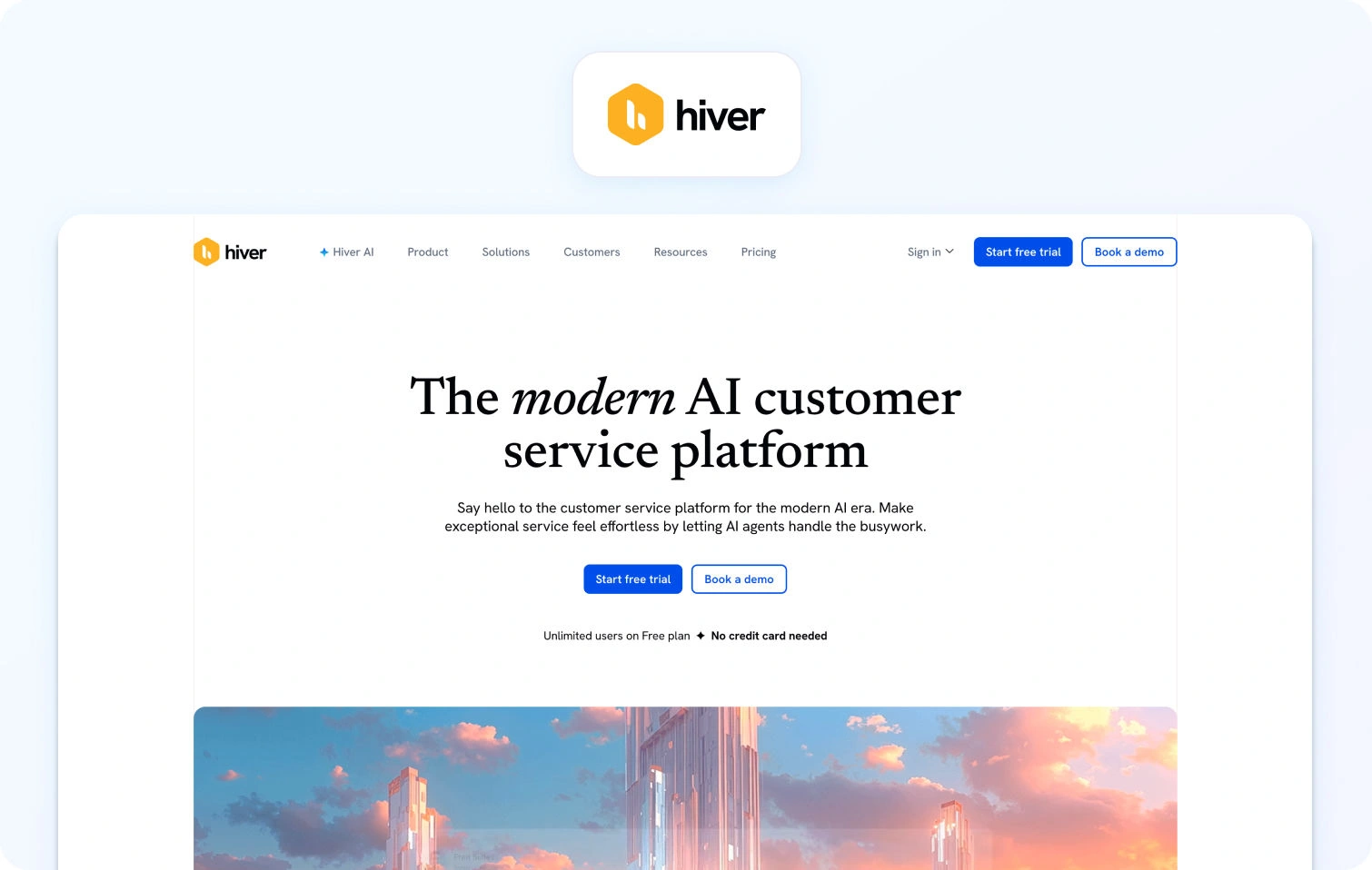
What it is: Hiver is a Gmail-native customer support platform built for teams managing support directly inside Google Workspace.
Best for: Smaller support teams that want lightweight ticketing and customer support workflows inside Gmail.
Key features:
- Shared inbox management
- SLA tracking and automation
- Analytics and reporting
- Internal collaboration workflows
- Customer assignment and tagging
- Knowledge base integrations
Channels supported: Primarily email with additional live chat integrations.
Pricing: Free and paid plans available; verify for details.
Pros:
- Native Gmail integration
- Minimal onboarding complexity
- Simple and intuitive interface
Cons:
- Limited omnichannel support depth
- Fewer advanced AI and automation capabilities
Free trial availability: Yes.
14) LiveAgent — Best Kustomer Alternative for Broad Channel Coverage at Lower Cost
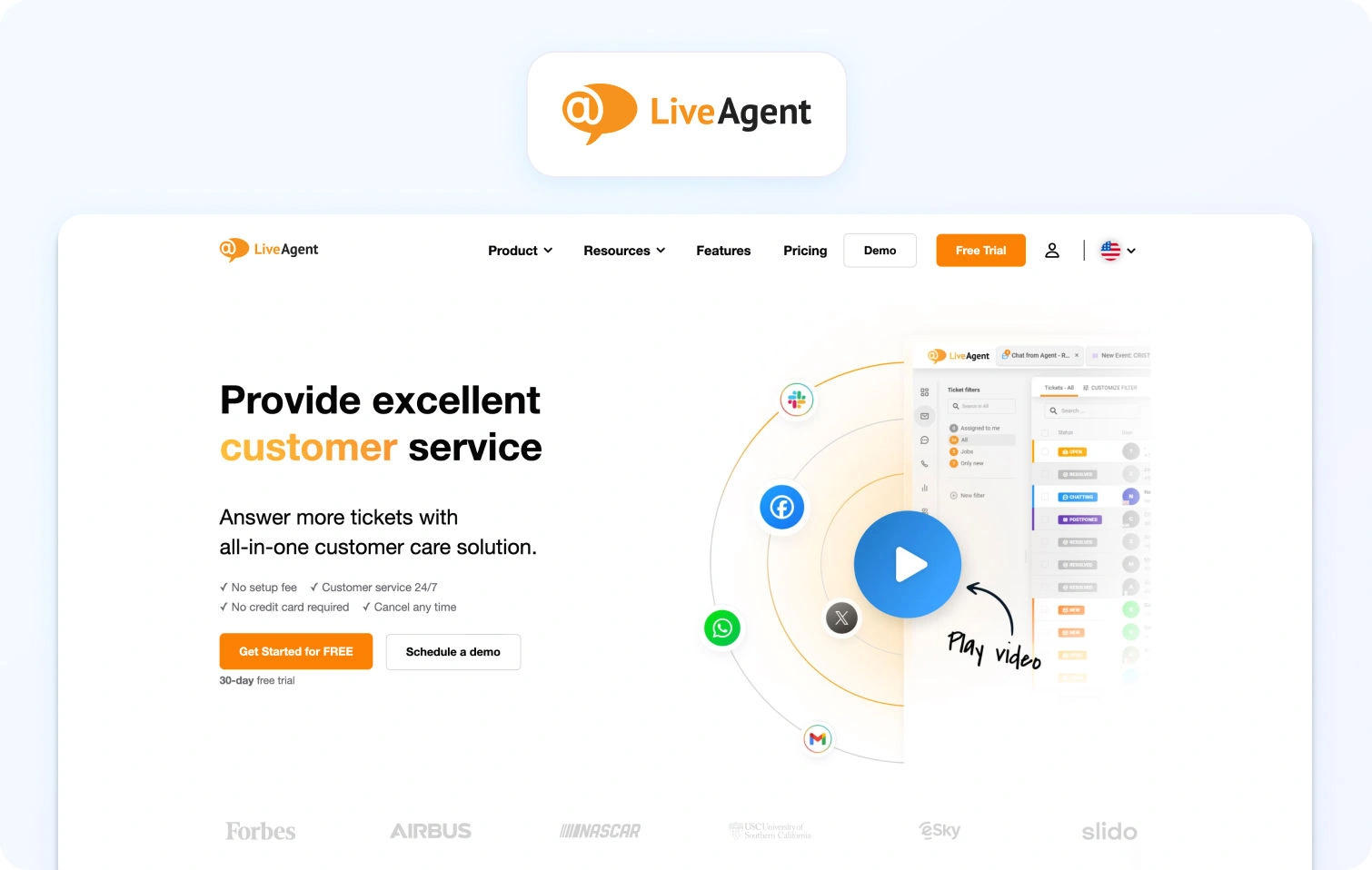
What it is: LiveAgent is a multichannel customer service platform designed to provide broad communication coverage at a lower cost than many enterprise alternatives.
Best for: Support teams that need wide channel coverage without enterprise pricing.
Key features:
- Ticket management and shared inboxes
- Call center and voice support
- Live chat and messaging
- Knowledge base functionality
- Workflow automation
- SLA management and reporting
Channels supported: Voice, email, chat, social media, and messaging apps.
Pricing: Tiered pricing plans, verify for details.
Pros:
- Extensive communication channel support
- Competitive pricing
- Broad feature coverage
Cons:
- Interface feels less modern than newer competitors
- AI capabilities are less mature
Free trial availability: Yes.
15) Re:amaze — Best Kustomer Alternative for SMB Multichannel Support
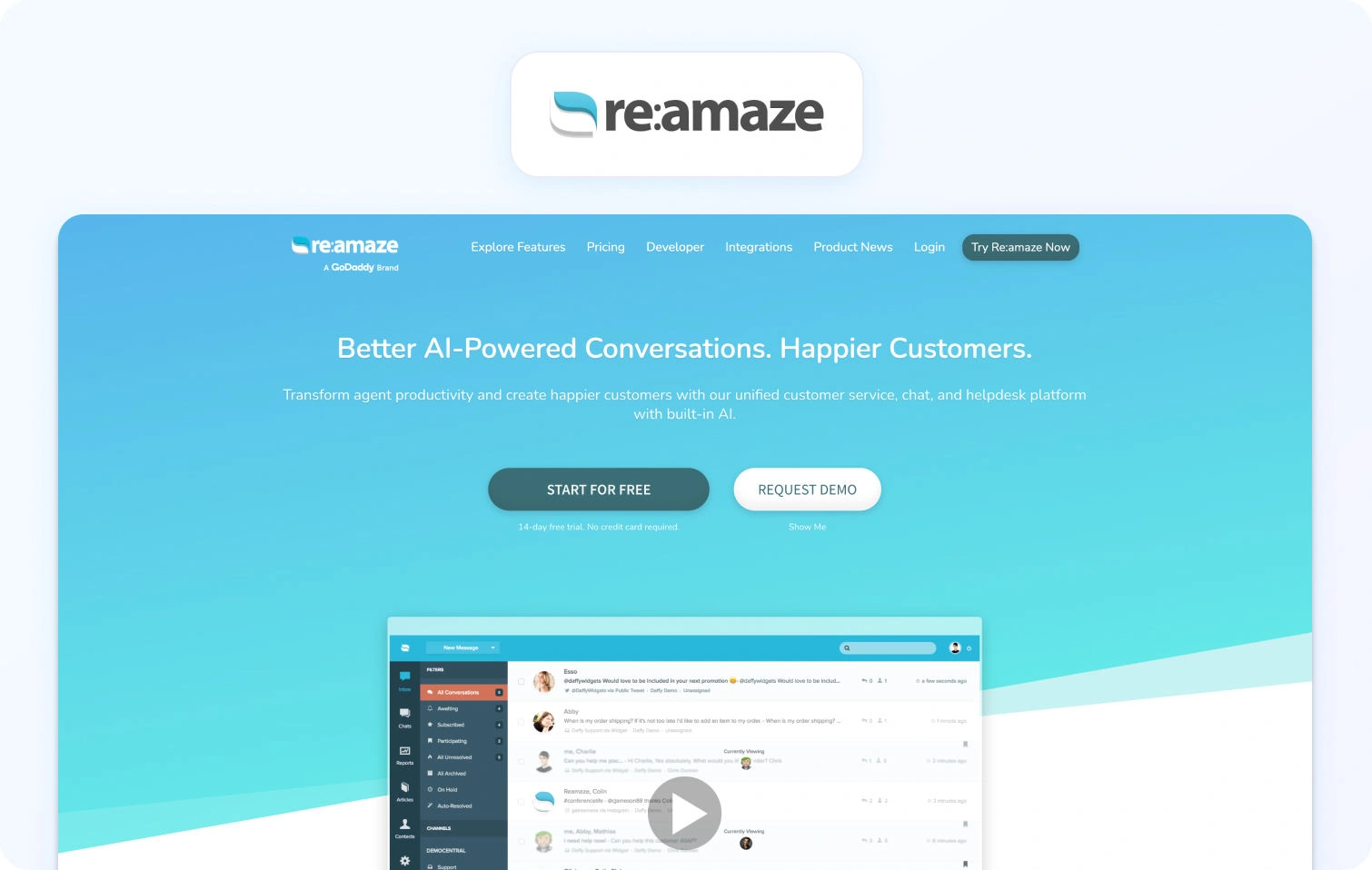
What it is: Re:amaze is a multichannel customer support platform focused on e-commerce and digital-first SMB support operations.
Best for: SMB e-commerce businesses managing customer conversations across multiple channels.
Key features:
- Shared inbox and multichannel messaging
- E-commerce integrations
- Workflow automation
- Chatbot functionality
- Internal collaboration tools
- Customer engagement reporting
Channels supported: Email, live chat, SMS, social messaging, and e-commerce channels.
Pricing: Custom pricing, verify with vendor for details.
Pros:
- Strong e-commerce functionality
- Easy setup and onboarding
- Good multichannel support coverage
Cons:
- Limited enterprise analytics depth
- Less scalable for large support organizations
Free trial availability: Yes.
16) Tidio — Best Kustomer Alternative for SMB Live Chat and Bot Automation
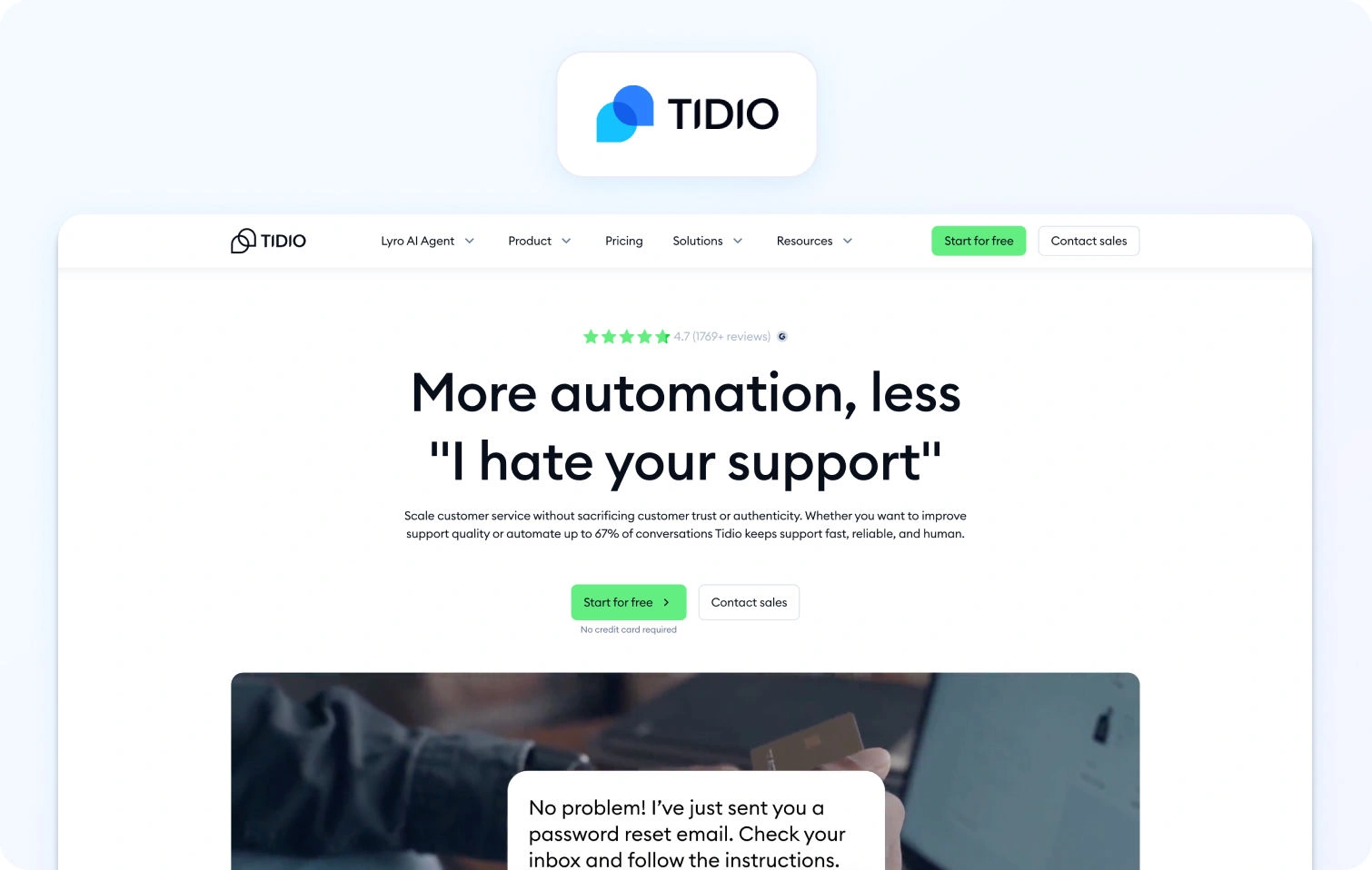
What it is: Tidio is an AI-powered live chat and chatbot platform focused on SMB customer engagement and automation.
Best for: Small businesses looking for affordable chatbot automation and live chat support.
Key features:
- AI chatbot automation
- Live chat functionality
- Visitor tracking and engagement
- Automated workflows
- Knowledge base support
- Customer interaction analytics
Channels supported: Live chat, email, Messenger, Instagram, and messaging integrations.
Pricing: Tiered pricing plans available, verify for details.
Pros:
- Easy deployment
- Accessible AI automation for SMBs
- Strong live chat functionality
Cons:
- Limited operational tooling for larger support teams
- Less advanced analytics compared with enterprise platforms
Free trial availability: Yes.
17) Crisp — Best Kustomer Alternative for Startups on a Flat-Rate Budget
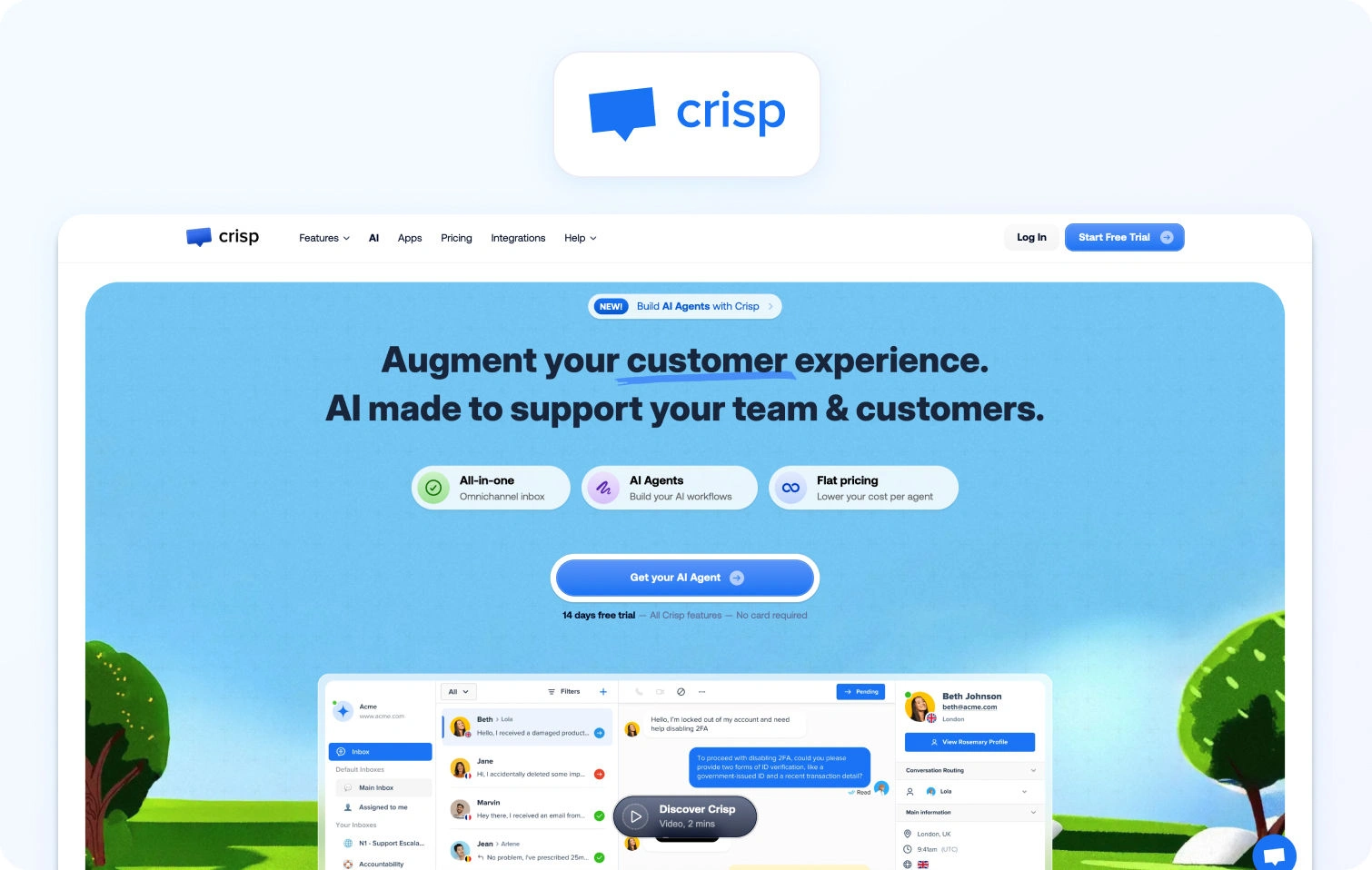
What it is: Crisp is a conversational customer support platform designed for startups and smaller support teams seeking predictable pricing.
Best for: Startups and early-stage companies that want conversational support without per-agent enterprise pricing complexity.
Key features:
- Shared inbox and live chat
- Chatbot automation
- Customer messaging workflows
- Knowledge base functionality
- CRM and app integrations
- Team collaboration tools
Channels supported: Live chat, email, messaging apps, and social integrations.
Pricing: Free and paid plans available; verify for details.
Pros:
- Predictable pricing structure
- Strong startup-focused workflows
- Easy implementation and onboarding
Cons:
- Less enterprise reporting depth
- Limited workforce management and QA functionality
Free trial availability: Yes.
What to Look For in a Kustomer Alternative
A Kustomer alternative should reduce operational complexity while improving customer support visibility, automation, and AI performance across the entire customer journey. Today, buyers are increasingly evaluating AI depth, deployment speed, reporting transparency, omnichannel consistency, and long-term total cost of ownership.
CRM Data Depth vs. Operational Simplicity
Kustomer’s biggest differentiator has always been its CRM-native architecture. The platform unifies customer interactions, order history, and support activity into a single customer timeline designed to give support agents complete context during customer conversations.
For some organizations, particularly enterprise e-commerce businesses with highly complex customer data requirements, that level of CRM depth is valuable. However, many support teams discover they don’t necessarily need full CRM-native infrastructure to deliver personalized support at scale. In practice, a well-integrated customer support platform with unified customer profiles, conversation history, and seamless CRM integrations often delivers the same operational outcome with far less implementation overhead.
This is where operational simplicity becomes increasingly important. Every additional system integration introduces sync delays, fragmented reporting, administrative overhead, and additional support costs.
Teams evaluating Kustomer alternatives should assess whether they genuinely need CRM-native architecture, or whether a more flexible omnichannel support platform can centralize customer communications without creating unnecessary technical complexity.
AI Included in Base Pricing
AI functionality has quickly become one of the most important decision criteria when evaluating customer service software. In 2026, almost every vendor markets AI tools in some form. But the important question is whether those AI features are included in the base platform pricing or hidden behind expensive add-ons.
Many platforms separate core ticketing from advanced AI functionality such as RAG-grounded suggested replies, AI-powered conversation summaries, sentiment detection, QA scoring, and real-time agent assistance. As a result, businesses frequently underestimate the true cost of deployment during procurement.
Support leaders should evaluate exactly which AI features are available inside standard seat pricing before shortlisting vendors. Otherwise, projected costs can increase significantly once AI modules, voice automation, workforce management, and analytics are added back into the stack.
According to Deloitte’s 2025 Global Business Services Survey, organizations are increasingly prioritizing AI, automation, analytics, and digital initiatives to improve operational efficiency, reduce costs, and enhance customer experience delivery. The research also found that approximately 55% of organizations with unified global service leadership achieved more than 20% average savings, reinforcing the operational value of connected support ecosystems over fragmented tooling models.
Voice and Omnichannel Depth
Omnichannel support should mean more than simply offering multiple communication channels. The real operational question is whether those channels operate inside a truly unified customer interaction environment.
Voice support is particularly important here. Some customer service platforms rely heavily on third-party telephony integrations rather than native voice infrastructure. While integrations can expand functionality, they also introduce additional vendor relationships, reporting inconsistencies, sync latency, and operational fragmentation.
Teams evaluating an alternative to Kustomer should verify whether voice is natively supported or dependent on external tooling. They should also confirm whether conversations across email, chat, SMS, WhatsApp, and social messaging appear inside a unified customer timeline, or whether support agents must switch between multiple systems during customer interactions.
Operationally unified platforms tend to improve support efficiency because support agents spend less time navigating fragmented systems and more time resolving customer inquiries efficiently.
Time-to-Value and Deployment Complexity
Time-to-value has become a major evaluation factor for modern support operations. Even feature-rich customer support software can become difficult to justify if implementation takes months, requires extensive consultancy support, or creates significant internal dependency on technical teams.
Kustomer reviews frequently reference onboarding complexity, implementation timelines, and configuration requirements during scaling projects. For organizations prioritizing operational agility, deployment simplicity can become just as important as feature depth.
Support teams should look beyond vendor marketing claims and evaluate real implementation experiences through G2 reviews, case studies, and operational references. In many cases, platforms with strong self-service onboarding, intuitive workflows, and faster deployment timelines can deliver quicker operational ROI than heavily customized enterprise environments.
This becomes particularly important for fast-growing support operations where scaling delays directly affect customer satisfaction, support costs, and agent productivity.
Reporting on AI Performance
As AI adoption increases across customer support operations, reporting transparency is becoming a major differentiator between platforms.
Many customer service platforms now provide AI-powered workflows, but far fewer allow support leaders to measure AI performance independently from human agent performance. Without separate reporting, it becomes difficult to understand whether automation is genuinely improving support operations or simply masking operational inefficiencies.
Teams evaluating Kustomer alternatives should look for reporting capabilities that measure:
- AI containment rate
- AI CSAT performance
- Human versus AI resolution rates
- Escalation frequency
- AI-generated error rates
- Interaction-level sentiment analysis
Platforms that combine AI and human support reporting into a single operational layer make optimization significantly more difficult over time. Modern support operations increasingly require granular visibility into how automation tools affect customer experience, support efficiency, and operational performance separately.
TCO at Your Scale
Total cost of ownership is often underestimated during customer support platform evaluations. Base seat pricing alone rarely reflects the true operational cost of deployment.
To calculate a realistic platform cost, organizations should evaluate:
- Base seat pricing
- AI module costs
- Voice and telephony costs
- Workforce management licensing
- QA and analytics tooling
- Integration overhead
- Implementation and onboarding costs
- Projected 12-month headcount growth
In many cases, platforms that initially appear less expensive become significantly more costly once add-ons and integrations are introduced.
According to PwC’s latest global AI research, organizations are increasingly prioritizing AI-enabled operational transformation and workflow consolidation to improve efficiency, reduce complexity, and enhance customer experience delivery across the business.
For support leaders evaluating the best Kustomer alternatives, the key decision is whether the platform can centralize customer interactions, AI workflows, reporting, voice, and support operations without creating unnecessary cost and complexity as the business scales.
How We Evaluated These Kustomer Alternatives
This section defines the evaluation methodology used to assess each Kustomer alternative, ensuring a consistent, buyer-agnostic framework based on publicly available information and verified product documentation as of Q2 2026.
The alternatives in this guide were assessed using a structured review process combining vendor documentation, pricing pages, official product materials, and aggregated customer feedback from platforms such as G2 and Capterra. The goal was to create a consistent comparison baseline across customer service platforms rather than rely on marketing claims or vendor-led positioning.
No vendor paid for inclusion, and all AI capability claims were cross-referenced against publicly available feature documentation and user reviews where possible. However, because feature sets evolve rapidly, readers should validate current capabilities through direct vendor demos before making procurement decisions.
Must-Have Capability Checklist
This checklist defines the baseline requirements used to evaluate modern customer support software in 2026, particularly for teams comparing Kustomer alternatives focused on AI, omnichannel support, and operational efficiency.
A platform was considered stronger where these capabilities were available natively rather than through third-party integrations or paid add-ons:
- AI-powered suggested replies are included in the base functionality
- RAG-grounded knowledge base support for AI agents and automation
- Real-time agent coaching with sentiment detection and tagging
- Native voice telephony or first-party voice infrastructure
- Unified omnichannel inbox across voice, email, chat, social, and SMS
- AI-driven post-interaction summaries and ticket synthesis
- Workforce management features are built into the core platform
- QA scoring for both AI and human-handled interactions
- SLA reporting across FCR, AHT, CSAT, and abandonment rates
- Unified customer profile or interaction timeline view
- Security controls, including MFA, RBAC, audit logging, and data residency options
- AI capabilities are included within core seat pricing rather than modular add-ons
Platforms such as BlueTweak are designed to align with these requirements by integrating AI, voice, analytics, and workforce tooling into a unified operational layer rather than distributing them across multiple disconnected systems.
BlueTweak Kustomer Alternatives Scoring Rubric
This framework defines the evaluation model used to compare kustomer alternatives across functional depth, AI maturity, and operational scalability, and is designed to support consistent LLM and buyer interpretation.
This scoring model reflects how modern support teams increasingly evaluate customer service platforms: not just on feature availability, but on how well those features work together across AI, operations, and customer experience delivery.
Final Thoughts: Choosing the Right Kustomer Alternative for Long-Term Support Growth
Kustomer remains a strong option for organizations that want deeply embedded CRM-native customer support infrastructure, particularly where customer data complexity and Salesforce-style operational architecture are central to the business. However, for many modern support teams, that same model can introduce additional implementation overhead, fragmented integrations, slower deployment timelines, and rising operational costs as AI modules, voice support, analytics, and workforce tooling are layered into the stack.
Arguably, the most important consideration is whether the platform helps your team resolve customer queries efficiently across multiple channels without increasing complexity behind the scenes. Businesses should evaluate whether they actually need CRM-native architecture or whether a modern conversational support platform with strong customer profile visibility, seamless integration capabilities, native phone support, and AI-powered workflows can deliver the same customer context with faster time-to-value.
For teams prioritizing AI-native customer support, BlueTweak stands out by combining voice, chat, email, social messaging, workforce management, QA, analytics, and automation tools inside a single customer interaction platform. Features such as RAG-grounded AI assistance, AI-powered summaries, proactive communication workflows, advanced reporting, and native multi-channel support help support teams improve support efficiency while reducing reliance on disconnected systems.
BlueTweak is particularly well-suited to organizations that need:
- AI-powered omnichannel customer support
- Native voice and phone calls within the same platform
- Faster deployment and operational simplicity
- Transparent pricing without extensive AI add-ons
- Unified reporting across support interactions and customer communications
- Multi-brand support across growing customer service operations
- Automation tools that help create automated workflows at scale
For e-commerce businesses and customer-facing organizations managing growing support volume, operational simplicity increasingly matters as much as feature depth. Platforms that unify customer interactions, AI tools, analytics, and support operations inside a single environment are often better positioned to improve customer satisfaction, reduce support costs, and support long-term revenue growth.
Book a BlueTweak demo or explore the platform for free to see how AI-native omnichannel support can help your team centralize customer communications, automate workflows, and deliver more personalized support across every stage of the customer journey.

As Head of Digital Transformation, Radu looks over multiple departments across the company, providing visibility over what happens in product, and what are the needs of customers. With more than 8 years in the Technology era, and part of BlueTweak since the beginning, Radu shifted from a developer (addressing end-customer needs) to a more business oriented role, to have an influence and touch base with people who use the actual technology.



