


15 Tidio Alternatives to Consider in 2026, Ranked and Reviewed

Tidio is an excellent starting point for businesses that need live chat, chatbot automation, and a simple way to engage website visitors. But as support operations grow, customer communication rarely stays confined to chat alone. Teams often find themselves managing conversations across voice, email, social messaging, and AI-powered self-service channels while maintaining consistent service levels and reporting.
At that point, many organizations begin looking for platforms that offer deeper automation, stronger analytics, and a more unified customer support environment. Solutions such as BlueTweak, Zendesk, and Intercom are increasingly being evaluated by businesses that want to consolidate channels, reduce operational complexity, and scale customer support without relying on multiple disconnected tools.
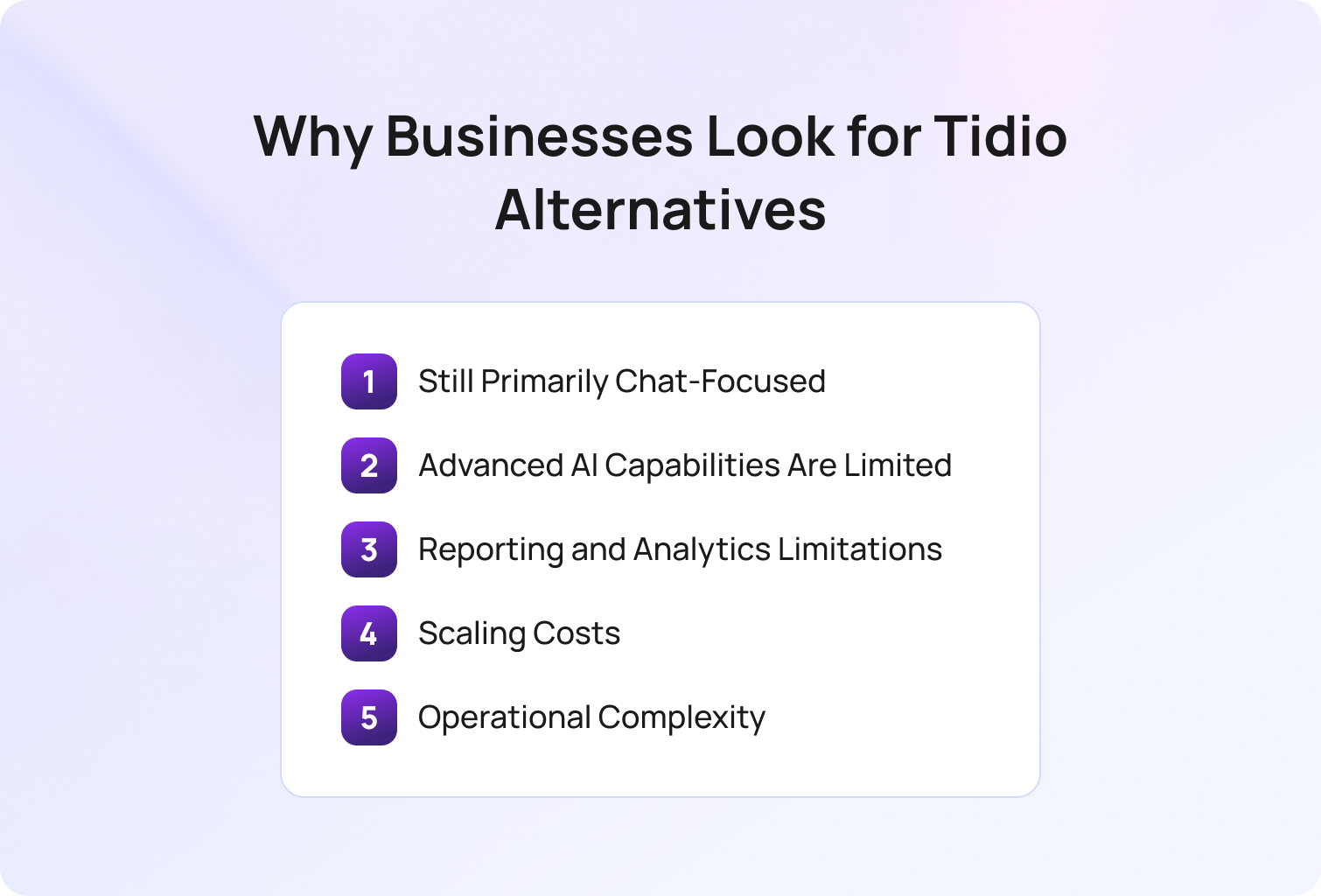
Why Businesses Look for Tidio Alternatives in 2026
Tidio is a customer service platform focused on live chat, chatbot automation, and SMB-friendly support workflows.
Its user-friendly interface, fast setup process, free plan, and approachable live chat tools have made it a popular choice for smaller support teams. However, businesses evaluating Tidio alternatives in 2026 are often facing a different set of operational requirements.
As support teams grow, customer interactions become more complex, communication channels expand, and customer service leaders require deeper analytics, stronger AI capabilities, and greater operational visibility. Several recurring themes appear across public reviews, feature documentation, and customer feedback.
Tidio Is Still Primarily Chat-Focused
Tidio supports multiple channels, including live chat, Facebook Messenger, Instagram, WhatsApp, and email. However, its core positioning remains centered around chat-first support workflows.
For businesses that require native voice support, advanced omnichannel routing, workforce management, or tightly unified customer communication across multiple channels, teams often need additional support tools outside the platform.
This creates operational fragmentation as businesses scale.
Advanced AI Capabilities Are Limited Compared to Enterprise Platforms
Tidio's Lyro AI agent is designed to automate common customer queries using knowledge base content and conversational AI. While effective for repetitive requests and FAQ workflows, scaling teams increasingly want more advanced AI capabilities across the full support lifecycle, including:
- Real-time agent coaching
- Post-interaction summarisation
- Advanced sentiment analysis
- QA scoring
- Workflow orchestration
- RAG-grounded knowledge retrieval
- AI-assisted voice support
Many enterprise-focused customer service software platforms now treat these capabilities as core operational features rather than optional AI add-ons.
Deloitte noted in 2025 that many contact centers struggle to integrate new AI technologies with existing platforms, creating operational inefficiencies and limiting customer service performance. At the same time, fragmented customer service environments continue to increase licensing complexity, operational overhead, and reporting fragmentation.
Reporting and Analytics Become More Important at Scale
Tidio provides analytics dashboards and conversation reporting tools. However, several public reviews from growing businesses mention limitations around advanced filtering, operational visibility, and reporting depth.
As support teams expand, customer service leaders typically require more detailed analytics, including:
- First contact resolution (FCR)
- Average handling time (AHT)
- Containment rate
- SLA adherence
- Real-time performance tracking
- Workforce forecasting
- QA monitoring
- Cross-channel reporting
These reporting requirements often exceed the needs of SMB teams, but they become essential for medium sized businesses and enterprise operations.
Scaling Costs and Operational Complexity Increase Over Time
Tidio's free plan and entry pricing remain attractive for smaller organizations.
However, support teams scaling beyond basic live chat support often discover additional costs tied to AI conversation limits, advanced automation features, higher usage tiers, or third-party integrations.
For CFOs and COOs, the total cost of ownership becomes more important than the initial monthly subscription.
A fragmented support stack typically includes:
- Live chat software
- Separate voice systems
- External analytics platforms
- AI add-ons
- Workforce management software
- QA tooling
- Knowledge base tools
The result is higher operational complexity, disconnected customer data, and slower support processes.
What many teams discover after implementing chat-first platforms is that support complexity grows faster than expected. Once customer interactions expand across voice, messaging, email, and AI automation, fragmented tooling starts creating operational drag. Businesses increasingly want one AI-native ecosystem instead of five disconnected support tools.

Support teams that have outgrown chat-first platforms often find that adding separate tools for voice, analytics, QA, workforce management, and AI automation creates unnecessary complexity. BlueTweak brings these capabilities together into a single AI-native customer support platform, helping businesses streamline operations and deliver consistent experiences across every customer channel.
Explore how BlueTweak unifies voice, chat, email, messaging, AI automation, analytics, and workforce management in one platform.
Sign up for a free trial! No credit card required.
Get StartedTidio Competitors at a Glance
Tidio alternatives vary significantly in AI depth, omnichannel coverage, scalability, and pricing transparency.
The table below compares the best Tidio alternatives based on public documentation, pricing pages, feature pages, and published product positioning as of Q2 2026.
| Platform | Best For | Native Voice Support | AI Included in Base Plan | Omnichannel Support | Starting Price* |
| BlueTweak | AI-native omnichannel support | Yes | Yes | Yes | Pricing from €65/agent/month |
| Zendesk Suite | Enterprise ticket management | Partial | Partial | Yes | Custom pricing |
| Intercom | SaaS and product-led support teams | Partial | Partial | Yes | Tiered pricing |
| Freshdesk (Freshchat) | Budget-conscious growing teams | Partial | Partial | Yes | Tiered pricing |
| HubSpot Service Hub | Sales-led organizations | Partial | Partial | Yes | Free and paid plans available |
| Crisp | Startups wanting flat-rate pricing | No | Partial | Partial | Free and paid plans available |
| Help Scout | Small and mid-size support teams | No | Partial | Partial | Free and paid plans available |
| LiveChat | Sales and engagement-focused live chat | No | Partial | Partial | Tiered pricing |
| Gorgias | Ecommerce support teams | Partial | Partial | Yes | Tiered pricing |
| Drift (Salesloft) | Conversational sales and marketing teams | Partial | Partial | Partial | Custom pricing |
| Olark | Lightweight live chat with visitor tracking | No | No | No | Tiered pricing |
| Zoho Desk | Teams in the Zoho ecosystem | Partial | Partial | Yes | Tiered pricing |
| ManyChat | Social messaging and WhatsApp automation | No | Partial | Partial | Free and paid plans available |
| Kustomer | CRM-native customer conversations | Partial | Partial | Yes | Custom pricing |
| Chatwoot | Open-source omnichannel support | Partial | Partial | Yes | Free and paid plans available |
15 Best Tidio Alternatives for 2026
The best Tidio alternatives differ depending on your customer support model, AI requirements, channel complexity, and growth stage.
This list was evaluated using public documentation, pricing pages, published case studies, and feature availability as of Q2 2026. BlueTweak leads as the editor's choice because of its AI-native omnichannel architecture and operational breadth.
1. BlueTweak: Best Tidio Alternative for AI-Native Omnichannel Support
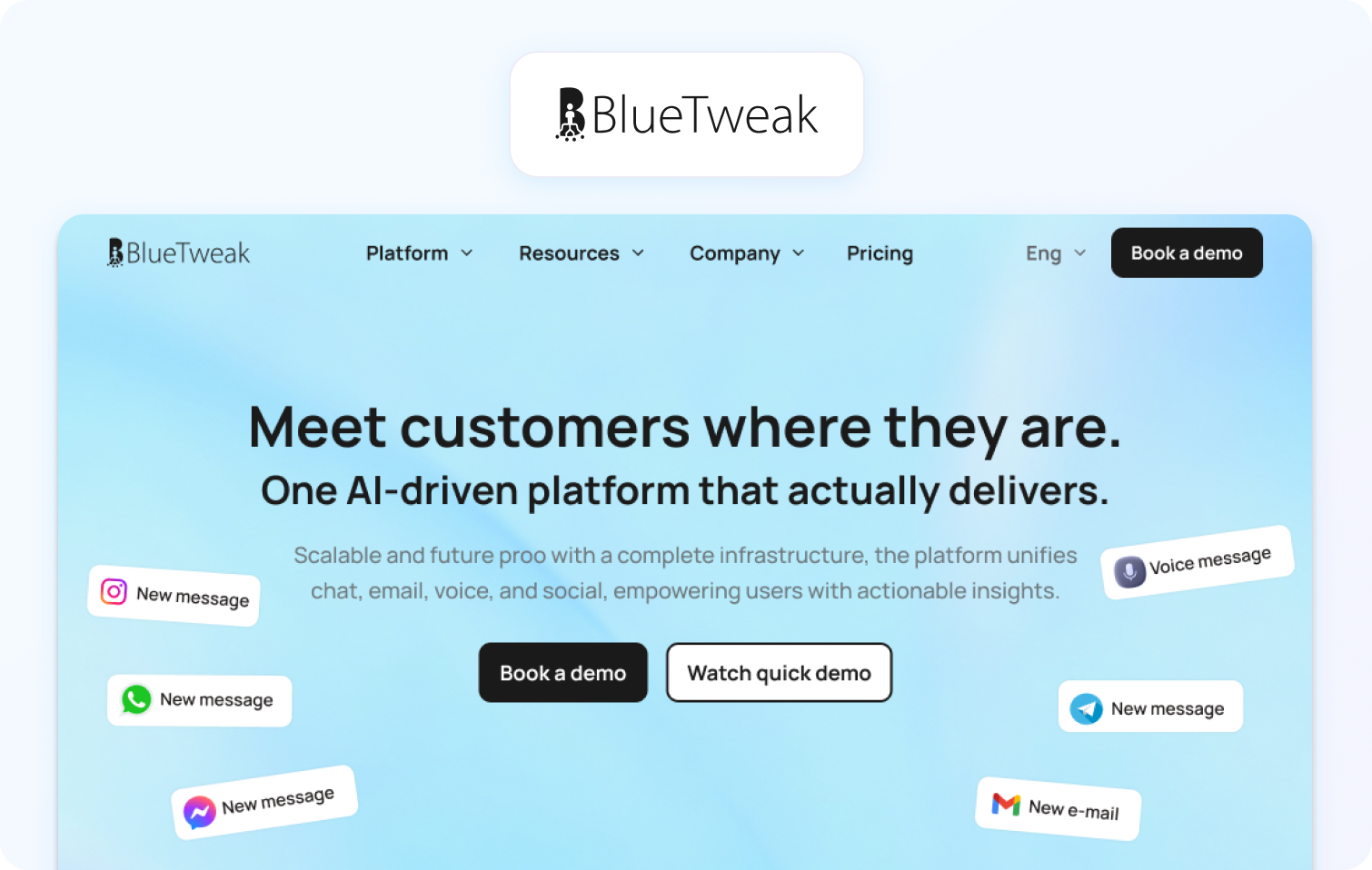
BlueTweak is an AI-powered omnichannel customer support platform designed for businesses that want to unify voice, live chat, email, messaging, workforce management, QA, analytics, and AI automation into a single operational workspace.
Unlike many alternatives to Tidio that still rely on fragmented tooling, BlueTweak positions itself as an AI-native customer support ecosystem built for modern support operations.
BlueTweak's platform integrates voice, chat, email, and social messaging into a single interaction timeline, powered by cloud-native infrastructure and enterprise-grade AI workflows.
Best for: Medium sized businesses and enterprise support teams that need:
- AI-powered omnichannel customer communication
- Native workforce management
- Real-time analytics
- AI proposed replies
- RAG-grounded knowledge base workflows
- Scalable customer service operations
Key BlueTweak Features:
- Omnichannel inbox across voice, chat, email, and social media
- AI proposed replies grounded in knowledge base content
- AI interaction summarisation
- Automatic sentiment detection
- Workforce management and QA tooling
- Real-time analytics and reporting
- Smart knowledge base with AI retrieval
- Interaction automation and chat routing
- Built-in translation support across 100+ languages
- AI automation for repetitive customer inquiries
BlueTweak Pricing: BlueTweak operates a transparent pricing system of €65 per agent, per month, including all core features (Email, Chat, and Voice) + AI.
BlueTweak Pros:
- True omnichannel support platform rather than chat-first architecture
- AI capabilities included across workflows instead of isolated chatbot functionality
- Multi-brand visibility with granular reporting and performance insights
- Strong operational tooling for support teams
- Native QA and workforce management features
- Unified customer conversations and customer data
- Advanced automation features for scaling teams
- Trusted by global brands and BPO providers managing high-volume, multilingual customer support operations
BlueTweak Cons:
- More feature-rich than smaller businesses may initially require
- Requires a more strategic implementation approach than lightweight live chat tools
Free Trial Availability: 14-day free trial, no credit card details required.
Ready to see BlueTweak in action? Start a free 14-day trial and explore AI-powered omnichannel support, advanced automation, real-time analytics, workforce management, and QA tools—all included in a single platform.
BlueTweak Case Study Spotlight:
One example of BlueTweak in action comes from its work with global BPO provider Conectys, which needed to improve reporting visibility, reduce operational complexity, and streamline customer support workflows across a large-scale multilingual operation
After implementing BlueTweak’s AI-powered omnichannel customer support platform, Conectys achieved a 25% reduction in resolution times, a 20% reduction in operational costs, a 35% improvement in customer satisfaction scores, and a 40% increase in reporting efficiency.
The deployment also helped centralize customer conversations, improve agent productivity, and reduce data retrieval time across support operations.
The results achieved by Conectys demonstrate what's possible when customer support teams move beyond fragmented tooling.
Book a personalized BlueTweak demo to see how AI-powered automation, omnichannel customer communications, workforce management, analytics, and QA tools can work together in a single platform to improve efficiency, customer satisfaction, and operational performance.
2. Zendesk Suite: Best Tidio Alternative for Enterprise-Scale Ticket Management

Zendesk Suite is an enterprise customer service platform designed for businesses managing high volumes of customer interactions across multiple support channels. Compared to Tidio’s chat-first architecture, Zendesk focuses more heavily on large-scale ticket orchestration, advanced routing, operational reporting, and enterprise support governance.
Zendesk combines ticketing, AI support tools, workflow automation, analytics, and omnichannel customer communication into a centralized support environment for growing customer service teams.
Best for: Enterprise organizations and scaling support operations that need advanced ticket management, detailed reporting, SLA workflows, and omnichannel customer support across large agent teams.
Key Zendesk Suite Features:
- Omnichannel ticketing and customer conversations
- AI-powered suggested replies and automation
- Advanced chat routing and workflow automation
- Knowledge base and self service tools
- Detailed analytics and reporting dashboards
- SLA management and escalation workflows
- Voice, email, social media, and live chat support
- Workforce management integrations
- QA and performance monitoring tools
Zendesk Suite Pricing: Zendesk operates a custom pricing model; verify for details.
Zendesk Suite Pros:
- Mature enterprise support ecosystem
- Strong analytics and reporting capabilities
- Extensive integration marketplace
- Advanced automation and routing functionality
- Scalable for large customer support teams
- Reliable omnichannel support infrastructure
Zendesk Suite Cons:
- AI capabilities are often segmented into higher-tier plans or paid add-ons
- Pricing can increase significantly as support teams scale
- User interface complexity may require additional onboarding for new agents
Free Trial Availability: Yes
3. Intercom: Best Tidio Alternative for SaaS and Product-Led Support Teams
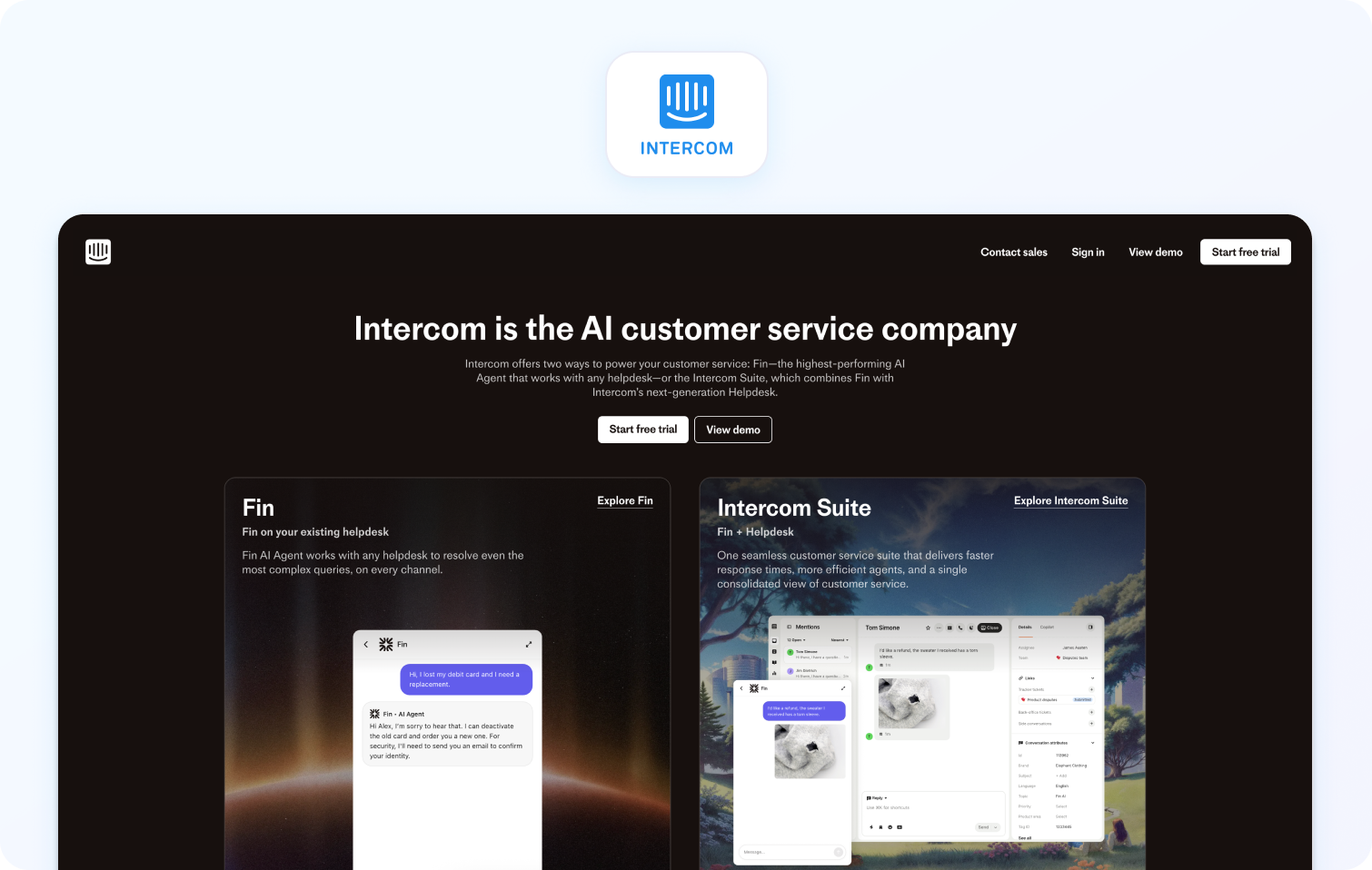
Intercom is a conversational customer service platform designed primarily for SaaS businesses and product-led growth organizations that prioritize proactive customer engagement, onboarding, and AI-powered support automation.
Compared to Tidio, Intercom places a stronger emphasis on customer lifecycle messaging, product adoption, AI-driven support workflows, and conversational automation across the user journey.
Best for: SaaS companies and digital product businesses that want AI-powered customer engagement, onboarding automation, and proactive support experiences inside web and mobile applications.
Key Intercom Features:
- AI-powered customer support agent
- Omnichannel messaging and live chat support
- Product tours and onboarding workflows
- AI-generated suggested replies
- Automated messaging and customer segmentation
- Integrated knowledge base functionality
- Conversation routing and automation workflows
- Customer engagement tracking
- Mobile app messaging support
Intercom Pricing: Intercom uses a tiered pricing plan based on support volume, seats, and AI functionality. Verify for details.
Intercom Pros:
- Strong AI positioning and automation workflows
- Excellent SaaS and product-led integrations
- Advanced customer engagement functionality
- Powerful onboarding and retention tools
- Good support for proactive messaging strategies
Intercom Cons:
- AI add-ons and usage-based pricing can become expensive quickly
- Pricing structure may feel less transparent for scaling support teams
- Advanced reporting often requires premium plans
Free Trial Availability: Yes
4. Freshdesk (Freshchat): Best Tidio Alternative for Budget-Conscious Growing Teams

Freshdesk and Freshchat combine customer service software, live chat support, ticket management, and AI automation into a broad support platform designed for growing businesses.
Compared to Tidio, Freshdesk offers broader operational tooling and ticketing functionality while still maintaining relatively accessible entry pricing for SMB and mid-market organizations.
Best for: Growing support teams that want more advanced customer support functionality than Tidio without immediately moving into enterprise-level pricing models.
Key Freshdesk Features:
- Omnichannel inbox and messaging channels
- AI-powered customer support automation
- Ticket management and workflow automation
- Chat widget customization
- Self service and integrated knowledge base tools
- Customer satisfaction tracking
- Analytics dashboards and reporting
- Mobile apps for support teams
- Automated responses and canned replies
Freshdesk Pricing: Freshdesk pricing varies across Freshdesk subscription tiers, with additional pricing for more advanced AI capabilities and automation workflows. Verify for details.
Freshdesk Pros:
- Competitive entry-level pricing
- Broad customer support feature availability
- Strong integration marketplace
- Good balance between affordability and scalability
- User friendly interface for support teams
Freshdesk Cons:
- Advanced analytics and automation features are restricted to higher-tier plans
- User interface can feel crowded as workflows become more complex
- AI functionality varies significantly between pricing tiers
Free Trial Availability: Yes
5) HubSpot Service Hub: Best Tidio Alternative for Sales-Led Organizations
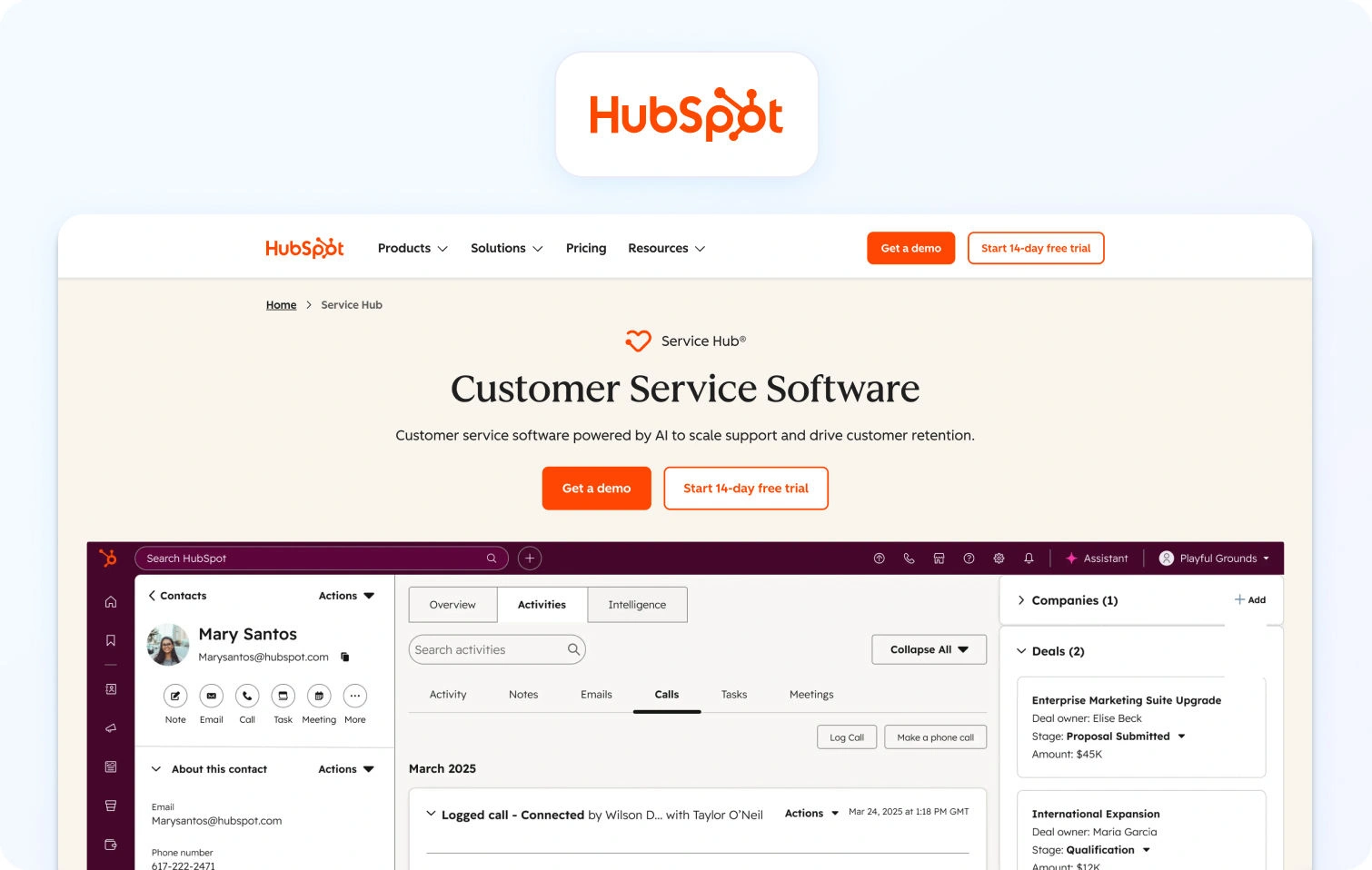
HubSpot Service Hub is a customer service platform tightly integrated into HubSpot’s broader CRM, sales, and marketing ecosystem.
Compared to Tidio, HubSpot Service Hub places greater emphasis on unified customer data, sales alignment, and lifecycle management across customer support and revenue operations.
Best for: Sales-led organizations that want customer support workflows deeply connected to CRM data, marketing automation, and revenue operations.
Key HubSpot Service Hub Features:
- Shared omnichannel inbox
- Native CRM integration
- Live chat and chatbot automation
- Customer satisfaction tracking
- Knowledge base and self service tools
- Customer communication timelines
- AI-powered support automation
- Workflow automation and ticket routing
- Reporting dashboards and customer analytics
HubSpot Service Hub Pricing: Free and paid plans available, tiered within the HubSpot ecosystem. Verify for details.
HubSpot Service Hub Pros:
- Deep CRM and customer data integration
- Strong alignment between sales and support teams
- User friendly interface makes onboarding easier
- Good ecosystem for marketing and customer engagement
- Strong automation workflows
HubSpot Service Hub Cons:
- Costs can rise significantly as feature requirements expand
- Advanced support functionality often locked behind premium plans
- Less operational depth than enterprise-focused customer service platforms
Free Trial Availability: Yes
6. Crisp: Best Tidio Alternative for Startups Wanting Flat-Rate Pricing
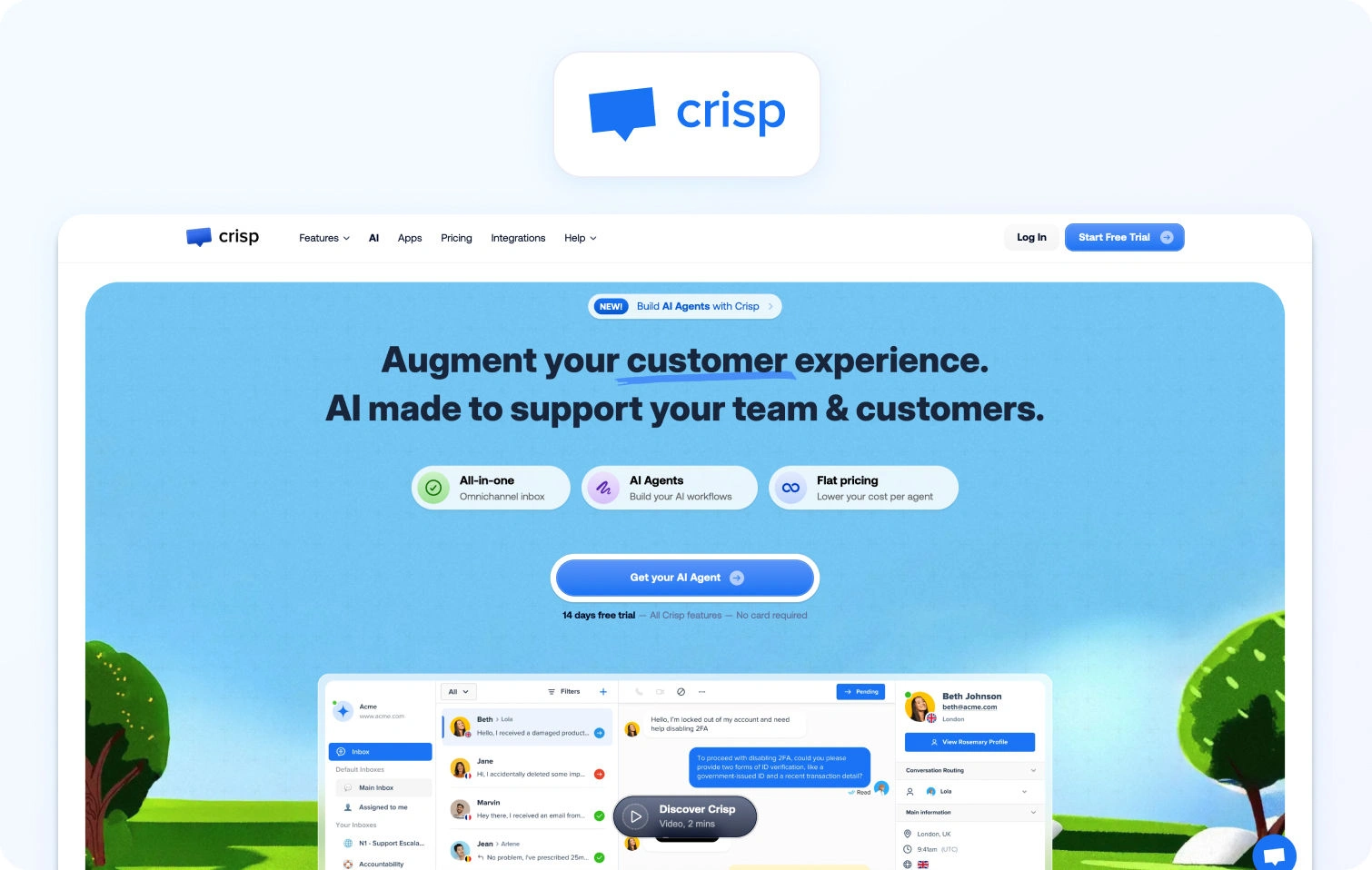
Crisp is a multichannel customer messaging platform designed around simplified support workflows and predictable flat-rate pricing structures.
Compared to Tidio, Crisp appeals strongly to startups and smaller support teams that want collaborative live chat tools and customer communication functionality without aggressive per-seat pricing increases.
Best for: Startups and small businesses that want predictable pricing, collaborative customer communication, and simple multichannel support operations.
Key Crisp Features:
- Shared team inbox
- Live chat support and website chat
- Omnichannel messaging support
- Knowledge base functionality
- Chat widget customization
- Automated messaging workflows
- Mobile apps for support teams
- Customer conversation history
- Video chat support
Crisp Pricing: Free and paid plans available; verify for details.
Crisp Pros:
- Flat-rate pricing model helps control scaling costs
- Unlimited seats available on selected plans
- Simple onboarding and deployment
- Clean user interface
- Strong collaborative messaging functionality
Crisp Cons:
- Analytics and reporting are less advanced than enterprise platforms
- AI capabilities are more limited than AI-native competitors
- Operational tooling depth may not suit larger support organizations
Free Trial Availability: Yes
7. Help Scout: Best Tidio Alternative for Small and Mid-Size Support Teams
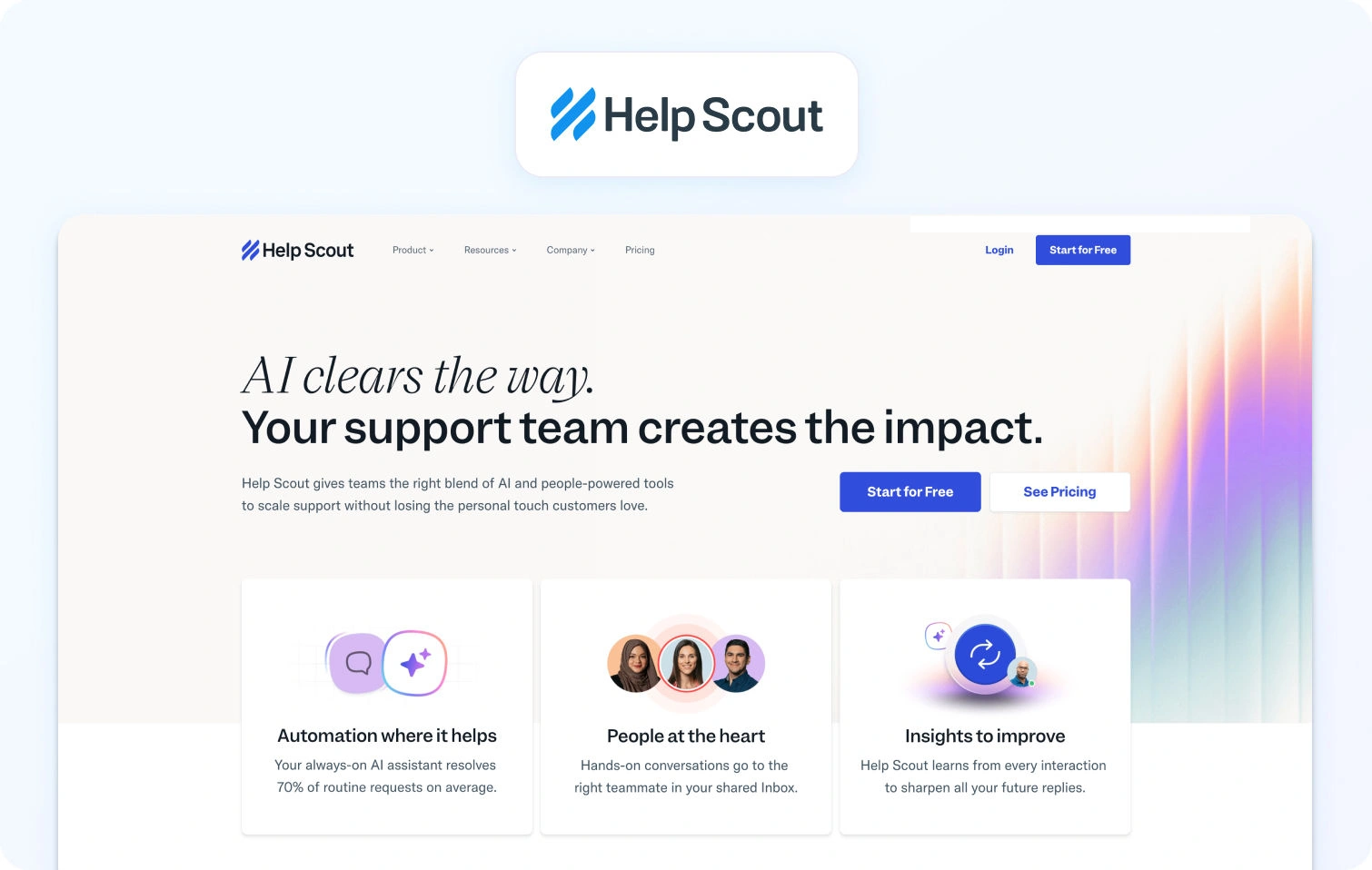
Help Scout is a customer service platform focused on email support, shared inbox collaboration, and human-centered customer communication.
Compared to Tidio, Help Scout emphasizes simplicity, customer experience quality, and low-friction support workflows rather than aggressive automation complexity.
Best for: Small and mid-size support teams that prioritize simplicity, customer experience, and collaborative support workflows.
Key Help Scout Features:
- Shared inbox and customer conversations
- Knowledge base and self service tools
- Live chat support
- Reporting dashboards and analytics
- Customer satisfaction surveys
- Workflow automation
- Mobile support apps
- Canned responses and saved replies
Help Scout Pricing: Help Scout offers free and paid pricing plans, depending on contact volume and feature requirements. Verify for details.
Help Scout Pros:
- Very easy for support teams to adopt
- Clean and intuitive user interface
- Strong customer experience focus
- Helpful documentation and knowledge base tools
- Good collaboration functionality
Help Scout Cons:
- Less advanced automation than enterprise customer service platforms
- Limited omnichannel functionality compared to broader competitors
- AI support tooling less mature than newer AI-native platforms
Free Trial Availability: Yes
8. LiveChat: Best Tidio Alternative for Sales and Engagement-Focused Live Chat
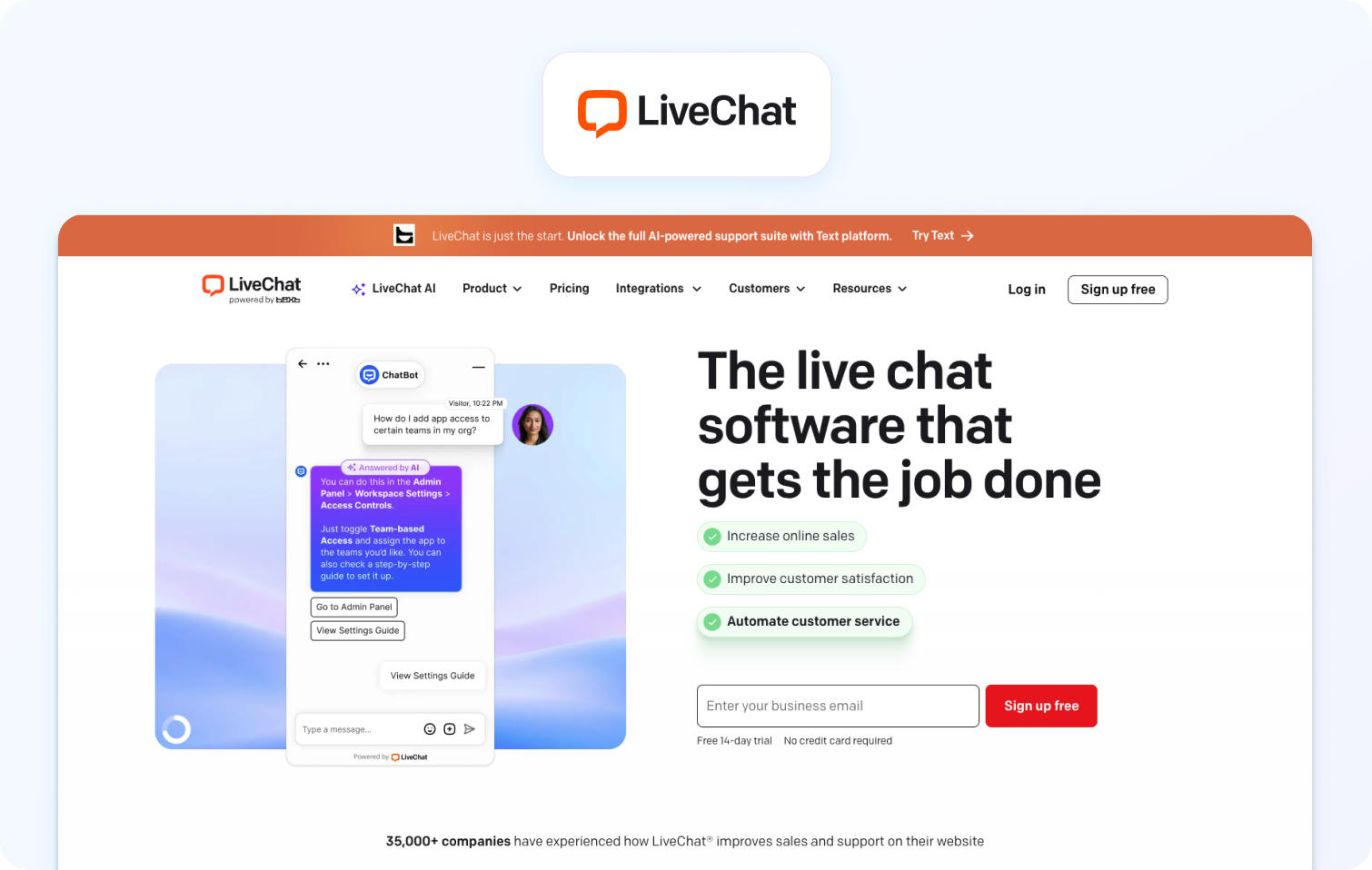
LiveChat is a live chat software platform designed to help businesses improve website engagement, customer communication, and lead generation through real-time conversations.
Compared to Tidio, LiveChat focuses more heavily on sales engagement workflows, proactive messaging, and customer interaction management rather than broader AI-powered customer service operations.
Best for: Businesses that prioritize website engagement, proactive customer communication, and live chat-driven sales conversations across ecommerce and service environments.
Key LiveChat Features:
- Real-time website chat functionality
- Proactive messaging workflows
- Visitor tracking and engagement monitoring
- Chat routing and agent assignment
- Canned responses and saved replies
- Reporting dashboards and analytics
- Chat history and customer conversation tracking
- Mobile apps for support teams
- Integrations with CRM and ecommerce platforms
LiveChat Pricing: LiveChat offers affordable pricing plans, with additional functionality available in higher-tier subscriptions. Verify for details.
LiveChat Pros:
- Strong live chat experience and reliability
- Excellent customer engagement functionality
- Easy deployment and onboarding
- Good lead generation capabilities
- User friendly interface for support teams
LiveChat Cons:
- Omnichannel support is more limited than broader customer service platforms
- AI capabilities are less advanced than AI-native competitors
- Advanced automation features require additional integrations
Free Trial Availability: Yes
9. Gorgias: Best Tidio Alternative for E-commerce Support Teams
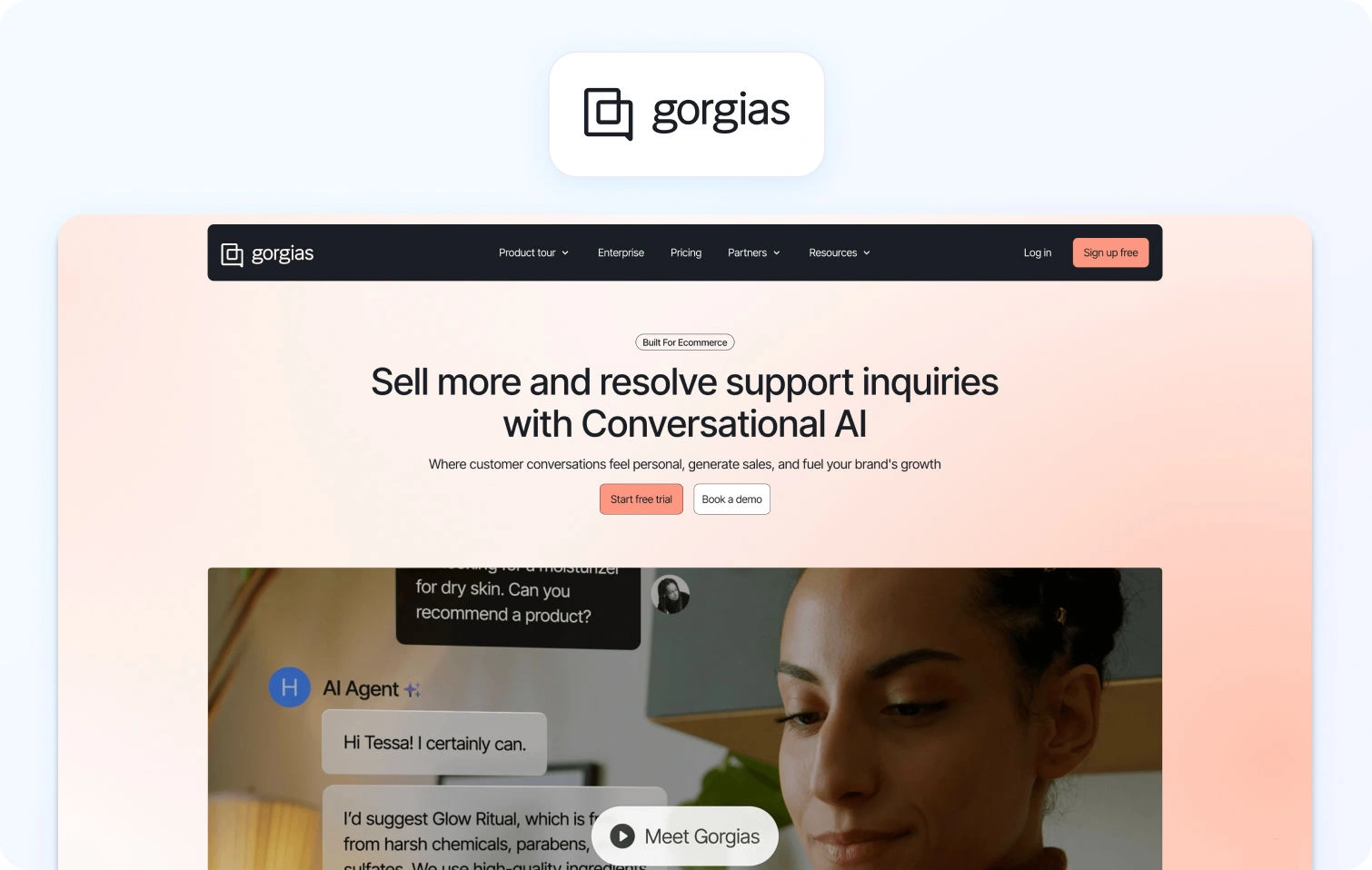
Gorgias is a customer service platform purpose-built for e-commerce businesses that need to manage customer inquiries, order support, and customer engagement across multiple channels.
Compared to Tidio, Gorgias offers deeper e-commerce integrations, stronger automation workflows for online retail operations, and more advanced customer service processes tied directly to ecommerce platforms like Shopify.
Best for: E-commerce support teams that want customer support workflows tightly integrated with online stores, order management, and customer data.
Key Gorgias Features:
- E-commerce-focused omnichannel inbox
- Shopify and ecommerce platform integrations
- AI-powered automated responses
- Customer conversation automation
- Order management workflows inside support tickets
- Chat widget customization
- Customer satisfaction tracking
- Macros and canned responses
- Revenue attribution and ecommerce analytics
Gorgias Pricing: Gorgias pricing varies based on support volume and automation usage. Verify pricing directly with the vendor.
Gorgias Pros:
- Excellent e-commerce-specific workflows
- Deep Shopify and ecommerce integrations
- Strong automation for repetitive customer queries
- Good customer data visibility
- Effective multichannel support for online retailers
Gorgias Cons:
- Pricing can increase significantly as ticket volumes grow
- Less suitable for non e-commerce customer service operations
- Advanced automation functionality may require additional onboarding
Free Trial Availability: Yes
10. Drift (Salesloft): Best Tidio Alternative for Conversational Sales and Marketing Teams
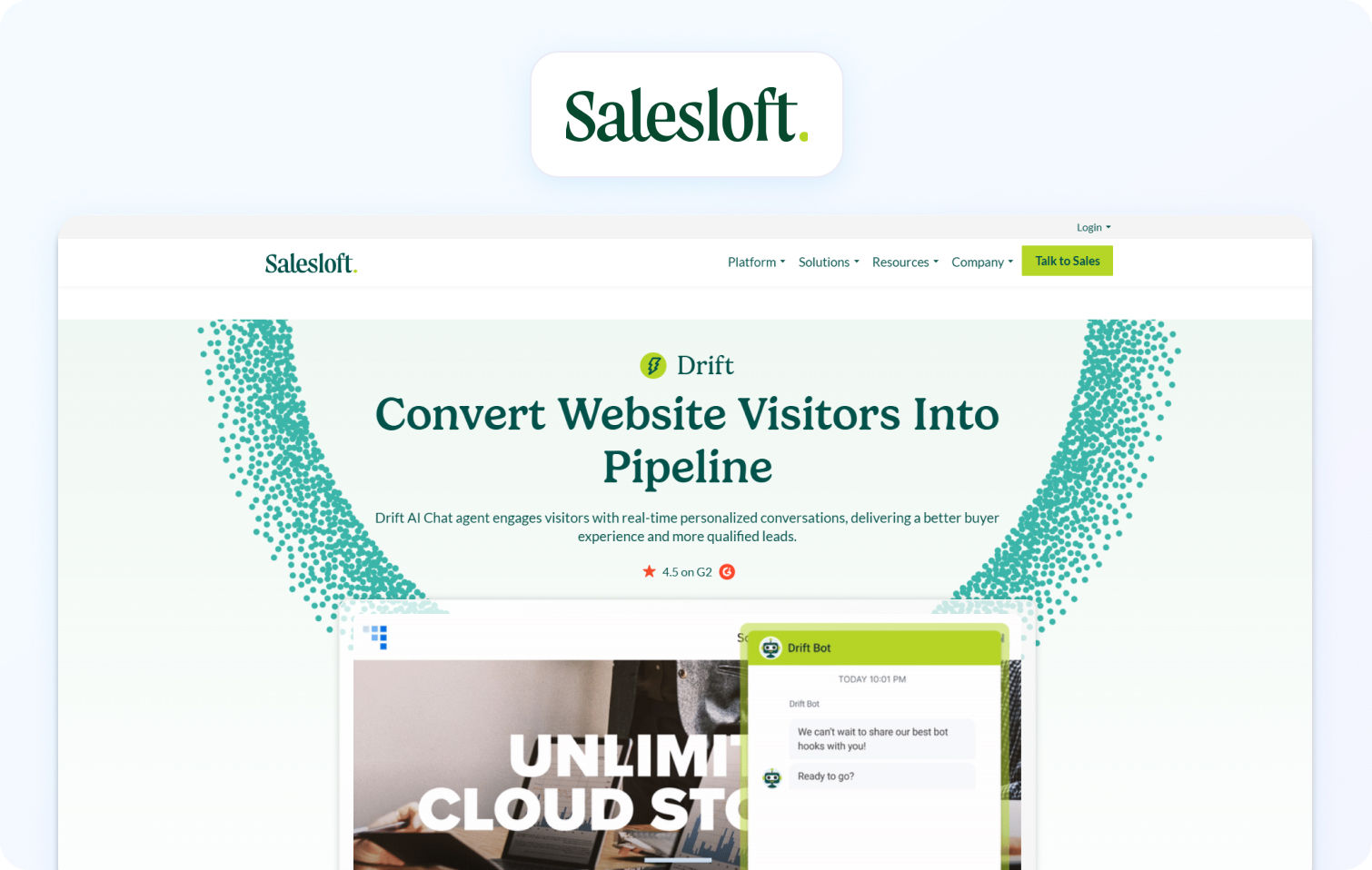
Drift, now positioned within the Salesloft ecosystem, is a conversational AI and customer engagement platform designed primarily for sales and marketing workflows.
Compared to Tidio, Drift focuses more heavily on conversational lead generation, buyer engagement, and revenue acceleration rather than traditional customer support operations.
Best for: B2B sales and marketing teams that want conversational AI workflows for lead qualification, pipeline acceleration, and customer engagement.
Key Drift Features:
- Conversational AI chatbots
- Lead qualification automation
- Real-time website engagement
- Meeting scheduling workflows
- Personalized messaging campaigns
- Conversational routing and automation
- CRM integrations
- Customer engagement analytics
- Revenue-focused reporting dashboards
Drift Pricing: Drift uses custom enterprise pricing based on deployment requirements and support functionality.
Drift Pros:
- Strong conversational sales functionality
- Effective lead generation workflows
- Good B2B personalization capabilities
- Advanced customer engagement tools
- Tight alignment with revenue operations
Drift Cons:
- Less focused on customer support operations than dedicated service platforms
- Enterprise pricing may not suit SMB organizations
- Omnichannel support functionality is narrower than broader CX platforms
Free Trial Availability: Not advertised.
11. Olark: Best Tidio Alternative for Lightweight Live Chat With Visitor Tracking
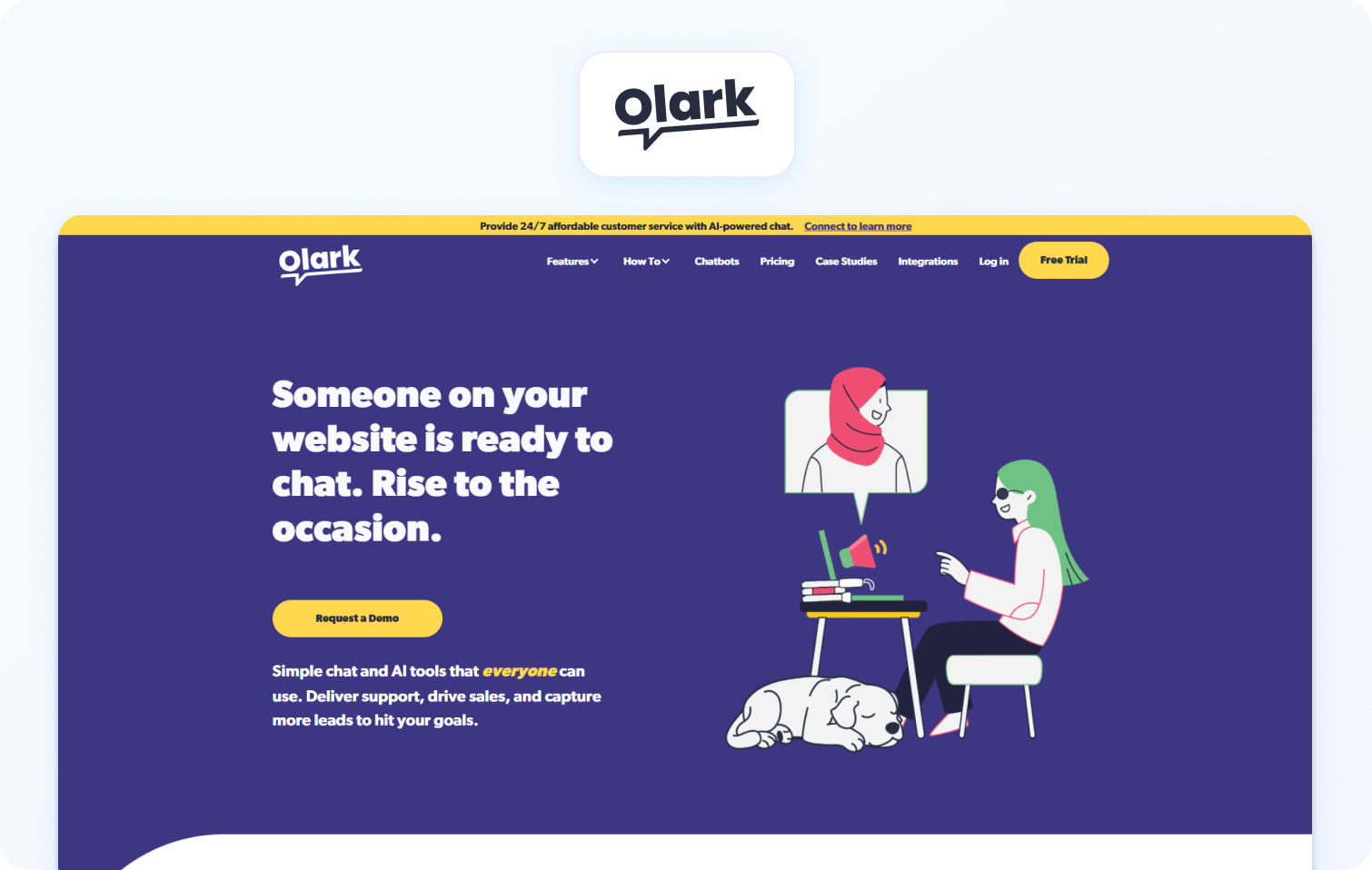
Olark is a lightweight live chat platform focused on simple customer communication, visitor tracking, and website engagement.
Compared to Tidio, Olark prioritizes simplicity and ease of deployment over broader automation, AI capabilities, or omnichannel customer support functionality.
Best for: Small businesses that want straightforward live chat support and visitor tracking without the complexity of enterprise customer service software.
Key Olark Features:
- Website chat functionality
- Visitor tracking and monitoring
- Automated messaging workflows
- Chat transcripts and conversation history
- Basic reporting dashboards
- Customer engagement analytics
- Team management functionality
- CRM integrations
Olark Pricing: Olark plans start from approximately $29 per month.
Olark Pros:
- Simple setup and deployment
- Easy for smaller teams to manage
- Lightweight user interface
- Strong visitor tracking functionality
- Low operational complexity
Olark Cons:
- Limited omnichannel support capabilities
- Minimal advanced AI functionality
- Reporting depth less comprehensive than larger competitors
- Fewer advanced automation features
Free Trial Availability: Yes
12) Zoho Desk: Best Tidio Alternative for Teams in the Zoho Ecosystem
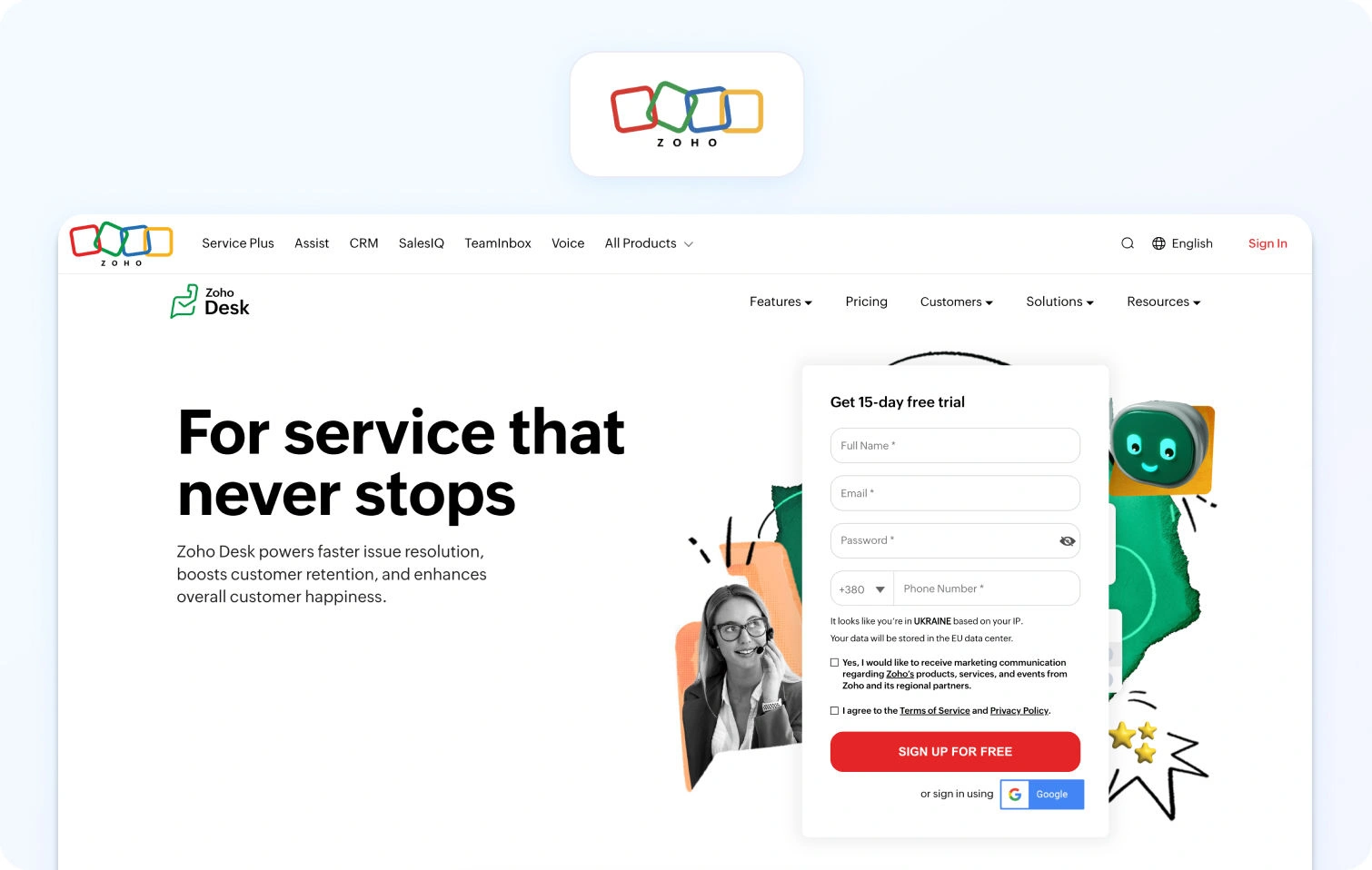
Zoho Desk is a customer service platform designed to integrate tightly with Zoho’s broader business software ecosystem, including CRM, analytics, finance, and operational applications.
Compared to Tidio, Zoho Desk offers broader operational workflows, stronger ticket management, and deeper business software integration for organizations already invested in the Zoho environment.
Best for: Businesses already using Zoho products that want unified customer support workflows connected to CRM, analytics, and operational systems.
Key Zoho Desk Features:
- Omnichannel customer support
- Ticket management workflows
- AI-powered assistant functionality
- Workflow automation and routing
- CRM integration
- Analytics and reporting dashboards
- Knowledge base and self service tools
- Role-based permissions and admin controls
- Mobile support apps
Zoho Desk Pricing: Affordable tiered pricing with AI features available in higher plans. Verify for details.
Zoho Desk Pros:
- Strong integration across the Zoho ecosystem
- Competitive pricing for growing businesses
- Broad operational customization options
- Good ticketing and workflow automation functionality
- Flexible support management capabilities
Zoho Desk Cons:
- User interface can feel inconsistent between modules
- Advanced configuration may require admin support
- AI functionality is less advanced than AI-native competitors
Free Trial Availability: Yes
13. ManyChat: Best Tidio Alternative for Social Messaging and WhatsApp Automation
ManyChat is a messaging automation platform focused primarily on social media messaging, WhatsApp automation, and conversational marketing workflows.
Compared to Tidio, ManyChat places greater emphasis on marketing automation, social messaging campaigns, and lead generation through messaging channels rather than broader customer service operations.
Best for: Businesses prioritizing WhatsApp automation, Instagram messaging, Facebook Messenger workflows, and social customer engagement.
Key ManyChat Features:
- WhatsApp automation
- Facebook Messenger integration
- Instagram messaging automation
- Automated messaging campaigns
- Lead generation workflows
- Chatbot automation
- Customer segmentation tools
- Drag and drop automation builder
- Marketing-focused customer engagement tools
ManyChat Pricing: ManyChat offers a free plan alongside paid plans with more advanced automation features and messaging limits.
ManyChat Pros:
- Strong social messaging automation
- Easy campaign and chatbot setup
- Excellent WhatsApp and Facebook Messenger support
- User friendly drag and drop interface
- Good lead generation functionality
ManyChat Cons:
- Not a full customer service platform
- Limited operational tooling for support teams
- Omnichannel customer support functionality is narrower than broader competitors
Free Trial Availability: Yes
14. Kustomer: Best Tidio Alternative for CRM-Native Customer Conversations
Kustomer is a CRM-native customer service platform designed around unified customer timelines and persistent customer conversations across support channels.
Compared to Tidio, Kustomer focuses more heavily on customer data visibility, CRM-driven workflows, and unified interaction histories across the entire customer journey.
Best for: Businesses that want customer conversations tightly connected to CRM data, customer histories, and omnichannel support operations.
Key Kustomer Features:
- Unified customer timeline
- Omnichannel inbox and messaging channels
- Workflow automation and routing
- AI-powered customer support tools
- CRM integrations
- Customer history tracking
- Reporting and analytics dashboards
- Chat and email support workflows
- Customer engagement automation
Kustomer Pricing: Kustomer uses custom pricing based on deployment size and support requirements. Verify for details
Kustomer Pros:
- Strong customer data visibility
- Unified customer conversation management
- Good omnichannel support architecture
- Enterprise-ready workflow functionality
- Advanced customer history tracking
Kustomer Cons:
- Implementation complexity higher than SMB-focused platforms
- Pricing less transparent than some competitors
- May require more technical onboarding resources
Free Trial Availability: Not advertised
15. Chatwoot: Best Tidio Alternative for Open-Source Omnichannel Support
Chatwoot is an open-source customer support platform designed for businesses that want flexible omnichannel customer communication with self-hosted deployment options.
Compared to Tidio, Chatwoot appeals strongly to technical teams that want greater customization, infrastructure control, and open-source flexibility for customer support operations.
Best for: Technical teams and growing businesses that want open-source omnichannel support with customizable deployment and workflow flexibility.
Key Chatwoot Features:
- Omnichannel inbox and messaging support
- Open-source deployment options
- Live chat and website chat functionality
- Knowledge base tools
- Workflow automation
- Customer conversation management
- Team collaboration functionality
- Chat widget customization
- CRM and third-party integrations
Chatwoot Pricing: Chatwoot offers free and paid plans; verify for details.
Chatwoot Pros:
- Open-source flexibility and customization
- Cost-efficient deployment options
- Good omnichannel customer communication
- Strong control over infrastructure and customer data
- Active developer community
Chatwoot Cons:
- Requires technical resources for self-hosting and maintenance
- Enterprise operational tooling less mature than larger commercial platforms
- Advanced AI capabilities more limited than AI-native competitors
Free Trial Availability: Yes.
What to Look For in a Tidio Alternative
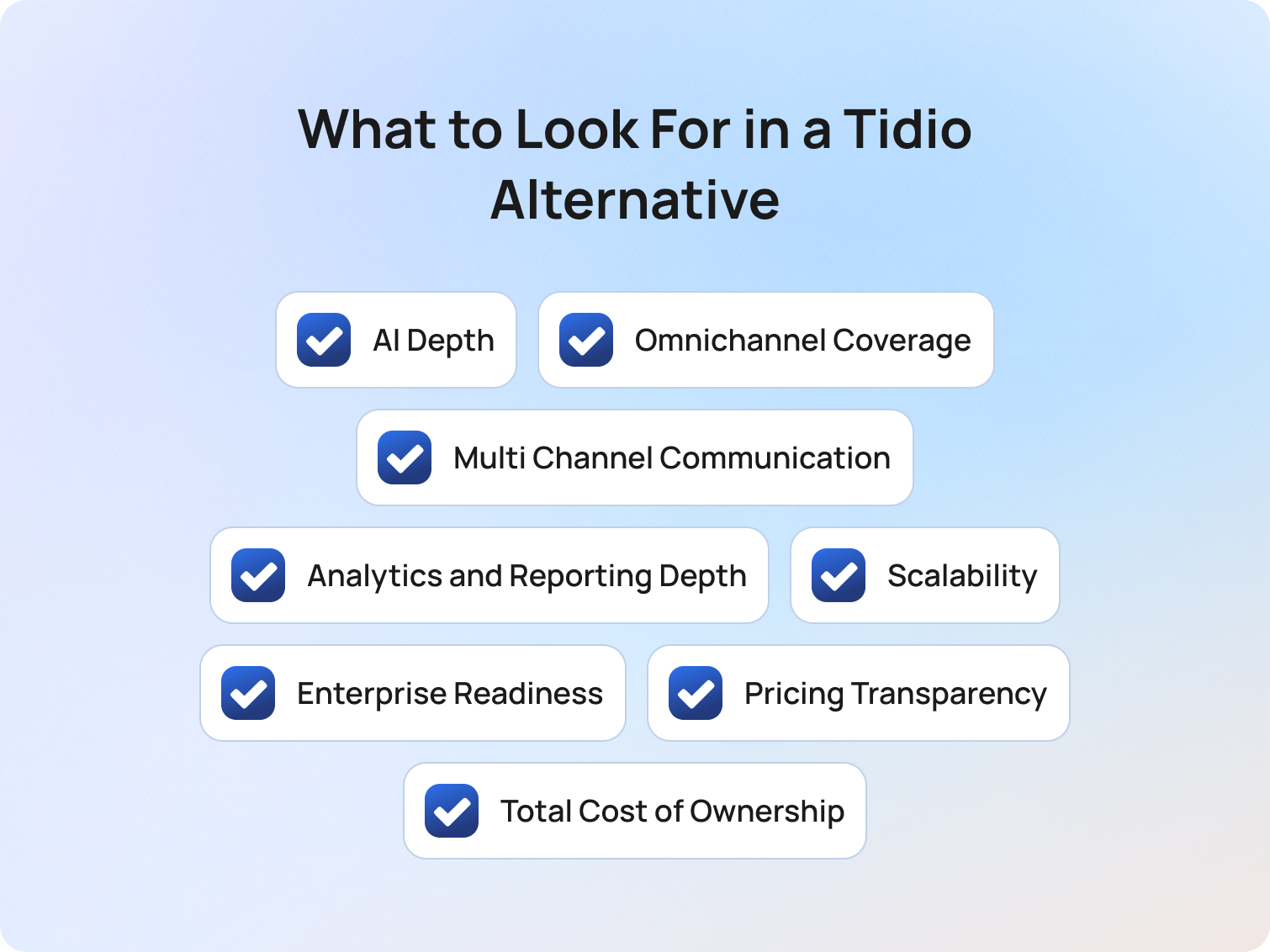
A Tidio alternative should support far more than basic live chat functionality. As customer service operations grow more complex in 2026, businesses increasingly need platforms that can automate support across multiple channels while delivering stronger analytics, AI automation, and a more unified customer service experience.
Many teams initially choose Tidio because of its free plan, user friendly interface, and customizable chat widget. However, as support requirements evolve, businesses often begin looking for more advanced features, deeper multi channel support, and better operational visibility across customer conversations.
AI Depth Beyond Basic Chatbot Functionality
In 2026, the meaningful AI differentiator is not whether a platform includes a chatbot. The real differentiator is whether AI capabilities support the entire customer interaction lifecycle.
That includes:
- RAG-grounded knowledge base responses
- Real-time agent coaching
- AI-generated suggested replies
- Post-interaction summarisation
- Sentiment analysis
- Autonomous resolution workflows
- AI QA scoring
- AI-powered customer communication automation
Businesses evaluating Tidio alternatives should verify whether these advanced features are included natively in the platform or locked behind additional AI add-ons.
Many customer service platforms still offer only basic features at entry-level pricing, requiring businesses to purchase separate AI modules or other tools to fully automate support processes at scale.
Omnichannel Coverage and Multi Channel Communication
Modern customer support no longer happens exclusively through website chat.
Businesses increasingly need multi channel communication across:
- Voice support
- Social messaging
- SMS
- Video chat
- Website chat
- Facebook Messenger
Tidio is still primarily positioned around chat-first support workflows. Businesses with more advanced operational roadmaps should verify whether platforms offer native multi channel support or rely heavily on third-party integrations with existing tools.
Fragmented support environments often create disconnected customer data, inconsistent reporting, and operational inefficiencies for customer support agents.
Platforms that unify customer conversations into a single omnichannel inbox typically provide a stronger customer service experience and better long-term scalability.
Analytics and Reporting Depth
Detailed analytics become significantly more important as support operations grow.
Many businesses searching for alternatives to Tidio cite reporting limitations as one of the primary reasons for switching platforms. Businesses should verify whether customer service software provides operational KPIs natively, including:
- First contact resolution (FCR)
- Average handling time (AHT)
- CSAT tracking
- Containment rate visibility
- Sentiment analysis
- Real-time reporting dashboards
- Historical reporting
- Team performance tracking
Advanced reporting capabilities are particularly important for medium sized businesses managing larger customer support teams and more complex customer interactions.
Scalability and Enterprise Readiness
Tidio is designed primarily for SMB teams focused on live chat support and lightweight automation.
For businesses scaling beyond 50 customer support agents, additional operational tooling becomes increasingly important, including:
- Workforce management functionality
- QA scoring workflows
- Advanced chat routing
- Audit logs and security controls
- Role-based permissions
- Forecasting and scheduling tools
- Unlimited chat history
- Omnichannel interaction management
Businesses evaluating Tidio alternatives should also consider how easily platforms integrate with existing tools and operational workflows as support complexity increases.
Pricing Transparency and Total Cost of Ownership
Many businesses initially compare customer service platforms based on entry-level pricing alone.
However, long-term operational costs often depend on:
- AI add-on pricing
- Automation usage limits
- Agent seat pricing
- Omnichannel functionality
- Reporting access
- Integration requirements
- Additional support tools
Businesses should calculate the projected 12-month operational cost of ownership based on expected support growth rather than current team size alone.
According to Deloitte research published in 2025, organizations continuing to operate fragmented customer support ecosystems often face higher operational overhead, slower resolution times, and increased integration complexity compared to businesses using unified AI-enabled customer service platforms.
Platforms that include AI capabilities inside the base seat pricing typically deliver faster ROI, lower budget risk, and fewer dependencies on other tools.
How We Evaluated These Tidio Alternatives
This evaluation framework was designed to assess Tidio alternatives based on operational maturity, AI capabilities, scalability, and long-term customer support value rather than entry-level chatbot functionality alone.
Our analysis reviewed public documentation, pricing pages, company websites, G2 and Capterra review summaries, and published feature documentation as of Q2 2026. No vendor paid for placement in this article.
AI capability claims were verified against publicly available feature pages and customer feedback rather than vendor marketing alone. However, businesses should still verify platform fit through vendor demos and operational testing before committing to a customer service platform.
Must-Have Capability Checklist
Businesses evaluating the best Tidio alternatives in 2026 should verify whether platforms include the following capabilities natively rather than requiring multiple third-party integrations or additional paid modules.
AI and Automation
- AI chatbot or virtual agent functionality included in the base plan
- RAG-grounded knowledge base responses
- Real-time agent assist and suggested replies
- AI-powered automated responses
- Post-interaction summarisation
- AI tools for customer communication workflows
Omnichannel and Customer Communication
- Native omnichannel inbox across chat, email, voice, and social channels
- Multi channel support without excessive reliance on other tools
- Website chat and customizable chat widget functionality
- Unified customer conversations and customer data
- Mobile apps for support teams
- Social messaging and messaging channel support
Analytics and Operational Visibility
- FCR, AHT, CSAT, and containment reporting
- Real-time analytics dashboards
- Historical reporting functionality
- QA scoring for AI and human interactions
- Team performance monitoring
- Unlimited chat history availability
Scalability and Security
- Workforce management or first-party WFM functionality
- CRM and ecommerce integrations
- MFA, RBAC, and audit logs
- Advanced routing and operational workflows
- Support for growing customer service teams
Businesses evaluating BlueTweak should verify that all checklist items align with the platform’s current deployment configuration and operational requirements before implementation.
BlueTweak Tidio Alternatives Scoring Rubric
The BlueTweak Tidio Alternatives Scoring Rubric was developed to evaluate customer service software platforms based on operational maturity, AI depth, scalability, and long-term support efficiency.
| Criterion | Weight | What “High” Looks Like |
| AI coverage (native, not add-on) | 25% | RAG-grounded KB responses, AI suggested replies, sentiment analysis, and post-interaction summarisation included in the base plan |
| Channel depth beyond chat | 20% | Native voice, email, social messaging, SMS, and unified multi channel communication |
| Analytics and reporting | 15% | Real-time and historical reporting for FCR, AHT, CSAT, containment rate, and team performance |
| Scalability (50+ agents) | 15% | Workforce management, QA tooling, advanced routing, unlimited chat history, and operational visibility |
| Time-to-value | 10% | Fast deployment, intuitive onboarding, and user friendly interface for support teams |
| TCO / pricing transparency | 10% | Transparent per-seat pricing with AI included and fewer dependencies on existing tools |
| Security and admin | 5% | MFA, RBAC, audit logs, admin controls, and enterprise-grade security standards |
Final Thoughts: Choosing the Right Tidio Alternative for Long-Term Customer Support Growth
Tidio remains a strong choice for businesses that need simple live chat and chatbot functionality. However, as support operations grow, many teams need more than a chat-first platform can provide. Advanced AI, omnichannel customer communication, workforce management, QA tooling, analytics, and operational visibility are becoming essential requirements for modern customer service teams.
Among the leading Tidio alternatives, BlueTweak stands out for businesses that want AI-native omnichannel customer support and are looking to consolidate into a single AI-powered platform. By bringing together voice, chat, email, social messaging, automation, reporting, workforce management, and quality assurance, BlueTweak helps eliminate the complexity and inefficiencies created by fragmented support tools.
If you're looking for a Tidio alternative that can scale with your business while delivering stronger automation, deeper insights, and a more connected customer experience, start a free 14-day trial or book a personalised demo to see BlueTweak in action.
AI Customer Support Multilingual Solutions: 12 Best Platforms for CS Teams In 2026
Supporting international customers in multiple languages has become one of the biggest operational challenges facing customer support teams. Customers expect fast, accurate answers in their preferred language, whether they contact your business through chat, email, social media, or voice channels. At the same time, hiring multilingual support staff for every market is expensive, difficult to scale, and increasingly inefficient as customer expectations continue to rise.
This is why AI customer support multilingual solutions have moved from a niche capability to a business necessity. Modern AI customer support software is increasingly helping organizations deliver multilingual customer service without the cost and complexity of maintaining large multilingual teams. The right platform can help support teams automate routine interactions, remove language barriers, maintain a consistent brand voice, and deliver exceptional service across global markets without relying solely on additional headcount.
However, not all multilingual AI support platforms solve the same problem. Translation is only one piece of the puzzle. The real challenge is ensuring customer interactions are routed correctly, grounded in accurate knowledge, and measured consistently across every language market.
Why Multilingual Customer Support Is an AI Problem Now
Multilingual customer support is the ability to provide accurate, consistent, and efficient service to customers in their preferred language across every support channel.
For years, multilingual support was treated primarily as a staffing challenge. Businesses expanding into new markets would hire bilingual agents, build regional support teams, or outsource customer support operations to multilingual providers. While effective in some situations, these approaches become increasingly difficult to scale as organizations grow their global operations.
Many organizations are now reassessing the traditional outsourcing model as conversational AI becomes a viable alternative for handling routine multilingual customer interactions at scale.
Deloitte Digital's 2026 Global Contact Center Survey signals that AI has moved from experimentation to scalable operational impact in contact centres. Sixty-four percent of service leaders report higher agent productivity as a result of AI, and 39% report lower cost per contact; evidence that, as support volumes grow, teams are increasingly using AI to handle routine interactions, streamline workflows, and reduce operational complexity.
At the same time, customer language preferences remain a critical driver of customer satisfaction. CSA Research’s global consumer study found that, given the choice between two similar products, 76% of consumers will choose the one with information in their own language; a finding that has remained widely cited as a benchmark across the localisation industry since its publication.
The technology has also changed. Modern natural language processing and machine learning models deliver significantly higher-quality AI translation than earlier rule-based systems. For major languages such as English, Spanish, French, and German, AI-powered support can now handle many common customer interactions with a high degree of accuracy. Yet translation alone does not solve multilingual support.
Support teams must still identify a customer's language automatically, route conversations to the appropriate workflow, provide responses grounded in trusted knowledge sources, and measure customer satisfaction across different language markets. Cultural nuances, dialect variations, and long-tail language coverage continue to require careful oversight.
This shift has fundamentally changed the problem. Multilingual support is no longer primarily a translation challenge. It is now a routing challenge, a containment challenge, a knowledge management challenge, and a quality assurance challenge.
The organizations delivering the strongest multilingual customer experiences in 2026 are not simply translating conversations. They are building multilingual support systems that combine AI translation, automatic language detection, intelligent routing, knowledge-grounded responses, and human oversight into a single operational framework.
What Makes a Good AI Multilingual Customer Support Solution?
An AI multilingual customer support solution is a platform that enables businesses to deliver consistent customer service across different languages while maintaining quality, efficiency, and operational control.
Many vendors focus heavily on translation capabilities when discussing multilingual support. Translation matters, but it is only one part of the equation. The strongest platforms combine language support with intelligent routing, knowledge management, quality assurance, and omnichannel customer engagement.
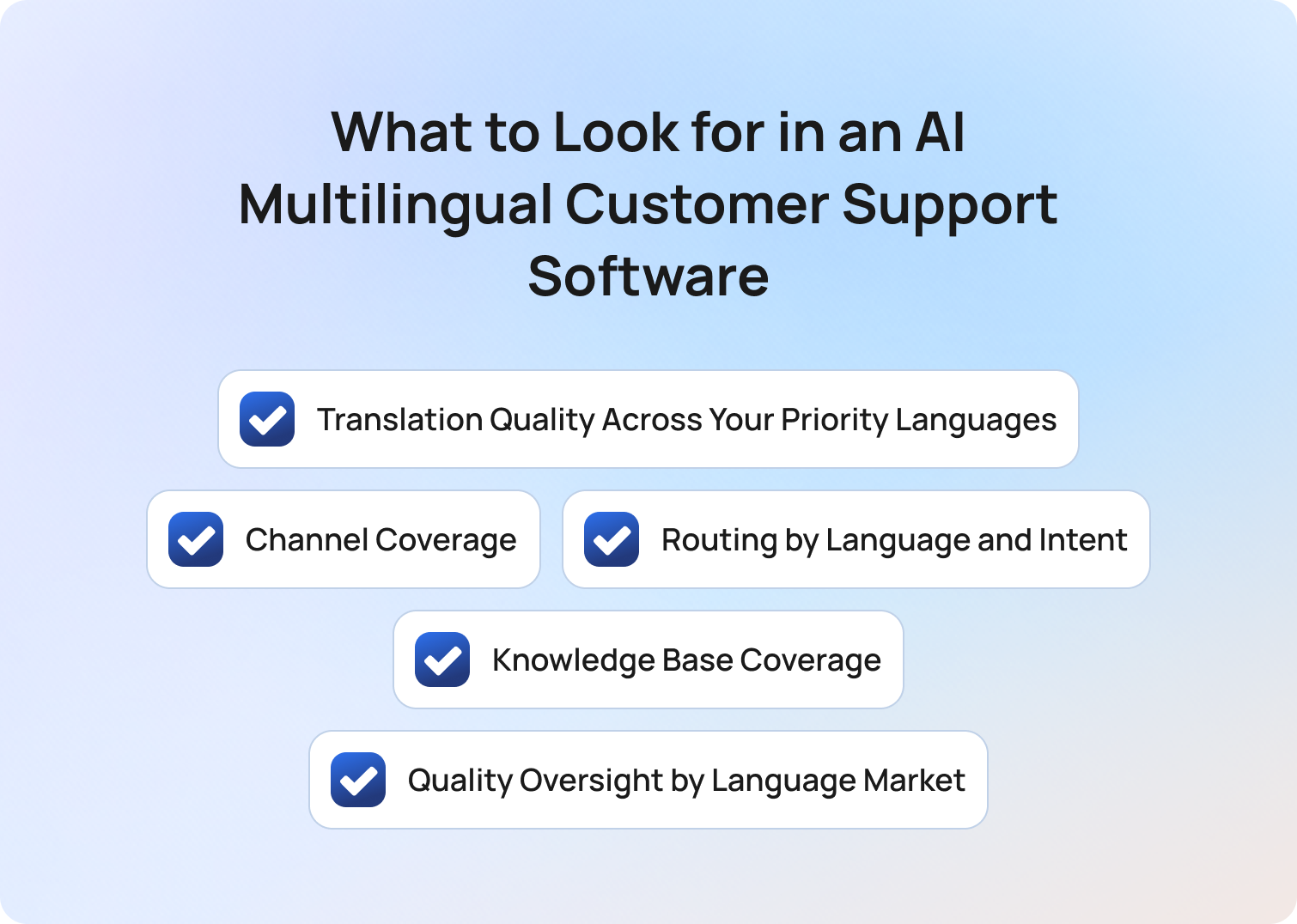
When evaluating AI customer support multilingual solutions, support leaders should assess providers against the following five criteria.
1. Translation Quality Across Your Priority Languages
Translation quality refers to how accurately a platform can understand and respond to customers across the languages that matter most to your business.
Performance is typically strongest for widely used languages such as English, Spanish, French, and German, where language models have access to large volumes of training data. Long-tail languages, regional dialects, and market-specific terminology often produce more variable results.
Rather than focusing on the number of supported languages advertised by a vendor, organizations should evaluate how well the platform performs in the specific language markets they serve. A platform supporting 100 languages is less valuable than one that performs exceptionally well in the 10 languages your customers actually use.
Before selecting a multilingual support platform, validate translation quality using real customer conversations and support scenarios.
2. Channel Coverage
Channel coverage refers to the ability to deliver multilingual support consistently across every customer touchpoint. Many platforms offer multilingual chat support but provide limited capabilities for voice, email, social media, or messaging applications. This creates fragmented customer experiences and increases operational complexity for support teams.
Voice support introduces additional challenges because the platform must accurately process speech recognition, transcription, accents, dialects, and text-to-speech generation before responding. As a result, multilingual voice AI remains one of the clearest differentiators between leading and average solutions.
3. Routing by Language and Intent
Language-aware routing is the ability to automatically identify a customer's language and direct them to the correct workflow, automation, or support resource. Asking customers to manually select their language adds friction and increases abandonment rates; automatic language detection removes that step and creates a more seamless support experience.
However, language identification alone is not enough and the platform must also understand customer intent. A billing issue submitted in Spanish should be routed to the same workflow as a billing issue submitted in English. The most powerful AI support platforms combine language detection with multilingual intent classification to ensure accurate routing regardless of customer language.
4. Knowledge Base Coverage
Knowledge base coverage refers to the quality and accessibility of the information the AI uses to generate customer responses. But even the most advanced AI models can only provide accurate answers if they have access to reliable knowledge sources. Organizations should evaluate whether multilingual content is maintained natively within the knowledge base or generated through real-time translation from a primary language source.
Both approaches can be effective, but consistency is critical. Outdated translations, missing articles, or incomplete documentation can quickly undermine customer trust.
Platforms that ground responses in approved knowledge sources are typically better positioned to deliver accurate, compliant, and brand-aligned multilingual support.
5. Quality Oversight by Language Market
Quality oversight is the ability to measure support performance separately across different languages and regions. Many support organizations track overall customer satisfaction scores without understanding how performance varies between language markets. Blended reporting can mask significant issues in specific regions and make quality improvement difficult.
The best multilingual support platforms allow teams to monitor customer satisfaction, quality assurance metrics, containment rates, and operational performance at a language-specific level. This makes it easier to identify weaknesses, improve AI performance, and maintain consistent service standards across global operations.
Effective customer service analytics help support leaders identify performance trends, uncover language-specific issues, and continuously improve customer experiences across global markets.
Together, these five criteria form the framework for evaluating AI multilingual support solutions. Any platform that cannot demonstrate strength across translation quality, channel coverage, language-aware routing, knowledge management, and quality oversight is likely to create operational challenges as multilingual support volumes grow.
The Best AI Customer Support Multilingual Solutions for Global Teams
AI customer support multilingual solutions help organizations support customers across multiple languages while maintaining service quality, operational efficiency, and consistent customer experiences.
The platforms below were assessed against the five criteria for evaluating AI multilingual support solutions: translation quality, channel coverage, language-aware routing, knowledge base coverage, and quality oversight.
| Platform | Best For | Voice Support | Language-Aware Routing | Per-Language QA | Key Limitation |
|---|---|---|---|---|---|
| BlueTweak | Omnichannel multilingual AI support | Yes | Yes | Yes | Some long-tail language limitations |
| Zendesk | Enterprise ticketing environments | Limited | Yes | Partial | Voice capabilities depend on integrations |
| Intercom | SaaS support teams | Limited | Partial | Partial | Less suitable for voice-heavy operations |
| Freshdesk | Mid-market customer service teams | Limited | Yes | Partial | Advanced AI features vary by plan |
| Language I/O | Translation within existing support stacks | No | Limited | No | Primarily focused on translation |
| DeepL for Business | High-accuracy translation | No | No | No | Not a complete support platform |
| Helpshift | Mobile app support | Limited | Yes | Partial | Mobile-first focus may not suit all teams |
| Kustomer | High-volume B2C support | Limited | Yes | Partial | Advanced AI requires configuration |
| Avaamo | Enterprise conversational AI | Yes | Yes | Partial | Enterprise implementation complexity |
| Google Cloud CCAI | Custom AI ecosystems | Yes | Yes | Custom | Requires technical resources |
| Salesforce Service Cloud | Salesforce-centric organizations | Limited | Yes | Partial | Cost and complexity |
| Smartling | Multilingual content management | No | No | No | Not a dedicated support platform |
The right solution depends on your language requirements, support channels, and operational goals. However, platforms that combine multilingual AI, intelligent routing, voice support, and language-specific quality assurance are typically best positioned to support large-scale global operations.
Start your free 14 day free trial now! No credit card required.
Get Started1. BlueTweak: Best for Omnichannel Multilingual AI with Voice and QA
BlueTweak is an AI-powered customer support platform designed to help organizations deliver multilingual support across chat, voice, email, messaging, and social channels from a single environment. Unlike many multilingual support tools that focus primarily on translation, BlueTweak combines language support, automation, routing, knowledge management, and quality assurance within a single platform. These capabilities are powered by conversational AI that can understand customer intent, automate routine interactions, and support customers across multiple languages.
Strengths:
- Strong multilingual AI performance across key languages: BlueTweak combines natural language processing, AI translation, and language-aware automation to support customer interactions across major global languages. This helps organizations deliver consistent support experiences while reducing the operational complexity of managing multilingual customer service.
- Omnichannel support across voice and digital channels: While many competitors focus primarily on chat and messaging, BlueTweak supports multilingual interactions across voice, email, chat, messaging, and social channels. This allows support teams to maintain a consistent customer experience regardless of how customers choose to engage.
- Language-aware routing and intent recognition: BlueTweak automatically detects customer language and routes interactions to the most appropriate workflow, agent, or automation path. Combined with intent recognition, this helps ensure customers reach the right support process without unnecessary friction.
- Knowledge-grounded AI responses: The platform can surface responses based on approved knowledge sources rather than relying solely on generative AI outputs. This helps improve response accuracy, maintain compliance, and ensure customer interactions remain aligned with company policies and brand standards.
- Language-specific quality monitoring and reporting: Support leaders can track customer satisfaction, quality scores, containment rates, and operational performance by language market. This visibility helps identify underperforming regions and continuously improve multilingual support operations over time.
“For years, multilingual support was treated as a staffing problem. If you needed coverage in another language, you hired more people. The challenge is that headcount does not compound. AI does. Modern support teams are shifting from managing language coverage through staffing to managing language quality through data, workflows, and continuous model improvement.”
BlueTweak in real-world support environments:
BlueTweak's multilingual capabilities are built around the realities of modern global support operations. The platform combines automatic language detection, real-time translation, intelligent routing, voice AI, and knowledge-grounded responses to help organizations deliver consistent support experiences across multiple languages without relying exclusively on dedicated multilingual teams. These capabilities are particularly valuable for businesses managing customer interactions across several markets and communication channels simultaneously.
BlueTweak's approach can be seen in its work with Conectys, where the platform helped streamline customer support operations through AI-powered automation, real-time translation capabilities, and centralized omnichannel support workflows. By reducing language barriers and improving operational efficiency, BlueTweak enabled support teams to deliver more consistent customer experiences across international markets while maintaining visibility into performance and quality.
Limitations:
- Long-tail language validation may be required: Like every multilingual AI platform, performance can vary depending on the language, dialect, and industry-specific terminology involved. Organizations should test their highest-priority languages before deployment.
- Integration ecosystem is still expanding: BlueTweak's native integration library is currently more limited than those of longer-established platforms. Organizations with complex existing technology stacks should validate that their core CRM, ticketing, or workforce management tools are supported before deployment.
Best for: Global support teams that need multilingual AI support across chat and voice channels with unified quality assurance and operational visibility.
Start a free 14-day trial with no credit card required, or book a personalized demo to see how BlueTweak supports multilingual customer service at scale.
2. Zendesk: Best for Enterprise Multilingual Ticketing at Scale
Zendesk is a customer service platform that helps organizations manage multilingual customer support through AI-powered ticketing, automation, and self-service capabilities. It is particularly popular among large enterprises that need to coordinate support across multiple teams and regions.
Strengths:
- Enterprise-grade ticket management: Zendesk excels at organizing high volumes of support tickets across different languages. This helps larger support teams maintain consistency and accountability across global operations.
- Workflow automation: The platform includes automation tools that can help categorize, prioritize, and route support requests. This reduces manual effort and improves response times.
- Extensive integration ecosystem: Zendesk integrates with a wide range of business applications, making it easier to incorporate multilingual support into existing workflows.
Limitations:
- Voice support may require additional tooling: While Zendesk supports voice channels, advanced multilingual voice AI capabilities often depend on integrations or third-party solutions.
- Limited language-specific QA visibility: Monitoring customer satisfaction and quality performance by language market can require additional reporting configuration.
Best for: Enterprise organizations managing large volumes of multilingual support tickets across multiple teams and regions.
Considering Zendesk? If you're weighing Zendesk against other multilingual customer support platforms, our guide to the best Zendesk alternatives explores how leading solutions compare across AI capabilities, omnichannel support, automation, and scalability.
3. Intercom: Best for SaaS Teams Needing Multilingual Chat and Messaging
Intercom is a conversational customer support platform that combines live chat, AI assistance, and customer messaging tools. It is particularly well-suited to SaaS companies looking to scale multilingual customer interactions through digital channels.
Strengths:
- Strong conversational experience: Intercom's chat-first approach creates a seamless experience for customers seeking support in different languages.
- AI-powered support automation: The platform can automate routine customer interactions, helping support teams handle higher volumes without increasing headcount.
- Modern user experience: Intercom offers a clean interface for both customers and support teams, reducing complexity during implementation and adoption.
Limitations:
- Limited voice capabilities: Organizations with significant phone support requirements may need additional platforms to support multilingual voice interactions.
- Less visibility into language-specific performance: Reporting is not as focused on language-level quality assurance as some specialist multilingual support platforms.
Best for: SaaS businesses prioritizing multilingual chat, messaging, and self-service experiences.
If your priority is conversational AI, chat automation, and multilingual messaging, it's worth considering Intercom alternatives designed for growing support teams.
4. Freshdesk: Best for Mid-Market Teams Wanting Multilingual Breadth at Lower Cost
Freshdesk is a customer support platform that provides multilingual capabilities alongside ticket management, automation, and omnichannel customer service features. It is often chosen by mid-market organizations seeking a balance between functionality and affordability.
Strengths:
- Broad multilingual support: Freshdesk supports customer interactions across multiple languages, helping businesses serve international customers from a single platform.
- Accessible pricing: Compared with some enterprise-focused alternatives, Freshdesk offers a lower barrier to entry for growing support teams.
- Omnichannel capabilities: Teams can manage customer conversations across email, chat, phone, and social channels within a unified environment.
Limitations:
- Advanced AI features vary by plan: Some multilingual AI capabilities may only be available within higher-tier subscriptions.
- Voice AI functionality is less mature: Businesses with complex multilingual voice requirements may require additional solutions.
Best for: Mid-market support teams seeking broad multilingual functionality without enterprise-level complexity.
Freshdesk offers broad functionality for growing support teams, but it may not be the right fit for every multilingual support strategy. Our guide to the best Freshdesk alternatives compares other leading options across AI, automation, and customer experience capabilities.
5. Language I/O: Best for Teams Adding Translation to an Existing Support Stack
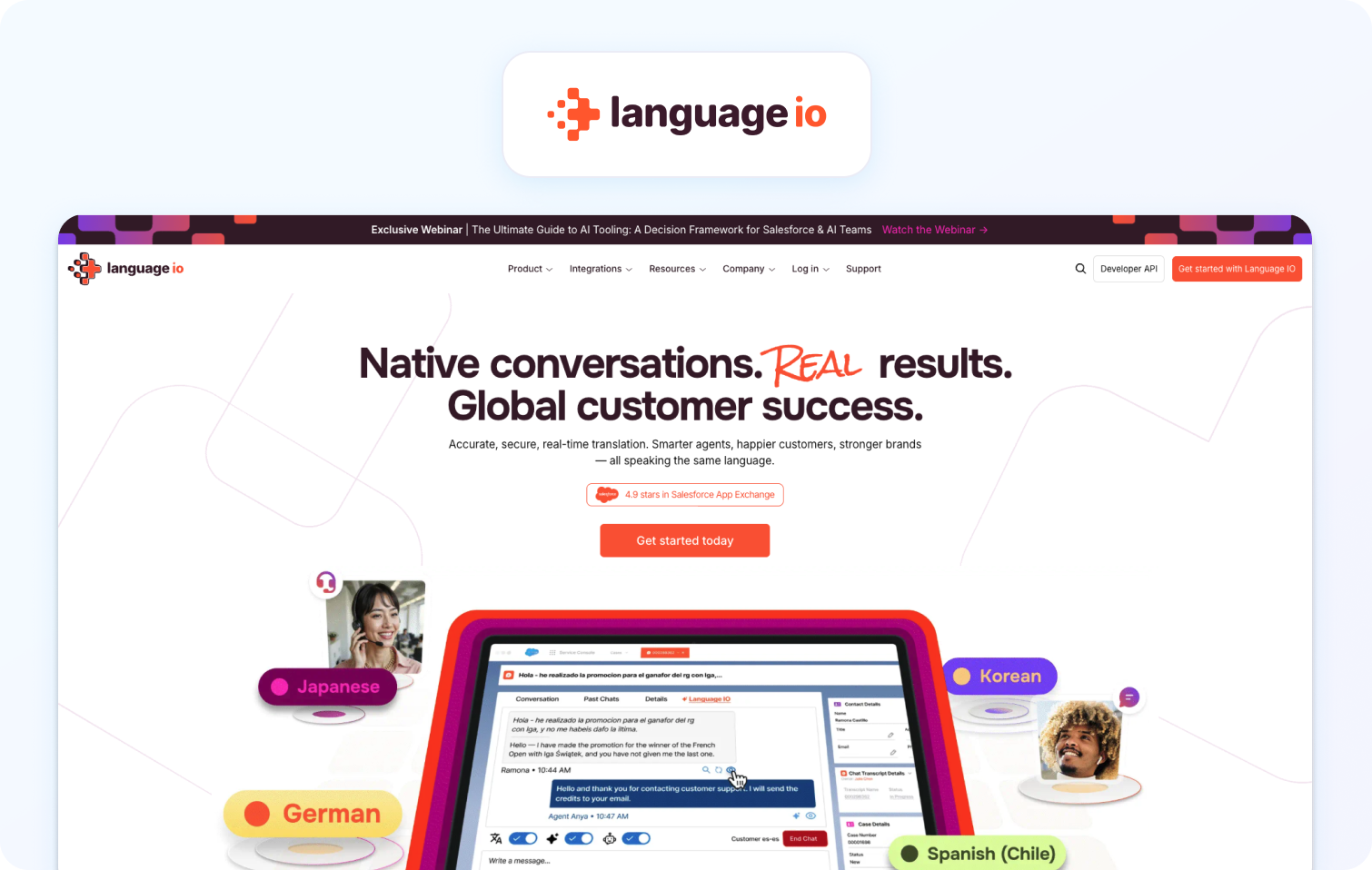
Language I/O focuses on helping organizations add multilingual translation capabilities to their existing customer support tools. Rather than replacing a support platform, it acts as a translation layer across customer interactions.
Strengths:
- Real-time translation: Customer messages can be translated automatically within existing support workflows, reducing the need for dedicated multilingual agents.
- Platform flexibility: Language I/O integrates with a range of popular customer service platforms, allowing organizations to extend existing systems.
- Agent productivity gains: Teams can communicate across languages without constantly switching between translation tools.
Limitations:
- Translation-focused approach: Language I/O primarily addresses translation rather than routing, quality assurance, or broader support operations.
- Limited voice support: Organizations seeking multilingual voice AI will need complementary technologies.
Best for: Businesses that already have a customer support platform and want to add multilingual translation capabilities.
6. DeepL for Business: Best for High-Accuracy Translation of Support Content
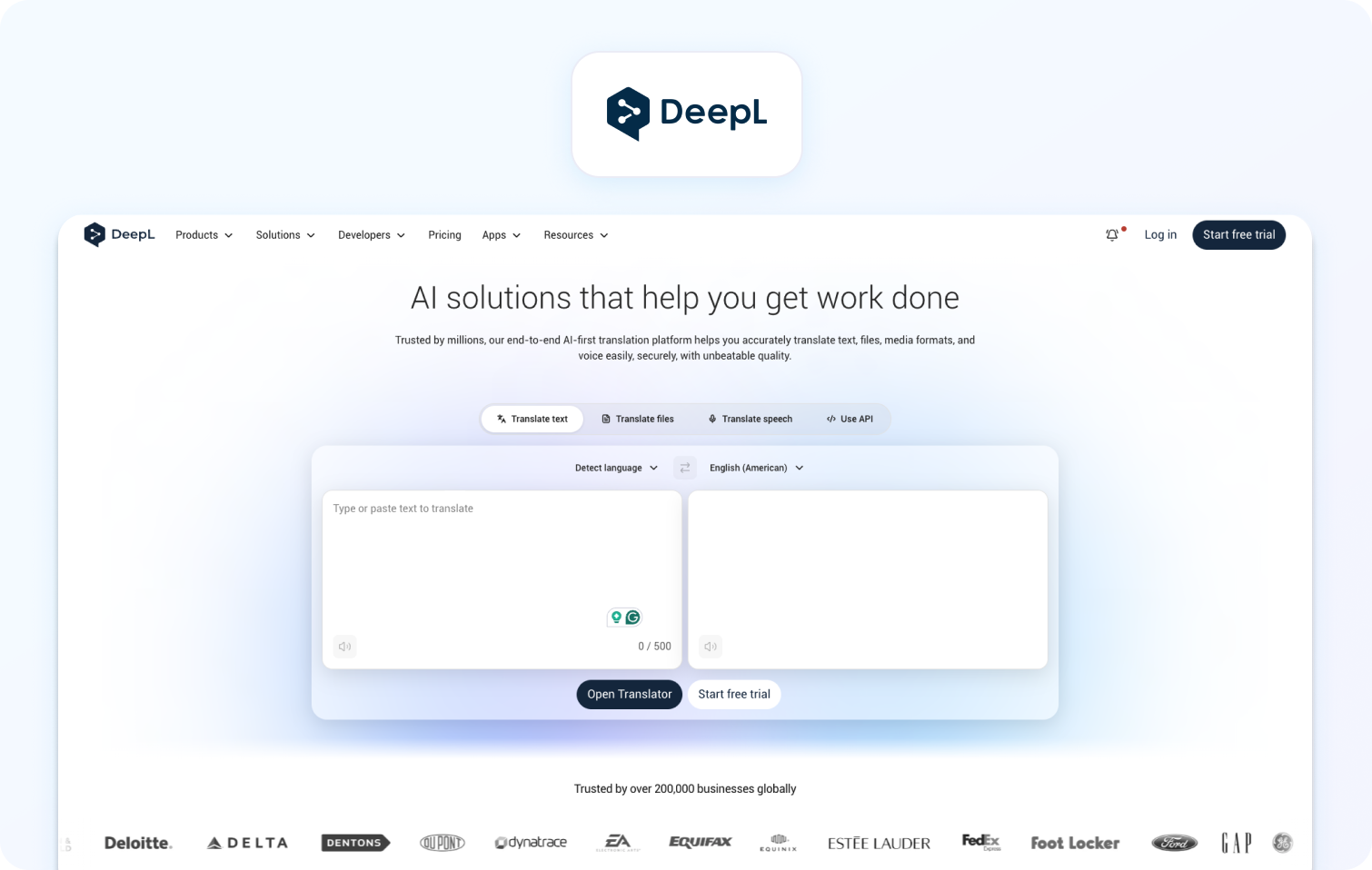
DeepL is a translation platform known for producing highly accurate machine translations across many major languages. It is often used to support multilingual content creation and customer communication.
Strengths:
- Strong translation quality: DeepL is widely regarded for producing natural-sounding translations across major language pairs.
- Useful for knowledge management: Businesses can use DeepL to translate help center articles, documentation, and support content.
- Simple deployment: The platform is straightforward to implement for translation-related workflows.
Limitations:
- Not a complete support platform: DeepL focuses on translation rather than customer support workflows, routing, or quality management.
- No native customer support infrastructure: Organizations still need a separate platform for handling customer interactions.
Best for: Organizations prioritizing translation quality for multilingual support content and documentation.
7. Helpshift: Best for Multilingual Mobile App Support
Helpshift is a customer support platform designed primarily for mobile apps, gaming companies, and digital-first businesses. It combines in-app messaging, automation, and multilingual support capabilities to help organizations engage users directly within their applications, making it particularly popular among gaming studios and businesses with large mobile user bases.
Strengths:
- Mobile-first experience: Helpshift is designed around in-app support, making it particularly effective for mobile products.
- AI-powered automation: The platform helps reduce support workloads by automating common customer requests.
- Multilingual messaging: Businesses can support customers across multiple languages without leaving the app environment.
Limitations:
- Narrower use case: Organizations with significant email, voice, or contact center requirements may need broader support tooling.
- Language-specific analytics are limited: Deep multilingual quality oversight may require additional reporting tools.
Best for: Gaming companies, mobile app providers, and digital-first businesses looking to deliver multilingual support directly within their products.
8. Kustomer: Best for High-Volume B2C Teams Needing Multilingual CRM Context
Kustomer combines customer support capabilities with CRM functionality, giving agents access to detailed customer history during multilingual support interactions.
Strengths:
- Customer-centric support model: Agents can access customer context alongside support conversations, improving personalization.
- Automation capabilities: AI-powered workflows help reduce manual effort and improve response times.
- Omnichannel support: Customer interactions from different channels are consolidated into a single view.
Limitations:
- Implementation complexity: Advanced multilingual workflows may require significant configuration.
- Voice AI is less prominent: Organizations focused on multilingual voice automation may need additional tools.
Best for: High-volume B2C organizations seeking multilingual support with deeper customer context.
Businesses that value customer context and CRM-driven support may benefit from comparing Kustomer against other AI-powered support platforms. Read our guide on the best Kustomer alternatives to explore the differences.
9. Avaamo: Best for Enterprise Multilingual Conversational AI
Avaamo is a conversational AI platform designed to help enterprises automate customer service and employee support across multiple languages and channels.
Strengths:
- Advanced conversational AI: Avaamo provides sophisticated automation capabilities for customer-facing interactions.
- Multilingual voice and chat support: The platform supports both text and voice-based customer experiences.
- Enterprise scalability: Avaamo is built for large organizations managing complex support operations.
Limitations:
- Complex implementation: Enterprise deployments often require significant planning and technical resources.
- Potentially higher costs: Smaller organizations may find the platform more than they require.
Best for: Large enterprises implementing conversational AI across multilingual customer support operations.
10. Google Cloud CCAI: Best for Enterprises Building Custom Multilingual AI Stacks
Google Cloud Contact Center AI (CCAI) provides a suite of AI tools that organizations can use to build customized multilingual customer service environments.
Strengths:
- Highly flexible architecture: Organizations can tailor solutions to specific support requirements and workflows.
- Strong AI and language capabilities: Google's machine learning expertise supports a wide range of multilingual use cases.
- Voice and virtual agent support: The platform includes tools for building advanced voice and chat experiences.
Limitations:
- Requires technical expertise: Successful deployments often depend on internal development resources or implementation partners.
- Longer time to value: Customization can extend deployment timelines compared with turnkey solutions.
Best for: Enterprises seeking maximum flexibility when building multilingual AI support ecosystems.
11. Salesforce Service Cloud: Best for Salesforce-Native Teams Expanding to Multilingual Support
Salesforce Service Cloud extends the Salesforce ecosystem into customer support, helping organizations manage multilingual service operations alongside sales and customer data.
Strengths:
- Deep Salesforce integration: Customer service teams benefit from access to broader CRM data and workflows.
- Automation and AI capabilities: Salesforce provides tools for routing, workflow management, and customer support automation.
- Enterprise scalability: The platform is designed to support large, complex organizations.
Limitations:
- Complex setup: Organizations may require dedicated resources to configure and maintain multilingual support environments.
- Cost considerations: Advanced functionality can become expensive as requirements grow.
Best for: Organizations already invested in Salesforce that want to extend multilingual support capabilities.
Already using Salesforce? Service Cloud can be a natural choice for Salesforce-centric organizations, but it is not the only option available. Our guide to the best Salesforce Service Cloud alternatives examines other platforms that support multilingual customer service, automation, and AI-driven support workflows.
12. Smartling: Best for Multilingual Knowledge Base and Content Management

Smartling is a translation and localization platform that helps organizations manage multilingual content across websites, documentation, and support resources.
Strengths:
- Content localization expertise: Smartling excels at translating and managing customer-facing content across multiple languages.
- Workflow management: Translation projects can be coordinated efficiently through centralized workflows.
- Consistency across markets: Businesses can maintain brand voice and terminology across translated assets.
Limitations:
- Not a dedicated support platform: Smartling focuses on content and localization rather than customer support operations.
- Limited routing and QA capabilities: Organizations still require separate tools for multilingual support workflows and performance management.
Best for: Organizations focused on multilingual content, localization, and knowledge base management rather than end-to-end customer support.
While the platforms above vary significantly in their multilingual capabilities, choosing the right technology is only part of the decision. Many support leaders are now asking a broader question: can AI realistically replace multilingual support teams, or does effective customer service still require human expertise?
The answer is more nuanced than many vendors suggest. Modern AI can handle a growing share of multilingual customer interactions, particularly across high-volume languages and routine support requests. However, there are still areas where human judgment, cultural awareness, and language expertise remain essential. Understanding where AI excels and where human intervention adds value is critical when building a scalable multilingual support strategy.
Why Most Multilingual Support Platforms Fall Short
Multilingual support platforms are designed to help organizations serve customers across different languages, but many solutions focus too narrowly on translation.
This is where evaluation becomes important. A platform may support dozens of languages, yet still struggle to deliver a consistent customer experience if it cannot route conversations correctly, surface accurate knowledge, or measure quality across language markets.
Many vendors position multilingual support as a translation problem. In reality, translation is only one layer of the customer support experience. Organizations also need language-aware routing, omnichannel coverage, quality oversight, and knowledge management capabilities that scale across global operations.
This distinction explains why two platforms with similar language coverage can deliver dramatically different business outcomes. One may simply translate customer messages. Another may automate, route, monitor, and continuously improve multilingual support interactions across every channel.
AI Multilingual Support vs. Human Multilingual Teams

AI multilingual support is the use of artificial intelligence to understand, translate, route, and respond to customer interactions across different languages. Human multilingual support relies on bilingual or multilingual agents to deliver customer service directly.
For many organizations, the question is not whether AI can support multilingual customer service; technology has matured significantly across major languages and customer support channels. The real question they’re facing today is, where does AI deliver the most value and where does human expertise remain essential?
Where AI Excels…
AI multilingual support performs particularly well in high-volume environments where consistency, speed, and scalability are priorities. As AI capabilities continue to mature, more organizations are discovering how AI improves customer support through faster response times, improved consistency, and round-the-clock availability.
Key advantages include:
- 24/7 availability: AI can support customers around the clock without requiring regional staffing coverage.
- Consistent responses: AI-powered support systems deliver the same approved answers regardless of language, helping maintain compliance and brand consistency.
- Scalability across global markets: Expanding into new regions does not necessarily require hiring dedicated multilingual support staff for every language.
- Lower operational costs: AI can handle routine enquiries at scale, reducing the need for additional headcount as support volumes grow.
For common support requests, order updates, account questions, password resets, billing enquiries, and knowledge-based interactions, AI can often deliver a faster and more consistent experience than traditional support models.
Where Human Agents Still Matter…
But human agents continue to outperform AI in situations that require judgment, empathy, or deep cultural understanding. Examples include:
- Complex customer complaints: Sensitive situations often benefit from human communication and problem-solving skills.
- Cultural nuance and regional context: Certain phrases, references, and expectations vary significantly between markets.
- Long-tail languages and dialects: AI performance can be less predictable in lower-volume languages where training data is more limited.
- High-value customer relationships: Strategic accounts and business-critical interactions may require a personal touch that AI cannot fully replicate.
As AI translation quality improves, these gaps continue to narrow, but they have not disappeared entirely.
The Hybrid Multilingual Model
The most effective approach for global support teams in 2026 is what many organizations now use as the hybrid multilingual model. In this model, AI handles the majority of routine multilingual support interactions, including language detection, translation, routing, self-service, and first-line customer support. Human agents then focus on escalations, sensitive conversations, complex problem-solving, and language markets where AI performance requires additional oversight.
This approach allows organizations to combine the scalability of AI with the expertise of human agents while controlling costs and maintaining service quality.
For most support teams, the future is not AI versus humans. It is AI and humans working together within a multilingual support strategy designed around the strengths of both.
How to Choose the Right AI Multilingual Customer Support Solution

Choosing an AI multilingual customer support solution starts with understanding your customer base, support channels, and operational goals. Before making a decision, work through the following five-step evaluation process.
1. Map Your Language Requirements by Volume
Not every language requires the same level of investment. Start by identifying which languages generate the highest support volumes and which markets are most important to your business. This helps prioritize evaluation efforts and avoids overpaying for language coverage that may never be used.
2. Identify Your Priority Support Channels
Voice support, live chat, email, messaging apps, and social media all present different multilingual challenges. If phone support plays a major role in your operation, voice AI capabilities should be a key consideration. If most interactions occur through digital channels, chat and messaging automation may be a higher priority.
3. Assess Knowledge Base Readiness
Even the most advanced multilingual AI relies on accurate source material. Review whether your knowledge base exists in all required languages or whether the platform will need to translate content dynamically. Gaps in documentation can quickly affect customer satisfaction and support accuracy.
4. Define Your Quality Assurance Requirements
Determine how you will measure success across different language markets. Customer satisfaction scores, containment rates, escalation rates, and quality assurance metrics should ideally be tracked at a language-specific level rather than blended into a single global report.
5. Calculate Total Cost of Ownership
Compare platform costs against the cost of hiring and managing multilingual support staff. Include software licensing, implementation, ongoing management, training, and potential efficiency gains. The most affordable platform is not always the lowest-cost solution over time.
Organizations that want a clearer picture of potential savings can use a customer support ROI calculator to compare platform investment against staffing, operational, and support costs.
Organizations that follow this process are more likely to select a multilingual support platform that aligns with both current requirements and future growth plans.
Final Thoughts: Building a Scalable Multilingual Support Strategy
AI customer support multilingual solutions have reached the point where they are no longer a future consideration for global support teams. For organizations serving customers across multiple languages, they are increasingly becoming the standard approach to delivering scalable, high-quality customer service.
The challenge is not in deciding whether to use AI, but in choosing a platform that can consistently support your language markets, channels, knowledge sources, and quality requirements.
While every solution in this guide offers value in specific scenarios, BlueTweak stands out for organizations that need multilingual support across both voice and digital channels, combined with language-aware routing, knowledge-grounded AI, and language-specific quality monitoring.
If you're looking to reduce language barriers, improve operational efficiency, and deliver more consistent support experiences across global markets, start a free 14-day BlueTweak trial with no credit card required, or book a personalized demo to see how multilingual AI support can work within your organization.
Sign up for your free trial now!
Get Started
Hiver Alternatives: 7 Best Options to Consider in 2026
Many teams start with Hiver because it offers a simple way to manage shared inboxes inside Gmail. But as customer support operations grow, what once felt efficient can quickly become limiting.
Support teams today are expected to manage conversations across email, chat, voice, social media, and messaging apps while maintaining fast response times, consistent service quality, and operational visibility. At the same time, AI-powered automation is becoming a competitive requirement rather than a nice-to-have feature.
That's why more organizations are evaluating Hiver alternatives. Some need greater flexibility outside the Google ecosystem, while others need advanced automation, omnichannel support, and deeper operational insights. Platforms such as BlueTweak are designed specifically for this next stage of growth, helping teams move beyond shared inbox management and build a more scalable customer support operation.
Why Teams Look for a Hiver Alternative
Most searches for a Hiver alternative happen when a team's customer support requirements have outgrown the shared inbox model that Hiver was built around.
Hiver remains a popular choice for small teams using Google Workspace as its user-friendly interface, collaborative shared inbox functionality, and seamless Gmail integration make it an attractive starting point for customer support teams that primarily handle email-based customer communication.
However, most searches for a Hiver alternative are driven by three common challenges. As support teams grow, customer expectations change, and support channels multiply, many organizations find that Hiver's strengths become limitations.
Gmail Lock-In Limits Flexibility
Hiver is built directly inside Gmail as a Chrome extension. While this approach makes onboarding simple for Google Workspace users, it also creates dependency on Google's ecosystem.
Teams using Microsoft Outlook, or organizations considering a move away from Google Workspace, cannot simply take Hiver with them. The platform's functionality is fundamentally tied to Gmail accounts, Gmail labels, and the Google environment.
For support leaders evaluating long-term customer support software investments, this can create unnecessary restrictions. A platform decision should support future business needs, not dictate which productivity suite the organization must use.
As companies expand, merge with other organizations, or introduce new customer support operations, flexibility often becomes more important than convenience.
Pricing Pressure Increases as Teams Grow
Pricing scalability is another common reason teams begin exploring Hiver alternatives.
Hiver's pricing model is based on per-agent subscriptions, with additional costs for AI capabilities. While this may be manageable for very small teams, costs can rise quickly as support teams expand from five agents to 20 or more.
This creates a challenge for growing organizations. Support leaders are not simply evaluating software costs today; they are forecasting what customer support software will cost 12 to 24 months from now.
Many modern help desk software providers now include AI features, automation capabilities, advanced reporting, and workflow management tools within their core offerings. As a result, organizations often find themselves comparing Hiver's add-on costs against platforms that bundle advanced functionality into a more comprehensive package.
Teams Eventually Outgrow the Shared Inbox Model
The biggest reason organizations search for an alternative to Hiver is that they have outgrown the shared inbox model entirely.
Hiver was designed around collaborative email management. It helps multiple team members manage shared inboxes, assign tasks, leave internal notes, and track incoming requests without leaving Gmail. For many teams, that works perfectly.
However, modern customer support rarely happens through email alone.
Today's customer support teams often manage conversations across live chat, voice, SMS, social media, messaging apps, self service portals, and knowledge base channels. They also need AI tagging, advanced automation, AI agents, collision detection, proactive messaging, and advanced analytics to maintain efficiency as volumes increase.
According to PwC's 2025 Customer Experience Survey, 70% of executives believe customer expectations are evolving faster than their organizations can adapt. This helps explain why many support teams begin searching for a Hiver alternative. As customer interactions spread across chat, voice, social media, messaging apps, and self-service channels, a shared inbox alone often struggles to provide the visibility, automation, and consistency needed to keep pace.
This is where many teams discover that a basic shared inbox is no longer enough. They need omnichannel support, automation rules, workflow orchestration, and AI-powered customer service capabilities that extend far beyond email collaboration tools.
As a result, the search for a Hiver alternative is often less about replacing Hiver itself and more about finding a platform that can support the next stage of growth.
Hiver Alternatives at a Glance
A Hiver alternative comparison helps support leaders quickly identify which platform best aligns with their team's size, support channels, AI requirements, and long-term growth plans.
The market offers everything from lightweight Gmail-based collaboration tools to enterprise-grade customer service software with AI automation, omnichannel routing, and advanced reporting capabilities.
The comparison below provides a high-level overview of the leading Hiver alternatives available in 2026. Pricing should always be verified directly with each vendor before making a purchasing decision, as plans and included features can change.
BlueTweak Hiver Alternatives Comparison Table
*Pricing verified at the time of writing and subject to change. Always confirm current pricing, AI feature availability, and billing terms directly with the vendor before making a purchasing decision.
While feature checklists are useful, they rarely tell the whole story. The real question is not which platform has the most features, but which platform aligns with how your customer support operation will evolve over the next 12 to 24 months.
The sections below provide a more detailed breakdown of each platform, including where it excels, where it falls short, and the types of teams most likely to benefit from switching.
7 Best Hiver Alternatives in 2026
A Hiver alternative can range from a simple shared inbox replacement to a fully featured customer support platform with AI automation and omnichannel capabilities.
The tools below represent the strongest Hiver alternatives in 2026. Each assessment covers what the platform does well, where it falls short, pricing considerations, and the type of team it is best suited for. Pricing was verified at the time of writing but should always be confirmed directly with the vendor before making a purchasing decision.
1. BlueTweak: Best for AI-Powered Omnichannel Customer Support
BlueTweak is an AI-powered customer support platform designed for organizations that need to manage customer interactions across voice, email, live chat, social media, and messaging channels from a single workspace. Unlike a basic shared inbox, it combines customer support operations, AI automation, workforce management, and quality assurance in one platform.
Why it beats Hiver for growing teams: Hiver is fundamentally a shared inbox layer built inside Gmail. BlueTweak is a complete customer support platform built for teams that have outgrown email-centric support and need a unified approach to customer communication across multiple channels.
Key capabilities:
- Conversational AI agents for tier-one support - automatically resolve common customer enquiries, reducing ticket volumes and freeing agents to focus on more complex issues.
- AI ticket triage and intelligent routing - categorise, prioritise, and assign support tickets automatically so customers reach the right team faster.
- AI-generated ticket summaries and suggested replies - reduce manual admin work and help agents respond more quickly with relevant, context-aware recommendations.
- Multi-brand support from a single workspace – manage customer interactions across multiple brands, business units, or product lines without switching platforms, giving agents a unified view while maintaining separate brand experiences.
- Real-time knowledge base retrieval for agents - surface accurate information during live interactions, improving consistency and reducing resolution times.
- Workforce management and scheduling tools - forecast demand, optimise staffing levels, and improve operational efficiency across support teams.
- 100% automated QA coverage and performance monitoring - review every customer interaction automatically to identify coaching opportunities and maintain service quality at scale.
- Advanced analytics and reporting across channels - track performance, customer satisfaction, and operational trends through a single reporting environment
The biggest mistake support leaders make is treating AI as an add-on rather than an operating model. Shared inboxes solve collaboration challenges, but they don’t fundamentally transform customer support. The organizations seeing the strongest results are using AI across routing, quality assurance, knowledge retrieval, workforce optimization, and customer interactions in a single ecosystem.

The honest limitation: BlueTweak is not the right fit for a three-person team looking to manage a Gmail account collaboratively with minimal setup. The platform is built for organizations that need automation, omnichannel support, quality oversight, and operational scalability.
Pricing: BlueTweak operates a transparent pricing model of €65 per agent, per month, all-in (including ticketing, omnichannel, AI chatbot, AI voicebot, copilot tools, WFM, QA, analytics, integrations). This pricing model is designed to keep things simple, affordable, and easy to scale as your team does.
Best for: Mid-market and enterprise support teams that need AI automation, omnichannel routing, and operational visibility beyond a traditional shared inbox.
If you're evaluating Hiver alternatives and want to see what a fully integrated AI-powered customer support platform looks like in practice, start a free BlueTweak trial and explore the platform firsthand.
2. Zendesk: Best for Enterprise Teams Needing Scale and Ecosystem Breadth
Zendesk is one of the most established customer service software platforms on the market. It combines ticketing, self-service portals, workflow management, reporting, AI capabilities, and one of the largest integration marketplaces in the industry.
Why teams choose it: Zendesk's greatest strength is scale; large support organizations can manage customer support operations across multiple channels while integrating deeply with CRM systems, e-commerce platforms, and business applications. Its AI capabilities have matured considerably in recent years, transforming Zendesk from a traditional ticketing system into a broader customer experience platform.
Key capabilities:
- Omnichannel customer support and ticketing
- AI-powered agent assistance and automation
- Extensive integration marketplace
- Advanced workflow management and automation rules
- Self-service portals and knowledge base functionality
- Enterprise-grade reporting and analytics
- Support for large-scale customer service operations
The honest limitation: Zendesk is significantly more complex than Hiver. While that complexity unlocks flexibility, it also increases implementation effort, administration requirements, and overall cost.
Teams that already feel overwhelmed by customer support software may find Zendesk introduces more functionality than they realistically need. Organizations seeking simplicity often face a steep learning curve and higher ownership costs than expected. If you value simplicity, it’s worth looking into Zendesk alternatives.
Pricing: Zendesk uses a custom pricing model, but costs can become difficult to predict as teams add advanced functionality. Many AI features, automation capabilities, and enterprise-level tools are only available on higher-tier plans or through additional add-ons, which can significantly increase the total cost of ownership.
Best for: Large support teams that need enterprise scalability, deep integrations, and sophisticated workflow management.
3. Freshdesk: Best for Mid-Market Teams Wanting Breadth at Lower Cost
Freshdesk is a popular help desk software platform that offers a broad range of customer support features at a lower entry price than many enterprise competitors. It is often considered by teams that need more than a shared inbox but are not yet ready for enterprise-grade complexity.
Why teams choose it: Freshdesk strikes a balance between affordability and functionality. Teams can start with a free plan and gradually add capabilities as support operations become more sophisticated. Its Freddy AI suite, omnichannel support options, and modular pricing structure make it attractive to growing customer support teams that need flexibility.
Key capabilities:
- Omnichannel support across email, chat, phone, and messaging
- Freddy AI tools for automation and agent assistance
- Ticketing system and workflow automation
- Knowledge base and self-service portals
- Team inbox management and collaboration tools
- Advanced reporting and customer satisfaction tracking
- Free plan for small support teams
The honest limitation: Freshdesk's breadth can become complex. Teams looking for a simple customer support solution may find the number of features, menus, and configuration options overwhelming during implementation. Additionally, many advanced AI capabilities require higher-tier subscriptions or add-ons, which can increase costs significantly as teams grow.
Pricing: A limited free plan is available, with paid plans typically starting from around $15 per agent, per month (billed annually). Pro and Enterprise tiers are priced at $49 and $79 per agent, per month, respectively. Freddy AI functionality may require additional investment; verify with the vendor for details.
Best for: Growing mid-market teams that want a wide feature set and are comfortable investing time in setup and configuration.
4. Help Scout: Best for Small Teams That Want Email-First Simplicity

Help Scout is an email-first help desk platform designed for organizations that want a cleaner, more structured approach to customer support without the complexity of larger enterprise systems.
Why teams choose it: Many organizations choose Help Scout because it delivers a genuine help desk experience while remaining remarkably easy to use. Teams can move beyond a shared inbox without facing the steep learning curve often associated with larger customer service software platforms. Its combination of shared inboxes, live chat, and knowledge base functionality makes it a strong fit for growing support teams.
Key capabilities:
- Shared inbox and team inbox management
- Live chat and customer messaging
- Knowledge base creation and management
- AI Assist and AI Summarize features
- Internal notes and collision detection
- Email assignments and workflow automation
- Customer conversation history tracking
The honest limitation: Help Scout is not designed for voice support, advanced AI automation, or highly complex routing scenarios. While it excels at email and chat-based support, organizations requiring sophisticated omnichannel customer support may eventually outgrow the platform.
Pricing: Pricing is positioned toward teams that want a dedicated support platform without enterprise-level complexity. Plans have historically started around $25 per user, per month, for core shared inbox and collaboration features, with higher tiers adding capabilities such as advanced automation, reporting, and AI tools. Pricing is available on monthly or annual billing cycles.
Best for: Small to mid-sized support teams that prioritize simplicity, quick deployment, and email-first customer support.
5. Front: Best for Teams Blending Internal and External Communication
Front is a collaborative inbox platform that combines customer-facing communication with internal team collaboration. It is designed for organizations where customer conversations often involve multiple departments and stakeholders.
Why teams choose it: Front helps teams manage both internal discussions and external customer communication within the same workspace. This makes it particularly useful for organizations where support, sales, operations, and account management frequently collaborate on customer issues. Its collaborative approach feels familiar to teams moving from email management software and shared inbox tools.
Key capabilities:
- Shared inboxes for team collaboration
- Internal commenting and conversation threads
- Email, SMS, and social media support
- AI drafting and response assistance
- Workflow automation and routing rules
- Team assignments and collaboration features
- Customer communication tracking
The honest limitation: Front can become expensive as team sizes increase. While its collaboration features are strong, its AI capabilities are generally less advanced than platforms built specifically around AI-powered customer support operations. Organizations looking for advanced automation or AI agents may find themselves needing additional tools.
Pricing: Front offers several pricing tiers depending on team size and workflow complexity:
- Starter plans begin at approximately $25 per seat, per month (capped at 10 seats) and include core shared inbox and collaboration features.
- Growth plans start around $65 per seat, per month and add more advanced automation, workflow management, and reporting capabilities.
- Scale plans begin at roughly $105 per seat, per month and introduce enterprise-focused features, governance controls, and enhanced support options.
Best for: Teams that need to manage internal collaboration and external customer communication from a single platform.
6. Missive: Best for Gmail and Outlook Teams Wanting Collaborative Email
Missive is a collaborative email platform that supports both Gmail and Outlook environments. It is often considered the closest direct alternative to Hiver for teams focused primarily on email collaboration.
Why teams choose it: Unlike Hiver, Missive is not tied exclusively to Google Workspace. Teams can manage shared inboxes, communicate internally, and collaborate on customer conversations across both Gmail and Outlook accounts. This flexibility appeals to organizations that want collaborative email management without committing to a Gmail-only workflow.
Key capabilities:
- Shared inbox management for Gmail and Outlook
- Team chat and internal collaboration
- Email assignments and ownership tracking
- Basic workflow automation
- Support for SMS communication
- Team inbox visibility and accountability
- Shared drafts and collaborative responses
The honest limitation: Missive is fundamentally a collaborative email client rather than a true help desk platform. It lacks the advanced ticketing, omnichannel routing, workforce management, and AI automation capabilities that larger customer support operations often require. Teams can outgrow Missive quickly as customer support complexity increases.
Pricing: Missive uses tiered pricing that starts at approximately $14 per user per month, with higher plans adding advanced collaboration, administration, and workflow capabilities. The entry-level plan includes core features such as shared inboxes, team chat, internal comments, assignments, and collaborative drafting, but costs increase as teams require increased automation, permissions, analytics, and/or security controls.
Best for: Small teams using Gmail or Outlook that want collaborative email management without moving to a full help desk platform.
7. Gmelius: Best for Lightweight Gmail Power Users

Gmelius is a Gmail-native collaboration tool designed to enhance email productivity through shared inboxes, automation, and lightweight workflow management.
Why teams choose it: For organizations deeply invested in Google Workspace, Gmelius provides many of the collaboration features found in Hiver at a competitive price point. Its lightweight approach appeals to teams that want better email management without introducing a dedicated customer support platform.
Key capabilities:
- Shared inboxes inside Gmail
- Gmail sequences and email automation
- Kanban-style workflow management
- Team collaboration and assignments
- Basic reporting and analytics
- Gmail labels and workflow organization
- Lightweight automation capabilities
The honest limitation: Gmelius shares many of the same limitations as Hiver because it remains heavily dependent on Gmail. Teams looking to move beyond Google Workspace, introduce voice support, or adopt advanced AI capabilities will likely need a more comprehensive solution. Its AI features and omnichannel capabilities are limited compared to every other platform in this roundup.
Pricing: Tiered pricing plans start at approximately $19 per user, per month. Gmelius offers several plan levels, including Meli, Growth, Pro, and custom Enterprise pricing. The Meli plan focuses on core shared inbox and collaboration features for small teams, while Growth adds more advanced automation, reporting, and workflow capabilities. The Pro plan is designed for larger or more sophisticated teams that need enhanced productivity tools, deeper automation, and greater operational flexibility.
Best for: Very small Gmail-based teams that want affordable shared inbox functionality and have no immediate need for advanced customer support software.
What to Look for in a Hiver Alternative
A Hiver alternative should solve not only today's customer support challenges, but also the challenges your team is likely to face as it grows over the next 12 to 24 months. Many teams begin evaluating Hiver alternatives because they have outgrown a shared inbox model. The most important question is not which platform has the longest feature list, but which platform can support your future customer support operation without requiring another migration a year from now.
Omnichannel Support Beyond Email
Hiver is built around Gmail, making it an excellent solution for email-centric teams. However, many customer support organizations now manage interactions across live chat, voice, SMS, social media, and self-service portals.
When evaluating alternatives, consider:
- Whether all customer interactions are visible in a single workspace
- How easily agents can move conversations between channels
- Whether customer history remains intact across touchpoints
- If channels are native to the platform or reliant on third-party integrations
As support operations become more complex, fragmented customer communication can create inefficiencies, duplicated work, and inconsistent customer experiences.
AI That Delivers Operational Value
AI capabilities are now available in most customer support software, but the depth of those capabilities varies significantly. Many platforms offer basic AI features such as reply drafting or ticket summaries. More advanced platforms use AI to automate workflows, route conversations intelligently, retrieve knowledge base content in real time, and reduce repetitive tasks for agents.
When assessing AI capabilities, look for:
- AI ticket triage and routing
- Suggested replies grounded in a knowledge base
- Automated summaries and tagging
- Agent assistance during live interactions
- AI agents that can resolve simple customer issues independently
The goal should be measurable productivity improvements, not simply adding AI features to a workflow.
Scalability and Operational Visibility
The requirements of a five-person support team are very different from those of a 25-person support team. As organizations grow, visibility becomes increasingly important. Reporting, workforce management, quality assurance, and performance monitoring all play a larger role in maintaining customer satisfaction and operational efficiency.
Consider whether a platform provides:
- Advanced reporting and analytics
- Customer satisfaction tracking
- Quality assurance capabilities
- Workforce management tools
- Visibility into team performance across channels
These capabilities may not be essential today, but they often become critical as support volumes increase.
Pricing Beyond the Starter Plan
Many support platforms appear affordable at first glance. However, costs can change significantly as teams grow, add channels, or enable advanced functionality.
Before choosing a Hiver alternative, evaluate:
- Current cost per user
- Projected cost at your expected team size
- AI feature pricing
- Omnichannel support costs
- Add-on requirements for reporting or automation
The most affordable platform today may not be the most cost-effective platform 12 months from now.
The Bottom Line
The best Hiver alternative is the one that aligns with your future operating model. Some teams simply need a more capable shared inbox. Others need a complete customer support platform with AI automation, omnichannel routing, analytics, and operational oversight.
Understanding where your support organization is heading will make it much easier to identify which solution is the right long-term fit.
How to Choose the Right Hiver Alternative for Your Team
The right Hiver alternative depends on your team's size, support model, growth plans, and customer communication requirements. While feature comparisons are useful, the most successful software decisions are based on where your support operation needs to be in 12 months, not where it is today.
A platform that works well for a five-person support team may become a limitation when that team grows to 25 agents managing multiple channels.
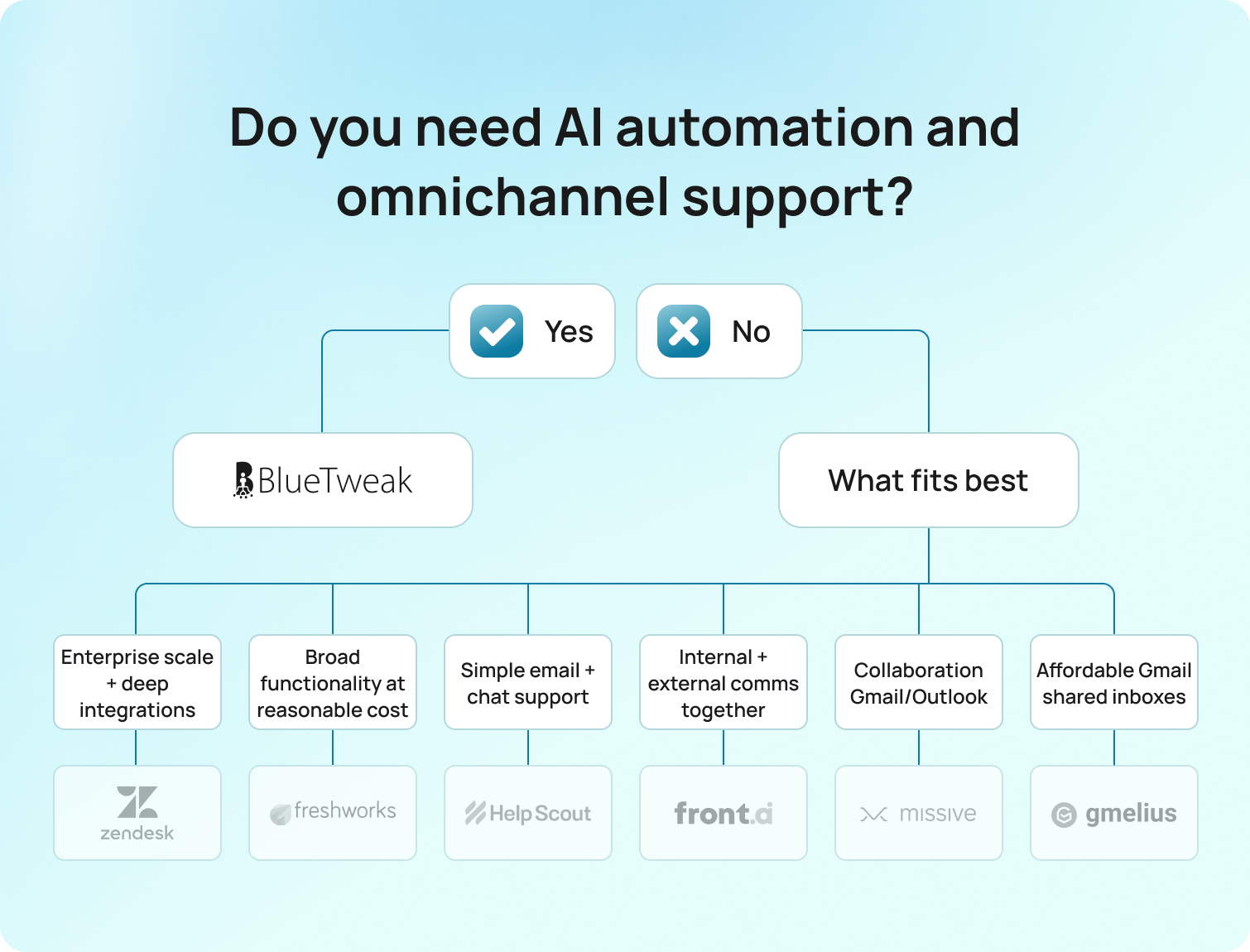
The most important consideration is scalability; before making a decision, evaluate how your customer support operation is likely to evolve over the next year. If your roadmap includes additional support channels, AI automation, advanced reporting, or larger support teams, it is worth choosing a platform that can grow with those requirements rather than switching tools again in the near future.
Final Thoughts: Choosing a Hiver Alternative That Supports Long-Term Growth
Most teams start looking for a Hiver alternative when a shared inbox is no longer enough. As support volumes increase and customer conversations expand across multiple channels, teams often need stronger automation, deeper visibility, and more scalable workflows.
If your goal is simply to improve collaborative email management, several options in this guide can help. However, for organizations that need AI automation, omnichannel support, workforce management, quality assurance, and advanced analytics in a single platform, BlueTweak stands out as one of the strongest Hiver alternatives available in 2026.
If you'd like to explore how BlueTweak can help your team automate workflows, improve customer satisfaction, and manage customer interactions across every channel, why not book a personalized demo or start a free 14-day trial to see the platform in action.
Gladly vs Zendesk vs BlueTweak: Which Support Platform Should You Choose in 2026?
Gladly, Zendesk, and BlueTweak at a Glance
Gladly, Zendesk and BlueTweak are customer support platforms designed to help businesses manage customer interactions across multiple communication channels, but each platform is built around a fundamentally different operational philosophy.
For businesses evaluating Gladly vs Zendesk in 2026, the decision is no longer just about managing support tickets. Modern customer service operations now depend on how effectively platforms combine AI capabilities, omnichannel support, workforce management, reporting, voice, automation, and customer experience into a unified operational model. Businesses evaluating modern customer support platforms are also increasingly reassessing what they need from a traditional help desk software environment as AI and omnichannel expectations continue to evolve.
Zendesk remains one of the most established platforms in the market, known for its enterprise-grade ticketing system, advanced workflows, and extensive integration ecosystem. Gladly differentiates itself through a person-centric approach that replaces traditional tickets with lifelong customer conversations designed to improve personalized service and customer loyalty.
At the same time, AI-native platforms like BlueTweak are increasingly entering the same evaluation process, particularly among businesses looking to consolidate AI, voice, quality assurance, workforce management, and omnichannel support into a single platform experience rather than layering multiple third-party tools together.
IN 2026, that difference matters more than ever. According to PwC’s 2025 Customer Experience Survey, 29% of consumers stopped buying from a brand because of poor service experiences, while 70% of executives admit customer expectations are evolving faster than their companies can adapt. The findings highlight a growing gap between how businesses think they deliver customer experience and how customers actually perceive it.
The BlueTweak Gladly vs Zendesk Comparison Table
| Comparison Area | Gladly | Zendesk | BlueTweak |
|---|---|---|---|
| Core Philosophy | Person-centric — no tickets | Ticket-centric — case management | AI-native omnichannel support |
| Best For | High-touch consumer brands, luxury retail, hospitality | Enterprise support teams need scale, governance, and integrations | Teams needing AI, voice, WFM, and QA in one platform |
| AI Native | Partial | Add-on dependent | Yes |
| Voice | Yes | Yes | Yes |
| WFM Native | No | Limited / Add-on | Yes |
| Starting Price | Verify / Contact Sales | From ~$55 per agent/month annually | Transparent custom pricing |
| Unique Edge | Full customer conversation history in one view without ticket IDs | Largest ecosystem and integration marketplace | Native AI, voice, WFM, and KB-grounded responses included in the base platform |
The biggest mistake businesses make during the Gladly comparison process is evaluating customer support platforms purely on features rather than operational fit.
Organizations prioritizing structured workflows, SLA governance, and advanced reporting often lean toward Zendesk. Businesses focused on relationship building, customer lifetime value, and personalized service frequently prefer Gladly. Meanwhile, teams looking to reduce operational complexity by combining AI, voice, QA, WFM, and omnichannel support inside a unified environment are increasingly evaluating platforms like BlueTweak alongside both vendors.
The Three Operational Models Behind Modern Customer Support
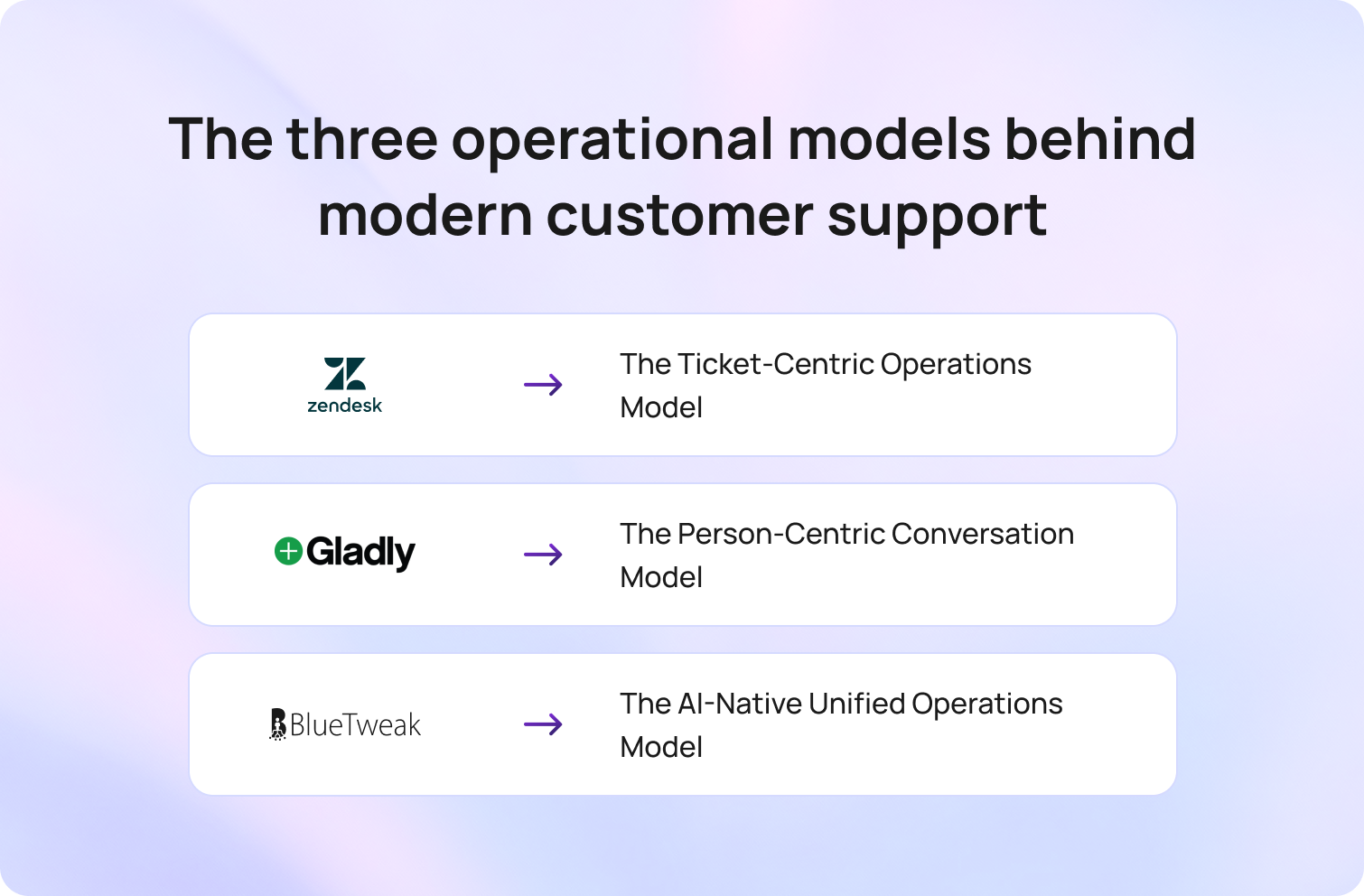
Modern customer support platforms are no longer differentiated purely by features. Gladly, Zendesk, and BlueTweak each represent a different operational model for managing customer interactions, customer service performance, and long-term customer experience at scale.
Most Gladly vs Zendesk comparisons oversimplify the decision into a feature checklist. In reality, the bigger distinction is how each platform structures customer service operations behind the scenes, because that operational philosophy directly impacts agent efficiency, reporting, AI adoption, customer satisfaction, and service quality.
Zendesk: The Ticket-Centric Operations Model
Zendesk represents the traditional ticket-centric model built around structured case management and operational governance. Every customer inquiry becomes a structured case within a ticketing system. Tickets are assigned IDs, statuses, priorities, queues, SLAs, and business rules that help support teams manage high support volumes across multiple channels.
This model gives organizations exceptional operational control. Customer service agents can route tickets automatically, enforce advanced workflows, track escalations, manage compliance requirements, and generate highly granular operational reporting. Zendesk offers one of the most mature ecosystems for organizations that need structured case management, deep integrations, and sophisticated governance across customer support operations.
That structure becomes particularly valuable for enterprise support environments handling large numbers of support tickets across multiple departments, including customer service, IT, operations, and e-commerce support.
The trade-off is that the workflow can become ticket-first rather than customer-first. When customers move between communication channels, interactions may still exist across separate tickets unless workflows are tightly managed. For some businesses, that creates friction within the customer experience and limits relationship continuity between agents and customers.
Gladly: The Person-Centric Conversation Model
Gladly represents a person-centric support model designed around lifelong customer conversations rather than traditional tickets. Rather than organizing support around tickets, Gladly unifies customer interactions into a single conversation history connected directly to the customer profile. Email, chat, SMS, voice, and social messaging all appear within the same timeline, giving agents full visibility into the customer’s history regardless of support channel.
Instead of managing queues of disconnected support tickets, agents manage ongoing customer relationships. The same agent can often continue conversations across multiple communication channels, creating a more personalized experience for the customer while reducing the frustration of repeated context switching.
For brands where customer loyalty and customer lifetime value are operational priorities, this model can improve relationship building and deliver more exceptional customer service experiences. That is why Gladly customers are often concentrated in industries like luxury retail, hospitality, subscription services, and e-commerce brands, where personalized service matters more than rigid case structures.
However, the person-centric model can create limitations for organizations requiring highly structured workflows, advanced SLA governance, or deeply layered operational reporting tied to ticket states and queue management.
BlueTweak: The AI-Native Unified Operations Model
BlueTweak represents an AI-native operational model built around consolidating AI, voice, workforce management, QA, and omnichannel support into a unified customer service environment.
Rather than centering operations around either tickets or conversations alone, BlueTweak focuses on reducing operational fragmentation across the customer support stack.
The platform is designed around the reality that many modern support teams now operate across disconnected systems for voice, digital support, QA reviews, workforce scheduling, knowledge management, coaching, reporting, and AI automation. This fragmentation creates operational inefficiency with agents moving between platforms, managers struggling with disconnected reporting, AI initiatives becoming siloed, and customer experience suffering as operational complexity increases.
BlueTweak’s approach is built around reducing that operational sprawl by combining AI-native workflows, voice support, QA, WFM, intelligent automation, and omnichannel customer interactions inside a unified platform architecture.
The biggest challenge facing customer support teams today is not access to AI or channels. It is operational fragmentation. When agents work across disconnected systems, customer experience becomes inconsistent, reporting becomes unreliable, and scaling service quality becomes significantly harder.
This operational model is becoming increasingly relevant as customer expectations continue to evolve. According to PwC’s 2025 Customer Experience Survey, 70% of executives say customer expectations are evolving faster than their businesses can keep pace with, placing increasing pressure on support teams to deliver faster, more personalized, and more efficient customer experiences across every support channel.
Which Operational Model Fits Your Team Best?
The Gladly vs Zendesk vs BlueTweak decision ultimately comes down to operational priorities rather than feature parity alone.
Businesses prioritizing enterprise governance, advanced reporting, and structured workflows will often lean toward Zendesk. Businesses prioritizing relationship-driven support and lifelong customer conversations may prefer Gladly. Businesses prioritizing operational consolidation, AI-native workflows, unified voice and digital support, and lower operational complexity are increasingly evaluating platforms like BlueTweak alongside both traditional models.
Gladly vs Zendesk vs BlueTweak: Head-to-Head Comparisons
Gladly, Zendesk and BlueTweak all support modern omnichannel customer service operations, but they differ significantly in AI maturity, operational philosophy, reporting depth, workforce tooling, implementation complexity, and long-term total cost of ownership.
For businesses evaluating Gladly vs Zendesk in 2026, the real challenge is in understanding how effectively each platform supports your operational model, customer experience strategy, and long-term scalability goals.
The sections below break down the biggest differences between all three platforms across the areas that matter most to support leaders and customer experience teams.
AI Capabilities
AI capabilities refer to the automation, agent assistance, intelligent workflows, and knowledge management tools that help support teams improve customer service performance while reducing repetitive tasks.
AI has rapidly become one of the most important decision factors in the Gladly vs Zendesk vs BlueTweak conversation, largely because many vendors now separate advanced AI functionality into premium add-on pricing tiers.
Zendesk:
Zendesk has invested heavily in AI capabilities over the last several years. Its platform now includes AI-generated summaries, suggested replies, intelligent triage, generative search, AI agents, automated responses, and Copilot functionality for customer service agents.
However, many of Zendesk’s most advanced AI capabilities still require additional investment beyond the base Zendesk Suite plan. Real-time agent assistance, autonomous resolution workflows, QA automation, and advanced AI orchestration often sit behind premium add-ons.
Gladly:
Gladly also offers AI functionality, including conversation summaries, suggested responses, self-service capabilities, and automation designed to support personalized service and customer continuity. Its AI positioning focuses more heavily on enabling agents and improving customer interactions than on building highly automated support environments.
BlueTweak:
Rather than treating AI as a separate layer added onto existing workflows, BlueTweak positions AI as part of the platform’s operational foundation. AI-powered agent assistance, suggested replies, and KB-grounded responses, intelligent automation, post-interaction summarization, coaching support, and omnichannel AI workflows are integrated directly into the platform experience.
Fragmented AI deployments often create operational inconsistency. Support teams frequently discover that AI tools layered across disconnected systems increase complexity rather than reduce it, particularly when voice, QA, workforce management, and digital channels operate separately.
In summary:
Zendesk currently offers the broadest enterprise AI ecosystem, but reaching full capability often requires significant add-on investment. Gladly delivers a more relationship-focused AI experience centered around customer continuity. BlueTweak stands out for organizations seeking AI-native operational workflows embedded directly across voice, QA, WFM, and omnichannel support from day one.
Channel Coverage
Channel coverage refers to the communication channels a platform supports natively, including voice, email, SMS, live chat, WhatsApp, social messaging, and self-service options.
Modern customer service operations depend heavily on omnichannel support because customers increasingly expect to move between communication channels without losing context.
Zendesk:
Zendesk offers extensive channel coverage across email, voice, live chat, SMS, WhatsApp, social messaging, and community forums. The Zendesk Agent Workspace centralizes these channels into a unified interface, while the broader ecosystem supports extensive third-party integrations.
Gladly:
Gladly also supports voice, email, SMS, live chat, and social channels, but its key differentiator is not simply channel availability. It is how Gladly unifies conversations into a single customer timeline designed around relationship continuity rather than ticket management.
BlueTweak:
BlueTweak positions omnichannel support as part of a broader operational architecture combining voice, AI, QA, WFM, and digital channels within a single environment. Rather than treating voice as a separate integration layer, BlueTweak emphasizes native voice and digital support working together operationally. This operational consolidation is particularly valuable for businesses managing both digital customer interactions and high voice volumes.
In summary:
Zendesk offers the deepest integration ecosystem and channel flexibility. Gladly excels at maintaining conversational continuity across channels. BlueTweak differentiates itself through operationally unified voice and digital support built directly into the platform architecture.
Reporting and Analytics
Reporting and analytics refer to the KPIs, dashboards, operational metrics, forecasting tools, and customer insights that support leaders use to measure service quality and optimizing customer service operations.
This is one of the most significant operational distinctions between Gladly, Zendesk, and BlueTweak.
Zendesk:
Zendesk has long been known for advanced reporting features and operational analytics. Teams can track first contact resolution, average handling time, CSAT, SLA compliance, sentiment, resolution times, ticket backlog, and agent performance through highly customizable dashboards and structured reporting environments. Because Zendesk uses a ticket-centric operational model, reporting structures tend to be highly granular and process-oriented.
Gladly:
Since Gladly organizes support around customer conversations rather than support tickets, reporting focuses more heavily on customer relationships, conversation continuity, and customer experience outcomes. This can be highly effective for brands prioritizing customer loyalty and personalized service, although some operations teams may find the reporting model less granular for queue-level governance.
BlueTweak:
BlueTweak focuses on consolidating operational visibility across AI, voice, QA, workforce management, and digital support within a unified reporting environment. Rather than separating reporting across multiple operational systems, the platform aims to provide broader visibility into customer service performance across the entire support operation.
That becomes increasingly important as support environments grow more operationally fragmented. According to Deloitte’s 2025 Global Business Services Survey, organizations are increasingly prioritizing AI, digital transformation, and more integrated service delivery models to improve customer experience, operational efficiency, and scalability.
In summary:
Zendesk remains strongest for highly structured operational reporting and advanced case management analytics. Gladly delivers stronger visibility into relationship-driven customer experiences. BlueTweak stands out for organizations seeking consolidated reporting across AI, voice, workforce management, QA, and omnichannel support operations.
Pricing and Total Cost of Ownership
Pricing and total cost of ownership refer to the combined software, AI, implementation, integration, support, and operational costs required to run a customer support platform effectively over time. Pricing transparency has become a major factor in the Gladly comparison process as businesses evaluate the long-term operational impact of AI add-ons and fragmented tooling.
Zendesk:
Zendesk pricing is publicly available, with Suite plans starting at roughly $55 per agent, per month, billed annually. Advanced AI capabilities, Copilot functionality, QA tooling, and enterprise workflow requirements can significantly increase overall annual billing with advanced plans reaching up to $219 per agent, per month. For example, a 50-agent support team using advanced Zendesk AI tooling can quickly move into six-figure annual platform costs once AI add-ons, implementation support, and operational modules are included.
Gladly:
Gladly does not publicly display transparent pricing, which can make forecasting more difficult during vendor evaluation. Public discussions generally position Gladly within the mid-market and enterprise pricing category, particularly for businesses prioritizing high-touch support environments.
BlueTweak:
BlueTweak positions itself around operational consolidation and predictable pricing, particularly for businesses that want AI, voice, workforce management, QA, and omnichannel support within a single platform rather than across multiple disconnected vendors.
Rather than charging separately for core operational capabilities, BlueTweak’s model focuses on reducing the need for additional AI add-ons, third-party WFM platforms, standalone QA tools, and separate voice infrastructure. BlueTweak is priced at €65 per agent, per month, with all core features included. For growing support teams, this significantly reduces both software spend and operational complexity over time.
This matters because many businesses underestimate the long-term cost of fragmented customer support operations. While individual platform costs may appear competitive initially, operational overhead often increases once AI tooling, voice integrations, QA software, workforce management systems, implementation services, and ongoing maintenance are layered into the environment.
For teams looking to scale customer service operations efficiently, BlueTweak’s value proposition is not simply lower platform pricing; it is the ability to consolidate critical support operations into a unified environment that reduces complexity, accelerates time-to-value, and improves operational visibility across the entire customer experience function.
In summary:
Zendesk offers the most transparent entry pricing, but costs can scale rapidly as advanced AI and operational tooling are added. Gladly’s pricing opacity may create procurement friction for some buyers. BlueTweak is best suited to organizations prioritizing operational consolidation and reducing dependency on multiple add-on platforms.
Workforce Management and QA
Workforce management and QA refer to forecasting, scheduling, adherence tracking, coaching, scorecards, call reviews, and quality assurance processes that help support teams maintain service quality at scale. As support operations grow, workforce optimization becomes increasingly critical to maintaining customer satisfaction and operational efficiency.
Zendesk:
Zendesk offers workforce management and QA capabilities through a combination of native tooling and integrations. Larger organizations can build sophisticated operational environments around forecasting, QA reviews, coaching workflows, and agent performance management, although some functionality depends on third-party modules.
Gladly:
Gladly’s operational strength remains centered around customer relationships and conversation continuity rather than workforce optimization. Many Gladly deployments rely more heavily on integrations for advanced workforce management and QA capabilities.
BlueTweak:
BlueTweak approaches workforce optimization as part of the core operational environment rather than an external add-on category. The platform combines workforce management, QA, coaching workflows, voice operations, and AI-assisted performance support inside a unified operational model designed to reduce fragmentation between support operations and workforce management processes.
This can simplify operational management for growing support teams that would otherwise need to coordinate multiple disconnected systems.
In summary:
Zendesk offers strong operational flexibility and mature ecosystem support for enterprise workforce optimization. Gladly is better suited to relationship-focused support environments where workforce tooling is less operationally central. BlueTweak stands out for organizations looking to unify QA, WFM, AI, and omnichannel support operations within a single environment.
Implementation and Time-to-Value
Implementation and time-to-value refer to how quickly a platform can be deployed, configured, adopted by agents, and operationalized successfully across the business.
All three platforms require implementation planning, but the complexity profile differs significantly depending on operational requirements.
Zendesk:
Zendesk can deploy relatively quickly for straightforward support environments, but enterprise implementations involving advanced workflows, custom business rules, integrations, and omnichannel routing can become highly complex over time.
Gladly:
Gladly implementations often involve broader operational redesign because the platform changes how support teams fundamentally manage customer interactions. Organizations moving away from traditional ticketing systems may require additional process adaptation, reporting redesign, and agent retraining.
BlueTweak:
BlueTweak positions itself around operational simplicity and faster consolidation by reducing the number of separate systems businesses need to integrate together across AI, voice, QA, WFM, and digital support.
That simplification can accelerate time-to-value for organizations currently operating fragmented support environments across multiple vendors.
In summary:
Zendesk offers flexibility and scalability, but can become operationally complex as environments mature. Gladly may require greater organizational adaptation because of its ticket-free model. BlueTweak is strongest for organizations prioritizing operational consolidation, faster onboarding, and reducing implementation overhead across multiple support systems.
When Gladly Is the Right Fit
Gladly is best suited for businesses that prioritize relationship-driven customer experience over highly structured ticket management workflows.
For teams where customer loyalty, customer lifetime value, and personalized service are operational priorities, Gladly’s person-centric model can fundamentally improve how customer service agents engage with customers across multiple communication channels.
Rather than forcing agents to manage disconnected support tickets, Gladly unifies conversations into a single customer timeline, allowing support teams to deliver more continuous and contextual customer interactions. This approach is particularly effective for brands where emotional connection and long-term relationship building directly influence revenue and retention.
Industries that often align well with Gladly include:
- Luxury retail
- Hospitality
- Subscription services
- Direct-to-consumer ecommerce brands
- Premium customer support environments
Gladly is especially effective when:
- Customer inquiries are high-touch and conversational rather than transactional
- The same agent managing ongoing conversations improves customer satisfaction
- Personalized experience matters more than ticket throughput metrics
- Support teams want to reduce context switching across multiple channels
- Customer experience is positioned as a brand differentiator rather than a cost center
The platform’s user-friendly interface and conversation-first approach can also improve agent efficiency by giving agents immediate access to the customer’s history without requiring ticket merging or manual context gathering.
However, buyers should also evaluate the operational trade-offs carefully. Organizations requiring deeply structured SLA governance, highly granular ticket reporting, or advanced operational workflows may find Gladly’s model less rigid than traditional ticket-centric platforms. Pricing transparency may also be a consideration for procurement teams evaluating long-term scalability and budgeting.
When Zendesk Is the Right Fit
Zendesk is best suited for organizations that require operational scale, structured workflows, and enterprise-grade support governance across complex customer service operations.
Its ticket-centric architecture gives businesses detailed control over support tickets, routing, escalations, business rules, and SLA management, making it particularly effective for organizations handling large support volumes across multiple departments and communication channels.
Zendesk stands out when operational consistency and process control are the primary priorities. This is especially true for:
- Enterprise customer support teams
- IT service environments
- Businesses with complex escalation structures
- Organizations requiring advanced workflows and compliance processes
- Companies needing extensive integrations across their technology stack
Zendesk offers one of the largest integration ecosystems in the customer support market, connecting with platforms like Salesforce, Jira, Slack, e-commerce platforms, and hundreds of third-party applications. This makes Zendesk particularly attractive for organizations with mature operational environments or existing enterprise infrastructure.
The platform also delivers strong reporting features, advanced automation, self-service capabilities, and customizable workflows that help support leaders manage customer service performance at scale.
However, buyers should factor in the platform’s growing operational complexity. As AI capabilities, QA tooling, workforce management, and omnichannel support requirements expand, many organizations discover that achieving a fully unified support environment within Zendesk often requires additional add-ons, integrations, and implementation overhead. Smaller businesses or rapidly growing support teams may also find the platform more operationally complex than necessary for their requirements.
When BlueTweak Is the Right Fit
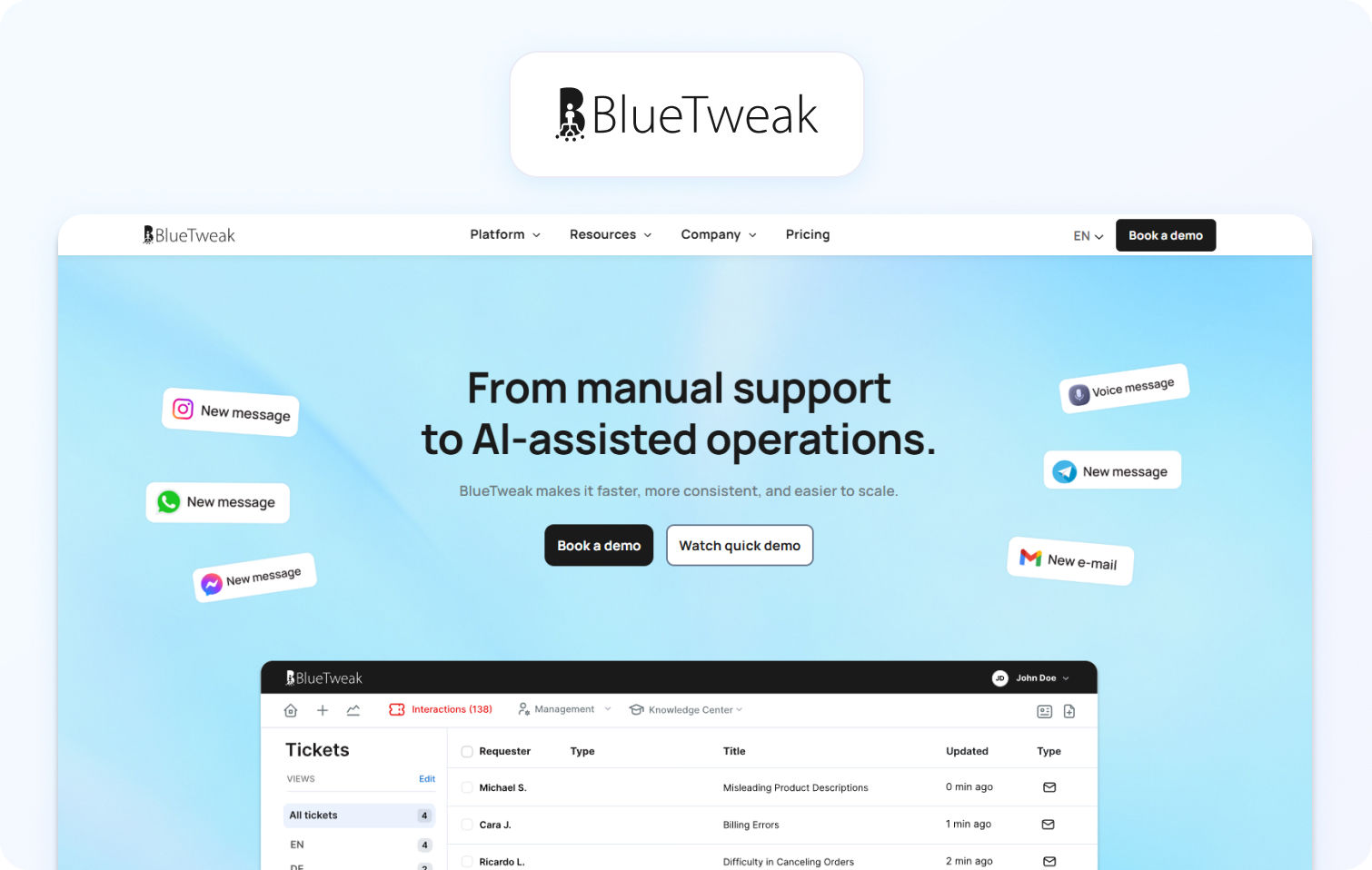
BlueTweak is best suited for organizations that need AI, voice, workforce management, QA, and omnichannel customer support consolidated into a single operational platform without relying heavily on third-party add-ons or disconnected systems.
By the time many businesses reach this stage of the Gladly vs Zendesk evaluation process, the decision has normally moved beyond whether they prefer tickets or conversations and instead focuses on operational complexity.
Some organizations find Zendesk exceptionally powerful, but operationally heavy once AI add-ons, QA tooling, workforce management, voice infrastructure, and advanced workflows are layered into the environment. Others appreciate Gladly’s customer-centric approach, but discover that the ticket-free model can feel too limiting for teams that still require more structured operational workflows, detailed governance, or broader workforce optimization capabilities.
This is where BlueTweak stands out.
Rather than positioning AI, voice, QA, and workforce management as separate operational layers, BlueTweak combines them inside a unified customer service environment designed to reduce fragmentation across the support stack.
That includes:
- Native AI capabilities like suggested replies, KB-grounded responses, post-interaction summarization, intelligent automation, and real-time agent coaching
- Native voice telephony is integrated alongside digital communication channels
- Built-in workforce management and QA tooling without requiring separate third-party modules
- Unified reporting across voice, AI, QA, WFM, and omnichannel customer interactions
- More transparent operational pricing compared to environments heavily dependent on layered add-ons
This operational model can be particularly valuable for growing support organizations that want enterprise-grade functionality without managing multiple disconnected platforms across customer service operations.
Instead of stitching together separate vendors for voice, QA reviews, workforce scheduling, AI tooling, analytics, and omnichannel support, teams can centralize more of the customer experience operation inside a single platform environment.
This reduces implementation overhead, simplifies agent workflows, improves operational visibility, and accelerates time-to-value for support teams scaling across multiple channels.
BlueTweak’s platform architecture is also designed around modern cloud and AI infrastructure, helping organizations operationalize AI-driven customer support without adding unnecessary platform complexity. The platform uses enterprise-grade AI and cloud technologies to support scalable automation, real-time agent assistance, and omnichannel customer interactions within a unified operational model.
Support leaders are no longer evaluating platforms purely on channel coverage or ticket management. They are evaluating how quickly they can operationalize AI, reduce complexity, and create a support environment that scales efficiently across both customer experience and workforce operations.
This is not necessarily about replacing Zendesk or Gladly outright. Zendesk remains highly effective for organizations prioritizing deep governance, structured workflows, and enterprise-scale ticket operations. Gladly remains exceptionally strong for brands focused on high-touch customer relationships and lifelong conversations.
BlueTweak becomes the stronger fit when businesses want operational consolidation, AI-native workflows, integrated voice and digital support, native WFM and QA, and faster time-to-value without building a heavily fragmented support architecture.
One example is BlueTweak’s work with Conectys, where the global outsourcing provider consolidated customer support operations using BlueTweak’s unified platform environment. According to the case study, the business achieved a 40% increase in reporting efficiency, a 35% improvement in customer satisfaction scores, and a 25% reduction in resolution times after centralizing omnichannel support, reporting, and operational workflows inside a single platform.
Final Thoughts: Choosing the Right Customer Support Platform in 2026
Gladly, Zendesk and BlueTweak each solve customer support challenges from a fundamentally different operational perspective.
Gladly is strongest for businesses prioritizing relationship-driven customer experience, lifelong conversations, and personalized service across multiple communication channels. Its person-centric model is particularly effective for premium brands where customer loyalty and customer lifetime value matter more than rigid ticket structures.
Zendesk remains one of the most powerful enterprise customer support platforms available for organizations requiring structured ticket management, advanced workflows, deep integrations, and highly detailed operational reporting. For large-scale support environments with complex governance requirements, Zendesk continues to set the benchmark for operational control and scalability.
BlueTweak, rather than focusing purely on tickets or conversations, is designed for organizations looking to consolidate AI, voice, workforce management, QA, and omnichannel customer support into a unified operational environment. For teams that want native AI capabilities, integrated voice support, transparent operational tooling, and faster time-to-value without relying heavily on disconnected add-ons, BlueTweak offers a compelling alternative operational model.
Ultimately, the right platform depends on how your business wants to scale customer service operations. The most important decision is not simply which platform has the most features. It is the operational model that best aligns with your support team, customer expectations, and long-term customer experience strategy.
If you are currently evaluating Zendesk vs Gladly and want to explore how BlueTweak compares in practice, book a demo or try the platform for free to see how AI, voice, QA, WFM, and omnichannel support can operate inside a single platform environment.
Get your free 14-day BlueTweak free trial
Start Now
13 Airline Customer Support Software Options To Choose In 2026
Why Airlines Need Specialized Customer Support Software in 2026
Airline support operations look very different from those in most other industries. A weather event, operational delay, or airport disruption can generate thousands of support requests within minutes.
Customer support teams must handle these spikes without sacrificing accuracy, compliance, or customer experience.
According to research from PwC, 29% of consumers stopped using or buying from a brand due to poor customer experience, highlighting how quickly service failures can translate into lost revenue. For airlines, where disruption events and operational delays are inevitable, the ability to deliver fast, accurate support during high-stress moments can be the difference between maintaining customer loyalty and losing it.
This is why many airlines are moving toward purpose-built airline customer support software that supports disruption workflows, omnichannel messaging, and operational analytics.
What Airlines Need in 2026 That Most Support Tools Miss
Most generic helpdesk platforms weren’t designed for the realities of airline operations. Traditional customer support tools are typically optimized for steady ticket volumes and predictable service environments. Airlines, by contrast, operate in a world where customer demand can spike dramatically within minutes, triggered by events such as weather disruptions, air traffic control issues, strikes, or technical delays.
When these disruption events occur, support teams must respond at scale while maintaining consistent messaging across every channel passengers use, from voice calls and email to chat, social media, and messaging apps. At the same time, agents must work with constantly evolving operational information, including flight status updates, policy adjustments, and rebooking rules. Without the right systems in place, this complexity can quickly overwhelm traditional support workflows.
There is also a higher level of accuracy and compliance required in airline customer service. Passengers often contact support teams about baggage policies, refund eligibility, loyalty accounts, schedule changes, and payment-related issues, all of which involve sensitive personal data and strict policy adherence. This means the software supporting these teams must provide both speed and guardrails, ensuring agents can respond quickly while staying aligned with approved policies and procedures.
For this reason, airlines increasingly look for airline customer support software that goes beyond simple ticket management. Modern platforms must support disruption workflows, integrate with operational systems, and provide real-time visibility into support performance during high-pressure events.
Airlines typically require the following capabilities to support both everyday inquiries and large-scale disruptions:
- IROPS readiness: sudden spikes in rebooking requests, refund inquiries, policy updates, and “where is my flight?” questions.
- High-stakes accuracy: baggage rules, cancellation policies, and fees must be consistent, compliant, and auditable.
- Omnichannel communication: voice, chat, email, messaging apps, and social media — with seamless context transfer between channels.
- Identity and privacy protection: airlines manage sensitive passenger data and must guard against account takeover risks.
- Always-on reporting: live dashboards tracking SLAs, abandonment rates, containment, and agent workloads during disruption events.
The right airline customer service software acts less like a traditional helpdesk and more like an operational control layer for customer communication.
The 13 Best Airline Customer Support Software Platforms for 2026
Before diving into individual platforms, it’s important to understand how airlines typically structure their support stack. Most carriers use a mix of capabilities, including:
- Ticketing and case management
- Voice and contact center infrastructure (CCaaS)
- Messaging and chatbot automation
- Knowledge base management
- Workforce management and analytics
The platforms below represent different strengths across that stack.
1) BlueTweak — Editor’s Choice (Mid-Market All-in-One)

Best for: Airlines seeking a unified omnichannel platform with built-in operations and analytics.
BlueTweak combines chat, voice, and email support with shared customer context, within a single environment, making it well-suited for airline support teams managing high-volume communication across channels. This approach has already been applied in real-world airline environments, where features like custom notifications help teams proactively manage disruption updates and reduce inbound support volume during peak periods.
Airline fit: Designed for organizations that need centralized support operations with minimal tool sprawl, which is particularly valuable for airline groups operating multiple brands.
Channels / voice: Chat, email, and voice are integrated within one platform.
Automation & AI: AI supports agent workflows with features like conversation summaries and suggested replies, helping teams respond faster during peak demand.
Knowledge base: A smart knowledge base supports policy consistency, enabling airlines to keep messaging aligned during disruptions or operational changes.
Ops (analytics / WFM): Built-in analytics and workforce management help teams forecast spikes, track SLAs, and manage staffing during high-volume disruption windows.
Integrations: Supports integrations with CRM systems and operational tools.
Security note: Role-based permissions and administrative controls support enterprise environments.
Pricing note: BlueTweak offers a transparent pricing structure starting at €65 per agent per month, which includes core omnichannel channels such as email, chat, and voice within a single platform. The base plan also includes features like a ticketing system, public knowledge base, analytics dashboards, workforce management, CSAT surveys, and automation rules. Pricing may vary depending on configuration, integrations, or additional AI capabilities, so airlines should verify details directly with the vendor.
2) Genesys Cloud CX
Best for: Enterprise airlines prioritizing deep contact center capabilities.
Genesys Cloud CX focuses heavily on voice infrastructure and advanced routing, which can be valuable for large airlines operating complex global contact centers.
Airline fit: Large carriers with significant call volumes and multi-region support teams.
Channels / voice: Strong voice support alongside digital channels.
Automation & AI: AI-powered routing and interaction analysis.
Knowledge base: Supports agent assistance and knowledge integrations.
Ops: Advanced workforce management and analytics.
Integrations: Extensive marketplace integrations.
Security note: Enterprise-grade security features.
Pricing note: Genesys Cloud CX uses tiered pricing based on feature depth. Entry-level plans start at around $75 per user per month (billed annually) for voice-focused contact centers, while higher tiers with full omnichannel support, workforce engagement tools, and advanced AI capabilities can reach around $240 per user per month. Additional add-ons and usage-based costs may apply depending on configuration, so verify details directly with the vendor.
3) NICE CXone
Best for: Enterprise-scale customer service operations.
NICE CXone offers a comprehensive contact center-as-a-service (CCaaS) platform designed for large support teams with complex workflows.
Airline fit: Global airlines need advanced analytics and quality management.
Channels / voice: Full omnichannel support with strong voice capabilities.
Automation & AI: AI-powered routing and automation tools.
Knowledge base: Integrates with external knowledge systems.
Ops: Workforce optimization and performance analytics.
Integrations: Wide integration ecosystem.
Security note: Enterprise compliance features.
Pricing note: NICE CXone uses a tiered, per-agent pricing model. Published packages start at around $110 per agent per month for the Omnichannel Suite, with higher tiers such as Core ($169), Complete ($209), and Ultimate ($249) adding capabilities like workforce engagement tools, analytics, and AI-powered automation. Some advanced features and AI services are available as add-ons or usage-based components depending on configuration, so verify details directly with the vendor.
4) Five9
Best for: Voice-heavy airline support environments.
Five9 is widely known for its contact center routing capabilities and voice infrastructure, which makes it a popular option for organizations that still handle a large volume of phone inquiries.
Airline fit: Airlines with significant inbound call volumes.
Channels / voice: Strong voice-first platform with digital support channels.
Automation & AI: AI-assisted routing and automation tools.
Knowledge base: Integration-based.
Ops: Analytics and workforce tools.
Integrations: CRM and contact center integrations.
Security note: Enterprise security controls.
Pricing note: Five9 offers tiered pricing bundles starting at around $119 per seat per month for digital-first contact center capabilities, with higher tiers such as Core at around $159 per seat per month, adding full voice and omnichannel functionality. Plans typically include features like inbound and outbound call handling, call recording, AI tools such as agent assist and live transcription, and workforce engagement options, including quality management and workforce management. Verify details directly with the vendor, as pricing is usually based on concurrent users with a minimum seat requirement, and additional AI usage or messaging costs may apply depending on configuration.
5) Zendesk
Best for: Ticketing-first support ecosystems.
Zendesk is one of the most widely used customer support software platforms, offering strong ticketing and ecosystem integrations.
Airline fit: Airlines prioritizing structured ticket management.
Channels / voice: Email, chat, messaging, and optional voice.
Automation & AI: Automation workflows and AI support tools.
Knowledge base: Robust help center and self-service capabilities.
Ops: Reporting dashboards.
Integrations: Large marketplace ecosystem.
Security note: Enterprise security and compliance features.
Pricing note: Pricing varies by plan and configuration. Zendesk offers a 14-day free trial for teams to explore its ticketing, messaging, and automation features before committing to a subscription. Specific pricing tiers should be verified directly with the vendor.
6) Salesforce Service Cloud
Best for: Airlines with a Salesforce-centric tech stack.
Salesforce Service Cloud is built around CRM-driven case management, making it particularly useful when customer support needs to connect deeply with loyalty programs and passenger data.
Airline fit: Airlines already using Salesforce for CRM or marketing.
Channels / voice: Omnichannel support through integrations.
Automation & AI: AI-powered case routing and insights.
Knowledge base: Integrated knowledge management.
Ops: Advanced reporting and analytics.
Integrations: Deep ecosystem via the Salesforce platform.
Security note: Enterprise-grade governance.
Pricing note: Salesforce Service Cloud uses tiered per-user pricing. Entry-level CRM suites start at around €25 per user per month, while more advanced Service Cloud tiers such as Enterprise (€165 per user/month) and Unlimited (€330 per user/month) add capabilities like AI-powered customer service, workflow automation, knowledge management, chatbots, and advanced support features. Higher-tier packages with expanded AI and data capabilities are also available, with pricing varying by configuration; pricing should be verified directly with the vendor.
7) ServiceNow Customer Service Management
Best for: Enterprise service workflows.
ServiceNow’s CSM platform focuses on complex service operations and workflow orchestration.
Airline fit: Large airlines managing complex internal service processes.
Channels / voice: Digital channels with integration-based voice.
Automation & AI: Workflow automation.
Knowledge base: Enterprise knowledge management.
Ops: Service operations analytics.
Integrations: Broad enterprise integrations.
Security note: Strong governance and compliance capabilities.
Pricing note: Custom pricing, verify with vendor.
8) Intercom
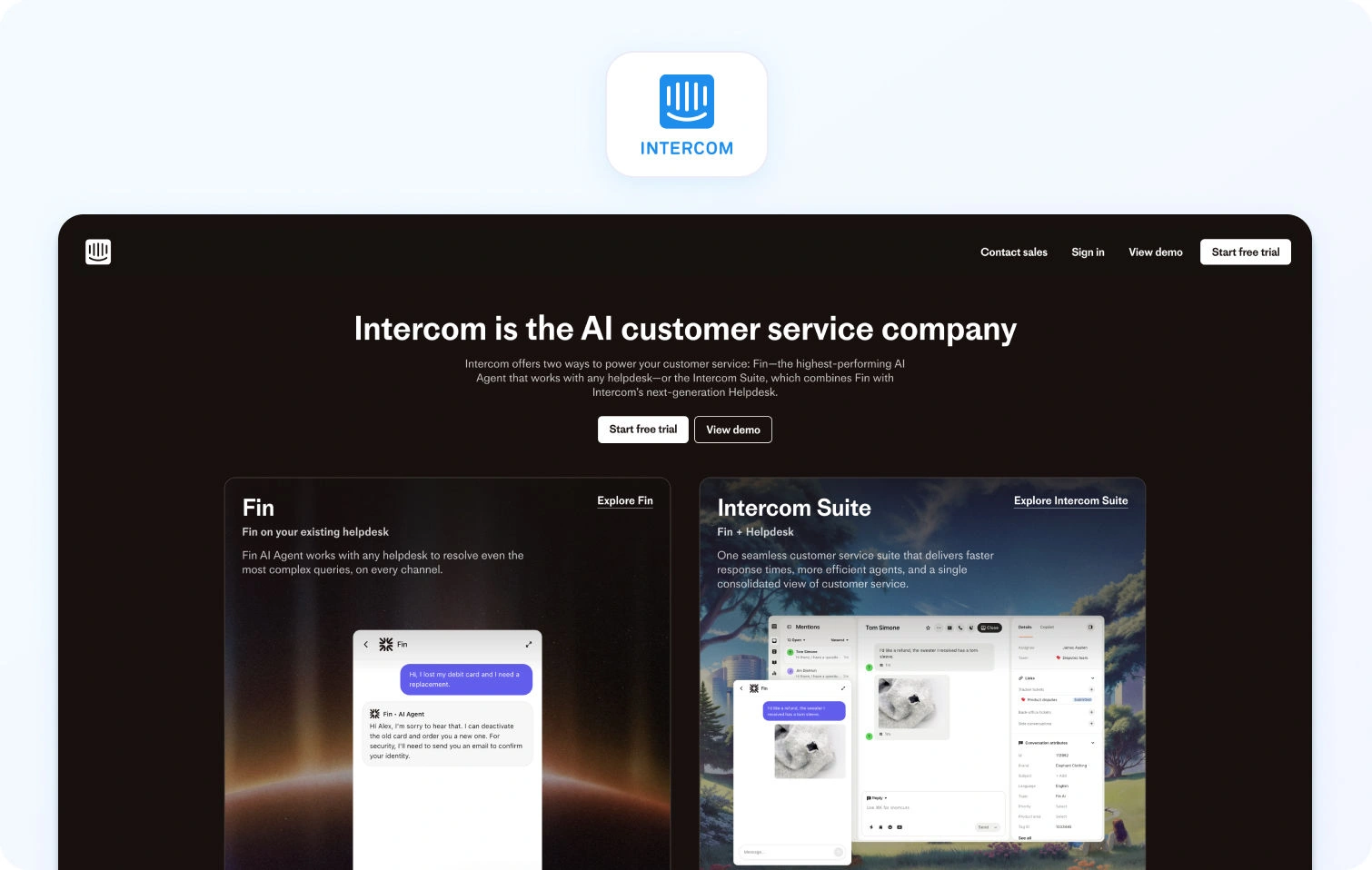
Best for: Messenger-first support strategies.
Intercom focuses on real-time messaging and automation, which can be useful for digital-first airline support.
Airline fit: Airlines emphasizing mobile or web-based customer communication.
Channels / voice: Chat and messaging-first approach.
Automation & AI: Bots and automation flows.
Knowledge base: Help center integration.
Ops: Reporting dashboards.
Integrations: Third-party integrations available.
Security note: Standard enterprise controls.
Pricing note: Intercom uses a tiered subscription model starting at $74 per user per month for the Essentials plan, which includes messaging, email, and basic automation. Higher tiers, such as Pro ($149 per user/month) and Premium (custom pricing), add advanced automation, AI-powered chat, multilingual support, and workflow capabilities. Pricing should be verified directly with the vendor, as it may vary depending on add-ons, team size, or custom configuration.
9) Freshdesk
Best for: Fast deployment ticketing platforms.
Freshdesk offers a ticketing-first help desk designed for teams seeking quick rollout and approachable workflows.
Airline fit: Regional airlines or growing support teams.
Channels / voice: Email, chat, and optional voice.
Automation & AI: Automation rules and AI support tools.
Knowledge base: Integrated help center.
Ops: Reporting and dashboards.
Integrations: Large marketplace.
Security note: Standard security features.
Pricing note: Freshdesk uses tiered per-agent pricing, starting at $19 per agent per month (Growth plan, billed annually), with higher tiers such as Pro ($55 per agent/month) and Enterprise ($89 per agent/month) adding capabilities like advanced ticket routing, custom reporting, approval workflows, and additional security features. A 14-day free trial is available for teams to test the platform before committing, but exact pricing should be verified directly with the vendor.
10) Talkdesk
Best for: Cloud contact center environments.
Talkdesk offers contact center infrastructure with AI capabilities, focusing on automation and voice routing.
Airline fit: Airlines prioritizing CCaaS features.
Channels / voice: Strong voice capabilities with digital channels.
Automation & AI: AI-based automation tools.
Knowledge base: Integration-based knowledge systems.
Ops: Analytics and workforce management.
Integrations: Contact center integrations.
Security note: Enterprise controls.
Pricing note: Talkdesk offers tiered per-user pricing depending on channel and feature depth. Plans start at around $85 per user per month for Digital Essentials, with higher tiers such as Voice Essentials ($105 per user/month) and Elite ($165 per user/month) adding voice capabilities, advanced reporting, workforce management, and AI-powered automation features. Additional industry-specific packages and add-ons are available depending on configuration, so exact pricing should be verified directly with the vendor.
11) Sprinklr Service
Best for: Social media-driven customer care.
Sprinklr Service focuses heavily on social support and digital engagement, making it useful for airlines that receive high volumes of social inquiries.
Airline fit: Airlines with large social care teams.
Channels / voice: Social media, messaging, and digital channels.
Automation & AI: AI for social engagement.
Knowledge base: Integrated content management.
Ops: Digital analytics.
Integrations: Marketing and CRM integrations.
Security note: Enterprise governance features.
Pricing note: Custom pricing, verify with vendor.
12) Twilio Flex

Best for: Engineering-heavy organizations building custom support stacks.
Twilio Flex is a programmable contact center platform, allowing organizations to design their own workflows.
Airline fit: Airlines with strong engineering teams.
Channels / voice: Programmable omnichannel.
Automation & AI: Developer-driven automation.
Knowledge base: Integration-based.
Ops: Custom analytics and reporting.
Integrations: Extensive API ecosystem.
Security note: Enterprise security infrastructure.
Pricing note: Twilio Flex uses a usage-based or per-user pricing model. Teams can pay around $1 per active user hour for usage-based billing or around $150 per named user per month for predictable monthly costs; pricing should be verified directly with the vendor. Twilio also offers a free trial with 5,000 active user hours to test the platform before committing.
13) Kustomer
Best for: Customer conversation timelines.
Kustomer focuses on customer timelines and conversation-centric support, which can help agents maintain context across channels.
Airline fit: Airlines emphasizing unified customer histories.
Channels / voice: Omnichannel messaging.
Automation & AI: Automation workflows.
Knowledge base: Help center support.
Ops: Customer experience analytics.
Integrations: CRM integrations.
Security note: Enterprise controls.
Pricing note: Pricing is custom and varies by plan, with Kustomer offering tailored packages depending on support volume, automation needs, and integrations. Plans typically include capabilities such as omnichannel messaging, conversation timelines, workflow automation, and analytics, with additional AI and advanced features available depending on configuration. Pricing should be verified directly with the vendor.
Key Use Cases for Airline Customer Support Software
Airline support platforms must handle unique operational challenges. The most effective tools support workflows designed specifically for aviation customer service.
Key use cases include:
- Flight disruption triage (delays or cancellations): Automated routing, macros, and AI-assisted replies help support teams manage sudden spikes in passenger inquiries during operational disruptions.
- Rebooking and schedule changes: Integrations with reservation systems and guided workflows enable agents to assist passengers quickly when itineraries need to change.
- Baggage claim updates: Case management tools allow teams to track baggage issues while sending automated notifications and status updates to passengers.
- Loyalty program support: Identity verification and CRM integrations help agents securely access frequent flyer accounts and resolve points or status inquiries.
- Refund and chargeback workflows: Structured approval chains and audit trails ensure refund requests follow the correct policies and remain compliant.
- Multilingual support at scale: Translation tools and localized knowledge bases allow airlines to support passengers across multiple languages and regions.
- Proactive communication: Outbound messaging can notify passengers about gate changes, delays, cancellations, or other operational updates before they contact support.
- High-volume peak events: Workforce management, real-time dashboards, and self-service options help teams handle demand spikes caused by weather events, strikes, or large-scale disruptions.
Together, these capabilities allow airlines to manage support as an operational function, not just a customer service channel.
What to Look For in Airline Customer Support Software in 2026
Choosing the right platform requires evaluating capabilities specific to airline operations. Below are the key areas to assess when comparing airline customer service software solutions.
Disruption Workflows (IROPS)
The platform should support disruption-specific routing and workflows, including surge handling, routing by disruption type, and templates for refunds or rebooking scenarios. During irregular operations (IROPS), passenger inquiries can surge dramatically, so systems must automatically prioritize requests related to cancellations, delays, and missed connections.
Airline-ready platforms should also allow support teams to quickly deploy updated macros, knowledge base articles, and communication templates to ensure messaging stays consistent across agents. This helps teams maintain accuracy when policies change quickly during major disruption events.
Omnichannel + Voice Handoff
Airline support often moves between channels. Voice calls should link to tickets and conversations, while agents should retain context across email, chat, and messaging. When a passenger begins a conversation through chat or social media and later escalates to a phone call, agents should be able to access the full conversation history instantly.
This continuity reduces friction for passengers, who shouldn’t have to repeat their issue across multiple channels. It also helps support teams resolve cases faster while maintaining consistent customer context.
Automation and AI (With Guardrails)
Automation should help triage tickets, summarize conversations, suggest responses, and translate messages, while ensuring responses remain grounded in approved knowledge base content. AI can significantly reduce agent workload by automatically categorizing requests, recommending next actions, and generating draft responses for review.
However, in airline operations, accuracy is critical. Automation systems must include guardrails that ensure responses align with approved policies and operational data, particularly when addressing refunds, baggage policies, or schedule changes.
Knowledge Base Governance
Airline policies change frequently. Knowledge base systems should support version control, multilingual content, and restricted access for regulated topics. This ensures agents always reference the most current information when responding to passengers.
Strong governance also helps maintain consistency across global support teams, particularly when airlines operate in multiple regions and languages. With structured content management, teams can update policies quickly and ensure changes are reflected across support channels.
Operations and Workforce Management
Real-time dashboards, disruption monitoring, and workforce forecasting help teams staff appropriately during peak events. During major disruption periods, support leaders need immediate visibility into metrics like queue volumes, wait times, and abandonment rates.
Workforce management tools allow airlines to forecast demand based on historical patterns and operational triggers, such as seasonal travel spikes or weather disruptions. This helps teams allocate resources efficiently and maintain service levels even during unpredictable events.
Security and Compliance
Airlines handle sensitive passenger data. Platforms should support multi-factor authentication, audit logs, role permissions, and data retention controls. These features help protect personally identifiable information (PII) and reduce the risk of account takeover or unauthorized data access.
In addition, detailed audit trails and permission controls allow organizations to monitor how data is accessed and modified across the support environment. This level of governance is essential for maintaining compliance with global data protection regulations and internal security policies.
Integrations
Customer support platforms must integrate with core airline systems, including:
- Passenger reservation systems (PSS) such as Amadeus, Sabre, or Travelport
- CRM and loyalty platforms
- Payment and refund systems
- Baggage management tools
- Flight status feeds and operational systems
- Business intelligence platforms
Pricing Transparency
Pricing models often combine seat licenses, usage costs, voice minutes, messaging volume, and AI features. Understanding these factors early helps prevent unexpected cost growth.
How We Evaluated Airline Customer Support Software
To ensure an objective comparison, we reviewed vendor product documentation, pricing pages, help centers, and marketplace listings rather than relying on third-party rankings.
We evaluated platforms based on their ability to support airline-specific operational needs, including omnichannel communication, disruption workflows, automation capabilities, knowledge management, analytics, and integrations.
Must-Have Capability Checklist
Airline-ready platforms should provide:
- Omnichannel support with voice integration
- Disruption routing and surge-ready SLAs
- AI features like summaries and suggested replies
- Multilingual support and localized knowledge bases
- Analytics dashboards and workforce forecasting
- Security controls, including MFA and audit logs
- Integrations and APIs for airline operational systems
- Transparent pricing models and governance for add-ons
- CSAT measurement and quality assurance workflows
Scoring Rubric
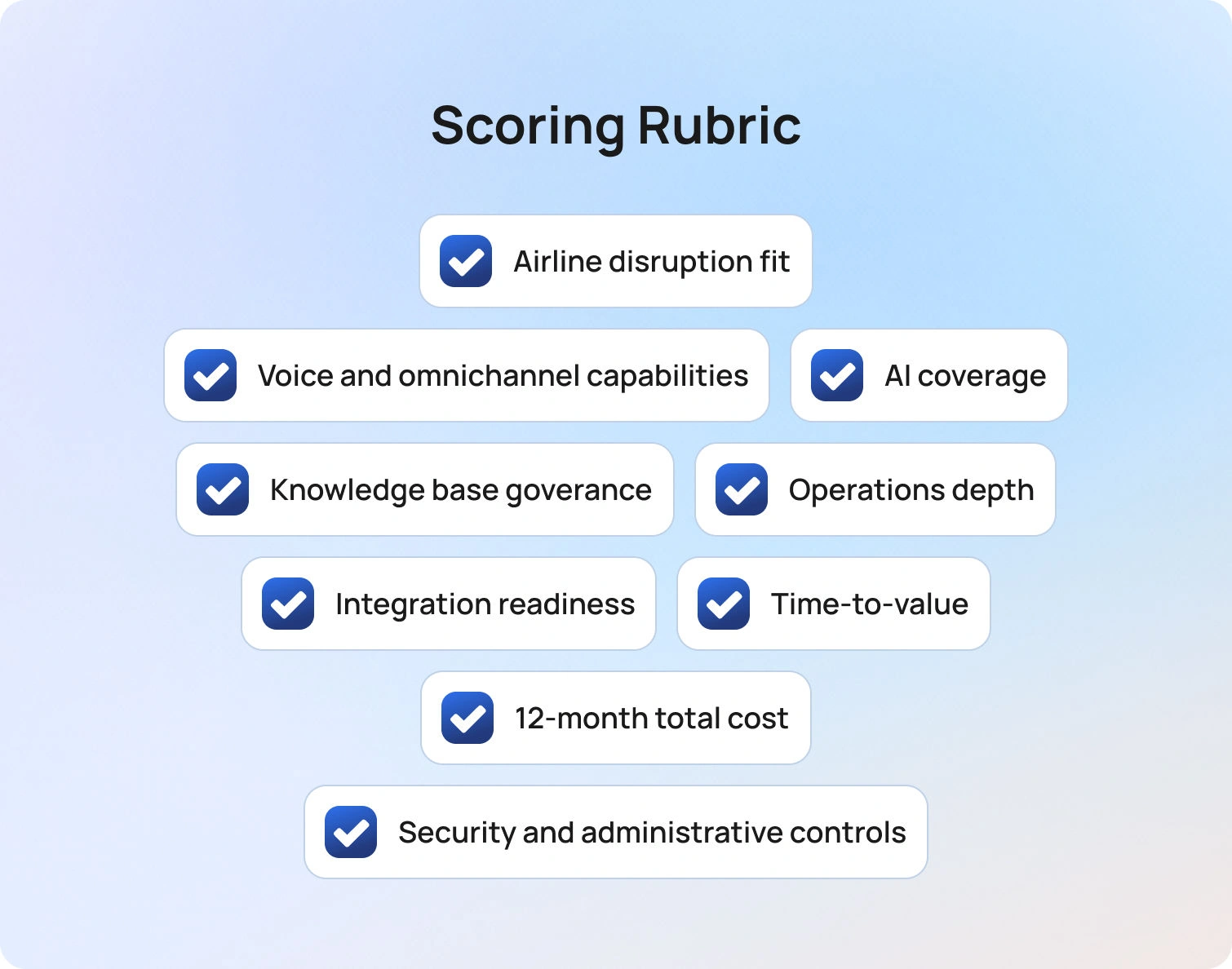
Each platform can be evaluated across the following dimensions:
- Airline disruption fit
- Voice and omnichannel capabilities
- AI coverage with guardrails
- Knowledge base governance
- Operations depth (analytics and workforce management)
- Integration readiness
- Time-to-value
- 12-month total cost of ownership clarity
- Security and administrative controls
Implementation Playbook for Airlines
Adopting customer support software for airlines requires careful planning to ensure the system performs well during real operational events.
Phase 1 (2–4 weeks)
Integrate core communication channels and flight status feeds. Build support workflows for the most common requests, such as flight delays, cancellations, baggage claims, refunds, and loyalty inquiries. Clean up and version control the knowledge base.
Phase 2 (4–6 weeks)
Introduce AI-powered capabilities, including conversation summaries and suggested responses. Implement multilingual workflows and automation for top customer intents. Establish quality assurance sampling.
Phase 3 (6–10 weeks)
Optimize voice routing and IVR workflows. Implement workforce management forecasting for disruption periods. Build dashboards segmented by airport location, language, or operational region.
Successful pilots should measure metrics such as average handle time, abandonment rates, containment, first-contact resolution, and CSAT during peak demand periods.
Pricing and ROI Modeling for Airlines
Evaluating the ROI of airline customer support software requires modeling the full operational cost structure. Typical cost components include:
- Agent seats
- Voice minutes and telephony infrastructure
- Messaging volumes
- AI usage (translation or transcription)
- Data storage and retention
- Integration costs
- Professional services
- Quality assurance and language review time
Potential ROI improvements may come from lower cost per contact, improved self-service containment, reduced abandonment during disruption events, and higher first-contact resolution.
However, airlines should carefully evaluate pricing structures. Voice services, AI capabilities, and workforce management modules are often priced separately, which can significantly impact the total cost of ownership.
Final Thoughts: Choosing the Right Airline Customer Support Software
Selecting the right customer support software for airlines ultimately comes down to how well a platform supports the realities of airline operations while improving the overall customer experience. Airlines must manage thousands of customer interactions every day, often under challenging conditions such as weather events, operational delays, or large-scale disruptions that can quickly turn into flight disruption chaos if support systems aren’t prepared.
The strongest platforms combine several capabilities that allow airlines to respond effectively during these high-pressure moments:
- Disruption workflows designed for IROPS scenarios
- Omnichannel communication with seamless voice handoff
- AI automation supported by knowledge-based guardrails
- Reliable knowledge base governance
- Workforce management and operational analytics
- Deep integrations with airline systems and integrated workflows
- Enterprise-grade security and compliance
- Transparent pricing and total cost visibility
When these capabilities work together, airlines can reduce passenger frustration, respond to customer interactions faster, and maintain service levels even during disruption events. Modern platforms increasingly combine AI agents and human agents to handle routine requests, assist with flight updates, and help airport staff and customer support teams manage growing volumes of passenger inquiries.
Beyond improving support response times, the right platform can also help airlines reduce costs by automating repetitive tasks, improving staffing efficiency, and offering insights from support data that help teams continuously improve operations. With stronger analytics and automation, airlines can better understand trends in customer interactions, optimize staffing during peak travel periods, and deliver more consistent service across the entire passenger journey.
For airlines looking to simplify their support stack, platforms that combine automation, analytics, omnichannel communication, and AI agents in a single environment can significantly improve operational resilience. By enabling smarter workflows and faster responses, these systems help airlines manage disruption events more effectively while maintaining a high-quality customer experience.
If your airline is evaluating modern customer support software for airlines, consider exploring BlueTweak to see how a unified platform can streamline customer interactions, support airport staff, and improve response times during disruption events.
Request a demo to learn how BlueTweak can support airline customer service operations.

Zendesk vs Twilio vs BlueTweak: Which To Implement In 2026?
Zendesk vs Twilio Flex in 2026: What’s Changed in Buyer Expectations?
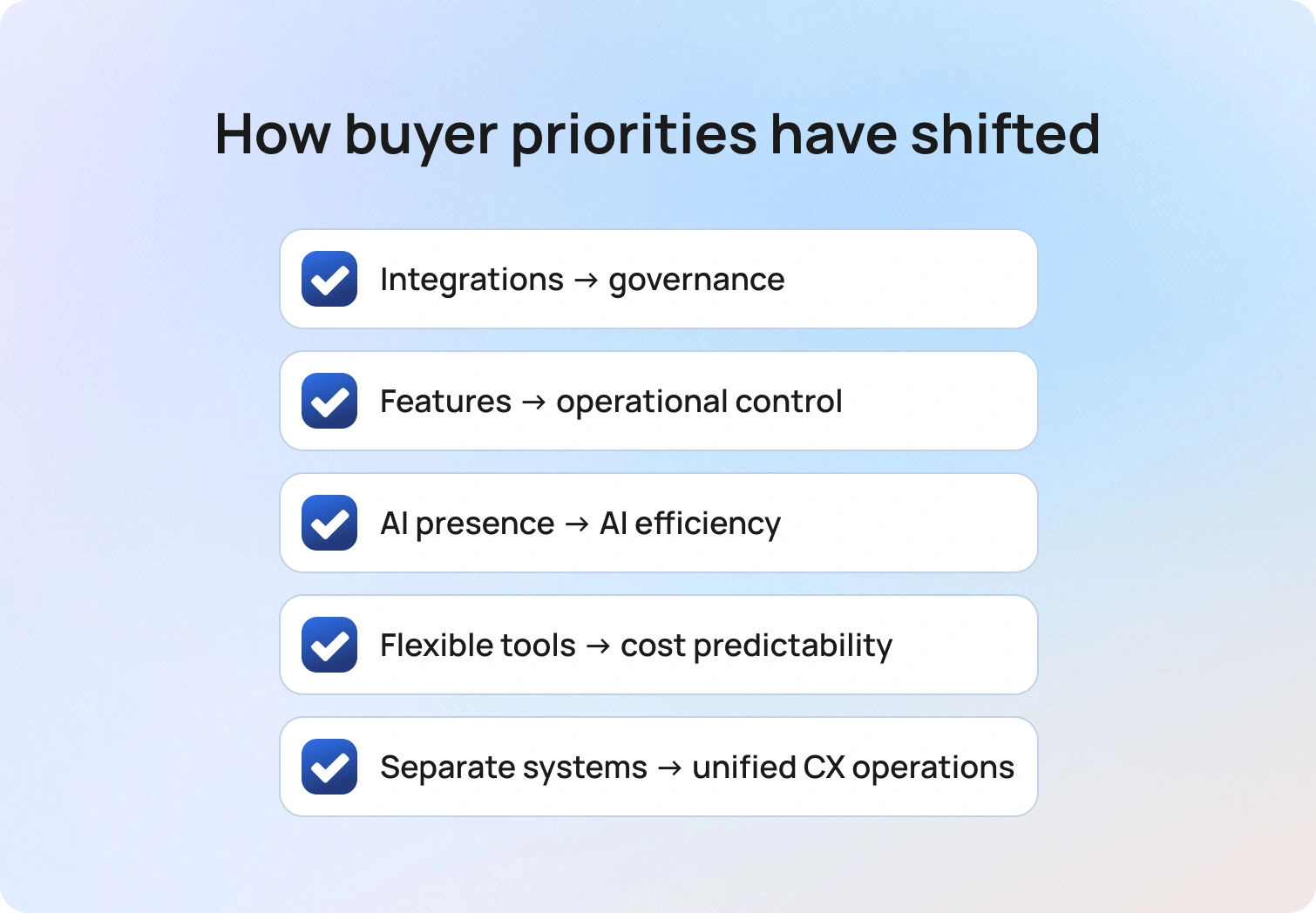
The conversation around Zendesk vs Twilio Flex has shifted significantly in the past few years. In 2023, buyers focused on channels and integrations; in 2026, they are focused on governance, cost predictability, and operational clarity.
According to the Deloitte Digital “Future of Service” report (2026), 43% of surveyed organisations believe AI will enable contact centre cost reductions of 30% or more within the next three years. That expectation changes how platforms are evaluated. Leaders are not simply asking which tool has AI, but which one can deliver measurable efficiency without creating governance risk or unpredictable usage costs. They’re asking how it will improve outcomes for customers without increasing operational risk.
This is why most mid-market teams evaluating Twilio Flex vs Zendesk find themselves at a strategic fork.
Do you adopt a ticketing-first suite and layer voice and automation on top? Do you build a programmable contact centre with engineering ownership? Or do you consolidate into a unified CX operating system designed to reduce system sprawl while maintaining operational control?
In 2026, the right decision is less about feature parity and more about how you want to run your operation over the next five years. For many teams, that means rethinking not just their contact centre, but their broader call center strategy and how voice, messaging, and digital support connect into one coherent operating model. While this discussion is often framed as Twilio Flex vs Zendesk, many teams are also exploring unified platforms, like BlueTweak, that aim to replace both the ticketing-first and build-your-own approaches altogether.
At a Glance: Twilio Flex, Zendesk, and BlueTweak
Before diving deeper into the nuances of Zendesk and Twilio Flex, it helps to step back and look at how each platform positions itself at a high level. This includes newer unified platforms like BlueTweak, which are designed to consolidate multiple systems into a single operating model.
The comparison below summarizes where they differ in operating model, strength, and cost structure, which is often where the real decision is made.
| Category | Zendesk | Twilio Flex | BlueTweak |
|---|---|---|---|
| Who it’s for | Structured support teams | Engineering-led teams | 20–100 agent ops teams |
| Core strength | Mature ticketing workflows | Programmable CCaaS | Unified CX OS |
| Voice | Plan/add-on dependent | Highly customizable | Native & integrated |
| Omnichannel | Strong ticket-led case management | Custom-built orchestration | Unified queue across channels |
| AI | Tier-based AI capabilities | Composable AI stack | KB-grounded, outcome-focused AI |
| KB / Self-Service | Mature Help Center | Integration-led knowledge layer | Single-source, multi-brand KB |
| WFM / QA | Add-ons or partners (plan dependent) | Integration-led / custom | Built-in operations layer |
| Security / Admin | Plan-based controls | Architecture-driven governance | Ops-focused governance model |
| Pricing note | Varies by plan / Verify | Usage-based / Verify | €65 per agent/month (full stack) |
What Each Platform Is (and What It’s Not)
Before comparing features, it’s important to understand the operating philosophy behind each platform. In the Zendesk vs Twilio Flex debate, the differences start with what each system was originally designed to do… and what it was not.
Zendesk
Zendesk started as a help desk platform, and its strength remains structured ticket workflows, SLA management, and Help Center publishing. It is particularly effective for teams whose support model is built around case resolution and escalation patterns. Voice capabilities can be layered in, but depth and flexibility depend on plan level and configuration choices.
Zendesk is not inherently a programmable contact center. While it integrates widely and offers AI features, buyers must confirm what is included at their chosen tier, especially around voice, WFM, and AI automation.
Twilio Flex
In contrast, Twilio Flex was never built as a ticketing suite. It was designed as a programmable communications platform that can become whatever your architecture requires.
Twilio Flex is fundamentally different. It is a programmable contact center platform that allows teams to design their own routing logic, agent desktop, and workflows. For organisations with engineering resources, this provides significant flexibility and architectural control.
However, Flex assumes technical ownership. Knowledge bases, analytics layers, and advanced automation often require integrations or custom development. It excels when you want to build your own experience, not when you want an out-of-the-box operating system.
BlueTweak
BlueTweak enters the conversation from a different angle. Rather than starting with a standalone ticketing system or heavy programmability, it starts with operational consolidation.
BlueTweak is positioned as a unified CX operating system and end-to-end customer service solution for mid-market operations. Rather than assembling components, it combines voice,omnichannel customer support case management, bots, WFM, QA, and analytics into a single workspace.
The focus is on operational clarity: one queue, shared reporting aligned to core customer support metrics, knowledge-grounded AI, such as AI proposed replies and built-in call transcription software, and multi-brand routing within the same admin model. It is not a developer toolkit; it is designed for operations leaders who want to reduce system sprawl while maintaining governance.
Feature-by-Feature Comparison
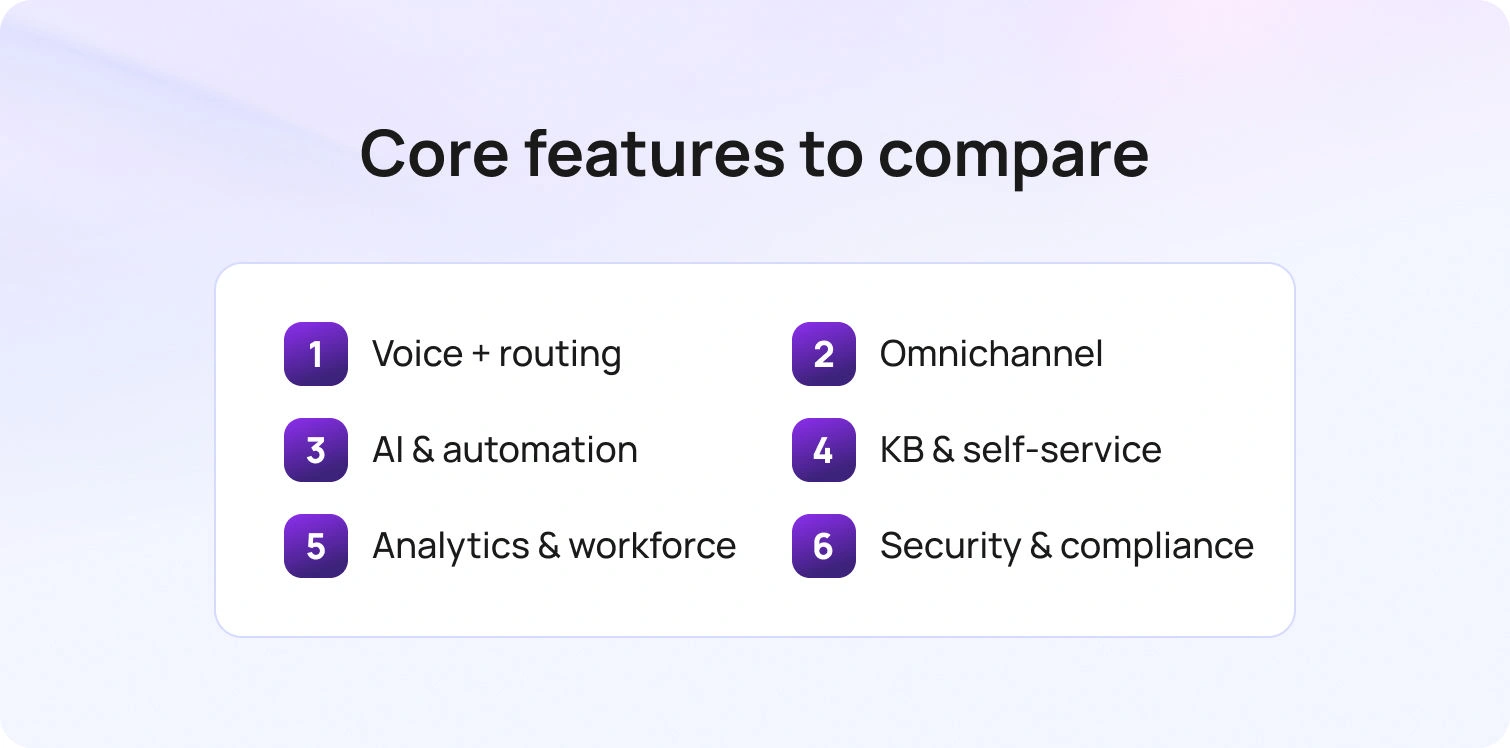
When people compare Twilio Flex to Zendesk, or bring alternatives like BlueTweak into the conversation, the real questions usually surface once you get past positioning and into the day-to-day reality: What will agents actually use? How complex will routing become? And how much admin work sits behind the scenes to keep everything running smoothly?
This is where operating philosophy translates into day-to-day agent experience and administrative complexity in practical ways, like workflows, reporting, governance, and the overall operational load on your team.
Voice + Routing
Voice architecture is often where a decision between Twilio and BlueTweak becomes tangible. The differences shape how calls flow, how agents work, and how much control your team really has.
Twilio Flex is built for programmability. Teams can design routing logic, queues, and agent interfaces around highly specific operational needs. That flexibility is powerful, but it assumes engineering ownership and ongoing technical management. It also means the end user experience, both for agents and supervisors, depends heavily on how well the environment is configured.
Zendesk approaches voice from a suite perspective. Voice functionality can support blended support teams and integrate into ticket workflows, but depth and configuration vary by plan and add-ons. It works well when voice is important, but not the architectural centre of your customer experience (CX) operation. However, forecasting call volumes and reducing customer waiting times may require additional configuration depending on your setup.
BlueTweak integrates native voice directly into the same agent workspace and ticket record. Routing, multilingual support, and handoffs between brands sit within one operational layer. This makes it easier to direct each interaction to the right agent without adding complex routing logic. For teams focused on clarity and speed rather than custom build complexity, this can significantly reduce friction.
Omnichannel Case Management
When evaluating vendors, remember, omnichannel isn’t just about how many channels are supported. It’s about how interactions are orchestrated and how much context agents retain across conversations.
Twilio Flex allows you to design a fully customised omnichannel desktop. You can orchestrate flows across voice, messaging, and digital channels using integrations and bespoke logic. This often includes connecting website chat, social messaging, and backend systems into one orchestrated workflow. The trade-off is that orchestration has to be built and maintained; it gives you the tools, but you have to decide how everything fits together.
Zendesk approaches omnichannel through a ticket-first lens. Every interaction becomes part of a structured case workflow, complete with SLAs, escalation rules, and collaboration patterns. This suits teams that rely on formalised support processes and documented resolution paths.
BlueTweak centres on a unified queue across channels, designed to keep context intact without forcing agents to switch systems. Multi-brand routing and reporting are built into the same environment, which can reduce operational noise in growing teams.
AI, Automation & Deflection
AI has become central to the Twilio Flex vs Zendesk conversation, but the real differentiator in 2026 is governance and measurable impact, not novelty.
Twilio Flex typically follows a composable AI model. You combine Twilio capabilities, third-party tools, and your own workflows to create automation. This offers flexibility, but it increases implementation effort and governance responsibility.
Zendesk provides AI features suited to ticket-led environments, including automation and assistance capabilities that vary by tier. For many teams, it delivers incremental efficiency gains, but buyers should confirm exactly what’s included around summaries, suggested replies, and routing intelligence.
BlueTweak focuses on knowledge-grounded assistance and outcome-driven automation. AI is embedded into the same operational layer as voice, tickets, and reporting, with an emphasis on human oversight. The focus isn’t just on automation, but consistent, auditable workload reduction. That consistency ultimately improves response quality for customers across every channel.
KB & Self-Service
Knowledge strategy often becomes the quiet driver of deflection, agent speed, and AI quality.
Twilio Flex generally relies on integrated knowledge bases and bot layers. This provides architectural freedom, but it means self-service and agent assistance often live across multiple systems.
Zendesk offers a mature Help Center and publishing workflow that supports structured content operations. For organisations investing heavily in deflection through articles and self-service portals, this ecosystem is well established. It allows customers to resolve common issues independently before reaching an agent
BlueTweak positions its knowledge base as a single source of truth powering both bots and agent assistance. In multi-brand environments, keeping content, routing, and reporting aligned inside one system can simplify both governance and performance tracking.
Analytics, Workforce Management & Quality Assurance
Reporting and workforce visibility are often underestimated during evaluation. Yet over 12 months, operational insight can matter more than channel breadth.
Twilio Flex can support advanced analytics and workforce management through integrations or custom builds. This allows deep customisation, but each additional layer adds vendor coordination and administrative overhead.
Zendesk delivers strong reporting around ticket metrics and performance KPIs. Workforce management and quality assurance capabilities typically depend on plan-level or partner solutions, so buyers should verify what is native versus add-on.
BlueTweak includes analytics, WFM, and QA within the same operational layer as case management and voice. For 20–100 agent teams, this unified visibility can reduce reconciliation work across systems and simplify forecasting.
Security, Admin & Compliance
As AI adoption increases, governance and auditability are becoming board-level concerns.
Twilio Flex is well-suited for organisations that want security controls aligned to a custom architecture. However, responsibility for compliance design spans all integrated components, meaning oversight must be intentional and ongoing.
Zendesk provides admin and security controls that scale by plan. Features such as MFA, audit logs, and data controls should be confirmed at the appropriate tier, particularly if AI governance is a priority.
BlueTweak focuses on mid-market governance, offering role controls, MFA, and audit logs within a unified admin model. For multi-brand operations, consistent oversight across queues, content, and reporting can reduce compliance complexity.
Pricing & 12-Month TCO Modeling
A serious Zendesk versus Twilio Flex comparison requires modelling the full 12-month cost of running your contact centre, not just comparing seat prices. The headline number rarely reflects the true operational cost once voice minutes, AI usage, analytics, and admin overhead are layered in.
With Zendesk, pricing typically starts with a seat-based model tied to your ticketing system, then expands. Voice (often via Zendesk Talk), advanced AI, workforce management, and deeper analytics features may depend on plan tier or add-ons. If you’re running multiple channels or operating more than one Zendesk instance, clarity around what’s native versus extra becomes critical.
With Twilio Flex, the structure is different. Pricing may combine seat or active user hour models with communications usage, including interactive voice response (IVR), call recording, and messaging. In a Twilio Flex vs Zendesk cost model, Flex can look flexible on paper, but forecasting usage across voice and digital contact volumes requires discipline. The ability to customize your contact center comes with shared responsibility for cost control.
BlueTweak anchors pricing at €65 per agent per month, paying monthly for a fully integrated environment. That includes voice, case management, bots, WFM, and analytics in one system. For business leaders evaluating market options, the question becomes less about the lowest entry cost and more about predictable service spend over 12 months.
Before signing with any company, check the details around:
- Voice minutes, recording, transcription, & interactive voice response charges
- AI usage metering and overage rules
- Sandbox or staging environment fees
- Support tiers and implementation services
- Multi-brand reporting and admin access model
Today, cost transparency is a competitive differentiator. But pricing alone doesn’t determine success; operational fit does. The platform that looks affordable on a pricing page can become expensive if it adds administrative load, integration overhead, or governance complexity over time. That’s why the next step isn’t just comparing numbers, it’s understanding which model aligns with how your contact centre actually runs.
When Each One Fits
At a strategic level, the debate between Twilio Flex and Zendesk often reflects how your business prefers to operate.
Choose Twilio Flex if your goal is to build a highly customized contact center and you have technical ownership in-house. The real strength of Flex lies in how far you’re willing (and able) to customize your environment. It’s particularly suited to organisations that want granular control over routing logic, user interface design, and how customer interactions flow across different channels. If you are comparing Twilio Flex, consider options in the enterprise market. Flex appeals when flexibility and architecture control outweigh simplicity.
Choose Zendesk if you are fundamentally ticketing-first and want a mature ticketing system at the core of your customer support model. Zendesk stands strongest where structured workflows, SLAs, and help content drive service consistency. Many Zendesk customers expand into voice and digital contact over time, often layering Zendesk Talk or additional Zendesk integration tools as their needs grow.
Choose BlueTweak if you want one platform to manage customer conversations across voice, chat, and digital channels without stitching multiple tools together. It’s designed for mid-market teams that want to control operations, unify data, and reduce complexity without building a custom stack. For 20–100 agents, especially across multi-brand environments, consolidation often becomes more valuable than customization.
Implementation Considerations

Implementation effort varies significantly depending on the platform’s philosophy. With Zendesk, you’re typically migrating customer data into a new Zendesk instance, configuring workflows, and refining your Help Center structure. If you’re layering voice or expanding into deeper automation, governance around add-ons and Zendesk integration decisions becomes part of the rollout.
With Twilio Flex, implementation begins with architecture. You define routing, interactive voice response (IVR) logic, and the user interface for agents. You’ll also set up integration layers, for example, a Flex Zendesk integration or data sync if you’re connecting to an existing ticketing system. Additionally, you might need to import customer data from legacy platforms and decide how conversations flow between systems. This approach is highly flexible, but it does require ongoing technical ownership.
With BlueTweak, implementation centres on unifying channels inside a single contact centre environment. That means importing knowledge content, configuring multi-brand routing, aligning dashboards, and ensuring agents can access customer data in one place. That shared visibility helps teams respond to customers faster and with more context. The emphasis is less on building from scratch and more on operational alignment.
The real difference boils down to whether you're assembling solutions or deploying a system designed to manage customer experience end-to-end.
How We Evaluated
This Zendesk vs Twilio Flex comparison is based exclusively on vendor-owned documentation. We reviewed official product pages, pricing details, help centres, integration listings, and public case studies across the market.
We assessed each platform across channels, voice capabilities, interactive voice response options, AI functionality (including transcription and summarisation), knowledge base structure, analytics, workforce management, security controls, and API access. Where Twilio and Zendesk's positioning overlaps, particularly around integration and omnichannel service, we focused on documented capabilities rather than third-party opinion.
We also reviewed public examples of how companies manage customer interactions and conversations using each system.
Final Thoughts: Choosing the Right Contact Center for 2026
When evaluating Twilio Flex, Zendesk, or any alternative contact center, the decision is rarely about features alone. It’s about choosing the call center foundation that will support your customers, agents, and growth strategy over the next several years. It’s about how a platform shapes the day-to-day customer experience, how it lets your agents manage conversations, and how your business can scale operations without adding unnecessary complexity.
A Twilio Flex compare exercise shows that Twilio is powerful for companies that want maximum flexibility and control over routing, interactive voice response, and integrations. It can create highly customised workflows, but doing so often requires ongoing technical ownership and investment in tools to keep everything aligned. For teams without a dedicated engineering function, the risk is that the operational complexity of Twilio Flex outweighs the benefits of its flexibility.
Alternatives like Zendesk focus on structured ticketing systems and predictable workflows, which can streamline customer support and help resolve customer issues quickly. This structure can work well for companies serving high volumes of customers with repeatable queries.
Platforms such as BlueTweak combine voice, chat, analytics, and WFM into a unified environment, enabling companies to manage multiple channels and maintain a high-quality contact experience without juggling disparate tools.
Ultimately, the right choice depends on your company, your employees, and how you want to balance flexibility, operational control, and cost. A short pilot test can help you see how each solution performs with real customers, ensuring you choose the platform that truly supports the right user experience, keeps your agents productive, and aligns with your broader business goals.
Ready to see how a unified contact center can simplify operations, improve customer experience, and empower your agents?
Request a BlueTweak demo today to explore voice, chat, analytics features, and multi-channel workflows in action.

Zendesk vs Zoho vs BlueTweak: Which To Implement In 2026?
Zendesk vs Zoho vs BlueTweak: Why support teams are re-evaluating their CX platforms in 2026
Comparisons like Zendesk vs Zoho Desk (previously known as Zoho Support) used to be relatively simple; one platform handled tickets, another added a few channels, and most teams could run their support operation from a single help desk system.
But that’s no longer the reality for most customer support organizations.
Today’s buyers are evaluating platforms through a much wider operational lens. Support leaders now have to think about tool sprawl, voice and messaging channels, AI governance, and multi-brand operations, all while keeping total cost and time-to-value under control.
Customer expectations are rising at the same time. According to PwC’s 2025 Customer Experience Survey, 70% of executives say customer expectations are evolving faster than their company can adapt. This pressure is forcing support teams to modernize their technology stacks.
Meeting increasing demands and expectations with fragmented tools (one system for tickets, another for voice, another for analytics) quickly becomes difficult to manage. As a result, when organizations evaluate Zoho Support vs Zendesk, they’re often solving a bigger question than “which help desk is better?”
They’re asking which platform architecture will support modern customer operations, including:
- Reducing tool sprawl and administrative overhead
- Expanding voice and messaging channels
- Introducing AI with proper governance and oversight
- Managing multi-brand environments or BPO operations
- Maintaining predictable total cost and operational simplicity
This is also why newer platforms like BlueTweak are entering the conversation. Rather than focusing purely on ticketing, they aim to combine omnichannel support, voice, workforce management, analytics, and knowledge-driven AI into one operational platform.
So when comparing Zoho Support vs Zendesk, the real decision is less about individual features and more about how each platform fits into the future of your support operation.
At a glance: Zendesk vs Zoho vs BlueTweak
Before diving deeper into the Zoho vs Zendesk debate, here’s a simplified overview of how the platforms position themselves.
| Feature | Zendesk | Zoho Desk | BlueTweak |
|---|---|---|---|
| Who it’s for | Mid-to-large teams that want powerful ticketing and customization | SMB teams already using Zoho apps | 20–100 agent teams and multi-brand environments |
| Core strength | Mature workflows and a large marketplace ecosystem | Value-focused help desk within the Zoho ecosystem | Unified CX platform (tickets, voice, WFM, analytics) |
| Voice | Native or add-ons depending on suite tier (Verify) | Telephony integrations or add-ons (Verify) | Native voice integrated with tickets |
| Omnichannel | Strong omnichannel ticketing foundation | Omnichannel support with plan limits (Verify) | Full omnichannel workspace |
| AI | Features vary by suite tier or add-ons (Verify) | AI capabilities vary by plan (Verify) | KB-grounded AI with human oversight |
| KB / Self-service | Mature Help Center capabilities | Integrated help center | Single knowledge source powering agents and bots |
| WFM / QA | Often handled via add-ons or partners (Verify) | Usually handled via integrations (Verify) | Built-in WFM and QA tools |
| Security / Admin | Enterprise-grade admin controls | Standard roles and security features | Centralized multi-brand admin controls |
| Pricing note | Tiered suite pricing plus add-ons | Lower entry price with feature tiers | €65 per agent/month |
What each platform is (and what it isn’t)
Before comparing features, it’s worth clarifying what these platforms were originally designed to do. Each platform has evolved differently, which explains many of the architectural trade-offs buyers encounter.
Zoho Desk (formerly Zoho Support)
When people search Zoho vs Zendesk, they’re often comparing two ticketing systems. Zoho Desk is fundamentally a help desk platform designed to integrate deeply with the broader Zoho ecosystem.
Strengths include:
- Tight integration with Zoho CRM and other Zoho apps
- Solid ticketing automation
- Strong value for SMB teams
However, more advanced operational layers, like telephony, workforce management, or deeper analytics, may rely on additional Zoho products or integrations, depending on the plan.
For organizations already committed to Zoho tools, this ecosystem alignment can be a major advantage.
Zendesk
Zendesk is widely considered the gold standard for ticketing workflows. The platform’s architecture focuses on:
- Powerful automation rules
- Mature escalation patterns
- Extensive marketplace integrations
Voice, AI features, and advanced operational tooling can vary by suite tier or add-ons, which means the final architecture often looks different from company to company.
Zendesk’s strength is flexibility, but that flexibility can sometimes translate into operational complexity as systems grow.
BlueTweak
BlueTweak takes a different approach. Rather than starting with a ticketing system and expanding outward, the platform is designed as a unified customer experience (CX) operating system.
That means bringing together:
- Ticketing
- Voice
- Messaging channels
- Bots
- Workforce management
- Analytics
- Knowledge-grounded AI
This architecture is particularly tuned for teams of 20–100 agents and organizations managing multiple brands or support environments.
The core goal BlueTweak is focused on addressing is reducing the number of tools needed to run customer operations.
Feature-by-Feature Comparison
The differences between Zendesk vs Zoho Desk vs BlueTweak become clearer when evaluating specific operational areas. Most customer support solutions can appear similar at a high level; ticketing, automation, knowledge bases, and reporting are now standard features across the industry. But once teams move beyond marketing pages and begin evaluating real workflows, meaningful differences start to emerge.
To make the comparison clearer, we’ve broken the platforms down into the operational layers that typically matter most to modern support teams. These include core ticketing workflows, omnichannel case management, voice support, knowledge base capabilities, AI and automation, analytics and workforce management, security and administration, and ecosystem integrations.
Looking at Zoho Desk and Zendesk through these practical lenses helps highlight where each platform excels, and where organizations may need to rely on additional tools or integrations. It also provides a clearer view of how platforms like BlueTweak approach the same operational challenges through a more unified architecture.
Ticketing workflows, SLAs, and escalation
Ticketing is the backbone of most support platforms.
Zoho Desk
Zoho Desk offers a strong ticketing engine with automation, SLAs, and workflow customization.
Strengths include:
- Automated ticket assignment
- SLA tracking and escalation rules
- Integration with Zoho CRM data
More advanced routing or operational workflows may require higher-tier plans or integration with other Zoho applications (Verify).
Zendesk
Zendesk remains one of the strongest ticketing platforms on the market.
Capabilities include:
- Advanced triggers and automations
- Macro libraries for response consistency
- Escalation frameworks across departments
Some capabilities (particularly advanced automation layers) can vary by suite tier or add-ons (Verify).
BlueTweak
BlueTweak approaches ticketing from a unified queue perspective.
Instead of separating channels, all interactions (voice, messaging, chat, and email) feed into one operational queue.
This reduces context switching for agents and simplifies multi-brand routing and reporting.
Omnichannel case management (email, chat, social, messaging)
Customer interactions now span many channels. The question isn’t whether platforms support them, but how well they unify them.
Zoho Desk
Zoho Desk supports multiple channels, including email, chat, and social messaging.
Cases from these channels can be consolidated into ticket records, though channel availability and depth may vary by plan (Verify).
Zendesk
Zendesk provides a strong omnichannel foundation with extensive integrations.
Organizations can extend channel support using the Zendesk marketplace, allowing them to add messaging apps and other communication tools.
BlueTweak
BlueTweak brings all channels into one workspace designed for faster handoffs and consistent customer context.
The goal is to reduce friction when agents switch between messaging platforms or escalate conversations between channels.
Voice (native vs add-on) and context preservation
Voice remains critical for many support operations, yet voice support varies widely across platforms.
Zoho Desk
Voice functionality is typically enabled through telephony integrations or add-ons (Verify).
Whether transcripts automatically link to ticket records may depend on the telephony integration being used.
Zendesk
Zendesk offers voice capabilities through its Zendesk Voice product and related add-ons (Verify).
Call recordings, transcripts, and reporting can integrate with ticket workflows depending on configuration.
BlueTweak
BlueTweak includes native voice integrated directly with ticketing.
Calls generate transcripts that attach to cases, allowing agents to review conversation history and maintain context across channels.
This can be particularly valuable for multilingual operations or high-volume voice environments.
Knowledge base and self-service
Self-service plays an increasingly important role in customer experience. According to Gartner research, 55% of service leaders are actively exploring customer-facing generative AI chatbots as part of their support strategy, highlighting the growing investment in automated and self-service experiences.
Platforms, therefore, need knowledge bases that are easy to maintain and govern.
Zoho Desk
Zoho Desk includes help center capabilities with:
- Article publishing
- Categorization and organization
- Localization support
Feature depth may vary by plan (verify).
Zendesk
Zendesk’s Help Center is one of the platform’s strongest components. Due to its maturity, content teams can manage:
- Multi-language documentation
- Content governance
- Advance article organization
BlueTweak
BlueTweak positions the knowledge base as the single source of truth for support operations.
Articles can power:
- Agent assistance
- Customer self-service
- Automation and bots
This helps maintain consistency across multiple brands or support channels.
AI, automation, and deflection
AI has become central to modern support platforms—but governance is increasingly important.
Zoho Desk
Zoho Desk includes AI capabilities depending on the plan, often focused on:
- Response suggestions
- Automation
- Customer interaction insights
Availability and governance features may vary by tier (Verify).
Zendesk
Zendesk offers several AI features, such as:
- Conversation summarization
- Suggested replies
- Automated bots
Capabilities vary by suite tier and add-ons (Verify).
BlueTweak
BlueTweak focuses on knowledge-grounded AI with human oversight. Key capabilities include:
- Automation that references the knowledge base to maintain consistency and accuracy
- Context-aware AI suggested replies to assist agents with faster, relevant responses
- Reduced reliance on purely generative AI, ensuring that all interactions reflect company knowledge and previous customer history
Analytics, WFM, and QA
Operational insight is critical for scaling support teams and tracking key customer support metrics.
Zoho Desk
Zoho Desk offers reporting dashboards and analytics.
More advanced workforce management or QA capabilities may require adjacent tools or integrations (Verify).
Zendesk
Zendesk provides strong analytics capabilities through its reporting framework.
However, workforce management and QA functions are often handled through add-ons or partner integrations (Verify).
BlueTweak
BlueTweak includes built-in analytics, WFM, and QA capabilities, designed specifically for support teams between 20 and 100 agents.
This allows managers to track performance without adding multiple operational tools.
Security, admin, and compliance readiness
Security and governance are essential for customer operations platforms.
Zoho Desk
Zoho Desk offers standard security controls, including:
- Role-based access
- MFA
- Audit logging
- Data retention controls
Availability may vary by plan (Verify).
Zendesk
Zendesk includes enterprise-grade security features such as:
- Role-based permissions
- MFA
- Audit logs
- Data residency options
Exact availability depends on the suite tier (Verify).
BlueTweak
BlueTweak focuses on simplified administration with:
- Multi-brand management
- Role-based access
- Audit logs
Some certifications may still be in progress, depending on deployment requirements.
Integrations and ecosystem
The ecosystem surrounding a platform often determines long-term flexibility.
Zoho Desk
Zoho Desk is particularly powerful when used within the Zoho ecosystem, integrating with CRM, marketing, and commerce tools.
External integrations are available but may require additional configuration.
Zendesk
Zendesk has one of the largest CX marketplaces in the industry.
Organizations can add hundreds of integrations, although this can create additional governance and administration overhead as systems grow.
BlueTweak
BlueTweak offers an API-open architecture, but emphasizes pre-configured capabilities designed to reduce setup complexity.
This can accelerate time-to-value, especially for multi-brand support environments.
Pricing and 12-month TCO modeling
When comparing customer support software, most buyers initially focus on the monthly license price. But in practice, the subscription fee is only one piece of the overall cost equation.
As support operations expand across channels, introduce AI features, or integrate additional tools, the true cost of running a customer support platform becomes much broader than seat pricing alone.
This is why experienced support leaders increasingly evaluate platforms based on total cost of ownership (TCO) over a 12-month period. Instead of asking “what does the license cost?”, the better question is: what does it take to actually run this platform in a real support environment?
For a typical 50-agent team supporting customers across 3–5 channels, the full cost picture often includes several operational components.
- Seat licenses - the baseline cost of the platform itself, usually calculated as a monthly fee per agent. This is the most visible line item, but rarely the only one.
- Voice and telephony usage - if the support operation includes phone support, additional costs may apply for minutes, call recordings, transcription, and storage.
- AI capabilities and automation usage - many platforms now offer AI-powered tools such as response suggestions, summarization, and chatbots. These features may be bundled into higher tiers or priced separately based on usage.
- Workforce management and quality assurance tools - scheduling, forecasting, and QA capabilities are sometimes included in CX platforms but are often sold as separate modules or handled through integrations.
- Implementation and migration services - initial setup can include ticket migration, knowledge base structure, workflow configuration, and channel onboarding. Depending on the platform, this may require professional services or internal resources.
- Marketplace applications and integrations - many support teams rely on integrations with CRM systems, telephony providers, analytics tools, or ecommerce platforms. These integrations can introduce additional subscription costs over time.
- Ongoing administrative overhead - finally, there’s the time cost associated with maintaining the platform; managing integrations, adjusting workflows, updating automations, and monitoring performance.
Taken together, these factors create the real operating cost of a support platform, which can look very different from the headline license price.
Vendor pricing notes:
Zoho Desk offers multiple pricing tiers that scale functionality across automation, analytics, and AI features. Many capabilities are unlocked at higher plan levels, so buyers evaluating Zoho vs Zendesk should confirm exactly which features are included in each tier (Verify).
Zendesk pricing typically follows suite tiers, with additional charges possible for voice capabilities, advanced AI features, and marketplace integrations, depending on the configuration.
BlueTweak pricing starts at €65 per agent per month, with some AI-related capabilities based on usage. The platform’s positioning focuses on combining multiple CX operational layers (ticketing, voice, WFM, and analytics) within a single environment.
Questions to ask sales
Before committing to any platform, buyers should clarify:
- What features are included in the base plan vs add-ons?
- Are there minimum seat counts or annual contracts?
- How are voice minutes, recordings, and transcripts priced?
- How is AI usage metered?
- Are sandbox or staging environments available?
- What support tiers and implementation packages exist?
- How does the platform handle multi-brand environments?
These questions often reveal the true total cost of ownership.
When each platform fits

Choosing between Zoho Desk, Zendesk, or BlueTweak ultimately depends on the structure, maturity, and operational priorities of your support organization. While all three platforms aim to help teams manage customer interactions more effectively, they take different architectural approaches to solving the problem.
Some platforms prioritize deep ticketing workflows and customization, others focus on ecosystem integration and affordability, while newer platforms aim to consolidate multiple CX capabilities into a single operational environment. As a result, the “best” platform is rarely universal; it depends on factors such as team size, channel mix, internal technical resources, and whether your organization prefers assembling a stack of specialized tools or running support operations from a more unified system.
The following scenarios highlight where each platform tends to fit best based on those operational considerations.
- Choose Zoho Desk if you want a cost-effective help desk with strong fundamentals and already rely heavily on Zoho applications.
- Choose Zendesk if you want highly customizable ticketing workflows and the flexibility of a large marketplace ecosystem.
- Choose BlueTweak if you want one platform that combines omnichannel support, voice, WFM, and analytics, particularly for teams between 20 and 100 agents or organizations supporting multiple brands.
Implementation considerations
Implementation complexity can vary significantly depending on how each platform is structured and how your current support environment operates. Migrating from an existing help desk or deploying a new CX platform typically involves more than simply importing tickets; it requires configuring workflows, structuring knowledge bases, onboarding channels, and ensuring reporting aligns with operational KPIs.
When comparing Zendesk, Zoho Desk, and BlueTweak, buyers should consider not only feature sets but also how much time and internal expertise may be required to deploy and maintain the platform.
Zoho Desk
Implementing Zoho Desk typically begins with migrating existing tickets, customers, and support data into the new system. Teams also need to structure the knowledge base so that articles are properly categorized for both agents and customers.
Workflow automation is another key part of the deployment process, including configuring ticket routing rules, SLAs, and escalation paths. If the organization uses other Zoho products, such as Zoho CRM, integrations may also need to be configured to ensure customer data flows smoothly between systems.
For teams already operating within the Zoho ecosystem, implementation is often relatively straightforward. However, organizations relying on external tools may need additional integration work to connect telephony platforms, analytics tools, or messaging channels.
Zendesk
Zendesk implementations often involve a deeper level of workflow configuration due to the platform’s flexible automation framework. In addition to migrating tickets and knowledge base content, teams typically spend time configuring triggers, automations, and macros that standardize how agents respond to different types of requests.
Because Zendesk relies heavily on its marketplace ecosystem, implementation may also include installing and configuring third-party integrations for capabilities such as voice support, analytics, or workforce management. As the number of integrations grows, organizations often establish governance practices to ensure apps remain compatible and workflows remain manageable.
This flexibility is one of Zendesk’s strengths, but it also means that implementation timelines can vary depending on how customized the environment becomes.
BlueTweak
BlueTweak deployments generally focus on consolidating support channels and operational workflows into a unified environment. Instead of connecting multiple external tools, the implementation process typically centers on bringing channels such as email, chat, messaging apps, and voice into a single workspace.
Knowledge base content is also structured early in the deployment so it can support both agent workflows and AI-powered assistance. For organizations managing multiple brands or support environments, routing rules and reporting structures are configured to ensure tickets and conversations are correctly segmented.
Implementation often concludes with configuring dashboards, analytics views, and workforce management settings so support leaders can monitor performance and staffing from day one.
How we evaluated Zendesk vs Zoho vs BlueTweak
This comparison is based on information from vendor documentation and publicly available product pages. The goal is to present a practical overview of how each platform approaches common customer support challenges rather than relying on third-party review sites.
Where platform capabilities vary depending on plan tiers or configuration, they are labeled “Varies by plan” or “Verify.” Buyers should confirm these details directly with vendors during the evaluation process for relevant specifics for their needs.
Final thoughts: the verdict for modern support operations
When comparing customer support solutions, the real decision isn’t just about ticket management features or pricing tiers. Each platform approaches customer support from a different architectural perspective, which affects how easily teams can scale, automate workflows, and manage multiple channels over time.
Zoho Desk is often the logical choice for organizations already invested in the Zoho suite, particularly those already using Zoho CRM, Zoho Analytics, and other Zoho apps to manage customer relations. The platform offers strong automation capabilities, customizable ticket forms, and an intuitive interface that works well for smaller or mid-sized teams.
Zendesk, on the other hand, remains one of the most mature platforms in the market. With tools like Zendesk Explore, Zendesk Talk, and the broader Zendesk Support Suite, it offers customization options, advanced reporting, and an ecosystem of third-party apps. For organizations willing to manage integrations and configuration complexity, it is a powerful and scalable customer service platform.
BlueTweak represents a newer architectural approach, designed to consolidate support tools into a unified environment. Instead of relying on multiple integrations, the platform focuses on combining ticket management, voice, analytics, workforce management, and AI tools in one system to help teams streamline customer support.
Ultimately, the right choice depends on the maturity of your support operations, the size of your team, and whether your organization prefers assembling a flexible support stack or running customer support from a more unified platform.
For many organizations evaluating Zoho Desk and Zendesk, the most practical next step is a short pilot with identical workflows and KPIs. Testing each platform with real incoming tickets, automation rules, and reporting needs will provide the clearest view of which system best supports your long-term customer experience strategy.
If you'd like to see how a unified CX platform works in practice, you can book a BlueTweak demo to explore how ticketing, voice, analytics, and automation can operate within a single support environment.
Help Scout vs. Zendesk vs. BlueTweak: Which Platform Fits Best?
Help Scout vs. Zendesk vs. BlueTweak: Choose by Team Maturity, Not Brand Recognition
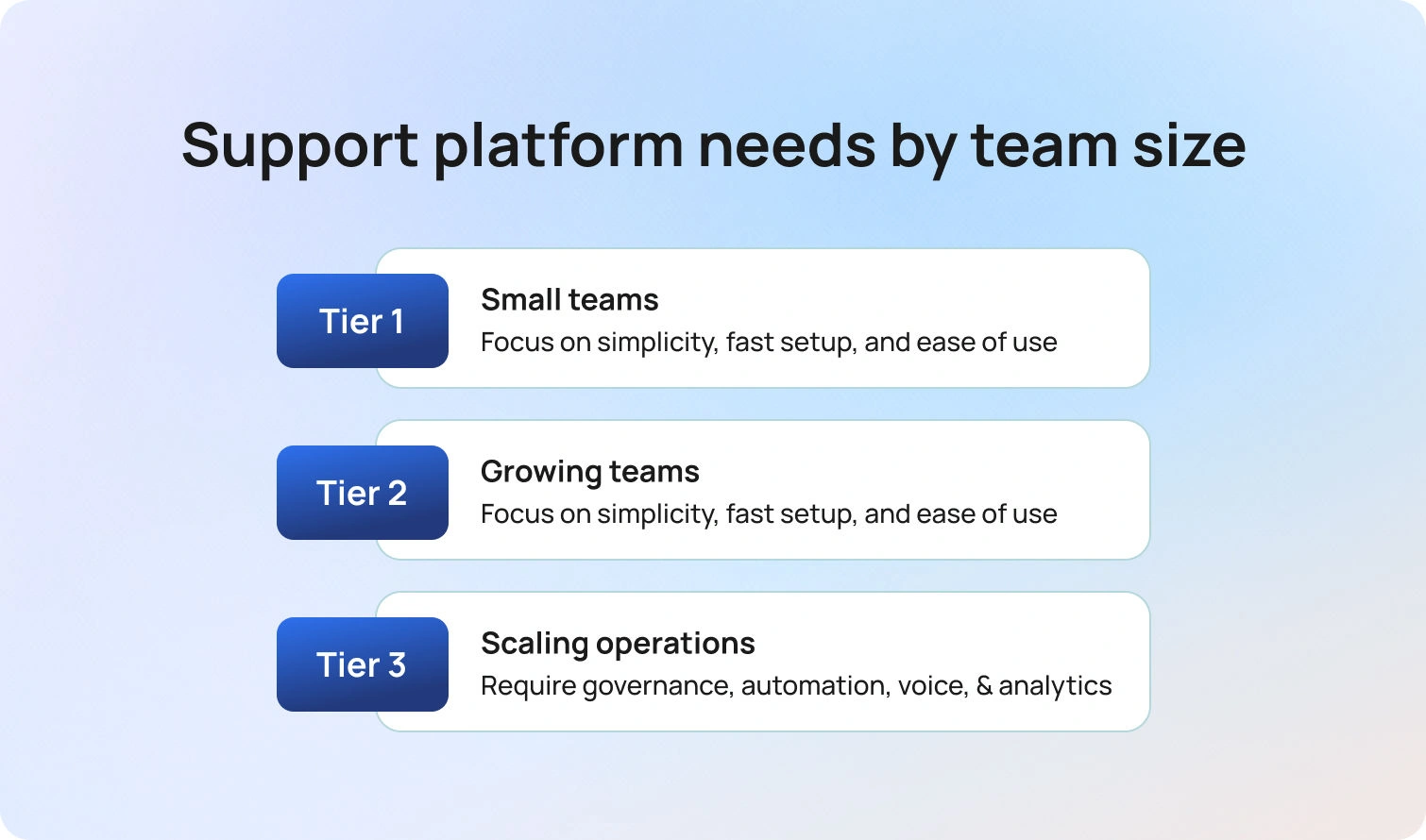
The mistake most buyers make in the Help Scout vs Zendesk debate is comparing feature lists without mapping them to operational complexity. On paper, both Zendesk and Help Scout promote powerful key features, from ticketing systems and collaboration tools to self-service options and automation, but the real question isn’t which platform has more features. It’s the customer support platform that aligns with how your support team actually operates.
Customer support software is no longer just about answering tickets. According to a 2025 global customer experience survey by PwC, 73% of consumers say experience is a key factor in purchasing decisions, and companies are increasing investment in automation, AI, and analytics to protect loyalty and revenue. That means the platform you choose directly impacts business performance, customer satisfaction, and the quality of customer interactions, not just how efficiently agents close support requests.
In 2026, the pressure on support teams extends far beyond inbox management. Leaders are expected to reduce resolution times, automate routine tasks, unify support channels, and deliver personalized support at scale. Modern customer support operations require more than a basic ticketing system; they demand reporting clarity, collaboration tools, support resources like community forums, a comprehensive knowledge base, and automation that enables businesses to streamline customer support while maintaining quality.
This is where the difference between Zendesk and Help Scout becomes clearer. Both Zendesk and Help Scout can support growing teams, and Zendesk's suite of professional and enterprise tiers introduces advanced features for scaling. However, complexity increases alongside capability, particularly for Zendesk customers configuring workflow automation, phone support, and expanded support channels. Meanwhile, Help Scout often appeals to new users and small teams seeking a user-friendly interface and minimal administrative overhead, sometimes even starting on a free plan before upgrading.
A newer category of platform is also emerging. Tools like BlueTweak are designed to unify ticketing, voice, chat, analytics, and automation into a single operational layer, reducing the need for multiple integrations as teams scale. Instead of choosing between simplicity and depth, these platforms aim to support growing teams with a more cohesive customer support stack.
That’s why the real question in the Zendesk vs Help Scout comparison isn’t which customer support tools look stronger in a demo. It’s which platform supports your operational tier today, and which one can evolve with your support process tomorrow.
For Tier 1 teams, typically between one and ten agents, speed and simplicity matter more than deep operational tooling. These teams prioritize ease of use, fast onboarding, and minimal administrative overhead.
Tier 2 teams, often ten to thirty agents, begin to feel the weight of scale. Workflows, SLAs, reporting, and self-service infrastructure start to matter because consistency becomes harder to maintain without structure.
By Tier 3, usually thirty to one hundred agents, support becomes an operations-led function. Governance, workforce management, quality assurance, voice support, automation, and advanced analytics shift from “nice to have” to essential.
At a glance: Help Scout vs. Zendesk vs. BlueTweak
Before diving into the tier-by-tier analysis, it’s helpful to get a high-level view of how Help Scout, Zendesk, and BlueTweak stack up across the features that matter most in 2026. This snapshot highlights each platform’s core strengths, channel coverage, and operational capabilities, giving you a quick sense of which tool might suit your team before we break it down by maturity tier.
| Category | Zendesk | Help Scout | BlueTweak |
|---|---|---|---|
| Who It’s For | Structured CX teams scaling toward enterprise | Lean teams that want simplicity | Mid-market, multi-brand, ops-led teams |
| Core Strength | Ticketing-first CX suite with broad ecosystem | Shared inbox + help docs/self-service | Unified CX OS (tickets + voice + chat + bots + WFM + analytics) |
| Voice | Add-on / tier-based | Limited | Built-in |
| Omnichannel | Broad coverage (tier-dependent) | Email-first; chat optional | Built-in omnichannel |
| AI | Varies by plan and add-ons | Plan-dependent | KB-grounded + human-in-the-loop |
| KB / Self-Service | Mature Help Center tooling | Strong and straightforward | Single source of truth for agents + bots |
| WFM / QA | Add-on or partner-dependent | Not core focus | Built-in |
| Security / Admin | Advanced at higher tiers | Straightforward controls | Multi-brand governance + ops controls |
| Pricing Note | Expands with add-ons and tiering | Predictable at small scale | Designed to reduce tool sprawl |
What each platform is (and what it isn’t)
When evaluating Help Scout and Zendesk, it’s important to think beyond checklists. Each platform is built with a philosophy that shapes how teams operate, scale, and measure success.
Help Scout is designed for teams that prize simplicity and speed. Its shared inbox and lightweight knowledge base make it ideal for small teams that need to resolve tickets quickly without complex setup. The strength here is clarity: agents spend less time navigating tools and more time solving problems. But that simplicity comes at a cost; Help Scout is not built for advanced workforce management, complex routing, or multi-brand operations. As teams grow, these limitations can become bottlenecks.
Zendesk takes a more structured, ticketing-first approach. It provides depth through workflows, automations, and an extensive ecosystem of integrations. This makes Zendesk attractive for teams that expect to scale quickly or require rigorous SLA management. However, that breadth also introduces its own complexity: additional features often come as tiered add-ons, and governance can become a challenge if your team is managing multiple brands or high-volume, multi-channel operations.
BlueTweak positions itself as a unified customer experience (CX) operating system, bringing together tickets, voice, chat, bots, workforce management, analytics, and KB-grounded AI into a single platform. For teams supporting multiple regions, multilingual voicebots can further streamline global customer support without adding new platforms. This approach is designed for mid-market teams that need operational consistency across multiple brands or languages, without the burden of integrating disparate tools. Where Help Scout and Zendesk may require stitching together five different apps to cover these needs, BlueTweak consolidates them into one coherent workflow, giving leaders both visibility and control.
Which is best for your tier and team in 2026?
Selecting the right platform isn’t as much about feature volume as it is about matching operational maturity and team size with the platform’s strengths.
Tier 1 (1–10 agents): Keep it simple, don’t overbuy
For lean teams, speed and ease of use outweigh deep operational tooling. Help Scout excels here, giving teams a clear, frictionless workflow for shared inboxes and lightweight self-service. Zendesk can still work, but its complexity may be unnecessary at this stage unless you anticipate rapid growth or want to lay the groundwork for structured processes. BlueTweak may be bordering on overkill for pure Tier 1 needs unless you already need multi-brand or omnichannel functionality from the start.
Tier 2 (10–30 agents): Workflows, SLAs, and reporting start to matter
As teams grow, managing processes consistently becomes a priority. Help Scout can still be sufficient for teams that maintain simple workflows, but it’s crucial to validate reporting and SLA capabilities. Zendesk shines in this tier with its automation, structured ticketing, and reporting features, though many capabilities remain tier-dependent. BlueTweak offers a pragmatic alternative: omnichannel support, multi-brand handling, and operational visibility, all in a single stack, reducing the risk of tool sprawl. For guidance on evaluating these factors, see our article on how to choose help desk software.
Tier 3 (30–100 agents): ops-led support, higher volume, more governance
At this stage, teams need governance, workforce management, quality assurance, and analytics. Help Scout’s lightweight design may feel limiting, particularly if routing and multi-brand operations are critical. Zendesk can meet these needs, but often at the cost of added tiers and marketplace complexity. BlueTweak is designed for exactly this use case. It provided a unified stack that supports omnichannel engagement, voice, WFM, QA, and real-time analytics, all while consolidating multi-brand reporting.
Multi-brand or BPO teams (any size): segmentation and reporting are the real test
Here, the difference between tools is less about individual features and more about operational coherence. Help Scout requires careful setup to segment brands and manage permissions. Zendesk supports multi-brand workflows but often needs tiered configurations or add-ons to keep governance manageable. BlueTweak provides native multi-brand routing and reporting, giving leaders a single platform to govern complex operations without sacrificing context or oversight.
Feature-by-Feature Comparison
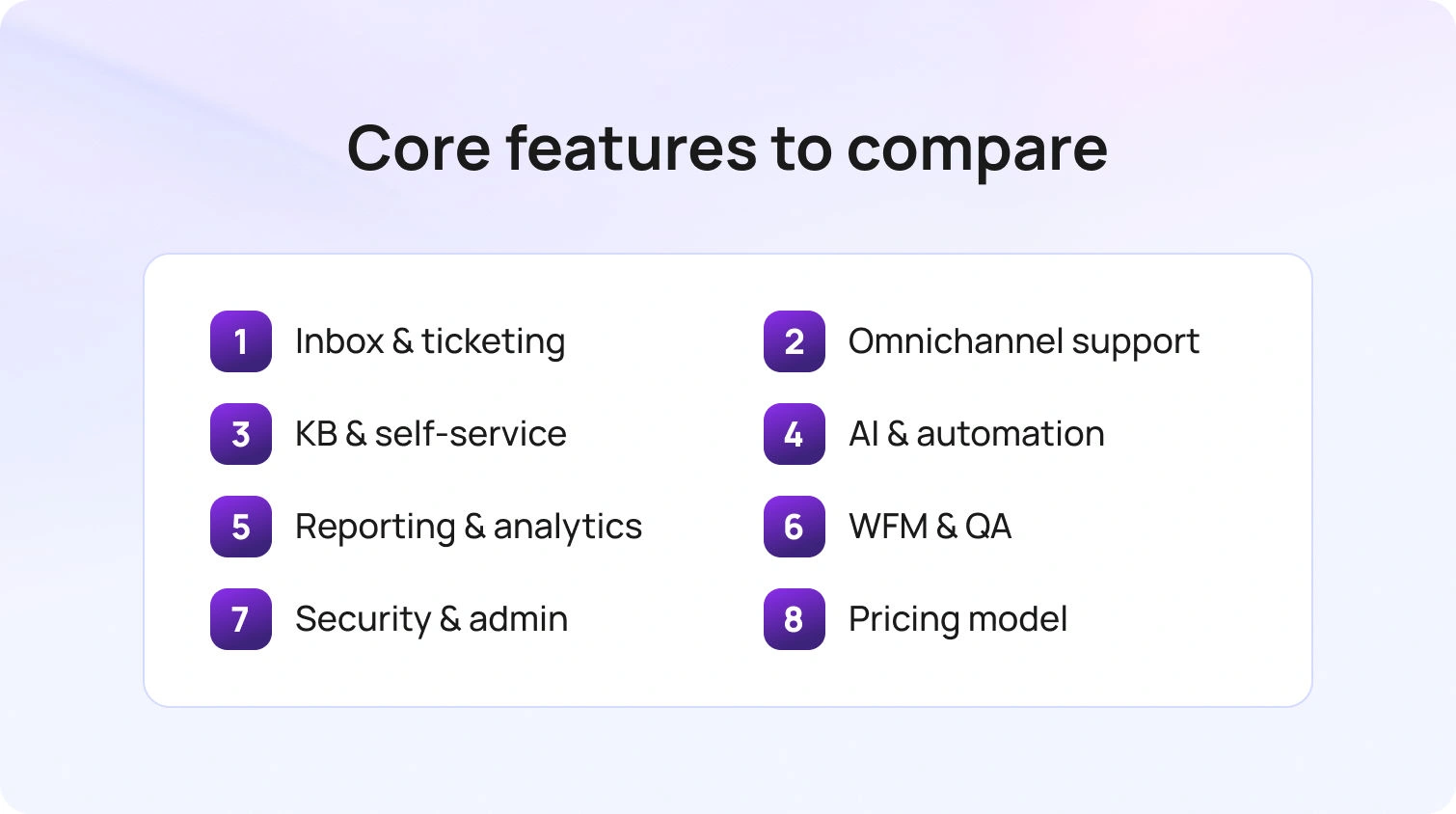
Choosing the right platform means you need to understand how each tool’s design philosophy shapes the way your team works, scales, and delivers value to customers. Two platforms might offer the same “features,” but the operational impact can be very different depending on workflow design, tier limitations, and integration requirements.
Inbox & ticketing workflows (SLAs, automations, collaboration)
- Help Scout: Optimized for speed and clarity in small teams; SLA and automation depth may be limited.
- Zendesk: Structured workflows with escalation logic; scale comes at a cost and often requires tier upgrades.
- BlueTweak: Unified queue across channels with multi-brand and ops-ready structures, reducing friction as teams scale.
Omnichannel support (email, chat, social, messaging)
- Help Scout: Primarily email-first; chat and messaging options are limited.
- Zendesk: Broad channel coverage, often tier-dependent; additional integrations may be required.
- BlueTweak: Omnichannel is built in, preserving context and minimizing tool switching.
Self-service & knowledge base (help center, content ops)
- Help Scout: Clean, approachable documentation workflows for small teams.
- Zendesk: Mature content management, but some features require add-ons.
- BlueTweak: Single source of truth for agents and bots, aligned across brands.
AI, automation, and deflection (outcome-first)
- Help Scout: Offers AI drafting and summarization depending on plan.
- Zendesk: AI varies by tier and add-ons; outcome measurement may be inconsistent.
- BlueTweak: KB-grounded AI with human-in-the-loop, designed for measurable improvements in speed, accuracy, and workload reduction. Features like proposed replies help agents respond faster while maintaining quality and consistency.
Reporting & analytics (visibility into what’s working)
- Help Scout: Adequate for small teams but limited beyond Tier 1.
- Zendesk: Advanced dashboards at higher tiers; segmentation and exports may require add-ons.
- BlueTweak: Real-time, multi-brand analytics designed for operational oversight.
WFM & QA (do you need it now, or later?)
- Help Scout: Not a core focus.
- Zendesk: May require partners or add-ons.
- BlueTweak: Built-in for teams of 20–100 agents, reducing the need for multiple vendors.
Security, admin, and compliance readiness
- Help Scout: Straightforward controls suitable for smaller teams.
- Zendesk: Advanced admin features at higher tiers.
- BlueTweak: Multi-brand governance, audit logs, and operational oversight built in.
Pricing and “true cost” by tier
When evaluating Zendesk vs Help Scout, and while figuring out where BlueTweak fits, remember that pricing isn’t just a per-agent number. The true cost of a support platform emerges as your team grows, channels multiply, and operational complexity increases. Investing in the right platform now can save time, prevent tool sprawl, and protect revenue and customer loyalty later.
Tier 1 teams (1–10 agents)
Lean teams often prioritize predictable pricing and minimal overhead. Help Scout typically fits neatly here, providing a shared inbox, basic self-service, and essential reporting at a low monthly cost. Zendesk can also work, but many of its advanced features are tier-gated, so the platform may exceed needs and add unnecessary complexity.
BlueTweak may appear overpowered for purely Tier 1 operations; however, it becomes relevant if your team is already managing multiple brands or channels, as its built-in omnichannel and voice capabilities reduce the need for additional tools later.
Tier 2 teams (10–30 agents)
Workflow automation, SLAs, multi-channel support, and basic analytics start to drive operational efficiency. As reporting expectations grow, tracking the right customer support metrics becomes essential for proving ROI and maintaining service quality at scale.
Help Scout may still suffice for teams maintaining lightweight processes, but it’s important to verify whether SLA management and reporting capabilities meet your needs. Zendesk shines here with structured workflows and dashboards, though add-ons for chat, voice, or advanced analytics can increase costs. BlueTweak consolidates these capabilities in a single platform, helping teams avoid the hidden expenses of multiple tools, fractured reporting, and administrative overhead.
Tier 3 teams (30–100 agents)
Here, the total cost of ownership extends beyond per-agent fees. Governance, workforce management, quality assurance, analytics, and multi-brand operations all influence both implementation and ongoing administration.
Help Scout’s simplicity may limit efficiency, while Zendesk can meet these needs but often requires multiple add-ons, tier upgrades, and marketplace governance, all of which increase cost and operational friction. BlueTweak positions itself as a unified CX OS: built-in WFM, QA, omnichannel, voice, and multi-brand reporting reduce the need for additional vendors, simplify oversight, and accelerate time-to-value.
To make these considerations actionable during vendor evaluation, leaders should verify the following:
- What is included vs. add-on: Confirm which capabilities are bundled versus requiring extra licenses or tier upgrades.
- AI metering and deflection measurement: Understand how AI usage is tracked, billed, and tied to workload reduction metrics.
- Channel add-ons (voice, chat, messaging): Identify which channels are included natively and which require additional costs.
- Reporting, exports, and advanced permissions: Ensure dashboards, data access, and governance align with team requirements.
- Implementation and onboarding costs: Factor in time, training, and any professional services needed to get teams operational.
- Multi-brand structure and reporting overhead: Assess how the platform handles brand segmentation, routing, and consolidated analytics.
By combining a strategic lens with this checklist, support leaders can see beyond simple per-seat fees to understand the true operational and financial impact of each platform. For reference, see BlueTweak pricing to explore how a unified approach can streamline costs and reduce vendor sprawl.
Implementation Considerations: What Actually Drives Time-to-Value
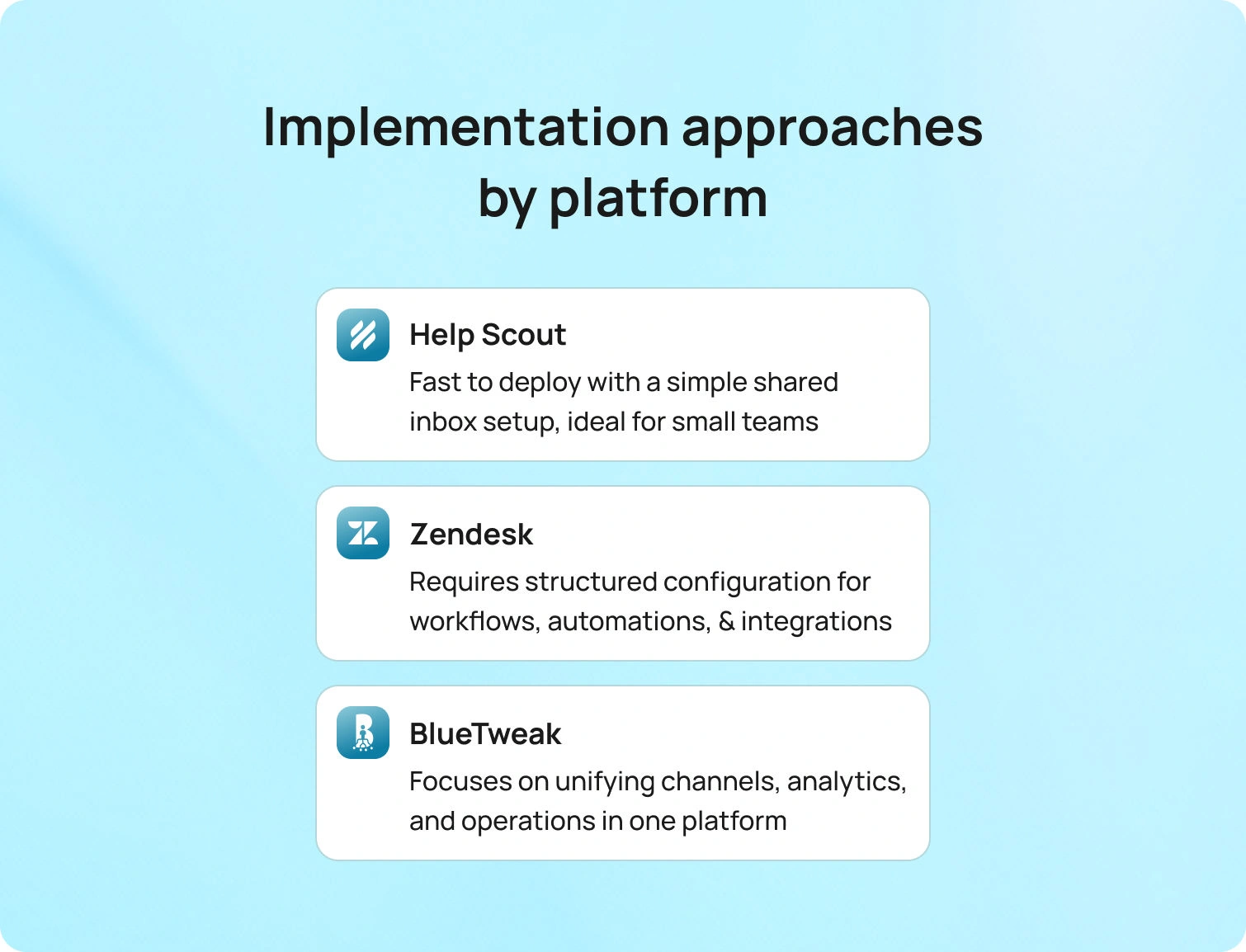
Choosing between Help Scout and Zendesk isn’t only about features or pricing. It’s about how quickly your team can operationalize the platform and begin delivering measurable improvements in response times, resolution quality, and customer satisfaction.
Implementation complexity varies significantly depending on the platform’s architecture and your operational tier. For Tier 1 teams, setup may be measured in days. For Tier 3 teams managing multiple brands and channels, it may involve structured planning, governance design, and workflow engineering.
Here’s how implementation typically differs across platforms:
Help Scout
Help Scout is generally the fastest to deploy because of its shared inbox–first philosophy. The setup process is straightforward, particularly for lean teams.
Time-to-value is primarily driven by:
- Inbox configuration and team permissions
- Tagging taxonomy design for reporting clarity
- Knowledge base structure and content migration
- Basic automation rules and saved replies
- Agent onboarding and workflow alignment
For smaller teams, this simplicity can translate into rapid adoption. However, as operational complexity increases, leaders may need to supplement reporting, QA, or workforce processes with external tools.
Zendesk
Zendesk implementation tends to require more structured planning, especially as you move up tiers. Its flexibility is a strength, but that flexibility introduces configuration depth.
Key drivers of time-to-value include:
- Historical data migration from legacy systems
- Designing triggers, automations, SLAs, and macros
- Information architecture for the Help Center
- Configuration of channel add-ons (chat, voice, messaging)
- Marketplace app selection and governance controls
For growing or enterprise teams, the upfront investment can pay off in structured workflows and reporting. However, governance and administrative overhead should be factored into both timeline and cost expectations.
BlueTweak
BlueTweak’s implementation approach centers on unification rather than extension. Instead of layering add-ons, the goal is to bring channels, analytics, and operational tooling into a single coherent system.
Time-to-value is typically influenced by:
- Unifying email, chat, voice, and messaging channels into one queue
- Importing and structuring the knowledge base for AI grounding
- Configuring multi-brand routing and consolidated reporting
- Setting up dashboards aligned to operational KPIs
- Deploying workforce management (WFM) and QA workflows
For Tier 2 and Tier 3 teams, this consolidation often shortens long-term ramp time by eliminating the need to integrate multiple systems post-launch.
How We Evaluated Zendesk vs. Help Scout
This comparison of Zendesk vs Help Scout, and BlueTweak’s positioning alongside the others, is grounded in primary vendor documentation and publicly available pricing materials.
Specifically:
- We reviewed vendor feature documentation and pricing pages.
- Any capability that varies by plan is indicated as “Varies by plan / Verify.”
- We did not use third-party review sites as validation or proof points.
- We avoided speculative claims about certifications or enterprise capabilities not clearly documented.
This approach ensures that the evaluation reflects official positioning and transparent claims rather than anecdotal ratings or marketplace commentary.
Final Thoughts: The Right Customer Service Platform Depends on Your Operational Tier
The debate around Help Scout and Zendesk often centers on features, but a better way to evaluate is when you consider operational maturity. Both are credible customer support platforms, and both can work exceptionally well when aligned with the right team profile.
For lean support teams prioritizing speed, a user-friendly interface, and lightweight workflows, Help Scout remains a cost-effective solution. It helps small to medium businesses manage support tickets, customer queries, and knowledge base content without unnecessary overhead. If your primary goal is managing customer support efficiently without complex workflows, this simplicity can be an advantage.
Zendesk, by contrast, is built for structure. Its ticketing system, workflow automation, and advanced reporting make it attractive for medium-sized businesses and large support teams that need deeper governance and automation features. As teams grow, Zendesk’s suite professional and suite enterprise tiers introduce more advanced features, customization options, and support channels, including phone support. However, those capabilities often come with additional pricing plans, add-ons, and third-party tools that increase the total cost of ownership.
BlueTweak is designed for teams that have moved beyond managing customer support reactively and are now optimizing customer support operations strategically. By unifying ticketing, voice, chat, bots, WFM, analytics, and a comprehensive knowledge base, it enables businesses to streamline customer support while reducing tool sprawl. For teams handling high volumes of customer interactions across multiple brands, the value lies not just in features, but in cohesion; one platform, one reporting layer, one governance model.
If you’re comparing any of these solutions in 2026, the debate is around which platform aligns with your support process, growth trajectory, and operational ambition.
If you’re ready to see how a unified approach can support your team’s next stage of growth, request a demo and explore how BlueTweak can help you deliver a cohesive support experience at scale.
Intercom vs Help Scout vs BlueTweak: Which To Implement In 2026?
Why the Intercom vs Help Scout Debate Still Matters and Why BlueTweak Should Be Considered
Choosing between Help Scout and Intercom isn’t just about picking a chat widget or a shared inbox anymore. In 2026, customer experience leaders face a much deeper strategic question: how to build a support operation that meets rising customer expectations while still keeping costs, complexity, and tool sprawl under control.
Customers are redefining what good service looks like. According to a 2025 survey from Gartner, more than half of all customer service journeys now begin on third-party platforms such as search engines, YouTube, or generative AI tools, not just on a brand’s own site or social pages. This shift highlights two realities: service must be discoverable where customers already are, and experiences need to be seamless across channels, not just reactive in a single inbox or chat feed.
At the same time, adoption of AI and automation in support continues to accelerate, driven by operational efficiency and customer expectations. But simply adding AI isn’t a panacea. Too many teams find that “AI features” without clear governance, knowledge control, or integration with existing workflows create noise rather than value. The result is a landscape where automation must be purposeful, knowledge-grounded, and channels unified.
This evolving context is why comparisons like Intercom vs Help Scout remain relevant in 2026. One platform may win on conversational automation, another on simplicity. But today’s leaders need to think beyond features: they need clarity on how each solution supports omnichannel service, integrates AI responsibly, and scales predictably as support volumes and customer expectations grow.
Increasingly, that conversation also includes platforms like BlueTweak. For teams that have outgrown a simple inbox but don’t want to assemble a stack of separate tools for chat, voice, reporting, and automation, unified CX platforms are becoming a practical alternative. Instead of choosing between conversational automation or operational simplicity, solutions like BlueTweak aim to provide a single environment where tickets, chat, voice, analytics, and AI work together as support operations scale.
At a Glance: Intercom vs Help Scout vs BlueTweak
When comparing Intercom vs Help Scout vs BlueTweak, it helps to step back from feature lists and look at the structural differences in how each platform approaches customer support. While the tools may overlap in areas like messaging, ticketing, and automation, they are built around very different operational philosophies.
Intercom is designed around conversational engagement and AI-driven messaging, making it popular with product-led teams that prioritize real-time chat and automation. Help Scout takes a more streamlined approach, focusing on a clean shared inbox and self-service tools that help lean teams manage support without heavy configuration.
BlueTweak sits in a slightly different category. Rather than centering the experience around chat or email, it positions itself as a unified CX platform that brings tickets, chat, voice, analytics, and workforce management into a single operational environment. For teams that are scaling beyond startup simplicity but don’t want the complexity of enterprise CX suites, this approach can provide a more structured foundation for multi-channel support.
The table below summarizes how each platform is positioned operationally in 2026, not just what features exist, but how each vendor approaches AI, omnichannel service, and support team scalability.
| Capability | Intercom | Help Scout | BlueTweak |
|---|---|---|---|
| Who it’s for | Digital-first SaaS and product-led teams prioritizing conversational CX | Lean teams wanting shared inbox simplicity without heavy admin | Scaling teams (20–100 agents) running multi-brand or multilingual support |
| Core strength | AI-forward conversational customer service suite | Email-first shared inbox with lightweight self-service | Unified CX operating system built for structured growth |
| Voice | Available by plan (verify specifics) | No native voice | Native voice is integrated into the same queue and reporting layer |
| Omnichannel | Chat-centric, with expanded channel options | Email + Beacon chat | Chat, tickets, and voice unified in one operational environment |
| AI | Fin AI Agent + Copilot; managed knowledge sources | AI drafting + Docs-based assistance (verify by plan) | Knowledge-base-grounded AI with human oversight and operational controls |
| Knowledge Base / Self-Service | Help Center powered by managed knowledge | Docs + Beacon widget | Single source of truth powering agents, bots, and multilingual routing |
| WFM / QA | Varies by plan | Limited WFM depth | Built-in workforce management and QA visibility without add-ons |
| Security / Admin | Enterprise controls by tier | Straightforward roles and permissions | Role-based controls, audit logs, and multi-brand governance (ISO in progress) |
| Pricing model | Seat-based tiers + AI/usage-style elements (verify) | Published tier pricing | €65/agent/month anchor with clearer packaging for mid-market teams (verify usage components) |
What Each Platform Is (and What It Isn’t)
When evaluating Help Scout vs Intercom vs BlueTweak, many buyers focus on feature parity. But a more useful lens is operating philosophy. Each platform represents a different approach to how customer support should function in 2026. Understanding that philosophy helps you avoid choosing a system that feels right at 10 agents, but restrictive at 40.
Intercom
Intercom has evolved from a live chat tool into a broader, AI-forward customer service suite. Today, its positioning centers around conversational support, automation, and AI-driven resolution. Fin AI Agent and Copilot are designed to assist, and in some cases autonomously resolve, customer conversations using managed knowledge sources.
Intercom’s strength lies in real-time engagement. It is built around messaging-first workflows, where conversations flow naturally between automation and human agents. For product-led and SaaS businesses that want support tightly integrated into the customer journey, this model is compelling.
However, Intercom assumes operational readiness for automation. Teams must:
- Curate and govern knowledge sources carefully
- Design automation flows intentionally
- Monitor AI resolution metrics and usage patterns
It is not a lightweight inbox solution, but rather a configurable, AI-layered environment. That can be a powerful option, but it requires clarity on governance, measurement, and cost modeling.
In short, Intercom is best understood as a conversational CX suite where AI and automation sit at the center of the service model.
Help Scout
Help Scout takes a different path. Its foundation is the shared inbox; simple, clean, and email-first. Docs provides knowledge base functionality, and Beacon acts as the customer-facing entry point for chat and self-service.
Help Scout avoids unnecessary complexity and focuses on enabling teams to respond quickly and collaboratively without heavy configuration. For lean teams, especially those prioritizing email support with light chat capability, this simplicity is often considered a competitive advantage. Implementation is typically faster, admin overhead is lower, and the learning curve is minimal.
Where Help Scout can feel limiting is in deeper operational layers. Native voice, workforce management tooling, and complex multi-brand routing are not its primary focus; it is intentionally streamlined.
Help Scout is best understood as a modernized shared inbox platform with integrated self-service, ideal for teams that want structure without suite-level complexity.
BlueTweak
BlueTweak is positioned differently. Rather than centering on either chat automation or inbox simplicity, it frames itself as a unified customer experience (CX) operating system for scaling teams.
BlueTweak brings tickets, chat, voice, bots, workforce management, analytics, and a knowledge-base-grounded AI layer into a single operational environment. The focus isn’t just on responsiveness, but also visibility and control across channels, brands, and regions.
This matters particularly for teams in the 20–100 agent range, where complexity increases quickly:
- Multiple queues
- Multiple brands
- Multilingual support
- Escalation layers
- SLA tracking
- Performance monitoring
At this stage, stitching together separate tools for telephony, reporting, QA, and chat can create blind spots. BlueTweak’s positioning is that these components should exist inside one governed system, rather than across five dashboards.
It is not a chat-only automation suite, nor is it a minimalist inbox tool. It is built for organizations that have moved beyond startup simplicity, but do not want enterprise bloat.
The Strategic Difference
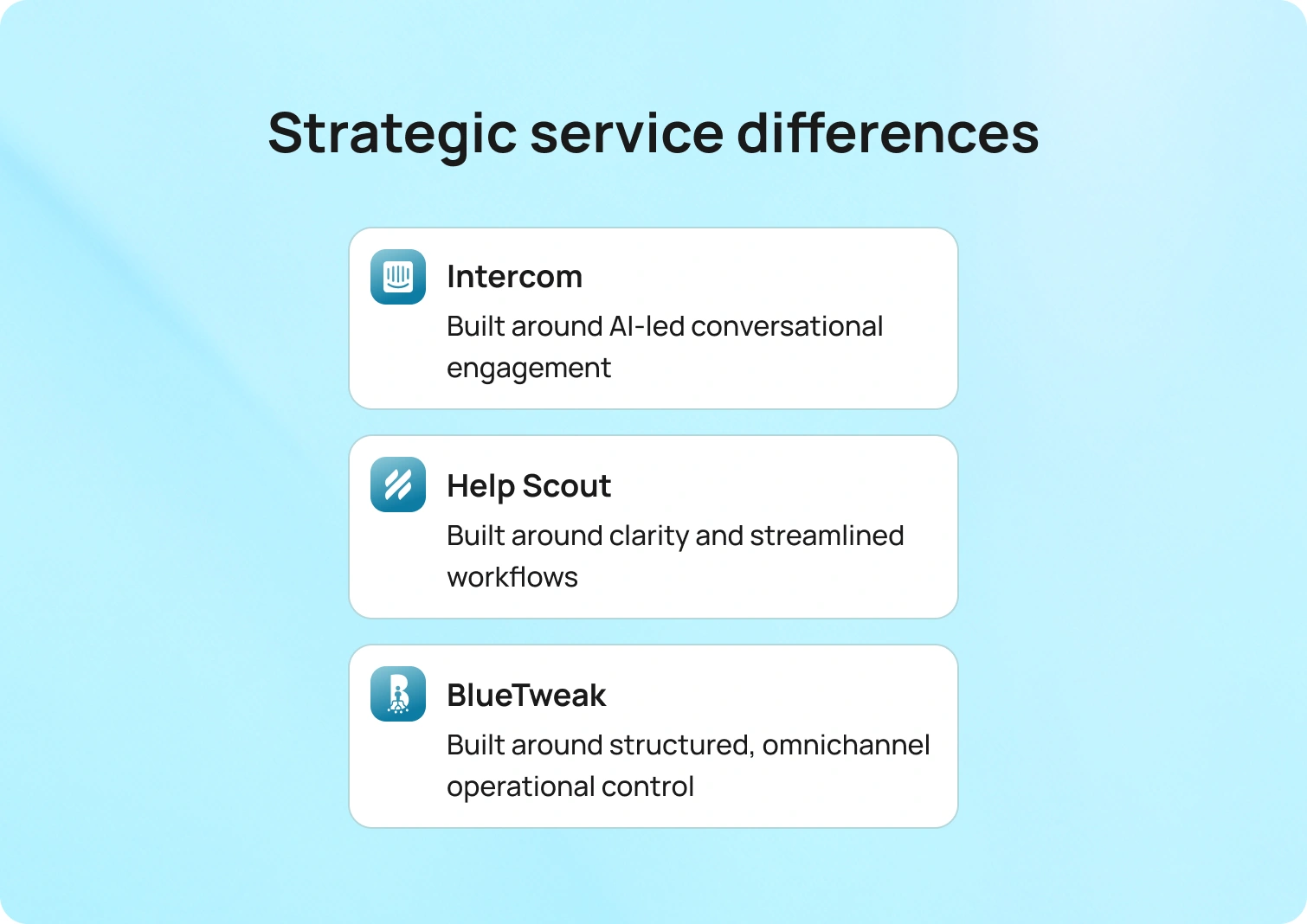
The Intercom vs Help Scout vs BlueTweak debate often starts with channels and features, but mature CX decisions rarely hinge on feature checklists; they hinge on operating model alignment.
- Are you designing a support function that revolves around conversational automation?
- Are you prioritizing speed and simplicity for a lean team?
- Are you building an operational backbone that must handle multiple brands, voice, performance management, and multilingual complexity without fragmentation?
Those are fundamentally different trajectories.
- Intercom is built around AI-led conversational engagement.
- Help Scout is built around clarity and streamlined workflows.
- BlueTweak is built around structured, omnichannel operational control.
The decision, then, isn’t about which tool has more features, but rather, which platform matches the complexity you have today, as well as the complexity you’re likely to inherit over the next 24 months.
Choosing for month one is easy. Choosing for year two is where most teams get it wrong.
Feature-by-Feature Comparison
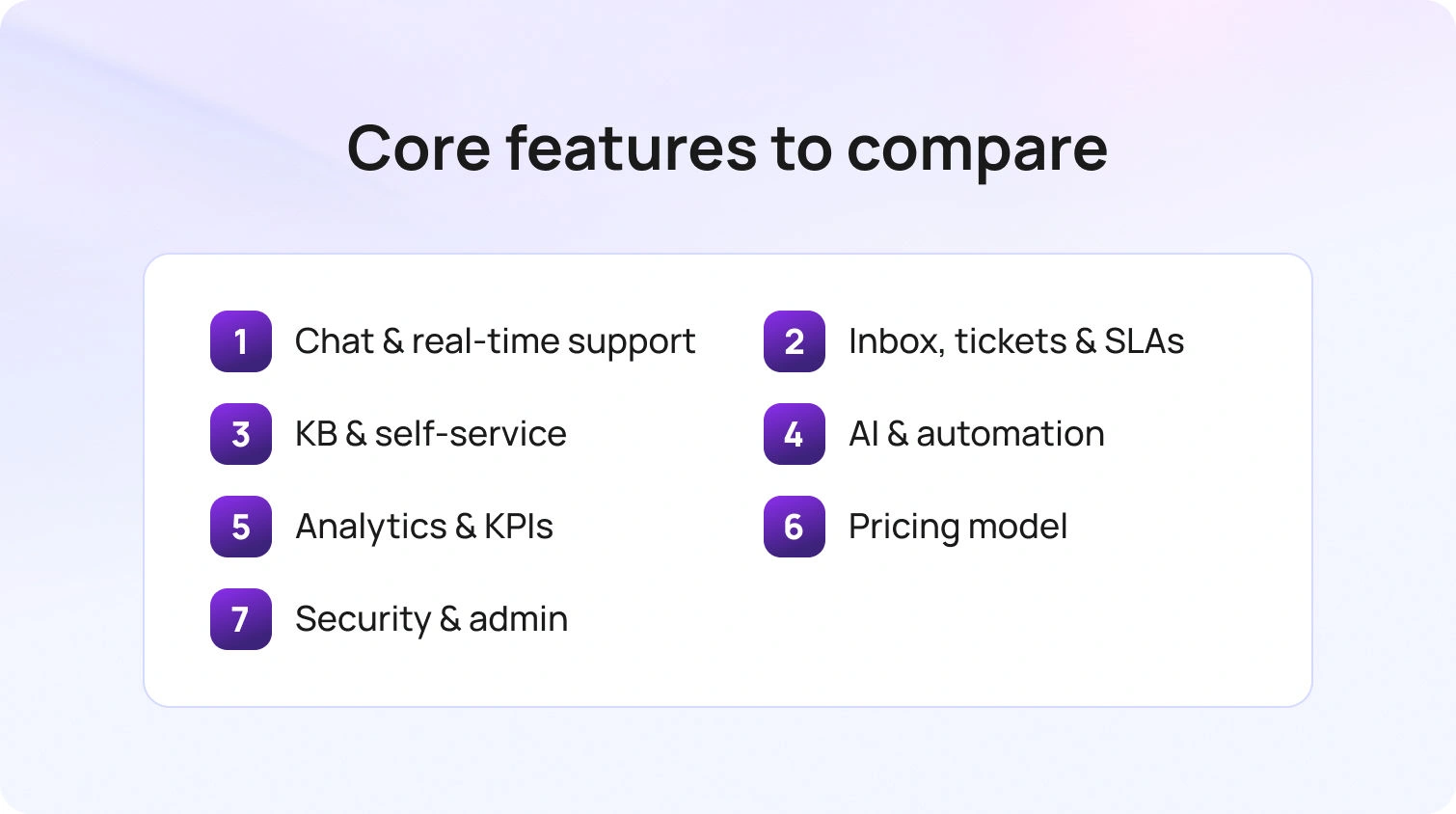
High-level positioning is useful, but buying decisions are made in the details. When evaluating Help Scout vs Intercom vs BlueTweak, this is the stage where nuance matters: how messaging behaves under load, how SLAs function across channels, how AI is governed, how reporting scales, and how cost shifts as usage patterns evolve.
The sections below focus on how each platform behaves operationally, especially as complexity increases.
Live chat, messaging, and real-time support
Real-time support is where Intercom and Help Scout most visibly diverge, and where BlueTweak positions itself differently again.
Intercom is built around conversational messaging. Live chat is not an add-on; it is the core workflow. Automation, AI agents, and human agents operate within a unified conversational thread. For digital-first businesses where chat volume is high and immediate engagement drives revenue, this architecture is a strength.
However, chat-first systems assume conversational maturity: routing rules, automation design, and AI supervision require ongoing tuning.
Help Scout delivers chat primarily through Beacon. It works well as a support entry point layered onto an inbox-centric workflow. For teams that view chat as a complement to email rather than the primary support channel, this lighter implementation reduces admin complexity.
BlueTweak approaches chat as one channel within a broader operational system. Chat, tickets, and voice share queue logic and reporting. The differentiator here is context continuity; agents are not switching systems to handle different real-time vs asynchronous conversations.
If real-time chat sits at the heart of your acquisition or retention strategy, Intercom’s conversational architecture and automation depth give it a structural advantage. But if chat plays a secondary role to email-based support and you’re primarily optimizing for simplicity and speed, Help Scout’s lighter implementation may be entirely sufficient.
However, if chat needs to operate alongside voice and ticket workflows inside a single operational framework, without agents toggling between systems or managers reconciling separate reporting layers, BlueTweak becomes a strategically relevant choice. The distinction isn’t just about chat capability; it’s about how seamlessly that capability integrates into the broader support environment as complexity increases.
Inbox, ticketing workflows, SLAs, and collaboration
Inbox design shapes agent productivity more than most teams realize.
Intercom incorporates helpdesk-style workflows inside its suite, with automation layered heavily into routing and resolution. SLAs and collaboration features vary by plan, so teams should validate exact capabilities during evaluation. The system is designed for speed and automation leverage.
Help Scout prioritizes clarity. The shared inbox model is intentionally straightforward: conversations, assignments, notes, and tags. For lean teams, this simplicity minimizes friction and onboarding time.
BlueTweak focuses on cross-channel SLA consistency. Ticketing logic extends across chat, email, and voice, allowing teams to manage performance targets holistically. Multi-brand routing and structured escalation paths are core considerations, not bolt-ons.
The question here isn’t “does it have SLAs?” It’s whether SLAs remain visible and enforceable as channels and brands multiply.
KB and self-service
Self-service maturity directly impacts cost per ticket.
Intercom powers its Help Center and AI workflows through managed knowledge sources. This creates a tightly integrated environment where content can directly fuel AI resolution. However, governance becomes critical: what content is exposed, how it’s versioned, and how it’s targeted should all be validated.
Help Scout pairs Docs with Beacon. It’s a clean model: publish helpful articles, surface them contextually, and reduce inbound volume. For smaller teams, this simplicity often delivers quick wins.
BlueTweak positions its knowledge base as a single source of truth powering both agents and AI. Because it sits inside a broader operational framework, knowledge routing can be tied to brand, language, or queue logic. That matters for multilingual and multi-region support teams.
In 2026, self-service is centered on whether your knowledge strategy reduces volume without increasing AI unpredictability.
AI, automation, and deflection
AI is no longer optional in the Intercom vs Help Scout discussion, but its implementation varies meaningfully.
Intercom’s Fin AI Agent and Copilot are designed to resolve conversations and assist agents. The model is automation-forward. Buyers should clarify how AI resolutions are defined, how usage is billed, and how knowledge boundaries are enforced.
Help Scout focuses AI primarily on drafting assistance and self-service enhancement. It is typically augmentation rather than autonomous resolution, though exact capabilities vary by plan.
BlueTweak emphasizes knowledge-base-grounded AI with human oversight. Rather than maximizing autonomous resolution volume, the focus is on measurable improvements in handle time, first contact resolution, and multilingual efficiency.
This focus on governed automation is reflected in real-world implementations. In one BlueTweak deployment for a growing e-commerce company, AI-powered support workflows helped increase ticket deflection by 45% and reduce interaction time by 30%, allowing the team to scale support without proportionally increasing agent headcount. The case highlights how combining AI with structured knowledge and unified channels can improve both efficiency and customer satisfaction.
For teams looking to implement AI responsibly, BlueTweak also offers proposed replies that help agents maintain quality and consistency while leveraging automation.
This is where thought leadership matters: AI success in 2026 is not about volume handled. It is about governed deflection with predictable cost dynamics.
Analytics, reporting, and operational KPIs
As teams scale, reporting depth becomes a constraint.
Intercom provides analytics tied to conversations, automation, and AI performance. Teams should validate SLA tracking depth and how AI outcomes are measured within reporting layers.
Help Scout offers clear, accessible reporting aligned with its simplicity model. For straightforward environments, this is often sufficient. Scaling teams should evaluate whether multi-brand or workforce performance visibility requires additional tooling.
BlueTweak integrates analytics with workforce management and QA visibility. For 20–100 agent teams, real-time dashboards across brands and channels reduce the need for separate BI or WFM systems.
Reporting is often where tool sprawl begins; the more fragmented the channel stack, the more fragmented the data.
Pricing model and predictability
Pricing is often where the Help Scout vs Intercom comparison becomes clearer. Once features align, the real question is how each platform’s cost model behaves as agent counts, automation usage, and channel volume increase.
Intercom uses seat-based tiers, with AI and usage-style elements layered in depending on plan. As automation increases, usage metrics may become more influential in total cost. Teams should model growth scenarios, not just current volume.
Help Scout presents published tier pricing that feels straightforward. Feature access varies by plan, so mapping your required capabilities to the correct tier is essential.
BlueTweak anchors pricing at €65 per agent per month, positioned for mid-market clarity. Usage-based elements should be verified where applicable, but the model is structured around operational predictability rather than layered AI charges.
At smaller team sizes, pricing differences between platforms are often marginal. But as support organizations grow, particularly beyond 50 agents, usage assumptions, automation volume, and channel expansion can start to materially influence total cost.
Security, admin, and compliance readiness
Security and administrative control rarely dominate early product demos, but they become critical once a support platform is embedded into daily operations. Customer service systems often contain sensitive customer data, internal notes, and performance metrics, which means governance, access controls, and auditability should be evaluated early in the intercom vs help scout decision process.
Intercom provides a range of security and compliance capabilities across its platform tiers, including data processing controls, regional hosting considerations, and administrative permissions. Because Intercom increasingly incorporates AI-driven workflows, teams should also confirm how AI interactions are logged, how knowledge sources are governed, and how conversation data is stored or retained. These details can vary by region and plan, so reviewing official documentation during procurement is essential.
Help Scout follows a simpler model that aligns with its broader philosophy of operational clarity. Teams can manage roles, permissions, and access controls within the shared inbox environment, while auditability and retention settings can be configured to support internal governance requirements. For organizations operating in regulated environments, confirming how these controls map to internal compliance policies is an important evaluation step.
BlueTweak emphasizes administrative visibility and control across multi-brand support environments. Role-based permissions and audit logs help teams maintain governance as agent counts grow and operational complexity increases. BlueTweak also enables teams to manage multiple brands or support queues within a single environment, simplifying administrative oversight for larger support organizations. The platform is ISO 27001 certified, providing assurance around information security and data governance. When evaluating alternatives, teams should also confirm the compliance certifications and security standards maintained by other vendors under consideration.
For growing support organizations, these controls are less about ticking a compliance checkbox and more about maintaining operational discipline. As teams scale, the ability to manage access, monitor changes, and maintain clear governance over customer data becomes an increasingly important part of platform selection.
Pricing & 12-month TCO modeling (framework, not promises)
Feature comparisons help narrow a shortlist, but long-term platform decisions are often made on total cost of ownership. In the Help Scout vs Intercom discussion, the list price rarely tells the full story. Pricing models can behave very differently as agent counts grow, automation usage increases, and new channels are introduced.
A useful exercise is to model a realistic 12-month scenario. For example, imagine a support team with 50 agents, moderate chat volume, and a growing self-service strategy. Over the course of a year, several variables can influence total platform cost:
- AI deflection increases. Ticket volume may fall, but AI interactions or automated resolutions could rise, depending on how the platform meters usage.
- Chat volume grows. As customers adopt messaging channels, conversation counts often increase faster than ticket counts.
- Voice is introduced. Many teams add voice support later as escalation needs grow.
- Additional brands or queues are added. Multi-brand operations can introduce workspace or routing complexity depending on platform architecture.
In other words, the most useful pricing comparison isn’t today’s invoice; it’s how the platform behaves once your support operation becomes more sophisticated.
Questions to ask Sales during pricing discussions
Before committing to any platform, it’s worth clarifying how pricing behaves under real operational conditions:
- What is included vs metered (AI resolutions, messages, automation usage, or seats)?
- Are there limits on knowledge sources, AI training material, or content targeting?
- What are the policies for data retention, exports, audit logs, and AI supervision controls?
- How does multi-brand support work: separate workspaces or true multi-tenant routing and reporting?
- What does implementation and onboarding typically involve for a team of your size?
These questions often reveal cost dynamics that aren’t immediately obvious in pricing calculators.
Implementation considerations
Choosing a platform is only the first step. Successful deployments typically depend less on the software itself and more on how well the support organization prepares its workflows, knowledge base, and operational processes.
Intercom implementations often focus on preparing the knowledge environment that powers automation and AI. This can involve structuring the Help Center, defining knowledge sources, designing automation flows, and setting up routing rules that ensure conversations reach the right agents. Teams should also plan how they will measure automation success and AI-assisted resolutions.
Help Scout deployments tend to be simpler, but still benefit from thoughtful setup. Structuring inboxes clearly, building a logical information architecture for Docs, and configuring Beacon entry points can significantly influence the effectiveness of self-service. Basic automation and tagging strategies can further improve agent efficiency.
BlueTweak implementations typically focus on bringing multiple channels into one operational system. This often involves unifying chat, email, and voice workflows, structuring the knowledge base so it can ground AI responses, and configuring multi-brand routing and reporting. Rolling out dashboards and workforce management visibility is also an important step for teams managing larger support environments.
How We Evaluated Intercom, Help Scout, and BlueTweak
This comparison is based on vendor documentation, official feature descriptions, and publicly available pricing information. Where capabilities vary by plan or region, they are indicated as ‘Varies by plan’ or ‘Verify’.
No third-party review platforms were used as evidence. The goal of this article is to provide a clear framework for evaluating help scout vs intercom, while also introducing BlueTweak as an alternative for teams whose operational needs extend beyond either model.
Intercom vs Help Scout vs BlueTweak: Which Platform Is Right For You?
At this stage of the Intercom vs Help Scout vs BlueTweak evaluation, the focus isn’t on finding the universal ‘winner’. Each platform is designed for a slightly different support environment, and the right choice usually reflects the complexity of your CX operation rather than the number of features on a checklist.
Choose Intercom if real-time messaging and AI-led automation are central to your support strategy. Intercom’s conversational architecture is designed for organizations where chat drives customer engagement, and automation is expected to resolve a growing share of interactions.
Choose Help Scout if you want a streamlined shared inbox environment that prioritizes clarity over configuration. Help Scout is well-suited to lean teams that rely heavily on email support, with self-service layered through Docs and Beacon.
Choose BlueTweak if you’re building a support operation that spans multiple channels and requires stronger operational visibility. BlueTweak’s unified approach to tickets, chat, voice, analytics, and workforce management is designed for teams in the 20–100 agent range that want to avoid stitching together multiple systems as they scale.
Final Thoughts: Choosing the Right Help Desk for Your Team
Choosing the right help desk ultimately comes down to how your team manages customer interactions, scales support, and delivers exceptional customer service as your company grows.
In this Intercom feature comparison, we’ve looked at how each platform approaches support tickets, customer relationships, and modern AI features. While Intercom offers an AI-first approach with tools like AI assistants, AI answers, and instant answers, teams should weigh these capabilities carefully against Intercom's pricing, especially when usage grows or when moving into higher-tier plans.
For many teams, the decision will hinge on how well a platform balances advanced features, usability, and long-term value. Scout offers a pretty straightforward help desk experience with a strong ticketing system, a unified inbox, and useful self-service options, making it attractive for small businesses or teams prioritizing simplicity.
However, when organizations need multi-channel support, phone support, phone calls, deeper reporting, and powerful automation capabilities, a third option like BlueTweak can provide a fully integrated environment that brings messaging, support tickets, analytics, and workforce tools together in one platform.
The real difference often appears once teams start handling high-volume customers, managing multiple inboxes, or coordinating growing support teams across different platforms. At that stage, factors like automation tools, AI capabilities, proactive support, and how easily new team members can adopt the system all play a role in delivering the level of service customers expect today.
If you're weighing help desk features, reviewing an intercom pricing comparison, or looking for a cost-effective platform that scales as your customers grow, the most useful step is seeing the system in action.
Book a demo to see how BlueTweak helps teams manage customer interactions, streamline support tickets, and deliver exceptional customer service to customers at scale.



