Omnichannel vs Multichannel Customer Service: 2026 Guide

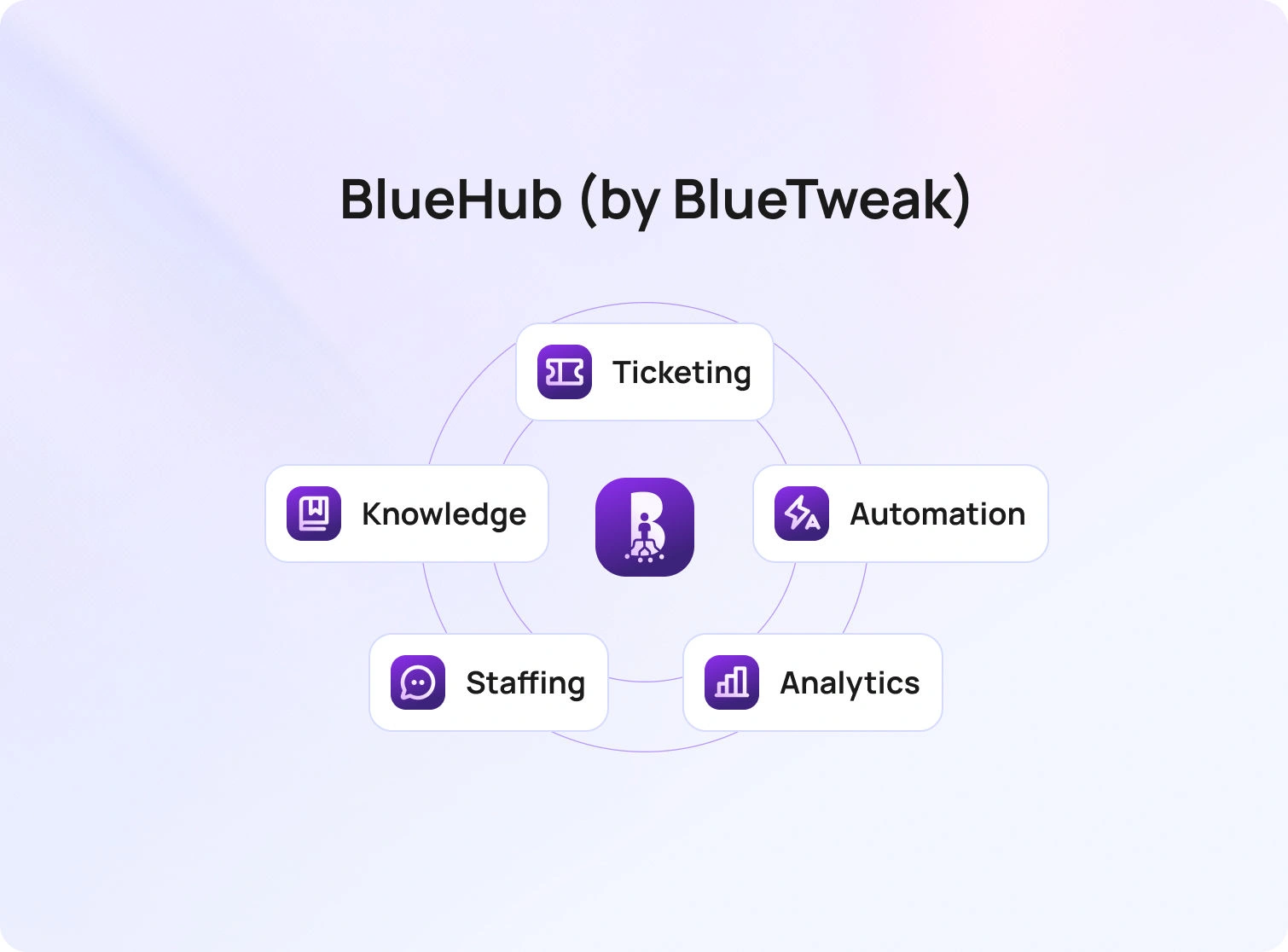


BlueHub unifies every conversation, customer record, and automation into one powerful platform.
Explore more
Omnichannel customer service integrates multiple channels around a single customer record, so conversations continue across touchpoints without duplication. Multichannel customer service offers different channels that operate independently. If your goals include higher customer satisfaction, faster resolution across the entire customer journey, and cleaner reporting, choose an omnichannel approach. If you are early in your maturity, have low contact volumes, or limited integration capacity, a disciplined multichannel approach can be a stepping stone, provided you plan the move to a unified customer engagement platform.
Customers expect continuity, not channel silos. In Salesforce’s State of the Connected Customer, large majorities say they expect companies to understand their unique needs, deliver consistent interactions across departments, and use the data they share to improve experiences, signals that context must travel from one channel to the next for a seamless customer experience. Those same respondents tie trust to how well brands use their information and avoid making them repeat details, a hallmark of omnichannel contact centers that unify customer data and past interactions across support channels.
Two implications follow. First, omnichannel vs. multichannel customer service is not an abstract debate about technology; it is a decision about how you will manage customer interactions and information throughout the entire customer journey. Second, the operational model you choose shapes business outcomes. Unified context reduces handle time spent on discovery, improves first contact resolution, and supports customer retention by preventing the “tell us again” loop that frustrates customers and customer service representatives alike. Next, you’ll get clear definitions and key differences between omnichannel customer support vs multichannel customer support, followed by a decision framework that maps your goals, channel mix, and customer preferences to the right model. We’ll also cover architecture must-haves, the metrics that prove impact, a practical migration roadmap, and where BlueTweak fits to unify customer data and past interactions across support channels.
Multichannel customer service means you offer multiple communication channels (email, chat, phone, social, in-app messaging) and manage them on a channel-by-channel basis. The customer may choose any channel, but data, workflow, and reporting often remain siloed. A multichannel approach improves reach and convenience but makes it harder to connect the dots across customer service interactions.
Omnichannel customer service integrates multiple channels into a single timeline and identity. Conversations, notes, knowledge usage, and customer data persist across touchpoints, so a customer can start in one channel and continue in another without having to start over. An omnichannel strategy emphasizes the entire customer journey and a unified customer experience, not just coverage for various channels.
If you need a working test, ask two questions. Can an agent see the past interactions and preferences from other channels without switching systems? Can you measure outcomes at the intent level across channels, not just per channel? If the answer is yes, you are operating closer to an omnichannel contact center.
Use this quick lens to compare omnichannel vs multichannel customer service across data integration, context continuity, and operational control. The focus is on how each model handles customer journey handoffs across multiple channels to deliver, or miss, a seamless customer experience.
Omnichannel: Higher odds of increased customer satisfaction and loyalty due to continuity and personalization, plus cleaner analytics for decision-making.
Use this section to match your support model to business realities: team size, tech stack, customer expectations, and channel mix. It outlines when multichannel customer service is sufficient and when an omnichannel approach is required to unify customer data, past interactions, and support channels across the entire customer journey.
Choose a disciplined multichannel approach when:
Choose an omnichannel approach when:
Use this checklist to verify the foundations you need in 2026 and to spot gaps by model. It clarifies which capabilities are table stakes for multichannel customer service and which are required for a true omnichannel approach that integrates multiple communication channels, unifies customer data, and preserves context across the entire customer journey.
Omnichannel: Central AI customer support knowledge base with consistent snippets across channels; assistants cite the same source of truth.
Omnichannel shifts daily work from juggling tickets by channel to managing a single conversation with shared context, so agents spend less time rediscovering and more time resolving. Multichannel keeps teams fast on a channel-by-channel basis, but increases handoffs, duplicate investigation, and coaching silos, changes that affect staffing, routing, and how you measure performance.
For customer service representatives: Omnichannel reduces tab-switching, re-asks, and duplicate ticket creation. Agents see past interactions and can continue a thread regardless of where the customer reappears. That speeds initial diagnosis and improves first contact resolution.
For team leads: Scheduling and coaching shift from channel averages to intent-based outcomes. You can compare how the same customer inquiries perform in chat vs. email, then set the right skills and playbooks for each channel.
For support operations: Forecasting and intraday management become more precise because contact volumes, handle time, and outcomes are measurable across channels, not just in silos.
For customer service reporting: Scorecards show customer satisfaction by intent and channel, linking customer engagement to business outcomes in a way multichannel reports struggle to achieve.
This section contrasts real moments in the customer journey to show how each model handles context, handoffs, and outcomes. Use these scenarios to see where multichannel works well and where omnichannel produces a more seamless customer experience with higher first-contact resolution.
Scenario 1: A return that starts online and ends in store
Scenario 2: A billing dispute across chat and email
Scenario 3: A technical issue across the app, forum, and phone
Omnichannel outcome: The IVR recognizes the logged issue from the app, routes to a skilled queue, and the agent opens the thread containing the community post and device logs.
Choosing between omnichannel vs multichannel customer service isn’t about buzzwords; it’s about how your support team will manage customer data, context, and outcomes across multiple channels. Use the questions below as a quick decision framework to match your current reality and roadmap to the model that will deliver a seamless customer experience and measurable business results.
What does your volume and mix look like today and next year?
If multiple touchpoints already account for most customer interactions, omnichannel support will prevent fragmentation as you scale.
Where does context break most often?
List the top five reasons customers repeat themselves. If three or more involve channel changes, the omnichannel approach offers immediate gains.
Do you need one source of truth for reporting?
If leaders want to analyze outcomes by intent across channels and marketing campaigns, omnichannel analytics are essential.
What is your integration tolerance?
If your IT team can implement identity, case, and knowledge integration, an omnichannel contact center pays back in continuity and measurement. If not, implement a strict multichannel strategy with documented handoffs and a plan for integration.
Customer support metrics tell you whether your model is creating continuity or just adding channels. Read each KPI two ways: in a multichannel approach, you evaluate performance channel by channel, while in an omnichannel strategy, you evaluate the same metric by intent across the entire customer journey to see if context actually travels. Use the signals below to confirm where omnichannel should outperform multichannel and where a disciplined multichannel setup can still hold its own.
Customer retention and loyalty signals. Tie intent-level outcomes to renewal or repeat purchase where possible.
A smart migration keeps service running while you add continuity. Use the phases below to move from a strong multichannel baseline to true omnichannel customer service without rebuilding your stack or confusing your support team.
Phase 1: Unify identity and case IDs
Connect authentication, case numbers, and contact profiles so that all channels resolve to a single customer.
Phase 2: Centralize knowledge
Move macros and articles into one library, then embed the same snippets across channels to ensure consistent answers.
Phase 3: Share transcripts and notes
Expose prior interactions within each agent’s workspace. Train teams to continue threads rather than re-interview customers.Phase 4: Orchestrate routing and reporting
Adopt intent- and language-aware routing across channels and shift to cross-channel reporting by intent.
Omnichannel is becoming the default expectation. Recent research shows customers now judge brands on continuity across channels and on how responsibly their data is used to personalize service, which puts unified context at the core of modern CX.
As organizations move from channel silos to journey orchestration, first-party data and AI are being used to predict next-best actions in the customer’s preferred channel while measuring outcomes at the journey level, not just by queue. Teams that embrace this shift see fewer handoffs, faster discovery from shared history, and staffing models that treat messaging and proactive outreach as first-class work, advantages that compound over time in retention and revenue.
BlueTweak lets you run the strongest possible multichannel operation right now without asking your team to change tools. A multilingual chatbot, AI voicebot, email, and social live in a single workspace, so customer service representatives can see shared knowledge and full transcripts across different channels. Even if you still report performance on a channel-by-channel basis, agents have the past interactions and context they need to keep conversations moving.
When you decide to move toward an omnichannel approach, you do not have to rebuild your stack. Enable language- and intent-based routing across channels, unify reporting by intent rather than by inbox, and connect customer data from your CRM and order systems. The same AI suggested replies, and AI summaries, and its engagement capabilities extend across every touchpoint, turning separate threads into a single continuous conversation without retraining the support team. Leaders then get clarity on business outcomes, not just traffic. BlueTweak’s analytics compare omnichannel versus multichannel at the intent level, customer satisfaction, customer effort, first-call resolution, and retention signals, so you can see where continuity is boosting results, where to tune playbooks, and which model best fits your support team as volumes and complexity grow.
Omnichannel vs multichannel customer service is a choice about outcomes and operating rhythm. Multichannel expands reach across multiple communication channels; omnichannel integrates those channels so context and customer data travel with the conversation across the entire customer journey.
If customers expect continuity, if you need intent-level reporting across various channels, and if your team is ready to manage unified context, move toward omnichannel support. If you are earlier in maturity, run a disciplined multichannel strategy with clear handoffs, shared knowledge, and a roadmap to unify data. In both cases, design around customer preferences, ensure past interactions are visible to every agent, and measure what matters: customer satisfaction, effort, first-contact resolution, and retention.
Ready to see this in action? Book a BlueTweak demo.
It can be sufficient when each channel routinely resolves issues end-to-end. Gaps appear the moment customers switch channels, and agents cannot see past interactions or shared customer data. That is where omnichannel customer service creates a unified customer experience by carrying context, history, and preferences across every touchpoint. BlueTweak helps here by bringing chat, voice, email, and social into one workspace, so agents can reference prior conversations without toggling tools.
Compare customer satisfaction, customer effort, first contact resolution, and time to resolution by intent across channels before and after the change. Track the rate of repeat explanations during channel switches and the percentage of journeys completed in the customer’s preferred channel. If repeated explanations fall while outcomes improve, your omnichannel strategy is working.
It typically reduces wasted effort in discovery and re-asks, lowering repeat contacts and stabilizing staffing needs. Some complex issues may take longer in a single session because agents finally have the context to finish the job, which often increases customer loyalty and reduces downstream follow-ups.
They do. Omnichannel contact center design benefits from the same data integration used in multichannel marketing and omnichannel marketing. When marketing campaigns, sales systems, and service share profiles and consented data, customer service representatives can anticipate customer behavior, personalize customer communications, and coordinate outreach across different channels for a more seamless customer experience.
Start with identity stitching, shared knowledge, and transcript visibility in one workspace so context is available to every agent. Many customer engagement platforms provide these foundations without custom code. As you scale, add intent-aware routing and cross-channel analytics to improve customer engagement and measure business outcomes. BlueTweak lets small teams begin with unified context and proposed replies, then layer language and intent routing later without replacing their stack.
As Head of Digital Transformation, Radu looks over multiple departments across the company, providing visibility over what happens in product, and what are the needs of customers. With more than 8 years in the Technology era, and part of BlueTweak since the beginning, Radu shifted from a developer (addressing end-customer needs) to a more business oriented role, to have an influence and touch base with people who use the actual technology.
Quality
Administration
Workforce Management
Customer Support Analytics
Copyright BlueTweak 2025