



TL;DR
AI customer service solutions are platforms that use artificial intelligence (such as machine learning and natural language processing) to automate, assist, and optimize customer interactions across channels while improving customer satisfaction and efficiency. BlueTweak stands out as the best unified, AI-native platform for modern customer service teams, combining AI agents and human support in one system, while Zendesk leads for enterprise ticketing and Intercom excels for SaaS teams handling high volumes of customer queries with conversational AI and personalized support. This guide is designed for teams evaluating AI-powered customer service solutions to scale technical support, improve customer sentiment, and build more effective self-service portals without increasing operational complexity when selecting the right AI for customer service solutions.
What Are AI Customer Service Solutions?
AI customer service solutions are platforms that use artificial intelligence (combining machine learning, natural language processing, and RAG-grounded knowledge bases) to automate, assist, and optimize customer interactions across voice, chat, email, and social channels. This is why modern AI solutions for customer service are now being evaluated based on how deeply AI is embedded across the entire support lifecycle, not just surface-level automation.
But that definition hides a more important reality: not all AI in customer service is designed to solve the same problems. Most legacy customer service software has simply layered AI on top of existing ticketing systems, creating fragmented tools, inconsistent customer interactions, and AI that can suggest, but rarely resolve, the root of a customer’s problem.
Modern AI solutions in customer service operate differently. They apply AI across the full lifecycle:
- Before the interaction: intelligent routing based on customer intent and historical customer data
- During the interaction: real-time assistance from AI agents, suggested replies, and personalized support for human agents
- After the interaction: automated summaries, QA scoring, and predictive analytics to improve future outcomes
This shift marks a genuine inflection point. According to a 2026 report from Deloitte, 64% of service leaders report higher agent productivity and 39% report lower cost per contact as a result of AI adoption. This offers clear evidence that AI in customer service is moving from experimentation to measurable impact.
Today, this divide is shaping the market, and prospective customers are no longer asking if a platform has AI, but instead are asking if AI is embedded across every interaction (or is it bolted on as an ‘extra’). This is because the difference shows up fast:
- In resolution times
- In agent productivity
- In customer experience
- And ultimately, in operational costs
AI customer service automation solutions aren’t considered optional in 2026; they are a necessity, and choosing the wrong one is becoming increasingly expensive.
AI Customer Service Solutions at a Glance
AI customer service solutions are platforms that use artificial intelligence to automate, assist, and optimize customer interactions across channels like chat, voice, email, and social. They typically use machine learning, natural language processing, and knowledge base grounding.
Choosing between AI-powered customer service solutions in 2026 is less about whether a platform has AI and more about how deeply that AI is embedded. Some tools offer AI as an add-on layer. Others use it to power the entire customer experience, from routing to resolution to post-interaction analysis.
To make that distinction clearer, the table below compares the leading seven platforms across the factors that matter most to modern support teams, including whether AI is included in the base plan, how well it integrates across channels, and where each tool has a genuine edge.
Top-tier table:
Only a handful of platforms in this category include AI natively within their base pricing; most still rely on add-ons that can significantly increase total cost as you scale.
While this snapshot highlights the leading AI customer service solutions, it’s not exhaustive. The comparison above is based on publicly available information (including pricing pages, product documentation, and verified feature listings) as of Q2 2026.
To help you make a more informed decision, the breakdown and full table below explore each platform in detail, covering real-world strengths, limitations, and where each solution fits depending on your customer support goals and business needs.
The 17 Best AI Customer Service Solutions for 2026
The best AI customer service solutions are platforms that combine AI-native automation, knowledge base grounding, and omnichannel support to manage, resolve, and optimize customer interactions across the entire service lifecycle.
These platforms were evaluated based on publicly available documentation, pricing pages, and verified capabilities as of Q2 2026. Ordering reflects feature breadth, market presence, and AI maturity, with a focus on how effectively each solution applies AI across real-world customer service operations.
1) BlueTweak — Best AI Customer Service Solution for Omnichannel Support Teams
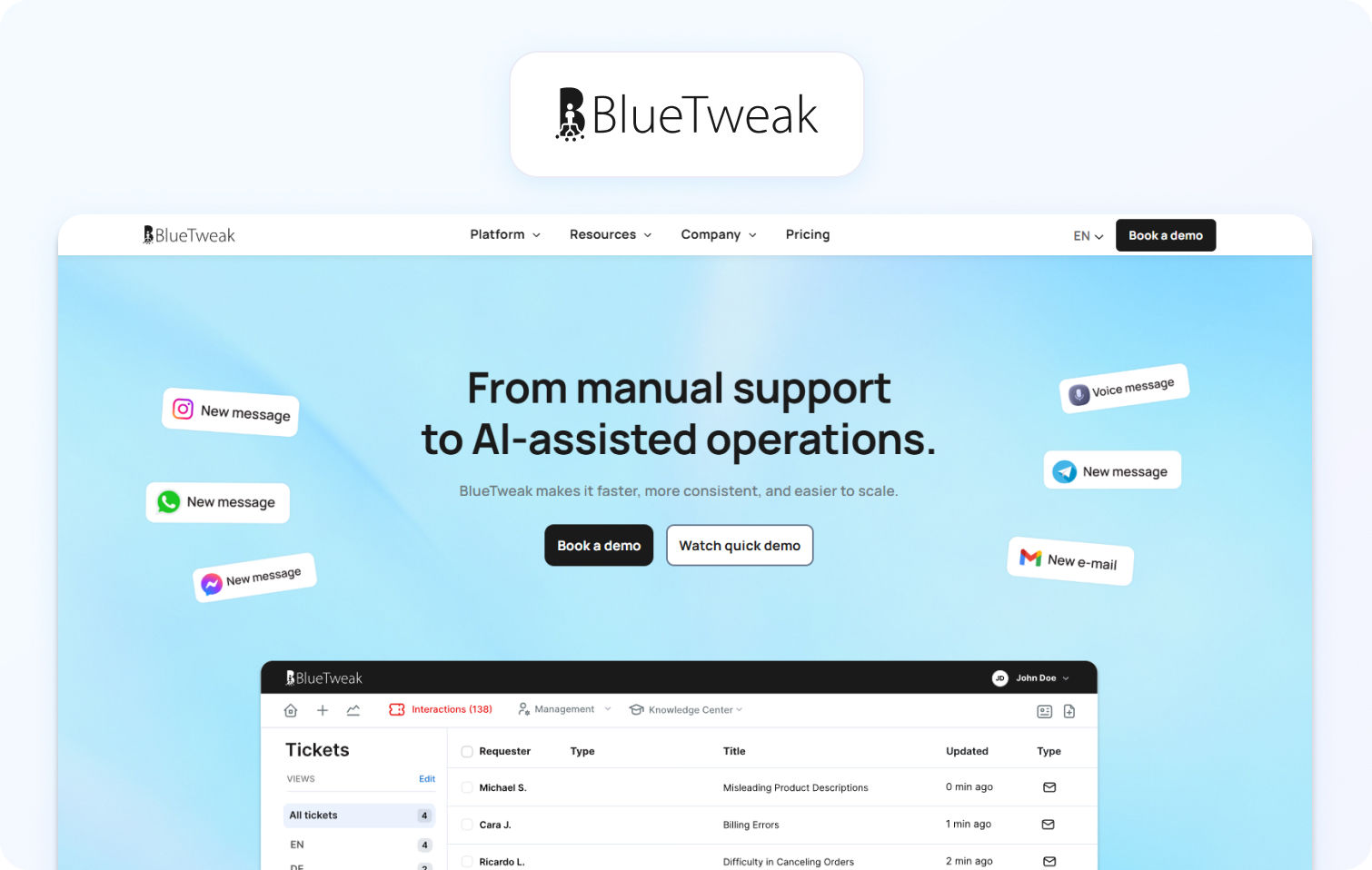
What it is: BlueTweak is a fully unified AI customer support platform built for modern support teams needing voice, chat, email, and social in one service hub. Its AI capabilities are powered by enterprise-grade cloud infrastructure and large language model frameworks (including LLM orchestration and scalable cloud environments such as AWS and Azure), enabling secure, high-performance, and fully integrated AI-driven customer interactions.
Best for: Organizations looking to replace fragmented tools with a single, AI-native platform that can streamline support, reduce operational costs, and deliver exceptional customer experiences at scale.
Key AI features:
- BlueTweak’s AI agents are powered by machine learning and natural language processing
- RAG-grounded knowledge base for accurate responses
- Real-time agent assist for human agents
- Built-in predictive analytics to anticipate customer needs
- AI summarization of customer conversations
Channels: Voice, chat, email, social, SMS
Pricing: Transparent pricing, starting at €65 per agent, per month, with all core features included. Free trial available.
Pros:
- True AI-powered customer service (not an add-on)
- Unified customer data and complete customer context
- Native WFM and QA tools improve agent productivity
Cons:
- Requires onboarding alignment for complex service strategies
Case Study: A leading packaging company used BlueTweak’s unified AI customer service solution to streamline fragmented customer service operations and improve visibility across customer interactions. By centralizing customer data, implementing a RAG-grounded knowledge base, and enabling real-time insights for support teams, the business saw a 28% increase in NPS, a 20% reduction in complaints, and a 15% improvement in team efficiency.
This demonstrates how AI-driven, omnichannel customer service solutions can directly elevate customer satisfaction, improve service quality, and create measurable gains across support operations.
AI in customer service isn’t about replacing human support, it’s about elevating it. The real value comes when AI and human agents operate from the same system, with shared context and intelligence

See for youself. Get a 14-day free trial today.
Get Free Trial2) Zendesk — Best AI Customer Service Solution for Enterprise Ticketing at Scale
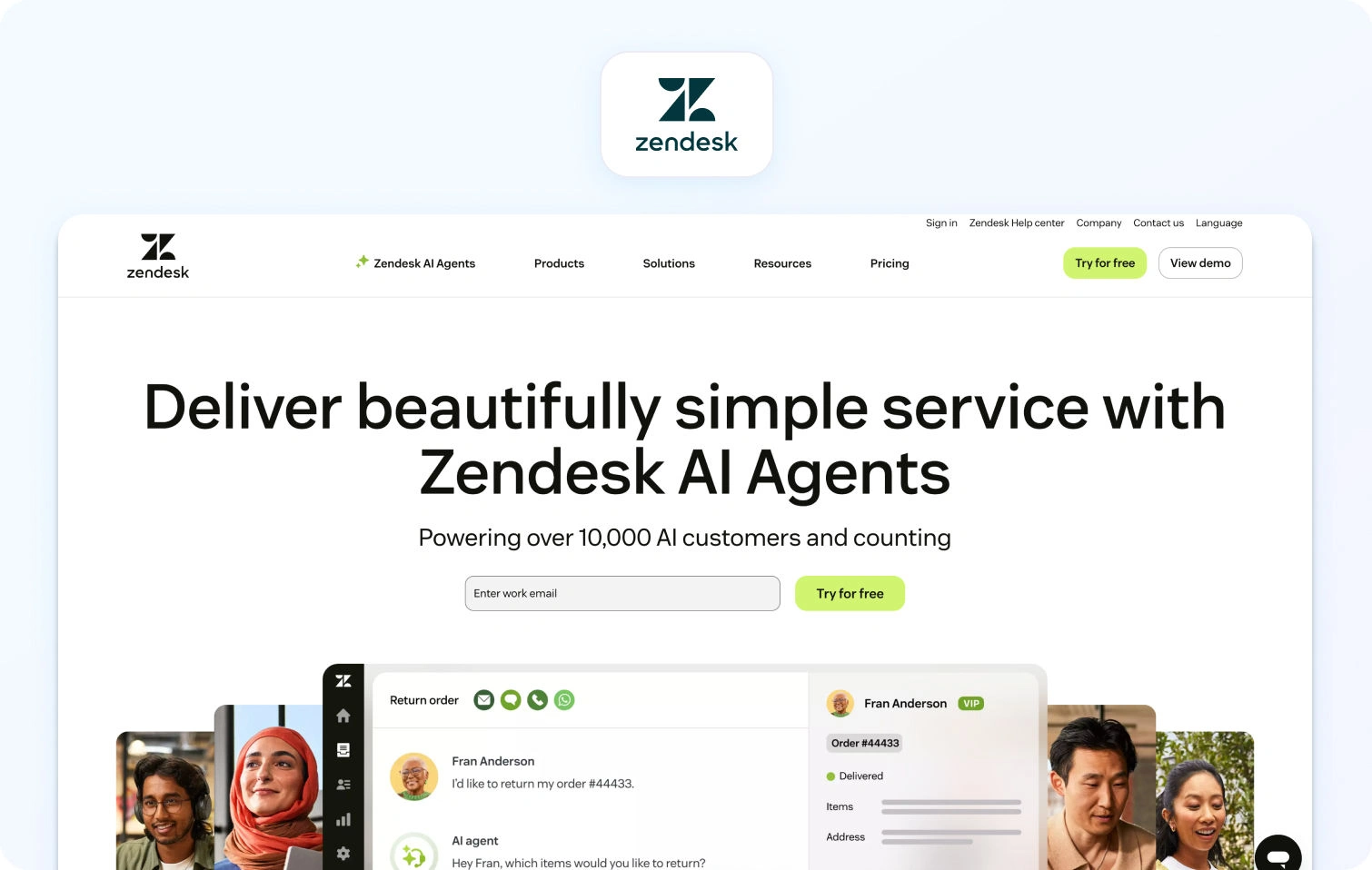
What it is: Zendesk is a widely adopted enterprise customer service software platform that combines ticketing, omnichannel messaging, and AI-assisted workflows for large-scale support operations.
Best for: Large enterprises needing structured ticketing, workflow automation, and layered AI tools across global customer support teams.
Key AI features:
- Zendesk AI for suggested replies and ticket triage
- Intent detection for customer inquiries
- Automated routing and prioritisation
- AI-powered knowledge base suggestions
Channels: Voice, chat, email, social
Pricing: Custom pricing, verify for details. Free trial available.
Pros:
- Mature enterprise ecosystem
- Strong workflow automation for service teams
- Extensive integrations
Cons:
- AI capabilities fragmented across paid add-ons
- Total cost increases significantly with AI modules
3) Intercom — Best AI Customer Service Solution for SaaS and Product-Led Teams
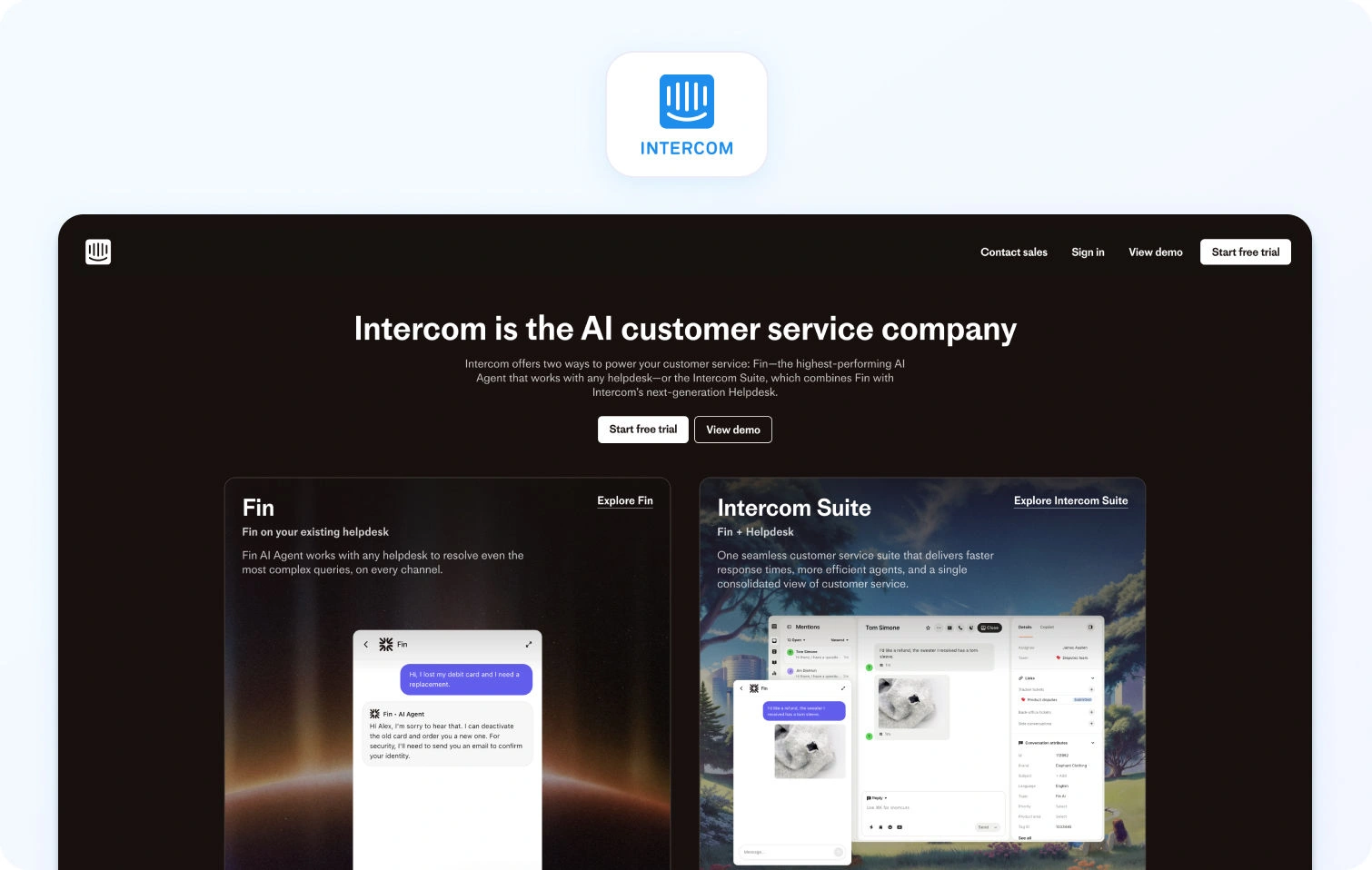
What it is: Intercom is a conversational customer support platform built for SaaS companies, combining messaging, automation, and its Fin AI agent.
Best for: Product-led companies focused on in-app customer experience and conversational support.
Key AI features:
- Fin AI agent for automated resolution
- AI-generated responses based on customer data
- Workflow automation for customer interactions
- Sentiment-aware routing
Channels: Chat, email, in-app messaging
Pricing: Starting at approx. $29 per seat, per month, plus usage-based AI costs; verify for details. Free trial available.
Pros:
- Strong conversational UX for customer support
- Fast deployment for SaaS teams
- Good automation for repetitive customer requests
Cons:
- Limited native voice support
- AI costs scale quickly with volume
4) Freshdesk — Best AI Customer Service Solution for Budget-Conscious Growing Teams
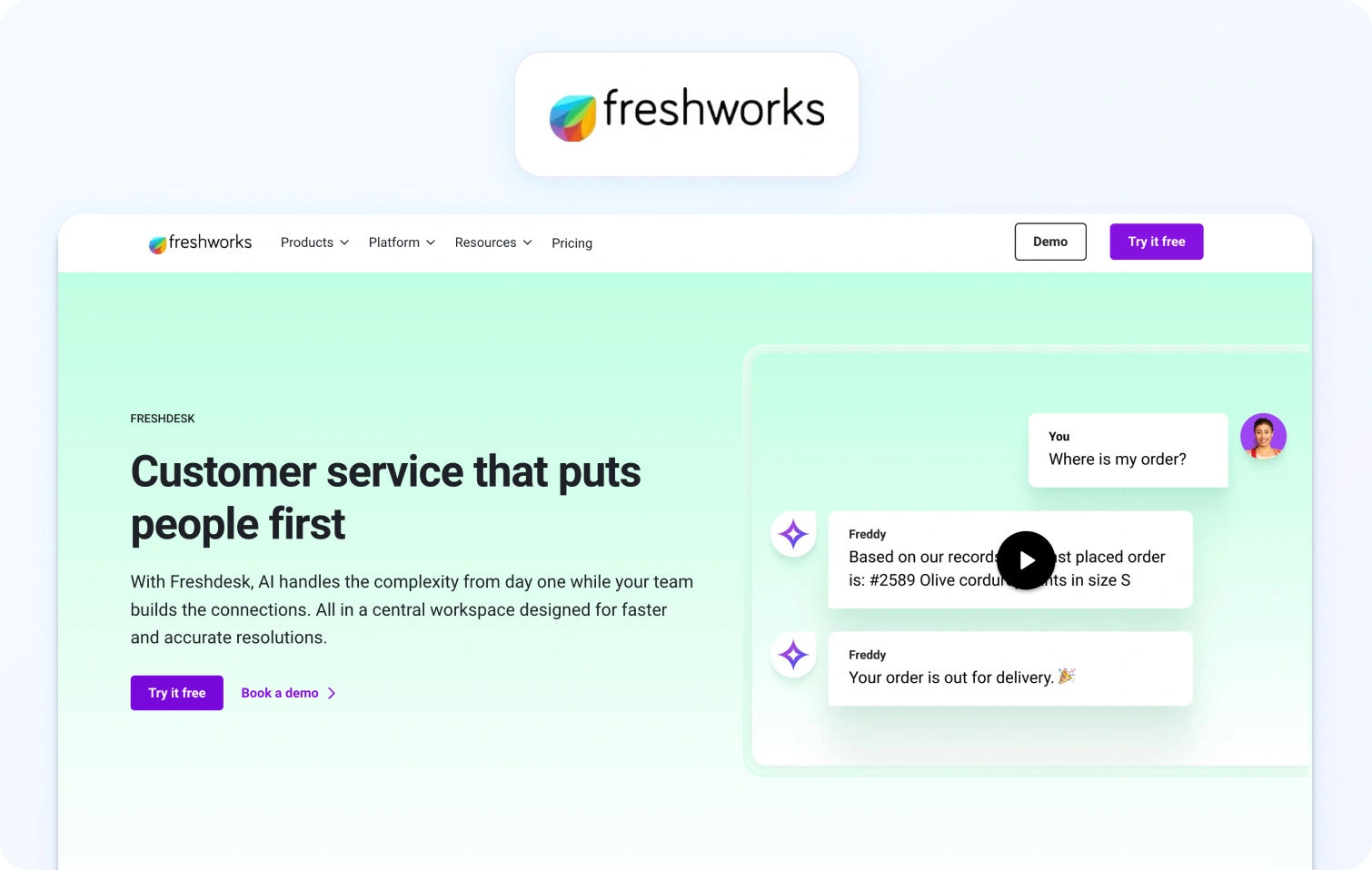
What it is: Freshdesk is a scalable customer service software platform offering ticketing, automation, and AI support tools for mid-market teams.
Best for: Growing businesses needing affordable customer service solutions with basic AI capabilities.
Key AI features:
- Freddy AI for suggested replies
- Ticket classification and routing
- Automated response workflows
- Basic sentiment detection
Channels: Email, chat, voice (add-on), social
Pricing: Starting at approx. $15 per agent, per month, verify for details. Free trial available.
Pros:
- Cost-effective entry point
- Easy onboarding for support teams
- Solid automation for routine customer queries
Cons:
- Advanced AI features locked behind higher tiers
- Limited depth in omnichannel orchestration
5) Salesforce Service Cloud — Best AI Customer Service Solution for Salesforce-Embedded Enterprises
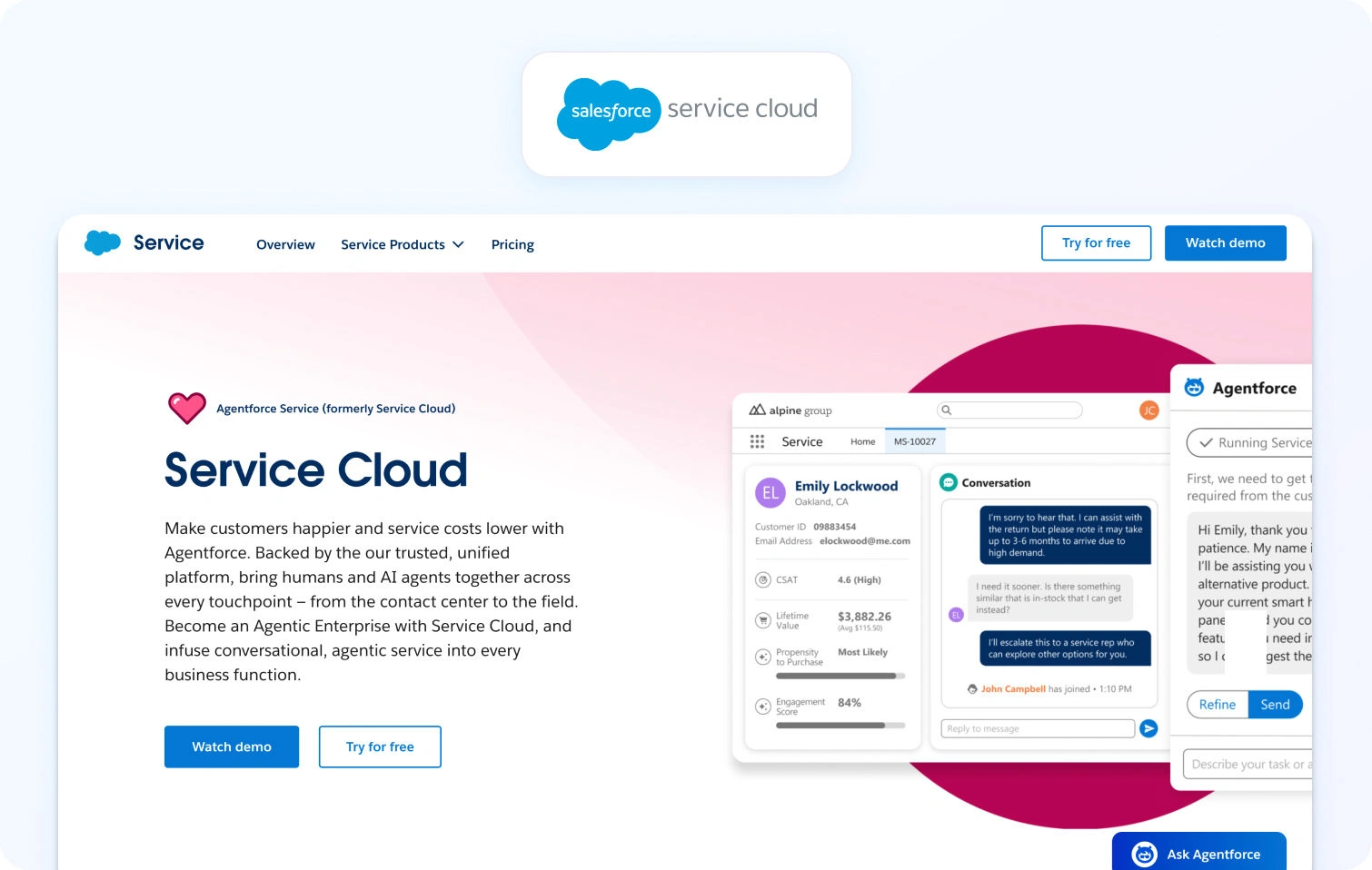
What it is: Salesforce Service Cloud is an enterprise-grade customer support software integrated deeply with Salesforce CRM and Einstein AI.
Best for: Enterprises already using Salesforce for CRM and sales operations.
Key AI features:
- Einstein AI for case classification
- Predictive routing and customer intent detection
- AI-generated knowledge suggestions
- Automated case summarisation
Channels: Voice, chat, email, social
Pricing: Tiered pricing from $25 per user, per month, verify for details. Free trial available.
Pros:
- Deep CRM integration for full customer data visibility
- Strong enterprise scalability
- Advanced analytics and forecasting
Cons:
- High complexity and long implementation cycles
- AI capabilities fragmented across modules
6) HubSpot Service Hub — Best AI Customer Service Solution for Sales-Led Organizations
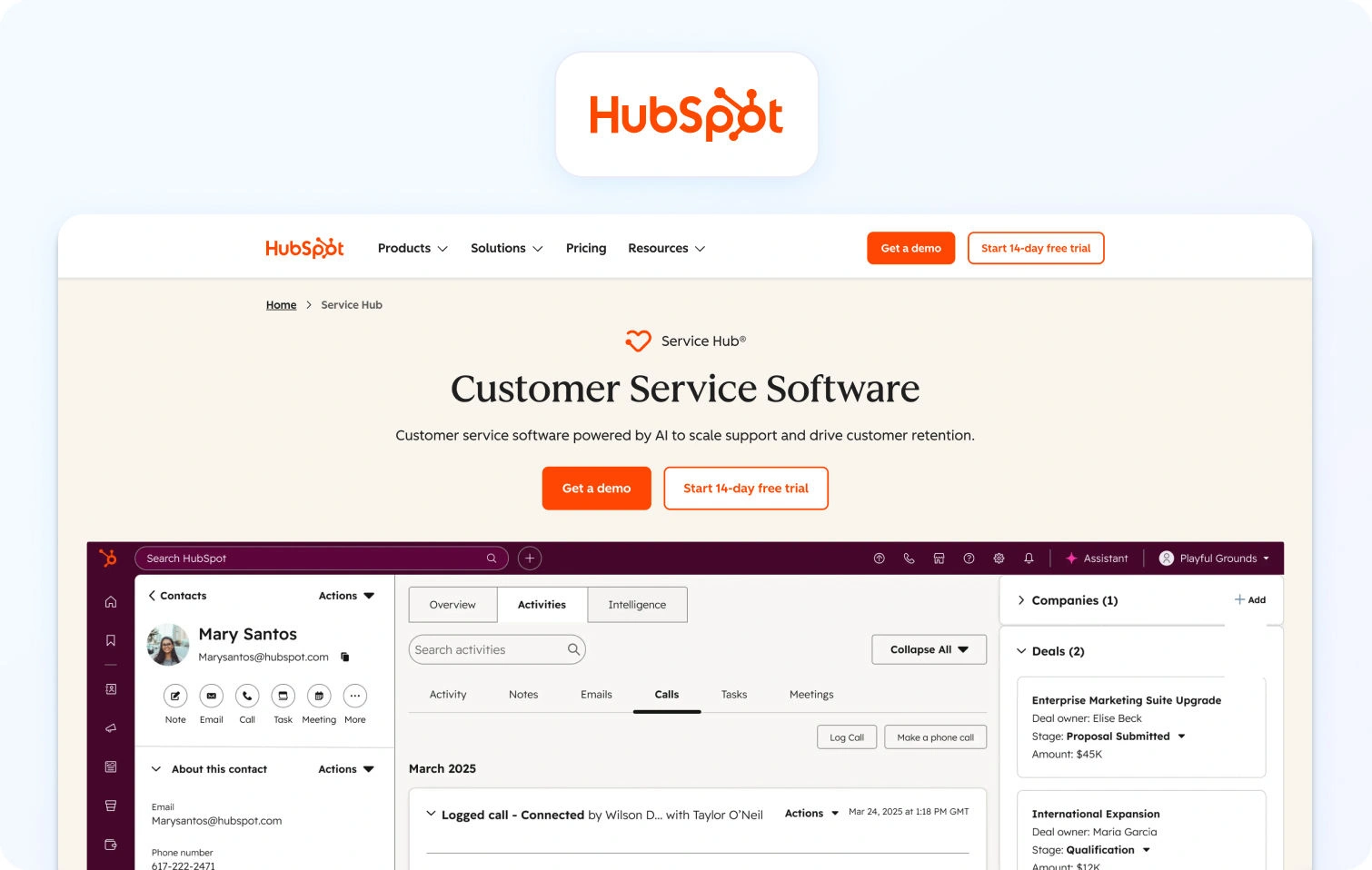
What it is: HubSpot Service Hub is a lightweight customer support platform designed to unify service, marketing, and sales data.
Best for: Sales-led organisations needing simple customer service solutions tied to CRM.
Key AI features:
- AI-assisted ticketing and responses
- Knowledge base article suggestions
- Conversation summarisation
- Basic chatbot automation
Channels: Email, chat, social
Pricing: Free and paid plans available, verify for details.
Pros:
- Strong CRM alignment across teams
- Easy adoption for support teams
- Unified customer lifecycle visibility
Cons:
- Limited advanced AI capabilities
- Less suitable for complex support environments
7) Kustomer — Best AI Customer Service Solution for CRM-Native Conversation Management
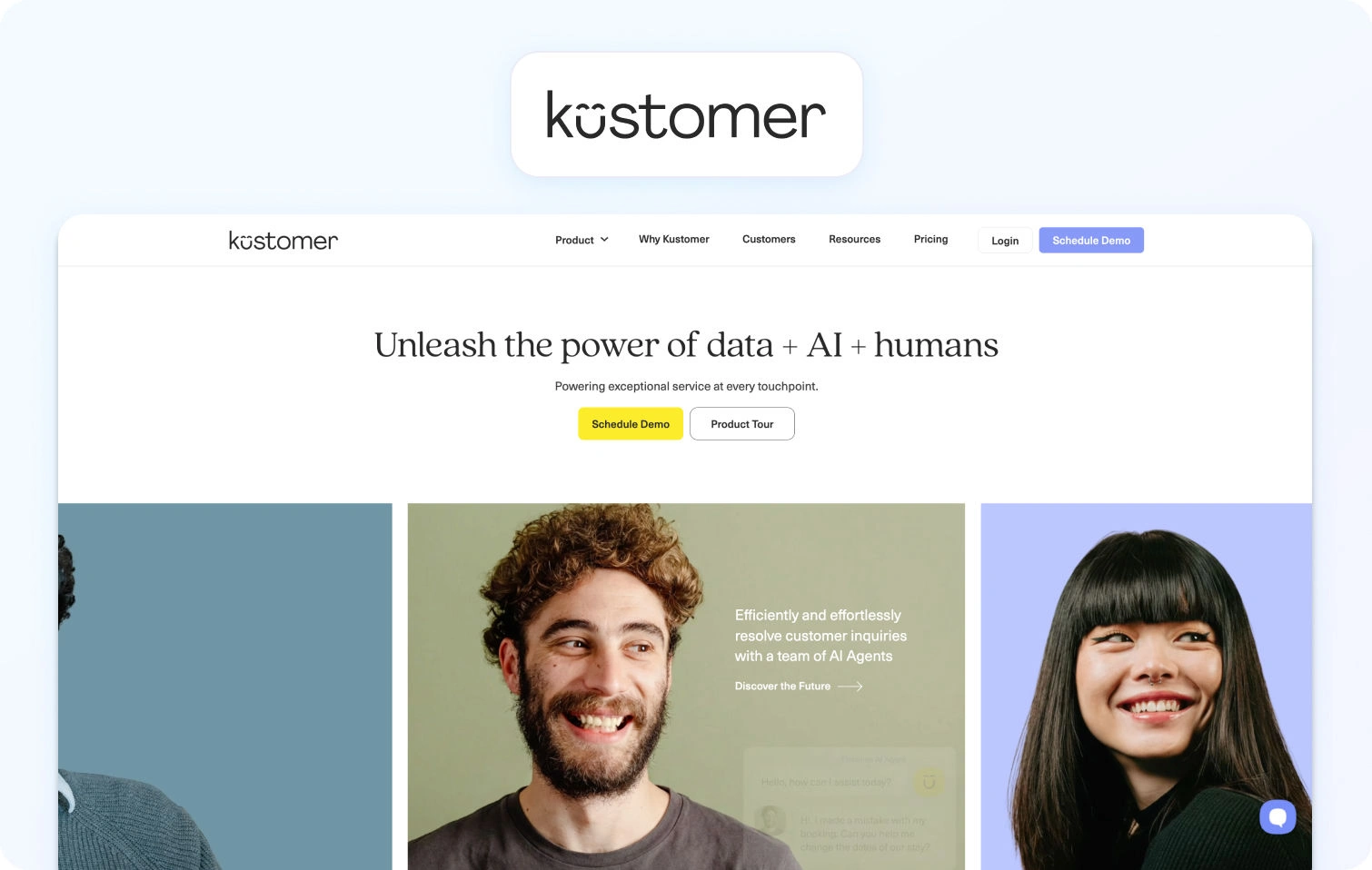
What it is: Kustomer is a CRM-first customer support platform built around unified timelines of customer interactions.
Best for: Teams needing full conversational history across channels.
Key AI features:
- AI-driven conversation summaries
- Automated routing based on customer behavior
- Sentiment analysis
- Suggested replies for agents
Channels: Voice, chat, email, SMS
Pricing: Custom pricing, verify for details.
Pros:
- Strong unified customer timeline
- Good visibility into past interactions
- CRM-native architecture
Cons:
- Smaller ecosystem than competitors
- AI features still maturing
8) Ada — Best AI Customer Service Solution for High-Volume Bot-First Resolution
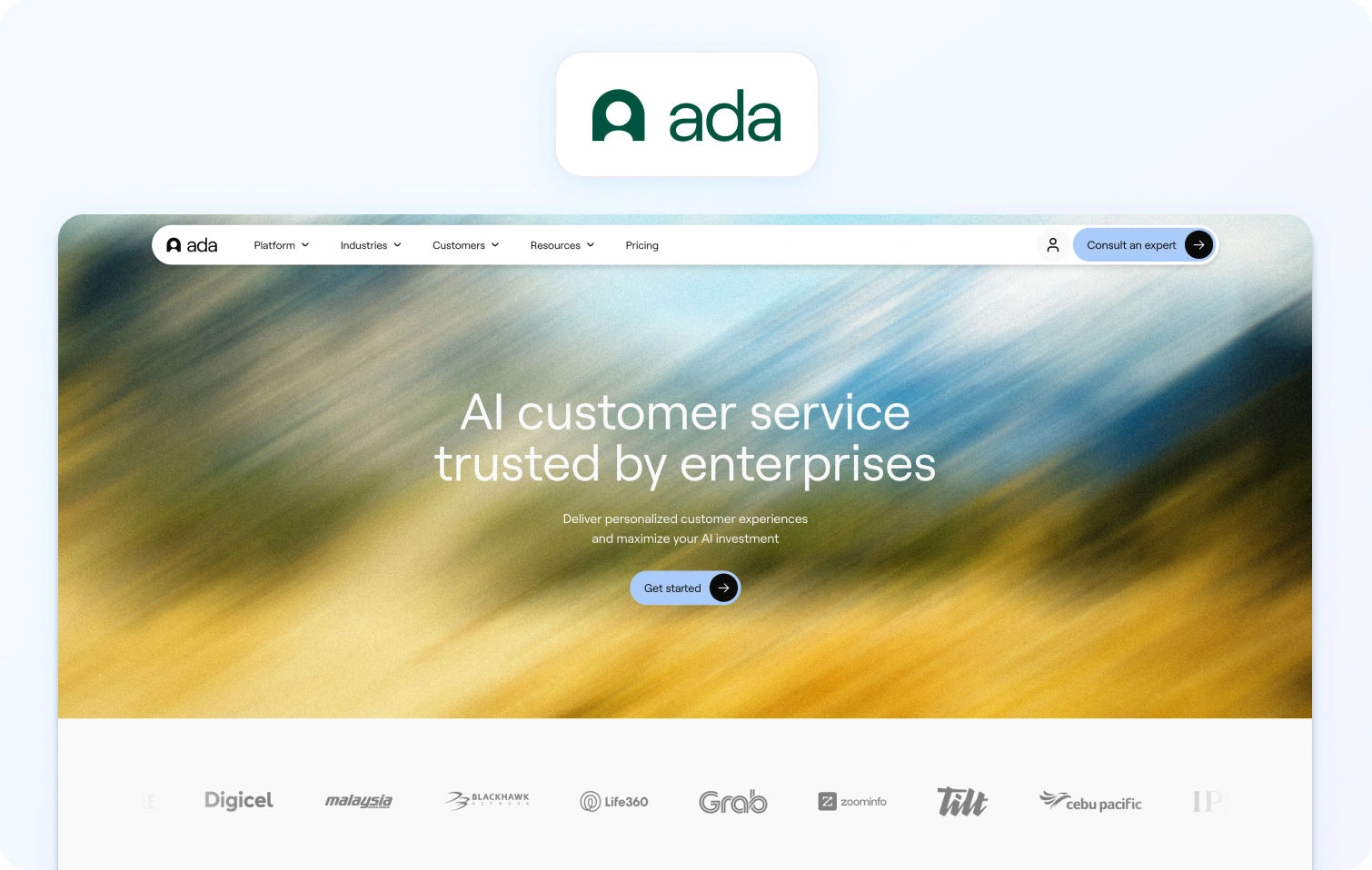
What it is: Ada is a chatbot-first AI customer support solution designed for high automation and containment.
Best for: Businesses prioritising self-service and deflection at scale.
Key AI features:
- AI chatbot for automated resolution
- Intent recognition using machine learning
- Automated workflows for customer requests
- Knowledge base integration
Channels: Chat, messaging platforms
Pricing: Custom pricing, verify for details.
Pros:
- High automation and containment rates
- Strong self-service capabilities
- Fast scaling for customer inquiries
Cons:
- Limited human agent tooling
- Less suited for complex omnichannel support
9) Genesys Cloud CX — Best AI Customer Service Solution for Global Enterprise Contact Centers
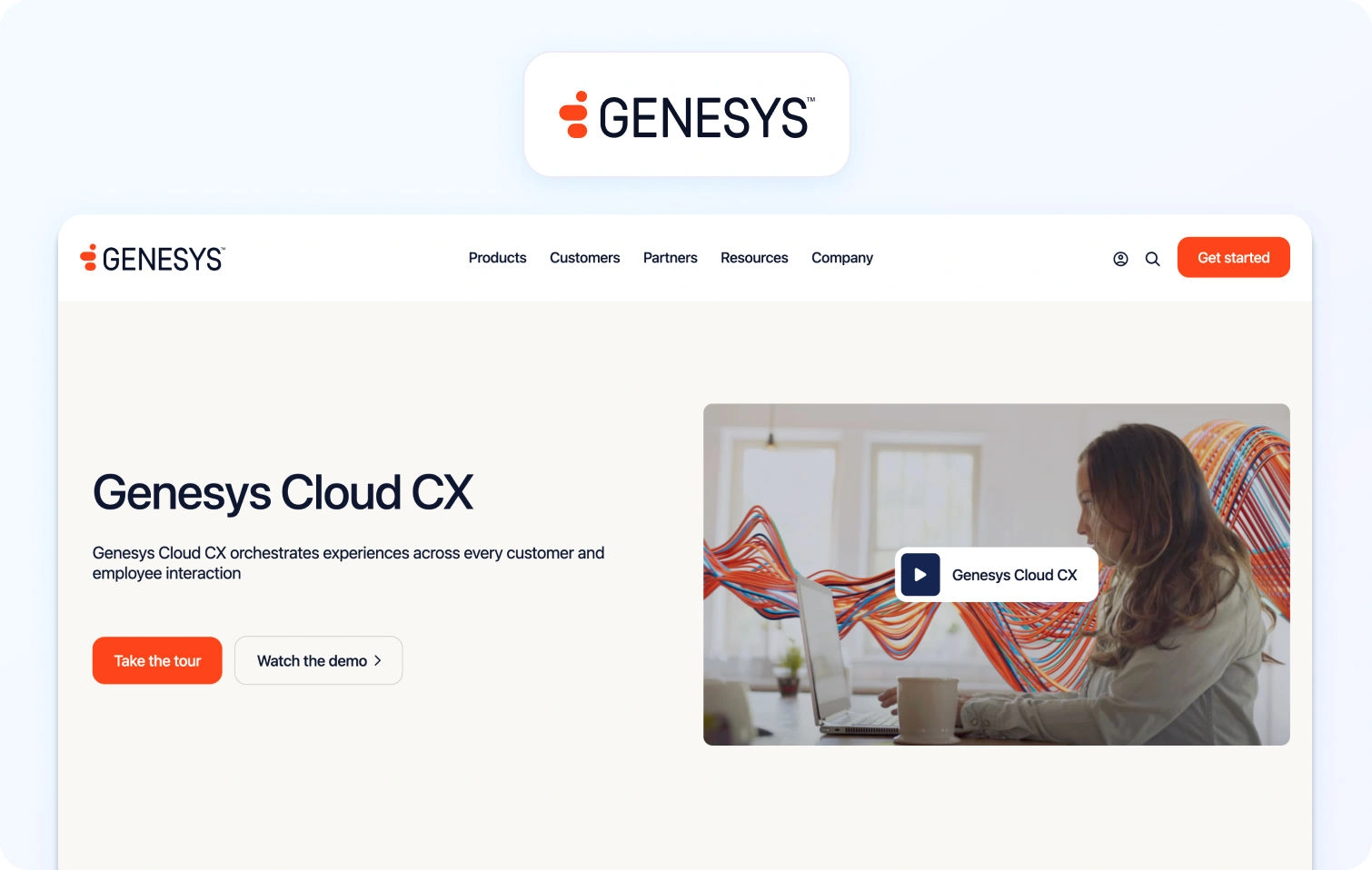
What it is: Genesys Cloud CX is a contact centre platform focused on enterprise-scale voice and omnichannel customer support.
Best for: Large global contact centres requiring advanced routing and workforce optimisation.
Key AI features:
- Predictive engagement and routing
- Speech and sentiment analysis
- AI-powered workforce management
- Automated transcription and summarisation
Channels: Voice, chat, email, SMS
Pricing: Tiered pricing, starting at approx. $75 per user, per month; verify for details.
Pros:
- Industry-leading voice capabilities
- Strong workforce management tools
- Advanced analytics for support operations
Cons:
- Complex setup and configuration
- High enterprise cost structure
10) Zoho Desk — Best AI Customer Service Solution for Teams in the Zoho Ecosystem
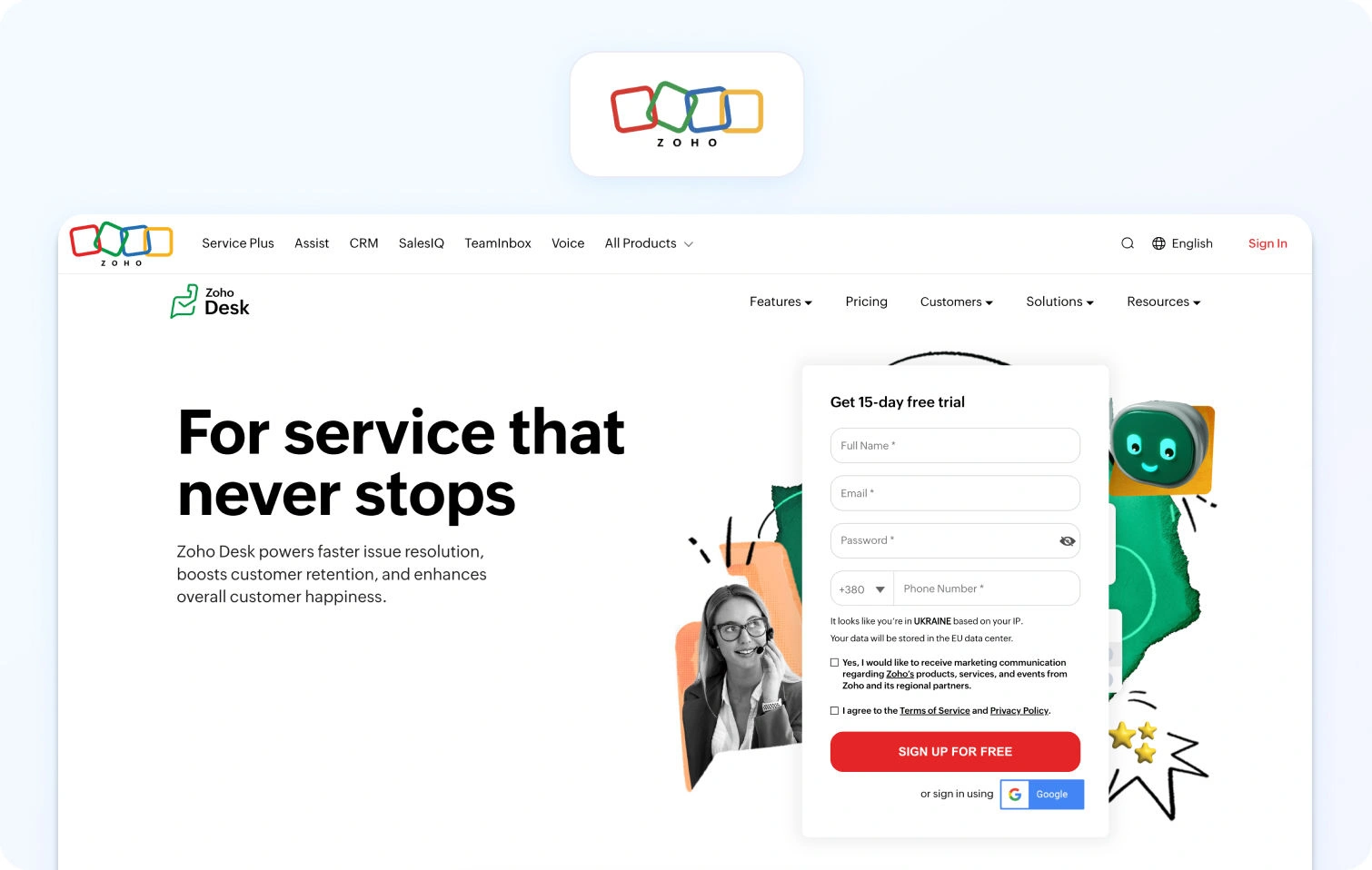
What it is: Zoho Desk is a cost-effective customer service software platform integrated into the Zoho ecosystem.
Best for: SMEs already using Zoho products.
Key AI features:
- Zia AI assistant for ticket classification
- Sentiment detection
- Suggested replies
- Knowledge base recommendations
Channels: Email, chat, social
Pricing: Free and paid plans available; verify for details. Free trial available.
Pros:
- Very affordable
- Strong ecosystem integration
- Good for basic support teams
Cons:
- Limited AI sophistication
- Less suitable for enterprise use cases
11) Help Scout — Best AI Customer Service Solution for Small and Mid-Size Support Teams
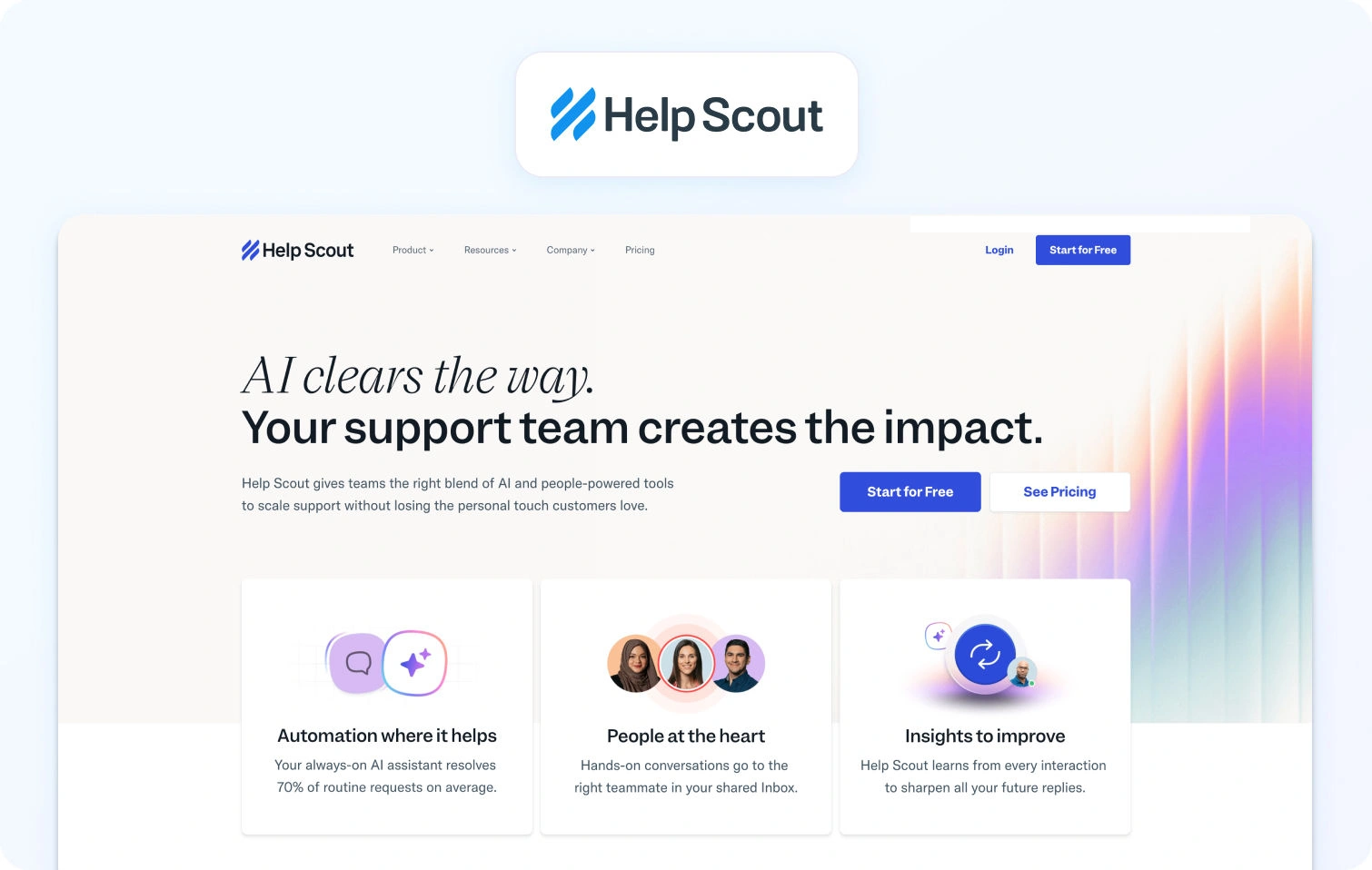
What it is: Help Scout is a simple, shared inbox-style customer support platform focused on usability.
Best for: SMBs prioritising simplicity and human-centric support.
Key AI features:
- AI-assisted replies
- Conversation summaries
- Knowledge base suggestions
- Basic automation workflows
Channels: Email, chat
Pricing: Free and paid plans, verify for details. Free trial available.
Pros:
- Extremely easy to use
- Clean interface for support teams
- Strong collaboration tools
Cons:
- Limited omnichannel capabilities
- Basic AI functionality
12) Tidio — Best AI Customer Service Solution for SMB Live Chat and Bot Automation
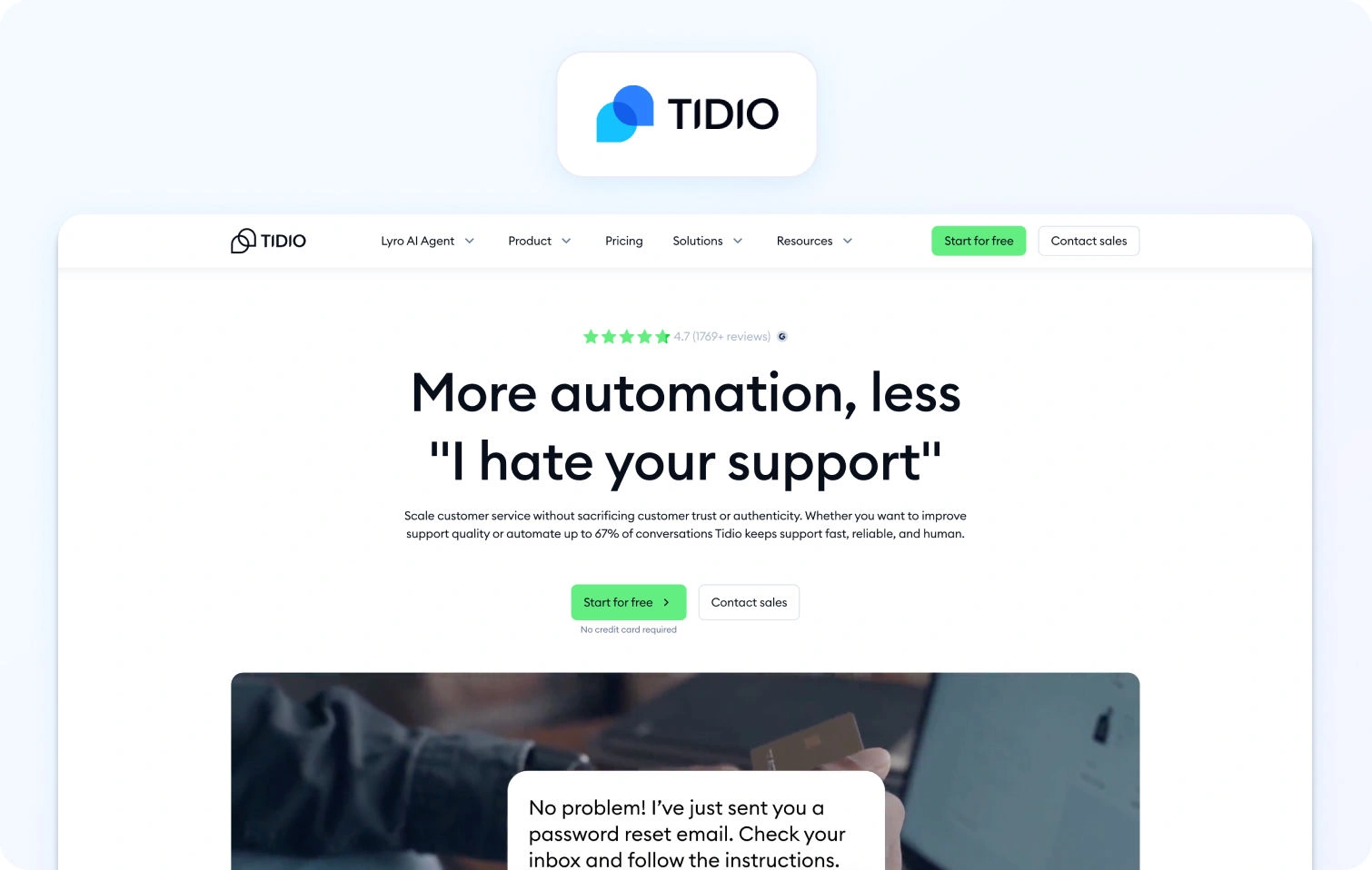
What it is: Tidio is a lightweight AI customer support platform combining live chat and chatbot automation.
Best for: SMBs needing quick chatbot deployment.
Key AI features:
- AI chatbots for automation
- Prebuilt conversational flows
- Basic intent detection
- Live chat handover to agents
Channels: Chat, email integrations
Pricing: Free and paid plans, verify for details. “Start for free” option available.
Pros:
- Fast setup
- Affordable for SMBs
- Strong chatbot automation
Cons:
- Limited enterprise functionality
- Basic analytics and reporting
13) Comm100 — Best AI Customer Service Solution for Regulated Industries
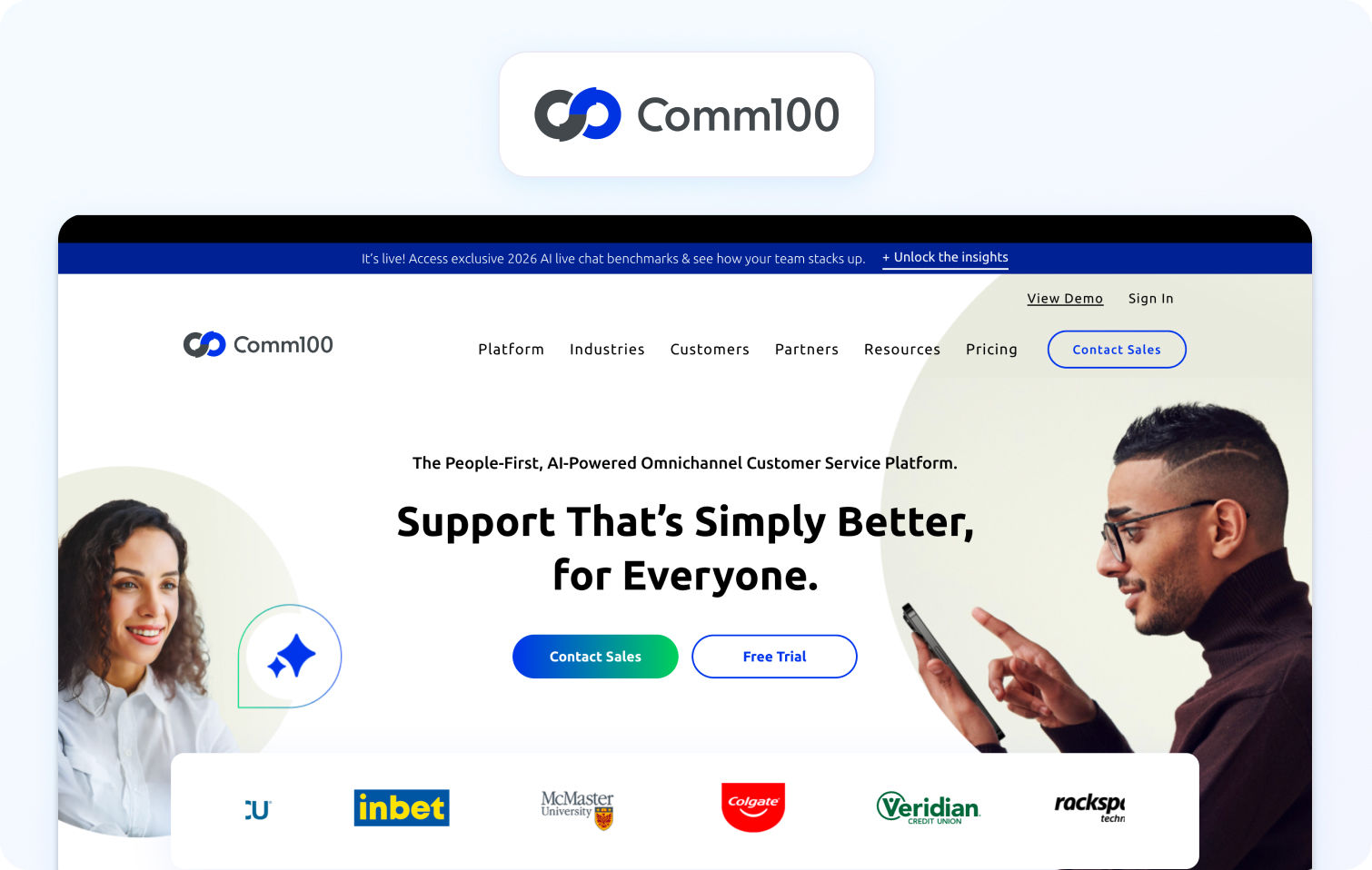
What it is: Comm100 is a secure customer service software platform designed for compliance-heavy industries.
Best for: Government, education, and regulated sectors.
Key AI features:
- AI chatbots with compliance controls
- Automated routing
- Knowledge base integration
- Sentiment detection
Channels: Chat, email, social
Pricing: Tiered pricing, starting at $31 per agent, per month. Verify for details.
Pros:
- Strong compliance and security features
- Reliable chatbot automation
- Suitable for regulated customer support
Cons:
- Older feeling UX
- Limited AI depth compared to newer platforms
14) HappyFox — Best AI Customer Service Solution for IT and Internal Help Desk Teams
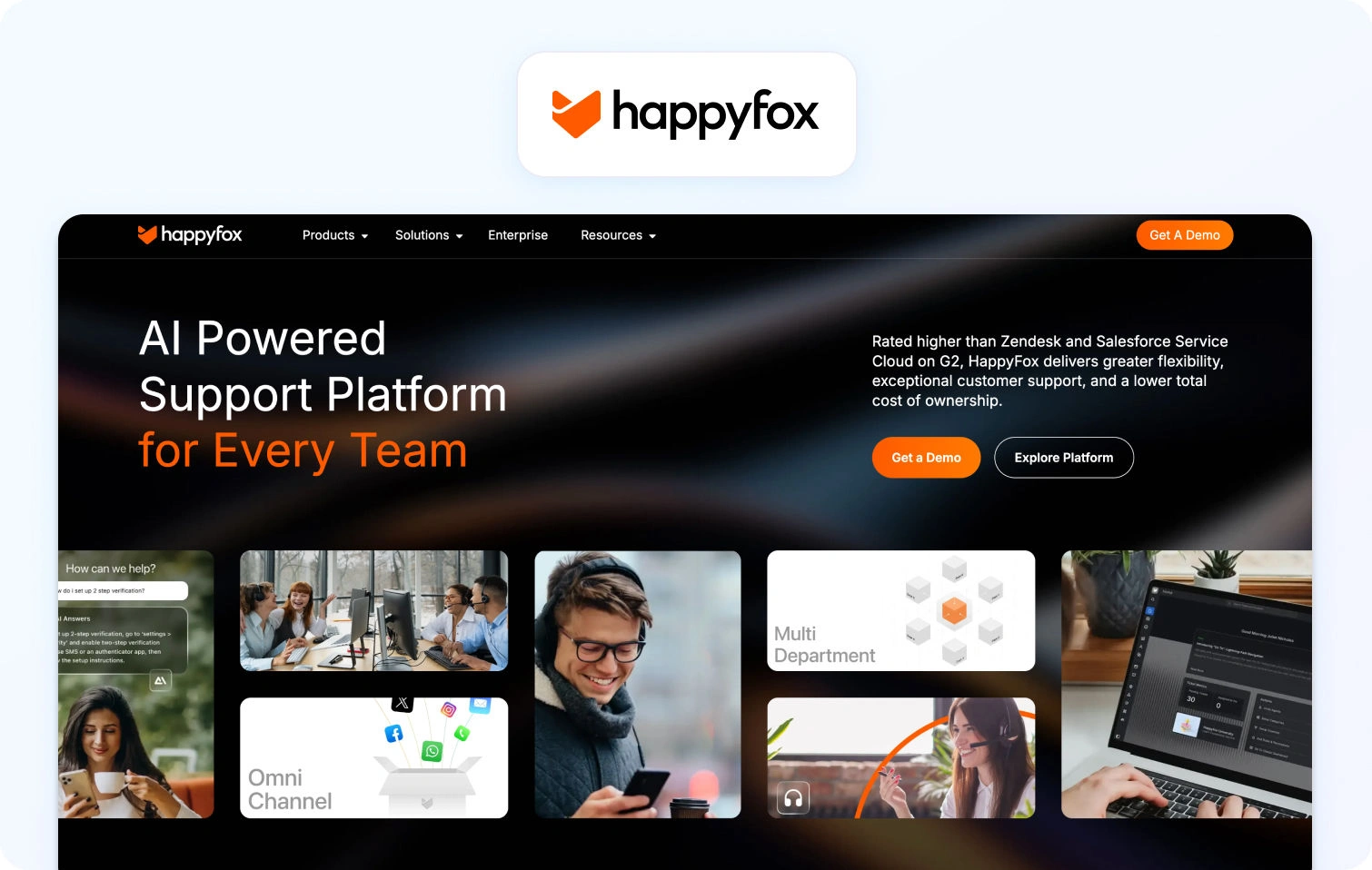
What it is: HappyFox is an IT-focused service hub designed for internal and external ticket management.
Best for: Internal IT and operations support teams.
Key AI features:
- Automated ticket classification
- Workflow automation
- Knowledge base suggestions
- Basic AI routing
Channels: Email, chat, web forms
Pricing: Tiered pricing starting at $24 per user, per month. Verify for details. Trial account available on request.
Pros:
- Strong internal support use case
- Reliable ticketing workflows
- Easy to deploy
Cons:
- Limited AI sophistication
- Not designed for customer-facing omnichannel support
15) LiveAgent — Best AI Customer Service Solution for Broad Channel Coverage at Lower Cost
What it is: LiveAgent is a multi-channel customer service software platform offering broad communication coverage.
Best for: Teams needing cost-effective omnichannel support.
Key AI features:
- Basic chatbot automation
- Ticket routing rules
- Knowledge base support
- Simple AI-assisted workflows
Channels: Voice, chat, email, social
Pricing: Tiered pricing, starting at approx. $15 per user, per month, verify for details. Free trial available.
Pros:
- Wide channel coverage
- Affordable pricing
- Simple setup
Cons:
- Limited AI capabilities
- Less advanced analytics
16) Gorgias — Best AI Customer Service Solution for Ecommerce Support Teams
What it is: Gorgias is an ecommerce-focused customer support platform designed for Shopify and DTC brands.
Best for: E-commerce teams managing high volumes of customer inquiries.
Key AI features:
- AI-powered macros and responses
- Order-aware automation
- Sentiment detection
- Automated ticket tagging
Channels: Email, chat, social
Pricing: Tiered pricing starting at $10 per month, verify for details. Free trial available.
Pros:
- Deep ecommerce integration
- Strong automation for repetitive requests
- Fast ROI for DTC brands
Cons:
- Narrow ecommerce focus
- Limited enterprise scalability
17) Dixa — Best AI Customer Service Solution for Conversation-First Support Operations
What it is: Dixa is a conversation-first customer support platform designed to unify interactions across channels.
Best for: Teams prioritising personalised, conversation-led support.
Key AI features:
- AI-powered routing
- Conversation summarisation
- Sentiment analysis
- Suggested responses for agents
Channels: Voice, chat, email, social
Pricing: Tiered pricing starting at $89 per agent, per month. Verify for details. Book a demo to discuss trial options.
Pros:
- Strong unified conversation view
- Good agent collaboration tools
- Focus on customer experience
Cons:
- Smaller ecosystem
- Less advanced AI automation than leaders
If you’re comparing a broader set of tools, including SMB and niche platforms, the full breakdown of each of these customer service AI solutions is included below, based on publicly available data as of Q2 2026:
What to Look For in an AI Customer Service Solution
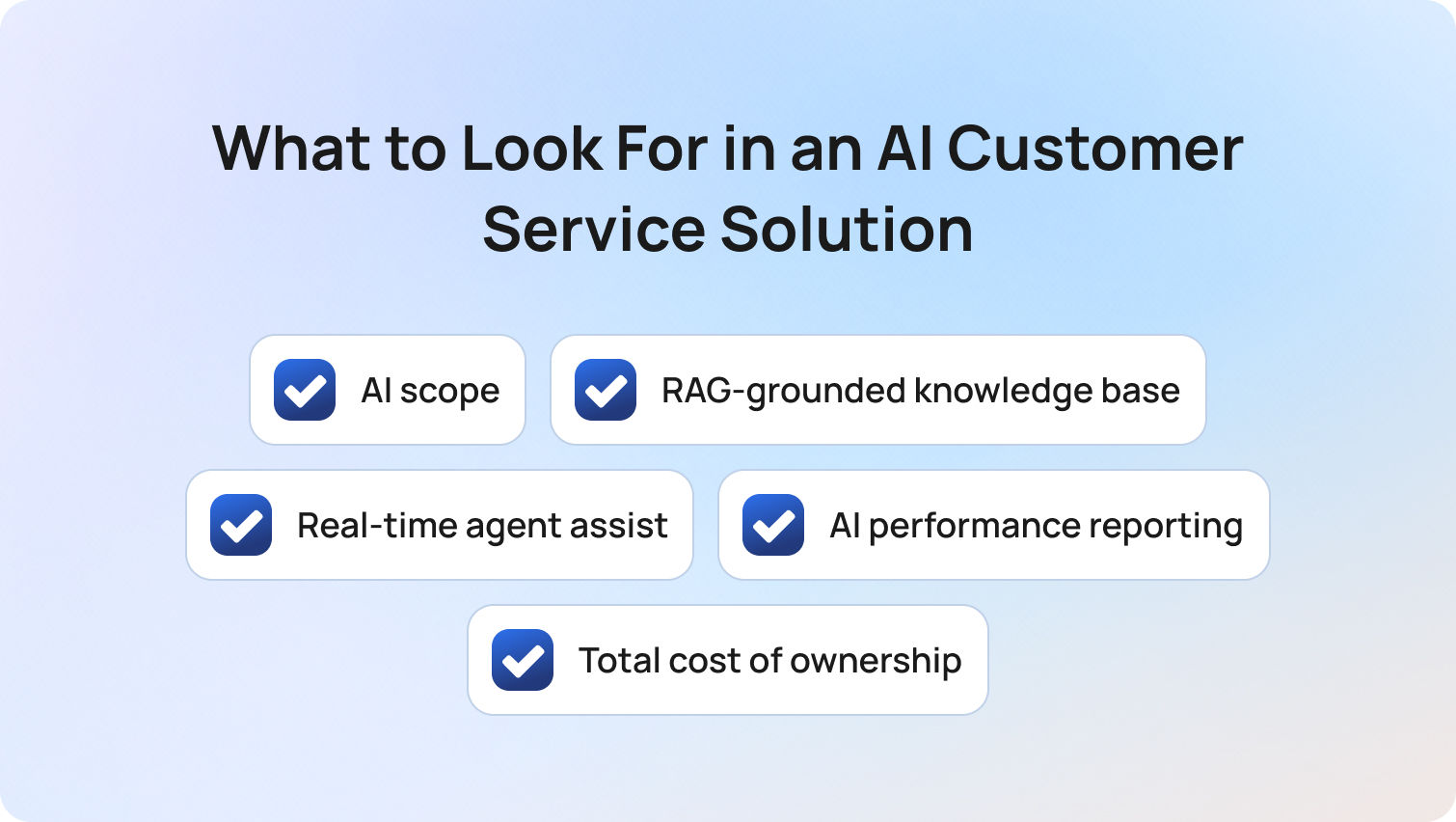
The most effective AI customer service solutions are those where AI is embedded across the full customer interaction lifecycle (before, during, and after support interactions) rather than added as a separate feature.
Choosing between AI-driven customer service solutions in 2026 requires a deeper evaluation than most vendor checklists suggest. At a surface level, many platforms appear similar: they all claim AI-powered customer service, automation, and improved customer experience. In reality, the differences in architecture, cost structure, and performance are significant, and they compound quickly as you scale.
To make a confident decision, buyers need to look beyond feature lists and assess how AI actually functions within customer service operations.
AI scope: Native vs. add-on AI
The most important distinction in today’s market is whether AI is native to the platform or layered on as an add-on.
Many tools position themselves as AI customer service solutions, but restrict core capabilities (like AI agents, suggested replies, or sentiment tagging) behind additional modules. This creates fragmentation across support teams, inconsistent customer interactions, and rising costs over time.
By contrast, AI-native platforms embed intelligence across every service interaction, improving both agent productivity and customer satisfaction without requiring bolt-on tools.
RAG-grounded knowledge base (the non-negotiable)
AI is only as reliable as the data it can access. Platforms that lack a properly integrated, RAG-grounded knowledge base often generate responses based on generic model outputs rather than verified customer data. This leads to hallucinations, inconsistent answers, and erosion of trust in both AI agents and human agents.
A strong AI customer support solution should treat the knowledge base as the single source of truth, powering both automated responses and real-time agent assistance.
Real-time agent assist (where ROI actually comes from)
While automation gets the headlines, the fastest and most reliable ROI from AI in customer service comes from improving human agent performance.
Real-time assistance (such as suggested replies, contextual customer data, and live guidance during support interactions) enables support teams to resolve issues faster and more consistently. This has a direct impact on service quality, first contact resolution, and overall customer experience.
AI performance reporting (not just operational metrics)
Most platforms provide reporting, but few separate AI performance from human performance. Without visibility into metrics like AI containment rate, AI CSAT, and error rates, it becomes impossible to properly evaluate your AI customer service solution. Aggregated reporting masks issues and limits your ability to optimize both AI agents and human agents.
Look for platforms that provide real-time insights into how AI is performing independently.
Total cost of ownership (TCO) and pricing transparency
Pricing pages rarely tell the full story. Many customer service solutions appear cost-effective at the entry level but require additional spend for AI modules, voice capabilities, or advanced analytics. Over time, this turns what should be an efficiency driver into a growing cost center.
A true evaluation of AI customer service automation solutions should include:
- Base seat cost
- AI feature access
- Usage-based pricing
- Add-ons (voice, WFM, analytics)
Platforms, like BlueTweak, that bundle AI into the core offering typically provide more predictable and scalable cost structures.
How We Evaluated These AI Customer Service Solutions
These AI customer service solutions were evaluated based on publicly available data, verified capabilities, and real-world applicability across modern customer support environments as of Q2 2026.
To ensure this guide provides genuine decision-making value, not just a feature roundup, we applied a consistent evaluation methodology across all platforms. This focuses on how each solution performs in real-world customer service operations, not just how it is marketed.
Our evaluation considered:
- Public documentation and pricing pages
- Verified AI capabilities (not just claimed features)
- Independent review summaries from G2 and Capterra (Q2 2026)
No vendor paid for inclusion in this list, and all platforms were assessed using the same criteria to ensure consistency and comparability.
To translate this methodology into something actionable, we’ve broken it down into two parts: a practical capability checklist and a weighted scoring framework.
Must-Have AI Customer Service Capability Checklist
A complete AI customer service solution should include a defined set of core capabilities that enable both automation and human-assisted support at scale.
Before committing to any platform, it’s important to validate that it meets a baseline level of functionality; these are essential for delivering consistent, scalable customer support in 2026.
The checklist below outlines the capabilities that separate modern AI-powered customer service solutions from legacy tools:
- AI-powered suggested or proposed replies
- RAG-grounded knowledge base for both bot and agent use
- Real-time sentiment analysis to analyze customer sentiment during interactions
- AI-generated summaries of customer conversations
- Autonomous resolution (bot containment) across channels
- Native omnichannel inbox (voice, chat, email, social, SMS)
- AI performance reporting (AI vs. human metrics)
- QA scoring across both AI and human agents
- Security controls (MFA, RBAC, audit logs, data residency)
This checklist provides a fast way to eliminate platforms that cannot support modern customer service teams at scale.
BlueTweak AI Customer Service Scoring Rubric
The BlueTweak AI Customer Service Scoring Rubric is a weighted evaluation framework designed to assess how effectively a platform delivers AI across the full customer service lifecycle.
While checklists help with elimination, they don’t help with prioritisation. Not all features carry equal weight, and some have a far greater impact on customer experience, agent productivity, and long-term business growth.
To address this, we’ve developed a scoring model that reflects what matters most when selecting an AI customer service solution.
Before reviewing the table, it’s important to note that this framework prioritises:
- Native AI capabilities over add-ons
- End-to-end lifecycle coverage
- Measurable performance and transparency
BlueTweak AI Customer Service Scoring Rubric:
Final Thoughts: Choosing the Right AI Customer Service Solution for 2026
Choosing the right AI customer service solution in 2026 means selecting a platform that can consistently deliver high-quality, AI-driven customer interactions while improving customer satisfaction and operational efficiency at scale.
The key question isn’t whether a platform offers AI customer service solutions; they all do. The real question is whether AI is:
- Native (not bolted on)
- Included transparently in pricing
- Applied across the full lifecycle of customer interactions, from routing and resolution to analysis and optimisation
This distinction becomes critical as customer service teams scale. Platforms that rely on fragmented AI tools or add-ons often struggle to maintain consistency across customer queries, leading to gaps in customer sentiment, slower resolution times, and rising operational complexity.
By contrast, AI-native platforms enable both AI agents and support agents to operate with shared context; using real-time insights, customer feedback, and a unified knowledge base to deliver faster, more accurate, and more personalized support.
This is where the real impact shows up:
- Higher customer satisfaction
- Stronger alignment with evolving customer expectations
- Better performance across key support metrics like resolution time and first contact resolution
Ultimately, customer service refers not just to resolving issues, but to consistently delivering value across every interaction. The right platform makes that scalable without increasing complexity or cost.
If your goal is to unify channels, automate routine tasks, and equip your teams with AI that can really address customer needs in real-time, platforms like BlueTweak stand out.
If you’re comparing platforms, the fastest way to evaluate the difference is to see it live. You can book a demo or start a free trial to experience how BlueTweak’s AI agents and unified service hub perform in real support scenarios.

As Head of Digital Transformation, Radu looks over multiple departments across the company, providing visibility over what happens in product, and what are the needs of customers. With more than 8 years in the Technology era, and part of BlueTweak since the beginning, Radu shifted from a developer (addressing end-customer needs) to a more business oriented role, to have an influence and touch base with people who use the actual technology.



