



TL;DR
Modern AI contact center solutions are transforming how businesses manage customer interactions, combining AI-powered automation with human agents to deliver faster, more consistent customer experiences across multiple channels. By embedding generative AI, intelligent call routing, and self-service solutions into a single platform, teams can improve customer satisfaction, boost agent productivity, and reduce operational costs without adding complexity. For teams evaluating a contact center AI platform in 2026, the priority should be unifying customer data, streamlining contact center operations, and adopting AI-powered tools that enhance both agent performance and the overall customer journey.
What Is an AI Contact Center Solution?
Before comparing vendors, it’s worth taking a step back and properly defining what a modern AI contact center solution actually is, and just as importantly, what it is not. At its core, an AI contact center solution is a cloud-based platform that brings together voice and digital communication channels, enhanced by embedded artificial intelligence, to manage, route, and resolve customer interactions in real time. But that definition alone doesn’t capture the scale of transformation happening in customer experience.
What we’re seeing in 2026 is not just a shift in tooling, but a shift in architecture. Legacy contact centers were built around telephony. Systems were designed for voice-first interactions, with rigid infrastructure, limited flexibility, and little visibility beyond basic call metrics. As digital channels emerged, many organizations layered on additional tools, resulting in fragmented workflows, duplicated data, and agents constantly switching between systems.
Cloud-based contact center-as-a-service platforms improved accessibility and scalability, but many still treated channels, automation, and analytics as separate components rather than a unified system.
AI-native platforms represent the next stage of this evolution. Instead of adding intelligence on top, they are built with AI embedded at every layer of the product. That distinction is critical. It’s the difference between a system that supports agents and one that actively enhances their performance in real time.
To properly evaluate today’s AI-powered contact center solutions, buyers should think in terms of three interconnected layers.
The first is the channel layer, which defines where conversations take place. This includes voice, email, live chat, SMS, and social messaging platforms. In a modern environment, these channels are not siloed. Conversations move seamlessly between them, with full context preserved, allowing agents to engage customers without losing continuity.
The second is the intelligence layer, which is where AI delivers its most visible impact. This includes capabilities such as intelligent routing, real-time transcription, automated summarization, suggested responses, and increasingly, autonomous resolution. The most advanced platforms go beyond surface-level automation and ground their AI in a company’s knowledge base, ensuring responses are accurate, consistent, and context-aware.
The third is the operations layer, which underpins how teams are managed and optimized. This includes workforce management, quality assurance, performance tracking, and reporting. In legacy setups, these functions often require separate tools or costly integrations. In AI-native platforms, they are built in, allowing leaders to make faster, more informed decisions based on real-time data.
This layered approach is what separates a true AI solution contact center platform from a traditional system with AI features bolted on. This is also why 2026 represents such a pivotal moment.
Large language model-powered capabilities, particularly in agent assist and customer self-service, have moved from experimental pilots to operational standards. Buyers are no longer asking whether a platform has AI. They are asking how deeply AI is embedded, how reliably it performs, and how much operational value it actually delivers.
2026 AI Contact Center Solutions: At-a-Glance Comparison
| Platform | Native Voice | AI Included | WFM Native | KB AI | Starting Price | Best For |
|---|---|---|---|---|---|---|
| BlueTweak | Yes | Yes | Yes | Yes | €65/agent/mo | 20–500 agents, omnichannel |
| Genesys Cloud CX | Yes | Partial | Yes | Varies | ~$75+ per agent | Enterprise |
| Five9 | Yes | Add-on | Yes | Add-on | Verify | High-volume voice |
| NICE CXone | Yes | Add-on | Yes | Add-on | Verify | Enterprise / Compliance |
| Talkdesk | Yes | Partial | Partial | Partial | ~$85+ per agent | Mid-market vertical |
| Zendesk | Yes | Add-on | Add-on | Add-on | ~$55+ per agent | Zendesk users |
| Salesforce Service | Yes | Add-on | Add-on | Partial | Verify | Salesforce-native |
| Freshdesk | Yes | Add-on | Add-on | Partial | ~$15+ per agent | SMB and growing |
| 8x8 | Yes | Partial | Partial | Partial | Verify | UCaaS + CCaaS |
| Dialpad AI | Yes | Yes | Add-on | Partial | ~$80+ per agent | Mid-market AI-first |
| Aircall | Yes | Add-on | No | No | ~$30+ per license | SMB voice + CRM |
| Intercom | Limited | Yes | No | Yes | ~$29+ per seat | SaaS / Digital-first |
Table note: “Yes” indicates the capability is native and included. “Partial” indicates limited or tier-dependent availability. “Add-on” indicates additional cost. “No” indicates the feature is not available. Pricing is based on publicly available information as of Q2 2026 and should be verified before procurement.
The 12 Best AI Contact Center Solutions for 2026
Choosing between today’s AI contact center solutions is less about ticking off features and more about understanding how each platform is built. While many vendors claim to offer AI and omnichannel support, the real difference lies in whether those capabilities are native to the platform or layered on as add-ons. This has a direct impact on both performance and total cost of ownership.
At the same time, buyers are increasingly looking to consolidate fragmented tech stacks into a single system that can handle channels, intelligence, and operations together. The platforms below have been selected based on how well they deliver across those areas, helping teams balance AI capability, operational control, and long-term scalability.
1) BlueTweak: Best AI-Native Contact Center Platform for Omnichannel Teams
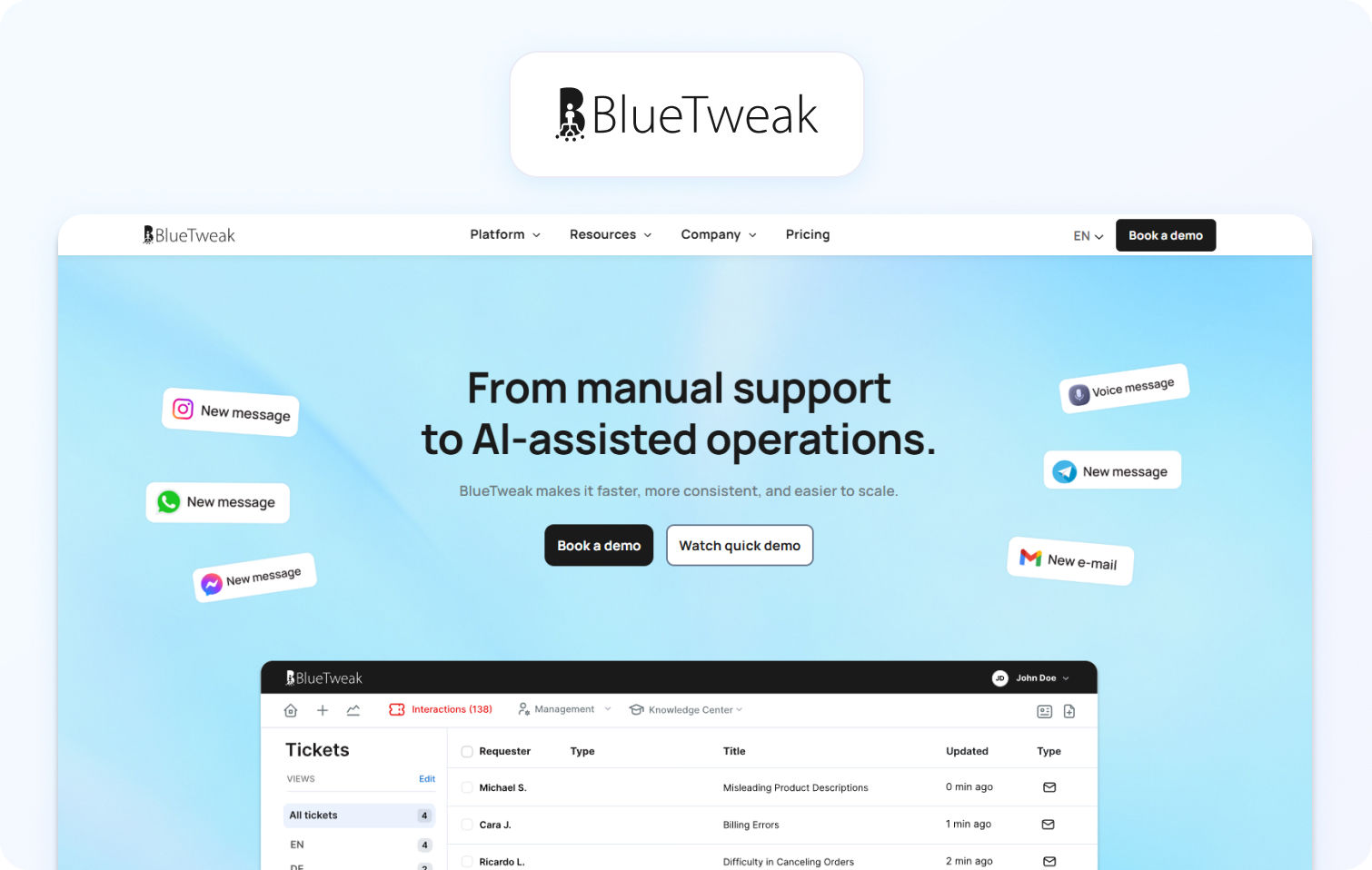
What it is: An AI-native, omnichannel contact center platform designed to unify voice, digital channels, and operations in a single workspace.
Best for: Mid-market to enterprise teams (20–500 agents) seeking true AI-first architecture
Standout AI features: Native transcription, summarization, agent assist, and KB-grounded responses
Channels: Voice, email, chat, SMS, social
Reporting & WFM: Fully native WFM, QA, and real-time analytics
Pricing: Transparent, bundled AI in base license
Pros:
- AI included by default
- Strong WFM and reporting out of the box
- Fast time-to-value
Watch-outs:
- Less brand recognition than legacy vendors
- Smaller ecosystem compared to Salesforce or Zendesk
Case study:
A growing e-commerce brand partnered with BlueTweak to replace a fragmented support stack and introduce AI across email and chat channels, using historical data to automate high-frequency queries and reduce manual workload. Within six months, the business achieved a 45% increase in ticket deflection and a 30% reduction in interaction times, allowing agents to focus on more complex issues while maintaining service quality. As volumes scaled, performance remained consistent without increasing headcount, highlighting how AI-native platforms can transform support from a cost center into a scalable growth function.
Speak to a BlueTweak Expert Today
Book Call2) Genesys Cloud CX: Best CCaaS for Enterprise Scaling
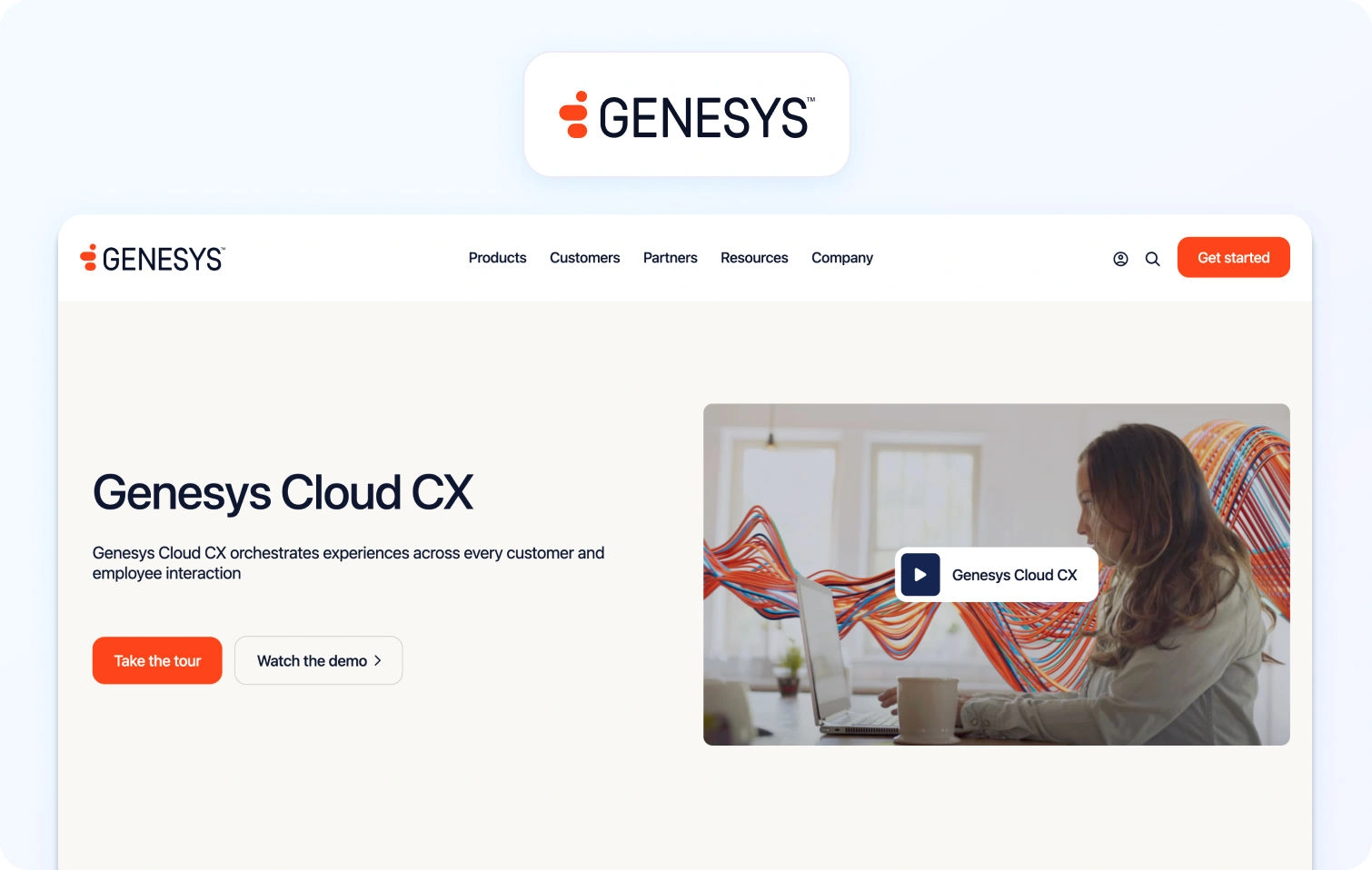
What it is: A leading enterprise-grade CCaaS platform with deep routing and orchestration capabilities
Best for: Large enterprises with complex routing needs
Standout AI features: Predictive routing, speech analytics
Channels: Voice-first with digital extensions
Reporting & WFM: Strong native WFM
Pricing: ~$75+/agent
Pros:
- Mature platform
- Deep enterprise capabilities
Watch-outs:
- AI often tiered or add-on
- Can be complex to implement
3) Five9: Best AI Contact Center Solution for High-Volume Voice
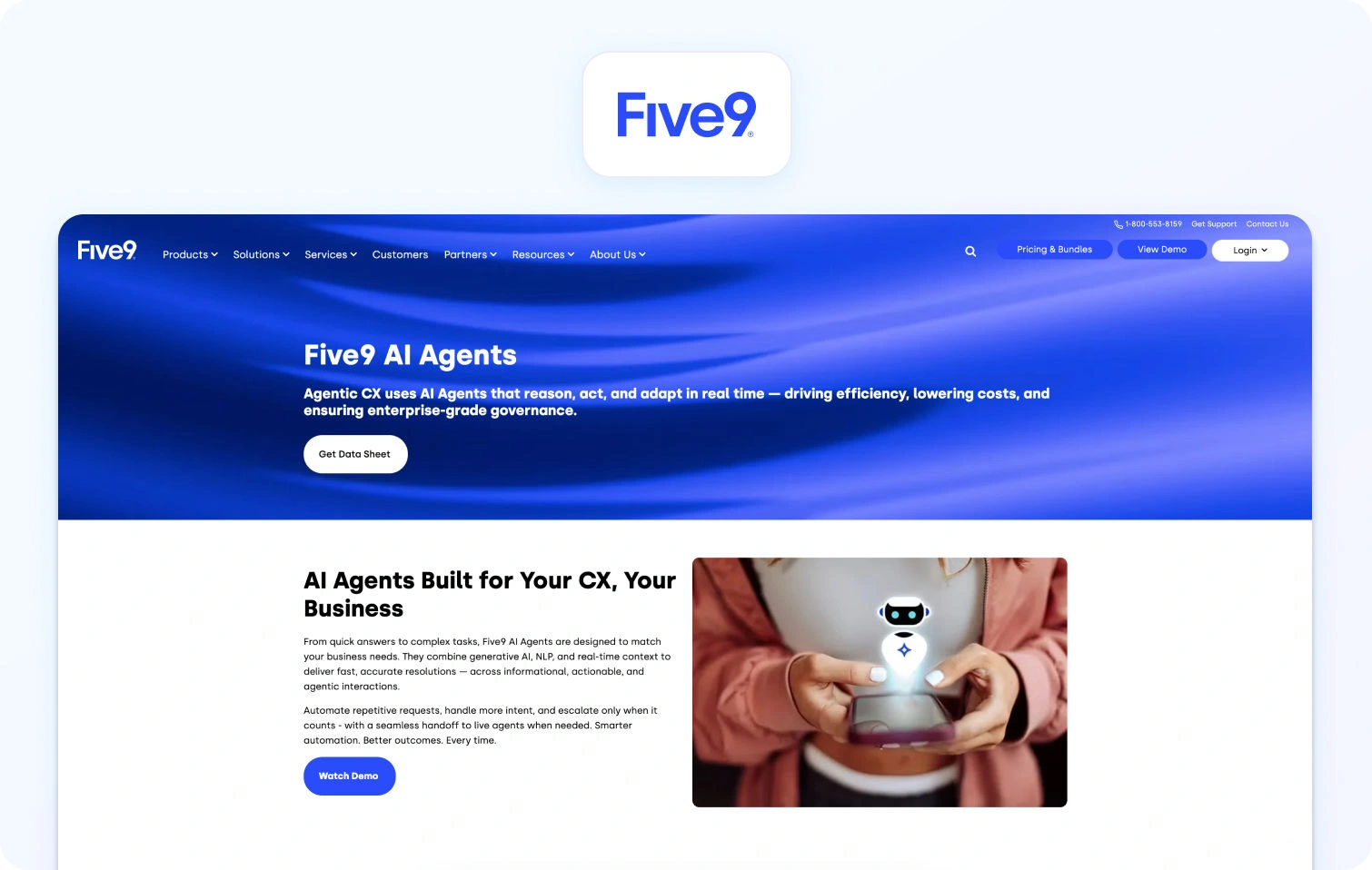
What it is: A cloud contact center platform focused on high-volume voice environments
Best for: Outbound-heavy or voice-centric teams
Standout AI features: IVR automation, agent assist
Channels: Voice, limited digital
Reporting & WFM: Available, often add-on
Pricing: Varies
Pros:
- Strong voice infrastructure
- Scalable
Watch-outs:
- AI not fully native
- Digital channels less mature
4) NICE CXone: Best AI Contact Center Platform for Compliance and Analytics
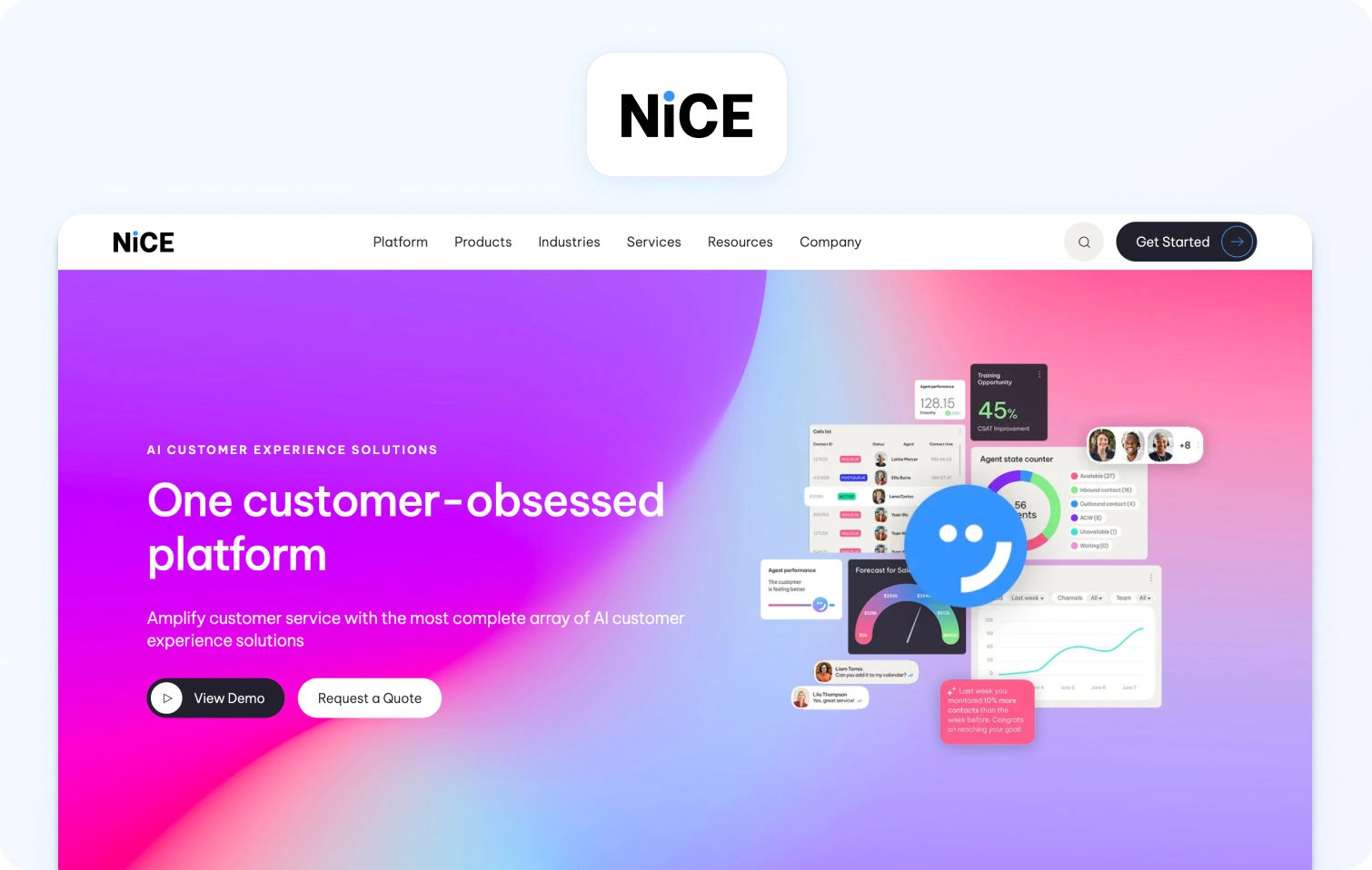
What it is: An enterprise CX platform with strong compliance and analytics capabilities
Best for: Highly regulated industries
Standout AI features: Advanced analytics, workforce optimization
Channels: Omnichannel
Reporting & WFM: Best-in-class WFM
Pricing: Varies
Pros:
- Robust compliance
- Deep analytics
Watch-outs:
- Expensive
- AI often modular
5) Talkdesk: Best AI Contact Center Solution for Industry-Specific Workflows
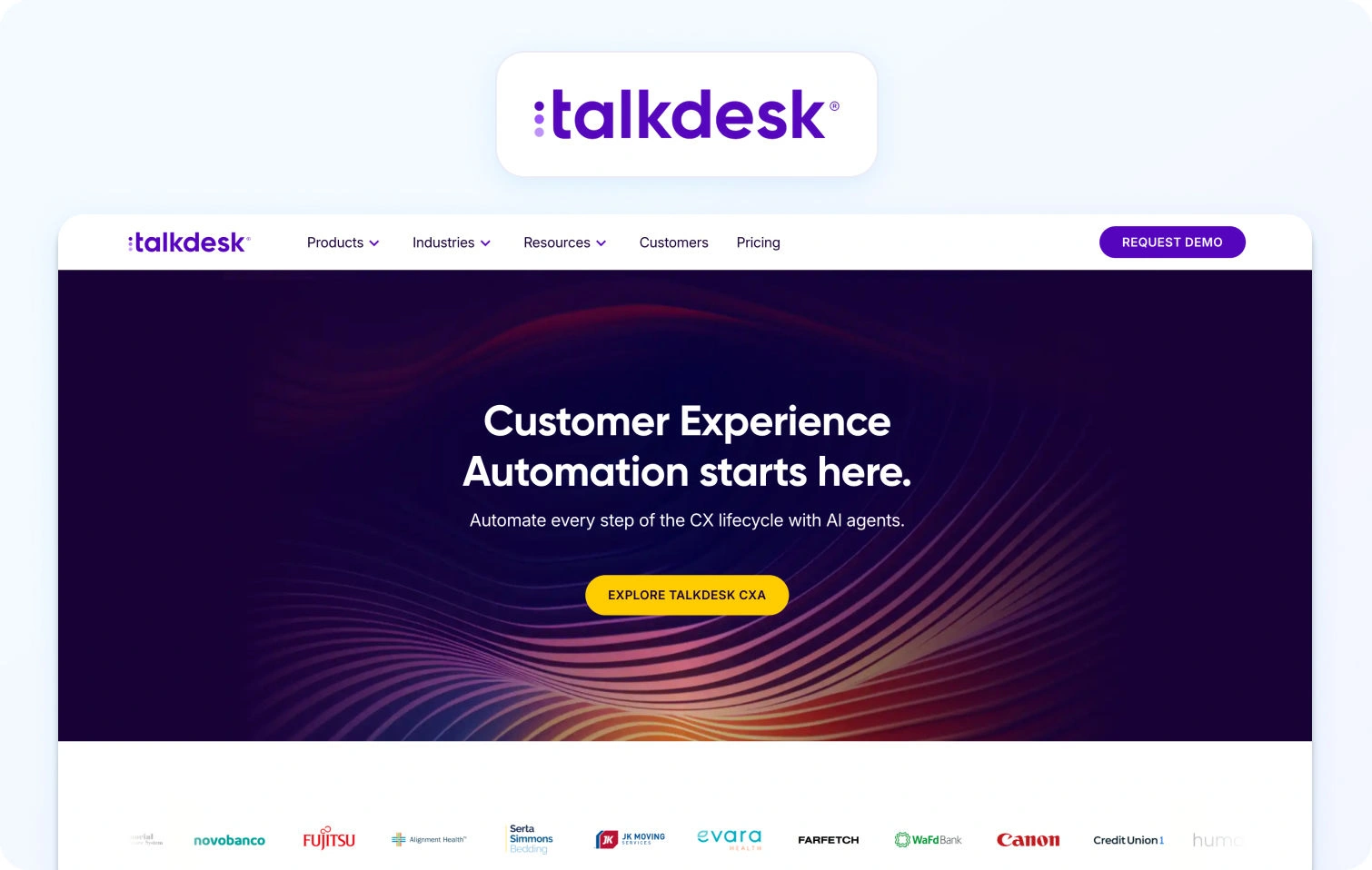
What it is: A modern CCaaS platform with industry-specific solutions
Best for: Mid-market verticals (healthcare, finance)
Standout AI features: AI Trainer, automation workflows
Channels: Omnichannel
Reporting & WFM: Partial native
Pricing: ~$85+/agent
Pros:
- Industry templates
- Strong UX
Watch-outs:
- AI varies by tier
- Add-ons increase cost
6) Zendesk (Talk + Suite): Best Contact Center AI Solution for Support-Led Teams
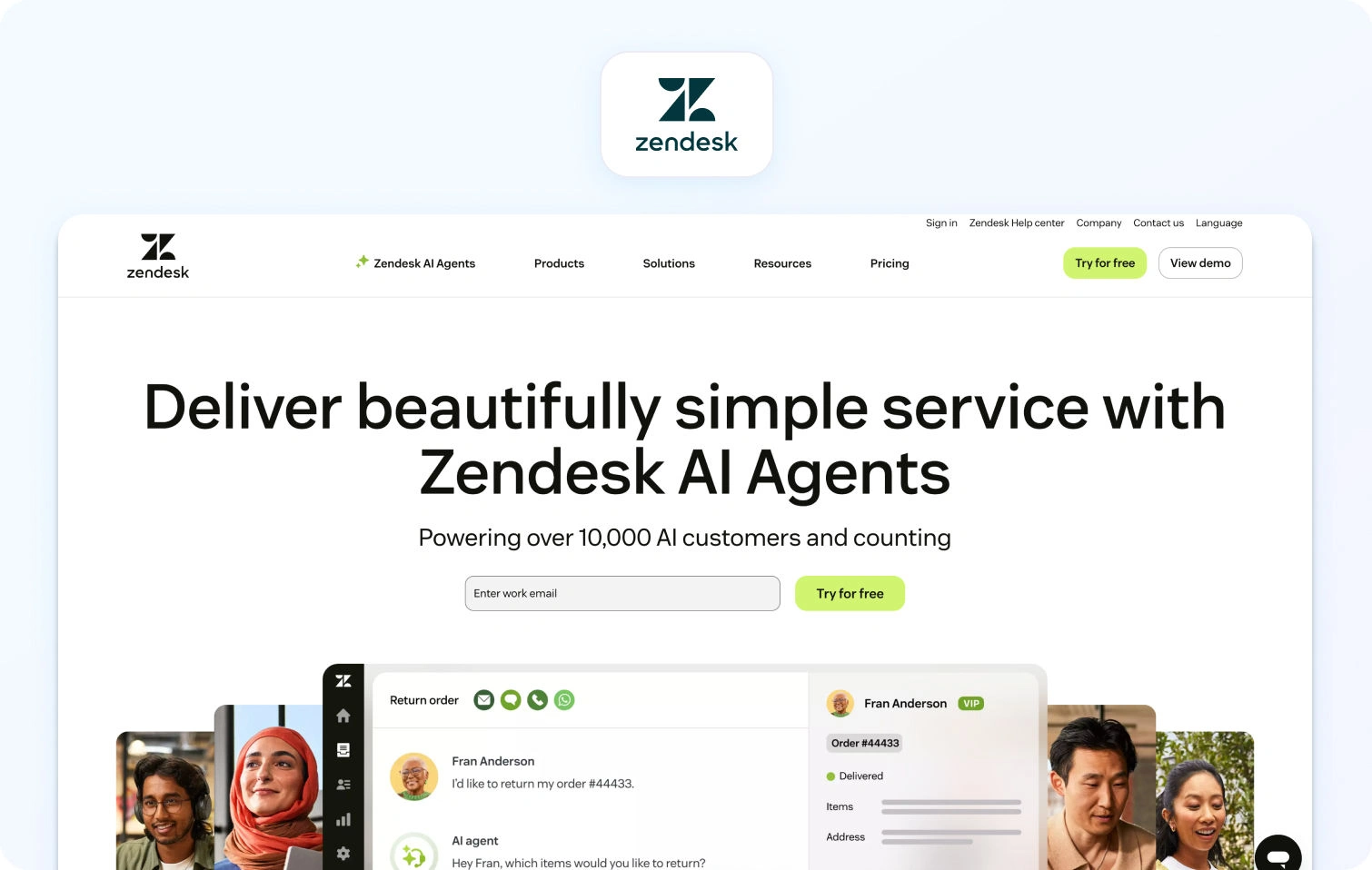
What it is: A customer support suite with integrated voice capabilities
Best for: Existing Zendesk users
Standout AI features: Answer Bot, macros
Channels: Email, chat, voice
Reporting & WFM: Add-ons required
Pricing: ~$55+/agent
Pros:
- Easy to use
- Strong ticketing
Watch-outs:
- AI limited unless upgraded
- WFM not native
7) Salesforce Service Cloud (Voice + Einstein): Best AI Contact Center Solution for CRM Integration
What it is: A CRM-native contact center solution with AI layered through Einstein
Best for: Salesforce-centric organizations
Standout AI features: Einstein AI, predictive insights
Channels: Omnichannel
Reporting & WFM: Add-ons
Pricing: Varies
Pros:
- Deep CRM integration
- Scalable
Watch-outs:
- Expensive ecosystem
- Complex setup
8) Freshdesk / Freshdesk Contact Centre (Freshcaller): Best AI Contact Center Solution for SMBs
What it is: A lightweight, affordable CCaaS for growing teams
Best for: SMBs
Standout AI features: Basic automation
Channels: Voice, chat, email
Reporting & WFM: Add-ons
Pricing: ~$15+/agent
Pros:
- Low cost
- Quick setup
Watch-outs:
- Limited AI depth
- Scaling challenges
9) 8x8 Contact Centre: Best Unified Communications and Contact Center Platform
What it is: A combined UCaaS + CCaaS platform
Best for: Unified communications + contact center
Standout AI features: Speech analytics
Channels: Omnichannel
Reporting & WFM: Partial
Pricing: Varies
Pros:
- Unified platform
- Global reach
Watch-outs:
- AI not fully native
- UX inconsistencies
10) Dialpad AI Contact Center: Best AI-Powered Contact Center for Real-Time Agent Assist

What it is: An AI-first contact center with strong real-time capabilities
Best for: Mid-market AI-focused teams
Standout AI features: Real-time transcription and coaching
Channels: Voice, messaging
Reporting & WFM: Add-on WFM
Pricing: ~$80+/agent
Pros:
- Strong native AI
- Easy to deploy
Watch-outs:
- Limited WFM
- Fewer enterprise features
11) Aircall: Best Lightweight Contact Center Solution for SMB Voice Teams
What it is: A voice-first contact center solution with CRM integrations
Best for: SMBs with heavy outbound calling
Standout AI features: Basic analytics
Channels: Voice
Reporting & WFM: Limited
Pricing: ~$30+/license
Pros:
- Simple
- Fast setup
Watch-outs:
- Not truly omnichannel
- Minimal AI
12) Intercom (Fin AI + Phone): Best AI Contact Center Solution for Digital-First Support
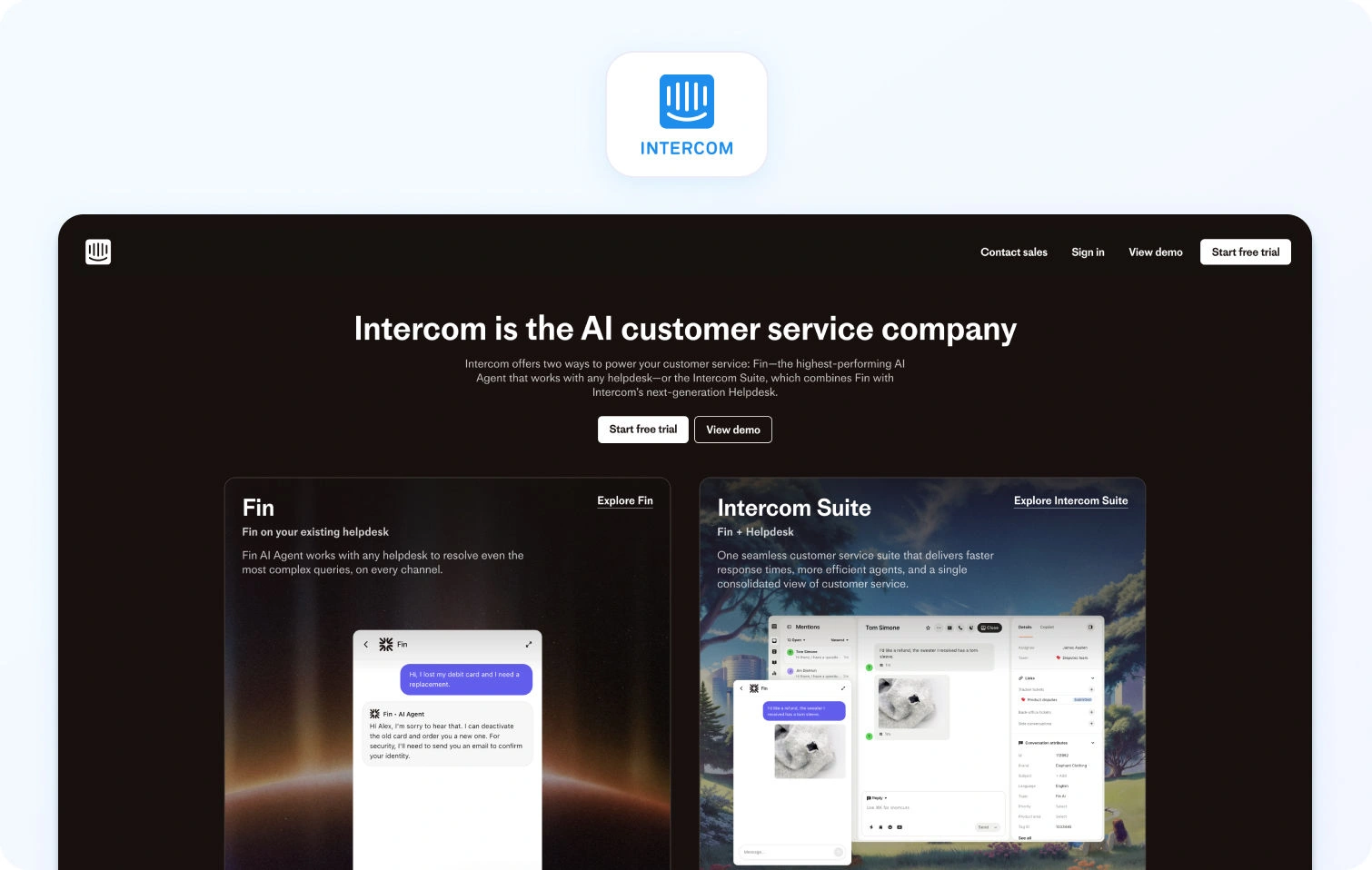
What it is: A digital-first platform with AI-driven customer support
Best for: SaaS and product-led companies
Standout AI features: Fin AI (autonomous support)
Channels: Chat, email, limited voice
Reporting & WFM: Limited
Pricing: ~$29+/seat
Pros:
- Strong AI automation
- Great for digital support
Watch-outs:
- Voice still emerging
- Limited WFM
Why Teams Are Replacing Legacy Contact Centre Tools in 2026
The shift toward AI contact center solutions isn’t just being driven by innovation or hype. It’s being forced by operational friction that legacy systems can no longer absorb. For many organizations, the breaking point is the accumulation of inefficiencies that compound over time. What once felt manageable at a smaller scale becomes unsustainable as interaction volumes grow, channels expand, and customer expectations increase.
At the center of this is fragmentation; many teams are still operating across disconnected systems, where voice sits in one platform, digital channels live in another, and reporting is handled elsewhere entirely. Agents are left to stitch together conversations manually, switching between tabs, re-entering context, and losing valuable time on every interaction. That fragmentation directly impacts the customer experience while also slowing teams down.
Alongside this, there’s a growing gap between what AI is expected to deliver and what legacy platforms can realistically support. In many environments, AI is still limited to basic chatbots, static workflows, or canned macros. There’s little to no real-time assistance for agents, no meaningful automation of post-call work, and no intelligence guiding decisions as conversations unfold.
This is where the pressure begins to show up in performance metrics. Teams dealing with these limitations often see declining first contact resolution, rising average handle times, and inconsistent customer satisfaction scores. Even small inefficiencies, when multiplied across thousands of interactions, quickly translate into measurable cost and lost revenue.
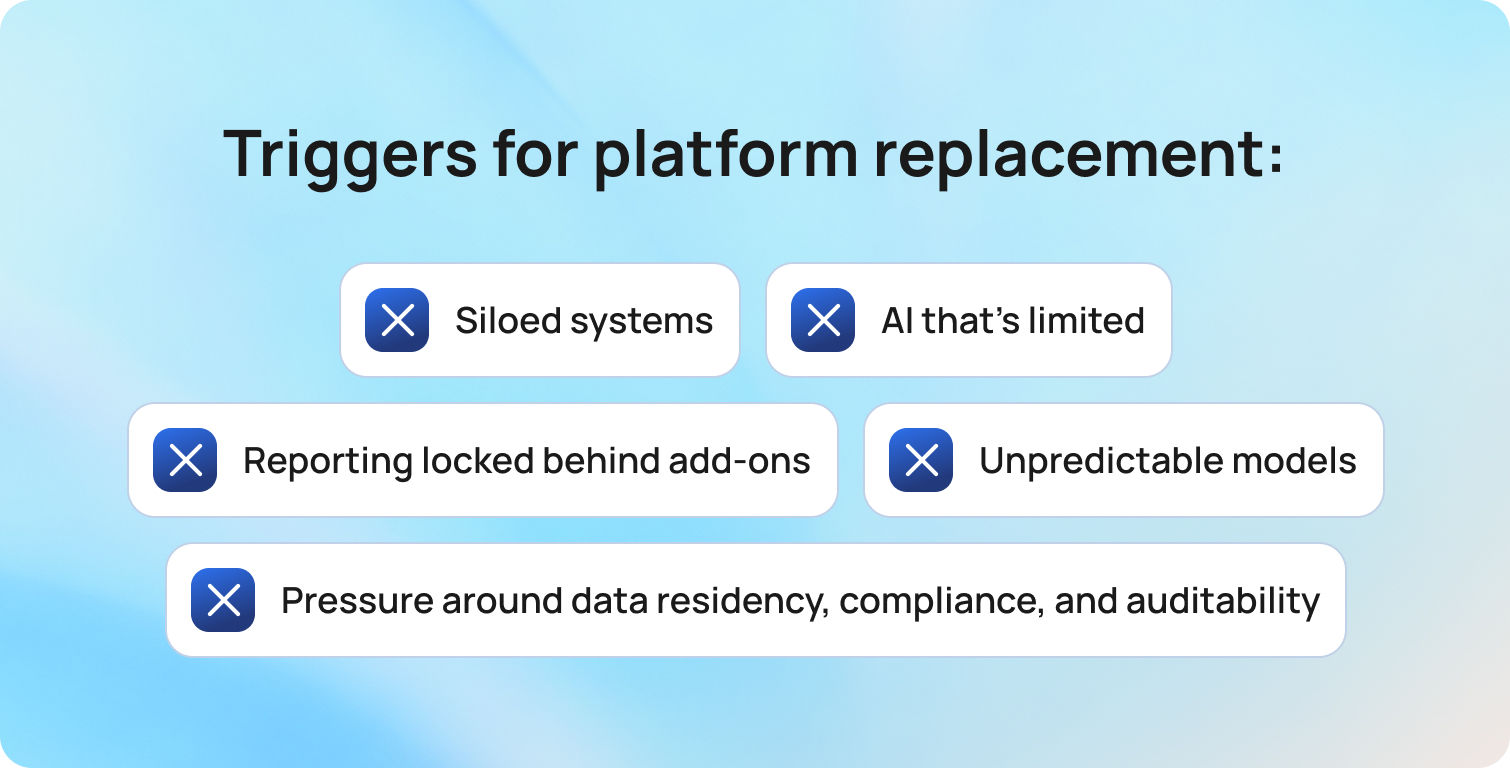
Common triggers for platform replacement include:
- Siloed systems forcing agents to switch between voice tools and ticketing platforms
- AI that’s limited to basic chatbots or macros, with no real-time coaching or summarization
- Reporting is locked behind expensive BI add-ons, slowing access to insights
- Usage-based pricing models that become unpredictable as volumes scale
- Increasing pressure around data residency, compliance, and auditability
- What’s changed in 2026 is that these challenges are no longer viewed as acceptable trade-offs. They are seen as structural issues that require a different type of platform.
There is also a growing financial dimension to this shift. From a CFO or COO perspective, the cost of maintaining legacy or partially modernized systems is becoming harder to justify. AI capabilities that are sold as add-ons often introduce a second layer of spend on top of base licenses, while still failing to deliver meaningful operational gains.
Over time, this creates a situation where organizations are paying more but getting less value.
The biggest misconception we see is that AI is a feature you can bolt on later. In reality, if AI isn’t native to the platform, you’re paying twice; once for the tool, and again for the inefficiencies it creates.

This is why more teams are moving toward AI-powered contact center solutions that are built with intelligence at their core. Instead of layering AI on top of existing workflows, these platforms are designed to reduce complexity, unify operations, and improve performance from day one.
The result is a fundamental shift in how contact centers operate, where efficiency, insight, and customer experience are no longer competing priorities, but outcomes of the same system.
What to Look For in an AI Contact Center Solution (2026)
Choosing the right AI contact center solution means understanding how each platform will impact operations, agent performance, and long-term scalability. In 2026, decision-makers need to look beyond marketing claims and evaluate the substance behind each capability.
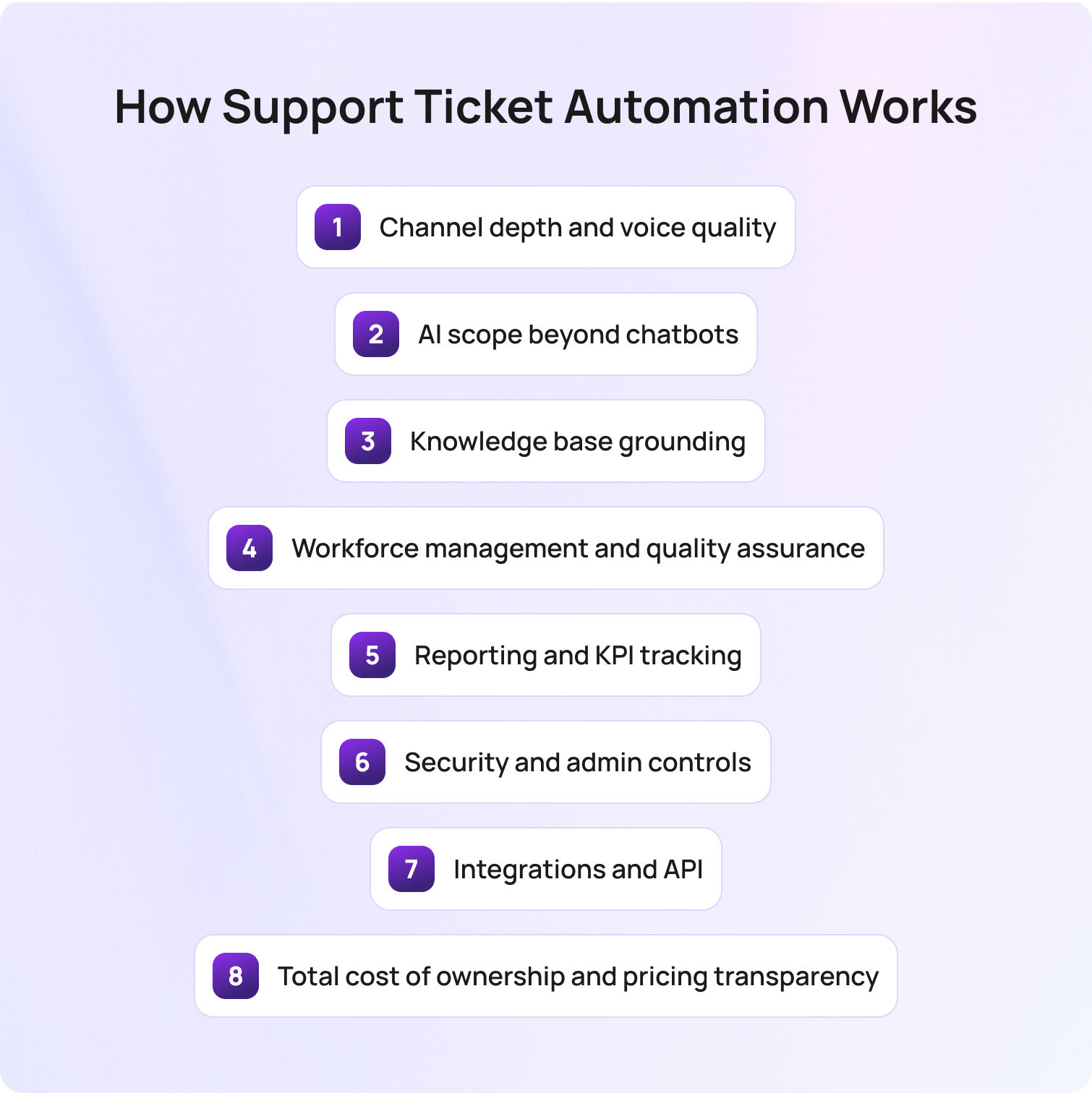
Channel depth and voice quality
Modern AI contact center platforms unify voice, email, chat, SMS, and social messaging into a single agent workspace. True omnichannel support reduces context switching, improves first contact resolution, and simplifies reporting. When evaluating vendors, always verify native telephony quality, MOS scores, uptime SLAs, and how easily digital channels integrate with voice workflows. High-quality voice infrastructure underpins the entire customer experience.
AI scope beyond chatbots
AI in 2026 goes far beyond basic macros or chatbots. Leading platforms provide real-time agent coaching, suggested replies, post-interaction summarization, autonomous resolution, and predictive routing. Buyers should map which AI capabilities are native versus paid add-ons, and understand the operational impact: how much manual work is actually reduced, and how consistent AI output is across channels.
Knowledge base grounding
AI that cannot access a company’s knowledge base risks producing inaccurate or inconsistent responses. Platforms that integrate AI with your KB (ensuring it serves as the single source of truth for both agent assist and bot interactions) are critical for maintaining trust, accuracy, and compliance.
Workforce management and quality assurance
Forecasting, scheduling, adherence monitoring, and call quality scoring are central to running an efficient contact center. Platforms with native WFM and QA reduce integration risk and ongoing costs. Relying on third-party tools can introduce delays, data discrepancies, and hidden expenses.
Reporting and KPI tracking
Executives and team leaders need immediate insight into key metrics such as FCR, AHT, containment rates, abandon rates, agent concurrency, CSAT, sentiment, and MOS. Platforms that surface this information natively (without requiring an external BI layer) allow faster decision-making and tighter operational control.
Security and admin controls
Strong security is foundational. Look for SOC 2 or ISO 27001 compliance, multi-factor authentication, audit logs, and flexible data residency options. These features protect both sensitive customer data and your organization’s operational integrity.
Integrations and API
A robust API and pre-built connectors to CRM, ecommerce, HRIS, and analytics systems ensure your contact center platform can scale with your business. Webhooks and versioned APIs support custom workflows, enabling automation and integration without constant vendor intervention.
Total cost of ownership and pricing transparency
The most important metric is not the headline license price; it’s the real cost of running the platform at scale. Calculate base seats, AI add-ons, WFM add-ons, and telephony usage to understand the true ROI. Platforms with AI included in the base license consistently deliver faster returns and fewer budget surprises.
How We Evaluated The AI Contact Center Platforms
Our assessment of AI contact center solutions is based entirely on publicly available information reviewed in Q2 2026, including vendor documentation, product and pricing pages, and official marketplace listings. No vendor featured in the list has paid for placement, ensuring that the ranking reflects real capabilities rather than marketing influence.
Where possible, we also incorporated:
- Customer case studies and success stories highlighting measurable outcomes
- Publicly listed client references to assess enterprise adoption and scalability
- Aggregated user reviews from platforms such as G2 and Capterra to capture real-world experience
Pricing information was drawn exclusively from publicly available pages. Where tiers are quote-based or variable, we note this transparently as “Verify” or “Varies by plan.”
Pros and cons are evidence-based, derived from feature documentation and user experiences rather than vendor claims. Limitations include the fact that we did not conduct live trials for every platform; capabilities and pricing may change, and buyers should always validate via a vendor demo before committing.
Must-Have Capability Checklist
If you’re evaluating an AI contact center solution in 2026, these are the non-negotiables to look for:
- Native omnichannel support (voice, chat, email, SMS, and social)
- AI is included in the base license, not sold as an add-on
- Real-time agent assist (transcription, suggestions, summarization)
- Knowledge base–grounded AI responses
- Native workforce management (forecasting, scheduling, adherence)
- Built-in QA and performance tracking
- Real-time and historical reporting (FCR, AHT, CSAT, containment)
- Transparent, predictable pricing with no hidden usage fees
- Enterprise-grade security (SOC 2, MFA, audit logs, data residency)
- Open API and strong integrations (CRM, ecommerce, BI tools)
BlueTweak meets all of the criteria above, based on current product capabilities and documentation.
The BlueTweak Scoring Rubric
If a platform can’t meet the majority of these criteria, it’s likely to introduce complexity rather than remove it. The next step is to compare how leading vendors stack up against these requirements in practice, not just in terms of features, but how those features are packaged, priced, and delivered.
The table below provides a side-by-side view of the top AI contact center solutions, helping you quickly identify which platforms align most closely with these must-have capabilities.
| Criterion | Weight | What “High” Looks Like |
|---|---|---|
| Voice & omnichannel | 20% | Native telephony + 5+ channels |
| AI coverage | 20% | Assist + automation + KB grounding |
| Reporting | 15% | Real-time + historical KPIs |
| WFM / QA | 15% | Fully native |
| Time-to-value | 10% | Days, not months |
| TCO transparency | 10% | No hidden fees |
| Security | 10% | SOC 2, MFA, RBAC |
Final Thoughts: Choosing the Right AI Contact Center Platform in 2026
The market for AI contact center solutions has reached a point where most platforms can cover the basics. The real difference now lies in how those capabilities are delivered, how well they integrate into day-to-day operations, and how sustainable they are as your team scales.
For most organizations, the decision comes down to three factors: how effectively a platform unifies channels, how deeply AI is embedded into workflows, and how much operational control it provides through reporting and workforce management. Platforms that perform well across all three tend to reduce complexity over time, while those that rely on add-ons or fragmented tooling often reintroduce it.
There’s also a growing need to think beyond immediate requirements. Many teams initially prioritize speed of deployment or cost, only to find themselves revisiting the decision 12–18 months later as volumes increase and expectations shift. Choosing a platform that can support both current needs and future maturity is becoming a critical part of the evaluation process.
In that context, solutions like BlueTweak are gaining traction not simply because they offer AI, but because they are designed around it; bringing together channels, intelligence, and operations in a way that reduces dependency on additional tools. For teams looking to simplify their stack while improving performance, that architectural approach is often where the most long-term value is found.
Remember, the focus shouldn’t be on choosing the platform with the most features, but on finding the one that delivers the most clarity, consistency, and control across your customer experience.
If you want to see how this approach works in practice, you can book a BlueTweak demo to explore the platform in more detail.
Book a BlueTweak Demo Today
Book Demo

As Head of Digital Transformation, Radu looks over multiple departments across the company, providing visibility over what happens in product, and what are the needs of customers. With more than 8 years in the Technology era, and part of BlueTweak since the beginning, Radu shifted from a developer (addressing end-customer needs) to a more business oriented role, to have an influence and touch base with people who use the actual technology.



