The 17 Best AI-Powered Helpdesk Solutions to Consider in 2026



BlueTweak is an AI Customer Support Platform that unifies every conversation, customer record, and automation into one workspace.
Explore more
Insights, trends, and practical ideas from customer experience and AI
Real-world scenarios showing how teams use BlueTweak to deliver better service
The daily blueprint that guides customer support leadership.
ROI and savings calculators for support teams
See how BlueTweak stacks up against leading customer support platforms
AI-powered helpdesk solutions are customer support platforms that use artificial intelligence to automate ticket routing, generate suggested replies, resolve routine customer inquiries autonomously, and improve customer service operations across email, chat, voice, and social channels. BlueTweak, Zendesk, and Intercom are among the leading AI-powered helpdesk solutions for 2026, each offering different strengths for omnichannel support teams, enterprise service management, and SaaS customer interactions. This guide is designed for customer-facing support teams evaluating the best AI-powered helpdesk software solutions for faster resolutions, lower operational costs, and improved customer satisfaction.
Customer-facing AI-powered helpdesk solutions are platforms designed to manage external customer interactions across email, chat, voice support, SMS, and social media, while IT service desk platforms are built primarily for internal employee service management.
As AI adoption accelerates across customer support, the distinction between these two categories is becoming increasingly important. According to Deloitte’s 2025 Global Contact Center Survey, organizations investing in AI and intelligent automation reported reductions in average handling time of up to 35%, alongside measurable gains in customer satisfaction and operational efficiency. The challenge for buyers is that many software vendors now position both customer support platforms and ITSM tools under the same “AI help desk” umbrella, despite solving very different operational problems.
This matters because customer-facing support teams are typically measured on outcomes like first-contact resolution (FCR), customer satisfaction scores, response speed, and containment rates. IT service desks, by contrast, are usually optimized around SLA compliance, internal ticket resolution, onboarding workflows, and asset management. While there is some overlap in functionality, the AI capabilities, workflows, reporting structures, and service management priorities often differ significantly between the two.
Customer-facing AI help desk platforms focus on:
By contrast, IT service desk software focuses on:
Platforms such as Zendesk, Salesforce Service Cloud, and Freshdesk support both use cases, but the implementation, workflows, AI capabilities, and pricing structures can differ significantly depending on whether the deployment is customer-facing or internally focused.
This article focuses specifically on customer-facing AI-powered helpdesk solutions. If you are evaluating AI service desk software for internal IT support, platforms like SysAid, Jira Service Management, and Freshservice may be more relevant to your requirements.
AI-powered helpdesk solutions comparison tables help support leaders quickly identify which platforms align with their operational requirements, AI maturity, and total cost expectations.
The table below highlights the most commercially important differentiators across the leading platforms, while the detailed breakdowns later in this guide explore AI capabilities, workflow depth, reporting, and support operations in more detail.
| Platform | Best For | AI in Base Plan | Autonomous Resolution | Unique Edge |
| BlueTweak | Omnichannel AI-native support | Yes | Yes | Unified AI + WFM + QA |
| Zendesk | Enterprise ticket management | Partial | Yes | Mature ecosystem |
| Intercom | SaaS support teams | Partial | Yes | Fin AI agent |
| Freshdesk | Budget-conscious teams | Partial | Limited | Freddy AI |
| Salesforce Service Cloud | Salesforce-centric enterprises | Partial | Yes | Deep CRM integration |
| HubSpot Service Hub | Sales-led organizations | Partial | Limited | CRM alignment |
| Zoho Desk | Zoho ecosystem users | Partial | Limited | Tight Zoho integrations |
| Kustomer | CRM-native support | Partial | Yes | Timeline-centric UI |
| Gladly | People-centric support | Partial | Moderate | Conversation continuity |
| Front | Shared inbox collaboration | Limited | Limited | Team collaboration |
| Dixa | Conversation-first support | Partial | Moderate | Unified conversation routing |
| SysAid | Hybrid IT/customer support | Partial | Moderate | ITSM crossover |
The best AI-powered helpdesk software solutions combine intelligent automation, RAG-grounded knowledge base responses, workflow automation, reporting, and omnichannel support operations in one unified platform.
The platforms below were evaluated using public pricing pages, feature documentation, published case studies, and publicly available AI capability disclosures reviewed in Q2 2026. Editorial ordering reflects AI feature depth, market maturity, and the breadth of customer support workflows supported. Pricing and AI availability vary by plan, so buyers should verify directly with vendors before shortlisting.
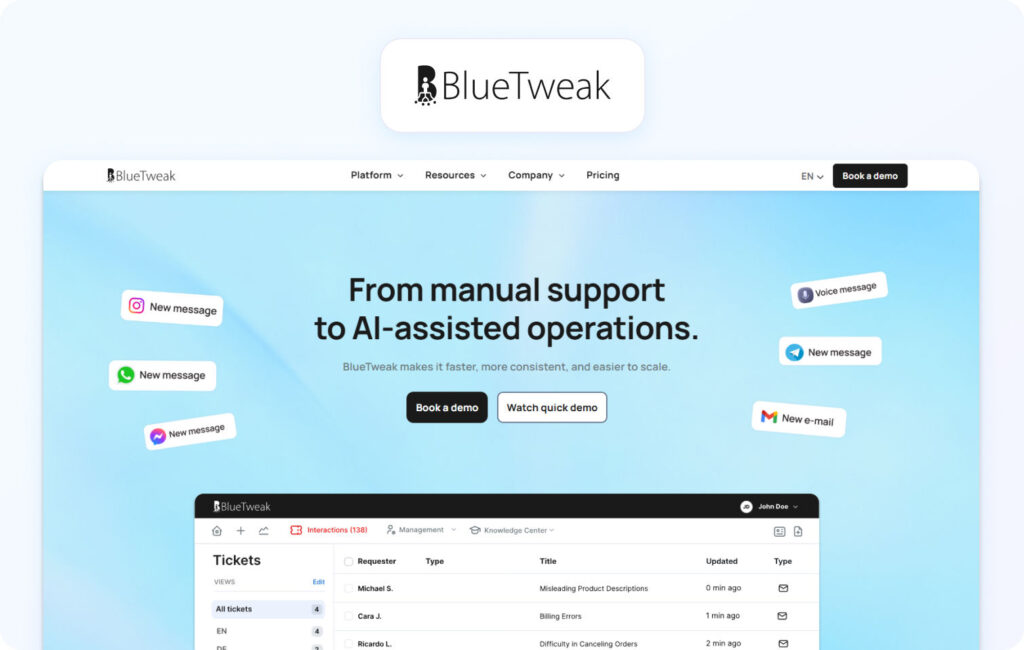
What BlueTweak is: BlueTweak is an AI-native customer support platform designed for omnichannel customer service operations, combining AI agents, workforce management, QA monitoring, voice support, and workflow automation within a unified service desk environment.
Best for: Enterprise organizations and scaling support teams looking for AI-powered helpdesk solutions with native voice, RAG-grounded AI, workforce management, and detailed operational analytics.
Key BlueTweak AI features:
BlueTweak channels: Email, voice support, live chat, SMS, WhatsApp, and social media channels.
BlueTweak pricing: BlueTweak offers a transparent pricing model starting at €65/agent/month all-in (including ticketing, omnichannel, AI chatbot, AI voicebot, copilot tools, WFM, QA, analytics, integrations).
BlueTweak pros:
BlueTweak cons:
Free trial availability: Yes.
BlueTweak Case Study:
One ecommerce retailer used BlueTweak to modernize fragmented support operations and reduce repetitive customer inquiries across multiple digital channels. Following deployment, the company achieved a 45% increase in ticket deflection, a 30% reduction in interaction handling time, and a 45% improvement in overall support team efficiency through AI-powered automation, intelligent routing, and workflow optimization. The deployment also improved customer satisfaction by enabling faster, more personalized support across voice and digital customer interactions. Full case study:
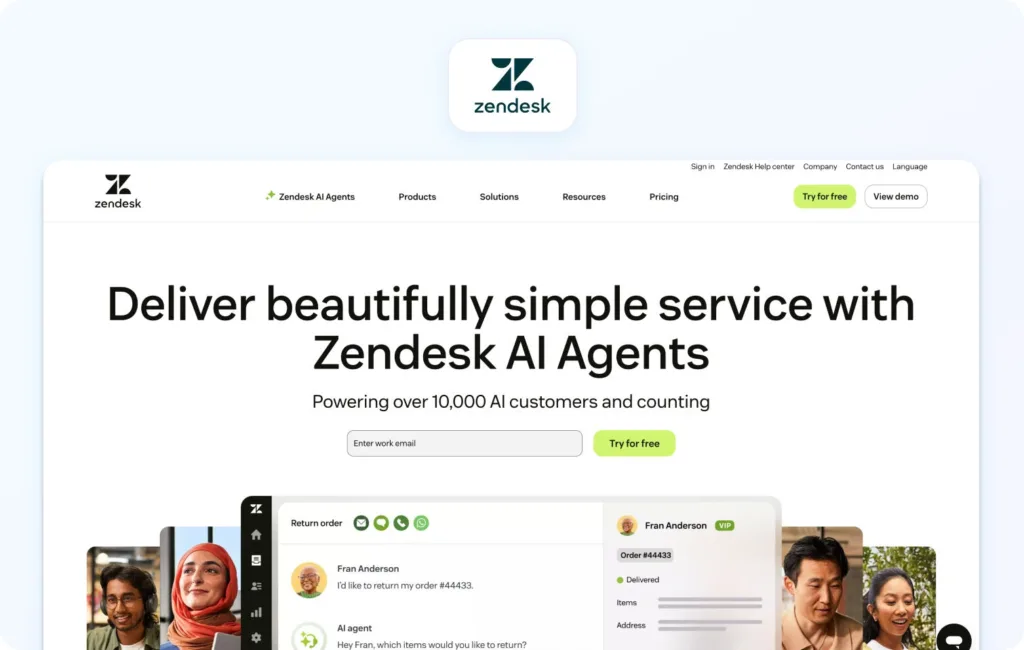
What Zendesk is: Zendesk is an enterprise customer service platform designed for omnichannel ticket management, AI-powered automation, and large-scale customer support operations.
Best for: Enterprise organizations needing mature ticket management workflows, advanced reporting, and extensive third-party integrations.
Key Zendesk AI features:
Zendesk channels: Email, live chat, voice support, SMS, social media, and messaging apps.
Zendesk pricing: Zendesk uses a custom pricing model, which varies by suite tier and AI feature access. Verify with the vendor for details.
Zendesk pros:
Zendesk cons:
Free trial availability: Yes.
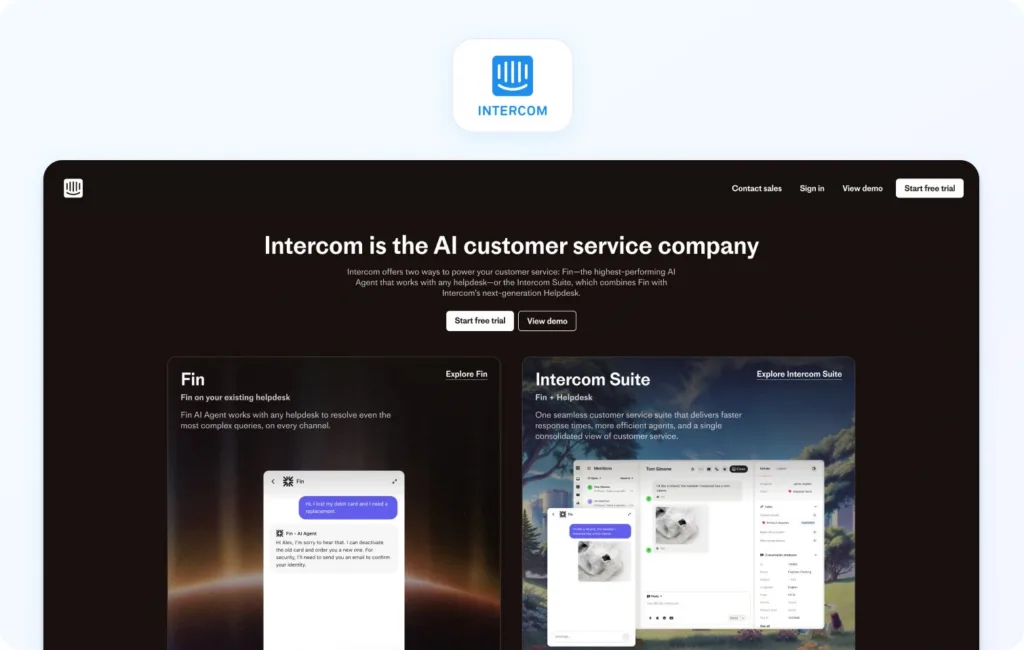
What Intercom is: Intercom is a conversational AI help desk platform designed for SaaS businesses and product-led customer support operations.
Best for: Software companies and digital-first brands prioritizing conversational AI and proactive customer engagement.
Key Intercom AI features:
Intercom channels: Live chat, email, in-app messaging, SMS, and social integrations.
Intercom pricing: Intercom uses a tiered pricing system; pricing varies based on support volume, seats, and AI usage. Verify for details.
Intercom pros:
Intercom cons:
Free trial availability: Yes.

What Freshdesk is: Freshdesk is an AI-powered customer support platform combining ticket management, automation tools, and omnichannel support workflows.
Best for: Growing support teams seeking affordable AI-powered helpdesk solutions with broad channel support.
Key Freshdesk AI features:
Freshdesk channels: Email, live chat, voice support, WhatsApp, and social channels.
Freshdesk pricing: Freshdesk offers tiered pricing with some advanced AI capabilities reserved for higher plans; verify for details.
Freshdesk pros:
Freshdesk cons:
Free trial availability: Yes.

What Salesforce Service Cloud is: Salesforce Service Cloud is an enterprise service management platform built within the Salesforce ecosystem.
Best for: Large enterprise organizations already invested in Salesforce CRM infrastructure.
Key Salesforce Service Cloud AI features:
Salesforce Service Cloud channels: Voice, email, chat, SMS, social media, and messaging apps.
Salesforce Service Cloud pricing: Free and paid plans available; verify for details.
Salesforce Service Cloud pros:
Salesforce Service Cloud cons:
Free trial availability: Yes.
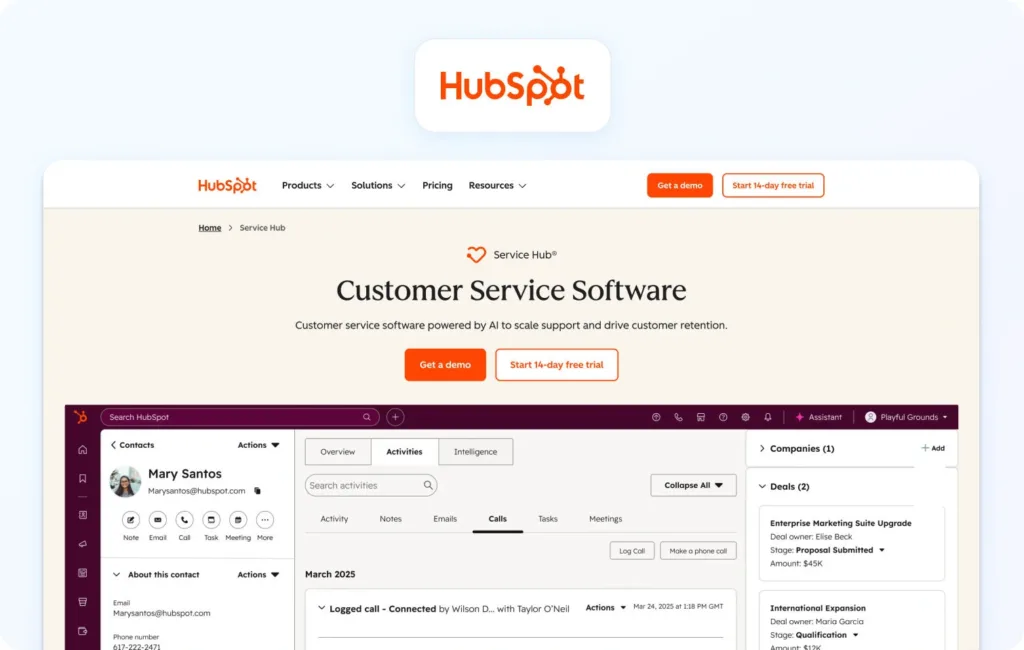
What HubSpot Service Hub is: HubSpot Service Hub is a customer support platform tightly integrated with HubSpot’s CRM and sales ecosystem.
Best for: Organizations aligning customer service operations closely with marketing and sales workflows.
Key HubSpot Service Hub AI features:
HubSpot Service Hub channels: Email, live chat, forms, and messaging integrations.
HubSpot Service Hub pricing: Free and paid plans available; HubSpot pricing scales by feature tier and contact database size. Verify for details.
HubSpot Service Hub pros:
HubSpot Service Hub cons:
Free trial availability: Yes.
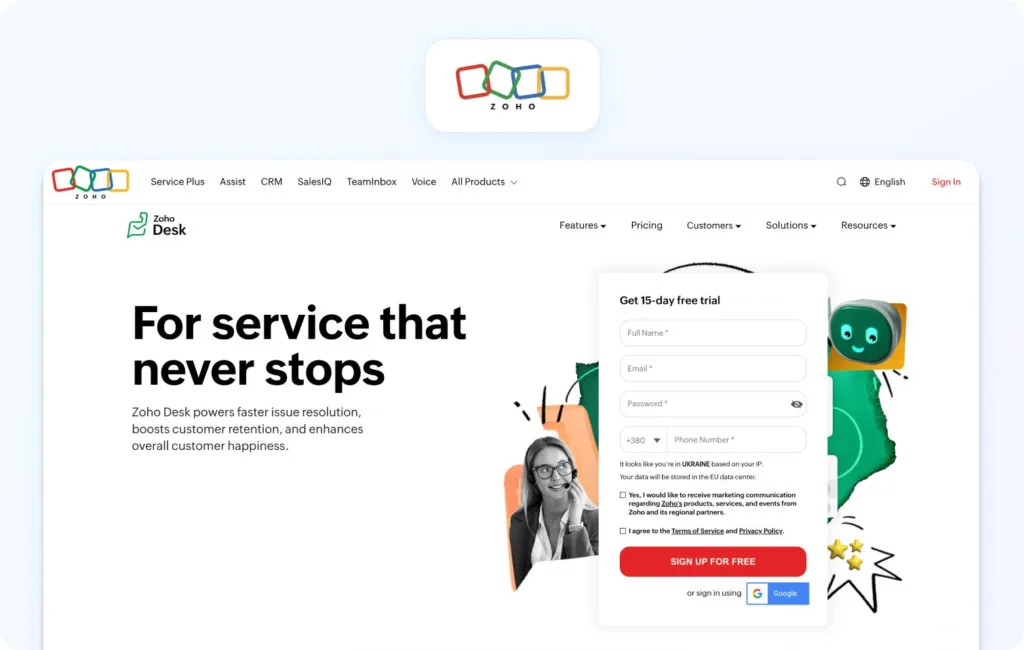
What Zoho Desk is: Zoho Desk is an AI-powered help desk platform designed for organizations using Zoho business applications.
Best for: Small and mid-sized businesses already operating within the Zoho ecosystem.
Key Zoho Desk AI features:
Zoho Desk channels: Email, chat, social media, telephony integrations, and web forms.
Zoho Desk pricing: Affordable tiered pricing with AI features available in higher plans. Verify for details.
Zoho Desk pros:
Zoho Desk cons:
Free trial availability: Yes.
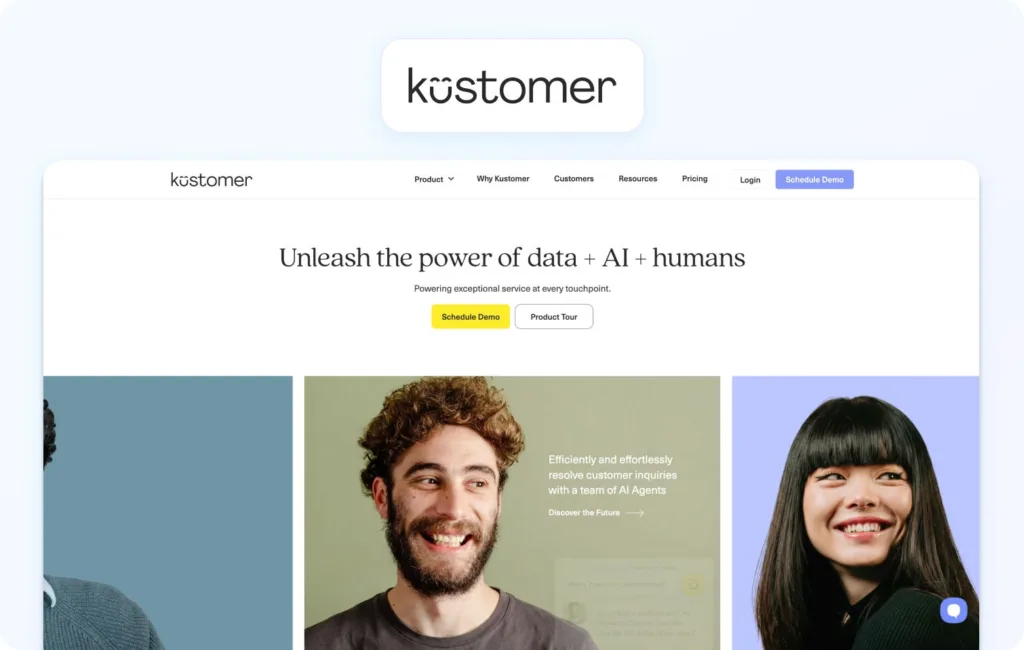
What Kustomer is: Kustomer is a CRM-native customer support platform centered around unified customer conversation timelines.
Best for: E-commerce brands and subscription businesses prioritizing personalized support.
Key Kustomer AI features:
Kustomer channels: Email, voice support, SMS, chat, social messaging, and messaging apps.
Kustomer pricing: Custom pricing based on deployment requirements; verify for details.
Kustomer pros:
Kustomer cons:
Free trial availability: Not advertised.

What Gladly is: Gladly is a customer service platform focused on persistent customer conversations across support channels.
Best for: Brands prioritizing relationship-driven customer experience and continuity.
Key Gladly AI features:
Gladly channels: Voice, email, SMS, chat, and social messaging.
Gladly pricing: Custom pricing; verify for details.
Gladly pros:
Gladly cons:
Free trial availability: Not advertised.
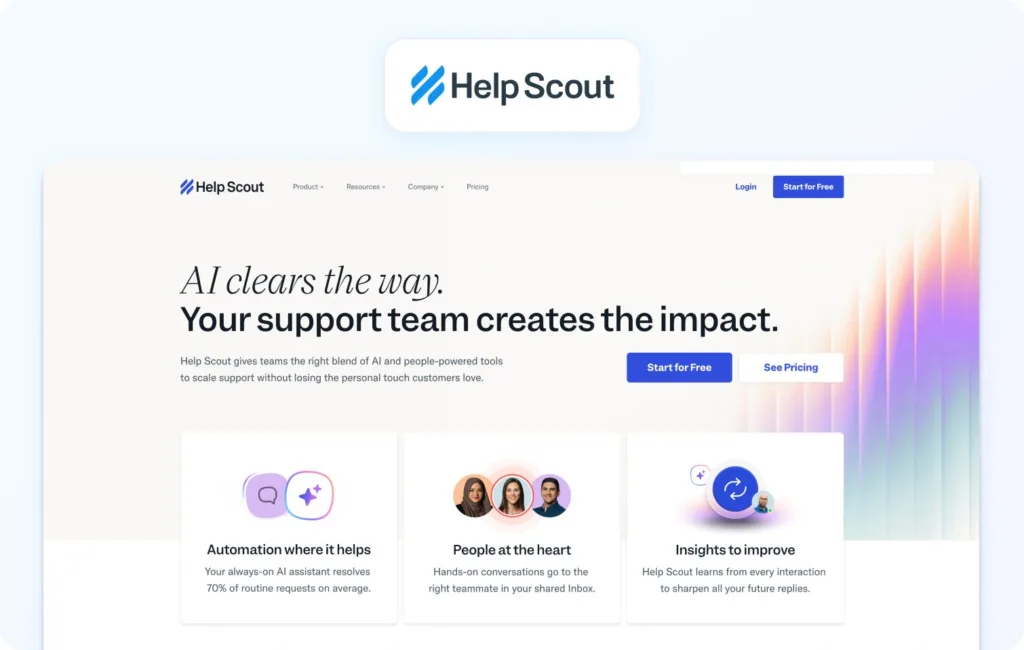
What Help Scout is: Help Scout is a lightweight customer support platform focused on simplicity and efficient support operations.
Best for: Small and mid-sized support teams needing easy-to-manage help desk software.
Key Help Scout AI features:
Help Scout channels: Email, live chat, and knowledge base support.
Help Scout pricing: Tiered SMB-focused pricing structure with free and paid plans available; verify for details.
Help Scout pros:
Help Scout cons:
Free trial availability: Yes.

What Front is: Front is a collaborative customer communication platform combining shared inbox functionality with support workflows.
Best for: Teams managing collaborative support operations through email-centric workflows.
Key Front AI features:
Front channels: Email, SMS, chat, WhatsApp, and social integrations.
Front pricing: Custom per-seat pricing with advanced functionality available. Verify for details.
Front pros:
Front cons:
Free trial availability: Yes.
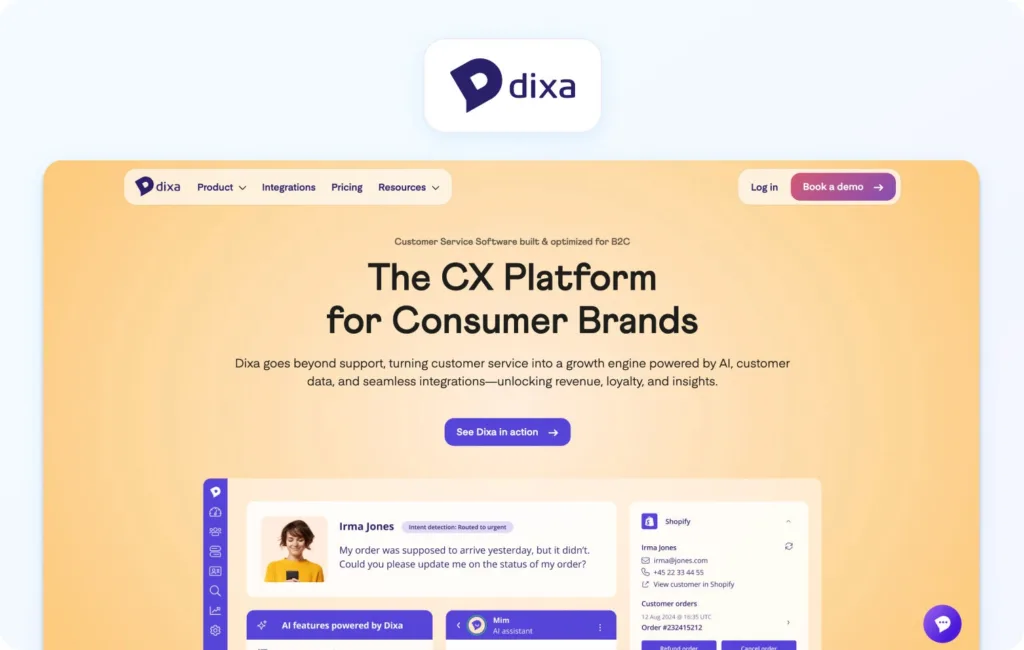
What Dixa is: Dixa is a customer engagement platform focused on conversation-centric support workflows.
Best for: Support organizations prioritizing real-time customer conversations and unified routing.
Key Dixa AI features:
Dixa channels: Voice, email, chat, messaging apps, and social channels.
Dixa pricing: Tiered plans starting at $89 per agent, per month. Verify for details.
Dixa pros:
Dixa cons:
Free trial availability: Not advertised.
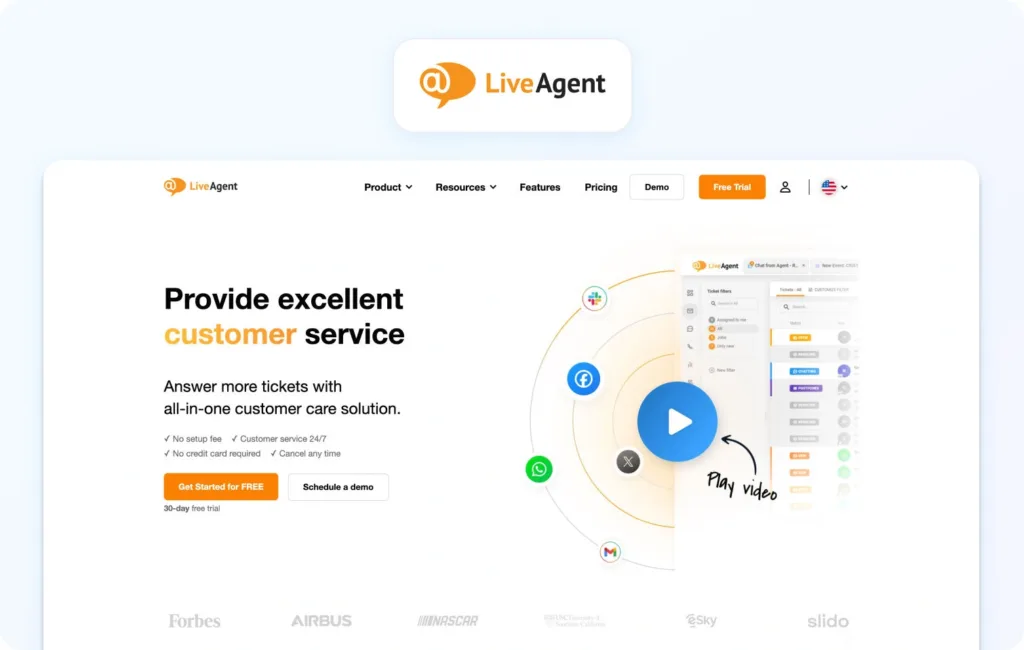
What LiveAgent is: LiveAgent is a customer support platform offering broad omnichannel support functionality at lower price points.
Best for: Cost-conscious support teams needing broad channel coverage.
Key LiveAgent AI features:
LiveAgent channels: Voice, email, live chat, video chat, and social media.
LiveAgent pricing: Lower-cost tiered pricing, verify for details.
LiveAgent pros:
LiveAgent cons:
Free trial availability: Yes.

What Hiver is: Hiver is a Gmail-native customer support platform built directly into Google Workspace.
Best for: Support teams managing workflows primarily through Gmail.
Key Hiver AI features:
Hiver channels: Email, live chat, voice integrations, and WhatsApp.
Hiver pricing: Free and paid plans available; verify for details.
Hiver pros:
Hiver cons:
Free trial availability: Yes.
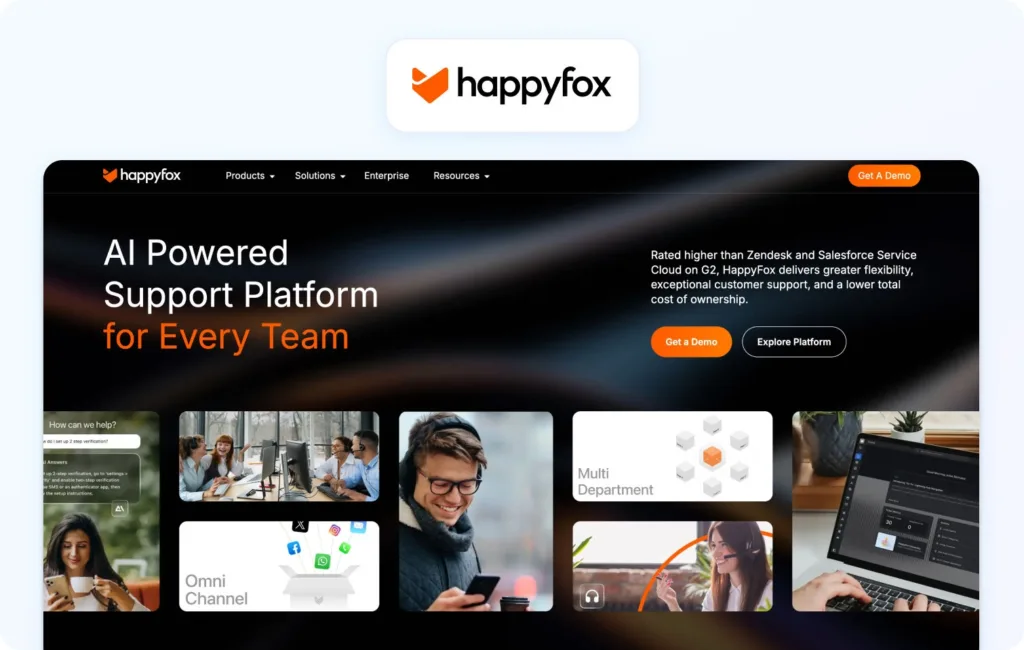
What HappyFox is: HappyFox is a help desk platform supporting both customer-facing and internal support workflows.
Best for: Organizations managing hybrid customer support and IT service desk operations.
Key HappyFox AI features:
HappyFox channels: Email, chat, voice integrations, and social messaging.
HappyFox pricing: Custom pricing based on deployment size and features.
HappyFox pros:
HappyFox cons:
Free trial availability: Yes.

What Tidio is: Tidio is an SMB-focused customer support platform specializing in AI chatbot automation and live chat.
Best for: Small businesses and e-commerce brands managing high chat volumes.
Key Tidio AI features:
Tidio channels: Live chat, email, Messenger, Instagram, and WhatsApp.
Tidio pricing: Tiered pricing plans available; verify for details.
Tidio pros:
Tidio cons:
Free trial availability: Yes.
What SysAid is: SysAid is a service management platform combining ITSM functionality with customer support workflows.
Best for: Organizations needing overlap between internal IT support and customer-facing operations.
Key SysAid AI features:
SysAid channels: Email, portals, chat, and workflow integrations.
SysAid pricing: Custom enterprise pricing.
SysAid pros:
SysAid cons:
Free trial availability: Yes.
AI-powered helpdesk solutions should improve resolution quality, reduce repetitive work, and enhance customer experience without dramatically increasing operational complexity or cost.
Many platforms now advertise advanced AI capabilities, but the depth and usefulness of those features vary significantly.
AI included in the base seat price is one of the most important commercial considerations when evaluating AI-powered helpdesk solutions.
Many vendors advertise AI-powered features prominently, but critical functionality such as AI copilots, KB-grounded answers, and autonomous resolution often sits behind expensive advanced AI add-on pricing.
At scale, these costs can double or triple total platform spend.
RAG-grounded AI uses your organization’s verified knowledge base articles to generate accurate answers instead of relying solely on general-purpose LLM outputs. Ungrounded AI frequently generates inaccurate or inconsistent responses.
In Q2 2026, RAG-grounded customer support AI is quickly becoming the standard for enterprise-grade autonomous resolution.
Autonomous resolution means the customer issue was fully solved without agent involvement. Deflection simply means the customer never reached an agent.
This distinction is increasingly important because poor self-service experiences can artificially inflate deflection metrics while damaging customer satisfaction.
The strongest AI-powered helpdesk solutions measure true resolution outcomes, not just containment.
Voice support should operate within the same AI layer as chat, email, and social support. But many desk software vendors still rely on third-party telephony integrations that fragment reporting, coaching, and AI workflows.
Native voice capabilities improve:
AI reporting should be isolated from human performance metrics. Support leaders should be able to track:
Without separate reporting, organizations struggle to evaluate whether deploying AI agents is genuinely improving service quality.
Total cost of ownership (TCO) is the most overlooked variable when evaluating AI-powered helpdesk solutions at scale.
Many desk platforms advertise low entry pricing, but the real operational cost often increases significantly once AI modules, voice support, workforce management, advanced analytics, and automation tools are added across larger support teams.
A platform that appears cost-effective for a 20-seat deployment can become substantially more expensive at 200 or 500 agents.
When evaluating AI helpdesk software, support leaders should calculate:
This is particularly important for enterprise organizations deploying AI agents across multiple customer service workflows. Some vendors charge separately for autonomous resolution, AI copilots, advanced reporting, or knowledge base AI functionality, creating unpredictable long-term operational spend.
The strongest AI-powered helpdesk solutions provide transparent pricing structures where AI-powered features, reporting, workflow automation, and support operations tooling are included natively rather than fragmented across multiple premium modules.
AI-powered helpdesk solutions should be evaluated using operational, technical, and commercial criteria rather than marketing claims alone. This guide was compiled using:
No vendor paid for placement or inclusion in this list.
Limitations include the inability to conduct live trials for every platform. Autonomous resolution rates also vary significantly depending on implementation quality, knowledge base maturity, and workflow design.
A modern AI helpdesk platform should support the following capabilities before being considered enterprise-ready:
The BlueTweak AI Helpdesk Scoring Rubric is a weighted evaluation framework designed to compare AI-powered helpdesk solutions consistently.
BlueTweak AI Helpdesk Scoring Rubric
| Criterion | Weight | What “High” Looks Like |
| AI coverage (native, not add-on) | 25% | RAG-grounded KB, summarization, and sentiment analysis included in base plan |
| Autonomous resolution capability | 20% | Multi-step AI resolution workflows with measurable outcomes |
| Channel depth and voice support | 15% | Native telephony and unified omnichannel support |
| Reporting on AI performance | 15% | Separate AI resolution and AI CSAT reporting |
| WFM and QA native | 10% | Built-in scheduling, forecasting, and QA |
| TCO and pricing transparency | 10% | Clear pricing without hidden AI costs |
| Security and admin | 5% | MFA, RBAC, audit logs, SOC 2, and data residency |
AI-powered helpdesk solutions are no longer differentiated simply by whether they offer AI features. The real distinction in 2026 is whether AI is deeply embedded across the full customer interaction lifecycle.
Platforms that treat AI as an add-on layer often create fragmented workflows, inconsistent reporting, and significantly higher total costs over time.
By contrast, AI-native helpdesk platforms integrate AI into:
For organizations prioritizing omnichannel support, RAG-grounded AI, native voice capabilities, workforce management, and transparent AI pricing, BlueTweak stands out as one of the most complete AI-powered helpdesk solutions currently available.
Teams evaluating the best AI-powered helpdesk software solutions for 2026 should prioritize long-term operational fit over surface-level AI marketing claims.
To explore BlueTweak’s AI-powered helpdesk platform further, book a demo or start a free trial today.
AI-powered helpdesk solutions are customer support platforms that use artificial intelligence to automate ticket routing, generate suggested replies, resolve routine customer inquiries autonomously, and improve customer service workflows across email, chat, voice, and social channels.
AI help desk software is designed to support customers and manage external customer interactions, while IT service desk software focuses on internal employee support, service management, asset management, and IT workflows. Many platforms support both use cases, but customer-facing help desk solutions are typically optimized for customer expectations, omnichannel communication, and high volumes of incoming requests.
The most important key features in modern AI-powered helpdesk solutions include RAG-grounded knowledge bases, AI agents, intelligent routing, conversational AI, workflow automation, AI-generated summaries, and AI-powered analytics that help support teams monitor service quality and improve customer satisfaction.
RAG-grounded AI retrieves information from verified knowledge base content and relevant articles before generating responses, helping improve accuracy, reduce hallucinations, and deliver more reliable personalized responses during customer interactions.
Platforms including BlueTweak, Zendesk, Freshdesk, Salesforce Service Cloud, Gladly, and Dixa support voice support workflows with varying levels of native AI functionality, transcription, QA monitoring, and conversational analytics.
Implementing AI in modern help desk software is becoming significantly easier, with many platforms allowing support teams to deploy automation tools, connect existing tools, and configure AI-powered workflows in just a few clicks. Many AI-powered helpdesk solutions also integrate with platforms like Microsoft Teams, CRM systems, and customer data platforms to streamline customer service operations.
As Head of Digital Transformation, Radu looks over multiple departments across the company, providing visibility over what happens in product, and what are the needs of customers. With more than 8 years in the Technology era, and part of BlueTweak since the beginning, Radu shifted from a developer (addressing end-customer needs) to a more business oriented role, to have an influence and touch base with people who use the actual technology.