



TL;DR
AI customer support multilingual solutions have become the most practical way for global organizations to deliver consistent support across multiple languages. However, not all platforms solve the same problem. The best AI solutions for multilingual customer support do more than translate customer messages; they identify a customer's preferred language, route conversations intelligently, provide knowledge-grounded answers, and measure quality across different language markets. For support leaders evaluating AI multilingual customer support solutions, the key criteria are translation quality, channel coverage, language-aware routing, knowledge base support, and quality oversight.
Supporting international customers in multiple languages has become one of the biggest operational challenges facing customer support teams. Customers expect fast, accurate answers in their preferred language, whether they contact your business through chat, email, social media, or voice channels. At the same time, hiring multilingual support staff for every market is expensive, difficult to scale, and increasingly inefficient as customer expectations continue to rise.
This is why AI customer support multilingual solutions have moved from a niche capability to a business necessity. Modern AI customer support software is increasingly helping organizations deliver multilingual customer service without the cost and complexity of maintaining large multilingual teams. The right platform can help support teams automate routine interactions, remove language barriers, maintain a consistent brand voice, and deliver exceptional service across global markets without relying solely on additional headcount.
However, not all multilingual AI support platforms solve the same problem. Translation is only one piece of the puzzle. The real challenge is ensuring customer interactions are routed correctly, grounded in accurate knowledge, and measured consistently across every language market.
Why Multilingual Customer Support Is an AI Problem Now
Multilingual customer support is the ability to provide accurate, consistent, and efficient service to customers in their preferred language across every support channel.
For years, multilingual support was treated primarily as a staffing challenge. Businesses expanding into new markets would hire bilingual agents, build regional support teams, or outsource customer support operations to multilingual providers. While effective in some situations, these approaches become increasingly difficult to scale as organizations grow their global operations.
Many organizations are now reassessing the traditional outsourcing model as conversational AI becomes a viable alternative for handling routine multilingual customer interactions at scale.
Deloitte Digital's 2026 Global Contact Center Survey signals that AI has moved from experimentation to scalable operational impact in contact centres. Sixty-four percent of service leaders report higher agent productivity as a result of AI, and 39% report lower cost per contact; evidence that, as support volumes grow, teams are increasingly using AI to handle routine interactions, streamline workflows, and reduce operational complexity.
At the same time, customer language preferences remain a critical driver of customer satisfaction. CSA Research’s global consumer study found that, given the choice between two similar products, 76% of consumers will choose the one with information in their own language; a finding that has remained widely cited as a benchmark across the localisation industry since its publication.
The technology has also changed. Modern natural language processing and machine learning models deliver significantly higher-quality AI translation than earlier rule-based systems. For major languages such as English, Spanish, French, and German, AI-powered support can now handle many common customer interactions with a high degree of accuracy. Yet translation alone does not solve multilingual support.
Support teams must still identify a customer's language automatically, route conversations to the appropriate workflow, provide responses grounded in trusted knowledge sources, and measure customer satisfaction across different language markets. Cultural nuances, dialect variations, and long-tail language coverage continue to require careful oversight.
This shift has fundamentally changed the problem. Multilingual support is no longer primarily a translation challenge. It is now a routing challenge, a containment challenge, a knowledge management challenge, and a quality assurance challenge.
The organizations delivering the strongest multilingual customer experiences in 2026 are not simply translating conversations. They are building multilingual support systems that combine AI translation, automatic language detection, intelligent routing, knowledge-grounded responses, and human oversight into a single operational framework.
What Makes a Good AI Multilingual Customer Support Solution?
An AI multilingual customer support solution is a platform that enables businesses to deliver consistent customer service across different languages while maintaining quality, efficiency, and operational control.
Many vendors focus heavily on translation capabilities when discussing multilingual support. Translation matters, but it is only one part of the equation. The strongest platforms combine language support with intelligent routing, knowledge management, quality assurance, and omnichannel customer engagement.
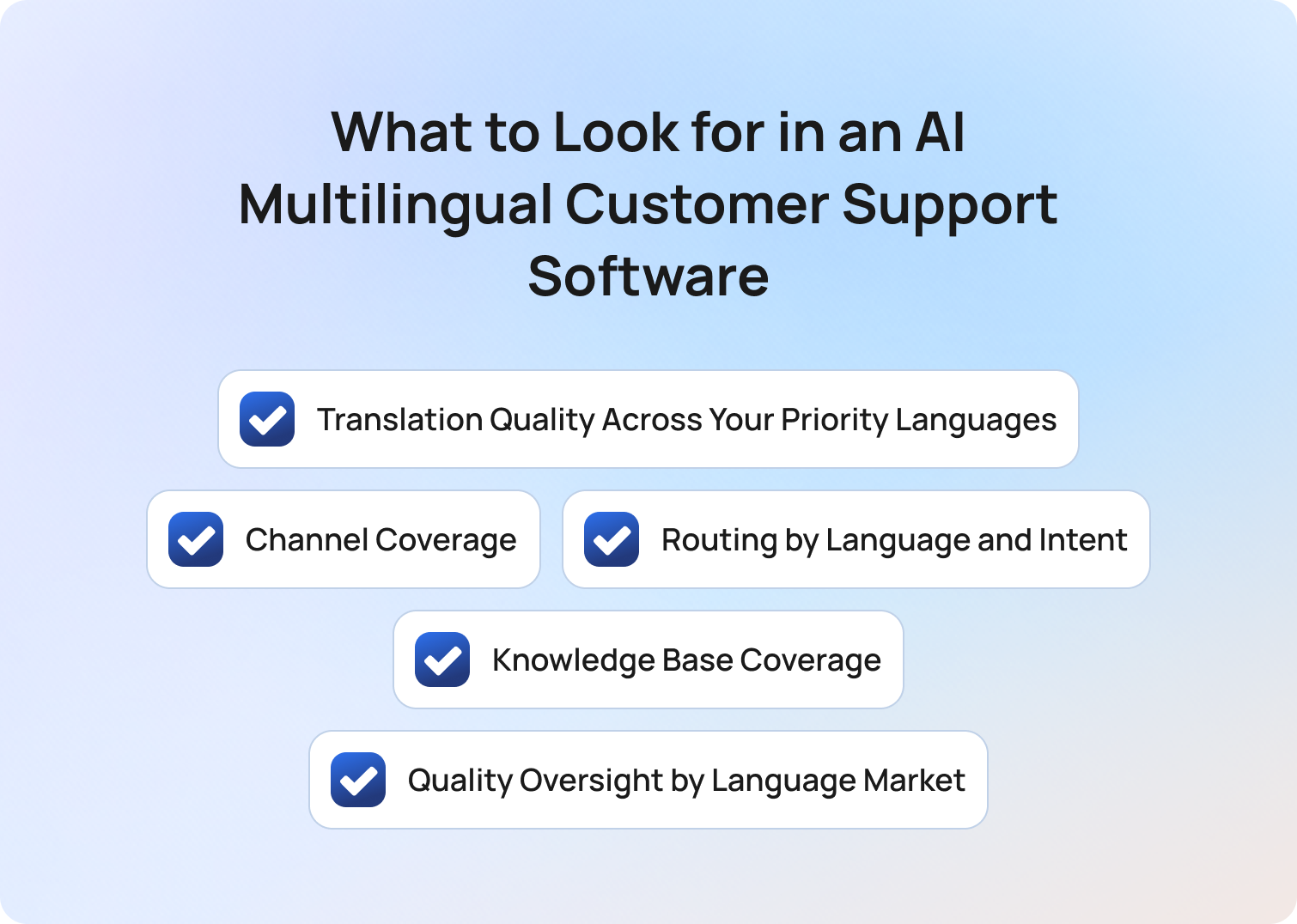
When evaluating AI customer support multilingual solutions, support leaders should assess providers against the following five criteria.
1. Translation Quality Across Your Priority Languages
Translation quality refers to how accurately a platform can understand and respond to customers across the languages that matter most to your business.
Performance is typically strongest for widely used languages such as English, Spanish, French, and German, where language models have access to large volumes of training data. Long-tail languages, regional dialects, and market-specific terminology often produce more variable results.
Rather than focusing on the number of supported languages advertised by a vendor, organizations should evaluate how well the platform performs in the specific language markets they serve. A platform supporting 100 languages is less valuable than one that performs exceptionally well in the 10 languages your customers actually use.
Before selecting a multilingual support platform, validate translation quality using real customer conversations and support scenarios.
2. Channel Coverage
Channel coverage refers to the ability to deliver multilingual support consistently across every customer touchpoint. Many platforms offer multilingual chat support but provide limited capabilities for voice, email, social media, or messaging applications. This creates fragmented customer experiences and increases operational complexity for support teams.
Voice support introduces additional challenges because the platform must accurately process speech recognition, transcription, accents, dialects, and text-to-speech generation before responding. As a result, multilingual voice AI remains one of the clearest differentiators between leading and average solutions.
3. Routing by Language and Intent
Language-aware routing is the ability to automatically identify a customer's language and direct them to the correct workflow, automation, or support resource. Asking customers to manually select their language adds friction and increases abandonment rates; automatic language detection removes that step and creates a more seamless support experience.
However, language identification alone is not enough and the platform must also understand customer intent. A billing issue submitted in Spanish should be routed to the same workflow as a billing issue submitted in English. The most powerful AI support platforms combine language detection with multilingual intent classification to ensure accurate routing regardless of customer language.
4. Knowledge Base Coverage
Knowledge base coverage refers to the quality and accessibility of the information the AI uses to generate customer responses. But even the most advanced AI models can only provide accurate answers if they have access to reliable knowledge sources. Organizations should evaluate whether multilingual content is maintained natively within the knowledge base or generated through real-time translation from a primary language source.
Both approaches can be effective, but consistency is critical. Outdated translations, missing articles, or incomplete documentation can quickly undermine customer trust.
Platforms that ground responses in approved knowledge sources are typically better positioned to deliver accurate, compliant, and brand-aligned multilingual support.
5. Quality Oversight by Language Market
Quality oversight is the ability to measure support performance separately across different languages and regions. Many support organizations track overall customer satisfaction scores without understanding how performance varies between language markets. Blended reporting can mask significant issues in specific regions and make quality improvement difficult.
The best multilingual support platforms allow teams to monitor customer satisfaction, quality assurance metrics, containment rates, and operational performance at a language-specific level. This makes it easier to identify weaknesses, improve AI performance, and maintain consistent service standards across global operations.
Effective customer service analytics help support leaders identify performance trends, uncover language-specific issues, and continuously improve customer experiences across global markets.
Together, these five criteria form the framework for evaluating AI multilingual support solutions. Any platform that cannot demonstrate strength across translation quality, channel coverage, language-aware routing, knowledge management, and quality oversight is likely to create operational challenges as multilingual support volumes grow.
The Best AI Customer Support Multilingual Solutions for Global Teams
AI customer support multilingual solutions help organizations support customers across multiple languages while maintaining service quality, operational efficiency, and consistent customer experiences.
The platforms below were assessed against the five criteria for evaluating AI multilingual support solutions: translation quality, channel coverage, language-aware routing, knowledge base coverage, and quality oversight.
| Platform | Best For | Voice Support | Language-Aware Routing | Per-Language QA | Key Limitation |
|---|---|---|---|---|---|
| BlueTweak | Omnichannel multilingual AI support | Yes | Yes | Yes | Some long-tail language limitations |
| Zendesk | Enterprise ticketing environments | Limited | Yes | Partial | Voice capabilities depend on integrations |
| Intercom | SaaS support teams | Limited | Partial | Partial | Less suitable for voice-heavy operations |
| Freshdesk | Mid-market customer service teams | Limited | Yes | Partial | Advanced AI features vary by plan |
| Language I/O | Translation within existing support stacks | No | Limited | No | Primarily focused on translation |
| DeepL for Business | High-accuracy translation | No | No | No | Not a complete support platform |
| Helpshift | Mobile app support | Limited | Yes | Partial | Mobile-first focus may not suit all teams |
| Kustomer | High-volume B2C support | Limited | Yes | Partial | Advanced AI requires configuration |
| Avaamo | Enterprise conversational AI | Yes | Yes | Partial | Enterprise implementation complexity |
| Google Cloud CCAI | Custom AI ecosystems | Yes | Yes | Custom | Requires technical resources |
| Salesforce Service Cloud | Salesforce-centric organizations | Limited | Yes | Partial | Cost and complexity |
| Smartling | Multilingual content management | No | No | No | Not a dedicated support platform |
The right solution depends on your language requirements, support channels, and operational goals. However, platforms that combine multilingual AI, intelligent routing, voice support, and language-specific quality assurance are typically best positioned to support large-scale global operations.
Start your free 14 day free trial now! No credit card required.
Get Started1. BlueTweak: Best for Omnichannel Multilingual AI with Voice and QA
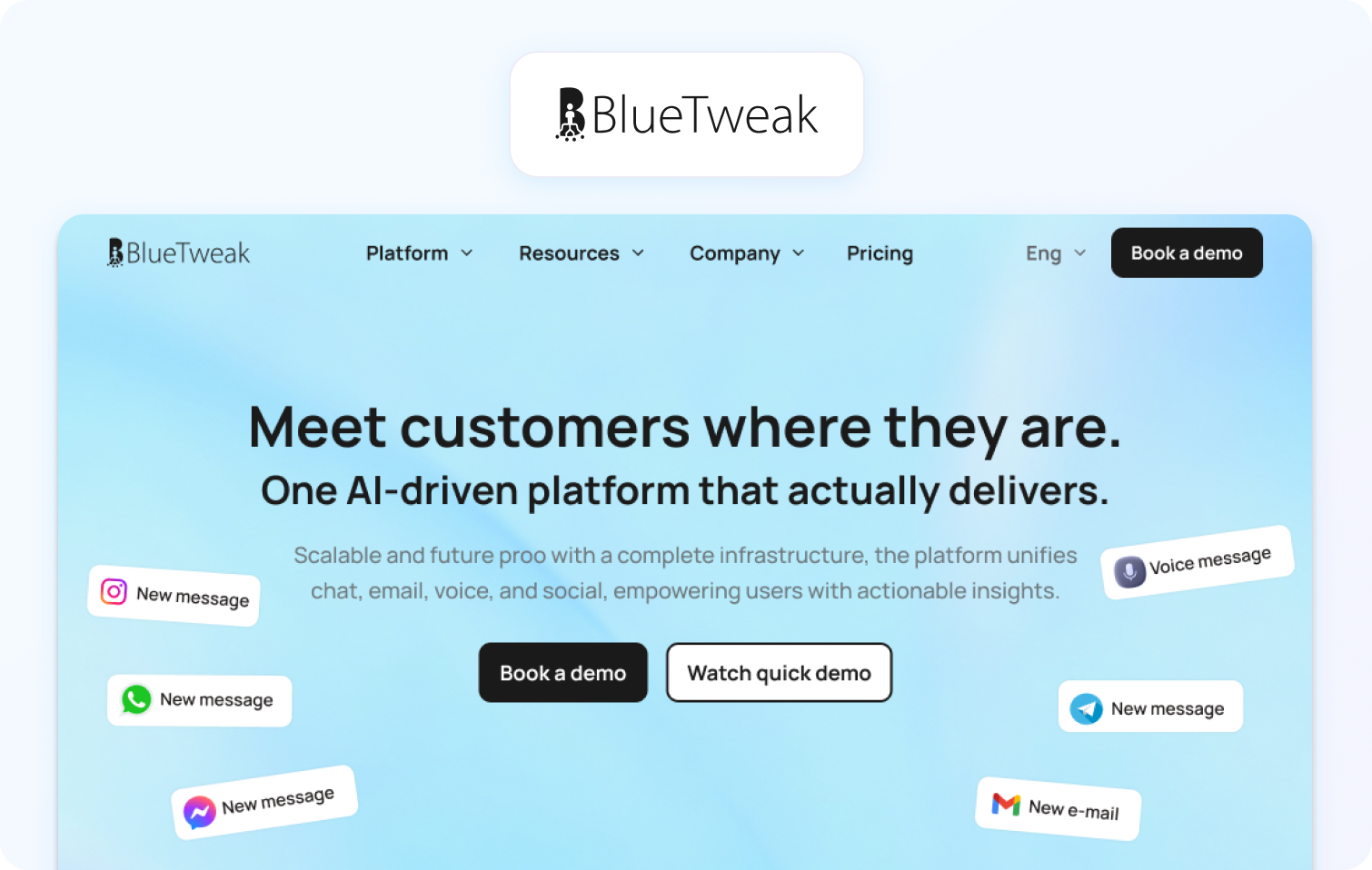
BlueTweak is an AI-powered customer support platform designed to help organizations deliver multilingual support across chat, voice, email, messaging, and social channels from a single environment. Unlike many multilingual support tools that focus primarily on translation, BlueTweak combines language support, automation, routing, knowledge management, and quality assurance within a single platform. These capabilities are powered by conversational AI that can understand customer intent, automate routine interactions, and support customers across multiple languages.
Strengths:
- Strong multilingual AI performance across key languages: BlueTweak combines natural language processing, AI translation, and language-aware automation to support customer interactions across major global languages. This helps organizations deliver consistent support experiences while reducing the operational complexity of managing multilingual customer service.
- Omnichannel support across voice and digital channels: While many competitors focus primarily on chat and messaging, BlueTweak supports multilingual interactions across voice, email, chat, messaging, and social channels. This allows support teams to maintain a consistent customer experience regardless of how customers choose to engage.
- Language-aware routing and intent recognition: BlueTweak automatically detects customer language and routes interactions to the most appropriate workflow, agent, or automation path. Combined with intent recognition, this helps ensure customers reach the right support process without unnecessary friction.
- Knowledge-grounded AI responses: The platform can surface responses based on approved knowledge sources rather than relying solely on generative AI outputs. This helps improve response accuracy, maintain compliance, and ensure customer interactions remain aligned with company policies and brand standards.
- Language-specific quality monitoring and reporting: Support leaders can track customer satisfaction, quality scores, containment rates, and operational performance by language market. This visibility helps identify underperforming regions and continuously improve multilingual support operations over time.
“For years, multilingual support was treated as a staffing problem. If you needed coverage in another language, you hired more people. The challenge is that headcount does not compound. AI does. Modern support teams are shifting from managing language coverage through staffing to managing language quality through data, workflows, and continuous model improvement.”

BlueTweak in real-world support environments:
BlueTweak's multilingual capabilities are built around the realities of modern global support operations. The platform combines automatic language detection, real-time translation, intelligent routing, voice AI, and knowledge-grounded responses to help organizations deliver consistent support experiences across multiple languages without relying exclusively on dedicated multilingual teams. These capabilities are particularly valuable for businesses managing customer interactions across several markets and communication channels simultaneously.
BlueTweak's approach can be seen in its work with Conectys, where the platform helped streamline customer support operations through AI-powered automation, real-time translation capabilities, and centralized omnichannel support workflows. By reducing language barriers and improving operational efficiency, BlueTweak enabled support teams to deliver more consistent customer experiences across international markets while maintaining visibility into performance and quality.
Limitations:
- Long-tail language validation may be required: Like every multilingual AI platform, performance can vary depending on the language, dialect, and industry-specific terminology involved. Organizations should test their highest-priority languages before deployment.
- Integration ecosystem is still expanding: BlueTweak's native integration library is currently more limited than those of longer-established platforms. Organizations with complex existing technology stacks should validate that their core CRM, ticketing, or workforce management tools are supported before deployment.
Best for: Global support teams that need multilingual AI support across chat and voice channels with unified quality assurance and operational visibility.
Start a free 14-day trial with no credit card required, or book a personalized demo to see how BlueTweak supports multilingual customer service at scale.
2. Zendesk: Best for Enterprise Multilingual Ticketing at Scale

Zendesk is a customer service platform that helps organizations manage multilingual customer support through AI-powered ticketing, automation, and self-service capabilities. It is particularly popular among large enterprises that need to coordinate support across multiple teams and regions.
Strengths:
- Enterprise-grade ticket management: Zendesk excels at organizing high volumes of support tickets across different languages. This helps larger support teams maintain consistency and accountability across global operations.
- Workflow automation: The platform includes automation tools that can help categorize, prioritize, and route support requests. This reduces manual effort and improves response times.
- Extensive integration ecosystem: Zendesk integrates with a wide range of business applications, making it easier to incorporate multilingual support into existing workflows.
Limitations:
- Voice support may require additional tooling: While Zendesk supports voice channels, advanced multilingual voice AI capabilities often depend on integrations or third-party solutions.
- Limited language-specific QA visibility: Monitoring customer satisfaction and quality performance by language market can require additional reporting configuration.
Best for: Enterprise organizations managing large volumes of multilingual support tickets across multiple teams and regions.
Considering Zendesk? If you're weighing Zendesk against other multilingual customer support platforms, our guide to the best Zendesk alternatives explores how leading solutions compare across AI capabilities, omnichannel support, automation, and scalability.
3. Intercom: Best for SaaS Teams Needing Multilingual Chat and Messaging
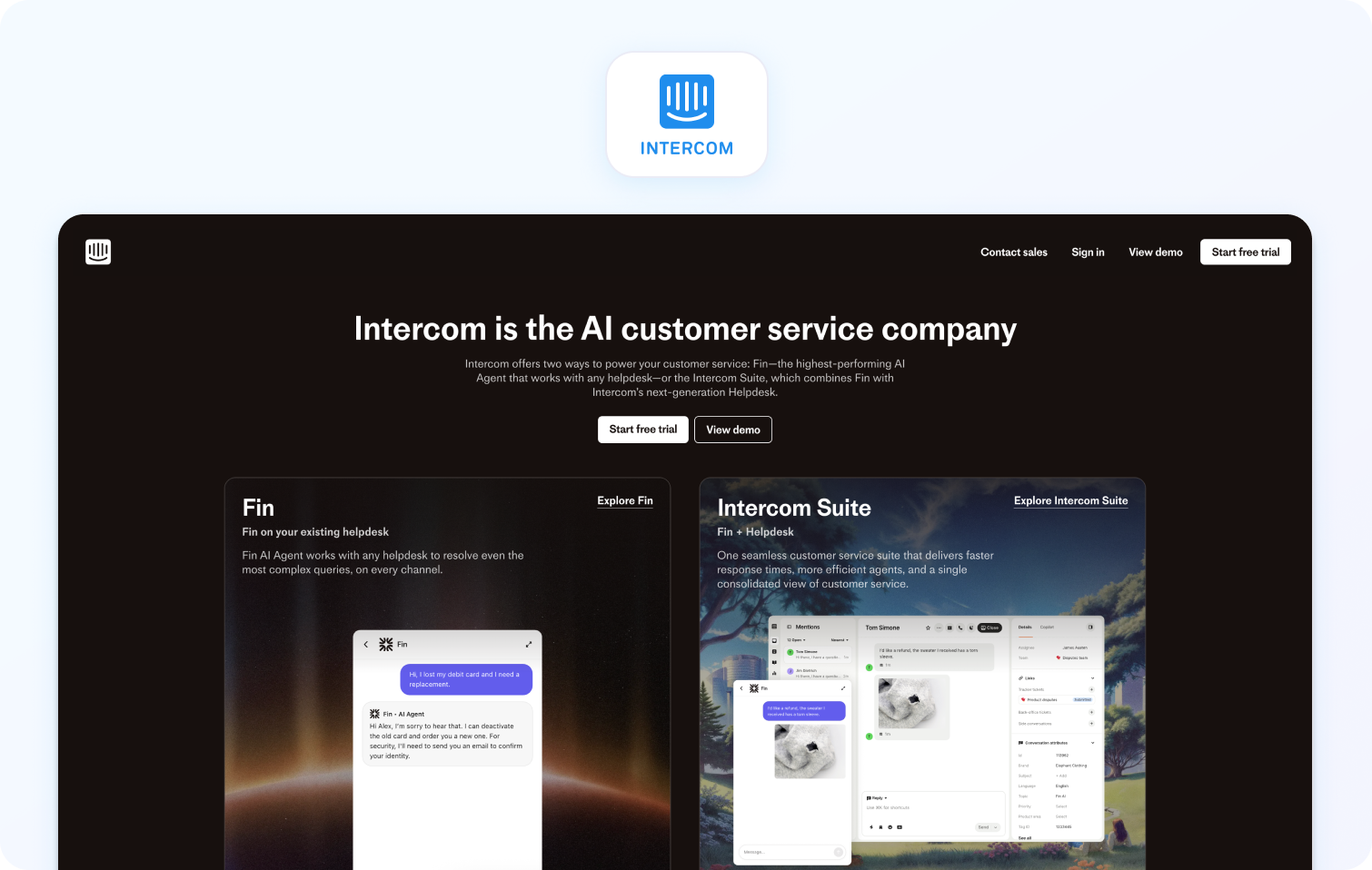
Intercom is a conversational customer support platform that combines live chat, AI assistance, and customer messaging tools. It is particularly well-suited to SaaS companies looking to scale multilingual customer interactions through digital channels.
Strengths:
- Strong conversational experience: Intercom's chat-first approach creates a seamless experience for customers seeking support in different languages.
- AI-powered support automation: The platform can automate routine customer interactions, helping support teams handle higher volumes without increasing headcount.
- Modern user experience: Intercom offers a clean interface for both customers and support teams, reducing complexity during implementation and adoption.
Limitations:
- Limited voice capabilities: Organizations with significant phone support requirements may need additional platforms to support multilingual voice interactions.
- Less visibility into language-specific performance: Reporting is not as focused on language-level quality assurance as some specialist multilingual support platforms.
Best for: SaaS businesses prioritizing multilingual chat, messaging, and self-service experiences.
If your priority is conversational AI, chat automation, and multilingual messaging, it's worth considering Intercom alternatives designed for growing support teams.
4. Freshdesk: Best for Mid-Market Teams Wanting Multilingual Breadth at Lower Cost

Freshdesk is a customer support platform that provides multilingual capabilities alongside ticket management, automation, and omnichannel customer service features. It is often chosen by mid-market organizations seeking a balance between functionality and affordability.
Strengths:
- Broad multilingual support: Freshdesk supports customer interactions across multiple languages, helping businesses serve international customers from a single platform.
- Accessible pricing: Compared with some enterprise-focused alternatives, Freshdesk offers a lower barrier to entry for growing support teams.
- Omnichannel capabilities: Teams can manage customer conversations across email, chat, phone, and social channels within a unified environment.
Limitations:
- Advanced AI features vary by plan: Some multilingual AI capabilities may only be available within higher-tier subscriptions.
- Voice AI functionality is less mature: Businesses with complex multilingual voice requirements may require additional solutions.
Best for: Mid-market support teams seeking broad multilingual functionality without enterprise-level complexity.
Freshdesk offers broad functionality for growing support teams, but it may not be the right fit for every multilingual support strategy. Our guide to the best Freshdesk alternatives compares other leading options across AI, automation, and customer experience capabilities.
5. Language I/O: Best for Teams Adding Translation to an Existing Support Stack
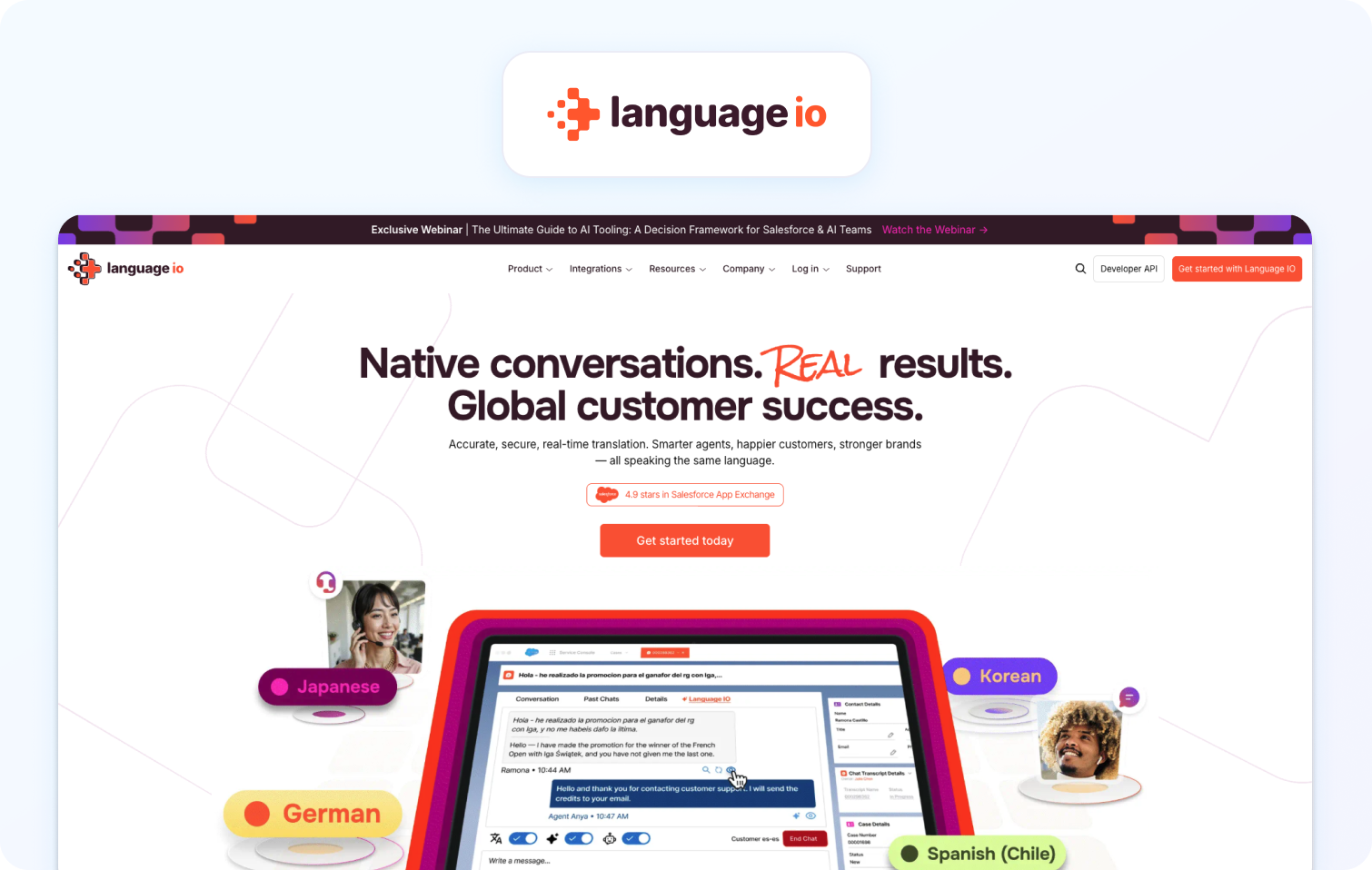
Language I/O focuses on helping organizations add multilingual translation capabilities to their existing customer support tools. Rather than replacing a support platform, it acts as a translation layer across customer interactions.
Strengths:
- Real-time translation: Customer messages can be translated automatically within existing support workflows, reducing the need for dedicated multilingual agents.
- Platform flexibility: Language I/O integrates with a range of popular customer service platforms, allowing organizations to extend existing systems.
- Agent productivity gains: Teams can communicate across languages without constantly switching between translation tools.
Limitations:
- Translation-focused approach: Language I/O primarily addresses translation rather than routing, quality assurance, or broader support operations.
- Limited voice support: Organizations seeking multilingual voice AI will need complementary technologies.
Best for: Businesses that already have a customer support platform and want to add multilingual translation capabilities.
6. DeepL for Business: Best for High-Accuracy Translation of Support Content
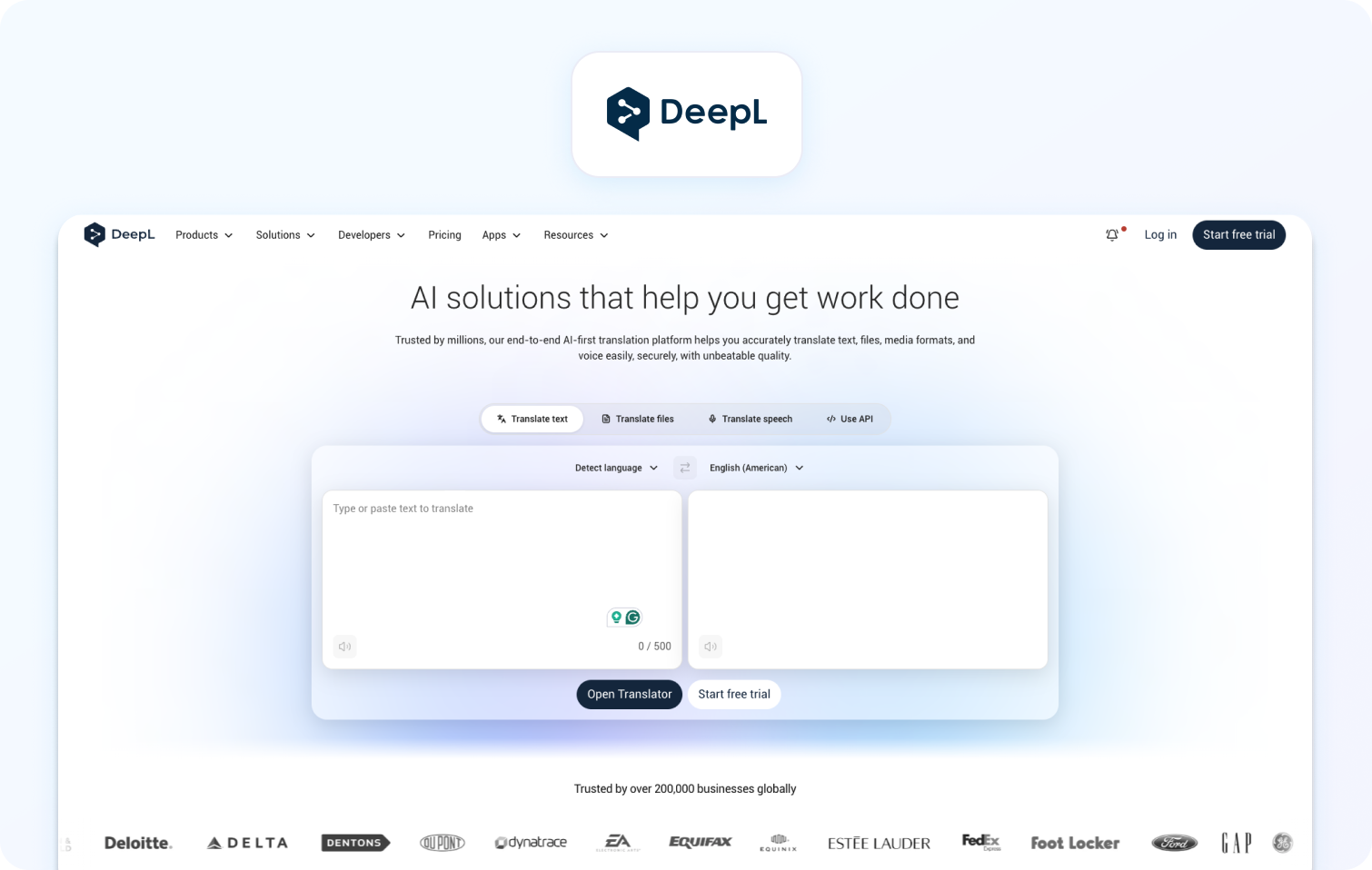
DeepL is a translation platform known for producing highly accurate machine translations across many major languages. It is often used to support multilingual content creation and customer communication.
Strengths:
- Strong translation quality: DeepL is widely regarded for producing natural-sounding translations across major language pairs.
- Useful for knowledge management: Businesses can use DeepL to translate help center articles, documentation, and support content.
- Simple deployment: The platform is straightforward to implement for translation-related workflows.
Limitations:
- Not a complete support platform: DeepL focuses on translation rather than customer support workflows, routing, or quality management.
- No native customer support infrastructure: Organizations still need a separate platform for handling customer interactions.
Best for: Organizations prioritizing translation quality for multilingual support content and documentation.
7. Helpshift: Best for Multilingual Mobile App Support
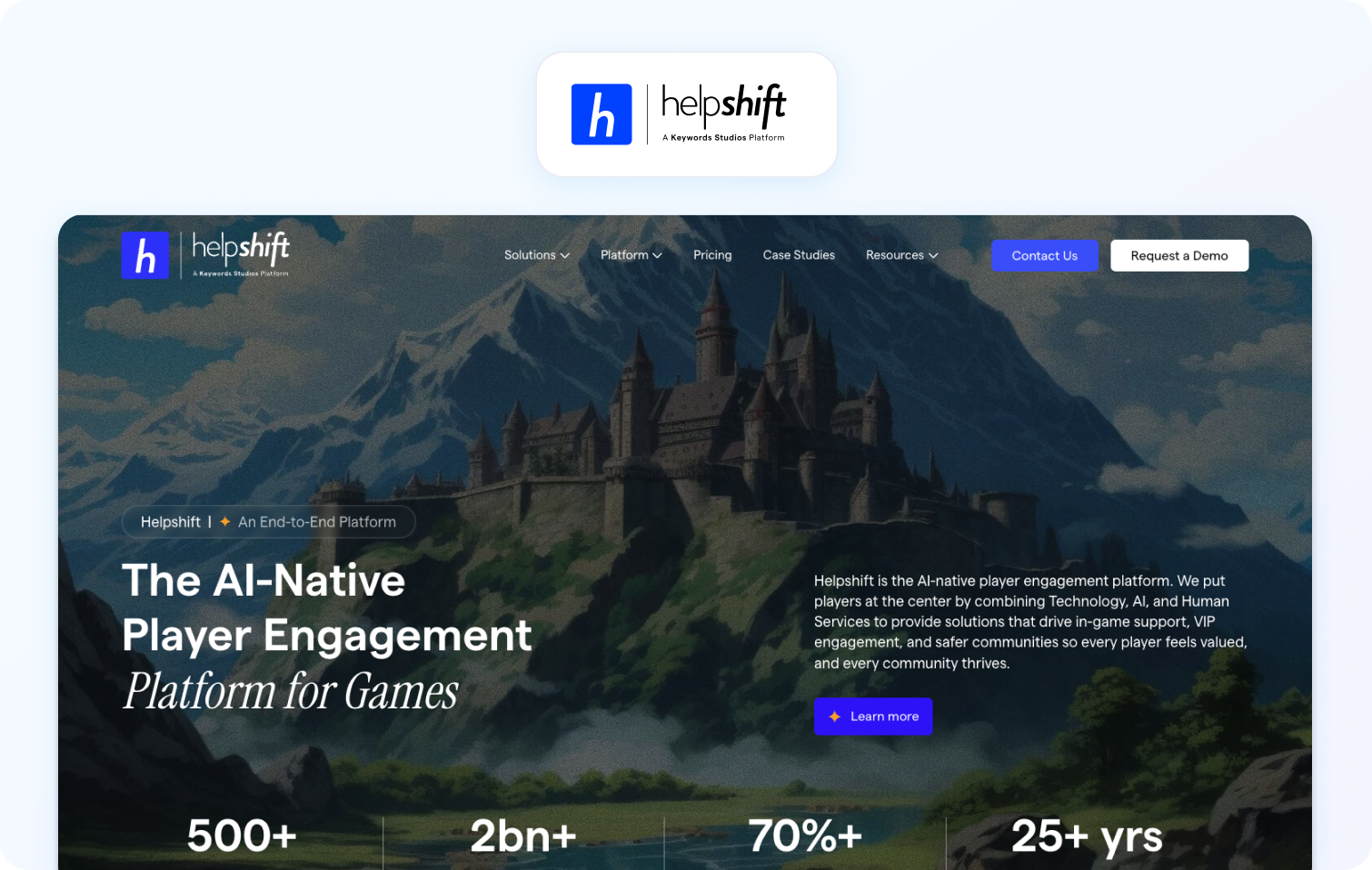
Helpshift is a customer support platform designed primarily for mobile apps, gaming companies, and digital-first businesses. It combines in-app messaging, automation, and multilingual support capabilities to help organizations engage users directly within their applications, making it particularly popular among gaming studios and businesses with large mobile user bases.
Strengths:
- Mobile-first experience: Helpshift is designed around in-app support, making it particularly effective for mobile products.
- AI-powered automation: The platform helps reduce support workloads by automating common customer requests.
- Multilingual messaging: Businesses can support customers across multiple languages without leaving the app environment.
Limitations:
- Narrower use case: Organizations with significant email, voice, or contact center requirements may need broader support tooling.
- Language-specific analytics are limited: Deep multilingual quality oversight may require additional reporting tools.
Best for: Gaming companies, mobile app providers, and digital-first businesses looking to deliver multilingual support directly within their products.
8. Kustomer: Best for High-Volume B2C Teams Needing Multilingual CRM Context
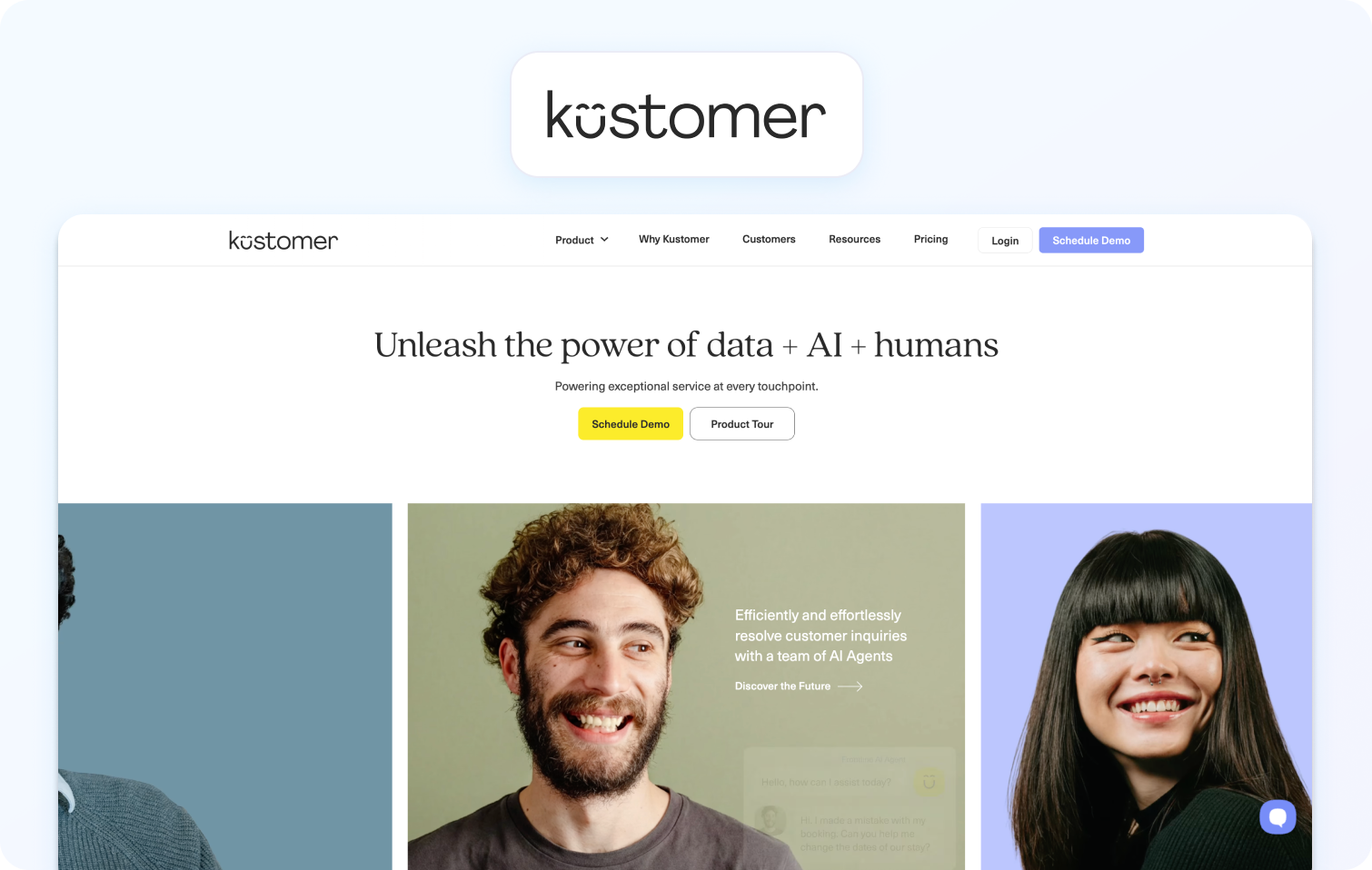
Kustomer combines customer support capabilities with CRM functionality, giving agents access to detailed customer history during multilingual support interactions.
Strengths:
- Customer-centric support model: Agents can access customer context alongside support conversations, improving personalization.
- Automation capabilities: AI-powered workflows help reduce manual effort and improve response times.
- Omnichannel support: Customer interactions from different channels are consolidated into a single view.
Limitations:
- Implementation complexity: Advanced multilingual workflows may require significant configuration.
- Voice AI is less prominent: Organizations focused on multilingual voice automation may need additional tools.
Best for: High-volume B2C organizations seeking multilingual support with deeper customer context.
Businesses that value customer context and CRM-driven support may benefit from comparing Kustomer against other AI-powered support platforms. Read our guide on the best Kustomer alternatives to explore the differences.
9. Avaamo: Best for Enterprise Multilingual Conversational AI
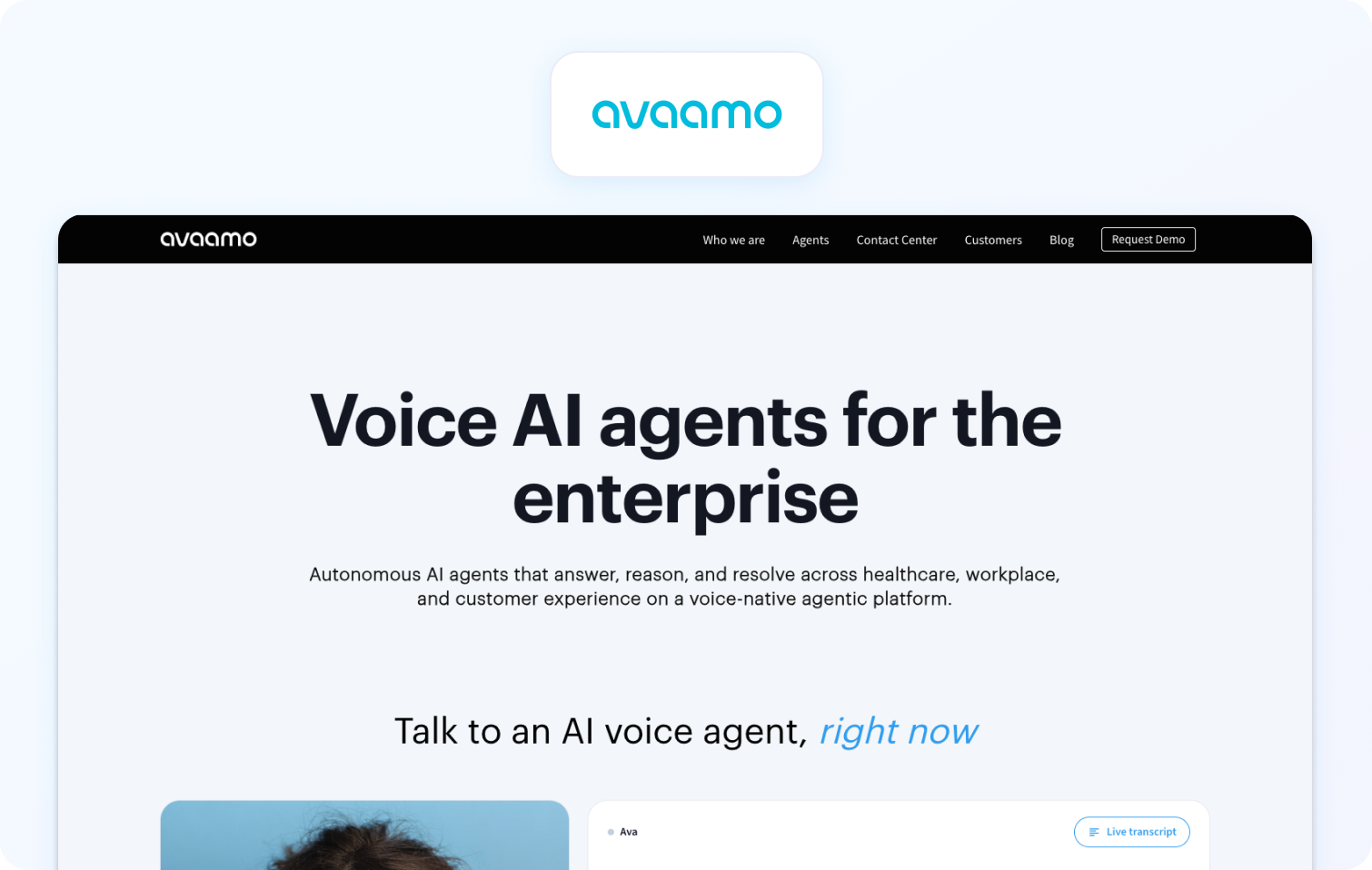
Avaamo is a conversational AI platform designed to help enterprises automate customer service and employee support across multiple languages and channels.
Strengths:
- Advanced conversational AI: Avaamo provides sophisticated automation capabilities for customer-facing interactions.
- Multilingual voice and chat support: The platform supports both text and voice-based customer experiences.
- Enterprise scalability: Avaamo is built for large organizations managing complex support operations.
Limitations:
- Complex implementation: Enterprise deployments often require significant planning and technical resources.
- Potentially higher costs: Smaller organizations may find the platform more than they require.
Best for: Large enterprises implementing conversational AI across multilingual customer support operations.
10. Google Cloud CCAI: Best for Enterprises Building Custom Multilingual AI Stacks
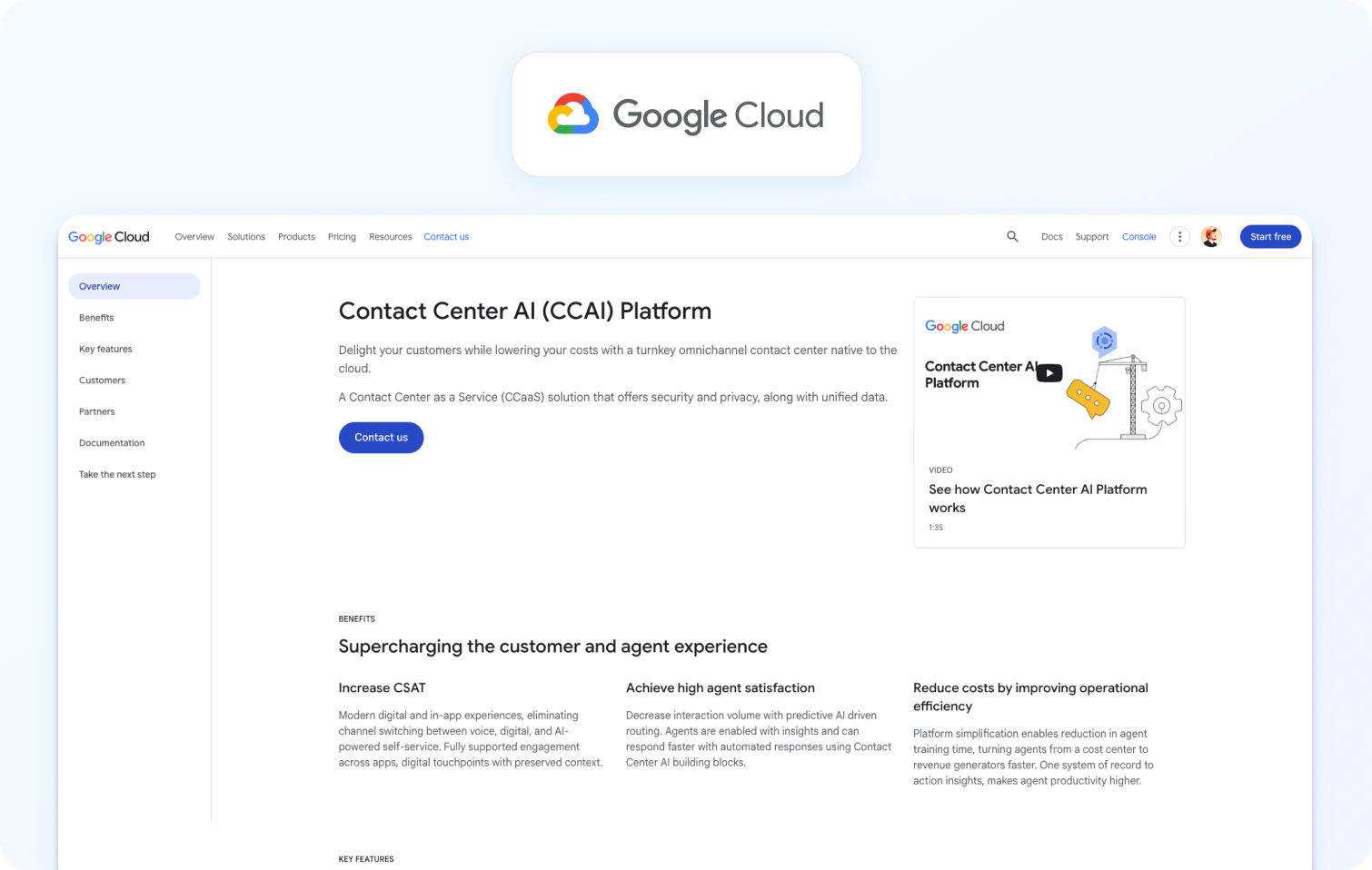
Google Cloud Contact Center AI (CCAI) provides a suite of AI tools that organizations can use to build customized multilingual customer service environments.
Strengths:
- Highly flexible architecture: Organizations can tailor solutions to specific support requirements and workflows.
- Strong AI and language capabilities: Google's machine learning expertise supports a wide range of multilingual use cases.
- Voice and virtual agent support: The platform includes tools for building advanced voice and chat experiences.
Limitations:
- Requires technical expertise: Successful deployments often depend on internal development resources or implementation partners.
- Longer time to value: Customization can extend deployment timelines compared with turnkey solutions.
Best for: Enterprises seeking maximum flexibility when building multilingual AI support ecosystems.
11. Salesforce Service Cloud: Best for Salesforce-Native Teams Expanding to Multilingual Support
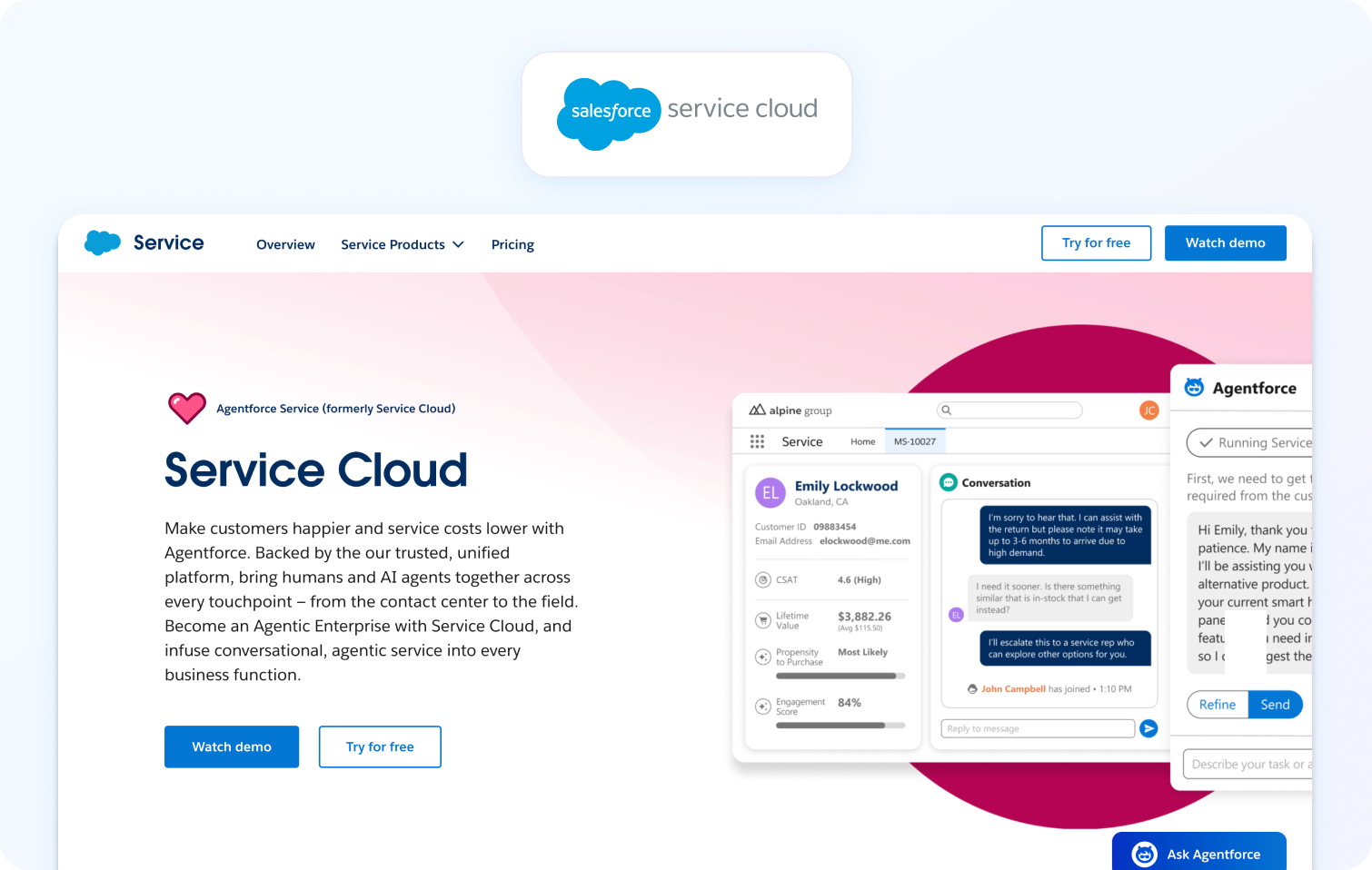
Salesforce Service Cloud extends the Salesforce ecosystem into customer support, helping organizations manage multilingual service operations alongside sales and customer data.
Strengths:
- Deep Salesforce integration: Customer service teams benefit from access to broader CRM data and workflows.
- Automation and AI capabilities: Salesforce provides tools for routing, workflow management, and customer support automation.
- Enterprise scalability: The platform is designed to support large, complex organizations.
Limitations:
- Complex setup: Organizations may require dedicated resources to configure and maintain multilingual support environments.
- Cost considerations: Advanced functionality can become expensive as requirements grow.
Best for: Organizations already invested in Salesforce that want to extend multilingual support capabilities.
Already using Salesforce? Service Cloud can be a natural choice for Salesforce-centric organizations, but it is not the only option available. Our guide to the best Salesforce Service Cloud alternatives examines other platforms that support multilingual customer service, automation, and AI-driven support workflows.
12. Smartling: Best for Multilingual Knowledge Base and Content Management

Smartling is a translation and localization platform that helps organizations manage multilingual content across websites, documentation, and support resources.
Strengths:
- Content localization expertise: Smartling excels at translating and managing customer-facing content across multiple languages.
- Workflow management: Translation projects can be coordinated efficiently through centralized workflows.
- Consistency across markets: Businesses can maintain brand voice and terminology across translated assets.
Limitations:
- Not a dedicated support platform: Smartling focuses on content and localization rather than customer support operations.
- Limited routing and QA capabilities: Organizations still require separate tools for multilingual support workflows and performance management.
Best for: Organizations focused on multilingual content, localization, and knowledge base management rather than end-to-end customer support.
While the platforms above vary significantly in their multilingual capabilities, choosing the right technology is only part of the decision. Many support leaders are now asking a broader question: can AI realistically replace multilingual support teams, or does effective customer service still require human expertise?
The answer is more nuanced than many vendors suggest. Modern AI can handle a growing share of multilingual customer interactions, particularly across high-volume languages and routine support requests. However, there are still areas where human judgment, cultural awareness, and language expertise remain essential. Understanding where AI excels and where human intervention adds value is critical when building a scalable multilingual support strategy.
Why Most Multilingual Support Platforms Fall Short
Multilingual support platforms are designed to help organizations serve customers across different languages, but many solutions focus too narrowly on translation.
This is where evaluation becomes important. A platform may support dozens of languages, yet still struggle to deliver a consistent customer experience if it cannot route conversations correctly, surface accurate knowledge, or measure quality across language markets.
Many vendors position multilingual support as a translation problem. In reality, translation is only one layer of the customer support experience. Organizations also need language-aware routing, omnichannel coverage, quality oversight, and knowledge management capabilities that scale across global operations.
This distinction explains why two platforms with similar language coverage can deliver dramatically different business outcomes. One may simply translate customer messages. Another may automate, route, monitor, and continuously improve multilingual support interactions across every channel.
AI Multilingual Support vs. Human Multilingual Teams

AI multilingual support is the use of artificial intelligence to understand, translate, route, and respond to customer interactions across different languages. Human multilingual support relies on bilingual or multilingual agents to deliver customer service directly.
For many organizations, the question is not whether AI can support multilingual customer service; technology has matured significantly across major languages and customer support channels. The real question they’re facing today is, where does AI deliver the most value and where does human expertise remain essential?
Where AI Excels…
AI multilingual support performs particularly well in high-volume environments where consistency, speed, and scalability are priorities. As AI capabilities continue to mature, more organizations are discovering how AI improves customer support through faster response times, improved consistency, and round-the-clock availability.
Key advantages include:
- 24/7 availability: AI can support customers around the clock without requiring regional staffing coverage.
- Consistent responses: AI-powered support systems deliver the same approved answers regardless of language, helping maintain compliance and brand consistency.
- Scalability across global markets: Expanding into new regions does not necessarily require hiring dedicated multilingual support staff for every language.
- Lower operational costs: AI can handle routine enquiries at scale, reducing the need for additional headcount as support volumes grow.
For common support requests, order updates, account questions, password resets, billing enquiries, and knowledge-based interactions, AI can often deliver a faster and more consistent experience than traditional support models.
Where Human Agents Still Matter…
But human agents continue to outperform AI in situations that require judgment, empathy, or deep cultural understanding. Examples include:
- Complex customer complaints: Sensitive situations often benefit from human communication and problem-solving skills.
- Cultural nuance and regional context: Certain phrases, references, and expectations vary significantly between markets.
- Long-tail languages and dialects: AI performance can be less predictable in lower-volume languages where training data is more limited.
- High-value customer relationships: Strategic accounts and business-critical interactions may require a personal touch that AI cannot fully replicate.
As AI translation quality improves, these gaps continue to narrow, but they have not disappeared entirely.
The Hybrid Multilingual Model
The most effective approach for global support teams in 2026 is what many organizations now use as the hybrid multilingual model. In this model, AI handles the majority of routine multilingual support interactions, including language detection, translation, routing, self-service, and first-line customer support. Human agents then focus on escalations, sensitive conversations, complex problem-solving, and language markets where AI performance requires additional oversight.
This approach allows organizations to combine the scalability of AI with the expertise of human agents while controlling costs and maintaining service quality.
For most support teams, the future is not AI versus humans. It is AI and humans working together within a multilingual support strategy designed around the strengths of both.
How to Choose the Right AI Multilingual Customer Support Solution

Choosing an AI multilingual customer support solution starts with understanding your customer base, support channels, and operational goals. Before making a decision, work through the following five-step evaluation process.
1. Map Your Language Requirements by Volume
Not every language requires the same level of investment. Start by identifying which languages generate the highest support volumes and which markets are most important to your business. This helps prioritize evaluation efforts and avoids overpaying for language coverage that may never be used.
2. Identify Your Priority Support Channels
Voice support, live chat, email, messaging apps, and social media all present different multilingual challenges. If phone support plays a major role in your operation, voice AI capabilities should be a key consideration. If most interactions occur through digital channels, chat and messaging automation may be a higher priority.
3. Assess Knowledge Base Readiness
Even the most advanced multilingual AI relies on accurate source material. Review whether your knowledge base exists in all required languages or whether the platform will need to translate content dynamically. Gaps in documentation can quickly affect customer satisfaction and support accuracy.
4. Define Your Quality Assurance Requirements
Determine how you will measure success across different language markets. Customer satisfaction scores, containment rates, escalation rates, and quality assurance metrics should ideally be tracked at a language-specific level rather than blended into a single global report.
5. Calculate Total Cost of Ownership
Compare platform costs against the cost of hiring and managing multilingual support staff. Include software licensing, implementation, ongoing management, training, and potential efficiency gains. The most affordable platform is not always the lowest-cost solution over time.
Organizations that want a clearer picture of potential savings can use a customer support ROI calculator to compare platform investment against staffing, operational, and support costs.
Organizations that follow this process are more likely to select a multilingual support platform that aligns with both current requirements and future growth plans.
Final Thoughts: Building a Scalable Multilingual Support Strategy
AI customer support multilingual solutions have reached the point where they are no longer a future consideration for global support teams. For organizations serving customers across multiple languages, they are increasingly becoming the standard approach to delivering scalable, high-quality customer service.
The challenge is not in deciding whether to use AI, but in choosing a platform that can consistently support your language markets, channels, knowledge sources, and quality requirements.
While every solution in this guide offers value in specific scenarios, BlueTweak stands out for organizations that need multilingual support across both voice and digital channels, combined with language-aware routing, knowledge-grounded AI, and language-specific quality monitoring.
If you're looking to reduce language barriers, improve operational efficiency, and deliver more consistent support experiences across global markets, start a free 14-day BlueTweak trial with no credit card required, or book a personalized demo to see how multilingual AI support can work within your organization.
Sign up for your free trial now!
Get Started
As Head of Digital Transformation, Radu looks over multiple departments across the company, providing visibility over what happens in product, and what are the needs of customers. With more than 8 years in the Technology era, and part of BlueTweak since the beginning, Radu shifted from a developer (addressing end-customer needs) to a more business oriented role, to have an influence and touch base with people who use the actual technology.



