



TL;DR
Customer service communication is about building relationships. The way your team communicates (tone, clarity, speed) directly impacts customer satisfaction, loyalty, and retention. This guide covers effective customer service communication, from choosing the proper channels to mastering techniques that turn frustrated customers into brand advocates.
Communication That Defuses, Resolves, and Retains
A customer reaches out, frustrated about a billing issue. Your agent responds with a copy-paste template that feels robotic and dismissive. The customer gets angrier. The situation escalates.
Eventually, they leave and take their business elsewhere.
Now imagine a different outcome. The same frustrated customer gets a response that acknowledges their concern, uses friendly language, and walks them through a solution. They feel heard. The problem gets solved. They stay and may even tell their friends about the excellent customer service they received.
That's the difference between customer service that works and communication that falls flat. And it's why the importance of communication in customer service can't be overstated.
Below, we break down customer service communication, explain why it's essential, and show how to master it so your team becomes the voice your brand deserves.
What Is Customer Service Communication?
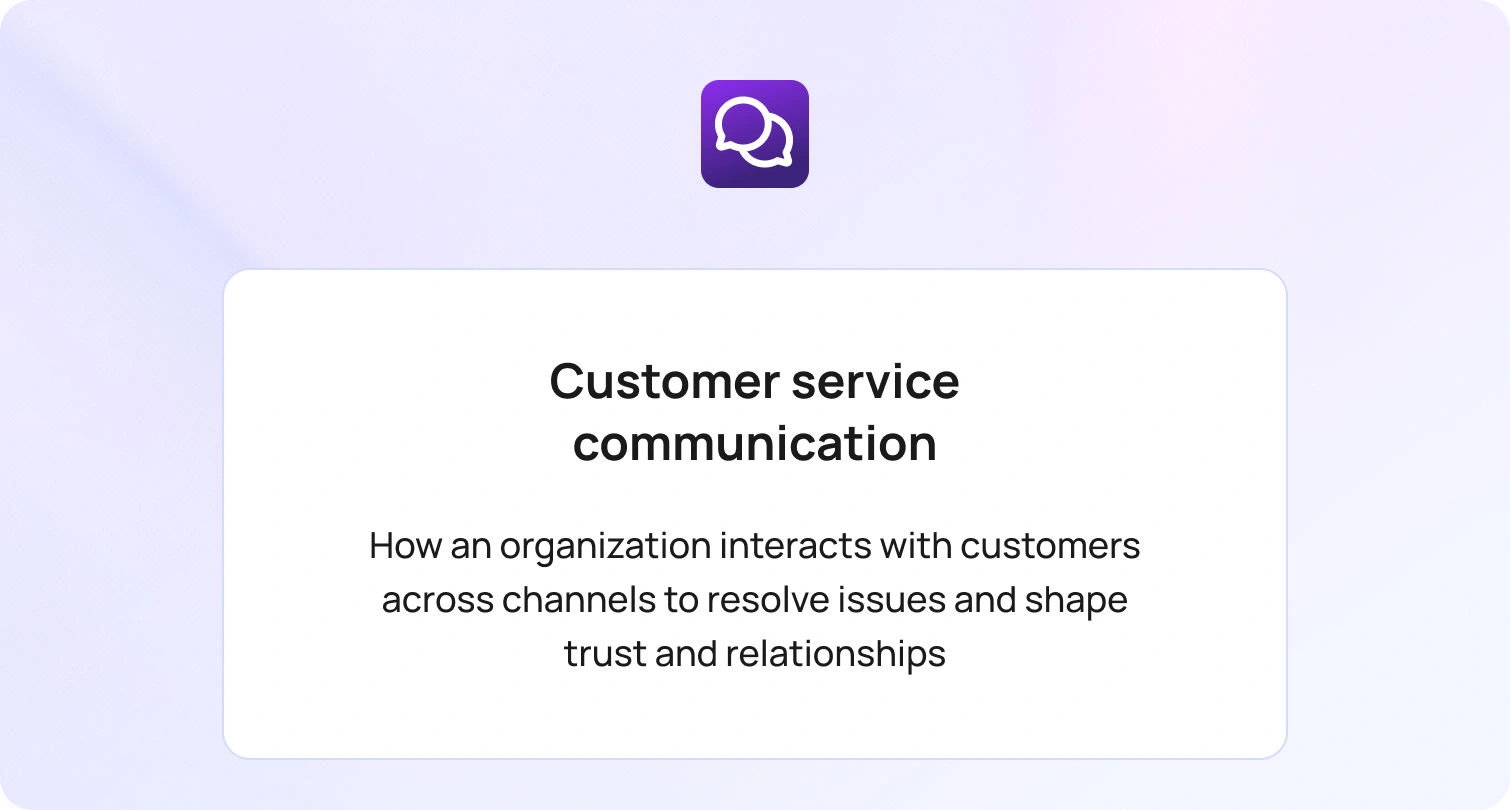
Customer service communication is every interaction between your team and your customers. That could be through calls, live chat, email, social media, or messaging apps. It's how you communicate with customers across multiple communication channels to answer customer inquiries, resolve issues, and build strong customer relationships.
However, it's not just about what you say. It's about how you say it.
The role of communication in customer service goes way beyond exchanging information. It shapes how customers feel about your brand, whether they trust you, and whether they come back, ultimately leading to excellent customer service.
Good communication in customer service includes:
- Clear communication that customers understand immediately
- Active listening so customers feel heard
- Positive communication that keeps interactions constructive
- Proactive communication that anticipates customer needs before problems arise
When you nail these communication skills, you create positive customer experiences that drive good customer relationships, loyalty, and repeat business.
Why Is Communication Important in Customer Service?
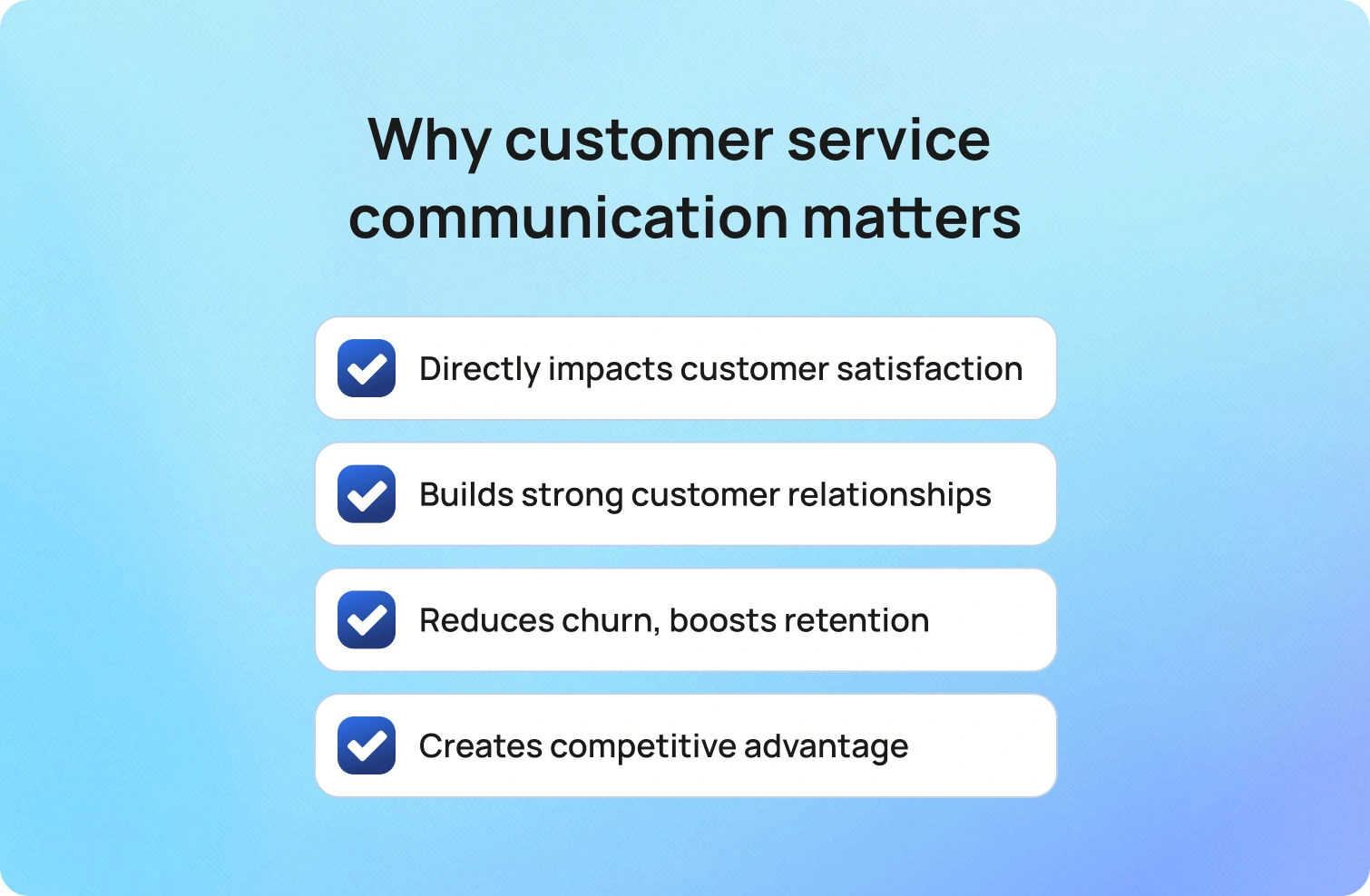
Practical communication matters in customer service because it is the foundation for everything else you aim to achieve.
1. It Directly Impacts Customer Satisfaction
Customers don't remember every feature of your product. But they absolutely remember how your support team made them feel. When your team communicates effectively, customer satisfaction scores go up. When communication breaks down, you get bad customer service experiences that tank your brand reputation.
Clear, empathetic communication makes customers feel valued. And when customers are heard, they're more willing to work with you to find a solution.
2. It Builds Strong Customer Relationships
Customer relationship management is a mindset. Every interaction is a chance to strengthen (or weaken) your relationship with that person. Excellent customer service communication turns transactional exchanges into meaningful conversations. When you communicate with customers in a way that's personal, helpful, and respectful, you solve problems and build trust.
3. It Reduces Churn and Increases Customer Retention
Companies with strong customer communication strategies have higher customer retention rates. That’s because customers stick with brands that make them feel understood.
When your team masters effective communication techniques in customer service, you reduce frustration, resolve issues faster, and give customers fewer reasons to leave.
That translates directly to business growth.
4. It Creates Competitive Advantage
Exceptional customer service is one of the few real differentiators left when enhancing the overall customer experience. Your communication efforts can set you apart from competitors who are still sending robotic, unhelpful responses.
When customers consistently have positive experiences with your support team, they become loyal advocates who spread positive word-of-mouth and social media feedback.
Choosing the Right Customer Service Communication Methods
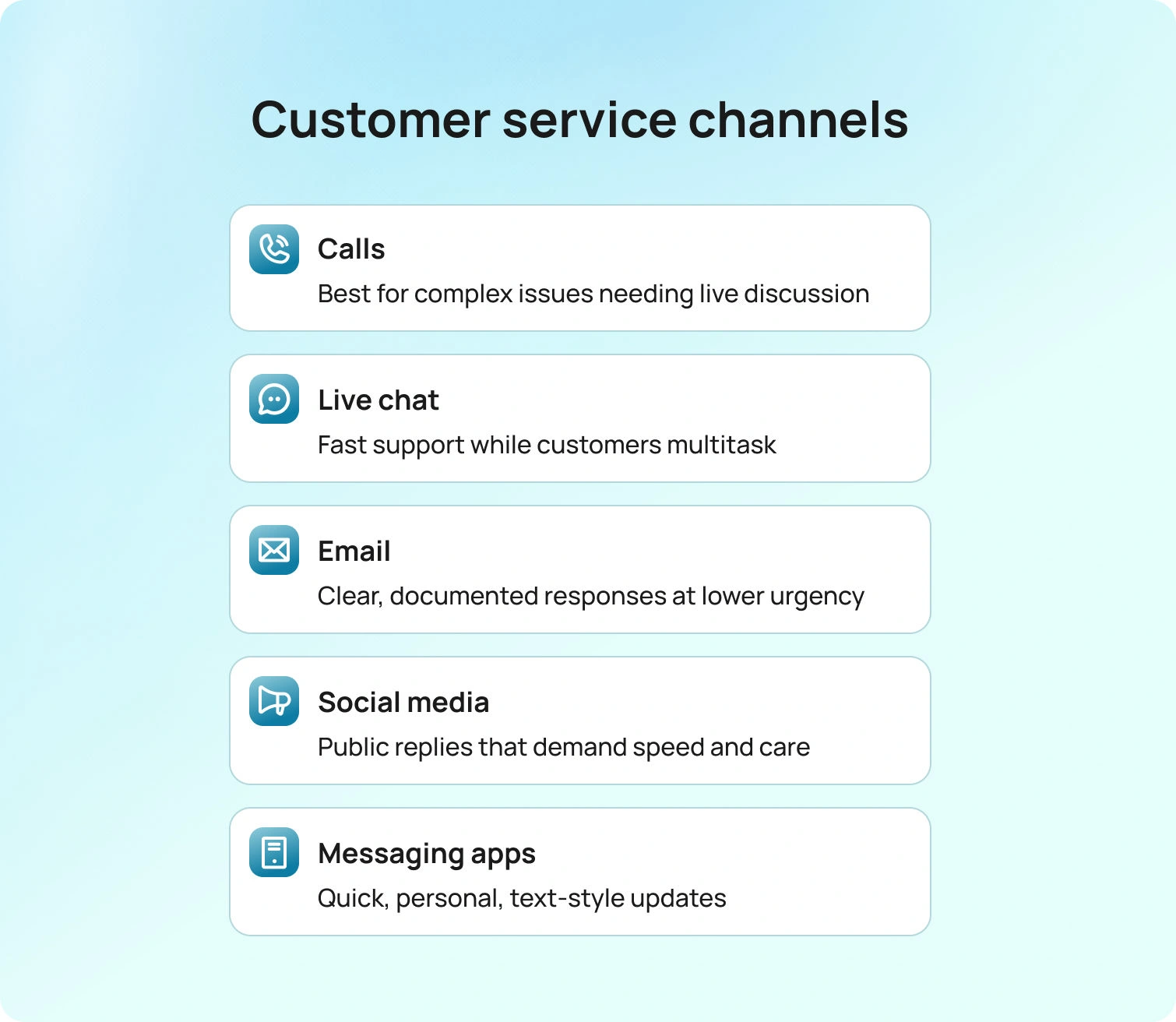
Not all communication channels are created equal. Different customers have different preferences, and your customer service team needs to meet them where they are.
Here are the primary communication methods in customer service and when to use them:
1. Calls
Phone interactions are important for complex issues that require back-and-forth communication. They enable immediate problem-solving and help service professionals pick up on tone and emotion. But they're also time-intensive, and not everyone wants to be on hold.
2. Live Chat
Chat is fast, convenient, and increasingly expected. Customers can multitask while waiting for responses, and your team can handle multiple conversations simultaneously. AI-powered chatbots can handle routine customer queries while human agents focus on complex issues.
3. Email
Email works well for detailed explanations and when customers need documentation of the conversation. It's less urgent than chat or phone, but requires strong written communication skills to avoid misunderstandings.
4. Social Media
Social media communication is public, which means every response is visible to potential customers. It requires quick turnaround and careful messaging, since you're essentially providing customer service on stage.
5. Messaging Apps
Platforms like WhatsApp and Facebook Messenger offer the convenience of texting with the professionalism of business communication. They're perfect for quick updates and personalized messages. The best customer service communication strategy uses multiple channels and lets customers choose their preferred method. An omnichannel customer support platform makes this seamless by unifying all customer communication channels in one place.
6 Customer Service Communication Techniques That Work
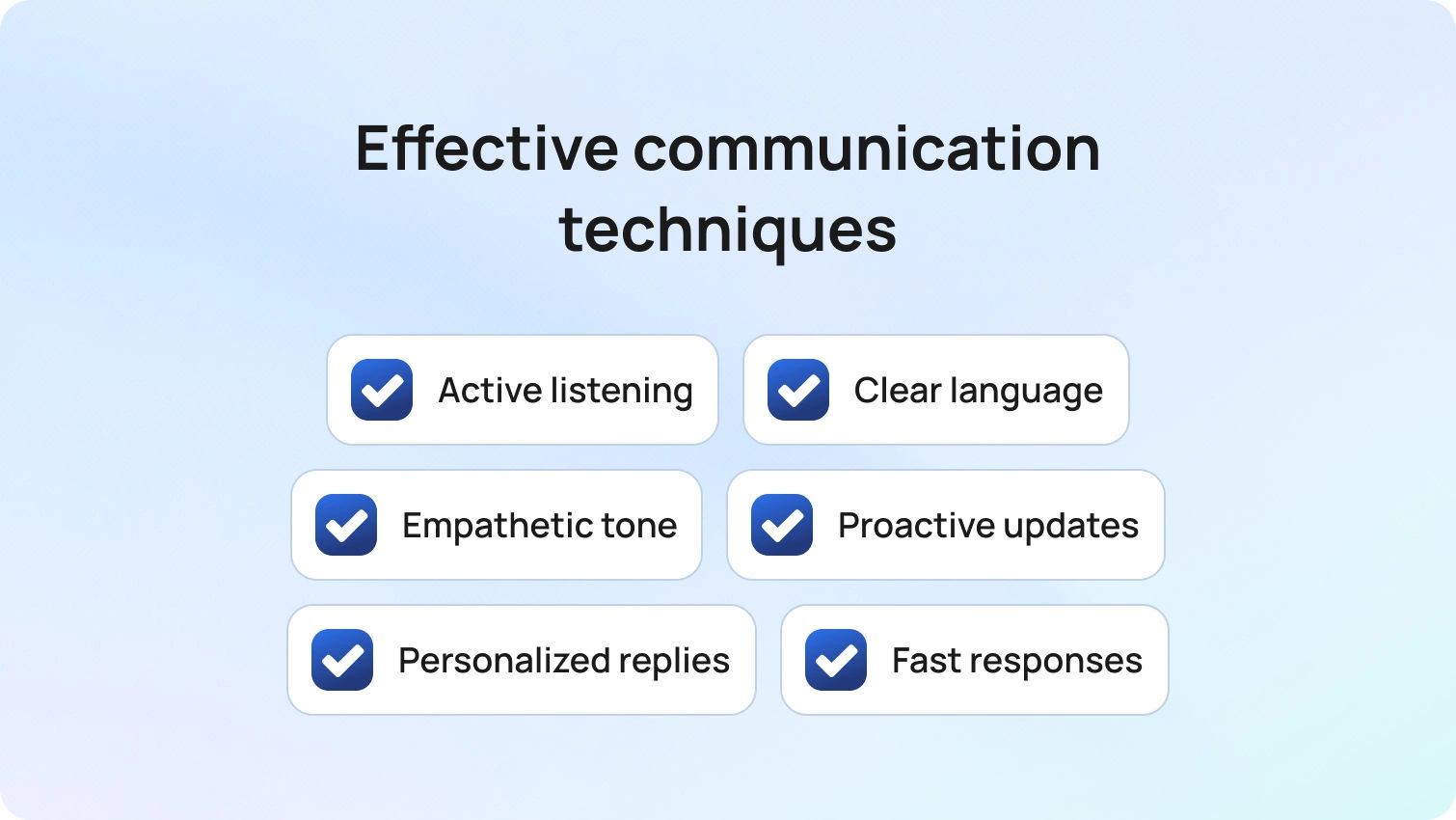
Here are the communication techniques in customer service that separate good teams from great ones:
1. Practice Active Listening
Active listening means truly hearing what customers are saying instead of waiting for your turn to respond. Read (or listen to) the whole message before crafting your reply. Ask clarifying questions. Repeat back what you've heard to confirm understanding.
When customers are heard, half the battle is already won.
2. Use Clear Communication
Avoid jargon, technical terms, or vague language. Your job is to make sure customers understand every step of the process. Break complex explanations into simple steps. Use short sentences. Be specific.
Bad: "We'll escalate this to the backend team for resolution."
Good: "I'm sending this to our technical team. You'll hear back within 24 hours with a solution."
3. Master the Right Tone
Written words in customer service are tricky because you don't have vocal cues to convey warmth. That's where tone matters.
- Start every interaction with empathy
- Acknowledge the customer's frustration or concern
- Use friendly language that feels human, not robotic
- Always maintain a positive attitude, even when dealing with difficult situations
Check out our guide on customer service best practices for more on tone and messaging.
4. Be Proactive, Not Just Reactive
Don't wait for customers to reach out with problems. Proactive communication means anticipating issues and reaching out first:
- Send updates on known issues
- Follow up after resolutions to make sure everything's still working
- Share tips that help customers get more value from your product
Proactively engage with customers, and you'll see customer engagement and satisfaction scores climb, leading to more positive feedback.
5. Personalize Every Interaction
Not every customer is the same, so you can’t treat them all the same way. Use customer data to understand their history, preferences, and past interactions. Reference previous conversations. Use their name. Tailor messages to their specific situation.
Personalized communication makes customers feel valued as individuals and not just ticket numbers.
6. Respond Fast
Speed matters. Customers expect quick responses, especially on channels like chat and social media. Set clear expectations about response times and stick to them. Use canned responses for common questions to speed up the process without sacrificing quality.
When you combine fast responses with clear, empathetic communication, you create exceptional customer service experiences.
Practical Customer Service Communication Examples
Let's look at some real examples to see these principles in action.
Example 1: The Robotic Response (Bad)
"Your ticket has been received. Reference number: 847392. Expected resolution time: 24-48 hours."
What's wrong here? Zero empathy. No acknowledgment of the customer's issue. No human touch. This is the kind of customer service that makes people feel like just another number.
Example 2: The Human Response (Good)
"Hi Sarah, I see you're having trouble with your billing. That's frustrating, especially when you're trying to get things sorted quickly. I've reviewed your account and identified the issue. It was a duplicate charge processed in error. I've issued a refund, and you'll see the credit within 2-3 business days. I'm really sorry for the inconvenience. Let me know if you need anything else!"
This works because it:
- Uses the customer's name
- Acknowledges the frustration
- Explains what happened clearly
- Provides a specific timeline
- Apologizes genuinely
- Offers continued support
That's effective communication and customer service working together.
How to Build a Customer Service Communication Plan
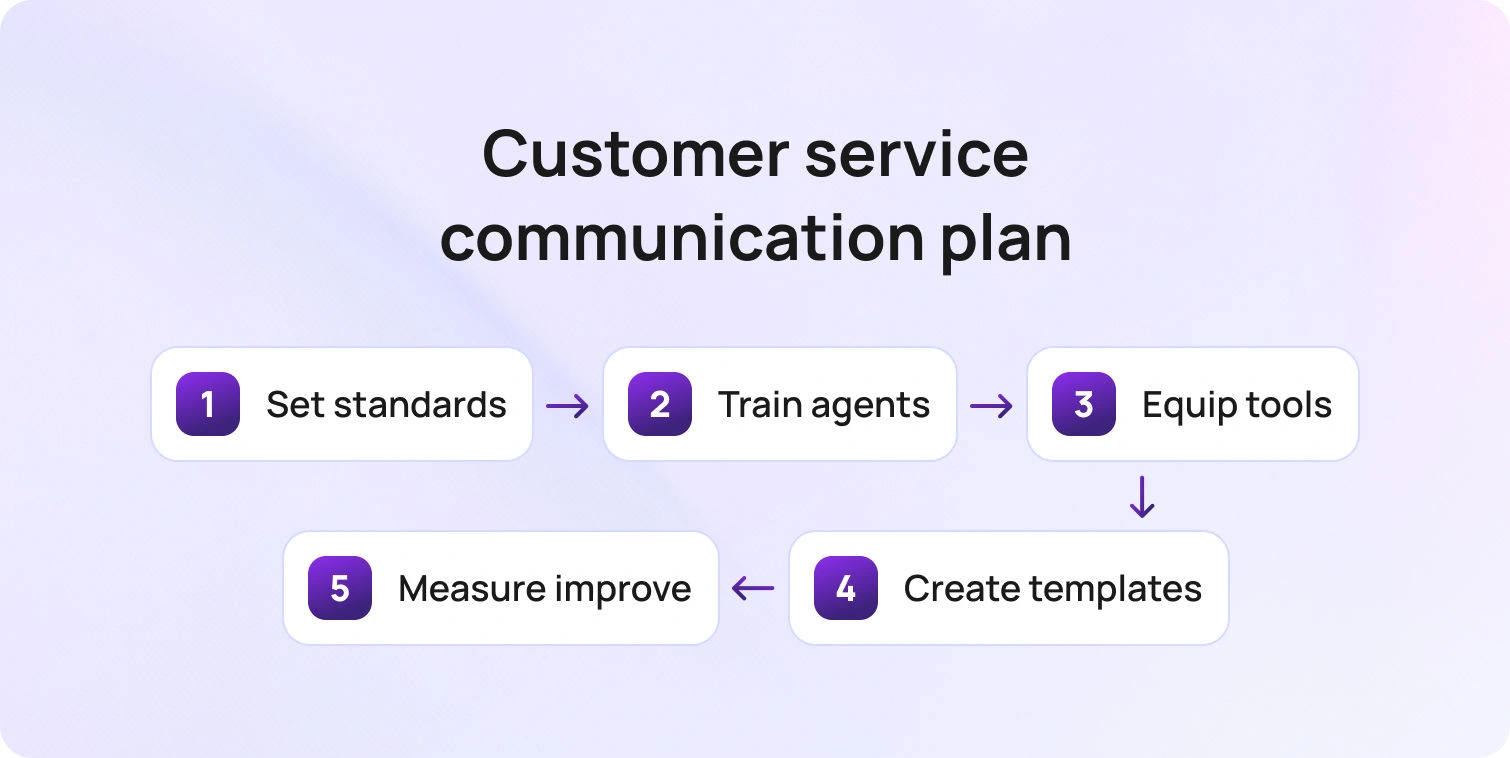
This plan is your roadmap for consistent, high-quality interactions. Here's how to create one:
1. Define Your Communication Standards
What does excellent customer service communication look like for your brand? Document your expectations around:
- Response time targets for each communication channel
- Tone guidelines (formal vs. casual, technical vs. simple)
- Language to use (and avoid)
- Escalation protocols
- Follow-up procedures
2. Train Your Team
Communication skills aren't innate. They are learned. Invest in training that covers:
- Listening techniques
- Written best practices
- Handling difficult customers
- Using support tools effectively
- Understanding customer expectations
Regular coaching and feedback help your customer service team improve communication skills over time.
3. Equip Your Team with the Right Tools
Your support team needs tools that enable effective communication across multiple channels. That means:
- A unified inbox that brings together email, chat, social media, and calls
- AI-powered features like proposed replies and ticket summaries that speed up responses
- Knowledge base tools so agents can find answers fast
- Real-time chat translation for customers who speak different languages
- Analytics to track communication performance and customer satisfaction
BlueHub (by BlueTweak) brings all of this together on a single platform, making it easier for your team to deliver consistent, high-quality communication across every channel.
4. Create Communication Templates
Templates save time and ensure consistent messaging. Build a library of customer service communication examples for:
- First response acknowledgments
- Common questions and solutions
- Escalation notifications
- Follow-up messages
- Thank you, and feedback requests
Just make sure your team personalizes these templates. Because nobody likes feeling like they're talking to a robot.
5. Measure and Improve
Track key metrics like:
- Customer satisfaction scores (CSAT)
- First response time
- Resolution time
- Customer feedback sentiment
- Retention rates
Use this data to identify communication gaps and refine your customer service communication strategy over time.
How BlueHub Strengthens Customer Service Communication
BlueHub (by BlueTweak) brings every channel into a single omnichannel workspace across voice, chat, email, SMS, and social. Agents see the full context and history, which helps keep tone consistent and replies accurate. AI assistance suggests replies that align with your brand, produces instant ticket summaries that make handoffs seamless, and provides translation so language is never a barrier. A searchable knowledge base sits beside every conversation to help teams deliver clear answers the first time. Leaders gain the insight needed to coach and improve. Journey-aware analytics track response time, resolution time, CSAT, sentiment, and first-contact resolution across brands. Quality assurance tools and audit trails surface conversations that need review. Integrated workforce management helps you meet SLAs, and native multitenant routing lets one team support multiple brands with clear separation and shared visibility. The result is communication that defuses tension, resolves issues faster, and retains customers at scale.
Make Top-Notch Communication Your Competitive Edge
Most companies still get this wrong. They're sending automated responses, making customers repeat themselves across channels, and treating support as a cost center rather than a relationship builder.
That's your opportunity.
When you master customer service, you stand out. You create exceptional customer service experiences that turn first-time customers into lifelong advocates.
In a world with endless options, such lasting relationships and customer loyalty are worth their weight in gold.
See how BlueHub (by BlueTweak) makes it easy to deliver consistent, high-quality support across every channel, from phone calls to social media to messaging apps. Request a demo to see it in action.

As Head of Digital Transformation, Radu looks over multiple departments across the company, providing visibility over what happens in product, and what are the needs of customers. With more than 8 years in the Technology era, and part of BlueTweak since the beginning, Radu shifted from a developer (addressing end-customer needs) to a more business oriented role, to have an influence and touch base with people who use the actual technology.



