Customer Experience Automation in 2026: Personalise Every Interaction



BlueTweak is an AI Customer Support Platform that unifies every conversation, customer record, and automation into one workspace.
Explore more
Insights, trends, and practical ideas from customer experience and AI
Real-world scenarios showing how teams use BlueTweak to deliver better service
The daily blueprint that guides customer support leadership.
ROI and savings calculators for support teams
See how BlueTweak stacks up against leading customer support platforms
Customer experience automation (CXA) uses AI, machine learning, and automation tools to streamline customer interactions across the entire customer journey. It helps businesses improve customer satisfaction, reduce operational costs, and deliver consistent, personalised interactions at scale. The right customer experience automation platform enables businesses to automate routine tasks, unify customer data, and optimise customer engagement across multiple channels.
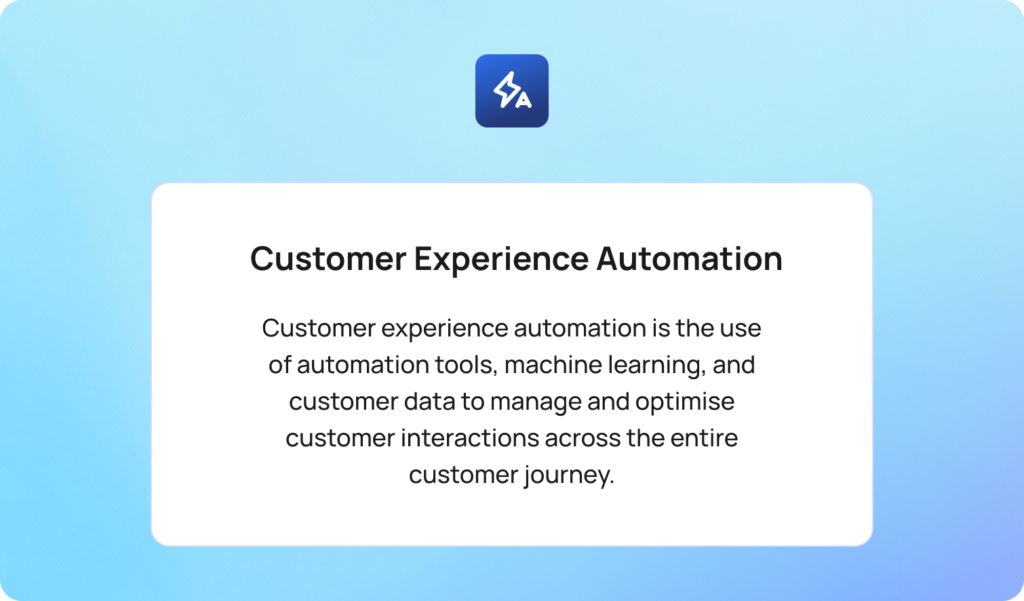
Customer experience automation is the use of automation tools, machine learning, and customer data to manage and optimise customer interactions across the entire customer journey. It enables businesses to automate routine tasks, deliver personalized interactions at scale, and create a more efficient, consistent customer experience across the entire customer lifecycle.
But defining what customer experience automation is purely in technical terms undersells its impact. In practice, it’s about designing an automated customer experience that feels seamless, responsive, and personal, without requiring constant human intervention.
Today, customer experience encompasses every interaction a customer has with your brand, from discovery to onboarding, support, retention, and beyond. That means automating customer experiences isn’t just about deploying chatbots or handling customer inquiries. It’s about orchestrating the entire customer journey using a robust customer experience automation platform.
By combining customer data platforms, customer relationship management CRM systems, and CX automation software, businesses can unify customer data, analyze customer behavior, and deliver personalized communications across multiple channels. The result is a connected, intelligent system that continuously learns from customer interactions and evolves alongside customer expectations.
Customer experience automation isn’t about replacing human interaction… It’s about elevating it. By removing friction from routine tasks, businesses can focus their people where they matter most: building meaningful customer relationships.

Radu Dumitrescu, Head of Presale & Digital Transformation, BlueTweak
Customer experience automation matters because it helps businesses meet rising customer expectations for speed, personalisation, and consistency across multiple channels. By combining automation and customer experience strategies, organisations can improve customer satisfaction, reduce operational costs, and deliver seamless customer interactions at scale.
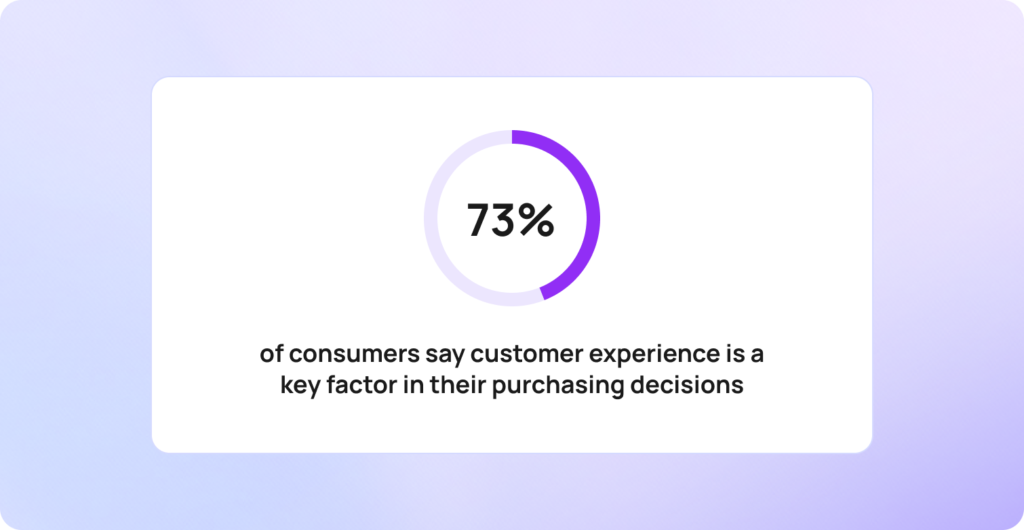
According to PwC, 73% of consumers say customer experience is a key factor in their purchasing decisions, yet only a small percentage feel companies consistently meet their expectations. This gap highlights a growing need for businesses to rethink how they manage customer interactions and why customer experience automation is becoming a strategic priority.
Over the last few years, customer expectations have fundamentally changed. Speed, convenience, and relevance are no longer differentiators; they’re baseline requirements. Today, customers expect:
This is where automation and customer experience come together to create a competitive advantage.
Customer experience automation enables businesses to move beyond fragmented systems and deliver a unified experience across every customer touchpoint. Instead of disconnected tools and manual processes, businesses can deploy automation solutions that connect marketing automation, customer communication, and customer service into one cohesive system.
With a well-implemented automation customer experience strategy, businesses can:
More importantly, it allows organisations to rethink how work gets done. Repetitive tasks, routine inquiries, and data entry can be handled by automated systems, freeing up customer service agents and customer service representatives to focus on complex tasks that require empathy, creativity, and human judgment.
This balance between automation and human agents is what defines best-in-class experience automation today.
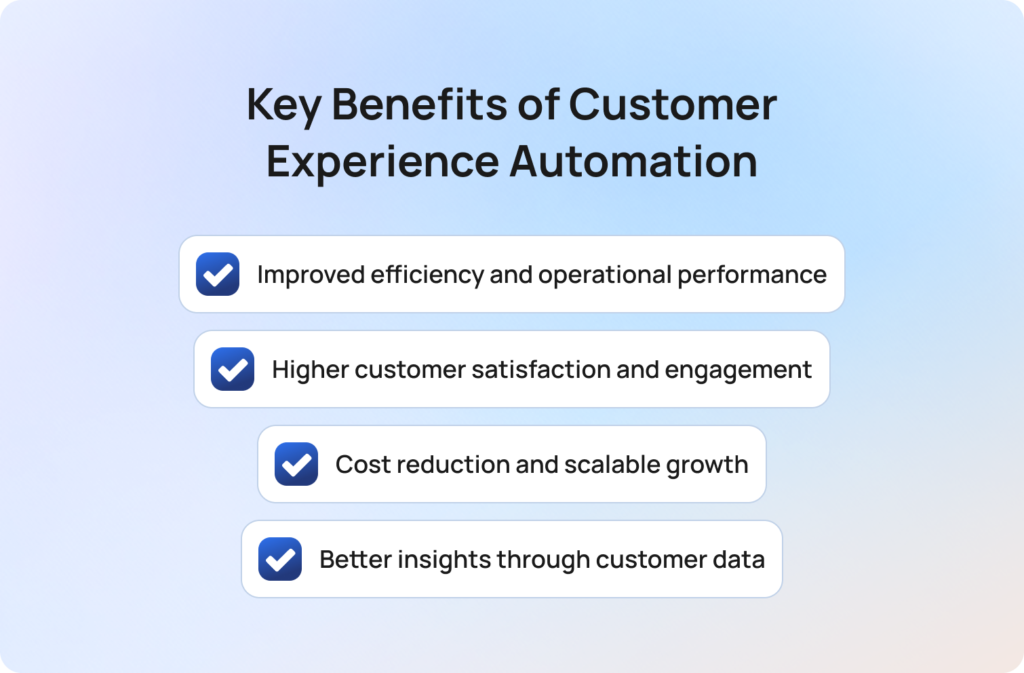
Customer experience automation is the strategic use of automation tools, customer data, and machine learning to improve how businesses manage customer interactions across the entire customer journey. Its benefits span efficiency, scalability, and customer satisfaction, helping organisations automate routine tasks, reduce operational costs, and deliver consistent, personalized interactions at every stage of the customer lifecycle.
One of the most immediate benefits of customer experience automation is its impact on operational efficiency.
In traditional models, customer interactions are heavily dependent on human input, which slows down response times and increases staffing and resource allocation challenges. With CX automation, businesses can automate routine tasks such as handling customer inquiries, managing customer queries, and processing repetitive tasks like data entry.
By implementing automated workflows and advanced automation tools, businesses can:
This ensures that even during peak demand, customer communication remains fast, accurate, and consistent. Self-service tools and self-service portals also empower customers to resolve issues independently, which reduces pressure on support teams while improving the automated customer service experience.
Customer experience automation plays a direct role in improving customer satisfaction. When customers receive fast, relevant, and consistent responses, their perception of your brand improves.
An automated customer experience ensures that no customer inquiries are missed, and every interaction meets a baseline level of quality. With the right customer experience automation platform, businesses can:
More advanced CX automation tools go even further and enable businesses to analyze customer behavior and tailor personalized communications in real-time. This creates a more engaging, relevant experience that strengthens customer relationships and drives long-term loyalty.
Scaling customer experience without increasing operational costs has historically been a challenge. Customer experience automation changes that equation.
By shifting routine inquiries and basic customer support to automated systems, businesses can significantly reduce operational costs while maintaining high customer service quality.
With automation, customer experience strategies in place:
This not only improves efficiency but also creates a more sustainable model for managing client relationships and supporting growth across the entire customer lifecycle.
A great example of this in action can be seen in BlueTweak’s customer success story with a medical clinic; high volumes of customer inquiries and fragmented customer interactions were impacting service quality. By implementing a unified customer experience automation platform, the clinic streamlined routine inquiries, introduced self-service tools, and improved response times across the entire customer journey. The result was higher customer satisfaction, improved operational efficiency, and more consistent, personalised interactions across every patient touchpoint.
Customer experience automation platforms ought to do more than execute; they should also generate intelligence. Every automated interaction produces valuable data. When businesses unify customer data across systems, they gain a clearer view of the entire customer journey.
By leveraging customer data platforms and cx automation software, businesses can:
This ability to continuously analyze customer data allows businesses to proactively adapt to customer needs, rather than reacting after the fact.
Over time, this creates a feedback loop where experience automation not only improves efficiency but also enhances decision-making across marketing automation, customer service, and business process management.
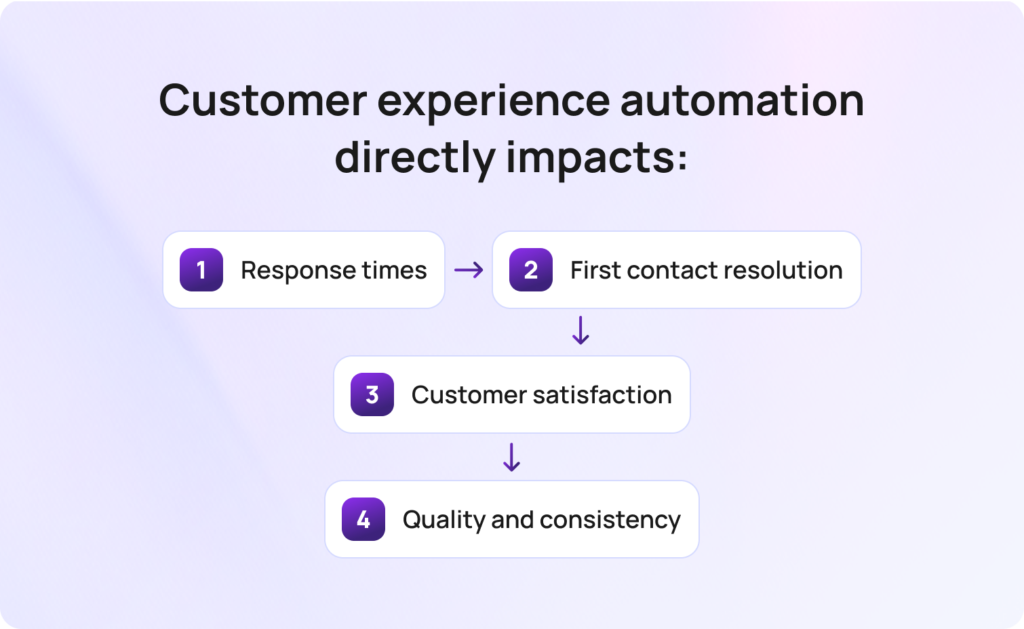
Customer experience automation improves key performance metrics by using automation tools, machine learning, and customer data to optimize customer interactions across the entire customer journey in real time. By reducing friction and automating routine tasks, it enables businesses to deliver faster, more accurate, and more consistent experiences at scale.
Understanding how automation improves customer experience metrics is critical for organisations looking to justify investment in CXA. Traditional customer service models often struggle with delays, inconsistent responses, and limited visibility into performance. In contrast, CXA introduces structured, data-driven processes that continuously improve over time.
Customer experience automation directly impacts:
By using machine learning and natural language processing, CX automation software can interpret customer queries, analyse intent, and route requests to the most appropriate channel, whether that’s self-service options or human agents for more complex tasks.
Crucially, these improvements compound over time. As businesses continue to analyze customer data and customer behavior, they gain valuable insights that help refine automated workflows, optimize customer communication, and deliver consistent experiences across multiple channels. This results in smarter, more adaptive customer engagement that evolves alongside customer expectations.
Customer experience automation platforms enable auditable, transparent decision-making by tracking how automated systems use customer data to manage customer interactions across the entire customer journey. This ensures that businesses can scale automation while maintaining compliance, accountability, and trust.
As organisations increasingly rely on automated systems and CX automation tools, the ability to explain and justify decisions becomes essential, particularly in industries where governance and data privacy are critical. Customer experience automation must not only be efficient, but also traceable. That’s where examples of auditable decisioning in customer experience automation become important.
Modern customer experience automation platforms provide visibility into how decisions are made, ensuring alignment with business rules, regulatory requirements, and customer expectations. Examples include:
This level of transparency allows businesses to continuously monitor customer sentiment, validate how automation tools are performing, and ensure that customer experience management strategies remain aligned with both compliance standards and customer needs.
Ultimately, auditable decisioning strengthens trust, not just internally, but with customers. It ensures that as businesses automate customer experience at scale, they do so responsibly, with full visibility into how every interaction is handled.
Customer experience automation is the strategic use of automation tools, customer data, and machine learning to transform how businesses manage customer interactions across the entire customer journey. When implemented effectively, it enables businesses to improve customer satisfaction, reduce operational costs, and deliver consistent, personalised interactions at scale.
But the real value of CXA goes beyond efficiency. It allows organisations to move from reactive support models to proactive, insight-driven engagement, where every interaction is informed by data, shaped by customer behavior, and optimised in real-time.
As customer expectations continue to evolve, businesses that invest in experience automation will be better positioned to adapt, scale, and compete. Those that don’t risk falling behind will ultimately struggle with fragmented systems, inconsistent service quality, and rising operational complexity.
Ready to see what customer experience automation can do for your business? Book a demo with BlueTweak or try the platform for free to discover how you can streamline customer interactions, improve operational efficiency, and deliver exceptional experiences across the entire customer lifecycle.
Customer experience automation (CXA) is the use of automation tools, machine learning, and customer data to automate and optimize customer interactions across the entire customer journey and customer lifecycle, enabling faster, more consistent, and personalized experiences.
Customer experience automation improves customer satisfaction by reducing response times, delivering consistent service quality, and enabling personalized interactions based on customer data and customer behavior.
The main benefits include improved operational efficiency, reduced operational costs, enhanced customer engagement, better use of customer data, and the ability to scale customer interactions without increasing headcount.
A strong customer experience automation platform should integrate with existing systems, unify customer data, support multiple channels, provide automation tools for routine tasks, and enable businesses to continuously monitor and optimise customer interactions.
No, customer experience automation is designed to complement human agents, not replace them. Automated systems handle routine inquiries and repetitive tasks, while human agents focus on complex tasks that require empathy, judgment, and deeper problem-solving.
As Head of Digital Transformation, Radu looks over multiple departments across the company, providing visibility over what happens in product, and what are the needs of customers. With more than 8 years in the Technology era, and part of BlueTweak since the beginning, Radu shifted from a developer (addressing end-customer needs) to a more business oriented role, to have an influence and touch base with people who use the actual technology.