



TL;DR
Tidio remains a strong live chat and chatbot platform for SMB teams, but many growing businesses eventually need more advanced features, deeper AI capabilities, and stronger multi-channel support than a chat-first platform can provide. The best Tidio alternatives in 2026 include BlueTweak for AI-native omnichannel customer support, Zendesk Suite for enterprise-scale ticket management, and Intercom for SaaS-focused customer engagement. This guide compares the top alternatives to Tidio based on AI automation, customer communication, analytics, scalability, pricing transparency, and long-term operational value.
Tidio is an excellent starting point for businesses that need live chat, chatbot automation, and a simple way to engage website visitors. But as support operations grow, customer communication rarely stays confined to chat alone. Teams often find themselves managing conversations across voice, email, social messaging, and AI-powered self-service channels while maintaining consistent service levels and reporting.
At that point, many organizations begin looking for platforms that offer deeper automation, stronger analytics, and a more unified customer support environment. Solutions such as BlueTweak, Zendesk, and Intercom are increasingly being evaluated by businesses that want to consolidate channels, reduce operational complexity, and scale customer support without relying on multiple disconnected tools.
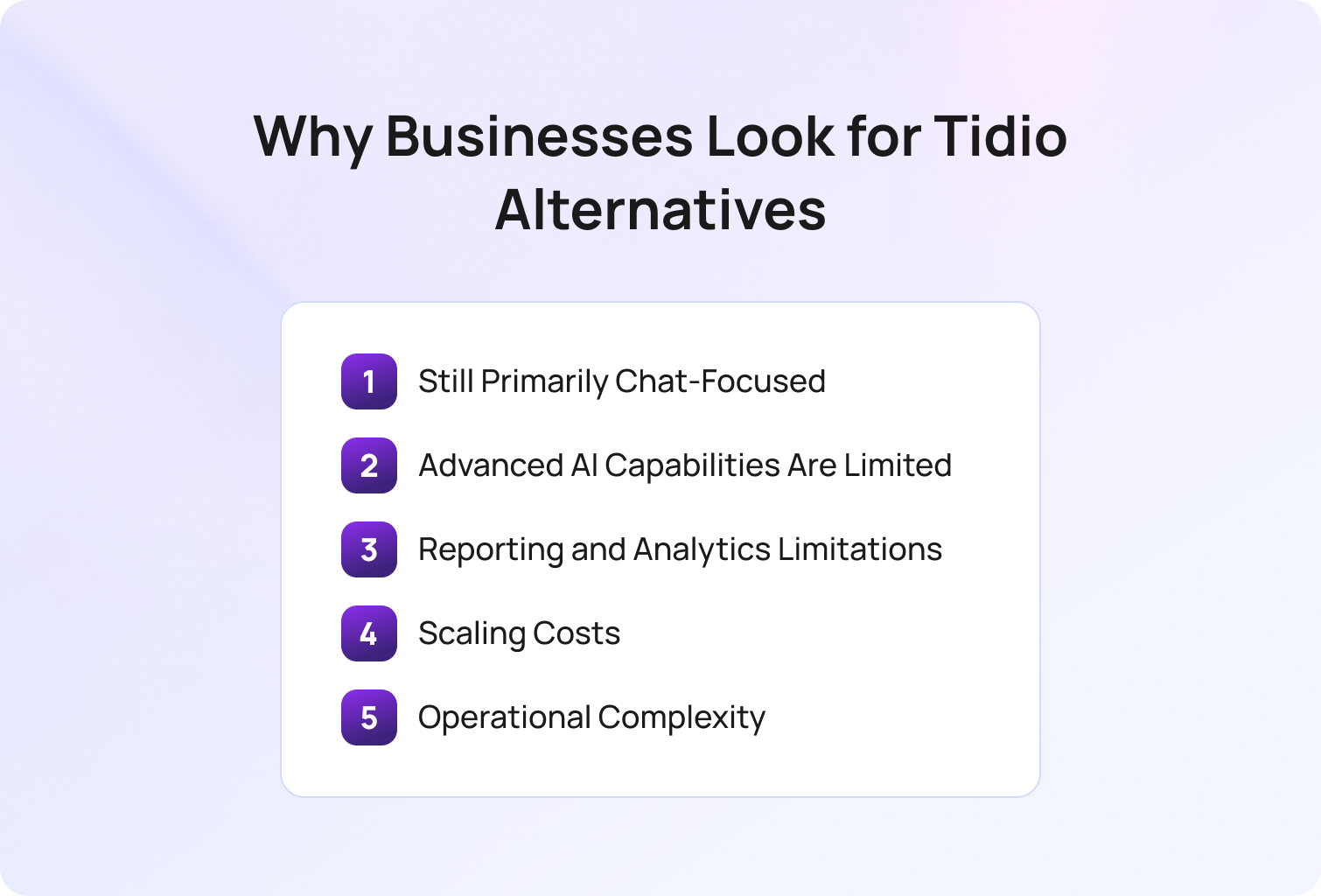
Why Businesses Look for Tidio Alternatives in 2026
Tidio is a customer service platform focused on live chat, chatbot automation, and SMB-friendly support workflows.
Its user-friendly interface, fast setup process, free plan, and approachable live chat tools have made it a popular choice for smaller support teams. However, businesses evaluating Tidio alternatives in 2026 are often facing a different set of operational requirements.
As support teams grow, customer interactions become more complex, communication channels expand, and customer service leaders require deeper analytics, stronger AI capabilities, and greater operational visibility. Several recurring themes appear across public reviews, feature documentation, and customer feedback.
Tidio Is Still Primarily Chat-Focused
Tidio supports multiple channels, including live chat, Facebook Messenger, Instagram, WhatsApp, and email. However, its core positioning remains centered around chat-first support workflows.
For businesses that require native voice support, advanced omnichannel routing, workforce management, or tightly unified customer communication across multiple channels, teams often need additional support tools outside the platform.
This creates operational fragmentation as businesses scale.
Advanced AI Capabilities Are Limited Compared to Enterprise Platforms
Tidio's Lyro AI agent is designed to automate common customer queries using knowledge base content and conversational AI. While effective for repetitive requests and FAQ workflows, scaling teams increasingly want more advanced AI capabilities across the full support lifecycle, including:
- Real-time agent coaching
- Post-interaction summarisation
- Advanced sentiment analysis
- QA scoring
- Workflow orchestration
- RAG-grounded knowledge retrieval
- AI-assisted voice support
Many enterprise-focused customer service software platforms now treat these capabilities as core operational features rather than optional AI add-ons.
Deloitte noted in 2025 that many contact centers struggle to integrate new AI technologies with existing platforms, creating operational inefficiencies and limiting customer service performance. At the same time, fragmented customer service environments continue to increase licensing complexity, operational overhead, and reporting fragmentation.
Reporting and Analytics Become More Important at Scale
Tidio provides analytics dashboards and conversation reporting tools. However, several public reviews from growing businesses mention limitations around advanced filtering, operational visibility, and reporting depth.
As support teams expand, customer service leaders typically require more detailed analytics, including:
- First contact resolution (FCR)
- Average handling time (AHT)
- Containment rate
- SLA adherence
- Real-time performance tracking
- Workforce forecasting
- QA monitoring
- Cross-channel reporting
These reporting requirements often exceed the needs of SMB teams, but they become essential for medium sized businesses and enterprise operations.
Scaling Costs and Operational Complexity Increase Over Time
Tidio's free plan and entry pricing remain attractive for smaller organizations.
However, support teams scaling beyond basic live chat support often discover additional costs tied to AI conversation limits, advanced automation features, higher usage tiers, or third-party integrations.
For CFOs and COOs, the total cost of ownership becomes more important than the initial monthly subscription.
A fragmented support stack typically includes:
- Live chat software
- Separate voice systems
- External analytics platforms
- AI add-ons
- Workforce management software
- QA tooling
- Knowledge base tools
The result is higher operational complexity, disconnected customer data, and slower support processes.
What many teams discover after implementing chat-first platforms is that support complexity grows faster than expected. Once customer interactions expand across voice, messaging, email, and AI automation, fragmented tooling starts creating operational drag. Businesses increasingly want one AI-native ecosystem instead of five disconnected support tools.

Support teams that have outgrown chat-first platforms often find that adding separate tools for voice, analytics, QA, workforce management, and AI automation creates unnecessary complexity. BlueTweak brings these capabilities together into a single AI-native customer support platform, helping businesses streamline operations and deliver consistent experiences across every customer channel.
Explore how BlueTweak unifies voice, chat, email, messaging, AI automation, analytics, and workforce management in one platform.
Sign up for a free trial! No credit card required.
Get StartedTidio Competitors at a Glance
Tidio alternatives vary significantly in AI depth, omnichannel coverage, scalability, and pricing transparency.
The table below compares the best Tidio alternatives based on public documentation, pricing pages, feature pages, and published product positioning as of Q2 2026.
| Platform | Best For | Native Voice Support | AI Included in Base Plan | Omnichannel Support | Starting Price* |
| BlueTweak | AI-native omnichannel support | Yes | Yes | Yes | Pricing from €65/agent/month |
| Zendesk Suite | Enterprise ticket management | Partial | Partial | Yes | Custom pricing |
| Intercom | SaaS and product-led support teams | Partial | Partial | Yes | Tiered pricing |
| Freshdesk (Freshchat) | Budget-conscious growing teams | Partial | Partial | Yes | Tiered pricing |
| HubSpot Service Hub | Sales-led organizations | Partial | Partial | Yes | Free and paid plans available |
| Crisp | Startups wanting flat-rate pricing | No | Partial | Partial | Free and paid plans available |
| Help Scout | Small and mid-size support teams | No | Partial | Partial | Free and paid plans available |
| LiveChat | Sales and engagement-focused live chat | No | Partial | Partial | Tiered pricing |
| Gorgias | Ecommerce support teams | Partial | Partial | Yes | Tiered pricing |
| Drift (Salesloft) | Conversational sales and marketing teams | Partial | Partial | Partial | Custom pricing |
| Olark | Lightweight live chat with visitor tracking | No | No | No | Tiered pricing |
| Zoho Desk | Teams in the Zoho ecosystem | Partial | Partial | Yes | Tiered pricing |
| ManyChat | Social messaging and WhatsApp automation | No | Partial | Partial | Free and paid plans available |
| Kustomer | CRM-native customer conversations | Partial | Partial | Yes | Custom pricing |
| Chatwoot | Open-source omnichannel support | Partial | Partial | Yes | Free and paid plans available |
15 Best Tidio Alternatives for 2026
The best Tidio alternatives differ depending on your customer support model, AI requirements, channel complexity, and growth stage.
This list was evaluated using public documentation, pricing pages, published case studies, and feature availability as of Q2 2026. BlueTweak leads as the editor's choice because of its AI-native omnichannel architecture and operational breadth.
1. BlueTweak: Best Tidio Alternative for AI-Native Omnichannel Support
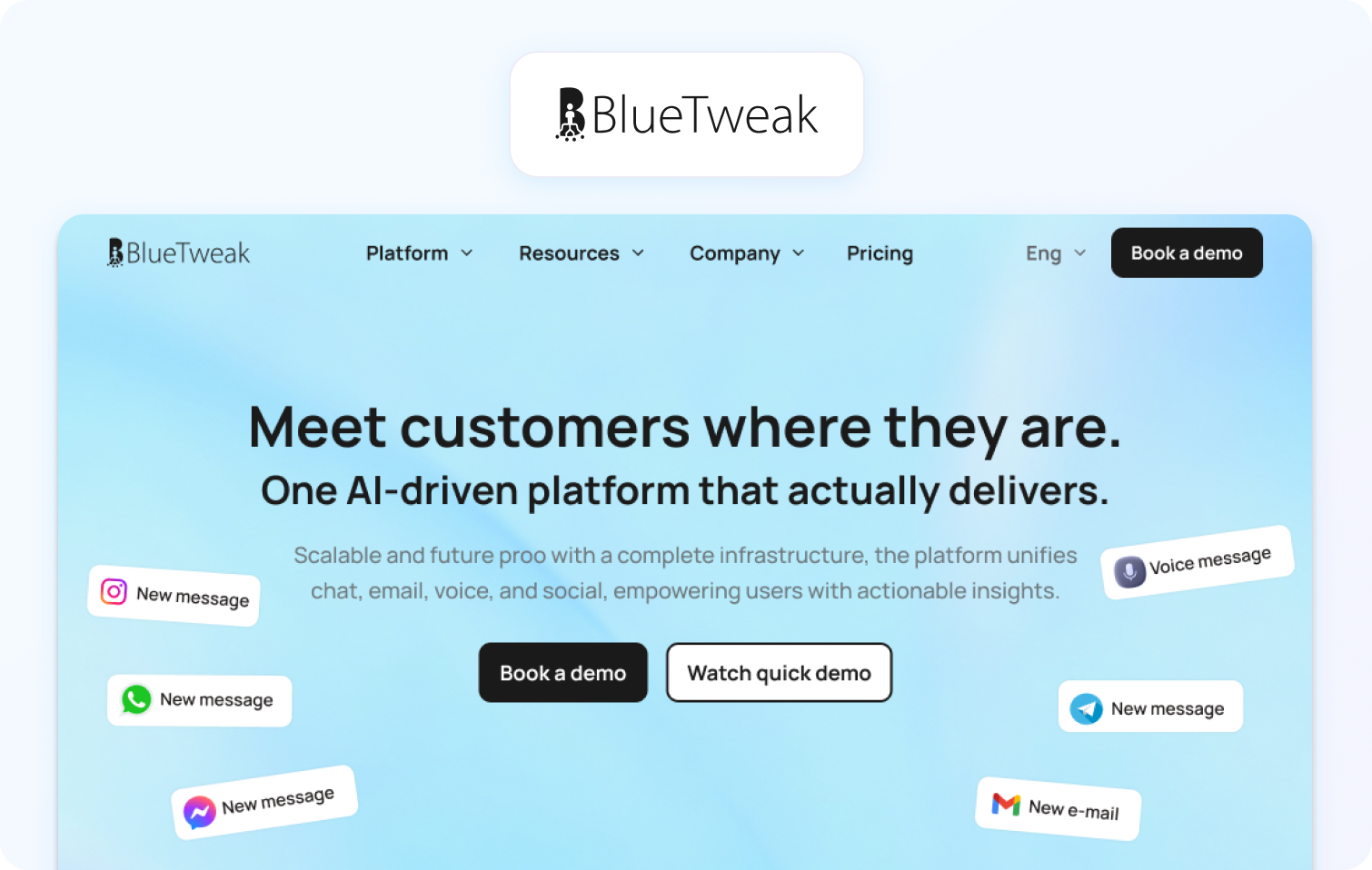
BlueTweak is an AI-powered omnichannel customer support platform designed for businesses that want to unify voice, live chat, email, messaging, workforce management, QA, analytics, and AI automation into a single operational workspace.
Unlike many alternatives to Tidio that still rely on fragmented tooling, BlueTweak positions itself as an AI-native customer support ecosystem built for modern support operations.
BlueTweak's platform integrates voice, chat, email, and social messaging into a single interaction timeline, powered by cloud-native infrastructure and enterprise-grade AI workflows.
Best for: Medium sized businesses and enterprise support teams that need:
- AI-powered omnichannel customer communication
- Native workforce management
- Real-time analytics
- AI proposed replies
- RAG-grounded knowledge base workflows
- Scalable customer service operations
Key BlueTweak Features:
- Omnichannel inbox across voice, chat, email, and social media
- AI proposed replies grounded in knowledge base content
- AI interaction summarisation
- Automatic sentiment detection
- Workforce management and QA tooling
- Real-time analytics and reporting
- Smart knowledge base with AI retrieval
- Interaction automation and chat routing
- Built-in translation support across 100+ languages
- AI automation for repetitive customer inquiries
BlueTweak Pricing: BlueTweak operates a transparent pricing system of €65 per agent, per month, including all core features (Email, Chat, and Voice) + AI.
BlueTweak Pros:
- True omnichannel support platform rather than chat-first architecture
- AI capabilities included across workflows instead of isolated chatbot functionality
- Multi-brand visibility with granular reporting and performance insights
- Strong operational tooling for support teams
- Native QA and workforce management features
- Unified customer conversations and customer data
- Advanced automation features for scaling teams
- Trusted by global brands and BPO providers managing high-volume, multilingual customer support operations
BlueTweak Cons:
- More feature-rich than smaller businesses may initially require
- Requires a more strategic implementation approach than lightweight live chat tools
Free Trial Availability: 14-day free trial, no credit card details required.
Ready to see BlueTweak in action? Start a free 14-day trial and explore AI-powered omnichannel support, advanced automation, real-time analytics, workforce management, and QA tools—all included in a single platform.
BlueTweak Case Study Spotlight:
One example of BlueTweak in action comes from its work with global BPO provider Conectys, which needed to improve reporting visibility, reduce operational complexity, and streamline customer support workflows across a large-scale multilingual operation
After implementing BlueTweak’s AI-powered omnichannel customer support platform, Conectys achieved a 25% reduction in resolution times, a 20% reduction in operational costs, a 35% improvement in customer satisfaction scores, and a 40% increase in reporting efficiency.
The deployment also helped centralize customer conversations, improve agent productivity, and reduce data retrieval time across support operations.
The results achieved by Conectys demonstrate what's possible when customer support teams move beyond fragmented tooling.
Book a personalized BlueTweak demo to see how AI-powered automation, omnichannel customer communications, workforce management, analytics, and QA tools can work together in a single platform to improve efficiency, customer satisfaction, and operational performance.
2. Zendesk Suite: Best Tidio Alternative for Enterprise-Scale Ticket Management

Zendesk Suite is an enterprise customer service platform designed for businesses managing high volumes of customer interactions across multiple support channels. Compared to Tidio’s chat-first architecture, Zendesk focuses more heavily on large-scale ticket orchestration, advanced routing, operational reporting, and enterprise support governance.
Zendesk combines ticketing, AI support tools, workflow automation, analytics, and omnichannel customer communication into a centralized support environment for growing customer service teams.
Best for: Enterprise organizations and scaling support operations that need advanced ticket management, detailed reporting, SLA workflows, and omnichannel customer support across large agent teams.
Key Zendesk Suite Features:
- Omnichannel ticketing and customer conversations
- AI-powered suggested replies and automation
- Advanced chat routing and workflow automation
- Knowledge base and self service tools
- Detailed analytics and reporting dashboards
- SLA management and escalation workflows
- Voice, email, social media, and live chat support
- Workforce management integrations
- QA and performance monitoring tools
Zendesk Suite Pricing: Zendesk operates a custom pricing model; verify for details.
Zendesk Suite Pros:
- Mature enterprise support ecosystem
- Strong analytics and reporting capabilities
- Extensive integration marketplace
- Advanced automation and routing functionality
- Scalable for large customer support teams
- Reliable omnichannel support infrastructure
Zendesk Suite Cons:
- AI capabilities are often segmented into higher-tier plans or paid add-ons
- Pricing can increase significantly as support teams scale
- User interface complexity may require additional onboarding for new agents
Free Trial Availability: Yes
3. Intercom: Best Tidio Alternative for SaaS and Product-Led Support Teams
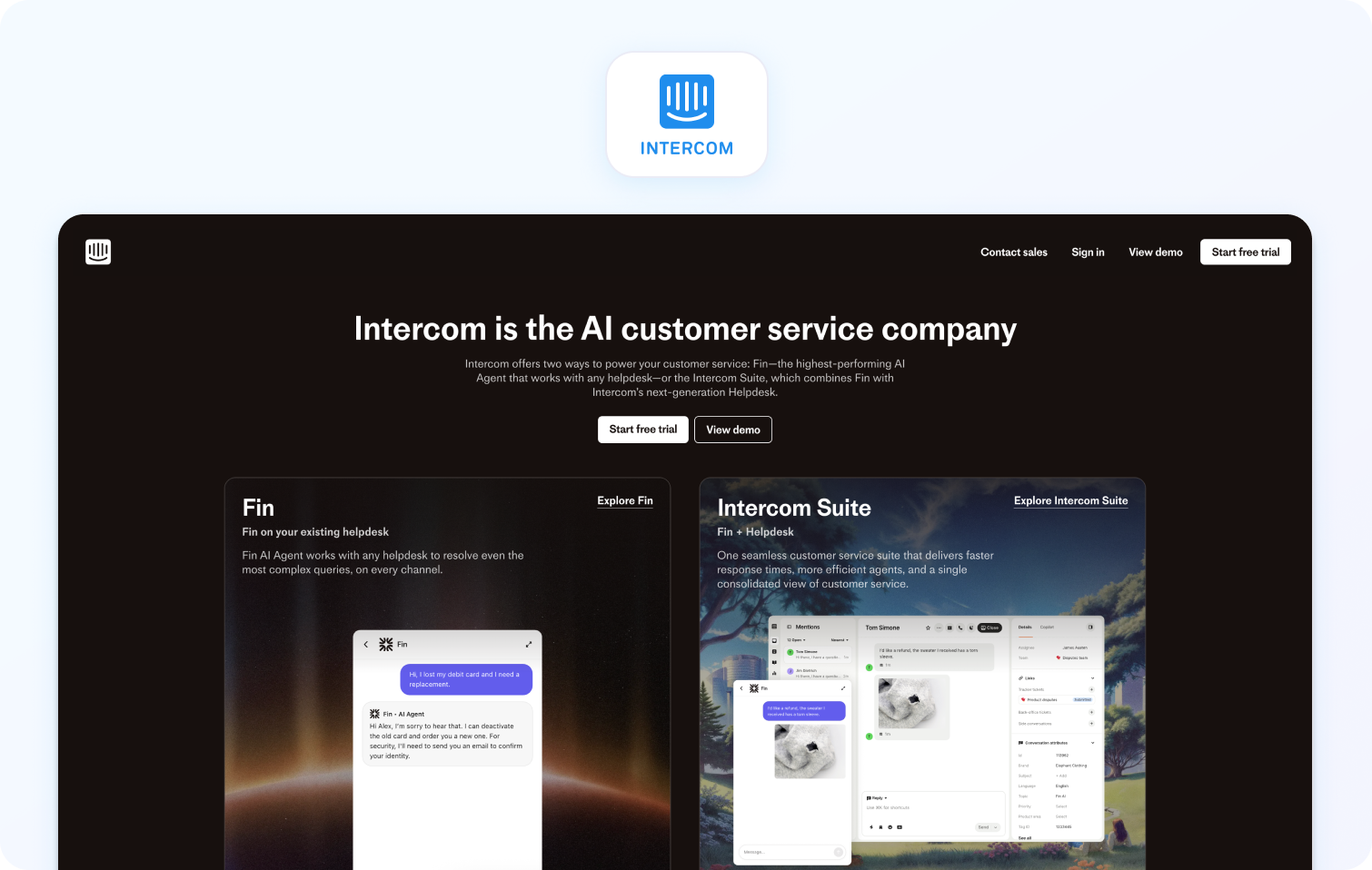
Intercom is a conversational customer service platform designed primarily for SaaS businesses and product-led growth organizations that prioritize proactive customer engagement, onboarding, and AI-powered support automation.
Compared to Tidio, Intercom places a stronger emphasis on customer lifecycle messaging, product adoption, AI-driven support workflows, and conversational automation across the user journey.
Best for: SaaS companies and digital product businesses that want AI-powered customer engagement, onboarding automation, and proactive support experiences inside web and mobile applications.
Key Intercom Features:
- AI-powered customer support agent
- Omnichannel messaging and live chat support
- Product tours and onboarding workflows
- AI-generated suggested replies
- Automated messaging and customer segmentation
- Integrated knowledge base functionality
- Conversation routing and automation workflows
- Customer engagement tracking
- Mobile app messaging support
Intercom Pricing: Intercom uses a tiered pricing plan based on support volume, seats, and AI functionality. Verify for details.
Intercom Pros:
- Strong AI positioning and automation workflows
- Excellent SaaS and product-led integrations
- Advanced customer engagement functionality
- Powerful onboarding and retention tools
- Good support for proactive messaging strategies
Intercom Cons:
- AI add-ons and usage-based pricing can become expensive quickly
- Pricing structure may feel less transparent for scaling support teams
- Advanced reporting often requires premium plans
Free Trial Availability: Yes
4. Freshdesk (Freshchat): Best Tidio Alternative for Budget-Conscious Growing Teams

Freshdesk and Freshchat combine customer service software, live chat support, ticket management, and AI automation into a broad support platform designed for growing businesses.
Compared to Tidio, Freshdesk offers broader operational tooling and ticketing functionality while still maintaining relatively accessible entry pricing for SMB and mid-market organizations.
Best for: Growing support teams that want more advanced customer support functionality than Tidio without immediately moving into enterprise-level pricing models.
Key Freshdesk Features:
- Omnichannel inbox and messaging channels
- AI-powered customer support automation
- Ticket management and workflow automation
- Chat widget customization
- Self service and integrated knowledge base tools
- Customer satisfaction tracking
- Analytics dashboards and reporting
- Mobile apps for support teams
- Automated responses and canned replies
Freshdesk Pricing: Freshdesk pricing varies across Freshdesk subscription tiers, with additional pricing for more advanced AI capabilities and automation workflows. Verify for details.
Freshdesk Pros:
- Competitive entry-level pricing
- Broad customer support feature availability
- Strong integration marketplace
- Good balance between affordability and scalability
- User friendly interface for support teams
Freshdesk Cons:
- Advanced analytics and automation features are restricted to higher-tier plans
- User interface can feel crowded as workflows become more complex
- AI functionality varies significantly between pricing tiers
Free Trial Availability: Yes
5) HubSpot Service Hub: Best Tidio Alternative for Sales-Led Organizations
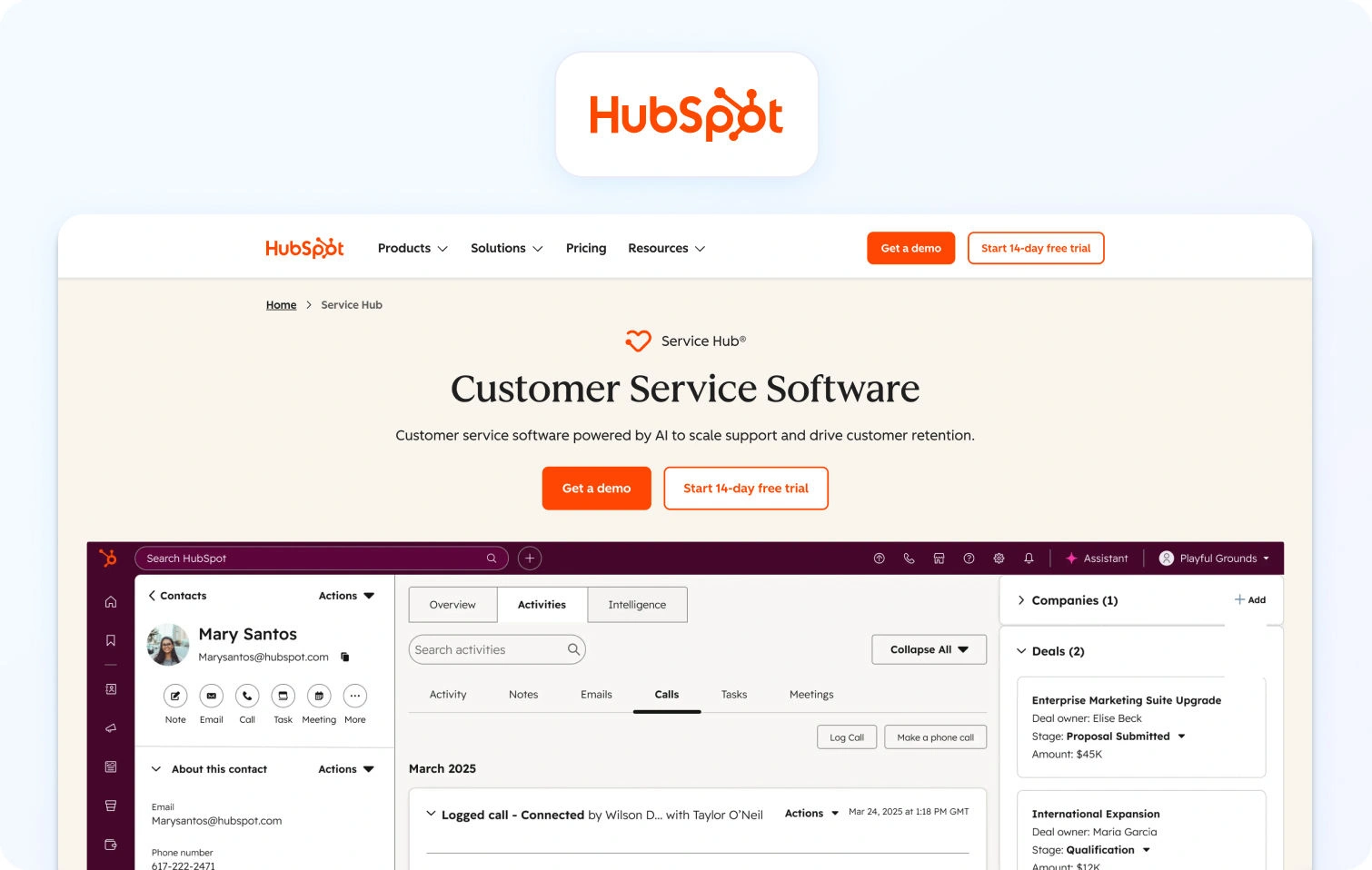
HubSpot Service Hub is a customer service platform tightly integrated into HubSpot’s broader CRM, sales, and marketing ecosystem.
Compared to Tidio, HubSpot Service Hub places greater emphasis on unified customer data, sales alignment, and lifecycle management across customer support and revenue operations.
Best for: Sales-led organizations that want customer support workflows deeply connected to CRM data, marketing automation, and revenue operations.
Key HubSpot Service Hub Features:
- Shared omnichannel inbox
- Native CRM integration
- Live chat and chatbot automation
- Customer satisfaction tracking
- Knowledge base and self service tools
- Customer communication timelines
- AI-powered support automation
- Workflow automation and ticket routing
- Reporting dashboards and customer analytics
HubSpot Service Hub Pricing: Free and paid plans available, tiered within the HubSpot ecosystem. Verify for details.
HubSpot Service Hub Pros:
- Deep CRM and customer data integration
- Strong alignment between sales and support teams
- User friendly interface makes onboarding easier
- Good ecosystem for marketing and customer engagement
- Strong automation workflows
HubSpot Service Hub Cons:
- Costs can rise significantly as feature requirements expand
- Advanced support functionality often locked behind premium plans
- Less operational depth than enterprise-focused customer service platforms
Free Trial Availability: Yes
6. Crisp: Best Tidio Alternative for Startups Wanting Flat-Rate Pricing
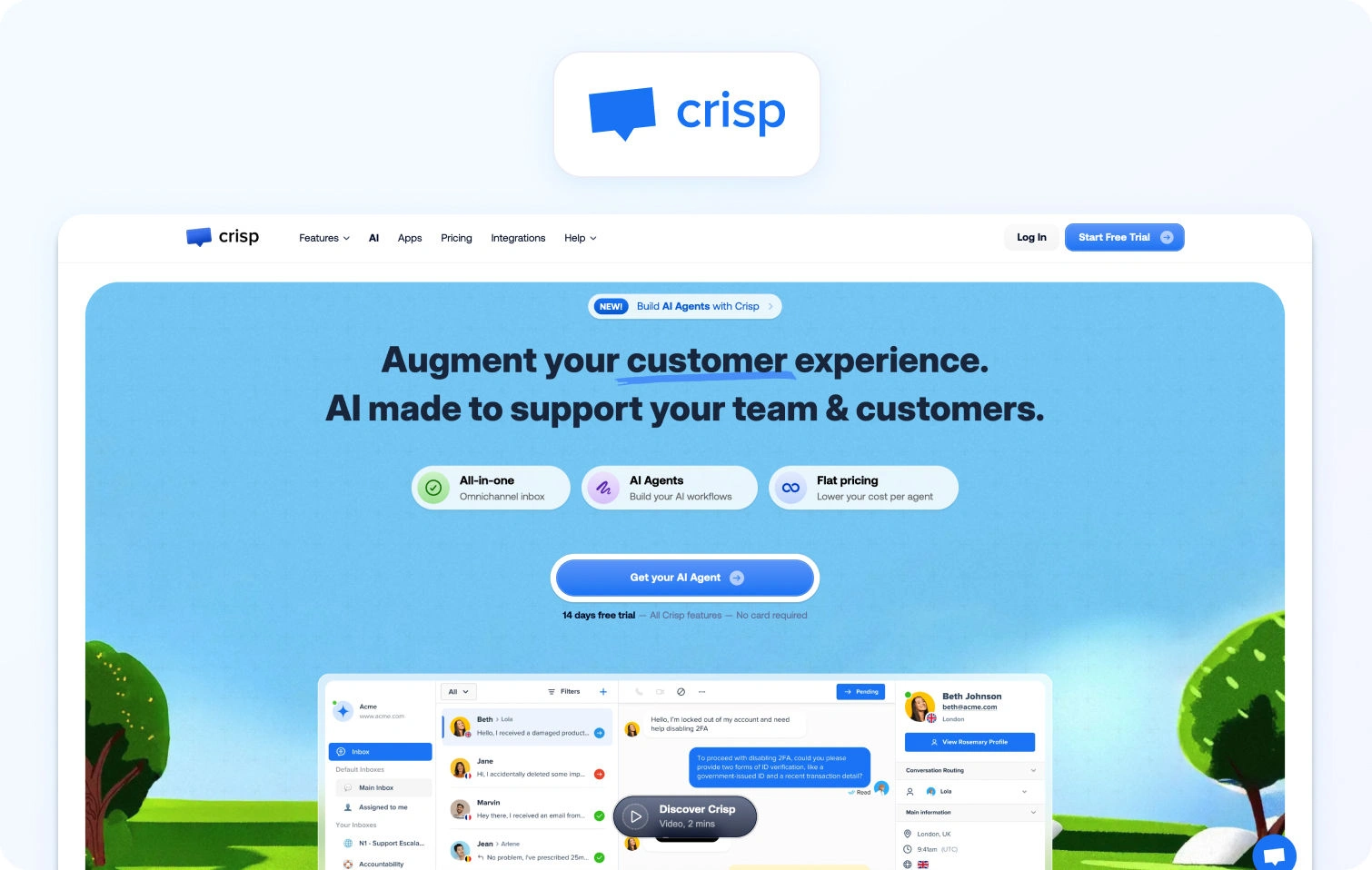
Crisp is a multichannel customer messaging platform designed around simplified support workflows and predictable flat-rate pricing structures.
Compared to Tidio, Crisp appeals strongly to startups and smaller support teams that want collaborative live chat tools and customer communication functionality without aggressive per-seat pricing increases.
Best for: Startups and small businesses that want predictable pricing, collaborative customer communication, and simple multichannel support operations.
Key Crisp Features:
- Shared team inbox
- Live chat support and website chat
- Omnichannel messaging support
- Knowledge base functionality
- Chat widget customization
- Automated messaging workflows
- Mobile apps for support teams
- Customer conversation history
- Video chat support
Crisp Pricing: Free and paid plans available; verify for details.
Crisp Pros:
- Flat-rate pricing model helps control scaling costs
- Unlimited seats available on selected plans
- Simple onboarding and deployment
- Clean user interface
- Strong collaborative messaging functionality
Crisp Cons:
- Analytics and reporting are less advanced than enterprise platforms
- AI capabilities are more limited than AI-native competitors
- Operational tooling depth may not suit larger support organizations
Free Trial Availability: Yes
7. Help Scout: Best Tidio Alternative for Small and Mid-Size Support Teams
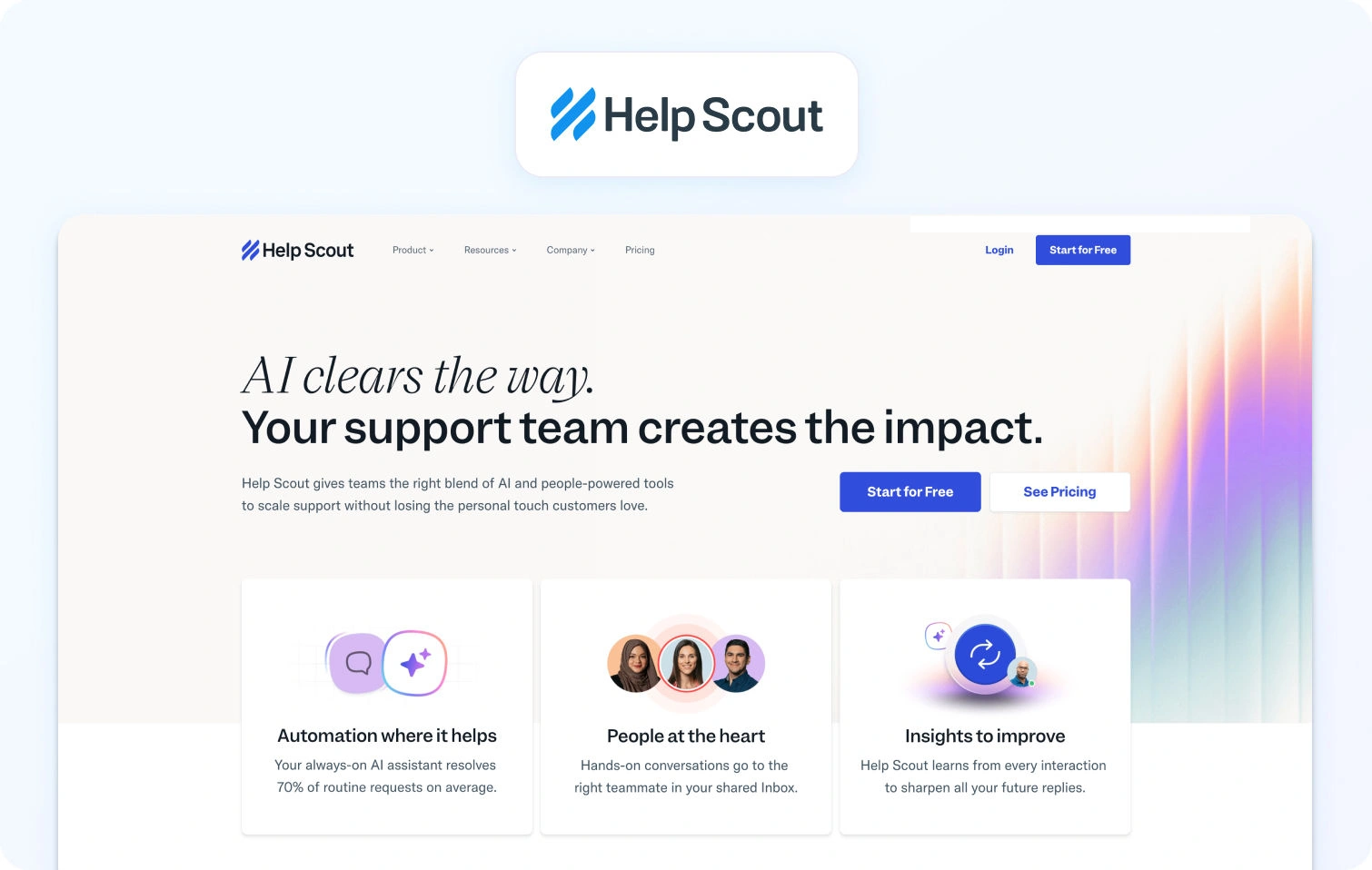
Help Scout is a customer service platform focused on email support, shared inbox collaboration, and human-centered customer communication.
Compared to Tidio, Help Scout emphasizes simplicity, customer experience quality, and low-friction support workflows rather than aggressive automation complexity.
Best for: Small and mid-size support teams that prioritize simplicity, customer experience, and collaborative support workflows.
Key Help Scout Features:
- Shared inbox and customer conversations
- Knowledge base and self service tools
- Live chat support
- Reporting dashboards and analytics
- Customer satisfaction surveys
- Workflow automation
- Mobile support apps
- Canned responses and saved replies
Help Scout Pricing: Help Scout offers free and paid pricing plans, depending on contact volume and feature requirements. Verify for details.
Help Scout Pros:
- Very easy for support teams to adopt
- Clean and intuitive user interface
- Strong customer experience focus
- Helpful documentation and knowledge base tools
- Good collaboration functionality
Help Scout Cons:
- Less advanced automation than enterprise customer service platforms
- Limited omnichannel functionality compared to broader competitors
- AI support tooling less mature than newer AI-native platforms
Free Trial Availability: Yes
8. LiveChat: Best Tidio Alternative for Sales and Engagement-Focused Live Chat
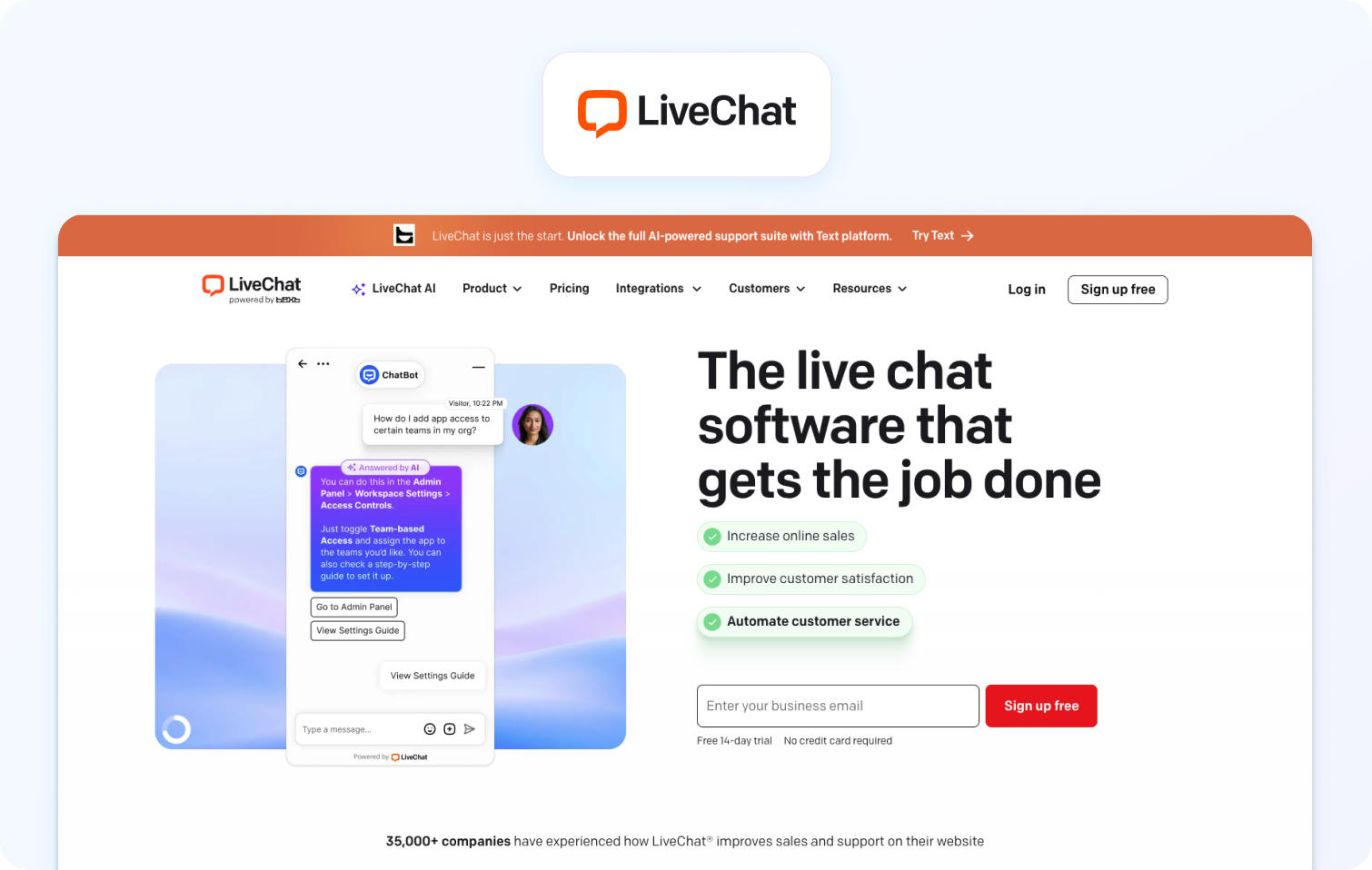
LiveChat is a live chat software platform designed to help businesses improve website engagement, customer communication, and lead generation through real-time conversations.
Compared to Tidio, LiveChat focuses more heavily on sales engagement workflows, proactive messaging, and customer interaction management rather than broader AI-powered customer service operations.
Best for: Businesses that prioritize website engagement, proactive customer communication, and live chat-driven sales conversations across ecommerce and service environments.
Key LiveChat Features:
- Real-time website chat functionality
- Proactive messaging workflows
- Visitor tracking and engagement monitoring
- Chat routing and agent assignment
- Canned responses and saved replies
- Reporting dashboards and analytics
- Chat history and customer conversation tracking
- Mobile apps for support teams
- Integrations with CRM and ecommerce platforms
LiveChat Pricing: LiveChat offers affordable pricing plans, with additional functionality available in higher-tier subscriptions. Verify for details.
LiveChat Pros:
- Strong live chat experience and reliability
- Excellent customer engagement functionality
- Easy deployment and onboarding
- Good lead generation capabilities
- User friendly interface for support teams
LiveChat Cons:
- Omnichannel support is more limited than broader customer service platforms
- AI capabilities are less advanced than AI-native competitors
- Advanced automation features require additional integrations
Free Trial Availability: Yes
9. Gorgias: Best Tidio Alternative for E-commerce Support Teams
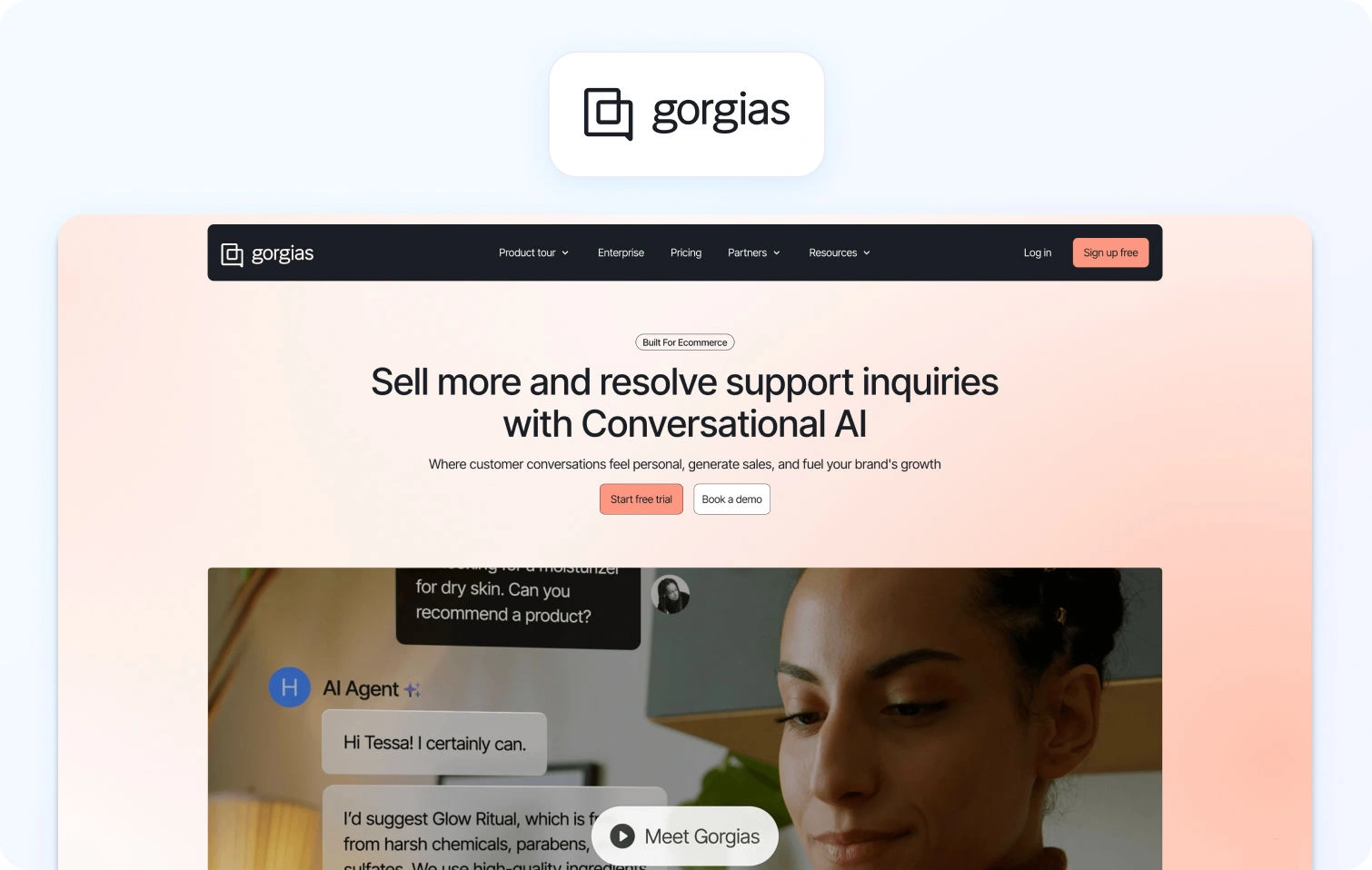
Gorgias is a customer service platform purpose-built for e-commerce businesses that need to manage customer inquiries, order support, and customer engagement across multiple channels.
Compared to Tidio, Gorgias offers deeper e-commerce integrations, stronger automation workflows for online retail operations, and more advanced customer service processes tied directly to ecommerce platforms like Shopify.
Best for: E-commerce support teams that want customer support workflows tightly integrated with online stores, order management, and customer data.
Key Gorgias Features:
- E-commerce-focused omnichannel inbox
- Shopify and ecommerce platform integrations
- AI-powered automated responses
- Customer conversation automation
- Order management workflows inside support tickets
- Chat widget customization
- Customer satisfaction tracking
- Macros and canned responses
- Revenue attribution and ecommerce analytics
Gorgias Pricing: Gorgias pricing varies based on support volume and automation usage. Verify pricing directly with the vendor.
Gorgias Pros:
- Excellent e-commerce-specific workflows
- Deep Shopify and ecommerce integrations
- Strong automation for repetitive customer queries
- Good customer data visibility
- Effective multichannel support for online retailers
Gorgias Cons:
- Pricing can increase significantly as ticket volumes grow
- Less suitable for non e-commerce customer service operations
- Advanced automation functionality may require additional onboarding
Free Trial Availability: Yes
10. Drift (Salesloft): Best Tidio Alternative for Conversational Sales and Marketing Teams
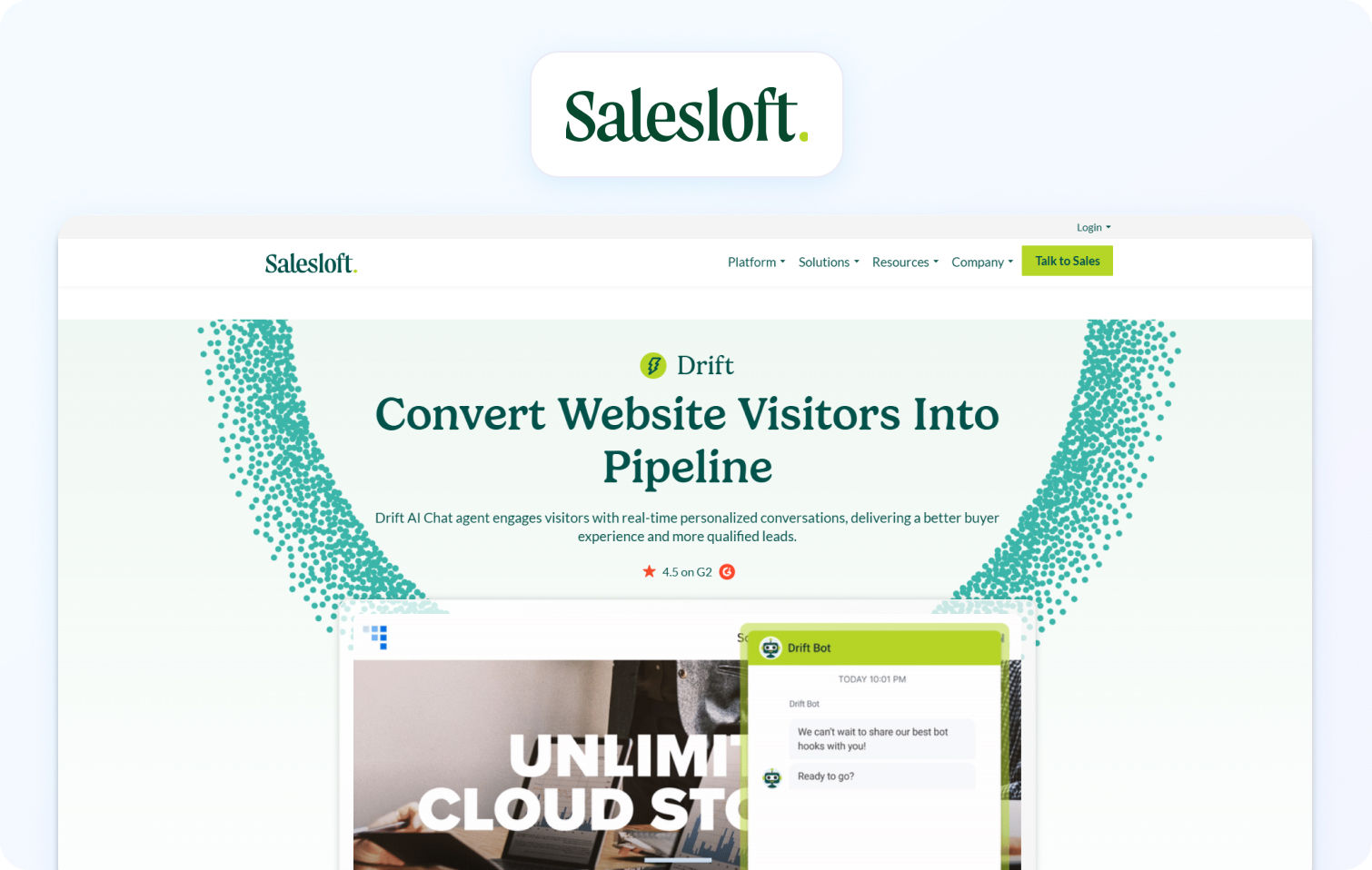
Drift, now positioned within the Salesloft ecosystem, is a conversational AI and customer engagement platform designed primarily for sales and marketing workflows.
Compared to Tidio, Drift focuses more heavily on conversational lead generation, buyer engagement, and revenue acceleration rather than traditional customer support operations.
Best for: B2B sales and marketing teams that want conversational AI workflows for lead qualification, pipeline acceleration, and customer engagement.
Key Drift Features:
- Conversational AI chatbots
- Lead qualification automation
- Real-time website engagement
- Meeting scheduling workflows
- Personalized messaging campaigns
- Conversational routing and automation
- CRM integrations
- Customer engagement analytics
- Revenue-focused reporting dashboards
Drift Pricing: Drift uses custom enterprise pricing based on deployment requirements and support functionality.
Drift Pros:
- Strong conversational sales functionality
- Effective lead generation workflows
- Good B2B personalization capabilities
- Advanced customer engagement tools
- Tight alignment with revenue operations
Drift Cons:
- Less focused on customer support operations than dedicated service platforms
- Enterprise pricing may not suit SMB organizations
- Omnichannel support functionality is narrower than broader CX platforms
Free Trial Availability: Not advertised.
11. Olark: Best Tidio Alternative for Lightweight Live Chat With Visitor Tracking
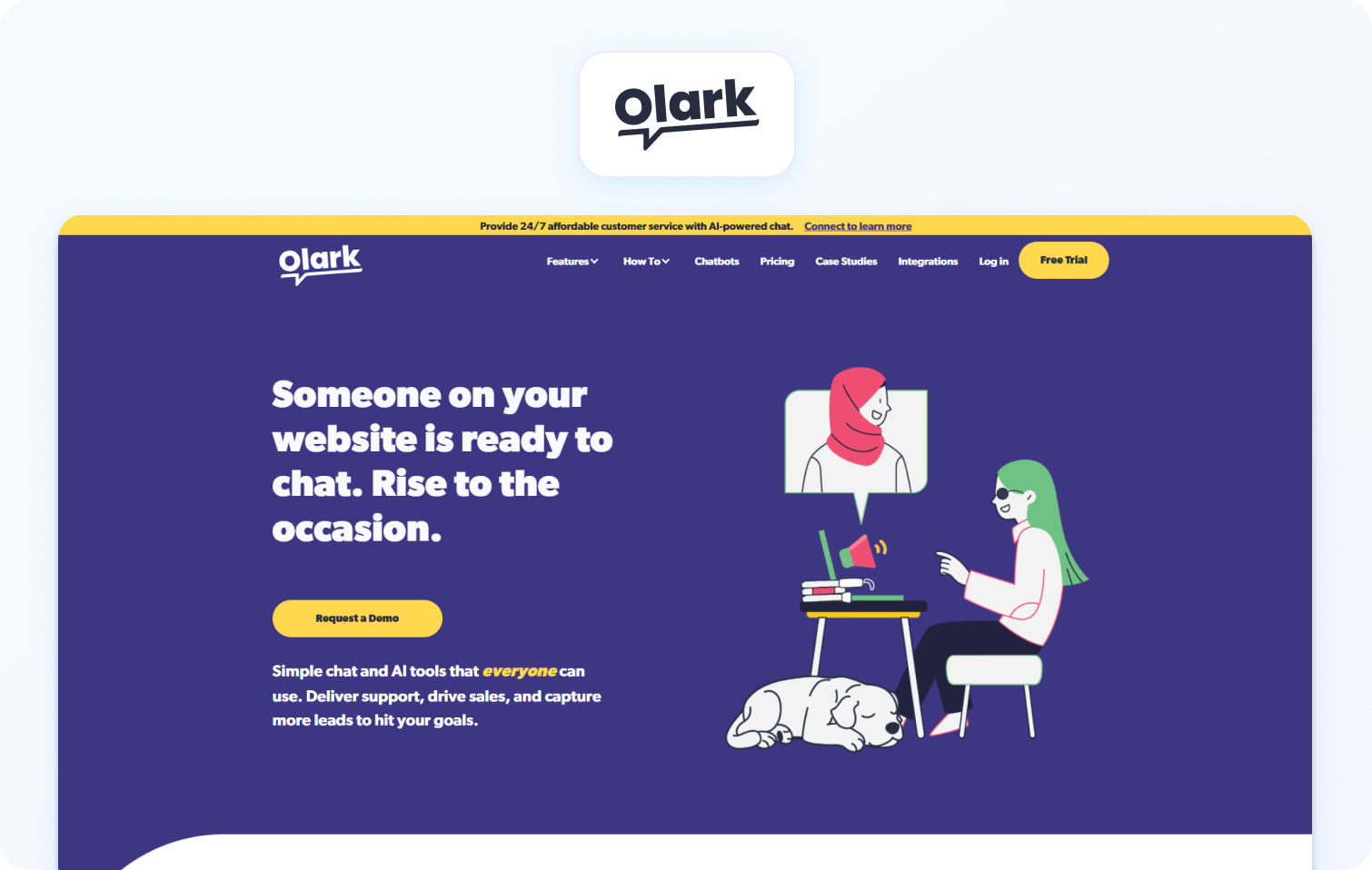
Olark is a lightweight live chat platform focused on simple customer communication, visitor tracking, and website engagement.
Compared to Tidio, Olark prioritizes simplicity and ease of deployment over broader automation, AI capabilities, or omnichannel customer support functionality.
Best for: Small businesses that want straightforward live chat support and visitor tracking without the complexity of enterprise customer service software.
Key Olark Features:
- Website chat functionality
- Visitor tracking and monitoring
- Automated messaging workflows
- Chat transcripts and conversation history
- Basic reporting dashboards
- Customer engagement analytics
- Team management functionality
- CRM integrations
Olark Pricing: Olark plans start from approximately $29 per month.
Olark Pros:
- Simple setup and deployment
- Easy for smaller teams to manage
- Lightweight user interface
- Strong visitor tracking functionality
- Low operational complexity
Olark Cons:
- Limited omnichannel support capabilities
- Minimal advanced AI functionality
- Reporting depth less comprehensive than larger competitors
- Fewer advanced automation features
Free Trial Availability: Yes
12) Zoho Desk: Best Tidio Alternative for Teams in the Zoho Ecosystem
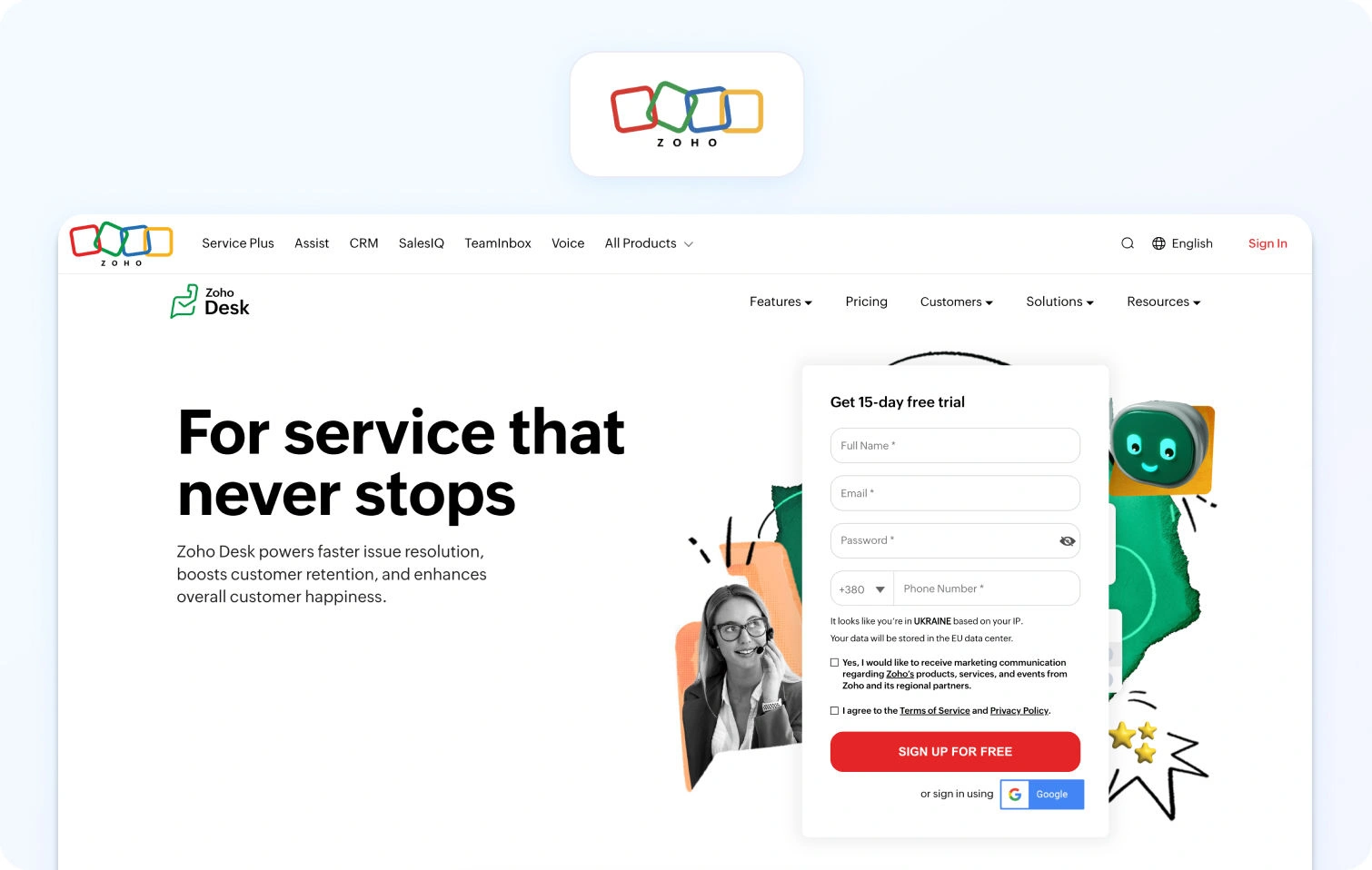
Zoho Desk is a customer service platform designed to integrate tightly with Zoho’s broader business software ecosystem, including CRM, analytics, finance, and operational applications.
Compared to Tidio, Zoho Desk offers broader operational workflows, stronger ticket management, and deeper business software integration for organizations already invested in the Zoho environment.
Best for: Businesses already using Zoho products that want unified customer support workflows connected to CRM, analytics, and operational systems.
Key Zoho Desk Features:
- Omnichannel customer support
- Ticket management workflows
- AI-powered assistant functionality
- Workflow automation and routing
- CRM integration
- Analytics and reporting dashboards
- Knowledge base and self service tools
- Role-based permissions and admin controls
- Mobile support apps
Zoho Desk Pricing: Affordable tiered pricing with AI features available in higher plans. Verify for details.
Zoho Desk Pros:
- Strong integration across the Zoho ecosystem
- Competitive pricing for growing businesses
- Broad operational customization options
- Good ticketing and workflow automation functionality
- Flexible support management capabilities
Zoho Desk Cons:
- User interface can feel inconsistent between modules
- Advanced configuration may require admin support
- AI functionality is less advanced than AI-native competitors
Free Trial Availability: Yes
13. ManyChat: Best Tidio Alternative for Social Messaging and WhatsApp Automation
ManyChat is a messaging automation platform focused primarily on social media messaging, WhatsApp automation, and conversational marketing workflows.
Compared to Tidio, ManyChat places greater emphasis on marketing automation, social messaging campaigns, and lead generation through messaging channels rather than broader customer service operations.
Best for: Businesses prioritizing WhatsApp automation, Instagram messaging, Facebook Messenger workflows, and social customer engagement.
Key ManyChat Features:
- WhatsApp automation
- Facebook Messenger integration
- Instagram messaging automation
- Automated messaging campaigns
- Lead generation workflows
- Chatbot automation
- Customer segmentation tools
- Drag and drop automation builder
- Marketing-focused customer engagement tools
ManyChat Pricing: ManyChat offers a free plan alongside paid plans with more advanced automation features and messaging limits.
ManyChat Pros:
- Strong social messaging automation
- Easy campaign and chatbot setup
- Excellent WhatsApp and Facebook Messenger support
- User friendly drag and drop interface
- Good lead generation functionality
ManyChat Cons:
- Not a full customer service platform
- Limited operational tooling for support teams
- Omnichannel customer support functionality is narrower than broader competitors
Free Trial Availability: Yes
14. Kustomer: Best Tidio Alternative for CRM-Native Customer Conversations
Kustomer is a CRM-native customer service platform designed around unified customer timelines and persistent customer conversations across support channels.
Compared to Tidio, Kustomer focuses more heavily on customer data visibility, CRM-driven workflows, and unified interaction histories across the entire customer journey.
Best for: Businesses that want customer conversations tightly connected to CRM data, customer histories, and omnichannel support operations.
Key Kustomer Features:
- Unified customer timeline
- Omnichannel inbox and messaging channels
- Workflow automation and routing
- AI-powered customer support tools
- CRM integrations
- Customer history tracking
- Reporting and analytics dashboards
- Chat and email support workflows
- Customer engagement automation
Kustomer Pricing: Kustomer uses custom pricing based on deployment size and support requirements. Verify for details
Kustomer Pros:
- Strong customer data visibility
- Unified customer conversation management
- Good omnichannel support architecture
- Enterprise-ready workflow functionality
- Advanced customer history tracking
Kustomer Cons:
- Implementation complexity higher than SMB-focused platforms
- Pricing less transparent than some competitors
- May require more technical onboarding resources
Free Trial Availability: Not advertised
15. Chatwoot: Best Tidio Alternative for Open-Source Omnichannel Support
Chatwoot is an open-source customer support platform designed for businesses that want flexible omnichannel customer communication with self-hosted deployment options.
Compared to Tidio, Chatwoot appeals strongly to technical teams that want greater customization, infrastructure control, and open-source flexibility for customer support operations.
Best for: Technical teams and growing businesses that want open-source omnichannel support with customizable deployment and workflow flexibility.
Key Chatwoot Features:
- Omnichannel inbox and messaging support
- Open-source deployment options
- Live chat and website chat functionality
- Knowledge base tools
- Workflow automation
- Customer conversation management
- Team collaboration functionality
- Chat widget customization
- CRM and third-party integrations
Chatwoot Pricing: Chatwoot offers free and paid plans; verify for details.
Chatwoot Pros:
- Open-source flexibility and customization
- Cost-efficient deployment options
- Good omnichannel customer communication
- Strong control over infrastructure and customer data
- Active developer community
Chatwoot Cons:
- Requires technical resources for self-hosting and maintenance
- Enterprise operational tooling less mature than larger commercial platforms
- Advanced AI capabilities more limited than AI-native competitors
Free Trial Availability: Yes.
What to Look For in a Tidio Alternative
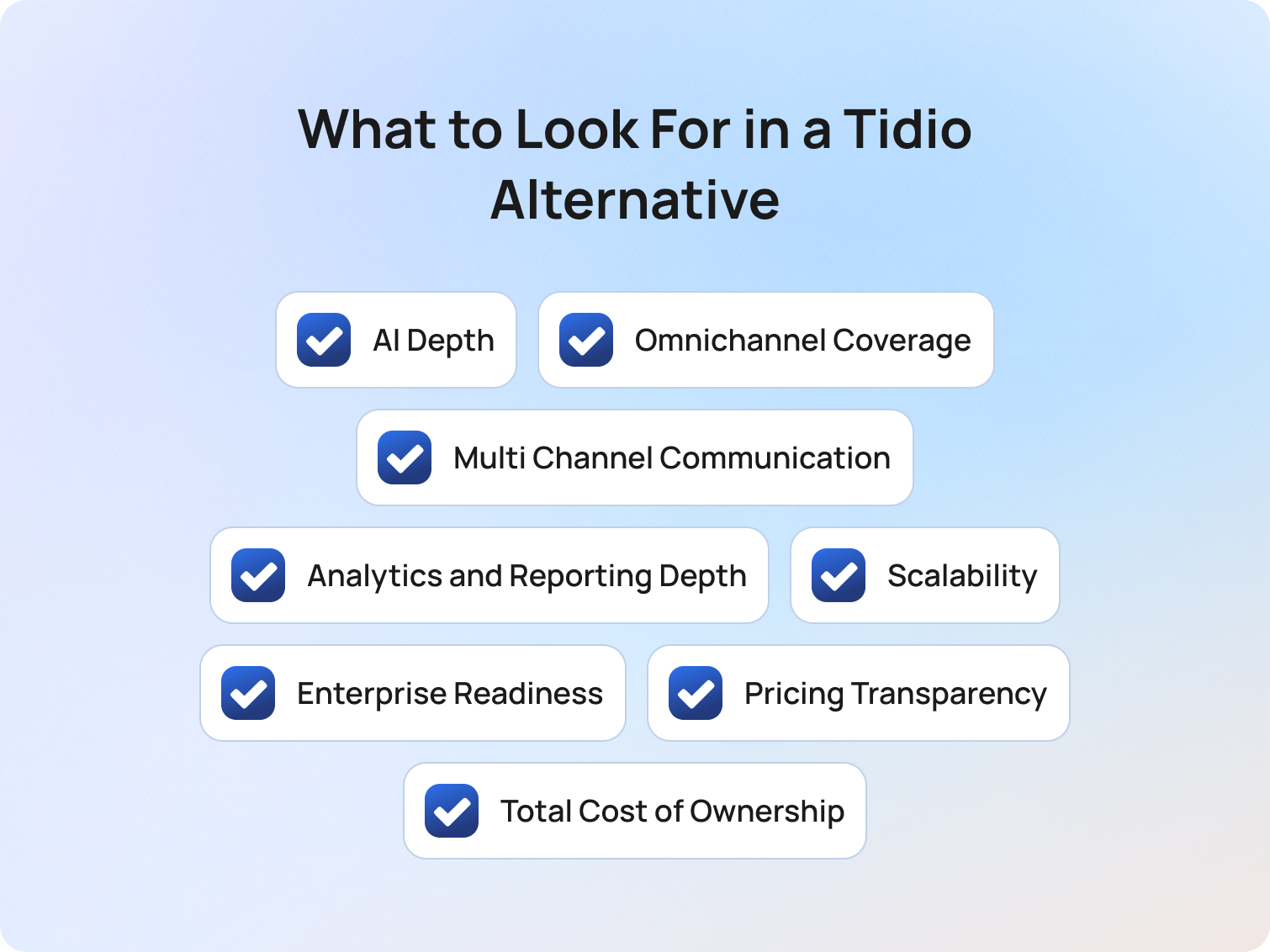
A Tidio alternative should support far more than basic live chat functionality. As customer service operations grow more complex in 2026, businesses increasingly need platforms that can automate support across multiple channels while delivering stronger analytics, AI automation, and a more unified customer service experience.
Many teams initially choose Tidio because of its free plan, user friendly interface, and customizable chat widget. However, as support requirements evolve, businesses often begin looking for more advanced features, deeper multi channel support, and better operational visibility across customer conversations.
AI Depth Beyond Basic Chatbot Functionality
In 2026, the meaningful AI differentiator is not whether a platform includes a chatbot. The real differentiator is whether AI capabilities support the entire customer interaction lifecycle.
That includes:
- RAG-grounded knowledge base responses
- Real-time agent coaching
- AI-generated suggested replies
- Post-interaction summarisation
- Sentiment analysis
- Autonomous resolution workflows
- AI QA scoring
- AI-powered customer communication automation
Businesses evaluating Tidio alternatives should verify whether these advanced features are included natively in the platform or locked behind additional AI add-ons.
Many customer service platforms still offer only basic features at entry-level pricing, requiring businesses to purchase separate AI modules or other tools to fully automate support processes at scale.
Omnichannel Coverage and Multi Channel Communication
Modern customer support no longer happens exclusively through website chat.
Businesses increasingly need multi channel communication across:
- Voice support
- Social messaging
- SMS
- Video chat
- Website chat
- Facebook Messenger
Tidio is still primarily positioned around chat-first support workflows. Businesses with more advanced operational roadmaps should verify whether platforms offer native multi channel support or rely heavily on third-party integrations with existing tools.
Fragmented support environments often create disconnected customer data, inconsistent reporting, and operational inefficiencies for customer support agents.
Platforms that unify customer conversations into a single omnichannel inbox typically provide a stronger customer service experience and better long-term scalability.
Analytics and Reporting Depth
Detailed analytics become significantly more important as support operations grow.
Many businesses searching for alternatives to Tidio cite reporting limitations as one of the primary reasons for switching platforms. Businesses should verify whether customer service software provides operational KPIs natively, including:
- First contact resolution (FCR)
- Average handling time (AHT)
- CSAT tracking
- Containment rate visibility
- Sentiment analysis
- Real-time reporting dashboards
- Historical reporting
- Team performance tracking
Advanced reporting capabilities are particularly important for medium sized businesses managing larger customer support teams and more complex customer interactions.
Scalability and Enterprise Readiness
Tidio is designed primarily for SMB teams focused on live chat support and lightweight automation.
For businesses scaling beyond 50 customer support agents, additional operational tooling becomes increasingly important, including:
- Workforce management functionality
- QA scoring workflows
- Advanced chat routing
- Audit logs and security controls
- Role-based permissions
- Forecasting and scheduling tools
- Unlimited chat history
- Omnichannel interaction management
Businesses evaluating Tidio alternatives should also consider how easily platforms integrate with existing tools and operational workflows as support complexity increases.
Pricing Transparency and Total Cost of Ownership
Many businesses initially compare customer service platforms based on entry-level pricing alone.
However, long-term operational costs often depend on:
- AI add-on pricing
- Automation usage limits
- Agent seat pricing
- Omnichannel functionality
- Reporting access
- Integration requirements
- Additional support tools
Businesses should calculate the projected 12-month operational cost of ownership based on expected support growth rather than current team size alone.
According to Deloitte research published in 2025, organizations continuing to operate fragmented customer support ecosystems often face higher operational overhead, slower resolution times, and increased integration complexity compared to businesses using unified AI-enabled customer service platforms.
Platforms that include AI capabilities inside the base seat pricing typically deliver faster ROI, lower budget risk, and fewer dependencies on other tools.
How We Evaluated These Tidio Alternatives
This evaluation framework was designed to assess Tidio alternatives based on operational maturity, AI capabilities, scalability, and long-term customer support value rather than entry-level chatbot functionality alone.
Our analysis reviewed public documentation, pricing pages, company websites, G2 and Capterra review summaries, and published feature documentation as of Q2 2026. No vendor paid for placement in this article.
AI capability claims were verified against publicly available feature pages and customer feedback rather than vendor marketing alone. However, businesses should still verify platform fit through vendor demos and operational testing before committing to a customer service platform.
Must-Have Capability Checklist
Businesses evaluating the best Tidio alternatives in 2026 should verify whether platforms include the following capabilities natively rather than requiring multiple third-party integrations or additional paid modules.
AI and Automation
- AI chatbot or virtual agent functionality included in the base plan
- RAG-grounded knowledge base responses
- Real-time agent assist and suggested replies
- AI-powered automated responses
- Post-interaction summarisation
- AI tools for customer communication workflows
Omnichannel and Customer Communication
- Native omnichannel inbox across chat, email, voice, and social channels
- Multi channel support without excessive reliance on other tools
- Website chat and customizable chat widget functionality
- Unified customer conversations and customer data
- Mobile apps for support teams
- Social messaging and messaging channel support
Analytics and Operational Visibility
- FCR, AHT, CSAT, and containment reporting
- Real-time analytics dashboards
- Historical reporting functionality
- QA scoring for AI and human interactions
- Team performance monitoring
- Unlimited chat history availability
Scalability and Security
- Workforce management or first-party WFM functionality
- CRM and ecommerce integrations
- MFA, RBAC, and audit logs
- Advanced routing and operational workflows
- Support for growing customer service teams
Businesses evaluating BlueTweak should verify that all checklist items align with the platform’s current deployment configuration and operational requirements before implementation.
BlueTweak Tidio Alternatives Scoring Rubric
The BlueTweak Tidio Alternatives Scoring Rubric was developed to evaluate customer service software platforms based on operational maturity, AI depth, scalability, and long-term support efficiency.
| Criterion | Weight | What “High” Looks Like |
| AI coverage (native, not add-on) | 25% | RAG-grounded KB responses, AI suggested replies, sentiment analysis, and post-interaction summarisation included in the base plan |
| Channel depth beyond chat | 20% | Native voice, email, social messaging, SMS, and unified multi channel communication |
| Analytics and reporting | 15% | Real-time and historical reporting for FCR, AHT, CSAT, containment rate, and team performance |
| Scalability (50+ agents) | 15% | Workforce management, QA tooling, advanced routing, unlimited chat history, and operational visibility |
| Time-to-value | 10% | Fast deployment, intuitive onboarding, and user friendly interface for support teams |
| TCO / pricing transparency | 10% | Transparent per-seat pricing with AI included and fewer dependencies on existing tools |
| Security and admin | 5% | MFA, RBAC, audit logs, admin controls, and enterprise-grade security standards |
Final Thoughts: Choosing the Right Tidio Alternative for Long-Term Customer Support Growth
Tidio remains a strong choice for businesses that need simple live chat and chatbot functionality. However, as support operations grow, many teams need more than a chat-first platform can provide. Advanced AI, omnichannel customer communication, workforce management, QA tooling, analytics, and operational visibility are becoming essential requirements for modern customer service teams.
Among the leading Tidio alternatives, BlueTweak stands out for businesses that want AI-native omnichannel customer support and are looking to consolidate into a single AI-powered platform. By bringing together voice, chat, email, social messaging, automation, reporting, workforce management, and quality assurance, BlueTweak helps eliminate the complexity and inefficiencies created by fragmented support tools.
If you're looking for a Tidio alternative that can scale with your business while delivering stronger automation, deeper insights, and a more connected customer experience, start a free 14-day trial or book a personalised demo to see BlueTweak in action.

As Head of Digital Transformation, Radu looks over multiple departments across the company, providing visibility over what happens in product, and what are the needs of customers. With more than 8 years in the Technology era, and part of BlueTweak since the beginning, Radu shifted from a developer (addressing end-customer needs) to a more business oriented role, to have an influence and touch base with people who use the actual technology.



