


Radu Dumitrescu

As Head of Digital Transformation, Radu looks over multiple departments across the company, providing visibility over what happens in product, and what are the needs of customers. With more than 8 years in the Technology era, and part of BlueTweak since the beginning, Radu shifted from a developer (addressing end-customer needs) to a more business oriented role, to have an influence and touch base with people who use the actual technology.
Recent articles

The Impact of AI on Customer Support Efficiency, Workforce Dynamics, and Human-AI Collaboration
The integration of artificial intelligence (AI) into customer support platforms has revolutionized the industry, enabling businesses to achieve unprecedented levels of operational efficiency while reshaping workforce dynamics.
Studies say that by automating routine tasks, accelerating response time, and optimizing resource allocation, AI-driven tools in customer support have reduced customer service costs by up to 35% and increased revenue by 32% for early adopters.
However, this transformation has also sparked critical discussions about the balance between automation and human empathy, as 47% of Gen Z consumers abandon brands after a single poor service experience. Leading enterprises that the optimal strategy combines AI’s analytical speed with human agents’ emotional intelligence, achieving a 44% faster issue resolution rate and 35% improvement in support quality.
I. AI-Driven Efficiency Gains in Customer Support Platforms
Automation of Repetitive Tasks
AI has redefined efficiency in customer support by systematically eliminating bottlenecks in ticket management, data entry, and initial query resolution. Chatbots and virtual assistants now handle 11–30% of total support volume autonomously, resolving common issues like password resets, order tracking, and basic troubleshooting without human intervention. This automation reduces average handle time by 45% and allows human agents to focus on complex cases requiring critical thinking.
For instance, one of our partners reduced their response time from six hours to 70 minutes by deploying AI classifiers that prioritize, and route tickets based on urgency, complexity, and sentiment analysis. The economic impact was substantial:
- AI reduced ticket volume by 8,000 per month, saving $1.3 million annually;
- conversational AI is projected to cut global contact center labor costs by $80 billion by 2026.
These savings stem from AI’s ability to operate 24/7 across time zones, a capability particularly valuable for multinational corporations.
Crucially, AI doesn’t merely replace human labor, it augments agent productivity. Support teams using AI tools handle 13.8% more inquiries per hour, with 35% less cognitive overload during calls.
Enhanced Decision-Making Through Predictive Analytics
Modern AI systems employ machine learning to analyze historical interaction data, enabling predictive customer service. This shift from reactive to predictive support reduces ticket volumes by up to 15% while improving the first-contact resolution rate.
Natural language processing (NLP) engines further enhance efficiency by analyzing sentiment in real time. When customers show signs of frustration (such as repeatedly rephrasing questions or using negative language) AI can automatically escalate cases to human agents, helping reduce customer churn by 18%.
AI also plays a key role in workforce planning in customer support services. By continuously mapping employee competencies against evolving skill demands, businesses can accelerate reskilling efforts by 28% compared to traditional methods, ensuring teams stay adaptable in a fast-changing market.
Operational Optimization Metrics
Key performance indicators underscore the transformative impact of AI-driven customer support tools:
- 52% faster ticket resolution compared to non-AI teams
- 37% reduction in first response time
- 68% lower staffing requirements during peak demand
- $3.50 ROI per $1 invested in AI, rising to $8 for top performers
These metrics reveal that AI’s value extends beyond cost reduction creates revenue opportunities through improved customer retention and upsell capabilities enabled by personalized service at scale.
Read more about: The Transformative Role of Chatbots in Customer Service
II. Workforce Transformation: Upskilling and Role Evolution
Changing Customer Support Agent Responsibilities
Contrary to displacement fears, AI has primarily redefined rather than replaced customer service roles. With AI customer support chatbots handling routine inquiries, human agents now spend 45% more time on high-value tasks like resolving escalated complaints, negotiating solutions, and building customer relationships. AI manages ticket triage and data gathering, allowing agents to focus on strategic problem-solving and emotional engagement.
Studies indicate that this shift in responsibilities requires new skill sets. Today, 62% of customer service agents need proficiency in AI collaboration tools, data interpretation, and emotional intelligence, skills that were rarely prioritized in pre-AI hiring criteria.
Companies that invest in upskilling programs see 40% higher employee retention, as agents move from repetitive tasks to more fulfilling, consultative roles.
Economic and Labor Market Impacts
The workforce contraction in entry-level support roles (projected 30% reduction by 2027) is offset by growing demand for AI supervisors, conversation designers, and ethics specialists. New models of collaboration are emerging, where AI detects complex issues and automatically assembles cross-functional human teams, streamlining workflows and reducing resolution time by 28%.
Compensation structures reflect these changes. Agents skilled in AI collaboration earn 22% more than traditional counterparts, while AI maintenance roles command premiums up to 45%. However, this transition requires substantial investment in continuous learning to ensure employees can adapt to evolving responsibilities.
Upskilling Imperatives
Integrating AI-powered customer support tools requires comprehensive workforce development strategies:
- Skills Gap Analysis: AI audits existing competencies against future needs, identifying priority areas like prompt engineering and bias mitigation.
- Personalized Learning Paths: Adaptive platforms curate training content based on individual learning pace and career goals, improving knowledge retention by 33%.
- Human-AI Collaboration Training: Simulations teach agents when to override AI recommendations, crucial for maintaining brand voice during sensitive interactions.
Companies excelling in these areas report 51% faster AI adoption rates and 29% higher customer satisfaction scores compared to peers relying solely on technical implementation.
Read more about: Balancing AI and Human Touch in Customer Service
III. Balancing Customer Support Automation with Human-Centered Service
The Empathy Imperative
While AI excels at speed and consistency, human agents remain irreplaceable for emotionally charged scenarios. Specialists in support operations found 68% of customers prefer human assistance for billing disputes, service cancellations, and bereavement cases. This preference stems from AI’s current limitations in interpreting nuanced social cues and cultural contexts, factors influencing 43% of customer loyalty decisions.
Our case studies highlight the business value of emotional intelligence: brands that provide seamless human escalation see 23% higher Net Promoter Scores (NPS) compared to fully automated competitors. The ideal balance between AI and human support varies by industry:
- retail chatbots handle 81% of pre-purchase queries,
- whereas healthcare maintains 65% human interaction rates due to compliance and empathy requirements.
Hybrid Interaction Models
Leading platforms employ dynamic AI-human handoff systems:
- Sentiment-Triggered Escalation: AI monitors stress indicators (keyword repetition) to initiate human transfers 40% faster than manual systems.
- Collaborative Resolution: Agents use AI-generated draft responses, editing them to add personalization, reducing reply time by 28% while maintaining authenticity.
- Post-Interaction AI Augmentation: Systems analyze resolved tickets to update knowledge bases, ensuring continuous learning without agent involvement.
Transparency and Trust Building
Customer acceptance of AI hinges on ethical implementation. Best practices include:
- Clear AI Disclosure: 79% of customers prefer knowing when they’re interacting with bots, leading to 31% higher satisfaction when transitions to humans are seamless.
- Bias Audits: Regular checks on AI decision patterns prevent problematic outcomes.
- Human Oversight Protocols: Maintaining human review for all AI-generated financial advice, ensuring regulatory compliance and accuracy.
Brands mastering this balance achieve 19% higher customer lifetime value compared to competitors over-indexing on automation.
Read more about: The Role of AI in Monitoring and Improving Customer Satisfaction in Real Time
IV. Future Trajectories in Customer Support and Strategic Recommendations
Next-Generation AI Capabilities
Emerging technologies promise further efficiency leaps:
- Multimodal AI: Combining voice, text, and visual analysis to resolve issues 58% faster.
- Predictive Personalization: Anticipating customer needs using purchase history and external data, a tactic boosting upsell success by 27% in early trials.
- Self-Learning Knowledge Bases: AI systems that automatically update troubleshooting guides after each solved case, reducing outdated information errors by 43%.
Workforce Development Roadmap
To prepare for these advances, organizations should:
- Implement AI Literacy Programs: Ensure all employees understand AI capabilities and limitations through interactive workshops.
- Redesign Career Pathways: Create AI specialist roles (e.g., Conversation Designer, Ethics Auditor) with clear progression tracks.
- Adopt Skills-Based Hiring: Prioritize adaptability and learning agility over traditional credentials for support roles.
Ethical Implementation Framework
A robust governance model should address:
- Data Privacy: Anonymizing training data and obtaining explicit consent for voice/chat analytics.
- Algorithmic Accountability: Maintaining human-controlled override systems for critical decisions.
- Equitable Access: Ensuring AI services accommodate disabilities through features like real-time captioning.
Read more about: Customer Support Challenges and How the Right Software Can Solve Them
The AI revolution in customer support represents a paradigm shift rather than a mere technological upgrade. By automating 30–40% of routine tasks, AI liberates human agents to excel in areas where emotional intelligence and creative problem-solving create competitive advantage. Enterprises achieving optimal balance demonstrate that synergy between machine efficiency and human empathy drives superior business outcomes.
To maintain this equilibrium, organizations must view AI not as a cost-cutting tool but as a workforce multiplier. Investments in upskilling, ethical AI design, and hybrid interaction models will differentiate industry leaders in the coming decade.
As customer expectations evolve, the winning formula combines AI’s 24/7 operational prowess with the irreplaceable human capacity for understanding, proving that in the age of customer support service automation, the most sustainable competitive advantage remains emphatically human.

AI Chatbots in Customer Service: 2026 Use Cases and Future Trends
How AI Chatbots in Customer Service Work (and Why They Matter in 2026)
Customer expectations have fundamentally shifted. Today’s customers expect instant, accurate, and personalised support across every digital channel, 24/7. Traditional support models, built around human-only teams, struggle to keep pace with rising interaction volumes and omnichannel complexity.AI chatbots in customer service address this gap by combining automation, natural language processing (NLP), and machine learning to simulate human conversation at scale. Unlike early rule-based systems, modern AI-powered chatbots in customer service can interpret intent, understand context, analyse sentiment, and generate accurate, conversational responses in real time.
What Are AI Chatbots in Customer Service?
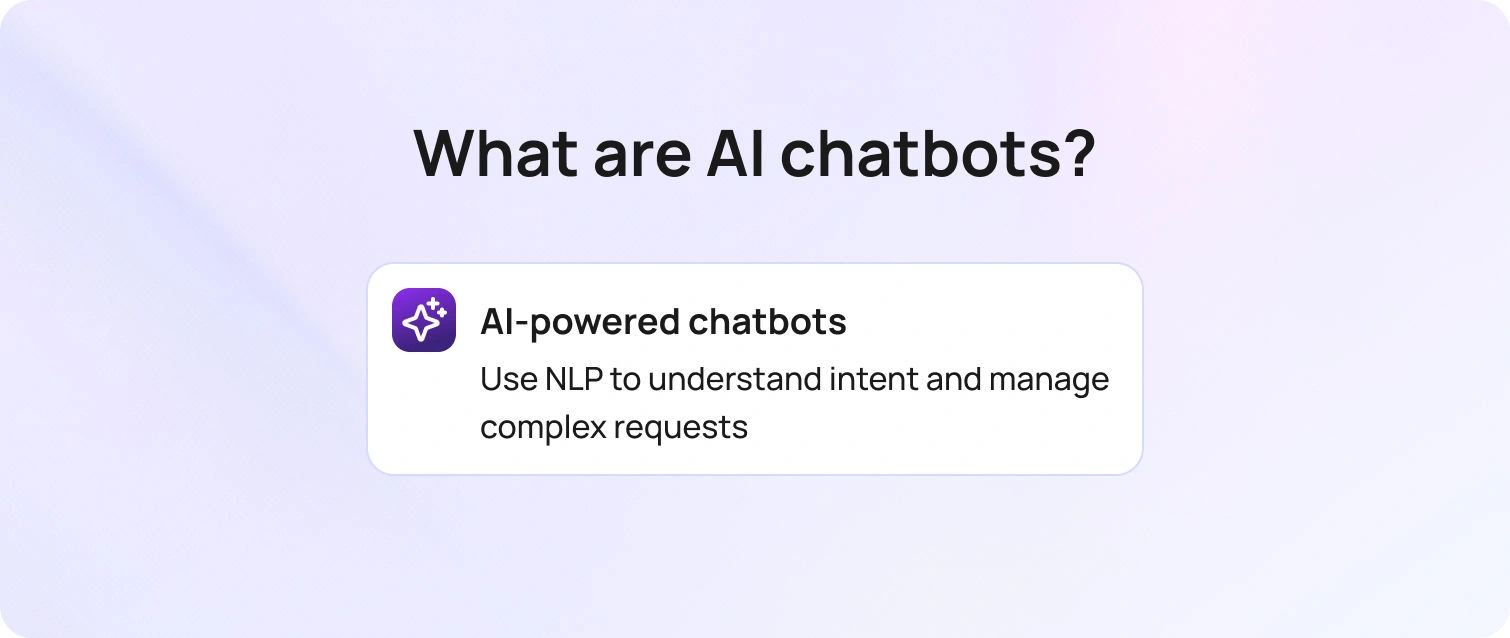
AI chatbots in customer service are intelligent software applications designed to handle customer interactions through text or voice. Acting as virtual assistants, they help customers:
- Resolve FAQs
- Track orders and manage accounts
- Navigate troubleshooting workflows
- Complete transactions
- Access support documentation
- Connect with human agents when needed
You’ll typically find AI chatbots embedded across websites, helpdesk platforms, messaging apps, social media channels, and mobile applications — creating consistent support across touchpoints. Their purpose is not to replace human agents, but to enhance the efficiency of customer service departments by automating repetitive interactions and supporting human teams with intelligent assistance.
How AI Chatbots Work
At a technical level, AI in customer service chatbots follows a structured process:
1. Message Processing
The chatbot receives a query and uses NLP to break down the language structure and context.
2. Intent Recognition
Machine learning models identify what the customer wants — even when phrased differently.
3. Response Generation
The chatbot retrieves or generates a response using:
- Pre-trained data
- Knowledge base integrations
- API-connected systems
- CRM and historical context
4. Continuous Learning
AI-powered chatbots refine performance over time by learning from previous interactions, improving accuracy and relevance.
This progression from rule-based scripts to contextual, generative AI has significantly expanded how AI chatbot use cases in customer service can be applied in 2026.
How AI Chatbots Are Used in Customer Service in 2026
Modern AI-based chatbots in customer service go far beyond answering simple FAQs. Today, they are deployed to:
- Automate Tier 1 support and reduce ticket volume
- Guide users through structured workflows
- Handle order status and account queries
- Pre-qualify customers before human handoff
- Support omnichannel communication
- Maintain conversation continuity across platforms
For customer service departments, AI for chatbots in customer service reduces repetitive workload while improving response speed, consistency, and scalability.
Platforms like BlueTweak enable organisations to deploy AI agents that combine intelligent automation with seamless human escalation, ensuring complex or emotionally sensitive issues are handled appropriately.
Implementing AI chatbots in customer service allows organisations to:
- Provide 24/7 availability
- Reduce response times from minutes to seconds
- Lower operational costs
- Handle high volumes of simultaneous conversations
- Deliver personalised experiences at scale
Chatbots act as a first layer of intelligent support, resolving routine inquiries instantly while freeing human agents to focus on high-impact, complex interactions. When implemented strategically, AI chatbots shift customer support from reactive ticket handling to scalable, intelligent engagement.
AI Chatbot Use Cases in Customer Service
Understanding how AI chatbots are used in customer service helps businesses move beyond basic automation and toward meaningful operational impact. Below are the most effective and widely adopted AI chatbot use cases in customer service today.
1. Automated First-Line Support (Tier 1 Deflection)
One of the most common AI chatbot use cases in customer service is handling high-volume, low-complexity queries at scale. These typically include:
- Order status requests
- Password resets
- Subscription updates
- FAQ responses
- Basic troubleshooting steps
Instead of customers waiting in queues, AI-powered chatbots in customer service provide immediate responses. This dramatically reduces ticket volumes and allows human agents to focus on complex, high-value interactions.For customer service departments, this use case alone can deflect 50–80% of repetitive inquiries, significantly improving operational efficiency.
2. Omnichannel Customer Engagement
Modern customers don’t interact through a single channel. They move between websites, mobile apps, WhatsApp, Messenger, and social platforms, often within the same journey.
AI in customer service chatbots enables consistent support across all these touchpoints. A well-integrated AI chatbot can:
- Maintain conversation history across channels
- Recognise returning users
- Deliver consistent answers regardless of platform
This ensures customers receive a unified experience rather than fragmented interactions. For brands operating globally or at scale, this omnichannel capability is essential.
3. Intelligent Customer Data Collection & Smart Routing
Another critical AI chatbot use case in customer service is pre-qualification and routing. Instead of transferring customers blindly between departments, AI chatbots in customer service can:
- Identify customer intent
- Collect relevant context (account number, issue type, urgency)
- Detect sentiment
- Route the query to the correct specialist
By the time a human agent joins the conversation, they already have full context. This reduces handling time, improves first-contact resolution rates, and eliminates the frustration of customers repeating themselves.
4. Self-Service Enablement & Guided Workflows
Customers increasingly prefer solving problems independently, as long as the process is simple and fast. AI-powered chatbots in customer service can guide users through structured workflows such as:
- Product setup instructions
- Returns and refund processes
- Technical diagnostics
- Account configuration steps
When integrated with knowledge bases or external databases via APIs, chatbots can surface real-time, accurate information, empowering customers without human intervention.
This shift toward self-service reduces operational strain while improving customer autonomy.
5. Personalised Support at Scale
One of the most strategic advantages of AI in customer service chatbots and personalization is contextual awareness. Unlike rule-based bots, AI-driven systems can analyse:
- Previous purchase history
- Browsing behaviour
- Past support interactions
- Customer tier or subscription level
Using this data, AI chatbots in customer service can tailor responses, suggest relevant solutions, and even anticipate needs. For example:
- Offering renewal reminders before expiry
- Suggesting upgrades based on usage
- Prioritising high-value customers automatically
This level of hyper-personalisation would be difficult to replicate manually at scale.
6. Proactive Customer Support & Predictive Engagement
Beyond reactive conversations, advanced AI-based chatbots in customer service can initiate engagement. Examples include:
- Triggering a chat when a user spends extended time on a checkout page
- Offering help if a user revisits a help article multiple times
- Alerting customers to potential service disruptions
This proactive layer turns AI chatbots from simple responders into customer experience enhancers.
7. Multilingual & Global Support
For international businesses, scaling multilingual support is expensive and complex. AI-powered chatbots can:
- Detect language automatically
- Provide instant translated responses
- Maintain consistent tone and policy compliance
This enables global customer service without dramatically expanding human headcount.
Benefits and Challenges of AI Chatbots in Customer Service
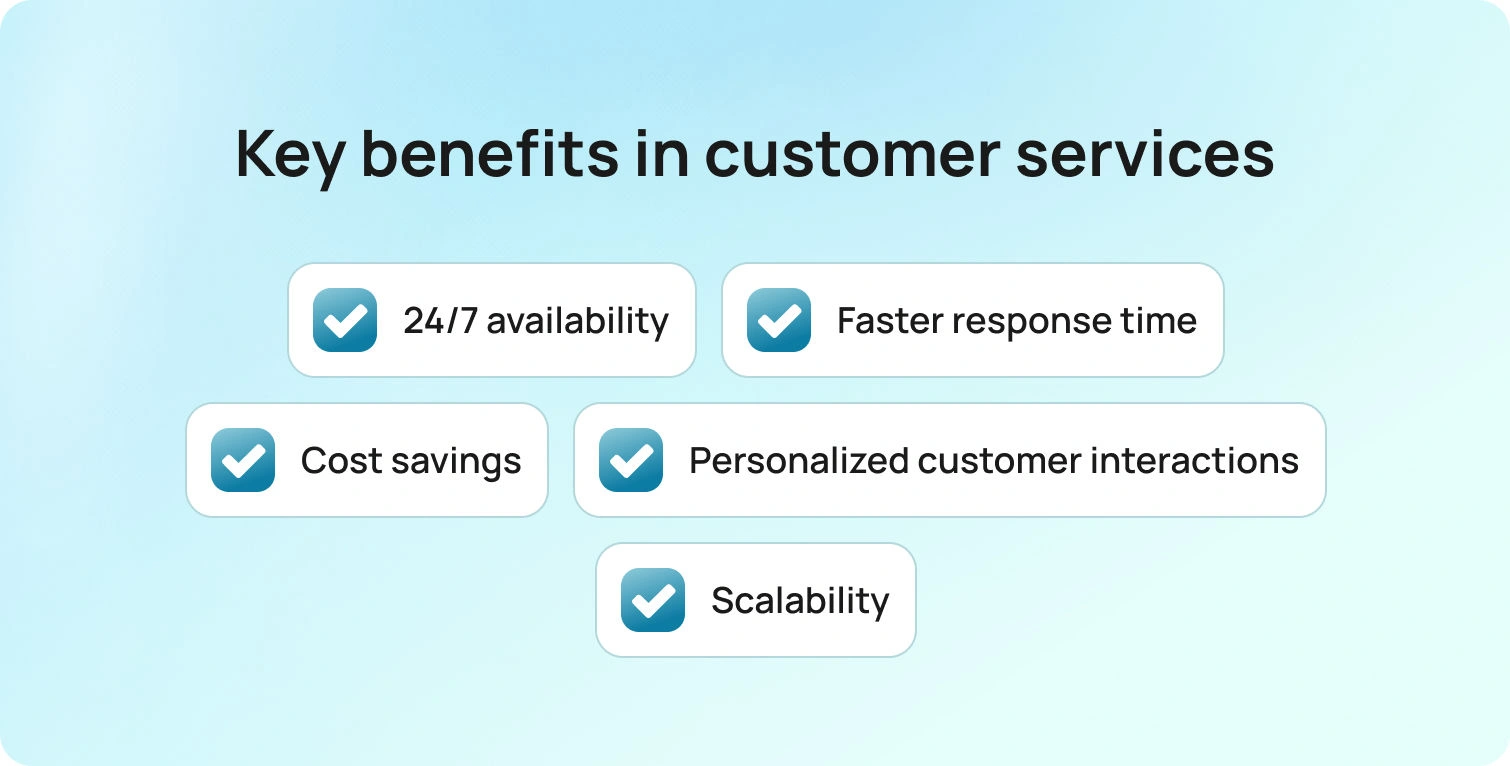
While the advantages of AI chatbots in customer service are significant, successful implementation requires understanding both their strengths and their limitations. Businesses that approach deployment strategically see the greatest return on investment.
The Benefits of AI Chatbots in Customer Service
1. 24/7 Availability
AI-powered chatbots in customer service operate around the clock, ensuring customers receive immediate support regardless of time zone or business hours.
2. Faster Response Times
Unlike human teams, chatbots can handle thousands of conversations simultaneously. This reduces wait times from minutes to seconds and improves overall customer satisfaction.
3. Cost Efficiency and Scalability
One of the primary benefits of AI chatbots in customer service is cost reduction. By automating repetitive Tier 1 queries, businesses reduce operational expenses while scaling support capacity without expanding headcount.
4. Consistency Across Channels
AI in customer service chatbots ensures consistent messaging across websites, apps, and messaging platforms, reducing variability in customer experience.
5. Personalization at Scale
Through AI in customer service chatbots and personalization, businesses can tailor responses using historical data, preferences, and previous interactions — something difficult to replicate manually at scale.
Common Challenges Associated with Deploying AI Chatbots in Customer Service

Despite their advantages, there are several challenges organisations must address.
1. Handling Complex or Nuanced Queries
A common challenge associated with deploying AI chatbots in customer service is managing ambiguous, emotionally sensitive, or highly technical requests. AI may misinterpret intent if not properly trained.
2. Limited Emotional Intelligence
While AI can analyse sentiment, it cannot genuinely empathise. In sensitive situations (think: complaints, billing disputes, service failures), human oversight remains critical.
3. Risk of Robotic Interactions
Poorly configured bots can feel scripted or unnatural. Without conversational optimisation, this can frustrate customers rather than assist them.
4. Data Privacy and Security Concerns
AI-based chatbots in the customer service process handle large volumes of customer data. Businesses must ensure compliance with privacy regulations and implement strong security protocols.
5. Integration with Existing Systems
Integrating AI chatbots with CRM platforms, helpdesks, and internal databases can be technically complex. Without seamless integration, chatbots cannot deliver full value.
Why a Hybrid Model Delivers the Best Results
The most effective approach combines automation with human expertise. A hybrid system allows AI chatbots to:
- Resolve routine inquiries instantly
- Gather context and pre-qualify customers
- Escalate complex cases to live agents seamlessly
This balance ensures efficiency without sacrificing empathy.
When implemented thoughtfully, AI-powered chatbots in customer service enhance, rather than replace, human support teams.
Best Practices and Proven Results of AI Chatbots in Customer Service
Successfully implementing AI-powered chatbots in customer service requires more than deploying software. The most effective organisations combine clear strategy, continuous optimisation, and human oversight, supported by measurable performance gains.
Best Practices for Implementing AI Chatbots
To maximise the effectiveness of AI chatbots in customer service, businesses should follow these core principles:
1. Define Clear Objectives
Identify which areas of the customer service department AI should improve, whether that’s reducing ticket volume, improving response time, or enhancing personalization.
2. Start Small and Scale Gradually
Begin with automating simple, high-volume queries (eg, FAQs or order tracking). Once performance is stable, expand into more advanced AI chatbot use cases in customer service.
3. Monitor and Optimise Continuously
AI chatbots improve over time, but only with proper oversight. Regularly analyse conversations, refine intent detection, and update knowledge bases based on customer feedback.
4. Maintain a Human Backup
Even advanced AI-based chatbots in customer service cannot replace human judgment entirely. Ensure seamless escalation paths to live agents for complex or emotionally sensitive issues.
The Impact of AI Chatbots in Customer Service

As AI technology evolves, industry research shows that conversational AI and agentic automation are becoming central to how organisations deliver customer support. Rather than hype, adoption is grounded in measurable operational improvements and strategic shifts. A large majority of customer service leaders are actively exploring or piloting conversational AI technologies, reflecting the increasing strategic importance of automation in service operations. According to Gartner, 85 % of customer service leaders plan to explore or pilot customer-facing generative AI solutions like conversational chatbots by 2025, a clear signal of where support strategy is headed.
Improved Customer Satisfaction
AI chatbots significantly reduce wait times by providing immediate responses to common queries. Large enterprises such as Bank of America have demonstrated how AI-powered virtual assistants can support millions of customer interactions at scale, offering fast answers and seamless handoff to human agents when needed.
By minimising delays and ensuring consistent support availability, businesses improve customer satisfaction while maintaining service quality.
Cost Efficiency and Savings
Automating routine and repetitive inquiries reduces pressure on support teams and lowers operational overhead. Industry research consistently shows that organisations implementing AI in customer service experience meaningful cost efficiencies, particularly when automation is applied to high-volume, low-complexity requests.
Rather than replacing human agents, AI enables teams to operate more strategically and efficiently.
Scalability
Customer expectations for 24/7 support continue to rise. AI chatbots allow organisations to scale without proportionally increasing headcount.
Analyst forecasts indicate that conversational AI and virtual assistants will handle a growing share of customer service interactions in the coming years, reflecting their expanding role in modern support infrastructure.
Faster Response Times
One of the most immediate benefits of AI chatbot deployment is speed. Automated systems eliminate queue times for standard queries and provide instant, consistent answers. Industry research shows 82 % of customers prefer chatbot support for immediate answers, underlining the value of fast, automated service. A reduction in response time improves overall customer experience and helps businesses meet rising expectations for immediacy across digital channels.
Personalization at Scale
Modern AI chatbots use customer data, conversation history, and behavioural insights to tailor responses in real time. As personalisation becomes a competitive differentiator, conversational AI enables brands to deliver relevant, contextual support experiences without manual intervention.
Consumers increasingly expect brands to understand their needs and preferences, and AI plays a critical role in delivering that at scale.
Increased Operational Efficiency
Research highlights that AI tools assist a human workforce by summarising tickets, suggesting relevant content, or handling initial triage, allowing human agents to focus on complex, high-value cases. This division of labour improves overall service quality while optimising workforce productivity.
Improved Customer Retention
Convenience, speed, and availability are key drivers of loyalty. When customers can resolve issues quickly, without long wait times or unnecessary friction, satisfaction and long-term retention improve.
AI chatbots contribute to this experience by ensuring support is always accessible and consistent.
Adoption Challenges and the Importance of Hybrid AI
Despite clear advantages, implementation is not without barriers. Common challenges associated with deploying AI chatbots in customer service include:
- Integration with existing CRM and helpdesk systems
- Handling complex or emotionally sensitive conversations
- Maintaining conversational quality and avoiding robotic responses
This is why the most effective organisations adopt a hybrid approach, combining AI automation with human oversight to deliver both efficiency and empathy.
How BlueTweak Delivers Intelligent AI Chatbots in Customer Service
Effective AI in customer service is achieved by applying the right level of intelligence to the right interaction. BlueTweak’s approach combines structured workflows, natural language understanding, and generative AI to create a chatbot experience that is both scalable and context-aware.
Multi-Level Support for Every Customer Need
BlueTweak’s AI chatbot operates across three interaction levels to provide tailored, scalable support:
1. Button-Based Interactions
Structured workflows with predefined options guide users quickly to relevant answers, ideal for high-volume, repetitive queries.
2. Keyword-Based Responses
Using Natural Language Processing (NLP), the chatbot detects intent and delivers dynamic, context-aware answers.
3. Generative AI Responses
Advanced AI analyzes queries in real time to generate personalized responses based on context, history, and available data.
This layered approach ensures the right level of intelligence is applied to each interaction.
Seamless Integration for Smarter Conversations
Through API integrations with CRMs, helpdesk systems, and external databases, BlueTweak’s AI chatbot:
- Retrieves real-time data
- Maintains conversation history
- Delivers accurate, up-to-date responses
This integration reduces resolution time and improves overall customer satisfaction, while ensuring AI works as part of your existing ecosystem, not alongside it.
The Future of AI Chatbots in Customer Service
AI chatbots are no longer experimental tools; they are becoming foundational to modern customer support strategies. As AI technology evolves, we can expect:
- Conversational AI with emotion detection
Systems that recognise tone and adjust responses accordingly. - More human-like dialogue
Continued advances in NLP will make conversations increasingly fluid and natural. - Hyper-personalization
AI in customer service chatbots and personalization will enable predictive recommendations based on behaviour and history. - Voice and multimodal integration
Chatbots integrated with voice assistants and digital channels for seamless cross-platform experiences.
The future of AI in customer service chatbots is in augmenting human ability. Businesses that adopt a balanced, hybrid model will deliver faster support, stronger relationships, and measurable operational gains.
Explore how organisations are already transforming their support operations in our customer success stories. Customer expectations are rising, support teams are stretched, and response times matter more than ever. BlueTweak’s AI chatbots help you stay ahead, without increasing headcount. See exactly how in a 30-minute demo tailored to your customer journey.

Balancing AI and Human Touch in Customer Service
Customer service is one of the most critical touchpoints for businesses, directly influencing customer satisfaction, retention, and loyalty. With the rise of AI, companies now have the ability to automate many aspects of customer service, offering quicker responses and more consistent support. However, a key challenge remains: how can businesses balance automation with the human touch? While AI can improve efficiency, there are situations where human interaction is essential.
Key Benefits of AI in Customer Service
- Efficiency and Scalability
One of the most immediate benefits of AI in customer service is its ability to handle large volumes of interactions simultaneously. AI chatbots and virtual assistants are capable of responding to common customer inquiries instantly, reducing wait time and improving overall customer satisfaction. Furthermore, AI can provide 24/7 support, allowing businesses to cater to global customers in different time zones without additional staffing costs. This scalability enables businesses to expand their customer service operations without a proportional increase in overhead.
- Consistency in Responses
AI ensures that customers receive consistent answers across all interactions. While human agents may inadvertently give different answers or introduce errors, AI systems are programmed to provide accurate and uniform responses. This is especially useful for handling frequently asked questions, troubleshooting guides, and order tracking, ensuring that customers always receive the correct information.
- Cost Efficiency
AI-powered tools can significantly reduce operational costs for businesses by automating routine tasks. By handling repetitive inquiries, AI allows human agents to focus on more complex or higher-value tasks, ultimately increasing overall productivity. This can lead to cost savings, particularly for businesses that receive a high volume of customer inquiries daily.
Read more about: Enhancing the Customer Experience with AI Customer Support Platforms
The Importance of the Human Touch in Customer Service
While AI excels at handling repetitive tasks, there are certain aspects of customer service that require human intervention. Customers often turn to businesses for personalized support when dealing with complex issues, complaints, or emotional concerns. Human agents possess empathy, intuition, and problem-solving abilities that AI cannot yet replicate. A well-trained human agent can de-escalate a frustrated customer, provide tailored solutions, and create positive emotional connections that foster customer loyalty.
- Empathy and Emotional Intelligence
In Customer Service, AI lacks the ability to understand human emotions in the way a trained customer service representative does. While AI can analyze language patterns and identify certain keywords, it cannot sense the underlying emotions that may be present in a conversation. For example, a customer who is upset about a late delivery may need reassurance and a personalized apology, something an AI system may struggle to provide. Human agents excel at providing empathy, understanding, and personalized attention, which can turn a negative experience into a positive one.
- Complex Problem-Solving
While AI is great for answering basic inquiries, some customer issues require a higher level of problem-solving. Whether it’s an unusual technical issue, a billing dispute, or a request for a custom solution, human agents are better equipped to handle complex problems that require nuanced judgment and creativity. In Customer Service, human agents also have the flexibility to go off-script, adapt to unique situations, and make decisions that AI systems cannot yet match.
Read more about: The Perfect Duo: AI Chatbots and Human Agents in Harmony for Customer Support
How to Achieve the Perfect Balance
To balance automation using AI and human touch in customer service, businesses need to adopt a hybrid approach. Here’s how:
- Automated Repetitive Tasks
AI should be used in customer service to handle tasks like providing FAQs, order updates, and troubleshooting guides. By automating these processes, businesses can free up human agents for more personalized interactions.
- Human Intervention When Necessary
For more complex or emotionally charged issues, customers should have easy access to a human agent. This ensures that customers receive the empathy and personalized service they need when dealing with difficult situations.
- AI Augmentation for Human Agents
AI can also assist human agents by providing real-time insights, suggesting responses, and helping agents resolve issues faster. This way, agents can leverage AI to improve their efficiency without losing the human touch.
Read more about: AI Customer Support vs. Human Support: Finding the right balance
Challenges to Balancing AI and Human Interaction in Customer Service
- Customer Expectations
Customers today expect fast responses. Balancing automation and human intervention require careful planning to ensure customers don’t have to wait too long for help when they need it.
- Employee Training
Human agents must be trained to work alongside AI tools. This means equipping them with the skills to handle escalations, personalize interactions, and make the most out of AI-generated insights.
The key to outstanding customer service in the age of AI lies in balancing automation with human empathy. While AI can handle routine tasks, human agents are irreplaceable when it comes to complex issues and emotional intelligence. By integrating both AI and human touch effectively, businesses can provide fast, efficient, and empathetic customer service that meets the needs of customers.

Effective Communication Strategies for Customer Support
Effective communication is the cornerstone of any successful customer support strategy. As businesses strive to meet the needs of increasingly demanding customers, ensuring that communication is clear, empathetic, and solution-oriented is critical. A customer’s perception of your brand is often shaped by their interaction with your support team, making communication one of the most influential factors in customer retention and satisfaction.
What is a Customer Communication Strategy
A customer communication strategy is a cohesive, big-picture business plan for connecting with prospective and existing customers, supported by specific tactics to achieve branding, marketing, and customer service goals. It involves understanding how customers want to receive information and creating a long-term communication strategy. A customer communication strategy can speed up communication, ensure message consistency, enhance customer retention, and improve customer acquisition.
Active Listening and Empathy: Building Trust and Understanding
One of the most fundamental principles in effective communication strategy for customer support is active listening. It’s not just about hearing what the customer says, but fully engaging with their concerns. When customers feel heard, they are more likely to trust the business, even in situations where a solution may not be immediately available. Empathy plays a key role in this process. Understanding the emotional context behind a complaint or request allows agents to provide responses that resonate on a personal level.
In customer service, active listening means allowing the customer to express their thoughts without interruption, reflecting their feelings, and validating their experiences. Empathetic responses show that you genuinely care about their situation, which helps diffuse negative emotions and fosters a positive relationship.
Read more about: The Role of Soft Skills in Customer Support: Training for Empathy and Communication
Clarity and Simplicity: Avoiding Misunderstandings
The customer support experience should be as easy to understand as possible. Clear and simple communication ensures that customers don’t feel overwhelmed by technical jargon or overly complex instructions. When providing solutions or answering questions, use concise language that gets to the point. Avoiding unnecessary complexity in your responses can significantly reduce the chances of misunderstandings and help customers grasp the solution quickly.
Furthermore, written communication, such as email or chat, should be especially clear, as tone can be harder to convey without verbal cues. Utilizing bullet points, step-by-step instructions, and simple phrases can ensure that customers easily follow along.
Read more about: Voice vs. Text in Customer Support Service: Choosing the right medium for your audience
Use of Positive Language: Shifting the Customer's Mindset
The language used by support agents should always focus on positivity and solutions. Customers often reach out with frustration, and it’s easy for interactions to spiral into negativity. By using positive language, agents can steer conversations toward constructive outcomes. This subtle shift in language fosters a more collaborative and hopeful atmosphere, making the customer feel empowered rather than dismissed.
Positive language also helps agents to maintain a professional demeanor during difficult interactions. By focusing on solutions rather than problems, customers are more likely to walk away with a positive experience, even if their issue isn’t immediately resolved.
Adapting to Communication Styles: Personalizing the Experience
Each customer has their unique preferences when it comes to communication. Some may prefer quick, direct answers, while others may appreciate more detailed explanations. By recognizing and adapting to the customer’s communication style, agents can make interactions feel more personal and relevant. For example, a customer who asks for technical assistance might prefer a detailed breakdown of the solution, while someone reaching out with a billing question might only need a brief clarification.
Training your team to recognize different customer communication styles can enhance the overall experience. This can be achieved by using tools that allow agents to track customer preferences or by analyzing previous interactions to understand how a customer prefers to communicate. By tailoring responses to the individual customer, you can improve the relationship and increase the likelihood of resolving the issue in the most efficient and satisfying manner.
Read more about: Customer Experience vs. Customer Service: Understanding the Difference
Utilizing Technology: Enhancing Communication with AI and Automation
While human communication is at the heart of customer support, technology plays an important role in supporting and enhancing these interactions. AI-powered chatbots, for example, can be used to answer frequently asked questions, provide troubleshooting tips, or direct customers to the right resources. By handling repetitive inquiries, AI allows human agents to focus on more complex or emotional customer issues.
Additionally, automation tools such as CRM systems can streamline communication by providing agents with quick access to customer data, prior interactions, and issue histories. This information allows agents to respond faster and more accurately, reducing wait time and increasing the effectiveness of the communication. With AI and automation, businesses can scale their customer support efforts while still maintaining a personalized and effective communication strategy.
Omnichannel Approach: Ensuring Consistency Across Touchpoints
Customers interact with businesses through a variety of channels, including phone, email, chat, social media, and self-service portals. It’s crucial that communication across all channels remains consistent and of high quality. Whether a customer reaches out via WhatsApp or other live chat window, they should experience the same level of professionalism and clarity.
Integrating all communication channels into a single system, such as a unified ticketing platform, ensures that customer interactions are logged and accessible regardless of the channel. This means that agents can pick up on previous conversations, avoid repetition, and offer more relevant solutions. Additionally, ensuring that responses are timely and consistent across touchpoints reinforces trust and creates a more cohesive brand experience for the customer.
Read more about: The Importance of Tone in Written Support: Crafting Effective Communication
Effective communication strategy in customer support is essential for building trust, improving satisfaction, and fostering customer loyalty. By focusing on active listening, clear and simple language, positive phrasing, adapting to communication styles, and leveraging technology, businesses can significantly enhance their customer support operations. In 2025, communication will continue to be one of the most important factors in driving customer success and differentiating your brand from the competition. Implementing these strategies will help create a customer support experience that is not only efficient but also memorable and positive.

The Future of AI in Business Operations
The future of AI in business operations holds transformative potential, reshaping how companies simplify their processes, make decisions, and interact with customers. From boosting efficiency through automation to making real-time, data-driven decisions, AI is no longer a futuristic concept but a present reality. Businesses of all sizes are starting to leverage AI to optimize performance, reduce costs, and create new opportunities.
Key Benefits of using AI in Business Operations
- Data-Driven Decision-Making
Artificial intelligence provides an unprecedented ability to analyze vast quantities of data in real-time. By leveraging machine learning algorithms and predictive analytics, AI allows businesses to make informed, data-backed decisions with remarkable speed and accuracy. For instance, AI could help businesses predict consumer demand, adjust inventory levels, and optimize supply chains. These insights can also extend to sales forecasting and financial planning, enabling companies to avoid stockouts, reduce waste, and make proactive decisions.
- Operational Efficiency
AI technologies such as robotic process automation (RPA) have proven invaluable in automating repetitive and time-consuming tasks. From handling routine customer inquiries to managing administrative functions like data entry or report generation, AI frees up human resources to focus on more strategic initiatives. This shift leads to significant cost reductions, operational efficiencies, and faster turnaround time. AI also helps businesses manage large-scale operations by coordinating processes and systems with minimal human intervention.
- Scalability and Growth
As businesses expand, maintaining operational efficiency can become a challenge. AI solves this problem by allowing companies to scale effortlessly. Automation tools powered by AI can handle increased workloads, making it easier to grow without a proportional increase in overhead costs. For example, AI-driven customer service chatbots can handle a higher volume of queries without requiring additional staff, which helps businesses scale customer support during busy periods.
- Improved Customer Experience
AI’s ability to personalize customer experiences is a game-changer. By analyzing past interactions, purchase behavior, and customer preferences, AI can help companies deliver highly tailored experiences. For example, AI recommendation systems suggest products based on individual preferences, significantly increasing conversion rates. In customer service, AI chatbots and virtual assistants provide immediate, personalized responses to customer queries, improving satisfaction and reducing wait time.
Read more about: The Perfect Duo: AI Chatbots and Human Agents in Harmony for Customer Support
Challenges of AI Adoption in Business Operations
- Integration with Legacy Systems
For many businesses, particularly those with established operations, integrating AI into existing systems can be a daunting task. Legacy systems, which may not be designed to work with AI-driven technologies, can present compatibility issues. This can be a time-consuming and costly process, though the benefits in the long term often outweigh the initial challenges.
- Data Privacy and Security
As AI systems rely heavily on large datasets to function, ensuring the privacy and security of customer data is a primary concern. AI-driven processes must be designed to comply with strict data protection regulations such as the GDPR in Europe or the CCPA in California. Businesses must invest in robust cybersecurity measures to protect against data breaches, which could result in severe legal and reputational consequences. Furthermore, AI systems themselves need to be regularly monitored to ensure they are not vulnerable to external attacks or misuse.
- Workforce Displacement Concerns
A common misconception about AI is that it will inevitably replace human workers. While AI can automate repetitive tasks, it is unlikely to replace human creativity, emotional intelligence, and complex decision-making abilities. Businesses must strike a balance between utilizing AI for efficiency and retaining the human touch for higher-value functions. Additionally, business leaders need to prioritize upskilling their workforce to ensure employees can work alongside AI tools, fostering collaboration rather than fear of displacement.
Read more about: Harnessing the Power of AI in Customer Support: Impact and Innovations
The Future: AI as a Key Driver of Innovation in Business Operations
The future of AI in business operations is not just about improving efficiency; it is about fostering innovation. As AI continues to evolve, its capabilities will expand to areas such as advanced decision-making, predictive analytics, and even new product development. Companies that adopt AI early and embrace its potential for innovation will be better positioned to lead in the market. Future AI technologies will likely be more autonomous, able to manage entire workflows and make strategic decisions independently, ultimately driving business growth in ways that were previously unimaginable.
Read more about: The Evolution of Customer Support Technology: From call centers to AI
AI’s role in business operations is only set to grow. From automating routine tasks to making complex decisions and enhancing customer experiences, AI is proving to be an asset for businesses of all sizes. Although challenges such as integration and data privacy remain, the long-term benefits of AI adoption far outweigh the risks. By embracing AI technology, businesses can improve efficiency, foster innovation, and position themselves for sustainable success in the digital age.

Why Personalization is the Key to Exceptional Customer Service
Consumers are becoming increasingly selective about where they spend their money. They expect more than just products or services; they want personalized experiences that make them feel valued and understood. Personalization has become a cornerstone of exceptional customer service, allowing businesses to build deeper connections with their customers and increase loyalty.
What is exceptional customer service
Exceptional customer service is the best kind of customer support. It's when you provide a positive, helpful, and timely experience for your customers. It happens when a company goes above and beyond what its customers expect. This is often done through the use of exceptional communication skills, superior knowledge of products or services, and an overall sense of sincerity.
The Importance of Personalization for Exceptional Customer Service
- Building Emotional Connections with Customers
At its core, personalization is about making customers feel seen and valued. When customers receive tailored service that acknowledges their unique preferences, behaviors, and history with the brand, it creates an emotional connection. This connection is crucial in building long-term loyalty and turning one-time buyers into repeat customers.
For example, addressing customers by name and remembering their previous service interactions can make them feel like they are not just another number. Customer service personalization shows that a business is paying attention to the individual needs of each customer, fostering a sense of trust and care that leads to stronger relationships.
- Enhancing the Customer Experience
Personalization plays a key role in exceptional customer service, improving the overall customer experience. When customers interact with a business that tailors its offerings to their preferences, they feel like their time is respected and that they are receiving value.
With the help of data and AI, businesses can better understand their customers and anticipate their needs. This knowledge enables companies to offer the right product or solution at the right time, improving customer satisfaction and creating a more positive experience overall.
- Increased Customer Retention and Loyalty
Personalized customer service is a powerful driver of customer retention. Research shows that customers are more likely to remain loyal to brands that provide personalized experiences. By consistently offering personalized interactions, businesses can foster a sense of connection and loyalty that goes beyond transactional relationships.
Read more about: How to Transform Your Customer Service: Best Practices
How to Implement Personalization in Customer Service
- Leverage Customer Data to Understand Preferences
Personalized customer service begins with data. By gathering insights from customer interactions, purchase history, feedback, and browsing behaviors, businesses can better understand their customers' preferences and needs. This data can be used to create personalized experiences, from product recommendations to customized customer support.
However, it’s important to use data responsibly. Customers need to feel confident that their information is being used ethically and securely. Transparent data usage policies and secure systems are critical to maintaining customer trust.
- Use AI for Smarter Personalization
AI plays a crucial role in enabling personalized customer service at a scale. AI-driven tools can analyze large volumes of customer data in real-time, helping businesses deliver personalized recommendations, responses, and support. For example, AI-powered chatbots can remember previous conversations and provide tailored assistance based on the customer’s history with the company.
Automation can also help businesses receive relevant information at the right time. When done correctly, AI and automation can provide personalized experiences without losing human touch.
Read more about: Superior Customer Support – Best Practices & AI Transparency
- Offer Multi-Touchpoint Customer Service Personalization
Customer service personalization should extend across all customer interactions. Integrating all communication channels into a unified system ensures that customer data is accessible to support agents, sales teams, and marketing departments. This enables businesses to deliver a consistent and personalized experience at every stage of the customer’s journey.
Read more about: Choosing the Right Customer Support Platform: A Comprehensive Guide
Personalization is the key to exceptional customer service. By understanding customer needs, leveraging data, and integrating personalized interactions across multiple touchpoints, businesses can create deeper connections, improve satisfaction, and foster long-term loyalty. As personalization becomes more accessible through AI and data analytics, businesses of all sizes can harness its power to stand out in an increasingly crowded marketplace.

Debunking AI Myths: What Every Business Leader Should Know
Artificial intelligence is becoming an integral part of businesses worldwide, but despite its growing popularity, many misconceptions persist. These myths about AI can prevent business leaders from fully embracing AI's potential or lead them to make incorrect decisions about its application.
Myths About AI
- AI Will Replace Human Jobs
One of the most widespread myths about AI is that it will completely replace human workers, leading to mass unemployment. While AI is undoubtedly capable of automating certain repetitive tasks, it is unlikely to replace jobs in areas requiring creativity, emotional intelligence, or complex decision-making. In fact, AI is designed to complement human abilities, helping workers focus on higher-value tasks while AI handles time-consuming or mundane activities. Businesses can use AI to improve efficiency without sacrificing the need for human input.
- AI is Only for Large Companies
Another misconception is that AI is only accessible to large corporations with vast resources. While it is true that larger companies may have the capital to invest in AI infrastructure, smaller businesses can also benefit from AI technologies. Cloud-based AI platforms allow companies of all sizes to implement AI-driven tools without the need for extensive upfront investments. In fact, AI can be a game-changer for small and medium-sized businesses, helping them compete with larger counterparts by streamlining operations and improving customer engagement.
- AI is a One-Time Investment
Many business leaders believe that AI requires a one-time investment and that once it is implemented, it will continue to perform without much further attention. AI is an ongoing process that requires continuous training, monitoring, and refinement. To ensure optimal performance, AI models must be regularly updated with new data and adjusted based on the evolving needs of the business. Over time, AI systems can improve and adapt to changes in the market or industry, but they require commitment and attention to maintain their effectiveness.
- AI is Only Useful for Tech-Savvy Companies
AI is increasingly being used across a wide range of industries, from healthcare and finance to retail and logistics. AI tools and platforms are becoming more user-friendly, with many solutions designed specifically for non-technical users. For example, AI-powered customer service platforms are intuitive and require minimal technical expertise, allowing businesses across industries to leverage AI.
- AI Can Work Without Human Oversight
AI is often seen as a fully autonomous system capable of functioning without human oversight. While AI systems can automate tasks and make decisions, they still require human intervention to ensure accuracy, interpret results, and make high-level decisions. AI is not infallible; it can produce errors or unintended outcomes if not properly monitored. Human oversight is essential to ensure that AI is functioning as intended and that its outputs align with business goals and values.
Read more about: The Evolution of Chatbots: Enhancing Customer Support with AI
Why These Myths about AI Persist
- Lack of Understanding
Many of these myths about AI stem from a lack of understanding about what AI can and cannot do. Business leaders who are unfamiliar with AI may be influenced by sensationalized portrayals in the media or exaggerated claims from vendors. As AI technology continues to evolve, it’s crucial for business leaders to educate themselves on the practical applications and limitations of AI.
- Fear of the Unknown
AI can be intimidating, especially for leaders in industries that are less familiar with technology. This fear of the unknown can lead to resistance or hesitancy to adopt AI solutions, even when they could provide significant benefits. However, understanding the realities of AI and how it can be integrated into existing operations is key to overcoming this fear and unlocking its potential.
Read more about: AI Customer Support vs. Human Support: Finding the right balance
How Business Leaders Can Navigate AI Adoption
- Start Small and Scale Up
Rather than trying to implement AI across every aspect of the business at once, leaders should start with smaller projects that have clear goals and measurable results. Once these projects are successful, businesses can gradually scale up their AI initiatives. This approach allows businesses to build confidence in AI technologies and demonstrate their value before committing to larger investments.
- Invest in Education and Training
To overcome misunderstandings and ensure successful AI adoption, business leaders should invest in educating their teams about AI. This includes providing training on how AI tools work, how to interpret data, and how to use AI effectively in day-to-day operations. By fostering an understanding of AI, businesses can create a culture that embraces innovation and continuous learning.
- Collaborate with Experts
Since AI is a complex field, partnering with AI experts or consultants can help businesses navigate the technical aspects of implementation. These experts can help businesses select the right AI tools, customize solutions to meet their needs, and provide ongoing support to ensure AI systems continue to evolve and deliver value.
Read more about: Enhancing the Customer Experience with AI Customer Support Platforms
Debunking the myths surrounding AI is essential for business leaders looking to leverage its potential. By recognizing that AI is a tool for enhancing human capabilities, accessible to companies of all sizes, and requiring continuous attention, leaders can make informed decisions and take advantage of AI’s transformative power. Through proper education, strategic implementation, and ongoing support, AI can become a key driver of success for businesses across industries.

The Role of AI in Monitoring and Improving Customer Satisfaction in Real Time: A Step-by-Step Guide
In a highly competitive business environment, customer satisfaction is one of the most critical factors for success. Monitoring and improving customer satisfaction in real-time allows businesses to proactively ensure a high level of service while addressing issues as they arise. AI (Artificial Intelligence) has become a powerful tool in this process, enabling companies to collect, analyze, and act on customer feedback more efficiently and effectively than ever before.
1. Implementing AI-Powered Sentiment Analysis
The first step in using AI for real-time customer atisfaction monitoring is deploying AI-powered sentiment analysis tools. These tools analyze customer interactions—whether via email, chat, social media, or voice calls—to determine the emotional tone and underlying sentiment of the communication.
How to Set it Up:
- Choose an AI-driven sentiment analysis platform that supports multi-channel customer interactions.
- Integrate the platform with your CRM, social media accounts, and customer service systems to capture interactions from all touchpoints.
- Train the AI model using historical customer interaction data to improve accuracy.
- Set up real-time monitoring dashboards that highlight customer sentiments, enabling your team to respond to negative interactions promptly.
Benefits:
- Continuous monitoring of customer sentiment.
- Immediate detection of dissatisfaction for rapid intervention.
- Aggregated sentiment data provides insights into trends over time, guiding strategic improvements.
2. Using AI for Predictive Analytics
After real-time data is captured, AI can be applied for predictive analytics to identify emerging trends in customer satisfaction. These insights help businesses proactively address potential issues before they escalate and improve overall customer experience.
Steps to Follow:
- Gather customer interaction and behavior data from all channels (web, mobile apps, customer support, etc.).
- Apply AI algorithms to identify patterns in the data that correlate with customer satisfaction (e.g., response times, product usage, interaction tone).
- Use predictive models to identify customers at risk of dissatisfaction or churn.
- Develop strategies to address predicted issues before they become larger problems.
Benefits:
- Anticipate customer needs and address potential pain points early.
- Take preventative measures such as offering discounts or optimizing support.
- Effectively allocate resources to manage high-risk customers or interactions.
Read more about: Enhancing Customer Satisfaction and Reducing Costs
3. AI-Driven Personalization to Improve Satisfaction
Personalization is a key factor in improving customer satisfaction and customer service satisfaction. AI plays a crucial role in delivering tailored experiences based on individual customer preferences, behaviors, and history.Steps for Implementing AI-Driven Personalization:
- Collect customer data from all interactions, including browsing behavior, purchase history, and feedback.
- Utilize machine learning algorithms to analyze this data and generate personalized recommendations, email content, or support options.
- Adjust marketing, customer service, and product offerings in real-time based on AI-driven insights.
Key Areas for Personalization:
- Product recommendations: AI predicts which products or services a customer is likely to be interested in based on their past behavior.
- Customer support: AI-powered systems route customers to the most appropriate support agent or service based on interaction history.
- Content delivery: Tailor messages, offers, or support based on customer preferences, enhancing satisfaction and loyalty.
Read more about: The AI Revolution in Customer Support Platforms. Boosting Customer Satisfaction
4. Deploying AI Chatbots for Immediate Customer Support
In many industries, real-time customer support is essential for maintaining satisfaction. AI chatbots provide instant assistance by answering common queries, resolving basic issues, and escalating complex cases to human agents when necessary.
Advantages:
- 24/7 support availability.
- Instant resolution for simple queries reduces wait times and improves customer experience.
- The ability to escalate complex issues to human agents ensures that customer needs are met efficiently.
Key AI Tools for Monitoring and Improving Customer Satisfaction
AI offers a wide range of tools that can be used to monitor and improve customer satisfaction in real time. Below are some of the most effective tools and their specific applications for customer service satisfaction:
- Real-Time Sentiment Analysis: AI analyzes customer interactions across channels—such as chat, email, or social media—in real-time, providing immediate feedback on customer emotions. This allows businesses to address dissatisfaction as soon as it arises, ensuring proactive responses.
- Predictive Analytics: AI uses historical data and trends to forecast potential issues before they occur. This enables companies to identify customers who are likely to become dissatisfied and take preemptive action to mitigate these concerns.
- Efficient Resource Allocation: AI-driven insights help businesses allocate their resources—such as support agents or marketing efforts—where they are most needed. By analyzing customer sentiment and workload in real-time, AI ensures that human agents are deployed efficiently, leading to better response times and customer outcomes.
- Automated Ticketing and Routing: AI can automatically categorize and route customer issues to the most appropriate teams based on the nature of the query. This streamlines the customer support process, speeding up response times and improving resolution rates.
- Proactive Support: AI can detect early signs of customer frustration by analyzing real-time data and triggering alerts. This allows businesses to offer timely interventions, preventing negative experiences from escalating.
- Chatbots: These AI-driven systems provide instant support by handling common customer queries or complaints, while also ensuring that more complex issues are routed to human agents. This allows for faster response times and more effective resource management.
- Speech Analytics: AI can analyze voice calls, extracting data points related to customer satisfaction, tone, and potential issues. This insight is invaluable for customer service teams looking to improve communication and resolve problems efficiently.
Read more about: Customer Satisfaction: Top 5 Must-Have Features for Support Software
Best Practices for Real-Time AI Monitoring and Improvement
- Centralized Dashboard: Use a unified dashboard that consolidates data from all channels—email, social media, support tickets, and more—into one view.
- Regular Training of AI Models: Continuously train AI models with updated data to improve accuracy in predictions and sentiment analysis.
- Proactive Approach: Actively reach out to customers identified as dissatisfied or at risk of churn rather than waiting for them to initiate contact.
- Continuous Feedback Loop: Ensure AI insights are shared across departments to drive improvements in products, marketing, and customer service.
Case Studies: Transforming Quality and Customer Satisfaction with BlueHub in Packaging Industry
AI offers companies unprecedented capabilities to monitor and improve customer satisfaction in real time. By implementing AI for sentiment analysis, predictive analytics, feedback automation, and personalization, businesses can enhance service quality while addressing issues proactively. When deployed effectively, AI becomes a cornerstone of superior customer experiences that drive business success.

The Hidden Costs of Inefficient Customer Support Systems
An inefficient customer support system can lead to significant hidden costs that are often overlooked. These costs not only affect your bottom line but can also have a long-term impact on customer loyalty, employee satisfaction, and overall business growth.
1. Lost Revenue: How Slow and Ineffective Support Drives Customers Away
When customers experience slow or ineffective support, their likelihood of remaining loyal diminishes. Delayed responses or unresolved issues frustrate customers, leading them to seek alternatives, resulting in lost revenue. Studies have shown that dissatisfied customers are far more likely to switch to a competitor, making efficient support a critical factor for customer retention.
To avoid this, businesses must invest in automated and responsive customer support solutions that ensure timely and accurate responses across all channels.
Read about BlueHub customer support system: AI Assisted Message Routing and Classification
2. Agent Burnout: The Impact of Manual, Repetitive Tasks on Employee Satisfaction
Customer support agents face high levels of stress when forced to deal with manual and repetitive tasks without automation. Over time, this can lead to burnout, high turnover rates, and decreased productivity. Burnt-out employees are less likely to engage with customers positively, which affects the overall service quality.
To reduce agent burnout, implement automated tools such as chatbots for handling repetitive inquiries, and provide training for handling more complex issues efficiently. This reduces the burden on agents and improves job satisfaction.
Read about BlueHub customer support system: AI Agent Augmentation
3. Missed Upsell Opportunities: The Cost of Poor Customer Engagement
Ineffective support systems can result in missed opportunities for upselling and cross-selling. A well-trained, well-supported agent can identify these opportunities during customer interactions. However, if the system is inefficient, agents may not have the time or tools to take advantage of these chances.
Ensuring that agents have access to customer history, preferences, and purchase behaviors can help in identifying upsell opportunities. Implement CRM systems that provide real-time insights during customer interactions.
Read about BlueHub customer support system: Intelligent Knowledge Base System
4. Reputational Damage: How Negative Customer Experiences Can Harm Your Brand
In an era where customer reviews are readily shared online, a poor customer service experience can quickly lead to reputational damage. Unhappy customers are more likely to leave negative reviews, which can discourage potential customers from doing business with your company.
Proactive customer service, such as quick issue resolution and personalized support, can prevent negative experiences from escalating. Monitoring social media and review platforms for feedback also helps businesses address problems before they tarnish the brand.
5. Higher Operational Costs: The Burden of Inefficient Processes
Inefficient customer support systems lead to higher operational costs. Without proper automation and streamlined processes, it takes more time and resources to resolve customer issues. This results in higher labor costs, increased use of support infrastructure, and slower resolution times, all of which negatively impact profitability.
To lower operational costs, businesses should adopt customer support software that integrates automation, self-service options, and streamlined workflows. These systems allow agents to handle more tickets efficiently, reducing the overall time spent on each inquiry.
Read about BlueHub customer support system: Ticketing System: Automate Repetitive Tasks
How to Address the Hidden Costs of Inefficient Customer Support Systems
- Assess Your Current Support System
Start by auditing your existing support processes to identify bottlenecks, inefficiencies, and areas where customer satisfaction is low. Use customer feedback, agent performance metrics, and resolution times to measure current efficiency levels.
- Invest in Automation and Self-Service
Implement customer support automation tools like AI-driven chatbots, automated ticket routing, and self-service options such as FAQ sections or knowledge bases. These tools reduce the burden on agents and provide customers with immediate solutions to common problems.
- Train Your Support Team Regularly
Equip your team with the necessary skills and knowledge to handle complex customer inquiries. Regular training ensures that they can use the support tools effectively, stay up-to-date with product changes, and improve customer interactions.
- Implement Comprehensive Reporting and Analytics
Use analytics to monitor customer support performance in real-time. This includes tracking customer satisfaction scores (CSAT), net promoter scores (NPS), and response times. Data-driven insights help in identifying inefficiencies early and making informed decisions to enhance the system.
Read more about BlueHub - Customer Support software features!
Key Takeaways for Optimizing Customer Support
- Streamline Your Processes: Eliminate unnecessary steps in the support process and prioritize solutions that improve speed and efficiency.
- Focus on Customer-Centric Solutions: Ensure your support tools and practices are tailored to meet the needs of your customers, providing them with seamless service experiences.
- Leverage Technology: Implement robust customer support platforms with built-in automation and reporting tools to reduce manual work and lower operational costs.
- Monitor and Adapt Continuously: Customer expectations evolve, so your support system should be regularly updated to stay efficient and relevant.
Read more about: Enhancing the Customer Experience with AI Customer Support Platforms
The hidden costs of inefficient customer support systems are multifaceted, ranging from lost revenue to reputational damage. Addressing these inefficiencies requires a proactive approach that combines technology, employee training, and data-driven insights. By optimizing your customer support operations, you not only reduce operational costs but also build a loyal customer base that contributes to long-term business success.



