



TL;DR
Looking for the best help desk software for e-commerce in 2026? We compare 10 leading support tools, including BlueTweak, to help e-commerce teams find the right platform for AI-powered customer support, omnichannel communication, and customer self-service. From live chat support and knowledge base articles to advanced AI features, ticket routing, and customer sentiment analysis, this guide covers the essential features, pricing, and integrations you need to improve agent efficiency, resolve customer issues faster, and deliver exceptional support at scale.
E-commerce customers expect fast, personalized support wherever they shop, whether that's email, live chat, social media, or messaging apps. But many support teams are still juggling disconnected desk tools, multiple business systems, and rising ticket volumes that slow down agents and frustrate customers.
The best e-commerce help desk software brings every support conversation into one place, helping teams automate repetitive tasks, improve agent efficiency, and deliver consistent customer experiences at scale. Platforms like BlueTweak combine omnichannel support, AI-powered automation, workforce management, and customer self-service capabilities in a single solution, making it easier for growing e-commerce businesses to resolve customer issues without adding operational complexity.
In this guide, we compare the best e-commerce help desk software for 2026, covering pricing, features, AI capabilities, and integrations so you can find the right platform for your business.
Why Generic Help Desk Software Falls Short for E-commerce
Choosing e-commerce help desk software isn't just about finding a platform with a Shopify integration. It's about selecting a customer support solution that's built for the realities of online retail.
Many traditional help desk tools were originally designed for general business support. While they may offer basic ticket management and a handful of e-commerce integrations, they often struggle with retail-specific workflows such as order tracking, returns, exchanges, and high-volume customer inquiries. Support teams are left switching between multiple platforms, manually checking order information, and responding to repetitive questions that could easily be automated.
The best e-commerce help desk software combines omnichannel communication, intelligent ticket routing, AI-powered automation, and customer self-service in one platform. Features like knowledge base articles, live chat support, customer sentiment analysis, and workflow automation help e-commerce teams resolve customer issues faster while improving service level agreements and reducing support costs.
The platforms below go beyond basic ticketing to deliver dedicated support for modern e-commerce businesses, helping agents work more efficiently while giving customers faster, more consistent experiences.
Signs You've Outgrown Your Current Help Desk Software
Every e-commerce business reaches a point where basic customer support software starts holding the team back. As order volumes grow and customers expect faster, more personalized service across every channel, disconnected support tools create bottlenecks that impact both agent productivity and the customer experience.
If any of the challenges below sound familiar, it's probably time to invest in e-commerce help desk software that's built for retail workflows rather than generic ticket management.
Common Triggers Pushing Teams Toward Specialized E-Commerce Help Desk Software:
1. Fragmented Tools Creating Chaos
Fragmented support tools create unnecessary work; agents switch between email, a shared inbox, WhatsApp Web, Instagram, your e-commerce platform, and other business systems just to answer a single customer inquiry. Your support team toggles between email, a basic shared inbox for chat, WhatsApp Web for messaging, Instagram for DMs, and your e-commerce store admin panel for order lookups. Instead of resolving issues quickly, they waste valuable time copying information between platforms. Modern help desk software should centralize every support conversation, automatically surface order history, and route tickets to the right team.
2. Missing E-Commerce Platform Integrations
Your current help desk lacks native Shopify, BigCommerce, or WooCommerce apps pulling customer profile details and purchase history. Agents ask customers to repeat order numbers and shipping addresses already in your system. You need e-commerce help desk software that automatically populates order details in tickets.
3. Limited Social Coverage
Customers message you through Instagram, Facebook, WhatsApp, and TikTok, but your desk software only handles email and basic chat. Social customer messages go unanswered because they don't flow into your ticketing system. You need multichannel support that covers where customers actually engage with your business.
4. Manual WISMO and Returns
Basic inquiries flood your support channels daily. Agents manually check tracking, copy-paste shipping updates, and process returns through repetitive steps. You need workflow automation handling routine inquiries with AI agents while escalating edge cases to human agents with full context.
4. AI That Doesn't Understand Retail
Generic chatbots often struggle with returns, exchanges, shipping policies, or product questions because they aren't grounded in your knowledge base articles. The best e-commerce platforms combine advanced AI features with knowledge-base grounding, customer sentiment analysis, and intelligent ticket routing to help agents resolve customer issues faster while maintaining accuracy.
Essential Features to Look For When Evaluating E-Commerce Help Desk Software:
- Order-aware ticketing: Customer timeline showing purchase history, current order status, and past support interactions inside each ticket. Quick action, such as creating refunds, processing exchanges, editing orders, or resending confirmations without leaving the help desk.
- Channels matching retail: Email, live chat, voice, SMS, WhatsApp, Instagram DMs, Facebook Messenger, and TikTok support. Marketplace message capture from Amazon, eBay, or other platforms. Native integrations, rather than third-party integrations requiring middleware.
- AI depth for common scenarios: Transcription and ticket summaries, reducing after-call work. Intent detection identifies WISMO, returns, cancellations, or pre-sale questions. AI-powered reply suggestions grounded in store policies. Proactive messaging alerting customers about shipping delays. Multilingual customer support through an AI chatbot and a voicebot.
- Automation reducing manual work: Low-code flows handling WISMO updates, return request processing, exchange workflows, cancellations, and back-in-stock notifications. Event-based triggers automatically respond to shipment confirmations, deliveries, or refund completions.
- Self-service reducing ticket volumes: Order tracking, address changes, returns/exchanges, and warranty claims handled through customer portals. Escalation to human support carrying full context rather than starting over.
KPIs Proving E-Commerce Help Desk Software Works:
- Contact rate per order
- WISMO inquiry percentage
- First Contact Resolution (FCR)
- Average Handle Time (AHT)
- Deflection and Containment Rates
- Abandonment Rate
- CSAT and Customer Effort Score (CES)
- Repeat purchase rate
- Refund rate
Track these before and after implementation. Platforms that promise e-commerce optimization should prove it through measurable reductions in support ticket volumes relative to order growth.
Multi-brand retailers: Running multiple brands or managing support for multiple marketplaces? Verify native multi-brand routing, per-brand reporting with data isolation, and separate SLAs preventing cross-contamination.
If your team is spending more time switching between tools than solving customer issues, it may be time to rethink your help desk. BlueTweak combines AI-powered automation, omnichannel communication, workforce management, and customer self-service in one platform, helping e-commerce teams improve agent efficiency while reducing support costs.
Use the BlueTweak ROI Calculator to estimate how much time and money your business could save, or book a personalised demo to see how it works with your ecommerce workflows.
10 E-commerce Help Desk Software Options for 2026
Below are the current e-commerce help desk platforms evaluated by retail support teams. Pricing and features come from vendor websites as of January 2026. Where pricing lacks clarity, we note “Contact sales” or “Verify.”
1. BlueTweak: Best for Unified E-Commerce Customer Support

BlueTweak provides an all-in-one CCaaS platform merging voice, chat, email, and social channels with AI automation and workforce management. It's built for mid-market operations (20-100 agents), ecommerce businesses, and BPO teams, and it offers KB-grounded AI and omnichannel ticketing without tool sprawl.
Best for: E-commerce operations wanting comprehensive omnichannel support with AI automation and built-in workforce management.
Key features:
- Native voice, IVR, multilingual support, AI voicebot, transcription
- Chat with an AI customer service chatbot and real-time translation
- Email with AI suggestions and automated ticket summaries
- Customer profile consolidating purchase history and interactions
- Sentiment analysis and automated tagging
- Customer service quality assurance module built in
- Multilingual customer support across 35+ languages
- Workflow automation for routine tasks
- WFM with forecasting and scheduling
- Open APIs for commerce platform integrations
"Modern e-commerce support isn't just about answering tickets faster. It's about giving every agent complete customer context, automating repetitive retail workflows, and using AI to deliver accurate, policy-based responses across every channel. When support, voice, workforce management, and AI all live in one platform, teams can scale without adding operational complexity." — Radu Dumitrescu, Head of Presales & Digital Transformation, BlueTweak
Pricing:
- €65/agent/month (all features included)
- No feature gating; unlimited users
- AI usage priced per interaction (transparent)
Pros:
- Unified platform eliminates the need to integrate separate voice, chat, and AI tools.
- KB-grounded AI prevents incorrect policy responses.
- Included WFM and QA save typical $25-$50/agent/month add-ons.
- Multilingual capabilities through AI voicebot support multiple languages.
- Multi-tenant for agencies managing multiple brands.
Cons:
- Newer brand versus established names.
- Optimized for mid-market; large enterprises may need customization.
- Requires commerce integration setup.
- Smaller app marketplace than legacy platforms.
Curious how much AI-powered automation could reduce your support costs? Use the BlueTweak ROI Calculator to estimate potential savings based on your ticket volume, automation opportunities, and team size. Then, book a personalized demo to see how BlueTweak can streamline your e-commerce customer support.
2. Gorgias
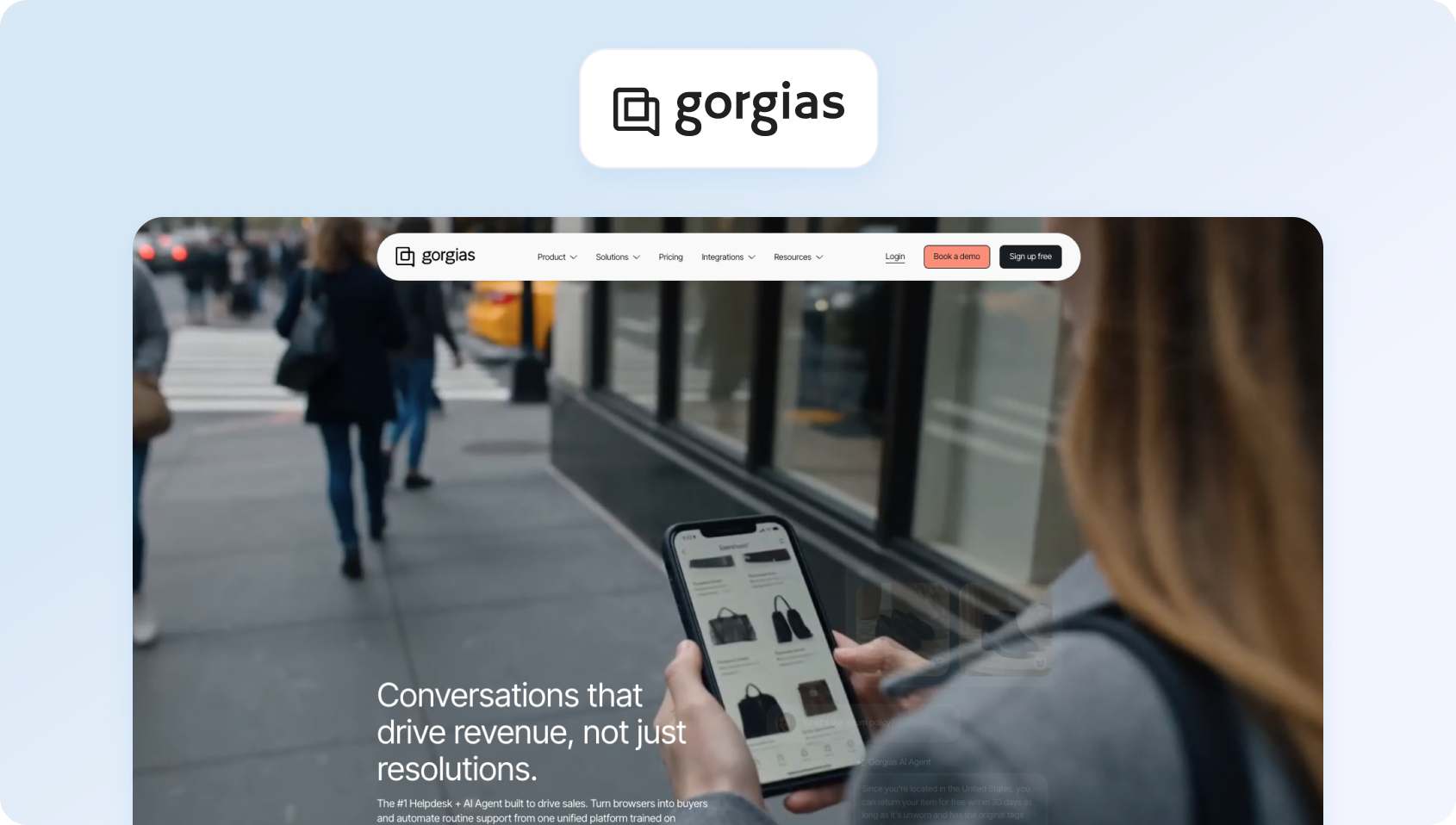
Gorgias delivers e-commerce help desk software purpose-built for Shopify, BigCommerce, and Magento stores. Strong integration of order context and social channel coverage, including Instagram, Facebook, and WhatsApp.
Best for: Shopify-focused stores wanting deep ecommerce integrations with social media support.
Key features:
- Order-aware ticketing with purchase history
- Email, chat, Facebook, Instagram, TikTok, WhatsApp, SMS
- AI Agent for automated resolutions
- Macros for returns, refunds, and order edits
- Revenue statistics and support performance
- Integration with Klaviyo, Recharge, Loop Returns, Yotpo
- Help center with unlimited articles
- Team management and SSO
Pricing:
- Starter: from $10/month (50 tickets)
- Basic: from $50/month (300 tickets)
- Pro: from $300/month (2,000 tickets)
- Advanced: from $750/month (5,000 tickets)
- Enterprise: Custom volume
- Overage: $36 per 100 tickets (Pro tier)
- AI Agent: $0.90-$1.00 per resolved conversation
Pros:
- Deep Shopify and e-commerce platform integrations.
- Strong social channel coverage, including WhatsApp.
- Order context automatically populates tickets.
- Affordable entry pricing for small stores.
- Purpose-built for retail workflows.
Cons:
- Ticket-based pricing creates unpredictable costs as you scale.
- Voice requires an add-on (not included in base pricing).
- Overages can spike bills during peak seasons.
- AI is charged separately per resolution.
- Limited WFM capabilities.
3. Zendesk
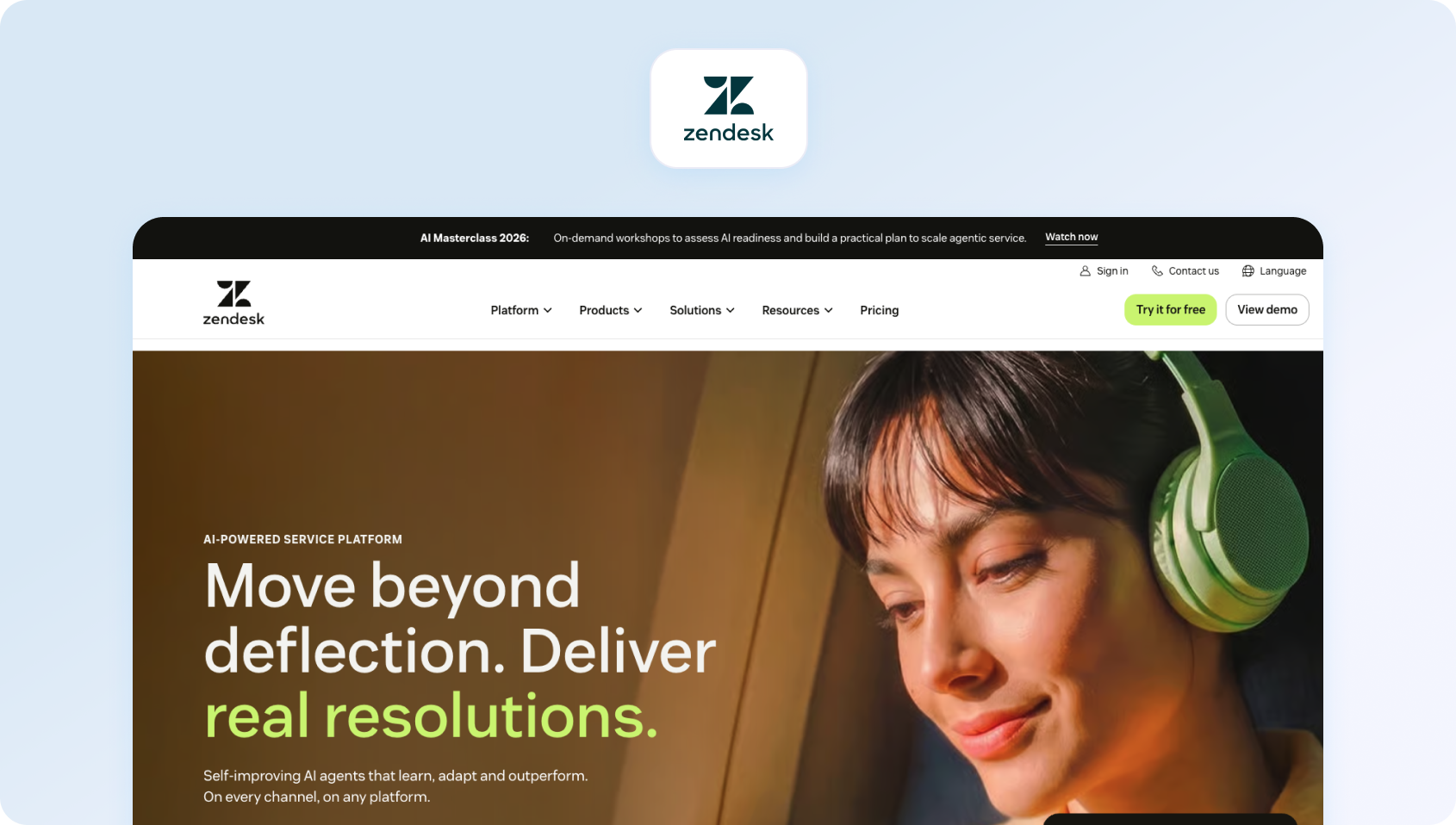
Zendesk provides a cloud-based help desk with e-commerce integrations available through marketplace apps. Strong for teams needing enterprise features beyond retail-specific workflows.
Best for: Large retailers needing robust reporting and extensive integrations beyond commerce.
Key features:
- Omnichannel ticketing
- Marketplace apps for Shopify, BigCommerce, WooCommerce
- Knowledge base with multilingual support
- Answer Bot for basic automation
- Workflow automation and routing
- Advanced analytics
- Voice via Zendesk Talk (add-on)
- WFM and QA (add-ons: $25-$35/agent/month each)
Pricing:
- Suite Team: $55/agent/month (annual)
- Suite Professional: $115/agent/month (annual)
- Suite Enterprise: $169/agent/month (annual)
Pros:
- Mature platform with extensive integrations.
- Enterprise-grade security and compliance.
- Strong reporting and analytics.
- Large marketplace ecosystem.
Cons:
- Not ecommerce-specific; requires marketplace apps.
- Costs escalate with essential add-ons.
- Voice requires a separate Talk add-on.
- Generic workflows need customization for retail.
- Complex for small e-commerce stores.
4. Freshdesk
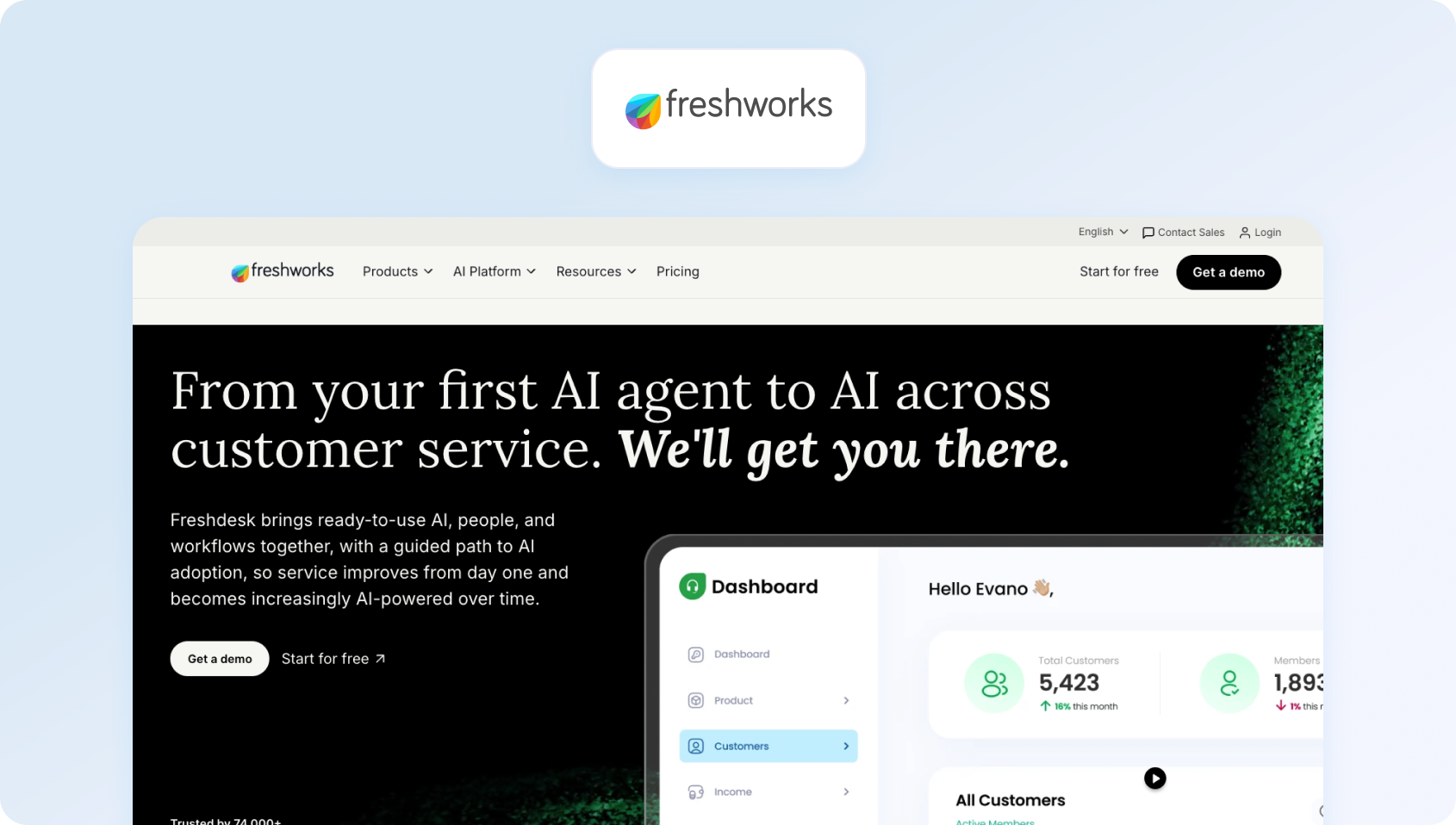
Freshdesk offers cloud-based ticketing with e-commerce integrations through apps. Affordable entry point with AI features as add-ons.
Best for: Small- to mid-sized ecommerce stores looking for affordable ticketing basics.
Key features:
- Ticketing with automation
- Email and social support
- Knowledge base for self-service
- Team collaboration (collision detection, internal notes)
- Marketplace apps for commerce platforms
- AI Copilot (add-on: $29/agent/month)
- Freddy AI Agent (add-on: usage-based)
Pricing:
- Free: $0 (up to 2 agents for 6 months)
- Growth: $23/agent/month
- Pro: $66/agent/month
- Enterprise: $107/agent/month
Pros:
- Affordable pricing for small teams.
- Free plan for initial testing.
- Good marketplace for basic integrations.
- Straightforward setup.
Cons:
- E-commerce features require third-party apps.
- Voice not native (needs integration).
- AI capabilities are paid add-ons.
- Limited order context without customization.
- Basic WFM capabilities.
5. Intercom

Intercom combines chat, an AI chatbot, and basic ticketing with a focus on proactive messaging. Strong for SaaS but adapts to e-commerce through integrations.
Best for: E-commerce businesses prioritizing proactive chat and product education.
Key features:
- Fin AI chatbot (KB-grounded)
- Live chat and messaging
- Product tours
- Basic ticketing
- Help center
- Reporting dashboards
- Multilingual chatbot support (45+ languages)
Pricing:
- Essential: $39/seat/month (annual)
- Advanced: $99/seat/month (annual)
- Expert: $139/seat/month (annual)
- Fin AI: $0.99 per resolved conversation
Pros:
- Strong proactive messaging capabilities.
- Modern chatbot for a better customer experience.
- Good for product education.
- Multilingual AI support.
Cons:
- Not ecommerce-specific.
- No native voice support.
- Limited order management features.
- Costs increase with conversation volume.
- Missing retail-specific automation.
6. Richpanel
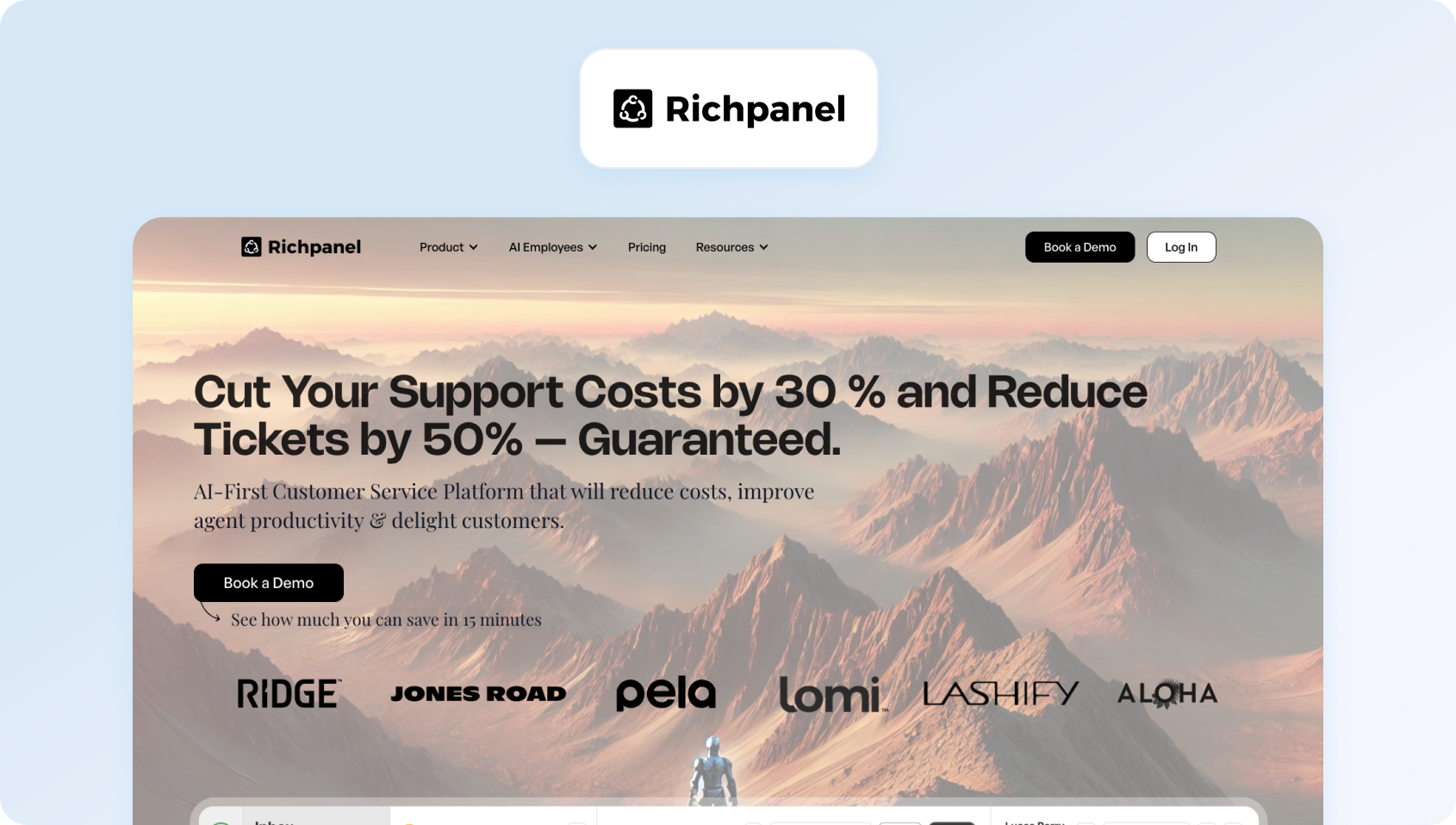
Richpanel delivers an e-commerce help desk focused on self-service portals, reducing support ticket volumes. Strong Shopify integration with order tracking and returns automation.
Best for: E-commerce brands looking to reduce agent workload through customer self-service.
Key features:
- Self-service portal (order tracking, returns, exchanges)
- Multi-channel support (email, chat, social, SMS)
- Shopify/ecommerce integrations
- Ticketing and automation
- AI-powered help center
Pricing:
- Pro: $89/agent/month
- Pro Max: $119/agent/month
- Enterprise: Custom
- Self-Service Portal: $99/month add-on
Pros:
- Strong self-service reduces ticket volumes.
- Good Shopify integration.
- Built for ecommerce workflows.
- Order management features.
Cons:
- No native voice.
- Higher pricing than some competitors.
- Limited WFM.
- Smaller brand recognition.
- Best for Shopify; other platforms need work.
7. Re:amaze
Re:amaze provides helpdesk for ecommerce consolidating multi-channel support. Good Shopify and WooCommerce integrations with order context.
Best for: Small ecommerce stores wanting affordable multi-channel support.
Key features:
- Multi-channel (email, social, SMS, chat)
- Order and customer data integration
- Shared inbox
- Chatbots and canned responses
- Knowledge base
- Customer profile with purchase history
Pricing:
- Basic: $29/user/month
- Pro: $49/user/month
- Plus: $69/user/month
- Starter: $59/month (flat, unlimited users)
Pros:
- Affordable for small teams.
- E-commerce platform integrations.
- Order context in tickets.
- Flat-rate Starter option.
Cons:
- Voice requires third-party integration.
- Limited AI capabilities.
- Basic reporting.
- Smaller ecosystem.
- Limited WFM.
8. Gladly
Gladly organizes support around customers rather than tickets, maintaining conversation threads across all channels throughout customer relationships.
Best for: Premium ecommerce brands emphasizing personalized, relationship-driven support.
Key features:
- Conversation-based (no ticket numbers)
- Omnichannel (voice, SMS, email, chat, social)
- Customer profile with full history
- Self-service options
- E-commerce integrations
Pricing:
- Custom pricing (contact sales)
Pros:
- Unique people-first approach.
- Continuous conversation threads.
- Native omnichannel, including voice.
- Good for high-value customers.
Cons:
- Custom pricing is typically expensive.
- Requires a workflow mindset shift.
- Less automation than AI-first platforms.
- Smaller integration marketplace.
- Not ideal for high-volume transactional support.
9. Kustomer

Kustomer provides a CRM platform with timeline views that show the full history of customer interactions. Good for complex ecommerce journeys requiring context.
Best for: E-commerce operations needing a unified customer view across touchpoints.
Key features:
- Customer timeline with interaction history
- Omnichannel support
- Workflow automation
- Knowledge base
- E-commerce integrations
- Analytics
Pricing:
- Enterprise: $89/seat/month (annual, 8-seat minimum)
- Ultimate: $139/seat/month (annual)
- AI Agents: $0.60 per conversation
Pros:
- Strong customer context across channels.
- Good for complex journeys.
- Workflow automation capabilities.
- Omnichannel included.
Cons:
- Premium pricing with minimums.
- Complex setup.
- Voice/SMS billed separately.
- Limited retail-specific features.
- Smaller brand than Zendesk.
10. Zoho Desk

Zoho Desk offers context-aware ticketing with e-commerce integrations through the Zoho ecosystem. Affordable option for budget-conscious stores.
Best for: Small ecommerce stores in the Zoho ecosystem wanting an affordable help desk.
Key features:
- Ticketing with automation
- Multi-channel support
- Knowledge base
- AI assistant (Zia)
- SLA management
- E-commerce integrations via the Zoho ecosystem
Pricing:
- Free: $0 (up to 3 users)
- Express: $9/user/month
- Standard: $20/user/month
- Professional: $35/user/month
- Enterprise: $50/user/month
Pros:
- Very affordable pricing.
- Good for Zoho users.
- AI is included in the upper tiers.
- Basic e-commerce integrations.
Cons:
- Interface feels dated.
- Voice needs separate integration.
- Limited retail-specific features.
- Smaller marketplace than competitors.
- Best within the Zoho ecosystem.
What to Look For in E-commerce Help Desk Software in 2026
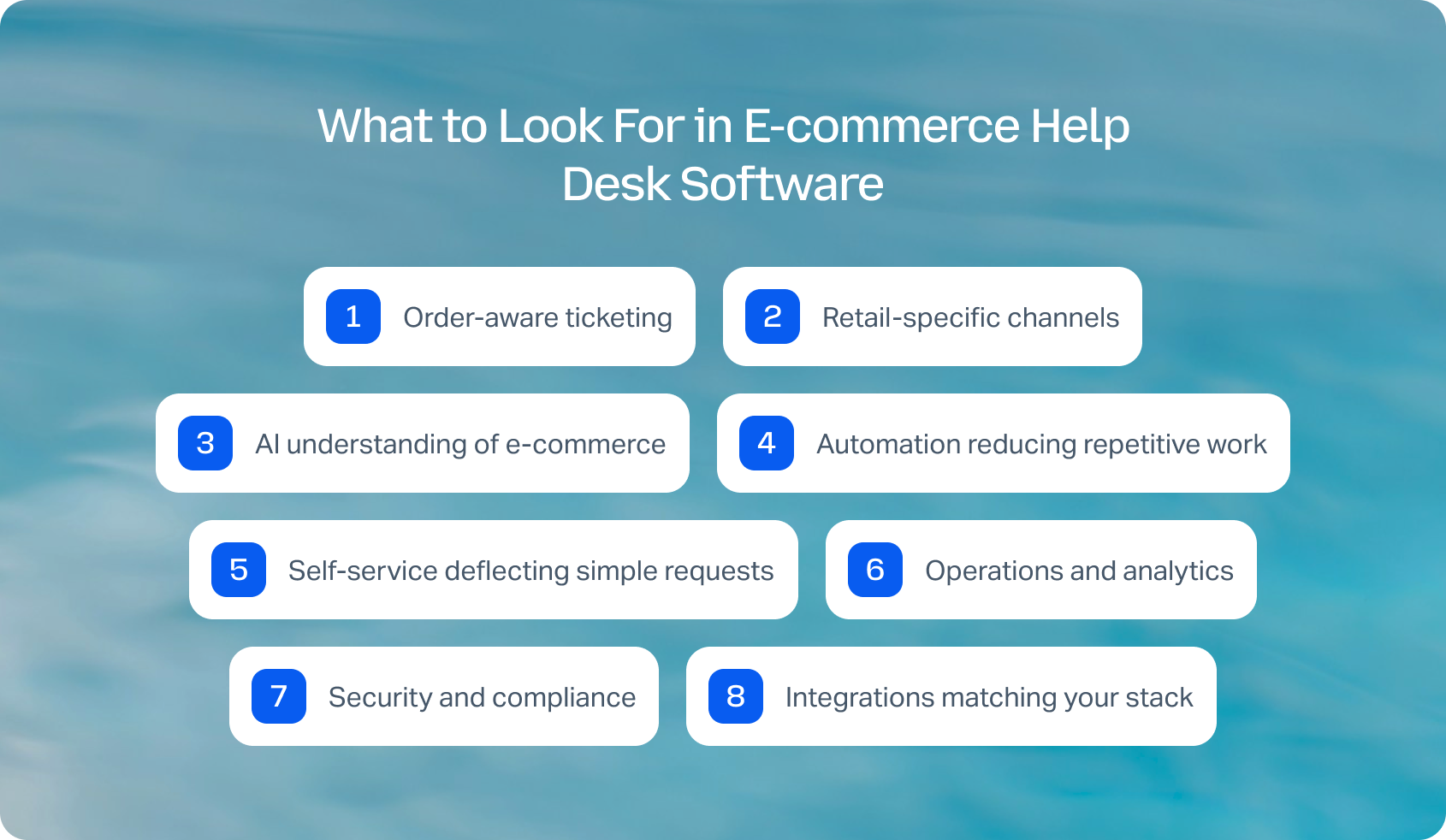
- Order-aware ticketing: Customer and order timelines in every ticket, showing purchase history, current order status, and past interactions. Macros enable agents to process refunds, create exchanges, edit orders, or resend confirmations without leaving the help desk.
- Retail-specific channels: Email, live chat, voice, SMS/WhatsApp, Instagram/Facebook DMs, and TikTok support. Capture marketplace messages from Amazon, eBay, or other platforms. Native integrations beat third-party middleware, which requires constant maintenance.
- AI understanding of e-commerce: Transcription and ticket summaries, reducing manual work. Intent detection automatically identifies WISMO, returns, cancellations, or pre-sale questions. AI-powered knowledge management to ground responses in store policies and prevent wrong information. Proactive messaging alerting customers about delays. Multilingual support through AI-powered chat and voice.
- Automation reducing repetitive work: No-code flows handling WISMO updates, return request processing, exchanges, cancellations, and back-in-stock alerts. Event triggers automatically respond to shipments, deliveries, or refunds. Reduce customer support calls through proactive automation.
- Self-service deflecting simple requests: Order tracking portals, address change windows, returns/exchanges, and warranty claims handled without agents. Escalate complex issues to human support with full context rather than starting over, improving help desk support efficiency.
- Operations and analytics: SLA tracking by channel, store, or region. Backlog aging and reopen rates reveal problem areas. Contact rate per order, WISMO percentage, FCR, AHT, and customer satisfaction metrics. Promo and seasonality dashboards. WFM forecasting peak volumes.
- Security and compliance: SSO/MFA, role-based access, audit logs, PII redaction, GDPR compliance. PCI-aware workflows when handling payment references, protecting customer data.
- Integrations matching your stack: Native apps for Shopify, BigCommerce, WooCommerce, Magento. Logistics integrations (carriers, 3PLs). Payment processor connections. Reviews and loyalty platforms. BI tools. Open APIs and webhooks for custom workflows.
Honest pricing: Seat-based versus usage models (tickets, SMS, WhatsApp, minutes). AI add-ons and their operational costs. Marketplace app fees. Avoid platforms paywalling core features like WhatsApp, voice, or returns automation behind enterprise tiers.
If you're evaluating e-commerce help desk software, don't just compare feature lists. Try a 14-day free trial to see how BlueTweak combines AI agents, omnichannel communication, workforce management, and quality assurance in one platform with transparent pricing.
How We Evaluated These E-Commerce Customer Service Platforms
We reviewed vendor websites, pricing pages, documentation, help centers, and marketplaces. Features were verified against official sources and cross-referenced with published customer stories.
Pricing reflects publicly listed rates as of January 2026. Custom pricing notes “Contact sales.”
Pros and cons derive from documented capabilities and verified feedback, not marketing promises. This evaluation uses public information subject to change; verify directly with vendors before purchasing.
Must-Have Capability Checklist for Customer Support Software
- Order-aware ticketing with timeline and quick actions
- Social/WhatsApp + SMS + voice + chat + email
- AI: summaries, KB-grounded replies, WISMO/returns intents
- Self-service: order tracking, returns/exchanges
- Automations: no-code flows, event triggers
- Analytics: contact rate/order, WISMO %, FCR, AHT, CSAT
- WFM/QA (native or first-party)
- Security/admin: SSO/MFA, roles, audit, GDPR
- Integrations: commerce, logistics, payments, BI
- Transparent pricing (no paywalled core features)
BlueTweak meets all criteria with transparent pricing of €65/agent/month.
Scoring Rubric
- Order context depth: Purchase history, quick actions, timeline visibility
- Channel coverage: WhatsApp/Instagram/SMS/voice plus email/chat
- AI and automation: WISMO/returns handling, KB-grounded responses
- Self-service effectiveness: Deflection rates, escalation quality
- WFM/QA: Forecasting, scheduling, quality assurance
- : Implementation speed, ROI timeline, and response time
Total cost: Seat/usage fees, overages, add-ons, realistic TCO
How to Choose the Best E-Commerce Help Desk Software
The best e-commerce help desk software should do far more than help you track tickets. As your business grows, you need a platform that brings every support conversation into one place, connects with your e-commerce platform and other business systems, and gives agents the tools they need to resolve customer inquiries quickly and consistently.
When comparing vendors, look beyond feature checklists. Consider how each platform performs across the areas that have the biggest impact on your customer experience and operational efficiency:
- Order-aware ticketing with complete customer context
- Omnichannel support, including email, live chat, voice, WhatsApp, and social media
- Advanced AI features, such as knowledge-base-grounded responses, customer sentiment analysis, ticket routing, and workflow automation
- Customer self-service capabilities, including knowledge base articles and self-service portals
- Reporting, workforce management, and analytics that help you improve service level agreements and agent efficiency
- Transparent pricing, integrations, security, and scalability as your support operation grows
If your team is managing high ticket volumes, supporting multiple brands, or relying on disconnected support tools, choosing a unified platform can significantly reduce manual work while improving ticket resolution and customer satisfaction.
For growing e-commerce teams, BlueTweak stands out by combining omnichannel communication, AI-powered automation, native voice, workforce management, quality assurance, and multilingual support in one platform. Instead of stitching together multiple tools, your team can manage every customer interaction from a single workspace while delivering faster, more consistent support.
Book a personalized demo to see how BlueTweak can help you deliver faster, more consistent customer support.

As Head of Digital Transformation, Radu looks over multiple departments across the company, providing visibility over what happens in product, and what are the needs of customers. With more than 8 years in the Technology era, and part of BlueTweak since the beginning, Radu shifted from a developer (addressing end-customer needs) to a more business oriented role, to have an influence and touch base with people who use the actual technology.



