



TL;DR
The best multilingual customer support software combines AI-powered translation, native voice, omnichannel support, and knowledge-driven automation in one platform. This guide compares 10 leading multilingual customer support platforms for 2026, with BlueTweak standing out for unified AI, transparent pricing, and fast deployment for global customer support teams serving international customers. Learn which solution best fits your global support operation.
Supporting customers across multiple languages shouldn't mean juggling disconnected translation tools, fragmented channels, or inconsistent customer experiences. Today's global support teams need multilingual customer support software that combines AI, voice, chat, and email into one intelligent platform. BlueTweak is one of the leading AI-powered platforms designed to meet those demands, bringing multilingual support, omnichannel communication, and intelligent automation together in a single workspace.
This guide compares the best multilingual customer support platforms for 2026, evaluating multilingual AI capabilities, omnichannel coverage, analytics, workforce management, and pricing transparency. If you're looking for the best AI tools for multilingual customer service, we'll help you find the right platform for your team.
What to Look for in Multilingual Customer Support Software
Choosing the right multilingual customer support software goes beyond translating conversations. The best platforms help global support teams deliver fast, consistent service across every channel, while giving agents the AI tools and context they need to resolve issues efficiently.
As customer expectations continue to rise, support teams must communicate in customers' preferred languages across chat, email, and voice, without forcing them to repeat information or switch between disconnected systems. Foundational data from CSA Research suggests that 68% of consumers prefer to receive customer service in their native language.
As we move through 2026, meeting those expectations has become a strategic priority. According to Gartner, 91% of customer service leaders are under executive pressure to deploy AI that improves customer satisfaction and delivers measurable business value. For global organizations, that starts with removing language barriers and embedding AI directly into multilingual customer support workflows.
When evaluating multilingual customer support software, support leaders should ask:
- Can agents switch between channels without losing context?
- Does AI genuinely help resolve cases faster, rather than adding complexity?
- Can you measure KPIs such as First Call Resolution (FCR) and Abandon Rate by language and region?
This guide compares the best multilingual customer support software platforms for 2026, helping you identify the right solution for your team based on AI capabilities, omnichannel support, analytics, workforce management, and pricing transparency.
Not sure which capabilities matter most for your team? Book a personalized BlueTweak demo to see how AI-powered multilingual support, omnichannel communication, workforce management, and built-in analytics work together to help global support teams deliver faster, more consistent customer experiences.
The 10 Best Multilingual Customer Support Platforms for 2026
Every team has its own requirements varying by language coverage, channel mix, AI support, and reporting needs. We evaluated each platform in this list using publicly available product and pricing information, focusing on multilingual coverage, omnichannel depth, AI features embedded in agent workflows, reporting and workforce management capabilities, integration flexibility, and pricing transparency.
1) BlueTweak: Best for AI-Powered Multilingual Customer Support

Support teams looking to unify channels, reduce workload using AI, and maintain performance across multilingual conversations. Teams that need true omnichannel support with built-in AI and multilingual voice
BlueTweak is an omnichannel customer support app that unifies chat, voice, and email in a single workspace. Multilingual support is built into the agent workflow, rather than bolted on through third-party tools.
As a smart solution for global business support, BlueTweak enables customer support teams and the internal support team to manage conversations across chat, voice, email and social media using built-in translation tools and real-time context.
Key multilingual capabilities:
- Real-time chat translation
- Automatic language detection and routing
- Call transcription that links voice conversations to tickets
- Conversation summarization for faster handoffs
- Proposed replies grounded in a smart knowledge base
Because voice is native, agents can move from a call to chat or email without losing context. Transcripts and summaries are stored directly in the case record, reducing after-call work and improving First Call Resolution.
BlueTweak also includes built-in analytics and workforce management features, allowing managers to track KPIs such as Abandon Rate, Concurrency, and Sentiment by language and channel.
Strengths:
- True omnichannel support across chat, voice, and email
- AI features embedded directly in the agent workflow
- Smart knowledge base that powers proposed replies
- Open API and integration-friendly architecture
"Multilingual support shouldn't rely on disconnected translation tools... AI should work alongside agents by understanding language, preserving context, and helping teams resolve conversations faster across every channel. That's why we built BlueTweak with multilingual AI embedded directly into the workflow, rather than treating it as an add-on." — Radu Dumitrescu, Head of Presales & Digital Transformation at BlueTweak
Pricing:
BlueTweak is priced at €65 per agent per month, all-in, covering ticketing, omnichannel, AI chatbot, AI voicebot, copilot tools, workforce management, QA, analytics, and integrations. There is no feature gating, and the price includes unlimited users and integrations.
AI usage is priced separately per interaction, with a transparent and predictable model: conversational AI for chat is billed at €0.20 per resolved chat session, AI-proposed email replies at €0.40 per email thread when used by agents, and conversational AI for voice at €0.09 per minute, billed only when a call is completed without agent intervention.
Wondering what multilingual AI could save your support team? Use BlueTweak's ROI Calculator to estimate reductions in handling time, support costs, and operational overhead before booking a demo.
2) Zendesk
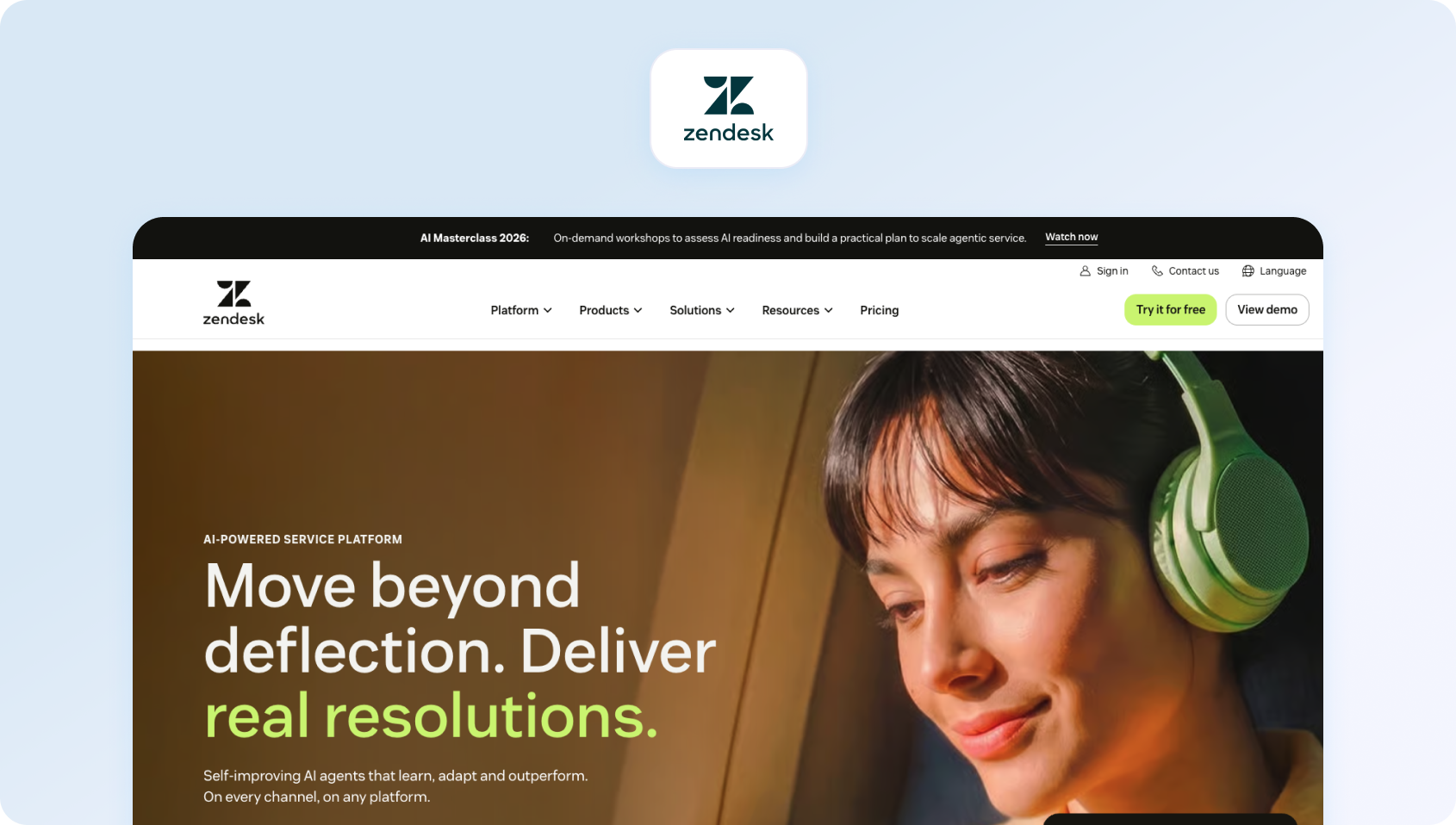
Zendesk offers global language support across chat, email, and help center content, with translation available through native features and integrations. Zendesk is often chosen by large or distributed customer support teams that need a proven ticketing system with broad language coverage and strong governance. For organisations prioritising stability, compliance, and ecosystem breadth over deep AI-driven workflow automation, Zendesk remains a familiar and trusted option.
AI features include automated replies, routing, and summarization, though some advanced capabilities depend on add-ons or higher-tier plans.
Voice support is available through Zendesk Talk, but handoff between voice and digital channels may require additional configuration.
Strengths
- Large integration marketplace
- Mature ticketing and reporting
- Widely adopted by global teams
Considerations
- Multilingual AI depth varies by plan
- Costs can increase with add-ons
Pricing
Zendesk’s most popular Suite Professional plan is priced at $115 per agent/month for Suite Professional (with more advanced routing and analytics). However, there are cheaper options for those who only want basic AI features. Enterprise-level pricing requires contacting sales for a custom quote.
3) Intercom

Intercom is known for chat-led customer support, with multilingual chatbot capabilities and automated responses. Translation and language handling are strongest in chat, while voice support is more limited compared to more traditional omnichannel platforms.
Intercom works best for product-led teams where chat is the primary customer interaction channel and response speed matters more than full omnichannel depth, particularly for SaaS companies with high inbound volumes in a limited number of languages.
Strengths
- Strong conversational AI
- Fast deployment for chat support
- Good for inbound automation
Considerations
- Limited native voice support
- Multichannel reporting can be constrained
Pricing
Intercom’s Customer Service Suite pricing is tiered by seat: Essential at $29 per seat/month, Advanced at ~$85 per seat/month, and Expert at ~$132 per seat/month, billed annually. A Fin AI Agent is included and priced at around $0.99 per resolution when used with supported helpdesks.
4) Freshworks
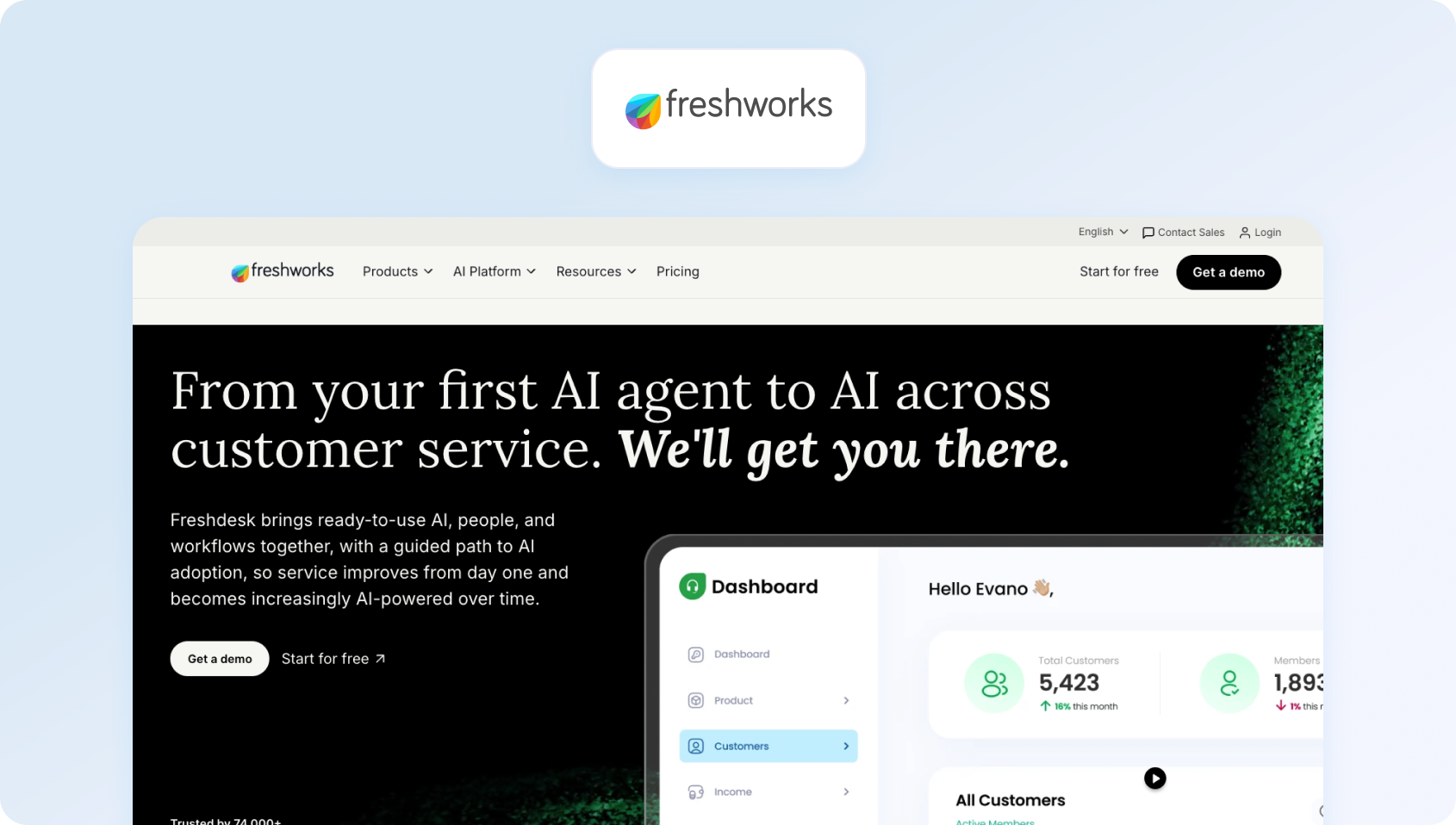
Freshworks supports multiple languages across email, chat, and phone, with built-in translation features and basic AI assistance. It offers a broad feature set at competitive pricing, though advanced AI and reporting features may require higher tiers.
Freshworks is often selected by growing teams that want multilingual coverage across core channels without the cost or complexity of enterprise platforms, making it a pragmatic choice for teams balancing budget, scale, and time-to-value.
Strengths
- Cost-effective entry point
- Supports multiple channels
- Easy to configure
Considerations
- AI capabilities are less deep than newer platforms
- Voice workflows may feel separated
Pricing
Freshworks offers multiple tiers, including a Free plan, a Blossom plan at $15 per agent/month, an Estate plan at $49 per agent/month, and a Forest plan at $79 per agent/month, all billed annually.
5) Salesforce Service Cloud
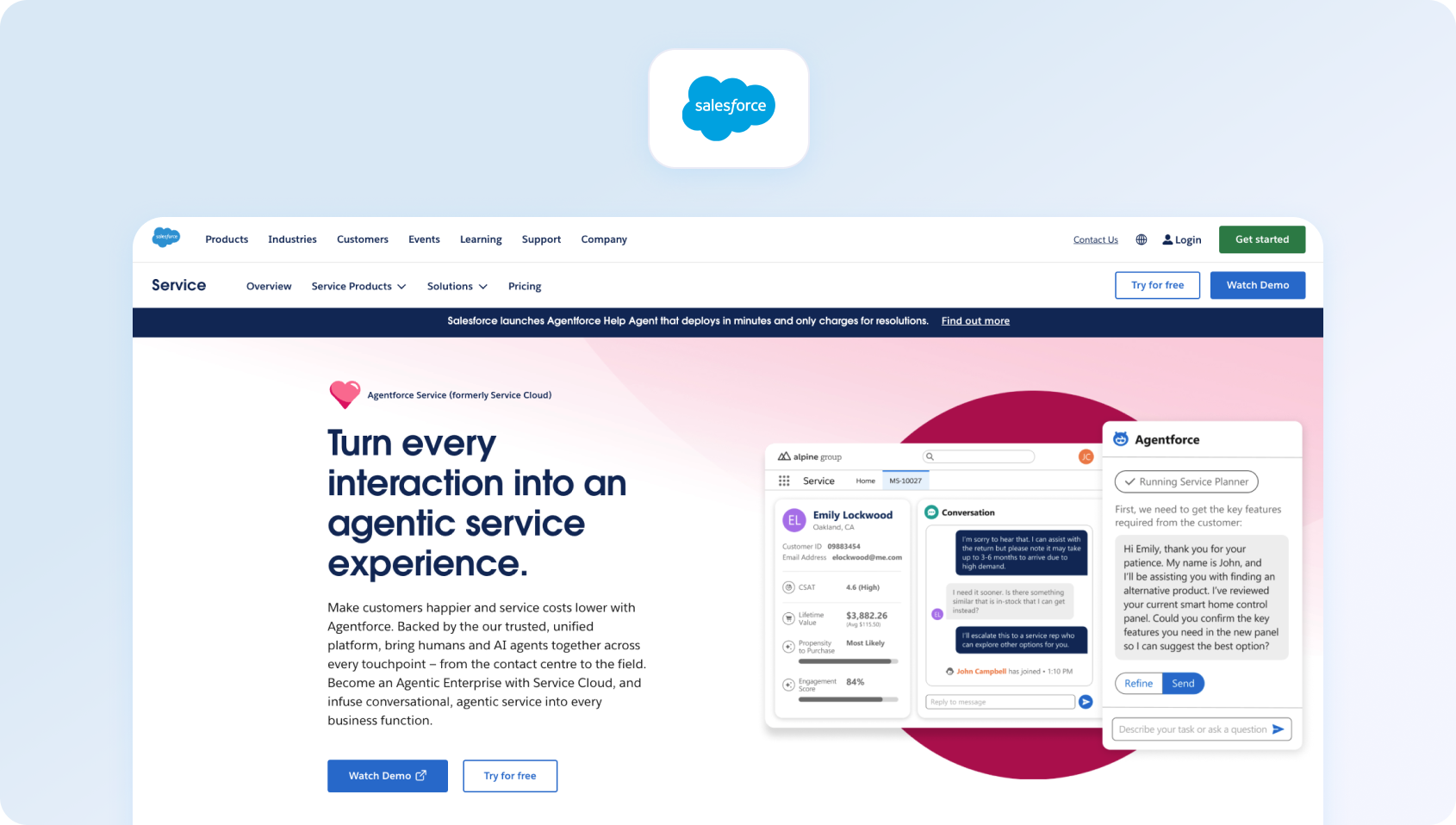
Salesforce Service Cloud offers global language support through its extensive CRM ecosystem, with AI features powered by Einstein. Multilingual functionality is strong, but configuration and time-to-value can be longer, especially for mid-market teams.
For enterprises already operating on Salesforce, Service Cloud’s multilingual capabilities benefit from shared customer data, automation, and reporting across the wider CRM, making it most compelling where service is tightly coupled to sales, marketing, and account management.
Strengths
- Deep CRM integration
- Advanced customization
- Enterprise-grade security
Considerations
- High complexity
- Longer implementation cycles
Pricing
Salesforce Service Cloud starts at $100 per user/month for the Starter Suite, with higher tiers including Enterprise at $175 per user/month and Unlimited at $350 per user/month, all billed annually. These tiers add deeper automation, real-time chat, AI features, and more advanced service intelligence.
6) Zoho Desk

Zoho Desk supports multilingual ticketing and customer portals, with AI assistance through Zia. Voice and chat are available, though omnichannel depth depends on how Zoho apps are combined.
Zoho Desk is particularly effective for teams already using Zoho CRM, telephony, or analytics, enabling multilingual support across departments without stitching together multiple vendors.
Strengths
- Competitive pricing
- Tight integration with Zoho tools
- Solid multilingual basics
Considerations
- AI and voice features vary by plan
- Reporting depth may be limited
Pricing
Zoho Desk’s pricing starts with a Free edition for up to three users, followed by paid plans with Express, Standard, Professional, and Enterprise packages at $9, $20, $35, and $50 per user per month, respectively. Feature access expands with higher tiers, including automation and multi-department support.
7) Kustomer

Kustomer focuses on customer timelines rather than tickets, with multilingual messaging and automation. Voice support exists, but some multilingual features depend on integrations.
Kustomer’s timeline-based approach can be valuable for multilingual support scenarios where historical context across languages matters, such as high-touch B2C or subscription businesses managing repeat interactions.
Strengths
- Unified customer view
- Strong automation
- Flexible data model
Considerations
- Can be complex to configure
- Pricing varies widely
Pricing
Kustomer’s pricing starts at $89 per seat/month for the Enterprise plan and $139 per seat/month for the Ultimate plan. Higher tiers unlock more advanced automation, analytics, and customization, and advanced AI capabilities are available as an add-on.
8) Dixa

Dixa offers omnichannel support with a particular emphasis on voice and real-time conversations. Multilingual routing and reporting are available, though AI translation features may require third-party tools.
Dixa is a strong fit for organisations where voice remains the dominant channel and real-time conversations matter more than advanced AI translation or automation depth.
Strengths
- Strong voice experience
- Real-time agent tools
- SLA-focused reporting
Considerations
- AI coverage varies
- Smaller ecosystem
Pricing
Dixa plans start at $39 per agent/month for Essential, $49 per agent/month for Professional, and $89 per agent/month for Enterprise (billed annually). Higher tiers unlock more advanced routing, analytics, and customization.
9) Language IO
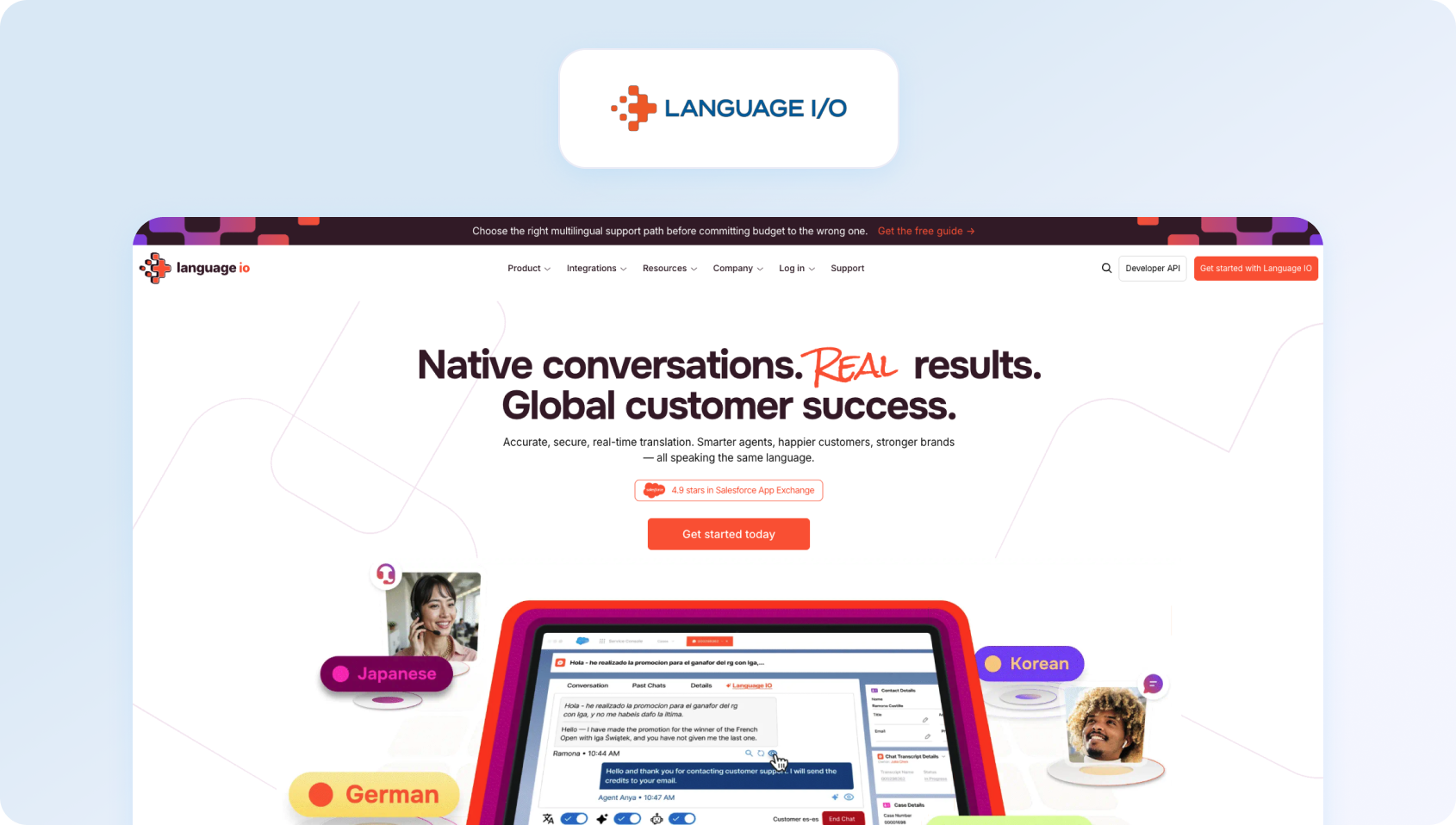
Language IO specializes in instant translation for customer support and integrates with platforms such as Zendesk and Salesforce. It is not a full customer support platform, but an add-on for multilingual coverage.
Language IO is best suited to organisations that already have an established support platform and need enterprise-grade translation quality layered on top, rather than a full multilingual support system.
Strengths
- High-quality translation
- Designed for support workflows
- Enterprise-ready
Considerations
- Requires an existing help desk
- No native omnichannel support
Pricing
Language IO offers three tiers, Pilot, Economy, and Premium, with custom pricing based on translation volume and usage. Exact costs are determined by interaction volume and deployment needs, and require contacting sales for a quote.
10) Help Scout
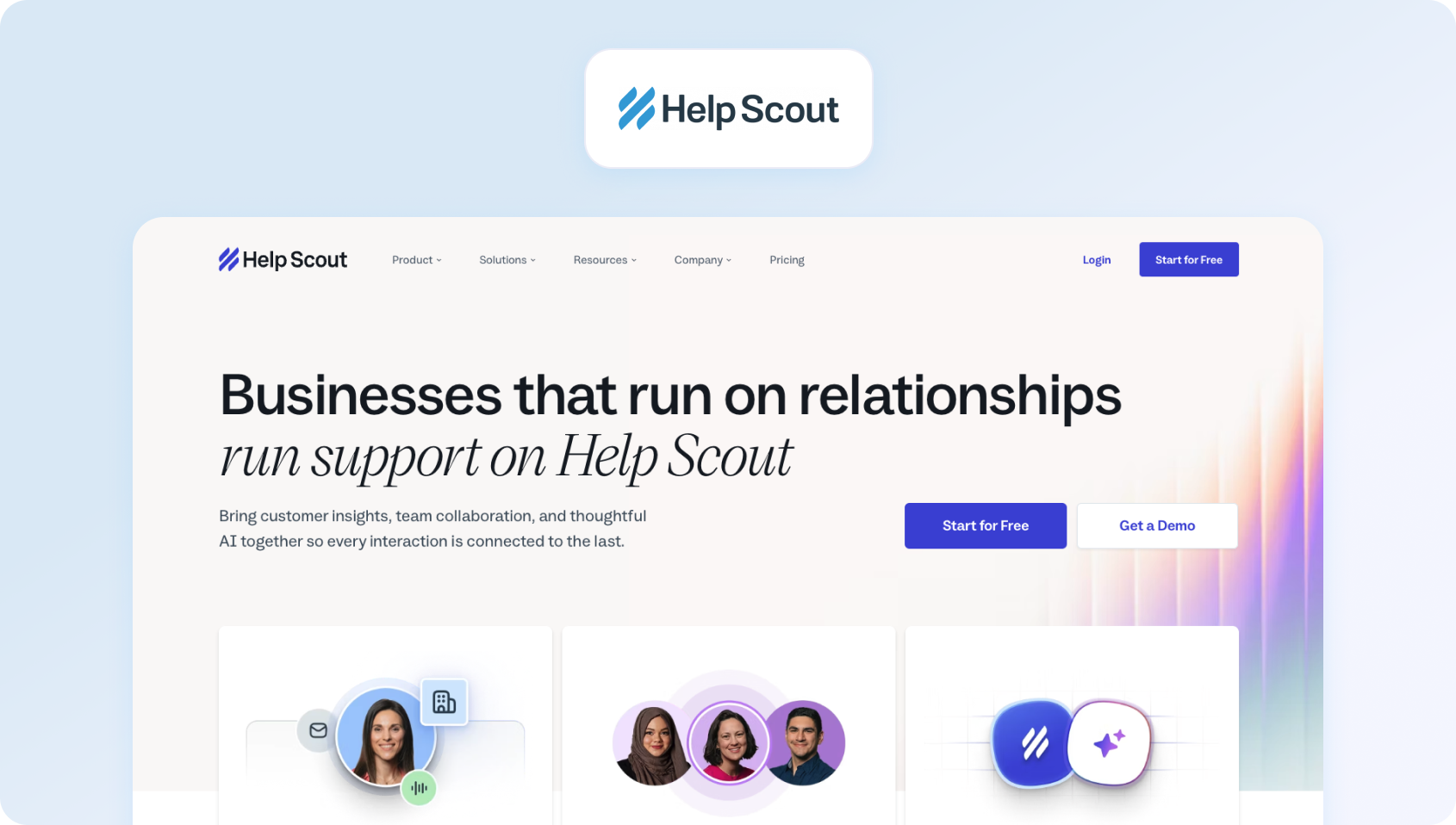
Help Scout supports multilingual email and knowledge base content, with a focus on simplicity.
AI and voice capabilities are limited compared to more comprehensive multilingual customer support software.
Strengths
- Clean, easy-to-use interface
- Strong email workflows
- Good documentation tools
Considerations
- Limited voice support
- Not designed for complex omnichannel operations
Pricing
Help Scout offers three main pricing tiers billed annually: Standard at $25 per user/month, Plus at $50 per user/month, and Pro at $75 per user/month. Help Scout also offers an optional AI Answers add-on, priced at $0.75 per resolution, which uses AI to suggest responses and help teams resolve routine customer queries faster.
Why Multilingual Support Matters in 2026
Global customers now expect support that feels local. Based on a foundational study by CSA Research, data suggests that 76% of consumers across 29 countries prefer information in their own language, and language preferences strongly influence both buying behaviour and loyalty. That expectation touches every part of your operation. In the same research, many customers indicated they would abandon purchases or switch brands if they couldn't access information or assistance in their own language, underscoring how language barriers still directly impact customer experience and revenue potential.
Teams increasingly need multilingual support and native voice capabilities, not just chat translation, along with seamless voice-to-ticket-to-chat handoffs so context is never lost. At the same time, organisations are feeling capacity strain: in a 2025 study, nearly 45% of leaders said expanding team capacity with digital labour was a top priority, second only to upskilling existing staff, a clear signal that support workloads are growing faster than human teams can sustainably manage. To keep up, AI must go beyond simple macros to support real agent workflows, including real-time translation, automatic transcription, conversation summarisation, and proposed replies grounded in the knowledge base.
As support expands across regions, leaders also need deeper reporting to track Service Level Agreement (SLA) performance by language, region, and channel, not just at the aggregate level.
The decision lens most teams use when choosing new software
When evaluating these support platforms, teams should look beyond surface-level translation services and assess whether the system can scale across various languages without adding operational complexity. Many global teams now adopt a hybrid model, where AI handles high-volume, repetitive interactions and human agents focus on complex or sensitive cases. This approach balances efficiency with empathy, while keeping costs predictable as support scales across regions.
When evaluating new customer support software, buyers tend to focus on five areas:
- Channels and voice handoff Chat, email, and calling should live on a single platform, with transcripts and tickets linked automatically.
- Language detection, translation, transcription, summaries, and suggested replies should be integrated directly into the agent workflow.
- Reporting and workforce management
SLA adherence, forecasting, and QA need language-level filters. - Integrations and administration
CRM, commerce, and analytics integrations should be standard, with open APIs for flexibility. - Seats, telephony minutes, translation usage, and QA effort all add up. Core AI features should not be hidden behind expensive add-ons.
KPIs directly affected by strong multilingual support workflows
The right multilingual customer support solution helps improve several key KPIs that directly impact customer satisfaction and operational efficiency. In an AI-powered multilingual support environment, these KPIs reflect how well a global support system helps agents work efficiently across multiple languages, while maintaining quality for customers speaking their native language:
- First Call Resolution (FCR): Measures the percentage of issues resolved on the first contact. Higher FCR reduces repeat interactions, boosts customer satisfaction, and lowers operational costs.
- Average Handle Time (AHT): Tracks the average time agents spend resolving a case. Optimized multilingual workflows and AI-assisted replies help reduce AHT without sacrificing quality.
- Containment and Deflection Rates: Show how many inquiries are resolved through self-service or AI channels, such as multilingual chatbots or voicebots, rather than escalating to agents. High rates free up agent capacity for complex issues.
- Abandon Rate: The percentage of customers who hang up or leave the channel before resolution. Effective language support and real-time translation reduce frustration and prevent abandonments.
- Concurrency Across Channels: Measures how many interactions an agent or bot can handle simultaneously. Platforms that unify voice, chat, and email improve concurrency, increasing efficiency and reducing wait times.
- Sentiment Score: Analyzes customer sentiment during interactions. Monitoring sentiment across languages helps identify at-risk customers and informs agent coaching.
- MOS (Mean Opinion Score/Voice Quality): Evaluates call clarity and audio quality. Maintaining high MOS ensures multilingual voice support is effective, especially when routing calls across regions.
For CFOs and COOs, the goal is clear: optimize these metrics to improve customer experience and operational efficiency without increasing tool sprawl or hidden costs, using platforms where AI and multilingual capabilities are built into the workflow rather than added as expensive add-ons.
Ready to improve multilingual support without adding complexity? Book a free BlueTweak demo to see how AI-powered translation, native voice, omnichannel support, and built-in workforce management help global teams improve KPIs such as First Call Resolution, Average Handle Time, and customer satisfaction.
What Support to Look For in 2026
.png)
With dozens of platforms claiming to be “AI-powered” or “global-ready,” it's important to understand what actually matters when evaluating multilingual customer support tools. Ultimately, strong multilingual support is a core pillar of any scalable customer-centric strategy, helping global teams deliver consistent, empathetic experiences across every market.
Modern multilingual customer service is about more than simply covering multiple languages. It's about helping customers communicate in their native language, reducing language barriers, and giving customer support teams the tools they need to resolve issues quickly and confidently across regions.
The most effective multilingual support tools offer in-app messaging, voice, and email in multiple languages, clearly document the languages supported, and make it easy to understand how many languages are available out of the box versus via add-ons or integrations.
As demand grows, AI tools for multilingual support are increasingly used to handle large volumes of requests quickly and efficiently, while human agents step in when nuance, judgment, or empathy is required. This hybrid operating model is becoming the standard for global support teams today.
Based on these real operational needs, the criteria below outline the capabilities that will separate viable solutions from legacy platforms as we move into 2026.
Channels
Calling, chat, and email should operate as a single, connected support experience. To give agents full context and improve resolution speed, reporting accuracy, and overall customer experience, you need to enable seamless handoffs between voice and digital channels, automatically transcribe calls, and link conversations to support tickets. This is especially important for email-based workflows, where poorly handledmultilingual customer support emails can quickly lead to delays, miscommunication, and repeat contacts.
AI capabilities
Many teams underestimate the complexity involved, and common challenges of implementing AI in customer support include accuracy, trust, and integrating AI cleanly into agent workflows.
Many AI-powered multilingual support platforms can automatically detect the language a customer is using, route the interaction accordingly, and resolve common issues without agent involvement. AI agents can autonomously handle tasks such as answering FAQs, categorizing issues, and summarizing conversations, allowing teams to manage higher volumes without increasing headcount.
Modern AI multilingual customer support tools should include:
- Automatic language detection and routing
- Real-time translation
- Speech-to-text transcription
- Conversation summarization
- Proposed or suggested replies
- Agent coaching and post-call notes
When implemented correctly, these translation tools and translation services help agents resolve issues faster without forcing customers to switch channels or repeat themselves.
Knowledge base
A smart knowledge base is essential for delivering fast, consistent customer support. AI responses should be grounded in approved content, with terminology enforced and sources visible, ensuring accurate self-service, trustworthy AI answers, and consistent knowledge management across agents and support channels. This becomes even more critical when usingAI translation in customer support, where accuracy, terminology control, and approved source content directly affect customer trust. In-house multilingual support, backed by a centralized knowledge base, gives companies greater control over brand voice and customer experience while reducing reliance on external translation services.
Operations and reporting
For support leaders, operations, and reporting capabilities underpin day-to-day coaching, forecasting, and performance oversight, especially in multilingual environments where visibility by language and channel matters.
Strong multilingual customer support solutions offer:
- SLA dashboards
- Forecasting and scheduling
- QA workflows
- Language-level reporting
Security and administration
Look for MFA, audit logs, granular role-based access controls, and data residency controls, especially in regulated markets. Strong security and administration features are essential for enterprise customer support platforms that handle sensitive customer data, meet compliance requirements, and support global teams.
Integrations
CRM, commerce, BI, and open APIs matter. The best customer service solutions integrate seamlessly with your existing tech stack, supporting translation management systems, language service providers, and other tools that enable scalable, multilingual support operations.
This flexibility is especially important for teams running complex multilingual support platforms that must integrate translation, CRM, and analytics without slowing agents down.
Pricing clarity
Seats and usage should be clearly separated. Transparent pricing models make it easier to forecast costs, compare vendors, and avoid unexpected charges tied to translation volume, AI usage, speech-to-text minutes, or telephony add-ons.
Ready to experience AI-powered multilingual customer support firsthand? Start your free 14-day BlueTweak trial (no credit card required) and see how multilingual AI, native voice, omnichannel support, and built-in analytics help your team deliver faster, more consistent customer experiences.
How We Evaluated These Customer Support Software Solutions
To accurately compare these solutions, we reviewed a range of public product documentation, pricing pages, and help resources for each platform.
The evaluation focused on:
- Supported channels, including voice
- Multilingual AI features such as translation, transcription, summarization, and proposed replies
- Knowledge base integration
- Analytics, workforce management, and reporting
- Security, administration, and integrations
We also considered time-to-value, as most modern multilingual support platforms can be live in days rather than months, following a small number of core setup steps.
If a vendor does not clearly publish pricing or multilingual support details on their website, we've clearly disclosed this to reflect that availability and cost can change by tier, usage, or contract.
Must-Have Capability Checklist
A multilingual support team is only as effective as the people behind it, and platforms that support diverse hiring and inclusive workflows give organizations a long-term advantage.
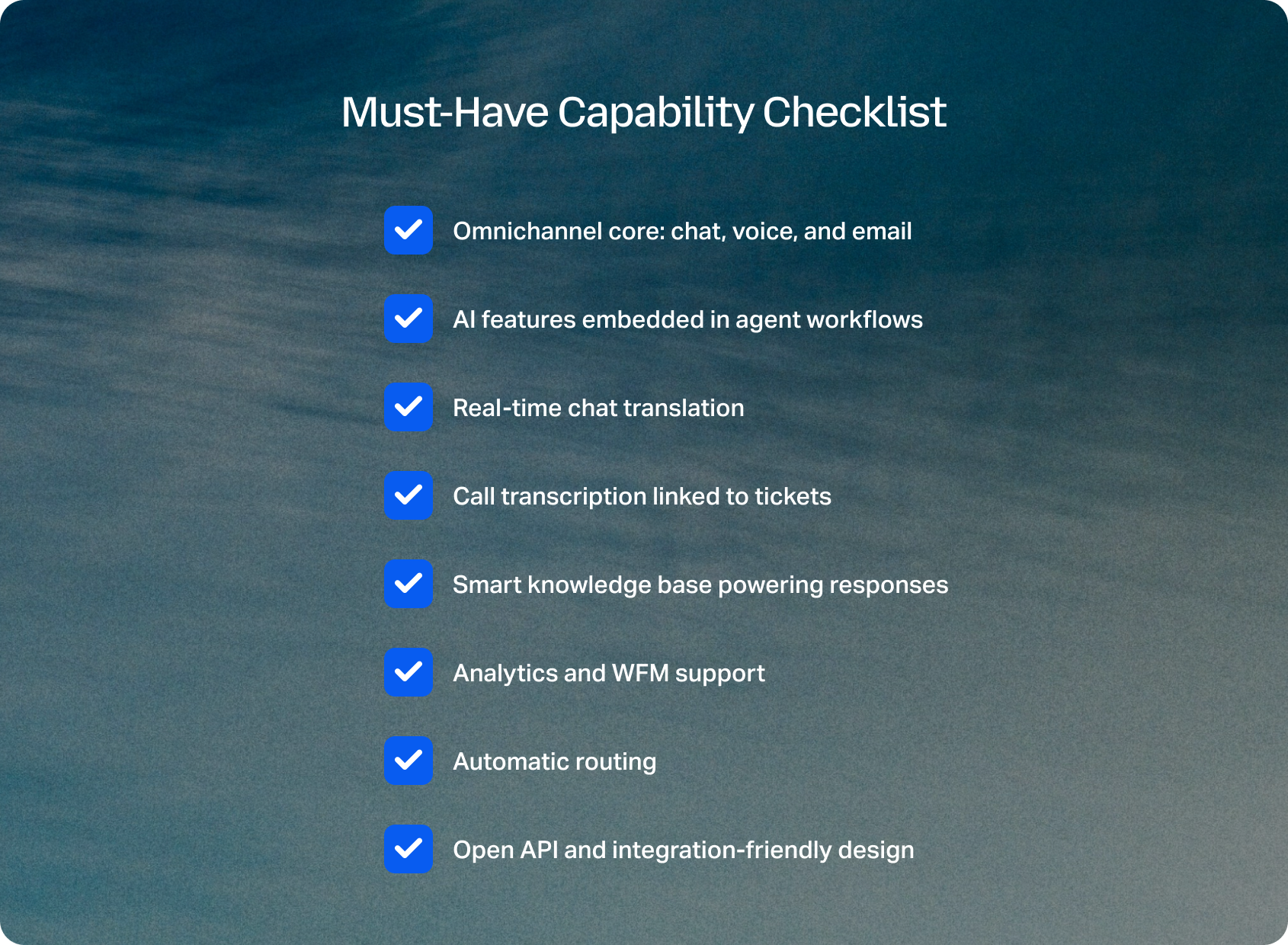
To evaluate each platform consistently, we assessed whether it met the following core requirements for modern, multilingual customer support operations:
- Omnichannel core: chat, voice, and email
- AI features embedded in agent workflows
- Real-time chat translation
- Call transcription linked to tickets
- Smart knowledge base powering responses
- Analytics and WFM support
- Automatic routing
- Open API and integration-friendly design
The BlueTweak app meets all of these requirements by combining multilingual support, omnichannel ticketing, and AI-powered automation into a single, unified platform. Removing feature gating and simplifying pricing enables global support teams to scale efficiently without compromising agent productivity, customer experience, or operational visibility.
Scoring Rubric
To ensure a fair, consistent comparison across all platforms, we assessed each solution against a clear set of operational, technical, and commercial criteria that matter most to modern, multilingual support teams:
- Fit for 20–100 agents
- Voice and omnichannel depth
- AI coverage for multilingual workflows
- WFM and QA capabilities
- Time-to-value
- Total cost to operate
- Security and administrative control
The Business Benefits of Native Language Support
Providing native-language support delivers measurable ROI by reducing friction in customer interactions and improving resolution speed across communication channels. When support is delivered in the customer's preferred language, conversations are clearer, response times improve, and issues are resolved faster, helping customers feel heard while lowering repeat contacts and support costs.
For teams serving a diverse customer base, native-language support also helps protect revenue as companies scale into new markets. Consistently speaking the customer's language across multilingual email, chat, and voice channels helps global teams deliver multilingual support that feels local, strengthening brand voice, increasing retention, and supporting expansion without proportional increases in headcount, even as global presence grows.
Modern platforms move beyond basic translation services or tools like Google Translate by embedding AI tools directly into the workflow. With instant translation, summaries, and intelligent routing, support teams can handle higher volumes of customer interaction across a global customer base more efficiently—improving agent productivity, maintaining accuracy and tone, and delivering operational efficiency at scale.
How Multilingual Support Has Evolved
Multilingual support is no longer about reacting to language gaps with delays; it's a core operational capability. Responding to customers in their native language has become a baseline expectation in 2026, directly improving customer retention by building trust and reducing confusion across languages.
Early approaches relied heavily on post-interaction translation or region-specific teams working in silos. That model struggled to scale and often created inconsistent customer experiences across markets.
In 2026, the focus has moved to real-time, AI-assisted multilingual support that allows global teams to operate as one. According to the World Economic Forum's 2025 Future of Jobs Report, organisations increasingly expect AI to improve human work rather than replace it, with customer-facing roles among those most impacted by real-time language, transcription, and summarization technologies.
This reflects a broader shift: businesses are no longer asking whether AI belongs in support workflows, but how deeply it should be embedded to improve speed, quality, and consistency across languages.
Looking beyond 2026, multilingual support is likely to become largely invisible to the customer. Language detection, translation, transcription, and summarization will increasingly happen automatically in the background, across voice and digital channels, without agents needing to manage separate tools or workflows. The differentiator won't be who offers multilingual support, but who can deliver it without friction, preserving tone, intent, and context at scale.
As global customer bases grow and support interactions become more complex, the next phase of multilingual support will be defined less by translation accuracy alone and more by how seamlessly language intelligence is woven into the entire customer experience, from first contact to resolution and reporting.
By embedding AI-powered translation and multilingual tools directly into daily workflows, support teams can offer multilingual support at scale and achieve true global coverage without sacrificing accuracy or efficiency. This evolution is pushing organizations to rethink how language, data, and customer experience work together, helping them foster loyalty and gain a competitive advantage in a particular market.
Turning Multilingual Support Into a Growth Advantage
The best multilingual customer support software in 2026 does more than translate conversations. It brings AI, omnichannel communication, and operational visibility together to help global teams deliver faster, more consistent customer experiences at scale. When comparing platforms, look beyond language coverage and evaluate how effectively they combine AI-powered translation, intelligent routing, call transcription, knowledge-based replies, and analytics within a single workflow.
For organizations that need chat, voice, and email to work seamlessly together, BlueTweak is a strong choice. As an AI-powered multilingual customer support platform, it reduces tool sprawl, accelerates time-to-value, and helps agents focus on what matters most: resolving customer issues with speed, accuracy, and empathy.
Whether you're expanding into new markets or improving support for an existing global customer base, investing in the right multilingual customer support software can strengthen customer loyalty, improve operational efficiency, and create a lasting competitive advantage.
Ready to experience AI-powered multilingual customer support for yourself? Start your free 14-day BlueTweak trial (no credit card required) and discover how multilingual AI, native voice, omnichannel support, workforce management, and built-in analytics help global support teams deliver exceptional customer experiences.

As Head of Digital Transformation, Radu looks over multiple departments across the company, providing visibility over what happens in product, and what are the needs of customers. With more than 8 years in the Technology era, and part of BlueTweak since the beginning, Radu shifted from a developer (addressing end-customer needs) to a more business oriented role, to have an influence and touch base with people who use the actual technology.



