


Radu Dumitrescu

As Head of Digital Transformation, Radu looks over multiple departments across the company, providing visibility over what happens in product, and what are the needs of customers. With more than 8 years in the Technology era, and part of BlueTweak since the beginning, Radu shifted from a developer (addressing end-customer needs) to a more business oriented role, to have an influence and touch base with people who use the actual technology.
Recent articles

Enhancing Customer Experiences through Immersive CX
In today’s rapidly evolving business landscape, delivering exceptional customer experiences (CX) has become a top priority for organizations across industries. According to a recent report, an impressive 77% of business leaders have witnessed a positive return on investment (ROI) by investing in immersive experiences for their customers. This highlights the significant impact immersive CX can have on customer satisfaction, loyalty, and ultimately, business success. But what exactly does immersive CX entail, and how can businesses leverage it effectively? In this article, we explore the concept of immersive CX and provide key recommendations for organizations aiming to enhance their customer interactions.
Understanding Immersive CX
Immersive CX refers to customer interactions that seamlessly integrate technology and human touchpoints to create fluid, natural experiences. It goes beyond traditional customer service models, enabling customers to engage with a brand or business through multiple channels and technologies, while still feeling connected and understood. This holistic approach fosters a sense of personalization, convenience, and responsiveness, which are all essential in today’s competitive market.
Read more: The Rise of Customer Experience: A Strategic Imperative for Modern Businesses
Key Recommendations for Achieving Immersive CX
One crucial aspect of immersive CX is the ability to provide real-time, human-like assistance to customers. Implementing an AI chatbot solution that can mimic human interaction can significantly enhance customer interactions, especially in scenarios where immediate assistance is required. By investing in the most advanced AI chatbot technology that your business can afford, you can ensure that customers receive prompt and helpful responses, leading to greater satisfaction and engagement.
Read more: Elevating Customer Support: Indicators It’s Time to Improve Customer Experience
Deepen Personalization within the Customer Journey
Personalization has become a cornerstone of modern customer experiences. Immersive CX takes personalization to the next level by tailoring interactions to each customer’s preferences, needs, and behaviors. To achieve this, businesses should focus on collecting and analyzing customer data to gain actionable insights. Leverage this information to deliver personalized recommendations, offers, and content across various touchpoints. By customizing the customer journey, businesses can create immersive experiences that resonate deeply with their audience.
Break Down Silos by Integrating CX Teams and Technology
To truly deliver immersive CX, it is essential to break down organizational silos. Often, different teams within a business work independently, focusing on their specific functions, which can result in disconnected customer experiences. By integrating CX teams and technology, organizations can foster collaboration, streamline processes, and create a unified approach to customer interactions. Encourage cross-functional collaboration, promote knowledge sharing, and implement integrated CX platforms that enable seamless data sharing and consistent experiences across channels.
As customer expectations continue to rise, businesses must adapt and embrace immersive CX strategies to remain competitive. By investing in technologies like human-like AI chatbots, deepening personalization efforts, and breaking down silos within the organization, businesses can create customer experiences that are fluid, natural, and tailored to individual preferences. Immersive CX not only enhances customer satisfaction but also drives positive ROI and long-term customer loyalty. By prioritizing immersive CX, businesses can gain a competitive edge in the dynamic and evolving landscape of customer experience.
Customer Experience Automation in 2026: Personalise Every Interaction
What Is Customer Experience Automation?
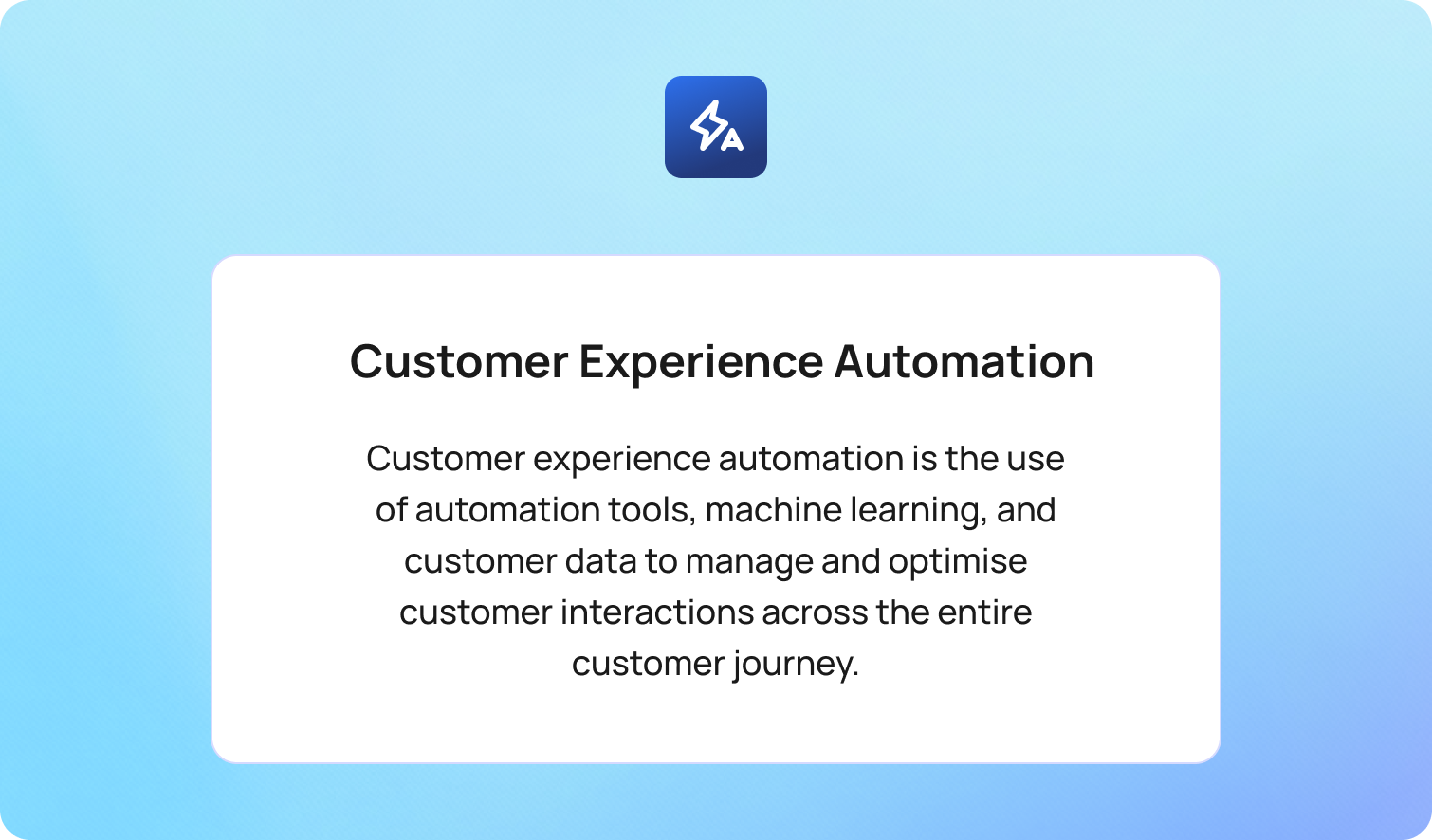
Customer experience automation is the use of automation tools, machine learning, and customer data to manage and optimise customer interactions across the entire customer journey. It enables businesses to automate routine tasks, deliver personalized interactions at scale, and create a more efficient, consistent customer experience across the entire customer lifecycle.
But defining what customer experience automation is purely in technical terms undersells its impact. In practice, it’s about designing an automated customer experience that feels seamless, responsive, and personal, without requiring constant human intervention.
Today, customer experience encompasses every interaction a customer has with your brand, from discovery to onboarding, support, retention, and beyond. That means automating customer experiences isn’t just about deploying chatbots or handling customer inquiries. It’s about orchestrating the entire customer journey using a robust customer experience automation platform.
By combining customer data platforms, customer relationship management CRM systems, and CX automation software, businesses can unify customer data, analyze customer behavior, and deliver personalized communications across multiple channels. The result is a connected, intelligent system that continuously learns from customer interactions and evolves alongside customer expectations.
Customer experience automation isn’t about replacing human interaction… It’s about elevating it. By removing friction from routine tasks, businesses can focus their people where they matter most: building meaningful customer relationships.

Why Does Customer Experience Automation Matter?
Customer experience automation matters because it helps businesses meet rising customer expectations for speed, personalisation, and consistency across multiple channels. By combining automation and customer experience strategies, organisations can improve customer satisfaction, reduce operational costs, and deliver seamless customer interactions at scale.
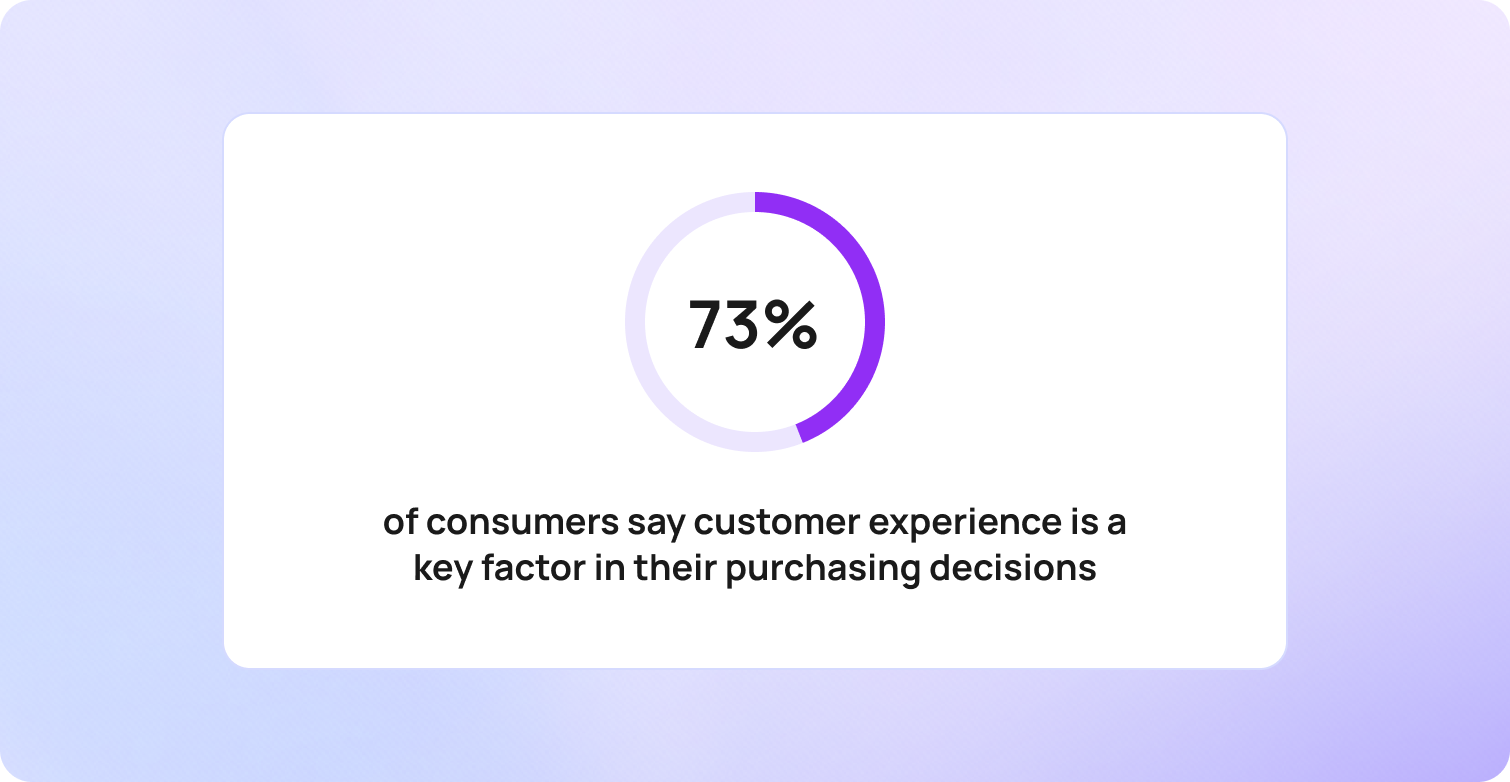
According to PwC, 73% of consumers say customer experience is a key factor in their purchasing decisions, yet only a small percentage feel companies consistently meet their expectations. This gap highlights a growing need for businesses to rethink how they manage customer interactions and why customer experience automation is becoming a strategic priority.
Over the last few years, customer expectations have fundamentally changed. Speed, convenience, and relevance are no longer differentiators; they’re baseline requirements. Today, customers expect:
- Instant responses to customer queries
- Seamless customer interactions across multiple channels
- Personalized interactions based on their needs and past behavior
This is where automation and customer experience come together to create a competitive advantage.
Customer experience automation enables businesses to move beyond fragmented systems and deliver a unified experience across every customer touchpoint. Instead of disconnected tools and manual processes, businesses can deploy automation solutions that connect marketing automation, customer communication, and customer service into one cohesive system.
With a well-implemented automation customer experience strategy, businesses can:
- Automate customer experience across the entire customer lifecycle
- Deliver uniform service quality at scale
- Continuously monitor customer sentiment and customer feedback
- Improve customer satisfaction while reducing operational costs
More importantly, it allows organisations to rethink how work gets done. Repetitive tasks, routine inquiries, and data entry can be handled by automated systems, freeing up customer service agents and customer service representatives to focus on complex tasks that require empathy, creativity, and human judgment.
This balance between automation and human agents is what defines best-in-class experience automation today.
Key Benefits of Customer Experience Automation
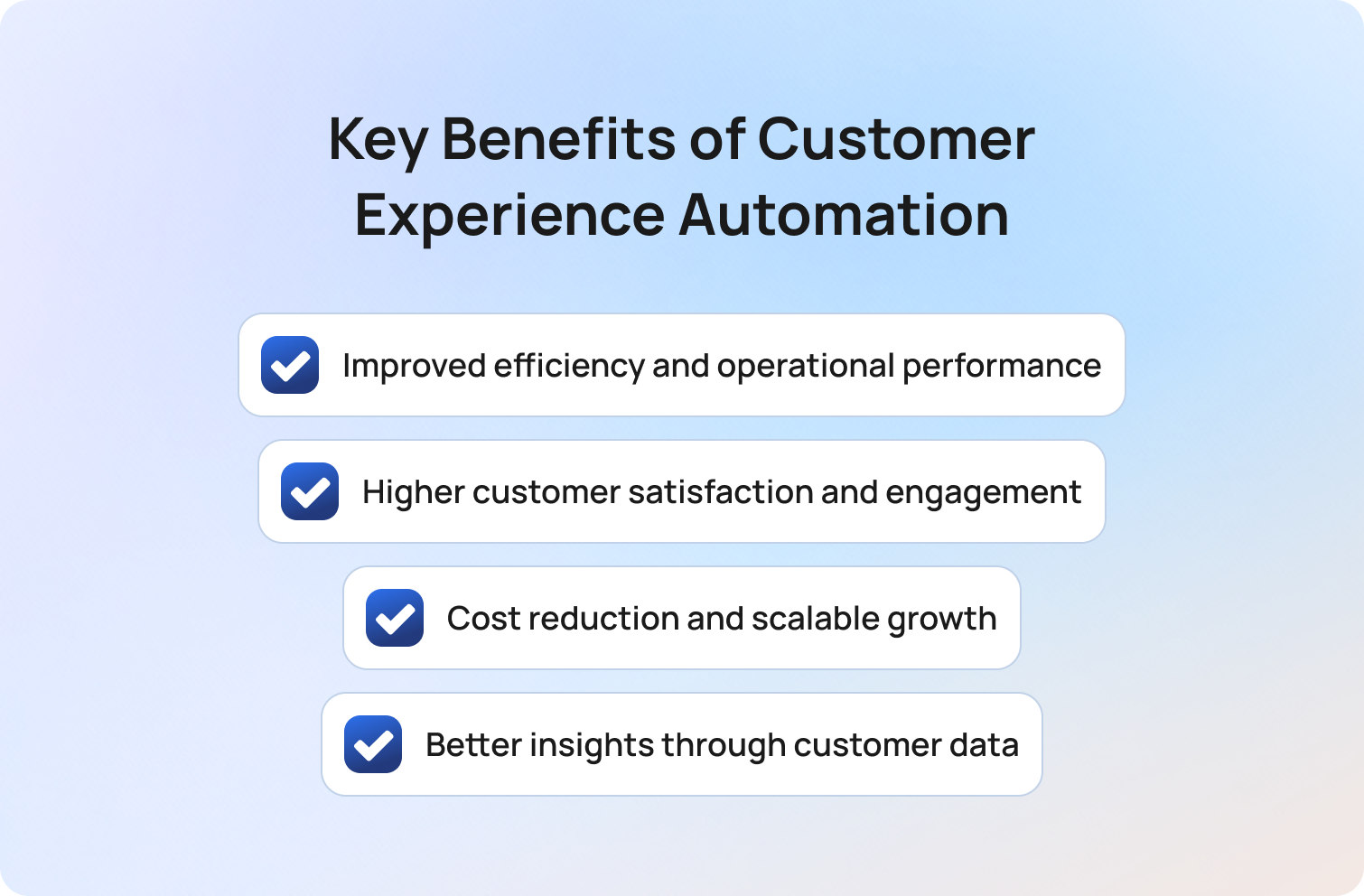
Customer experience automation is the strategic use of automation tools, customer data, and machine learning to improve how businesses manage customer interactions across the entire customer journey. Its benefits span efficiency, scalability, and customer satisfaction, helping organisations automate routine tasks, reduce operational costs, and deliver consistent, personalized interactions at every stage of the customer lifecycle.
1. Improved Efficiency and Operational Performance
One of the most immediate benefits of customer experience automation is its impact on operational efficiency.
In traditional models, customer interactions are heavily dependent on human input, which slows down response times and increases staffing and resource allocation challenges. With CX automation, businesses can automate routine tasks such as handling customer inquiries, managing customer queries, and processing repetitive tasks like data entry.
By implementing automated workflows and advanced automation tools, businesses can:
- Handle high volumes of customer requests simultaneously
- Reduce response times across all customer interactions
- Improve operational efficiency while optimising staffing and resource allocation
This ensures that even during peak demand, customer communication remains fast, accurate, and consistent. Self-service tools and self-service portals also empower customers to resolve issues independently, which reduces pressure on support teams while improving the automated customer service experience.
2. Higher Customer Satisfaction and Engagement
Customer experience automation plays a direct role in improving customer satisfaction. When customers receive fast, relevant, and consistent responses, their perception of your brand improves.
An automated customer experience ensures that no customer inquiries are missed, and every interaction meets a baseline level of quality. With the right customer experience automation platform, businesses can:
- Deliver consistent experiences across multiple channels
- Provide personalized interactions using existing customer data
- Improve customer satisfaction through faster resolutions
More advanced CX automation tools go even further and enable businesses to analyze customer behavior and tailor personalized communications in real-time. This creates a more engaging, relevant experience that strengthens customer relationships and drives long-term loyalty.
3. Cost Reduction and Scalable Growth
Scaling customer experience without increasing operational costs has historically been a challenge. Customer experience automation changes that equation.
By shifting routine inquiries and basic customer support to automated systems, businesses can significantly reduce operational costs while maintaining high customer service quality.
With automation, customer experience strategies in place:
- Human agents focus on more complex tasks
- Repetitive tasks are handled automatically
- Businesses scale customer interactions without scaling headcount
This not only improves efficiency but also creates a more sustainable model for managing client relationships and supporting growth across the entire customer lifecycle.
A great example of this in action can be seen in BlueTweak’s customer success story with a medical clinic; high volumes of customer inquiries and fragmented customer interactions were impacting service quality. By implementing a unified customer experience automation platform, the clinic streamlined routine inquiries, introduced self-service tools, and improved response times across the entire customer journey. The result was higher customer satisfaction, improved operational efficiency, and more consistent, personalised interactions across every patient touchpoint.
4. Better Insights Through Customer Data
Customer experience automation platforms ought to do more than execute; they should also generate intelligence. Every automated interaction produces valuable data. When businesses unify customer data across systems, they gain a clearer view of the entire customer journey.
By leveraging customer data platforms and cx automation software, businesses can:
- Analyze customer data and customer sentiment in real time
- Generate valuable insights into customer behavior
- Optimize customer experience management strategies
This ability to continuously analyze customer data allows businesses to proactively adapt to customer needs, rather than reacting after the fact.
Over time, this creates a feedback loop where experience automation not only improves efficiency but also enhances decision-making across marketing automation, customer service, and business process management.
How Automation Improves Customer Experience Metrics
Customer experience automation improves key performance metrics by using automation tools, machine learning, and customer data to optimize customer interactions across the entire customer journey in real time. By reducing friction and automating routine tasks, it enables businesses to deliver faster, more accurate, and more consistent experiences at scale.
Understanding how automation improves customer experience metrics is critical for organisations looking to justify investment in CXA. Traditional customer service models often struggle with delays, inconsistent responses, and limited visibility into performance. In contrast, CXA introduces structured, data-driven processes that continuously improve over time.
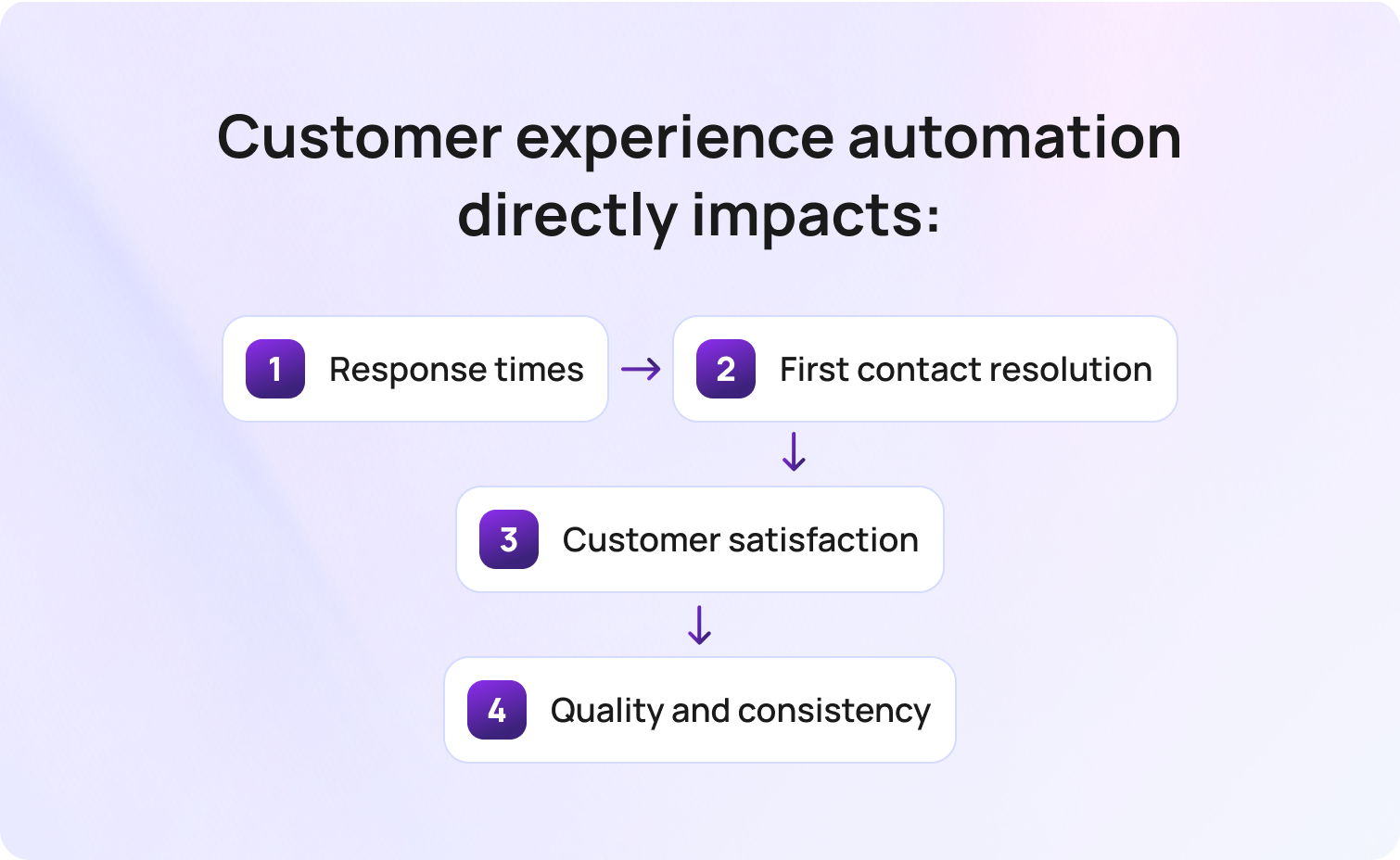
Customer experience automation directly impacts:
- Response times through automated customer service experience
- First contact resolution via intelligent routing and natural language processing
- Customer satisfaction scores across the entire customer lifecycle
- Overall customer service quality and consistency
By using machine learning and natural language processing, CX automation software can interpret customer queries, analyse intent, and route requests to the most appropriate channel, whether that’s self-service options or human agents for more complex tasks.
Crucially, these improvements compound over time. As businesses continue to analyze customer data and customer behavior, they gain valuable insights that help refine automated workflows, optimize customer communication, and deliver consistent experiences across multiple channels. This results in smarter, more adaptive customer engagement that evolves alongside customer expectations.
Examples of Auditable Decisioning in Customer Experience Automation
Customer experience automation platforms enable auditable, transparent decision-making by tracking how automated systems use customer data to manage customer interactions across the entire customer journey. This ensures that businesses can scale automation while maintaining compliance, accountability, and trust.
As organisations increasingly rely on automated systems and CX automation tools, the ability to explain and justify decisions becomes essential, particularly in industries where governance and data privacy are critical. Customer experience automation must not only be efficient, but also traceable. That’s where examples of auditable decisioning in customer experience automation become important.
Modern customer experience automation platforms provide visibility into how decisions are made, ensuring alignment with business rules, regulatory requirements, and customer expectations. Examples include:
- Automated workflows that log every customer interaction across the entire customer lifecycle
- AI-driven routing decisions based on predefined rules, customer data, and business logic
- Customer data usage is tracked and managed across customer data platforms
- Decision logs within cx automation systems that provide full traceability and audit trails
This level of transparency allows businesses to continuously monitor customer sentiment, validate how automation tools are performing, and ensure that customer experience management strategies remain aligned with both compliance standards and customer needs.
Ultimately, auditable decisioning strengthens trust, not just internally, but with customers. It ensures that as businesses automate customer experience at scale, they do so responsibly, with full visibility into how every interaction is handled.
Final Thoughts: Turning Customer Experience Automation Into Competitive Advantage
Customer experience automation is the strategic use of automation tools, customer data, and machine learning to transform how businesses manage customer interactions across the entire customer journey. When implemented effectively, it enables businesses to improve customer satisfaction, reduce operational costs, and deliver consistent, personalised interactions at scale.
But the real value of CXA goes beyond efficiency. It allows organisations to move from reactive support models to proactive, insight-driven engagement, where every interaction is informed by data, shaped by customer behavior, and optimised in real-time.
As customer expectations continue to evolve, businesses that invest in experience automation will be better positioned to adapt, scale, and compete. Those that don’t risk falling behind will ultimately struggle with fragmented systems, inconsistent service quality, and rising operational complexity.
Ready to see what customer experience automation can do for your business? Book a demo with BlueTweak or try the platform for free to discover how you can streamline customer interactions, improve operational efficiency, and deliver exceptional experiences across the entire customer lifecycle.

Virtual Assistants to Address CX Talent Shortages
In today’s fast-paced digital landscape, customer experience (CX) has become a critical differentiator for businesses. Delivering exceptional CX requires a skilled and dedicated workforce capable of handling customer inquiries, providing support, and resolving issues effectively. However, many companies are facing a growing challenge in finding and retaining qualified CX talent. This is where virtual assistants, powered by artificial intelligence (AI), are emerging as a valuable solution. Virtual assistants offer a range of benefits that can help address CX talent shortages and enhance overall customer satisfaction.
The CX Talent Shortage Challenge
The demand for CX professionals with expertise in handling diverse customer interactions is rapidly increasing. Whether it’s managing customer service inquiries, resolving technical issues, or providing personalized recommendations, businesses need a skilled workforce to deliver exceptional experiences. Unfortunately, many organizations struggle to attract and retain top CX talent due to several factors:
Competition for skilled professionals
The demand for CX talent is high across various industries, leading to intense competition for qualified candidates. This competition drives up recruitment costs and makes it challenging for companies to secure the right talent.
High turnover rates
The CX field can be demanding, with high-stress levels and the need for constant upskilling. As a result, turnover rates among CX professionals are often higher than in other roles, leading to talent gaps and increased recruitment efforts.
Limited scalability
Scaling up a CX team to meet growing customer demands can be a complex and time-consuming process. Finding, hiring, and training new team members takes time, which can hinder an organization’s ability to deliver consistent and timely customer support.
Read more about: Ticket Data for Proactive Support: Building Long-Term Relationship
Virtual Assistants: Bridging the CX Talent Gap
Virtual assistants, powered by AI and natural language processing, present a viable solution to address the CX talent shortage challenge. Here’s how they can help:
24/7 availability
Virtual assistants are available round the clock, providing customers with immediate assistance and support. Unlike human agents who have limited working hours, virtual assistants can handle inquiries and resolve issues at any time, improving response times and overall customer satisfaction.
Read more about: The Power of Omnichannel Customer Support Platforms
Scalability and flexibility
Virtual assistants can be easily scaled up or down based on customer demands. Businesses can adjust the number of virtual assistants to align with peak periods or specific campaigns, ensuring they meet customer expectations without delays or disruptions.
Multilingual support
Language barriers are a common challenge in delivering CX to a global customer base. Virtual assistants can be programmed to offer multilingual support, eliminating language constraints and enhancing the overall customer experience.
Consistency and accuracy
Virtual assistants provide consistent and accurate responses to customer inquiries. They can be programmed with up-to-date information about products, services, and company policies, ensuring that customers receive accurate information every time.
Personalization
Advanced AI algorithms enable virtual assistants to analyze customer data and provide personalized recommendations. By understanding customer preferences and behaviors, virtual assistants can deliver targeted suggestions, resulting in a more engaging and tailored customer experience.
Read more about: Understanding Customer Pain Points: Strategies for Effective Resolution
Human-assisted interactions
While virtual assistants can handle a wide range of customer inquiries, they can also seamlessly transfer complex or sensitive issues to human agents when necessary. This hybrid approach ensures that customers receive the best support while freeing up human agents to focus on more complex tasks that require human intervention.
As businesses continue to prioritize delivering exceptional customer experiences, the scarcity of qualified CX talent can hinder their progress. Virtual assistants offer a compelling solution to address these talent shortages, providing round-the-clock support, scalability, multilingual capabilities, and personalized interactions. By integrating virtual assistants into their CX strategy, companies can bridge the talent gap, enhance customer satisfaction, and drive long-term business success. Embracing AI-powered virtual assistants is a smart investment for organizations aiming to optimize their CX operations and stay ahead in the competitive market.
The Power of Humanized Digital Experiences: Beyond Discounts and Loyalty Perks
In today’s hyperconnected world, where consumers are bombarded with countless options and brand messages, establishing meaningful connections with customers has become more important than ever. While discounts and loyalty perks have traditionally played a significant role in building brand loyalty, a paradigm shift is underway. Recent studies have shown that a whopping 74% of consumers believe that brand loyalty is about being touched, understood, and valued. This shift in consumer expectations has given rise to the concept of humanized digital experiences, where brands go beyond transactional interactions to foster genuine connections with their customers. In this article, we will explore the significance of humanized digital experiences and the ways in which brands can embrace this approach to drive customer loyalty and engagement.
The Rise of Humanized Digital Experiences
In the digital age, consumers seek more than just a product or service; they desire an emotional connection with the brands they support. Humanized digital experiences encapsulate this desire by focusing on building authentic relationships and personalized interactions. Brands that prioritize empathy, understanding, and genuine communication have the power to differentiate themselves in the crowded digital marketplace.
Understanding Customer Needs
To create humanized digital experiences, brands must first understand their customers’ needs and aspirations. This requires gathering data and utilizing analytics to gain insights into customer behavior, preferences, and pain points. By understanding their target audience on a deeper level, brands can tailor their digital experiences to meet their customers’ specific needs.
Personalization and Customization
One of the key elements of humanized digital experiences is personalization. Customers appreciate when brands recognize them as individuals and provide tailored recommendations or content. By leveraging customer data, brands can create personalized offers, product suggestions, and relevant communications that resonate with each customer. Additionally, allowing customers to customize their experiences, such as choosing preferences or settings, empowers them and fosters a sense of ownership.
Read more about: Navigating the Future: Customer Support Trends for 2024
Responsive and Transparent Communication
Effective communication is at the heart of humanized digital experiences. Brands should focus on creating open channels of communication with their customers, allowing them to provide feedback, ask questions, or voice concerns. Responding promptly and transparently builds trust and shows customers that their opinions and experiences matter. This approach not only resolves issues but also strengthens the relationship between the brand and the customer.
Read more about: The Crucial Role of Feedback Integration in Omnichannel AI-Driven Platforms
Empathy and Emotional Connection
Humanizing digital experiences requires brands to infuse empathy and emotional intelligence into their interactions. Understanding customers’ emotions and providing support during critical moments, such as purchase decisions or problem resolution, can have a profound impact on customer loyalty. Brands that genuinely care about their customers’ well-being and success create lasting emotional connections that extend beyond the transactional nature of business.
Read more about: Transforming Quality and Customer Satisfaction with BlueHub in Packaging Industry
Community Building and Advocacy
Humanized digital experiences extend beyond individual interactions to foster a sense of community among customers. Brands can create spaces, such as online forums or social media groups, where customers can connect, share experiences, and support each other. By nurturing a community, brands can cultivate a sense of belonging and tap into the power of customer advocacy, as satisfied customers become brand ambassadors who willingly share their positive experiences with others.
In an era where technology dominates interactions, brands must recognize the growing importance of humanized digital experiences. Consumers are increasingly seeking connections that go beyond discounts and loyalty perks. By focusing on empathy, personalization, transparent communication, and community building, brands can create meaningful relationships with their customers. Embracing the concept of humanized digital experiences will not only drive customer loyalty but also differentiate brands in a crowded marketplace, ensuring long-term success in the digital age.
The Rise of Voice Technology
In recent years, the world has witnessed an exponential growth in voice technology, revolutionizing the way we interact with our devices and changing the dynamics of various industries. From voice assistants to smart speakers, voice technology has found its way into our homes, workplaces, and even our pockets. With the market projected to reach a staggering $30 billion by 2026, it’s evident that voice technology is here to stay. In this article, we explore the reasons behind its meteoric rise and the transformative impact it is set to have on numerous sectors.
The Increasing Popularity of Voice Assistants
Voice assistants, such as Amazon’s Alexa, Apple’s Siri, and Google Assistant, have become ubiquitous in households worldwide. These virtual helpers can perform a range of tasks, from answering questions and setting reminders to controlling smart home devices. The convenience and ease of use offered by voice assistants have been instrumental in driving their adoption.
Furthermore, the proliferation of smart speakers, which act as a gateway to voice assistants, has contributed to their popularity. With intelligent voice recognition systems and natural language processing capabilities, these devices enable users to interact effortlessly with their devices, making voice technology an integral part of our daily lives.
Enhanced User Experience and Convenience
Voice technology offers a more intuitive and user-friendly interface, eliminating the need for complex button sequences or navigating through multiple screens. Voice commands provide a seamless and hands-free experience, allowing users to interact with devices while multitasking or when their hands are occupied. Whether it’s getting real-time information, placing online orders, or controlling smart home devices, voice technology simplifies tasks and streamlines interactions.
Read more about: Unlocking Success: The Benefits of a Customer Support Platform
Advancements in Natural Language Processing (NLP) and Machine Learning
The rapid advancements in natural language processing and machine learning have been pivotal in improving the accuracy and reliability of voice technology. NLP algorithms now better understand human speech patterns, dialects, and accents, enabling more accurate voice recognition and interpretation. As these technologies continue to evolve, voice technology will become even more proficient at understanding context, intent, and user preferences, leading to highly personalized and tailored experiences.
Read more about: Embracing Customer Experience Automation: The Future of Business Interactions
Integration with Internet of Things (IoT) and Smart Homes
The integration of voice technology with the Internet of Things (IoT) has opened up a new realm of possibilities. Voice commands can control an array of smart devices, including thermostats, lights, security systems, and kitchen appliances. The seamless integration of voice technology into smart homes not only enhances convenience but also improves energy efficiency, home security, and overall quality of life.
Read more about: BlueHub’s AI-Powered Customer Support Transformation for E-Commerce Client
Transforming Industries and Driving Innovation
Voice technology has extended its influence beyond the consumer realm and is driving innovation across various industries. In healthcare, voice assistants can assist with patient care, medication reminders, and monitoring vital signs. In retail, voice-enabled shopping experiences are becoming increasingly popular, simplifying product searches and purchases. In the automotive sector, voice technology enables hands-free communication and control, enhancing driver safety.
Furthermore, voice technology is making significant inroads in customer service, education, and entertainment. Voice-enabled chatbots provide immediate and personalized support, voice-activated learning tools engage students, and voice-controlled entertainment systems offer immersive experiences. These applications signify the transformative potential of voice technology across sectors.
The rapid growth of voice technology is revolutionizing the way we interact with technology, opening up new possibilities and improving the overall user experience. With voice assistants becoming increasingly integrated into our daily lives, the market for voice technology is projected to reach a substantial $30 billion by 2026. This growth is driven by the convenience, enhanced user experience, and continuous advancements in natural language processing and machine learning.
As voice technology continues to evolve, it will undoubtedly unlock further opportunities for innovation, impacting industries ranging from healthcare and retail to automotive and entertainment. The rise of voice technology signals a fundamental shift in how we engage with technology, paving the way for a more seamless and intuitive future.

Revolutionizing Customer Support: AI for Superior Customer Experience
In today’s digital age, customer support has become a critical aspect of any business’s success. Consumers expect prompt and personalized assistance, making it crucial for companies to provide efficient customer support services. Artificial Intelligence (AI) has emerged as a game-changer in the customer support industry, revolutionizing the way businesses interact with their customers. In this article, we will explore the various AI implementations in customer support platforms and how they are reshaping the landscape of customer service.
Chatbots: The First Line of Assistance
Chatbots have become synonymous with AI in customer support. These intelligent virtual assistants can handle basic customer inquiries, provide relevant information, and resolve simple issues. Powered by natural language processing and machine learning algorithms, chatbots can understand customer queries, deliver instant responses, and even learn from interactions to improve their accuracy over time. By employing chatbots, businesses can significantly reduce response times, enhance customer satisfaction, and free up human agents to focus on more complex tasks.
Automated Ticket Routing and Prioritization
AI-powered customer support platforms leverage advanced algorithms to automate ticket routing and prioritization. By analyzing the content of customer inquiries and classifying them based on their urgency and complexity, AI can intelligently assign tickets to the most suitable customer support agents. This automated process ensures that issues are addressed promptly, preventing bottlenecks and minimizing customer wait times. Furthermore, AI can identify patterns in customer inquiries, allowing businesses to identify recurring problems and implement proactive measures to mitigate them.
Sentiment Analysis: Understanding Customer Emotions
One of the significant challenges in customer support is accurately gauging customer emotions. AI technologies, such as sentiment analysis, can help customer support platforms decipher the sentiment behind customer interactions. By analyzing text or voice inputs, sentiment analysis algorithms can determine whether a customer is happy, frustrated, or angry. This valuable insight enables businesses to respond with empathy and tailor their approach accordingly, ensuring a more personalized and satisfactory customer experience.
Read more about: The Perfect Duo: AI Chatbots and Human Agents in Harmony for Customer Support
Personalized Recommendations and Upselling
AI can play a vital role in delivering personalized recommendations to customers. By analyzing customer data, purchase history, and browsing behavior, AI algorithms can suggest relevant products or services based on individual preferences. This capability not only enhances the customer experience but also presents opportunities for upselling and cross-selling. By leveraging AI-driven recommendation engines, businesses can increase customer engagement, boost sales, and foster long-term customer loyalty.
Voice Assistants: A New Era of Customer Support
Voice assistants, such as Amazon’s Alexa, Google Assistant, or Apple’s Siri, have become an integral part of our daily lives. These voice-activated AI technologies are increasingly being integrated into customer support platforms, allowing customers to engage with businesses using voice commands. Voice assistants can provide instant responses, offer personalized recommendations, and even execute actions on behalf of customers. By harnessing the power of voice AI, businesses can offer seamless and hands-free customer support experiences.
Read more about: Harnessing the Power of AI in Customer Support: Impact and Innovations
Predictive Analytics for Enhanced Support
AI implementations in customer support platforms enable predictive analytics, empowering businesses to anticipate customer needs and issues. By analyzing vast amounts of customer data, AI algorithms can identify patterns and trends, predict potential problems, and proactively address them. Predictive analytics can help businesses optimize their support processes, allocate resources more effectively, and reduce the likelihood of customer complaints or escalations.
Read more about: Revolutionizing Customer Experience: Insights from Cutting-Edge Research in Customer Support and Service
AI implementations in customer support platforms have revolutionized the way businesses interact with their customers. From chatbots and automated ticket routing to sentiment analysis and voice assistants, AI technologies are driving efficiency, personalization, and customer satisfaction in customer support. By leveraging AI, businesses can streamline their support processes, deliver personalized experiences, and build long-term customer loyalty. As AI continues to evolve, we can expect further advancements in customer support platforms, paving the way for even more seamless and intelligent interactions between businesses and their customers.
Technology’s Impact on Agent Experience
Technology has had a significant impact on the agent’s experience in the customer service industry. In the past, agents had to rely on manual processes and tools to assist customers, which often led to slow response times and frustration on both sides. With the advent of advanced technology, agents now have access to a range of digital tools that make their jobs easier and more efficient.Read more about: The Perfect Duo: AI Chatbots and Human Agents in Harmony for Customer Support
One major way technology has impacted the agent’s experience is using customer relationship management (CRM) systems. These systems allow agents to store and access customer data quickly and easily, so they can better understand each customer's needs and preferences. Additionally, CRM systems can automate many routine tasks, such as sending follow-up emails or scheduling appointments, freeing up agents to focus on more complex customer issues.Read more about: Mastering Productivity in Customer Service: Insights to Become an Exceptional Agent
Another way technology has impacted the agent experience is using chatbots and artificial intelligence (AI) tools. These tools can handle simple customer inquiries and tasks, such as resetting a password or providing basic product information, freeing agents to handle more complex issues. Chatbots and AI tools can also learn from past interactions to provide better assistance to customers over time.
Technology has also impacted the way agents communicate with customers. With the rise of digital communication channels such as email, chat, and social media, agents can now communicate with customers in a variety of ways, giving them greater flexibility and convenience. This can also lead to faster response times, as agents can handle multiple conversations simultaneously.Read more about: Ethical Leadership in Customer Support Management: A Guide for Managers
Overall, technology has had a significant impact on the agent’s experience, making their jobs easier, more efficient, and more satisfying. By automating routine tasks, providing access to customer data, and enabling faster communication, agents are better equipped to handle complex customer issues and provide a high level of service.

How Generative AI Can Augment Post-Call Work and Transform Customer and Employee Experiences – BlueTweak
Generative AI, has the potential to significantly augment post-call work and transform customer and employee experiences in various ways. Here are five key areas where this technology can be applied:
Transcription and summarization of calls
Generative AI can convert spoken conversations into accurate transcriptions, providing a detailed record of the call. This transcription can then be summarized into key points, saving valuable time and effort for customer service representatives (CSRs) and management.
Sentiment analysis and insights
By analyzing the language and tone used during the call, generative AI can provide insights into the customer’s sentiment and mood, allowing CSRs to better tailor their responses and follow-up actions. This analysis can also help identify trends and patterns in customer behavior, enabling more proactive and informed decision-making for the company.
Read more: The Perfect Duo: AI Chatbots and Human Agents in Harmony for Customer Support
Personalized follow-up actions
Generative AI can generate contextually relevant and personalized follow-up emails or messages based on the call’s content. This can lead to more effective and tailored communication with customers, improving their overall experience and potentially increasing customer satisfaction and loyalty.
Read more: Harnessing the Power of AI in Customer Support: Impact and Innovations
Training and coaching
By identifying strengths and weaknesses in an agent’s performance during calls, generative AI can provide personalized coaching and training recommendations. This can help improve the agent’s skills and confidence, ultimately leading to better customer interactions and reduced attrition rates.
Automating routine tasks
Generative AI can help automate routine tasks such as updating customer information, scheduling appointments, or processing refunds, enabling CSRs to focus more on complex issues and providing a better customer experience.
Overall, the integration of generative AI into post-call work can lead to significant improvements in efficiency, personalized customer interactions, and employee skill development. By automating repetitive tasks and providing valuable insights, AI can help businesses streamline their customer service operations and create more satisfying experiences for both customers and employees.
Read more: Choosing the Right Customer Support Platform: A Comprehensive Guide

Technology’s impact on the future of CX – BlueTweak
Technology is transforming the future of customer experience (CX) in many ways. The proliferation of new technologies has given customers unprecedented power to interact with businesses on their own terms. Businesses that want to stay competitive in today’s market must leverage technology to provide an exceptional customer experience.
Here are some ways technology is impacting the future of CX:
Personalization
Advances in artificial intelligence and machine learning enable businesses to personalize customer experiences like never before. By analyzing customer data, businesses can offer tailored experiences that meet the unique needs and preferences of each customer.
Read more about: Harnessing the Power of AI in Customer Support: Impact and Innovations
Omnichannel experiences
Customers expect to interact with businesses through multiple channels, such as social media, email, chat, and phone. With the help of technology, businesses can seamlessly integrate these channels to offer an omnichannel experience that makes it easy for customers to interact with them.
Automation
Businesses can use automation to streamline processes and reduce the need for human intervention. This not only saves time and money but also enables businesses to respond to customer inquiries and requests more quickly.
Read more about: Revolutionizing Customer Experience: Insights from Cutting-Edge Research in Customer Support and Service
Data analytics
With the help of technology, businesses can collect and analyze vast amounts of data about their customers. This data can be used to identify trends and patterns that can inform business decisions and improve the customer experience.
Read more about: Crafting a Personalized Customer Experience: A Path to Brand Loyalty and Success
Self-service
Customers increasingly prefer to solve problems and find information on their own. Technology can enable businesses to offer self-service options such as knowledge bases, chatbots, and interactive voice response (IVR) systems.In conclusion, technology is transforming the future of CX, enabling businesses to offer personalized, omnichannel experiences that meet customers’ evolving expectations. Businesses that embrace these changes and leverage technology to improve the customer experience will be better positioned to succeed in the years to come.



