The Future of Customer Support: 6 Trends to Watch in 2026


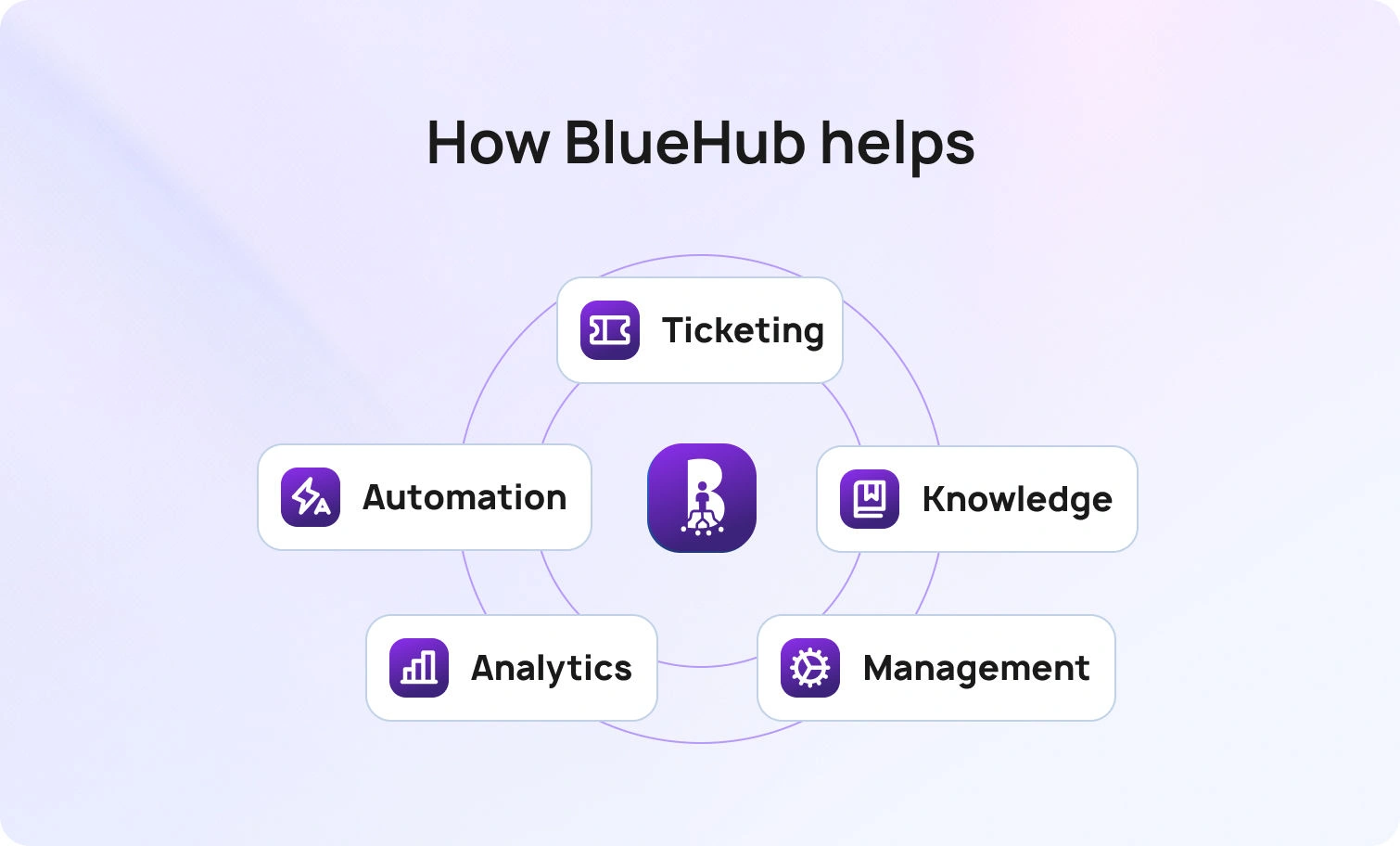
BlueHub unifies every conversation, customer record, and automation into one powerful platform.
Explore more
Updated on January 2026
Customer support is entering a new era of technological advancements and evolving customer expectations. The year 2026 is expected to bring several transformative customer support trends that will redefine how businesses approach customer service. Companies looking to stay competitive must prepare to adopt these trends to enhance customer experience, increase efficiency, and drive loyalty.
Artificial Intelligence (AI) will play a pivotal role in offering hyper-personalized customer support by analyzing real-time data and customer behavior. AI systems can learn from customer interactions to deliver more tailored responses, anticipate needs, and provide support that feels individualized.
How to implement:
By implementing AI-driven personalization, businesses can deliver more engaging, relevant support experiences that reduce response times and improve satisfaction.
Read more about: The Evolution of Customer Support Technology: From call centers to AI
Chatbots have evolved from handling basic tasks to managing more complex customer service inquiries. Customer support trends in 2026: they will be equipped with advanced AI, allowing them to resolve nuanced issues and free up human agents for more critical interactions.
How to implement:
By empowering chatbots to take on more complex tasks, companies can offer faster, more efficient customer support at all hours, improving both customer satisfaction and operational efficiency.
Read more about: The Evolution of Chatbots: Enhancing Customer Support with AI
Implementing voice-powered support not only offers convenience but also positions your company as a forward-thinking player in customer service innovation.
How to implement:
Read more about: Voice vs. Text in Customer Support Service: Choosing the right medium for your audience
Proactive support systems anticipate customer issues before they occur and provide solutions without the need for customers to reach out. These systems use predictive analytics to identify potential problems and suggest resolutions preemptively.
How to implement:
By implementing proactive support systems, businesses can prevent customer frustration and reduce support ticket volumes, leading to higher satisfaction and loyalty.
Read more about: The Art of Proactive Customer Service: Enhancing the Customer Journey
Blockchain technology is an important trend in customer support because it offers enhanced security and transparency, ensuring your customer’s data is well-protected and fostering trust in your company’s handling of sensitive information.
How to implement:
Self-service options are evolving, with AI playing a key role in empowering customers to resolve more complex issues on their own. AI-driven knowledge bases, smart FAQs, and virtual assistants will make self-service more intuitive and effective.
How to implement:
Evolving self-service options give customers the autonomy to solve their own issues, reducing the need for human support and improving overall efficiency.
The future of customer support is fast approaching, driven by technological innovations and heightened customer expectations. By adopting customer service trends such as AI-driven personalization, enhancing chatbot capabilities, incorporating voice-powered support, and embracing proactive and immersive technologies, companies can provide exceptional customer experiences. Additionally, investing in blockchain for security and evolving self-service options will further elevate customer support strategies. Implementing these trends thoughtfully will allow businesses to stay ahead of the competition, offering cutting-edge customer service in 2026 and beyond.
As Head of Digital Transformation, Radu looks over multiple departments across the company, providing visibility over what happens in product, and what are the needs of customers. With more than 8 years in the Technology era, and part of BlueTweak since the beginning, Radu shifted from a developer (addressing end-customer needs) to a more business oriented role, to have an influence and touch base with people who use the actual technology.
Quality
Administration
Workforce Management
Customer Support Analytics
Copyright BlueTweak 2025