Top 12 AI Use Cases in Customer Service That Are Revolutionizing the Industry (2026)



BlueHub unifies every conversation, customer record, and automation into one powerful platform.
Explore more
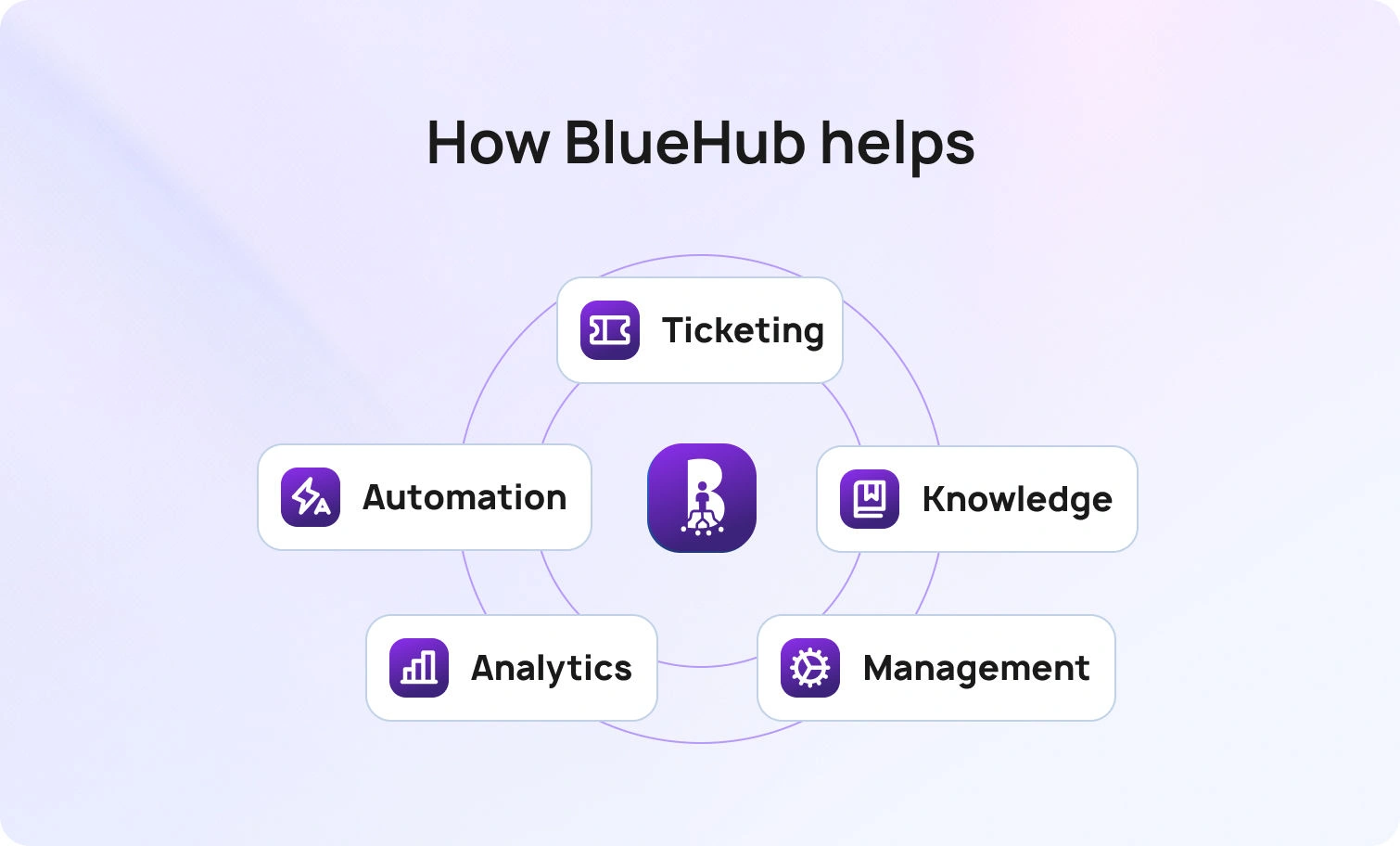
AI shifts routine work to machines and keeps judgment with people. The most significant gains come from conversational AI, intent-based routing, agent assist, personalization, multilingual translation, sentiment analysis, and journey analytics, provided everything is grounded in company knowledge and tied to a real ticketing workflow. BlueHub (by BlueTweak) combines ticketing, knowledge, automation, analytics, and staffing in a single workspace, allowing teams to implement and iterate seamlessly without needing to stitch together disparate tools.
This article explains why AI is essential in customer service operations today, particularly in addressing customer experience, behavior, and questions, then walks through the 12 most impactful AI use cases in customer service, highlighting how they improve customer satisfaction and agent productivity, and where a unified platform like BlueHub can help. Expect practical descriptions, what “good” looks like, and subtle checkpoints you can use during a pilot.
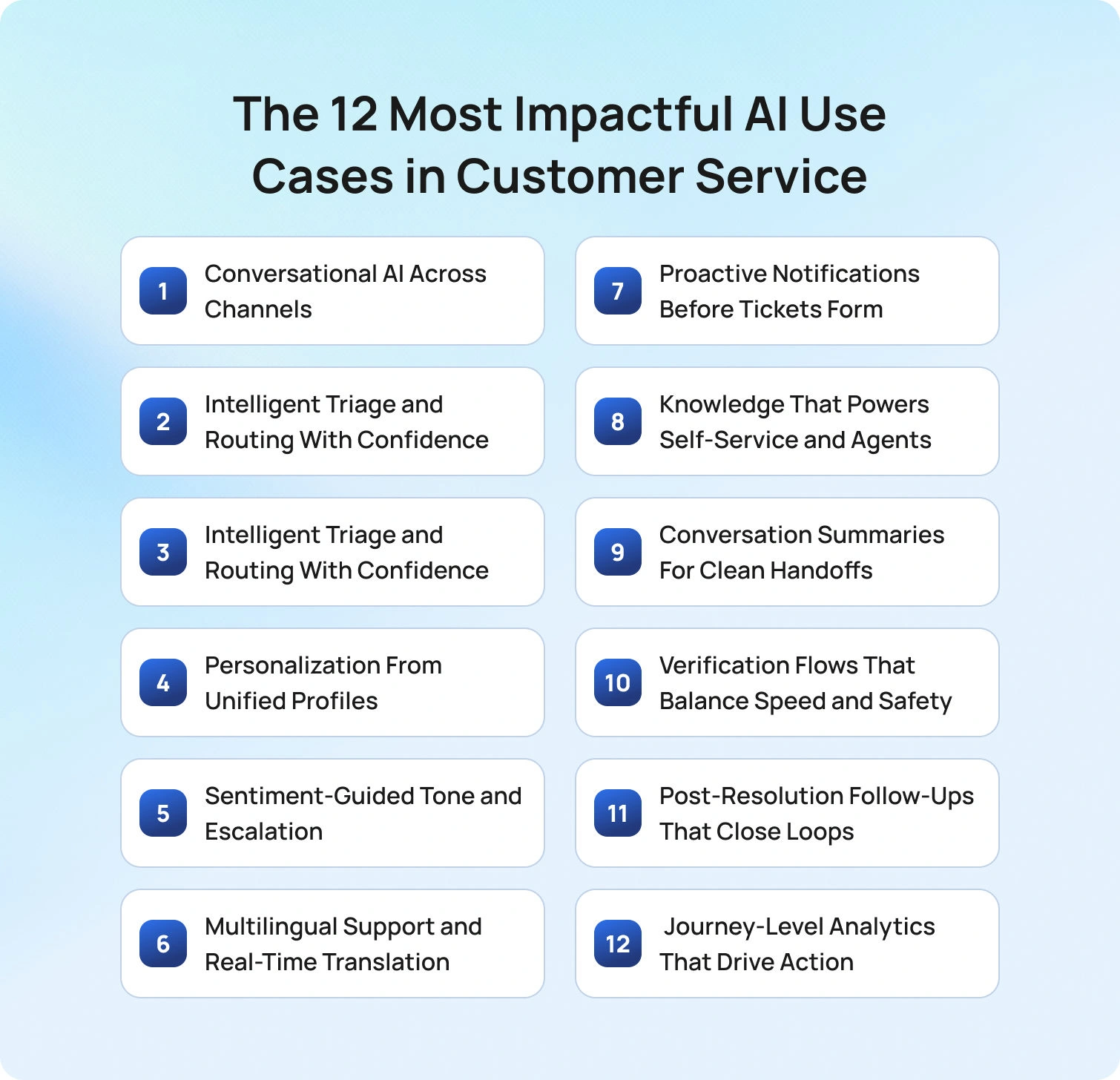
These are the patterns that drive the numbers in real contact centers, particularly in customer interactions. Each one is stronger when grounded in your knowledge base, connected to your ticketing system, and measured against a clearly defined KPI that reflects customer preferences.
Modern customer service chatbots and voicebots answer routine questions 24/7, collect context, and guide simple workflows without human intervention. With advanced natural language processing, they recognize intent, authenticate safely, fetch order or account data, and hand off cleanly when complexity appears.
In BlueHub, customer service agents rely on bots that sit on the same backbone as tickets and knowledge, so automated steps, articles, and macros stay in sync with live operations.
AI classifies incoming customer inquiries and needs by language intent, urgency, and product, and then assigns work based on skill and capacity. High-confidence cases auto-route; mid-confidence cases suggest two labels for one-click confirmation; low-confidence cases trigger a clarifier.
BlueHub demonstrates confidence and rationale inline, allowing agents to confirm in place, thereby reducing misroutes while keeping humans in control of automated responses.
As agents work, AI proposes grounded replies based on information from the knowledge base that enhance customer engagement, highlight the relevant article, and suggest next steps based on the customer’s history. It’s drafting help, not auto-send. BlueHub’s agent view surfaces suggestions, macros, and required fields on one screen, eliminating the need for tab-hunting and reducing response times.
AI leverages the customer profiles available within the platform (including past tickets, calls, and resolutions) to summarize context, suggest replies, and guide tone across channels. It does not natively merge purchase history or other external attributes by default. Return advice reflects the plan tier; troubleshooting shifts to the customer’s device and OS; recommendations map to the behavior. Because BlueHub unifies identity resolution with ticketing, the “who” and “what” are already in context when replies are drafted.
Real-time sentiment analysis detects frustration and urgency, adjusting templates, priority, and escalation paths. Supervisors identify risks early by analyzing customer sentiment; sensitive threads receive empathetic phrasings. Rather than writing a score for each case, BlueHub reveals sentiment through Custom Views/filters and Reporting, allowing leaders to spot trends and coach exactly where it matters. Configuration and data permissions apply.
Language detection, combined with controlled glossaries, delivers accurate, on-brand answers in dozens of languages, without forking workflows. BlueHub can detect language at intake, apply region-specific SLA calendars, and surface localized articles, allowing global teams to run the same workflow while providing consistent service quality and meeting local expectations.
Predictive signals, such as inventory levels, shipping scans, renewal dates, and error spikes, trigger targeted outreach on the customer’s preferred channel, addressing customer questions. That’s proactive support that prevents many cases entirely. BlueHub’s workflows can schedule these nudges from the same rules that power routing and SLAs.
One knowledge base for both paths: customers see the same, current steps that customer service representatives use in customer service strategies. AI flags gaps from “no result” searches and proposes drafts. In BlueHub, publishing a customer service solutions knowledge article updates both the agent view and the self-service portal from the same source, so a single edit improves both experiences.
When work moves from social to email or chat to phone, AI generates concise and accurate summaries: decisions made, promises given, and next actions. BlueHub stores conversation summaries in the case timeline, ensuring that handoffs never lose context and audits remain straightforward.
Guided checks request only what’s required for the channel and case type, with exceptions routed to specialists. Sensitive actions stay behind human approval. BlueHub embeds verification steps within the same workflow that drives routing and SLAs, ensuring consistent and in-flow secure checks.
After a fix, AI sends a brief check-in on the original channel, invites a one-question CSAT survey, and links relevant resources. If something’s still off, the case reopens with full context, and human customer service agents can intervene. In BlueHub, these follow-ups reside in the same automation layer that manages closure and status rules, ensuring loops close consistently without the need for additional tools.
Leaders see first reply, handle time, FCR, sentiment, and deflection by intent and channel, then adjust routing or content in place. BlueHub emphasizes insight-to-edit on one screen, enabling fast changes and making their impact visible in the very next reporting cycle.
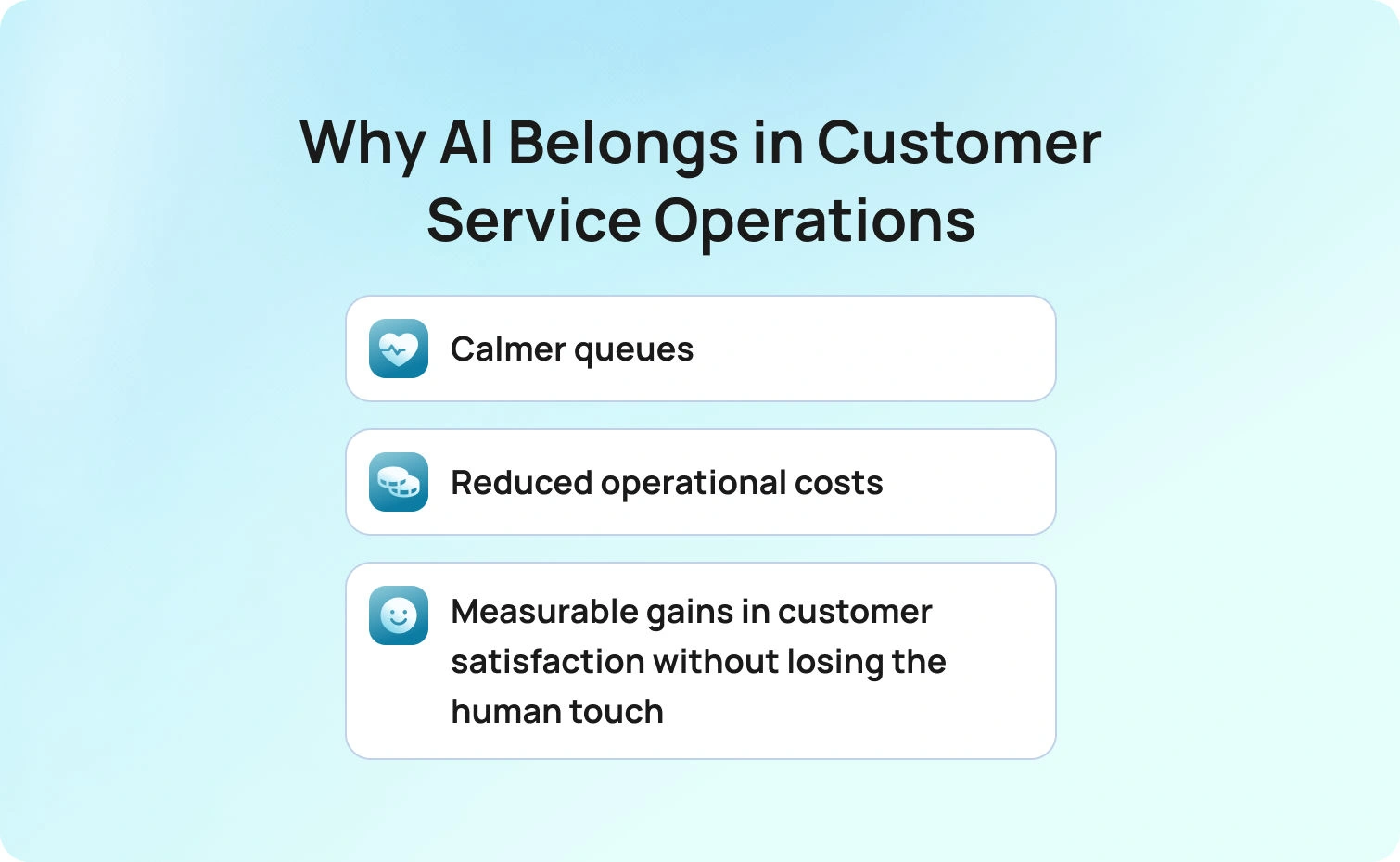
Customers want fast, consistent answers across multiple channels and a single story that follows them. Support teams want fewer tabs, fewer misroutes, and workflows that don’t break under peak volume. AI closes that gap: NLP converts unstructured messages into structured work; machine learning directs cases to the correct queue; generative AI generates brand-safe text; predictive analytics identifies risks. The payoff is calmer queues, reduced operational costs, and measurable gains in customer satisfaction without losing the human touch.
A credible deployment uses approved sources, keeps humans in the loop for sensitive steps, and ties every suggestion to a real workflow. Request clear confidence and rationale for predictions. Provide grounded reply suggestions with citations. Offer multilingual support, accompanied by a glossary. Consider the sentiment that can influence priority. Maintain audit trails for all actions.
BlueHub was designed around four key guardrails: identity resolution, AI assistance, routing, and reporting, all working in concert to ensure improvements stay aligned with daily work.
Measure before and after on a tight set: first reply time, handle time, FCR, CSAT, sentiment by channel, reopen rate, deflection/containment, abandon rate (IVR/chat), and backlog trend. Add program signals, such as auto-route percentage, label-correction rate, and agent edits, to AI drafts based on customer feedback. BlueHub’s analytics sit alongside workflow settings, allowing teams to quickly transition from insight to a published change.
Pick two high-volume intents across two channels. Enable intent classification with confidence, knowledge-grounded suggestions, and sentiment-aware priority. Connect CRM for context. Run two weeks of production-like traffic and tune one friction point each week (a missing article, a weak macro, a confusing label). When stable, add a third channel and proactive notifications. BlueHub’s single workspace enables teams to design workflows, publish changes, monitor KPIs, and make adjustments quickly, all without switching tools.
Maintain approvals for refunds, identity checks, legal, and safety; restrict models to approved sources; log prompts and outputs; set tone guidelines for publication. In BlueHub, these controls are located beside the workflow, ensuring compliance occurs without requiring a switch to other tools.
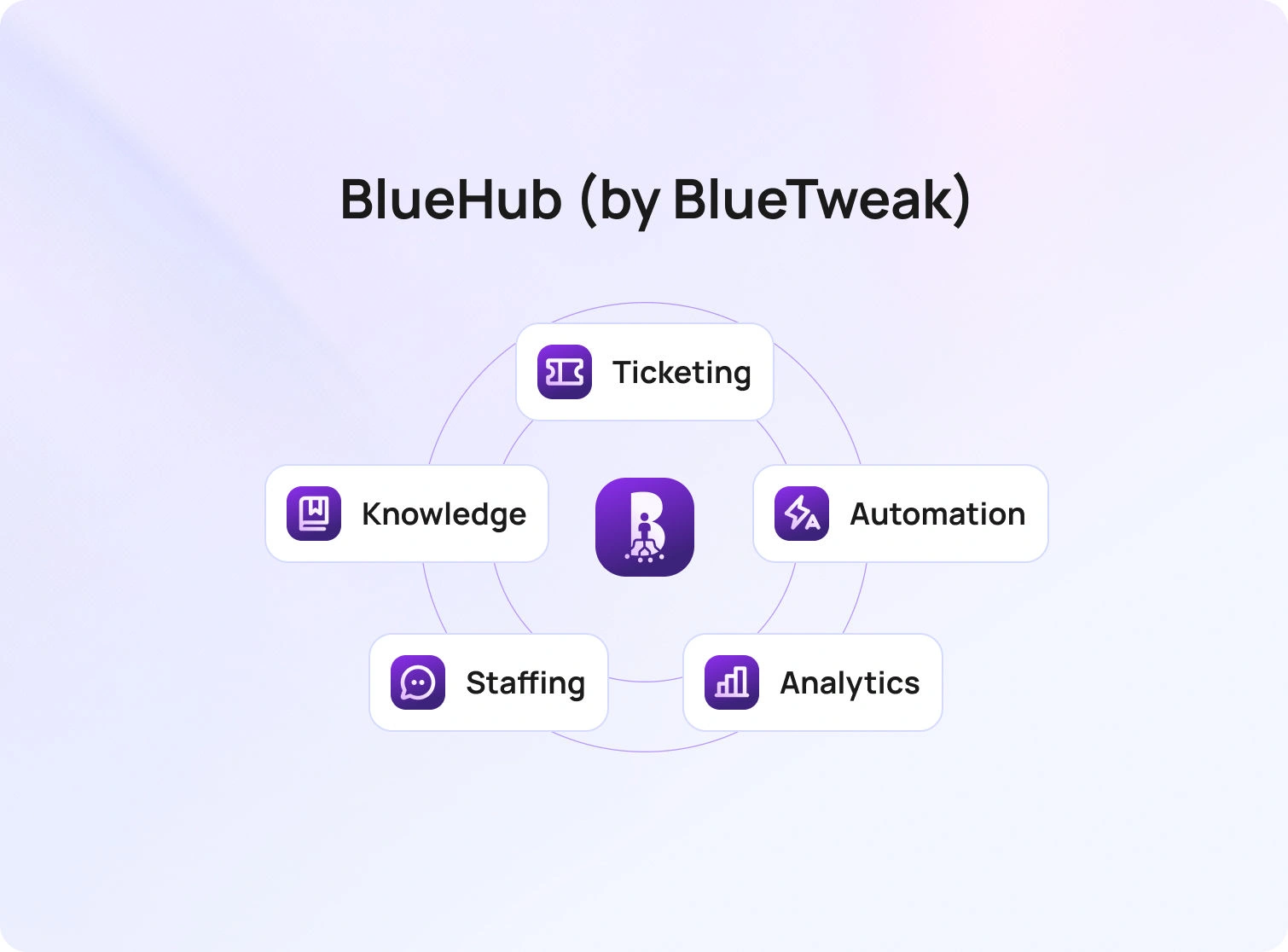
BlueHub (by BlueTweak) centralizes ticketing, knowledge, automation, analytics, and staffing, enabling the top AI customer service use cases (chatbots/voicebots, intent-based routing, agent assist, multilingual replies, sentiment-aware priority, and journey analytics) to be launched faster, which can enhance customer interactions and improve more easily.
Categories and channels map to playbooks, language detection pairs with regional SLAs, and a single article update enhances both agent guidance and self-service. Identity resolution, AI suggestions, and real-time reporting all on one screen, enabling teams to manage the entire customer journey without piecing together a complex stack.
The strongest programs utilize AI to transform unstructured conversations into structured work, assist agents in determining the next step, and convert customer data into actionable guidance at the point of need. Start with identity and intent, ground replies in knowledge, and add sentiment and multilingual support to understand customer behavior, measuring results on a weekly basis.
If a single workspace that connects design, execution, and measurement to address customer needs would be helpful, request a BlueHub walkthrough and watch as one ticket moves across channels with full context, AI-guided steps, and live analytics that turn insights into actionable edits.
Chatbots/voicebots, intent-based routing, agent assist, personalization, multilingual translation, sentiment analysis, and journey analytics. In BlueHub, these work together in a single omnichannel queue to boost speed, accuracy, and CSAT for everyday inquiries.
Generative AI creates or transforms text, drafting replies, summarizing threads, and adapting tone, while classification and routing models label and direct work. BlueHub grounds its generation in approved knowledge and keeps human approval for sensitive moments.
No. BlueHub’s AI handles routine questions and prep work (summaries, suggested replies, next steps), freeing human agents to focus on nuanced, complex issues. Keep humans in the loop for identity, refunds, legal, and safety decisions. AI should enhance, not replace, judgment.
Start small, two intents and two channels, and ground answers in your company knowledge. In BlueHub, constrain sources, require approvals for risky steps, and review outcomes weekly. Expand once deflection, accuracy, and sentiment stabilize.
BlueHub centralizes the core: ticketing, knowledge, automation, analytics, and staffing, to offer personalized support. That makes it easier to implement the top AI use cases customer service teams rely on, monitor impact, and iterate quickly, all in one place.
As Head of Digital Transformation, Radu looks over multiple departments across the company, providing visibility over what happens in product, and what are the needs of customers. With more than 8 years in the Technology era, and part of BlueTweak since the beginning, Radu shifted from a developer (addressing end-customer needs) to a more business oriented role, to have an influence and touch base with people who use the actual technology.
Quality
Administration
Workforce Management
Customer Support Analytics
Copyright BlueTweak 2025