Your Complete Guide to Customer Experience Strategy in 2026



BlueHub unifies every conversation, customer record, and automation into one powerful platform.
Explore more
A CX strategy is a company-wide plan to design, deliver, and continuously improve every interaction across the customer lifecycle. It matters because expectations have reset, and customers now demand fast, effortless, and personalized experiences across every channel. BlueHub (by BlueTweak) helps you execute this daily by unifying channels with embedded AI, workforce management, and analytics to prove ROI.
The pandemic changed everything about customer expectations. Those changes aren’t going anywhere, either. Today’s customers want convenience, speed, and a personalized experience across their preferred channels.
59% of consumers now prioritize customer experience more than they did before COVID-19. That’s not a trend. That’s the new baseline.
This means you need a solid customer experience strategy. Not a fluffy mission statement or a vague goal to be more customer-centric. You need a real plan that includes key elements to address pain points, maps the entire customer journey, and gives your team the tools to deliver consistently great experiences.
Below, we’ll break down how to develop a customer experience strategy that moves the needle.
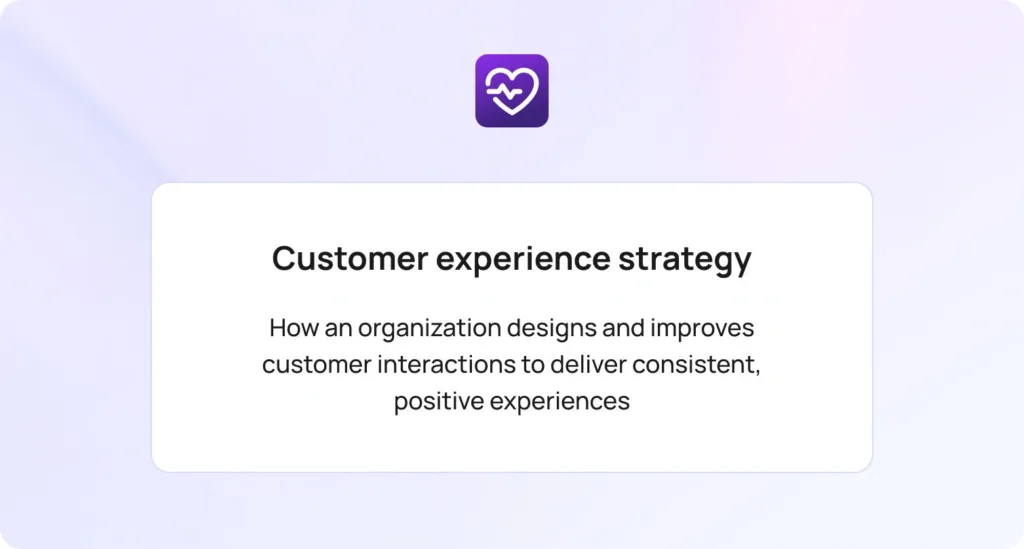
Customer experience strategy, in plain terms: how you design, deliver, and continuously improve every interaction a customer has with your brand. From their first website visit to post-purchase support, your CX strategy, informed by customer feedback, shapes how people feel about doing business with you.
A strong customer experience strategy integrates multiple channels, customer data, and internal processes to deliver smooth, positive experiences. Beyond accelerating problem resolution, the priority is to foresee and address customer needs in advance.
The benefits of a customer experience strategy are measurable. Companies with well-executed CX strategies see:
Your customers have options. Lots of them. If your support experience is clunky, your response times are slow, or your team can’t access customer history across channels, people will go elsewhere, jeopardizing your chances of retaining customers. It’s that simple.
Creating a customer experience strategy isn’t just a nice-to-have anymore. It’s how you stay competitive. When you build a customer experience strategy into your operations, you’re setting yourself up to:
Every time a customer has to repeat themselves, switch channels to get help, or wait days for a response, you’re losing ground. A smart customer experience improvement strategy fixes these pain points before they cost you customers.
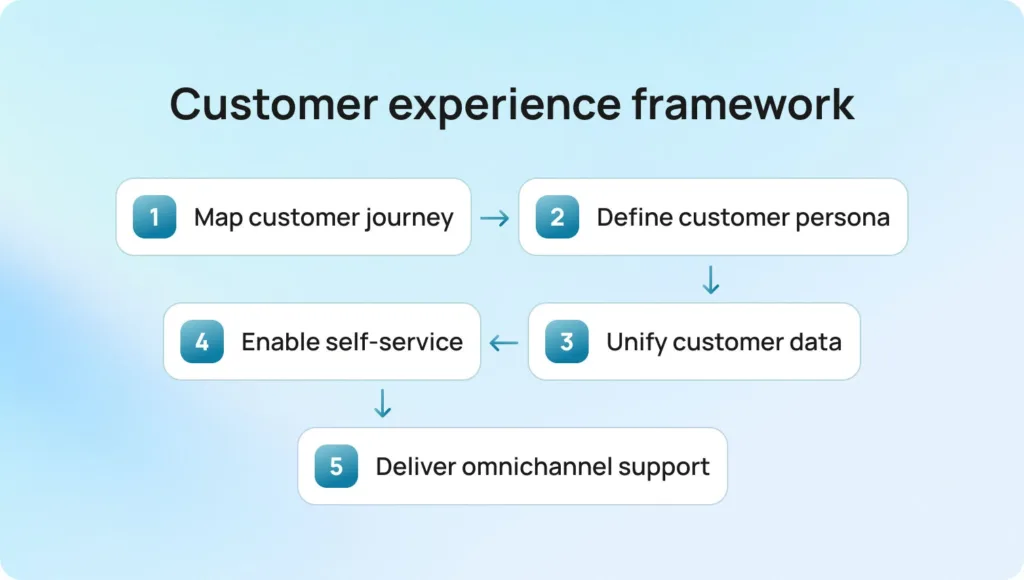
Next, we outline a practical, evidence-based framework for CX. These are the essential best practices.
You can’t improve what you don’t understand. Create a customer journey map that covers every stage from awareness and consideration to purchase and support. Identify where customers interact with your brand, what their expectations are at each stage, and where friction exists.
Most companies focus only on the purchase moment, but the real magic happens across the entire journey. Pay attention to first-time buyers, repeat customers, and every customer interaction in between.
Who are you serving? Build detailed customer profiles based on real data and not assumptions.
Understanding your target audience means examining purchase history, feedback loops, and behavioral patterns. The more you know about your customer base, the better you can tailor experiences that feel personal rather than generic.
When your team has a complete picture of every customer’s history across voice, email, chat, and social media, they can provide faster, smarter support. Customer service analytics give you real-time insights into what’s working and what isn’t. Track key metrics like customer satisfaction score (CSAT), net promoter score (NPS), customer effort score, and first call resolution rates. These key performance indicators tell you exactly where to focus your improvement efforts.
Your customers don’t always want to talk to someone. Sometimes they just want answers, and they want them fast.
That’s where self-service comes in.
A comprehensive FAQ section, a smart knowledge base, and automated workflows let customers solve problems on their own terms.
When you automate routine customer requests, you free your support teams to handle more complex issues. That’s a win-win for everyone: lower costs, happier customers, and less agent burnout.
Your customers don’t think in channels. They don’t care whether they started a conversation in chat and finished it via email. They just want a positive experience.
That means your customer support platform needs to unify every channel. When an agent can see the full customer journey (every previous interaction, every support ticket, every touchpoint), they can deliver better service faster. Omnichannel customer support platforms aren’t just about having multiple channels. They’re about connecting those channels so nothing falls through the cracks.
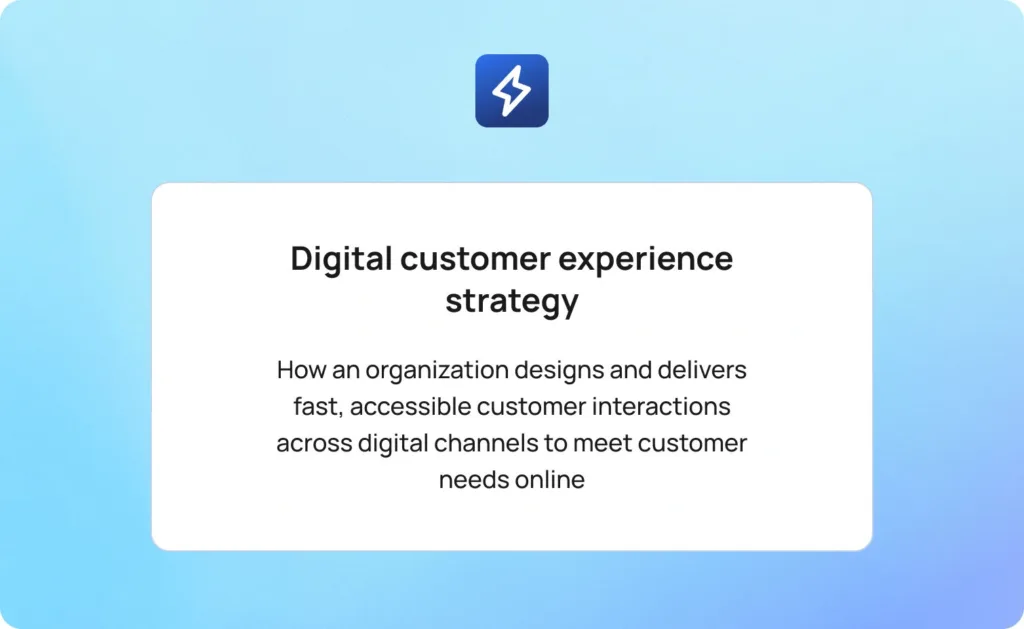
It’s how you show up online across your website, mobile app, social media, chatbots, and email. Digital customer experience strategies need to prioritize speed, convenience, and accessibility.
Here’s what that looks like in practice:
Your digital strategy should also include tools such as canned responses and suggested reply features to help your team respond in seconds.
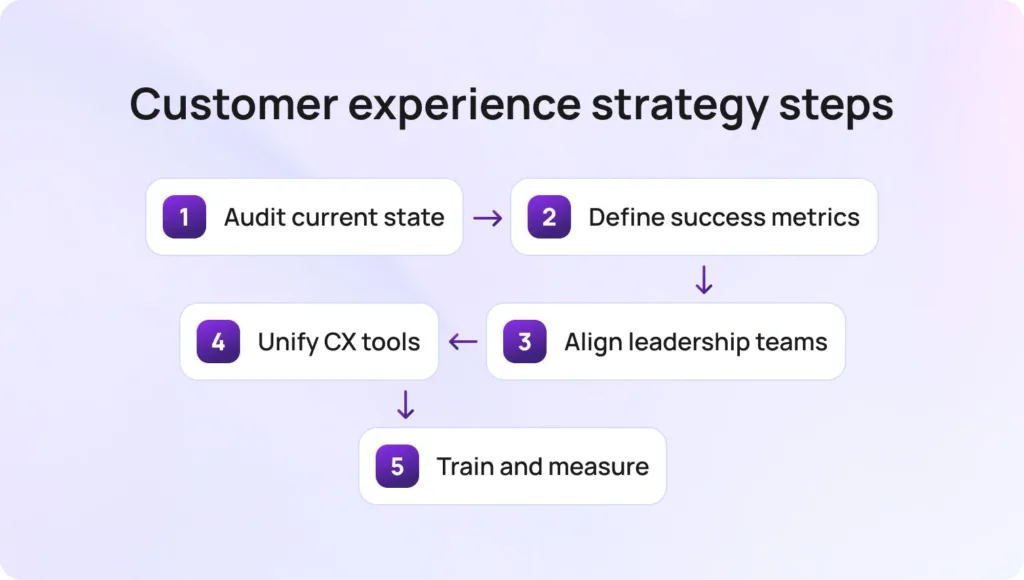
Here’s your customer experience strategy document checklist to help evaluate performance:
Where are you now? Look at your existing customer touchpoints, support tickets, feedback forms, and metrics. Identify pain points in the customer journey and gather input from your support teams about what’s slowing them down.
Set clear business outcomes. Are you trying to reduce customer churn? Improve first-time resolution rates? Increase customer value? Pick 3-5 metrics to track, like CSAT, NPS, customer retention rate, and average handle time.
This isn’t just a support thing. Your customer experience management approach needs buy-in from leadership, marketing, product, and everyone who touches the customer. When everyone’s aligned on creating positive experiences, magic happens.
You can’t deliver a great CX with disconnected tools and manual processes. Invest in an omnichannel platform that unifies voice, email, chat, and social media. Look for features like call transcription, AI-powered ticket summaries, and real-time analytics.BlueHub (by BlueTweak) brings all of this together in one platform—no need to juggle multiple systems or lose context when customers switch channels.
Your strategy is only as good as your team’s ability to execute it. Invest in training, create knowledge bases that agents can actually use, and set up feedback loops to continuously improve.
Track your progress.
Adjust your strategy based on the data.
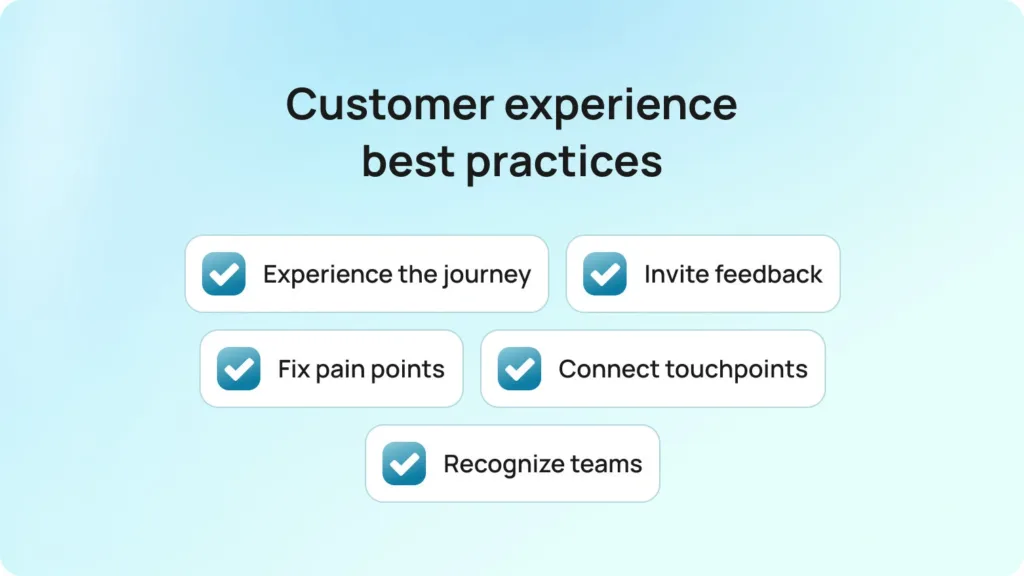
Here are some quick wins to keep in mind as you’re creating your customer experience strategy:
Put yourself in your customer’s shoes. Walk through their journey yourself. Where does it feel clunky? Where do they have to repeat information? Fix those spots first.
Make it easy to give feedback. Surveys, forms, and purchase check-ins help you understand what’s working and what isn’t.
Don’t ignore negative experiences. Every complaint is a chance to improve. Use sentiment analysis and customer data to spot patterns and fix systemic issues.
Focus on the full customer journey, not just individual touchpoints. A smooth handoff between channels matters just as much as a fast response time.
Celebrate your wins. When your team delivers exceptional service, recognize it. Employee experience directly impacts customer experience.
BlueHub (by BlueTweak) turns a good plan into consistent, day-to-day execution. It unifies email, voice, chat, SMS, and social into a single workspace with full context and history, so customers never have to repeat themselves and agents can move faster with fewer handoffs.
AI is built in where it matters: voicebots and chatbots deflect high-volume Tier-1 requests with instant language switching, while Agent Copilot delivers ticket summaries and suggested replies to accelerate resolution and reduce agent fatigue.
Beyond the front line, BlueHub gives leaders real-time visibility into CSAT, NPS, first-contact resolution, and effort scores across channels and brands. A smart, searchable knowledge base powers both self-service and agent-assisted, keeping answers consistent and up to date. Workforce management is integrated, and forecasting, scheduling, and adherence tools help you meet SLAs while controlling costs. For multi-brand or BPO operations, native multi-tenant routing and reporting enable a single team to support multiple brands with clear separation and shared visibility. With MFA, audit logs, and flexible deployment options (cloud, hybrid, on-prem), BlueHub aligns with enterprise security and compliance requirements.
Building a customer experience strategy isn’t a one-and-done project. It’s an ongoing process of listening, learning, and adapting to ensure sustainable growth. The companies that win are the ones that treat CX as a core part of their business, not an afterthought.
Start small. Pick one pain point in your customer journey and fix it. Then move on to the next one. Over time, those improvements add up to something bigger: a reputation for delivering experiences people actually want to talk about.
If you’re ready to build a CX strategy that drives real results, check out how BlueHub brings together omnichannel support, AI automation, and robust analytics in one platform. Because turning complicated into simple? That’s what we do. Request a demo to see how it works.
Customer service is reactive support, providing help when someone needs it. Customer experience (CX) strategy is broader: it designs every touchpoint, from first visit to post-purchase, so interactions are consistent and effortless. BlueHub supports both layers: it powers frontline service (voice, chat, email, social) and the end-to-end journey with unified context, automation, and analytics.
Track CSAT, NPS, customer effort score, first-contact resolution, retention, and churn, then tie them to outcomes like repeat purchase and lifetime value. BlueHub provides real-time dashboards across channels and brands, so you can monitor these metrics and drill into root causes without stitching together multiple tools.
Treating CX as a support-only project, ignoring feedback loops, optimizing single touchpoints instead of the whole journey, underinvesting in the right platform, and not measuring what matters. BlueHub reduces this risk by centralizing channels, feedback, and knowledge in one place, and by surfacing journey-level insights you can act on quickly.
Expect early wins in weeks (faster response times, lower effort, improved CSAT) and more durable gains over 6–12 months (higher loyalty and lifetime value). BlueHub accelerates both phases with AI deflection for common inquiries, Agent Copilot for faster resolutions, and WFM/analytics to sustain improvements at scale.
Absolutely. In fact, small businesses often have an advantage here because they’re more agile. You don’t need a massive budget to improve customer experience. You just need to listen to your customers, address pain points, and deliver consistently. Start with basics such as faster response times, improved self-service options, and a unified view of customer interactions. Tools like BlueHub make it easy to deliver enterprise-level CX without enterprise-level complexity.
As Head of Digital Transformation, Radu looks over multiple departments across the company, providing visibility over what happens in product, and what are the needs of customers. With more than 8 years in the Technology era, and part of BlueTweak since the beginning, Radu shifted from a developer (addressing end-customer needs) to a more business oriented role, to have an influence and touch base with people who use the actual technology.
Quality
Administration
Workforce Management
Customer Support Analytics
Copyright BlueTweak 2025