



TL;DR
Implementing AI in customer service sounds great in theory, but the challenges of using AI for customer support range from legacy system integration nightmares to keeping the human touch alive. This guide breaks down the real challenges of AI-powered customer support systems, why they happen, and practical solutions for staying ahead without losing customer loyalty.
Implementing AI in Support
Artificial intelligence is now everywhere in customer support: Conversational AI and predictive analytics. Companies are rushing to implement these AI-driven tools to handle routine tasks, cut costs, and scale faster.
Still, implementing AI in customer service is easier said than done.
Below, we cut through the hype and talk about the real AI customer support challenges businesses face and (more importantly) how to solve them.
What Are the Challenges of AI in Customer Support?
The challenges of using AI in customer support aren't just technical problems you can code your way out of. They are organizational, cultural, ethical, and financial obstacles that require holistic solutions.
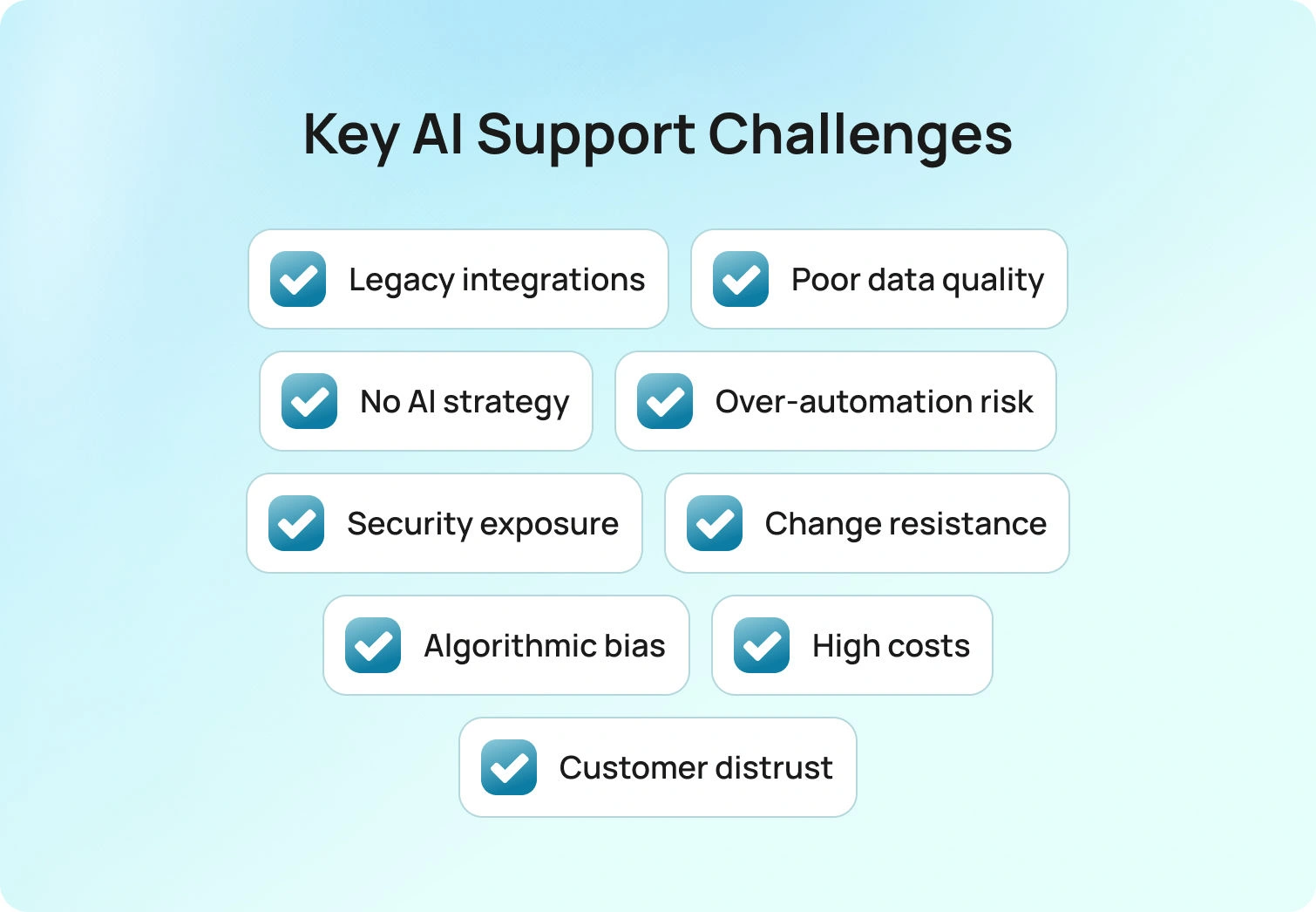
Here are the main challenges of AI-powered customer support systems:
- Integration nightmares with existing systems that weren't built for AI
- Data quality issues that make AI systems rely on garbage information
- Missing a strategy that leads to implementing AI for AI's sake
- Balancing automation with human touch so you don't lose emotional intelligence
- Security risks when handling customer data through AI
- Organizational resistance from support agents who see AI as a threat
- Algorithmic bias that can damage your brand
- High costs that make ROI unclear
- Customer skepticism about interacting with machines
9 Challenges of AI in Customer Support
Below, we’ll break down each of these challenges of using AI for customer support and how to solve them.
1. Integration with Legacy Customer Support Systems
Most companies’ existing systems aren't ready for AI. You've got customer service platforms that are 10, 15, or 20 years old, built before anyone considered machine learning or natural language processing.
These legacy systems have incompatible data formats, outdated architecture, and limited API capabilities. When you try to plug in AI tools, nothing fits together properly. You end up needing middleware, custom APIs, and extensive engineering work just to make things talk to each other.
The Fix:
Start with a realistic assessment of what you're working with. Can your current customer support platform handle AI features, or do you need to modernize first?
Some businesses take a phased approach, implementing AI capabilities in stages rather than overhauling everything at once. Others choose platforms, like BlueTweak, that have AI functionality built in from the ground up, so you're not fighting your tech stack at every step.
Want to learn more? Get a 14-day free BlueTweak Trial
Get Trial2. Data Management and Quality Issues
AI systems rely on clean, structured, and consistent data. Unfortunately, most companies’ customer data is not up to scratch.
You've got:
- Siloed databases across departments
- CRM systems that don't talk to billing
- Support tickets in one place
- Calls in different systems
- Chat transcripts somewhere else
When you try to train AI on this fragmented chaos, you get AI-powered chatbots that give generic responses or factually wrong information.
An AI chatbot trained on incomplete customer interaction histories will confidently tell customers things that aren't true. That erodes trust fast.
Then there's the ongoing maintenance issue. Customer inquiries change. Products evolve. If your training data is from 2022 and it's now 2026, your AI is working with outdated information. It needs continuous updates, which requires robust processes and governance.
The Fix:
Data cleansing isn't pretty, but it's necessary. Before you implement AI, audit your data ecosystem.
- Where is customer information stored?
- What's the data quality like?
- What data is missing?
You'll need data transformation pipelines to create consistency across sources. Some companies use AI-powered tools to help clean and normalize data, which sounds ironic but actually works.
Also, build data governance frameworks that address compliance (GDPR, CCPA, etc.) and regularly verify data quality. This isn't a one-time project; it's an operational shift. Modern AI customer support platforms with real-time data ingestion can help maintain relevance without constant manual updates.
3. Missing Strategic Vision for AI Implementation
Many companies implement AI reactively. They see competitors doing it, so they rush to deploy AI chatbots without thinking through why or how.
Failed AI projects in customer service often stem from poorly defined customer support metrics, scattered data, and inadequate cross-departmental collaboration. When you don't have clear goals, you can't measure success (and you definitely can't optimize).
The Fix:
Start with strategy, not technology. What specific customer service challenges are you trying to solve? Where do routine tasks waste your team's time? What are your customers' expectations around response speed and availability?
Here's how one e-commerce team moved from reactive AI experimentation to a structured implementation that delivered measurable results: BlueTweak's AI-Powered Customer Support Transformation for E-Commerce Client
Map your customer success metrics before touching any AI tools. Define clear KPIs like:
- First-contact resolution rates
- Customer satisfaction (CSAT) scores
- Average handle time
- Ticket deflection rates
- Cost per interaction
Then identify high-impact use cases where AI opens up real value. That might be automated ticket routing. Maybe it's sentiment analysis to catch escalating issues early. Or perhaps it's handling the bulk of support requests, such as password resets and basic FAQs.
Use process mining tools to objectively analyze existing workflows. Find the spots where AI can actually help. Check out our guide on customer support strategies to see where AI fits into the bigger picture.
he biggest mistake we see is companies treating AI implementation as a technology project when it's really a business transformation project. The teams that succeed aren't the ones with the most sophisticated models. They're the ones who spent time defining what 'better' actually looks like before they wrote a single line of integration code.
— Radu Dumitrescu, Head of Presale & Digital Transformation, BlueTweak
4. Balancing Automation with the Human Touch
AI is great at repetitive tasks and routine queries. It can handle hundreds of customer inquiries simultaneously, 24/7, without getting tired or frustrated.
But AI isn’t great at emotional intelligence.
When a customer is dealing with a billing dispute, a service outage, or a genuinely upsetting problem, they want human empathy. They want someone who gets it. AI-powered chatbots that respond with canned sympathy feel hollow and often make things worse.
The risk of over-automation is real. If customers feel like they're stuck in an AI loop with no way to reach a real person, they bail. And they tell their friends about it.
The Fix:
Build hybrid support models that leverage both AI and human expertise. Use AI customer support chatbots to triage incoming support requests using natural language processing. Let them handle straightforward customer queries. But make escalation to human support seamless and obvious.
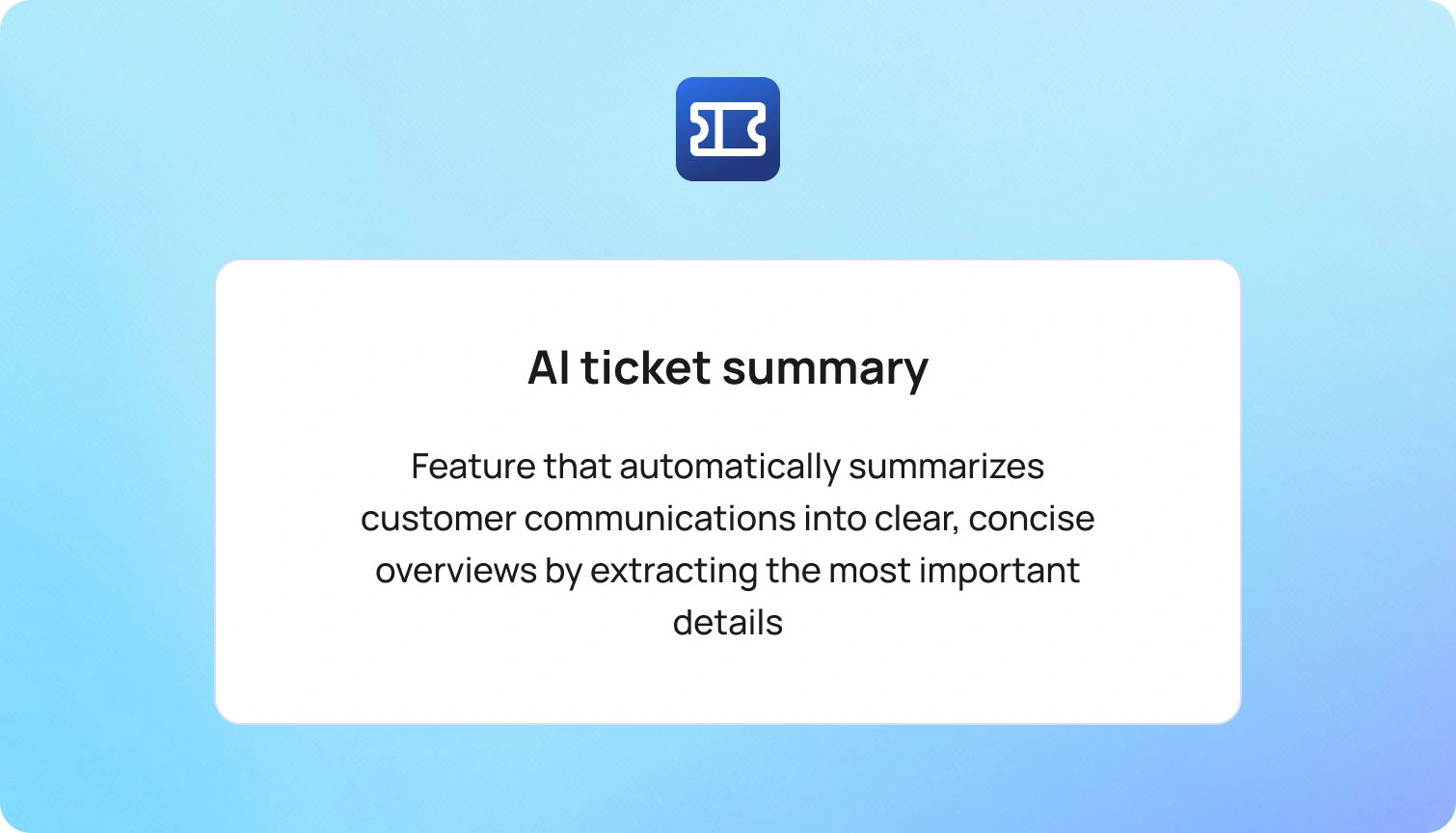
For complex issues, route customers to support agents equipped with AI-assisted tools, such as real-time response suggestions or AI-powered ticket summaries that provide agents with full context instantly.
Train your AI to recognize signals of frustration and escalate proactively. If a customer repeats themselves or uses language that indicates anger, that's a trigger for human intervention.
5. Security and Privacy Risks
AI-powered chatbots handle sensitive customer data: payment information, personal identifiers, and account details. That’s what makes them attractive targets for cyberattacks.
The challenges of AI in customer support include ensuring robust security measures at every touchpoint. AI algorithms must be auditable to demonstrate ethical data use. You need to comply with evolving regulations like GDPR, CCPA, HIPAA, and the EU's AI Act.
The Fix:
Build security into your AI implementation from day one. That means:
- End-to-end encryption for data in transit and at rest
- Regular security audits and penetration testing
- Access controls that limit who can see what data
- Federated learning frameworks that keep relevant information on-premises
- AI explainability tools that make decision-making processes transparent
Also, implement granular consent management systems so customers understand what data is collected and how it is used, and have clear opt-out mechanisms. Work with AI vendors that take security seriously and have proven compliance frameworks. Modern omnichannel customer support platforms should have security and compliance built into their architecture.
6. Organizational Culture and Change Management
Customer service agents often see AI as a threat to their jobs. They worry about being replaced. That leads to resistance, disengagement, and sometimes active opposition to AI implementations.
Ultimately, if your support agents feel they're being automated out of existence, they won't help make the AI work. They might even sabotage it (consciously or unconsciously) by not using it properly or by highlighting every failure.
The Fix:
Change management starts with communication. Be transparent about what AI will and won't do. Position it as an augmentation, not a replacement. Show agents how AI-driven tools and abilities can handle boring, repetitive tasks so they can focus on interesting, meaningful work.
Involve support agents in the co-design of AI implementations. Let them test tools, provide feedback, and help shape how AI fits into their workflows. When people feel ownership, resistance drops dramatically.
Celebrate successes. When AI helps solve a customer issue faster or provides accurate information that saves time, recognize it. Show the team that this tool makes their lives easier.
7. Algorithmic Bias and Ethical Concerns
AI systems learn from training data. If that data reflects historical biases (racial, gender, socioeconomic), the AI will perpetuate those biases.
The problem is that bias can be subtle. Perhaps your AI routes certain customer inquiries to less-experienced agents based on implicit assumptions in the training data. Maybe it provides different levels of service based on factors it shouldn't be considering.
When customers can't get explanations for AI decisions (like why a refund request was denied), they perceive the process as opaque and unfair. That destroys trust.
The Fix:
Implement ethical AI governance frameworks from the start. That includes:
- Diverse data sampling to reduce bias in training sets
- Continuous bias monitoring to catch problems early
- Regular audits of AI decision-making patterns
- "Right to explanation" interfaces that let customers request human reviews
Transparency builds trust. When customers understand how AI makes decisions and know they can escalate to a human, they're more comfortable with the technology.
This is an area where customer service leaders need to be proactive. Waiting until you have a bias scandal is too late.
8. Financial and Resource Constraints
Custom AI chatbot development, cloud infrastructure for AI systems, and ongoing model training costs can add up. ROI timelines often stretch beyond 18 months, which makes many businesses nervous.
For small and midsize companies, these numbers are daunting. You're looking at a major upfront investment with uncertain returns.
Then there are hidden costs nobody warns you about:
- Ongoing maintenance to update natural language processing models
- Training data management
- Integration work with existing systems
- Staff training and change management
- Compliance and security measures
Open-source AI tools can provide cost-effective entry points, but they require technical expertise to customize and maintain.
The Fix:
Build a realistic business case before committing. Calculate not just implementation costs but ongoing operational expenses. Factor in necessary adjustments and iterations—your first AI deployment won't be perfect.
Look for phased implementation approaches that let you validate ROI before scaling. Start with a pilot program targeting one high-impact use case. Measure results. Adjust. Then expand. Consider platforms that offer AI as part of an integrated solution rather than requiring separate AI vendor relationships.BlueHub (by BlueTweak) includes AI functionality such as AI chatbots, voicebots, and suggested reply features as part of the core platform.
9. Customer Acceptance and Experience Gaps
Some customers don't like AI customer support.
They don't trust it. They find it impersonal. They've had too many bad experiences with AI chatbots that couldn't understand their questions or kept them trapped in unhelpful loops.
Customer expectations have also become more sophisticated. People can tell when they're talking to AI, and many actively seek ways to bypass it and reach human agents.
The Fix:
Focus on customer experiences. Design AI interactions that feel helpful.
That means:
- Making escalation to humans obvious
- Using customer data to personalize interactions
- Being transparent about AI
- Allowing seamless toggling
- Continuously improving based on customer feedback
Personalized experiences matter. AI that can create relevant, context-aware responses (not generic responses) earns trust. But be careful not to over-personalize in ways that feel intrusive.
Also, offer self-service options that empower customers who prefer solving problems independently. A robust knowledge base with AI-powered search can deflect many support requests while maintaining high customer satisfaction.
Make AI Work in Customer Support with BlueTweak
Yes, the challenges of AI-powered customer support systems are real and substantial. But they're not insurmountable.
The companies that succeed with implementing AI in customer service do a few things consistently:
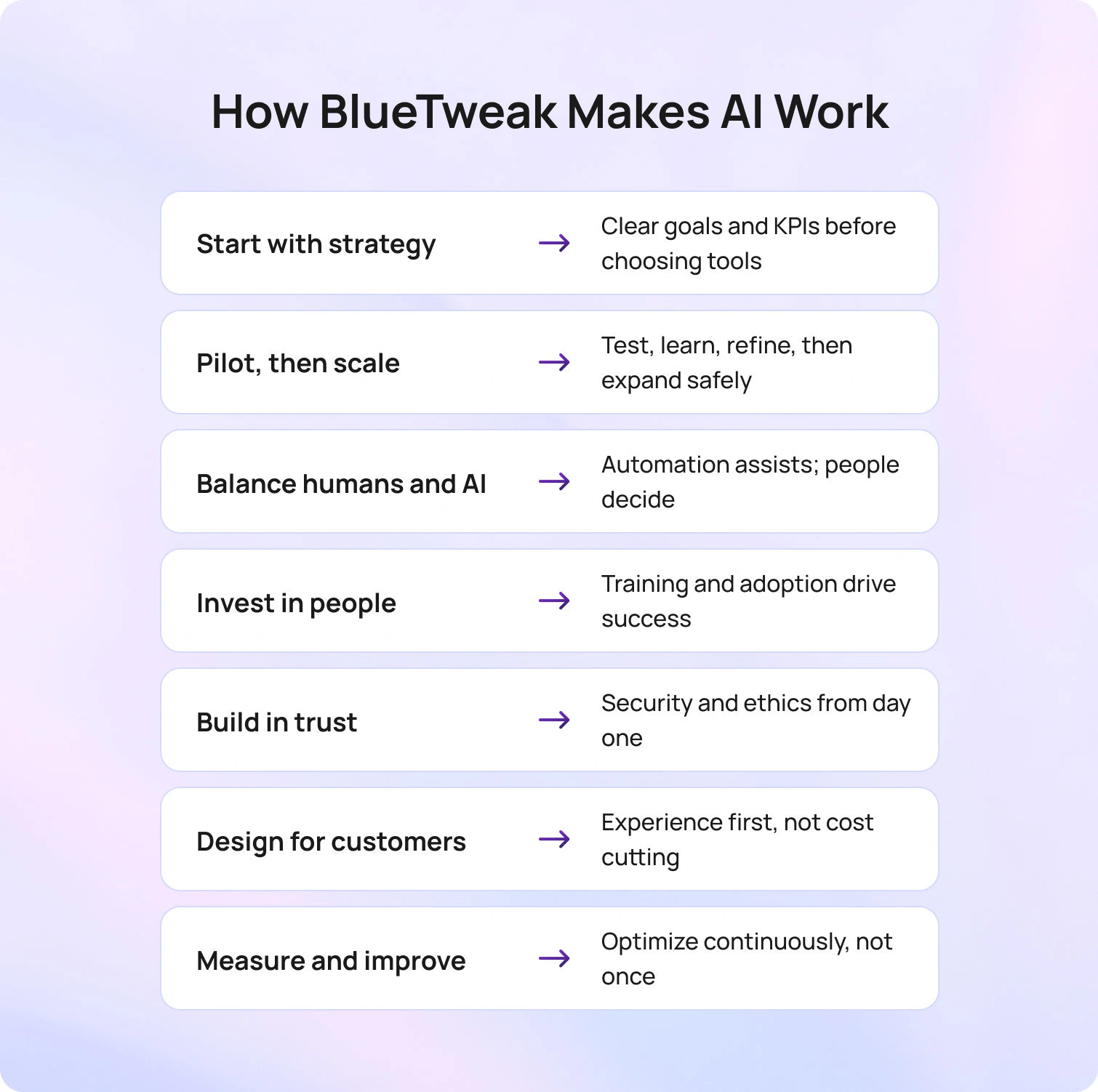
- They start with strategy, not technology – Clear goals, defined use cases, measurable KPIs
- They take a phased approach – Pilot programs, validation, iteration, then scaling
- They balance AI with human expertise – Hybrid models that play to each's strengths
- They invest in their people – Training, change management, cultural buy-in
- They prioritize security and ethics – From day one, not as an afterthought
- They focus on customer needs – Not just cost reduction, but better customer experiences
- They measure and optimize continuously – AI isn't set-it-and-forget-it
Artificial intelligence AI has a pivotal role in the future of customer support. It can handle routine tasks at scale, provide predictive analytics that anticipate customer needs, and free up human agents to do what they do best.
But AI isn't magic. It's a tool that requires thoughtful implementation, ongoing maintenance, and constant refinement.
BlueTweak integrates AI-powered features, including intelligent chatbots, voicebots, ticket summarization, and proposed replies, into a unified platform built for real-world use. Request a demo to see it in action.
Request a demo today
Request Demo

As Head of Digital Transformation, Radu looks over multiple departments across the company, providing visibility over what happens in product, and what are the needs of customers. With more than 8 years in the Technology era, and part of BlueTweak since the beginning, Radu shifted from a developer (addressing end-customer needs) to a more business oriented role, to have an influence and touch base with people who use the actual technology.



