AI-Powered Suggested Reply for Support: A Practical Guide to Faster, Better Service

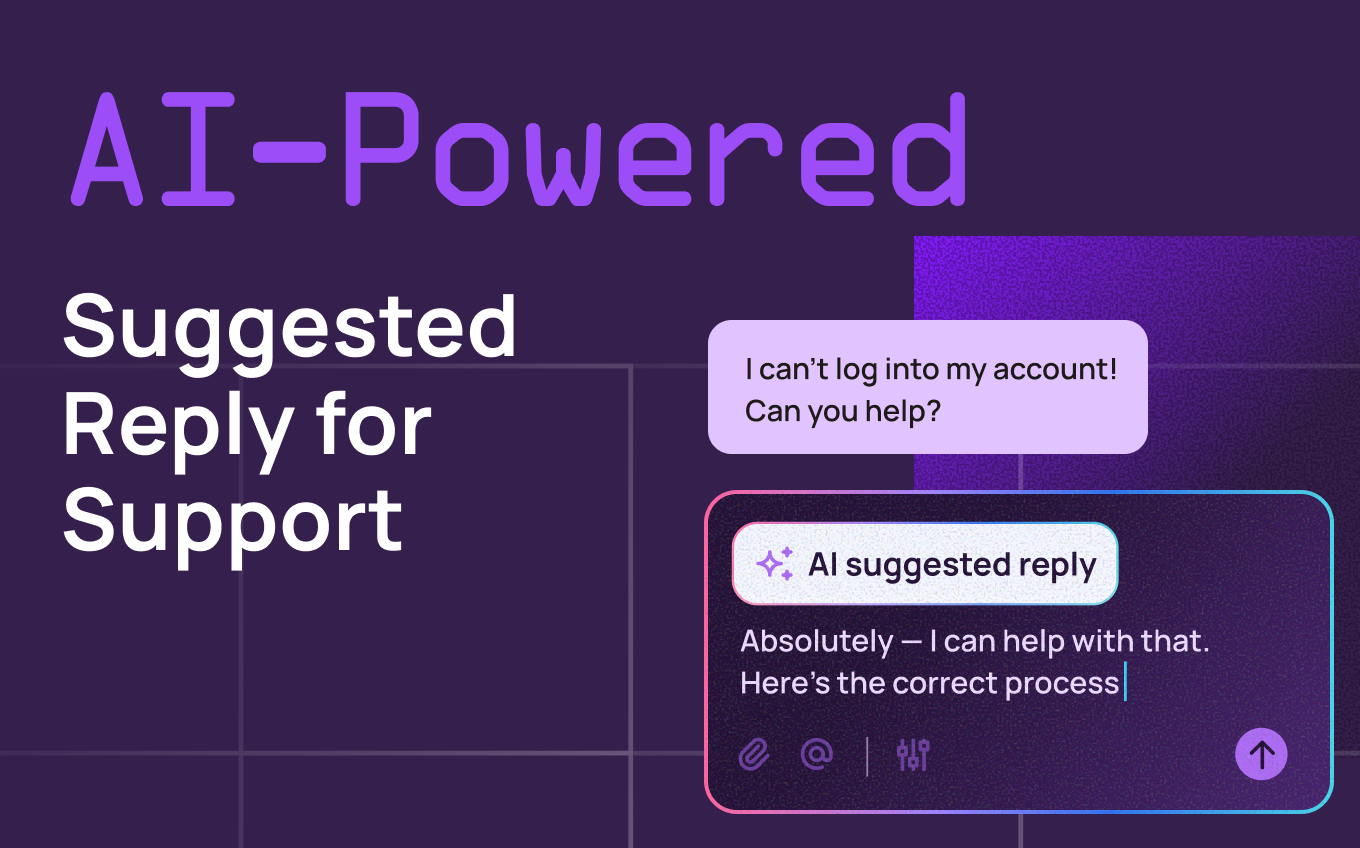


BlueHub unifies every conversation, customer record, and automation into one powerful platform.
Explore more
AI-powered suggested reply for support transform each incoming message into a clear set of relevant replies, allowing agents to generate responses to customer inquiries that they can review, edit, and respond to in real-time. Grounded in approved knowledge and shaped by brand identity, an AI response generator reduces response times, maintains consistent tone, and enhances customer satisfaction without compromising accuracy. BlueHub (by BlueTweak) integrates these capabilities into a unified support workspace, encompassing ticketing, knowledge, analytics, and workforce management. Teams can safely adopt generative AI and demonstrate progress across the entihre customer journey.
In support, the space between a customer’s question and a policy-correct answer is where delays and do-overs creep in. AI-powered suggested reply closes that gap by generating a grounded first draft the instant an incoming message arrives, pulling policy, context, and brand voice into a single starting point. Agents start with an AI-generated draft, quickly adjust tone or details, and send, delivering faster replies, steadier quality, and lower cognitive load. This keeps a human-in-the-loop (HITL) at every step.
The article ahead demonstrates how AI-powered suggested replies for support operate daily, the habits that ensure suggestions remain accurate and on-brand, and how BlueHub integrates this workflow into ticketing, knowledge management, analytics, and workforce management.
A shipment-delay ticket lands in the queue. The incoming message is short: “Where is my order?” In the agent’s console, AI-powered reply suggestions pull the latest tracking scan, the relevant policy snippet, and the approved response style. A draft appears with plain-language context, next steps, and a friendly sign-off. The agent adjusts the date, adds the order number, and sends it.
Now the pace holds. An access issue arises, and the suggestion includes the correct verification steps, along with a transparent fallback in case the customer is unable to complete the verification. A more tense conversation follows; the system offers a de-escalation template that acknowledges key points, specific needs, impact, and sets a time for the next update. Throughout, the agent remains in control while the system ensures accurate, on-brand, and fast responses. The result is fewer do-overs, steadier quality, and room for judgment where it matters.
Reply suggestions are a governed drafting layer inside the agent console. Instead of auto-sending, the system produces an on-brand first draft that agents can review, adjust, and approve immediately. Under the hood, a large language model operates only with approved inputs, i.e., knowledge articles, macros, recent resolutions, and account context, ensuring the language reflects the current policy and the organization’s response style.
Admins set tone rules, required disclaimers, and escalation boundaries; agents keep control of the send. In practice, AI-suggested replies function as a governed drafting layer that speeds work without removing human judgment.
Think of it as an in-house writing assistant with receipts. Each draft is grounded in cited sources, inherits the correct voice, and adapts to the conversation’s context without inventing facts. Sensitive scenarios (refund thresholds, identity checks, legal complaints) are flagged for human review.
Quality improves over time through lightweight feedback; agents can mark a draft helpful or not, add a note, and content owners update the underlying articles. Analytics surface adoption and editing patterns, allowing leaders to focus on better inputs rather than heavier oversight.
In short, the suggested reply combines three disciplines: retrieving the correct data, generating the right voice, and applying human judgment at the right moment. The three disciplines work together to deliver accurate, relevant, and consistent answers without turning service into an auto-reply.
Consider discussing a return window. The system proposes a reply that confirms timing, lists conditions, and offers the next step with a link already filled in. The agent checks the order date and sends it. In a how-to message for a new feature, the suggestion outlines numbered steps, warns about a common mistake, and includes a brief validation step to ensure the customer knows the fix has worked.
When a warranty question arises, the draft requests one missing detail, then provides the correct path if the product qualifies. In each case, the suggestion eliminates guesswork and provides the agent with a strong starting point.
Consistency improves as well. Shifts and regions often phrase things differently. A tuned AI text response generator reduces that variance by standardizing the structure and wording of suggested responses, while leaving room for personalization. Customers notice the difference. Messages appear to come from the same service team, regardless of who typed them. That steadiness is a quiet, yet persistent, driver of improved customer satisfaction, leading to stronger customer relationships.
There is also a less visible but powerful effect on the people doing the work. When agents spend less time hunting for fragments and more time applying judgment, fatigue drops. The work feels focused. New colleagues ramp up faster because the suggested replies model good habits that lead to improved customer satisfaction. Leaders see cleaner metrics not because dashboards changed, but because the process did.
Morning opens with a queue full of short questions and a handful of complex threads. A customer asks about a shipment delay. The system presents a draft that confirms the latest scan, explains its meaning in plain language, and suggests the following action. The agent edits the date, adds a friendly sign-off, and sends it.
Another incoming message is about account access. The suggestion includes the proper verification steps and a contingency path in case the customer cannot pass them. Later, a conversation escalates; the agent uses a de-escalation template proposed by the system for a quick reply, which acknowledges the impact and commits to the next update window. Throughout the day, the agent marks drafts as helpful or not, leaving one-line feedback that content owners use to refine the knowledge base. The loop closes. The responses get better.
Across dozens of interactions, the pattern repeats: ground, generate, review, respond. It works for simple moments and supports the handoff in complex issues, where human judgment remains the anchor. The system saves time, but it also reduces rework by preventing partial answers and unclear next steps.
Trust starts with sources. If articles are outdated, the model will echo old guidance. Content quality is the fuel for accurate suggestions. The next ingredient is tone: codify response style so the system can maintain it. Provide examples for apologies, policy denials, and fix-forward messages. Set clear rules for language and clarity, especially in regulated contexts. With those inputs, the model can understand context and keep messages aligned with how the brand speaks.
Human-in-the-loop design remains non-negotiable. Auto-sending might look efficient, but it risks missing nuance. Keep humans in control of the send button, particularly for refunds, escalations, and any transactions that involve sensitive data. Finally, make feedback easy. A one-click rating with a short note is enough to identify gaps and drive improvements without adding friction to the workday.
Governance is part of the story. Role-based access, audit logs, and a straightforward content ownership process keep the system responsible and reviewable. When a leader asks how a message was produced, the team can show sources and edits. That transparency builds confidence within the business and with customers.
Four signals tell the story: time to first response, handle time, first-contact resolution, and customer satisfaction. If AI-generated responses are effective, the team engages more quickly, composes responses more efficiently, resolves more issues on the first touch, and experiences a positive trend in feedback. Two program metrics round it out: how often agents use or customize the suggested replies, and content gaps where drafts are marked not helpful because a file or macro is missing.
Leaders do not need twenty charts. They need a short conversation each week about what changed and why. If performance stalls, check the content before tuning prompts. Improvements in knowledge usually move the numbers more than any upstream tweak in modeling.
Some situations are made for reply suggestions. Order status is a classic example because clarity beats creativity: confirm what is true, set expectations, and explain the next step. Account and access flows benefit because the system can generate a complete set of verification steps, not just a link. Returns and eligibility messages improve when the draft spells out conditions and what to attach. Warranty troubleshooting proceeds more smoothly when the model recognizes the device, proposes the correct path, and requests the missing detail. For how-to setups, stepwise instructions that avoid jargon help the end user succeed the first time.
In each of these scenarios, the AI response generator provides a strong first draft. Agents still adjust, personalize, and decide, but the heavy lifting is handled. Over time, the team writes less from scratch and more from a grounded starting point, resulting in a predictably clear customer experience.
BlueHub is BlueTweak’s unified customer support platform. It brings ticketing, knowledge, analytics, and workforce management into the same space where agents handle customer conversations. Suggested replies live inside that flow. When a customer message arrives, BlueHub retrieves relevant knowledge and recent resolutions, and the AI response generator composes suggested replies in real-time. Agents can customize the draft, adjust tone, add a note, and send with one click. Nothing is auto-sent. Human review remains the default for sensitive topics.
Two aspects define the approach. First, grounding is built in. Drafts are generated from approved content, so messages stay accurate and consistent with policy. Second, control belongs to the team. Program owners set response style and disclaimers, and decide where suggestions appear. Analytics reveal core outcomes, such as response time and resolution, allowing leaders to see the impact without exporting data across multiple tools.
Because BlueHub aligns suggested replies with ticketing and workforce management, the process works at the scale of daily operations. When handle time drops, scheduling can adapt. When content gaps appear, owners update articles, and future drafts improve. It is a system designed to maintain quality while moving faster, not a bolt-on widget.
(For governance, BlueHub supports audit logs and data location options. Organizations can publish data handling details on their Trust Center for buyers who evaluate residency and sub-processors.)
Adopting the suggested reply is not a matter of flipping a switch. It is a series of habits. The team agrees on the first set of intents where suggestions are most helpful. Knowledge owners keep articles short, current, and specific. Leaders set expectations for tone and structure. Agents add a sentence of feedback when a draft falls short of the mark. The system gets better as the team uses it. Generative AI provides the speed to save time; the business supplies the judgment.
As the habits take root, something subtle happens. The work feels less chaotic. Agents shift attention from hunting for snippets to solving problems. Conversations are more explicit, even when the topic is complex. The support organization stops spinning on the blank page and starts delivering the right message at the right moment. That is how AI enhances customer support services in a way that customers notice and remember.
Suggested replies are a practical way to combine the speed of AI with the care of human service. With good sources, clear tone, and human review, agents produce better answers faster; customers receive helpful, relevant guidance; and leaders see steadier operations. The pattern is simple: ground the message, generate the draft, review and edit, and respond with confidence.
See how it works in BlueHub. Explore AI-powered suggested replies within a unified workspace, enabling the team to move faster while maintaining quality in every message.
An AI-suggested reply workflow generates grounded drafts for each incoming message using approved sources in your helpdesk; agents review, customize, and send them, so humans stay in control while the model provides speed. BlueHub implements this in the agent workspace, pulling from your KB, policies, and macros to keep suggestions relevant.
Generic tools miss policy and process context, while an in-workspace generator reads your knowledge base, macros, and permissioning to stay accurate, on-brand, and compliant. BlueHub’s Suggested Reply is context-aware by design, so drafts reflect how your business actually operates.
No. Suggestions handle assembly and phrasing, but people manage complexity, apply judgment, and decide what to send. BlueHub speeds routine replies so agents can focus on edge cases and higher-value work.
Yes, when style rules are defined. Admins set tone, phrasing, and do/don’t language so drafts match your brand while leaving room for personalization. BlueHub enforces these guardrails at generation time and during review.
Time to first response, handle time, first-contact resolution, and CSAT are core; adoption and edit rates reveal where content or prompts need tuning. BlueHub reports these metrics at the intent and queue level, linking outcomes to specific articles and templates.
As Head of Digital Transformation, Radu looks over multiple departments across the company, providing visibility over what happens in product, and what are the needs of customers. With more than 8 years in the Technology era, and part of BlueTweak since the beginning, Radu shifted from a developer (addressing end-customer needs) to a more business oriented role, to have an influence and touch base with people who use the actual technology.
Quality
Administration
Workforce Management
Customer Support Analytics
Copyright BlueTweak 2025